Best Overall
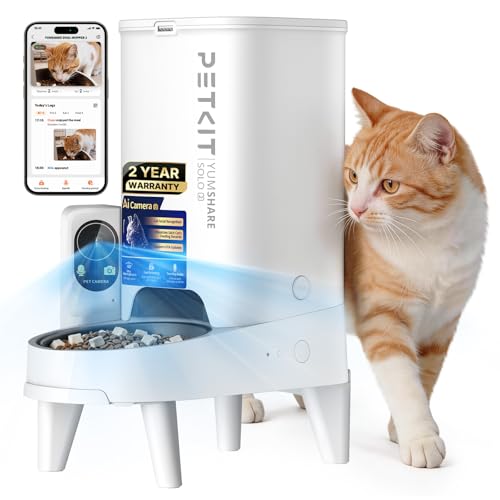
PETKIT Smart Feeder with Camera and Audio
Real-time video lets you monitor pets remotely.
Two-way audio enables easy interaction with pets.
Scheduled feeding ensures consistent meal times.
 Brianna York
Real-time video lets you monitor pets remotely.
Two-way audio enables easy interaction with pets.
Scheduled feeding ensures consistent meal times.

Large capacity, ideal for big breed dogs.
Anti-clog design handles varied kibble sizes.
Dual power ensures uninterrupted feeding.

App-controlled for convenient remote feeding.
Compatible with Alexa for voice commands.
Backup batteries ensure feeding during outages.

Large capacity for fewer refills needed.
LCD screen for easy programming.
Flexible meal scheduling with up to 6 meals daily.

Large 14L capacity minimizes refills.
Remote feeding via 2.4G WiFi app.
Anti-blockage ensures smooth food flow.
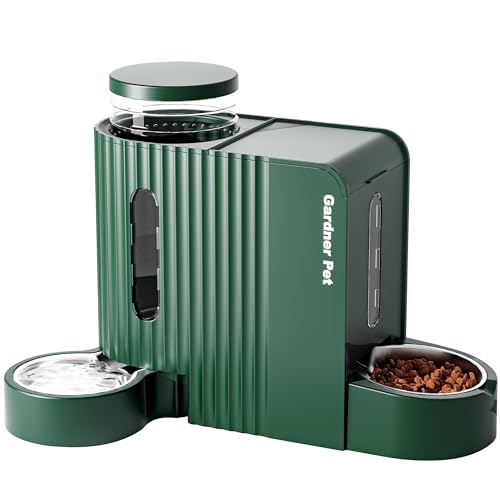
Dual function: Feeds and hydrates pets simultaneously.
BPA-free material ensures pet safety.
Includes stainless steel bowl for durability.

Large capacity ideal for extended feeding.
Built-in HD camera for remote monitoring.
Anti-clog design handles various kibble sizes.

High-quality 1080P night vision camera.
Convenient 5G WiFi connectivity.
Personalized 10-second voice recording feature.

Dispenses food for two cats simultaneously.
Large 5L capacity reduces refill frequency.
Programmable timer for consistent feeding schedules.

App control for convenient feeding schedules.
Portion control helps maintain pet health.
Supports WiFi connectivity for easy setup.
The most important buying question is whether the feeder can deliver the food mass your dog actually needs. Most products in this category use portions, cups, teaspoons, or milliliters rather than grams. Kibble density, shape, size, hopper level, and the need to prime a conveyor can change the delivered weight. A useful product should state its permitted food type and kibble size, explain portion limits and calibration, and provide model-specific independent weighed-kibble testing. Without that evidence, weigh several real dispenses with your dog’s food before relying on a veterinarian-set calorie plan. A large hopper or a claim such as “precise,” “healthy,” or “clog-free” is not proof of repeatable portions.
Reliability is a separate issue. Look for independent endurance testing that records jams, bridging, double dispensing, schedule drift, and performance across the stated kibble range. A low-food indicator, blockage code, or anti-jam design can help, but a warning is not the same as preventing a missed meal. Gravity feeders avoid electrical outages, but they do not schedule or measure meals and are unsuitable for pets that overeat unless intake is supervised.
Failure handling also deserves attention. Manuals should explain whether schedules continue without Wi-Fi, an app, or cloud access; what happens during a power outage; whether backup batteries are required; how long they support feeding; and whether manual feeding remains possible. Smart features should have clear privacy, security-update, account-recovery, and end-of-support information. FCC authorization can verify a product’s intentional radio emissions, but it does not prove feeding accuracy or electrical safety for the complete feeder and adapter.
For powered products, look for a traceable finished-product or correctly matched power-supply listing in UL Solutions Product iQ or Intertek’s ETL directory. The relevant safety framework also includes OSHA’s recognized testing laboratories, while radio-equipped versions should have an exact-model FCC Equipment Authorization record. Absence from these records does not prove a product is unsafe; it means the claimed safeguard was not verified in the supplied review.
Food-contact parts should be removable, cleanable, and fully dry before refilling. Buyers should check whether the bowl, hopper, chute, seals, rotor, and desiccant compartment are identified; whether dishwasher use is allowed; and whether the product is limited to dry food. “Stainless steel,” “BPA-free,” or “food-grade” claims are stronger when supported by specific material information, FDA food-contact requirements, or an applicable NSF/ANSI 51 listing.
Across the supplied products, recurring safety limits are clear: none was independently validated for strict gram-level veterinary feeding, and no product should be trusted alone where a missed or incorrect meal could create a medical emergency. Many require routine checks for jams, low food, battery condition, clock or schedule accuracy, and cleaning. Wet or moist food is commonly excluded or subject to conflicting instructions. Shared bowls and open or gravity-fed designs cannot prevent food stealing between pets, while determined animals may tip, pry open, or break into a feeder. Owners of large dogs must also check the stated breed, bowl access, and kibble-size limits rather than assuming a large hopper is suitable.
These topics separate a feeder’s useful routine-control features from claims that could affect a pet’s health, household safety, or the product’s usable life. The supplied scores show that documented operating details often score better than independently verified accuracy, durability, or certification.
This measures whether programmed servings deliver a consistent food mass suitable for a veterinarian-set calorie plan. It matters because most feeders use volume units and kibble mass varies. Among the supplied products, scores ranged from 5 for a water dispenser with no meal control to 74 for the strongest model. Higher-scoring feeders still lacked independent weighed validation, so weighing actual meals remains necessary.
This measures resistance to jams, bridging, double dispensing, and schedule drift across the stated food range. It matters because a missed or extra meal can undermine routine feeding or a clinical plan. Scores ranged from 8 for a water dispenser to 72 for the strongest feeder. Low scores reflected documented uneven flow or faults; higher scores still generally relied on manuals rather than endurance tests.
This measures backup-power behavior, offline schedules, alerts, and manual feeding during power, Wi-Fi, app, sensor, or low-food failures. It matters because connectivity features are not useful if a meal is missed. Scores ran from 68 to 84. Higher-scoring products documented replaceable battery backup or local operation; battery mode sometimes disabled app monitoring, and manufacturer claims were not always independently tested.
This measures whether bowls, hoppers, chutes, seals, and removable parts are identified and realistically cleanable. It matters because damp or dirty dry-food paths can encourage sticking and contamination. Scores ranged from 70 to 77. Higher scores generally had removable stainless bowls and washing instructions, while lower-scoring products lacked detailed material grades, dishwasher limits, or full food-contact documentation.
This measures resistance to tipping, lid access, pawing, chewing, and injury, including honest limits for determined or multi-pet households. It matters because a feeder cannot control calories if another pet can take the food. Scores ranged from 48 to 74. Higher scores reflected features such as latching lids or stability guidance, but no supplied product had broad independent access and tip testing.
This measures credible North American safety evidence for the finished feeder, charger, batteries, and radio components. It matters because FCC radio authorization is not the same as electrical listing. Scores ranged from 68 to 95, with the highest score belonging to a non-electric water dispenser. For powered feeders, the supplied reviews commonly found no traceable UL or ETL listing for the complete product.
This measures whether smart functions protect household data while local schedules and controls continue if the app, account, Wi-Fi, or cloud service fails. It matters because remote feeding can otherwise become a single point of failure. Scores ranged from 68 to 95. Non-connected local products scored highest; camera and app products generally documented fewer long-term security or support commitments.
This measures whether statements about accuracy, freshness, capacity, anti-jam performance, cameras, health outcomes, and certifications apply to the exact product and stated conditions. It matters because headline claims often exceed the manual or test evidence. Scores ranged from 52 to 73. Higher-scoring reviews used more qualified claims; lower scores reflected conflicting specifications, absolute anti-clog language, or unsupported portion and health implications.
This measures current, traceable model-specific evidence from an independent laboratory, accredited certifier, regulator, or transparent test. It matters because a manual can describe intended operation but cannot prove long-term reliability or accuracy. Scores ranged from 68 to 80. The strongest evidence in the set included exact FCC radio records or hands-on testing, while independent weighed-portion and endurance reports were generally absent.
This measures whether the feeder has replaceable parts, a repair path, durable support, and clear battery and electronics end-of-life guidance. It matters because sealed electronics, disposable desiccants, and unsupported apps can shorten product life. Scores ranged from 68 to 77. Higher-scoring products documented replaceable accessories or longer warranties; most still lacked a complete repair program and product-specific recycling route.
This is a 3 L indoor dry-food feeder for cats and small-breed dogs. It uses a removable hopper, dispensing vanes and impeller, a stainless-steel bowl, Wi-Fi app controls, a 1080p camera, two-way audio, and a physical button for manual dispensing. The manual limits dry kibble to 12 mm and freeze-dried pieces to 9 mm. Its strongest model-specific evidence is an independent hands-on test that reported no jams with the tester's kibble, satisfactory night camera performance, and easy access to the dispensing parts for washing. PETKIT states that five separately purchased AAA alkaline batteries preserve scheduled feeding during a power outage, although camera operation stops in battery mode. The feeder is FCC-authorized for its 2.4 GHz radio, but no finished-product UL or ETL electrical listing was located.
This product suits a one-cat or small-dog household using dry kibble or appropriately sized freeze-dried food, especially where the caregiver wants scheduled meals plus a camera view of the bowl. It is most appropriate for someone willing to install five backup AAA batteries, keep the unit on a level floor, and periodically verify the grams delivered by their own kibble. The removable hopper and impeller parts also suit households prepared to empty, wash, fully dry, and reassemble the food path regularly.
It is not suited to pets needing wet food, large or irregular dry pieces above the stated size limits, or a precisely verified veterinary calorie plan without owner-led output checks. It is also not a secure individual-feeding system for food-guarding, determined pets, or households where one animal must be prevented from eating another's meal. Buyers who need a camera during an outage, a confirmed North American electrical safety listing, or a feeder that can safely be left unattended without battery maintenance should look for those protections specifically.
Portion-controlled automatic feeding can help caregivers carry out a veterinarian-directed plan, but this feeder itself does not establish a health outcome. Research on automatic feeding in cats supports its use as part of a controlled weight-management program, not as a substitute for calorie calculation, food selection, body-weight monitoring, or veterinary oversight. For this product, published independent evidence supports smooth dispensing with tested kibble, while laboratory-grade portion-accuracy evidence was not located. The stainless-steel bowl and fully removable food-path parts are practical hygiene strengths. PETKIT instructs users to wash the hopper, vanes, impeller, cover, lid, and bowl, then dry every part completely. The product uses replaceable AAA alkaline backup batteries rather than a sealed lithium pack, and PETKIT's U.S. warranty allows replacement parts or refurbished parts for covered failures. The manual includes separate electronics disposal guidance, but a U.S.-specific recycling or repair-parts catalog for this model was not located. No U.S. CPSC recall was identified in the searched recall records.
This is a countertop, dry-food automatic feeder for medium through giant dogs. The available product instructions describe a 15 L hopper, a stainless-steel bowl, an optional elevated stand, local button controls, and programming for up to six meals daily. It is intended for dry kibble stated to measure 2 to 23 mm. Key operating details are manufacturer-stated rather than independently tested. One portion is listed as 1/8 cup, with up to 50 portions per meal. The product uses a corded DC adapter and can use eight AA batteries, sold separately, as backup. Its no-Wi-Fi design means feeding schedules are set at the unit rather than through an app. No model-specific weighed-portion testing, jam endurance testing, or accredited safety certification record was located.
This product suits a dry-food household that wants a large, locally programmed feeder for one dog or dogs that can safely share food. It is most practical for owners who value operation without Wi-Fi, can check the bowl and hopper daily, and are willing to weigh several test portions using their own kibble before relying on the schedule. The stated 15 L capacity and optional elevated stand make it aimed at medium, large, and giant dogs, provided the particular kibble falls within the stated size range.
It is not suited to a dog on a strict veterinarian-set calorie plan unless the owner first verifies each programmed portion by weight and continues monitoring delivery. It is also a poor fit for multi-pet homes where one pet steals another's food, for dogs that can pry open lids or tip equipment, and for households needing remote alerts, low-food notifications, or documented jam detection. Do not use it for wet food, and do not assume its elevated stand has proven medical or posture benefits.
The product is designed only for dry food. Its instructions call for washing the removable lid, hopper, rotor, stainless-steel bowl, and tray with mild soap and water, then drying them completely. That is useful hygiene guidance, although the available materials do not identify the grade of stainless steel, the specific food-contact plastics, dishwasher limits, or a third-party food-contact certification. FDA food-contact rules cover substances used in food-contact materials, but no product-specific compliance record was located. Its local controls avoid app dependence and the associated account and cloud-service risk. Backup requires eight disposable AA batteries, and the instructions suggest periodic desiccant replacement. No replacement-parts catalog, repair instructions, battery recycling guidance, or electronics end-of-life program was located. A search of CPSC recall resources did not identify a Nityers-specific recall or public safety warning, but no independent electrical listing or model-specific safety test was located.
This is a plug-in Wi-Fi automatic dry-food feeder for cats and dogs, with a 24-cup hopper, stainless steel bowl, local Feed Now button, app scheduling, and an optional four D-cell battery backup. PetSafe states that it can schedule up to 12 meals each day, in 1/8-cup to 4-cup portions, and offers a 15-minute slow-feed setting for larger meals. Its useful safeguards are concrete but mostly manufacturer-stated. The removable hopper, lid, bowl holder, bowl, conveyor, and crumb catcher can be cleaned separately. Four D-cell batteries are stated to maintain scheduled feedings for up to seven days during an outage. Independent hands-on testing found correct dispensing with one cat food, but a failure to dispense the requested quantity with a tested dog food containing differently sized pieces. That result makes weighing real portions essential before relying on it for a veterinarian-set calorie plan.
This product suits a household feeding dry kibble to one cat or a small to medium dog on a predictable routine, especially where a caregiver can test several complete meal cycles before depending on it. It is most appropriate when remote schedule changes, low-food alerts, and a local manual-feed control are useful, but someone can still check the pet and feeder routinely. It can also support a veterinarian-designed ration when the owner converts cup settings to weighed portions using that pet's actual kibble and rechecks output after cleaning or refilling.
It is not suited to pets whose medical safety depends on highly precise, independently verified gram-level portions, or to households that cannot supervise initial setup and periodic output checks. Avoid relying on it alone for wet, canned, or moist foods, because the instructions limit use to dry food. It is also a poor fit for determined food-seeking animals that may access the bowl, pets that cannot physically reach the tray, or unsupervised multi-pet households where one animal can consume another's ration. Large kibble or mixed-size kibble needs especially careful testing.
Scheduled, portioned feeding can help caregivers control food access and follow a feeding plan. Veterinary guidance recognizes automated feeders as useful for controlling food access and amount, but this product itself has not been independently validated for calorie-plan accuracy. The key health limitation is food compatibility. An independent reviewer reported under-dispensing with a tested dog food that had varied piece sizes, and PetSafe's own support materials identify debris, low food, and conveyor alignment as possible causes of incorrect portions. The stainless steel bowl is a practical food-contact component, and the hopper, lid, holder, bowl, conveyor, and crumb catcher are removable for cleaning. The base must remain dry. Four replaceable D-cell batteries avoid a sealed internal battery, but they create a recurring battery waste stream. PetSafe provides cleaning and troubleshooting instructions, though I did not locate a clear public repair-parts pathway or a model-matched independent electrical safety listing. No recall specific to this feeder was identified in the reviewed U.S. recall material.
This is a non-Wi-Fi dry-food feeder with an 8 L, or 34-cup, hopper, an LCD and physical programming keys. Nityers states that it can schedule one to six meals daily, with one to 50 portion settings per meal. It has a single 6.7-inch removable stainless-steel bowl and is intended for cats and small dogs. The manufacturer also states that it runs from a Type-C wall adapter with four AA batteries, sold separately, as backup power. Local buttons and an LCD mean routine schedules do not depend on an app or internet connection. There is no independently published weighed-kibble test for this product, so its portion settings should not be treated as verified gram or calorie doses for a veterinarian-set feeding plan.
It suits a cat or small-dog household using dry kibble that wants a large hopper, simple on-device scheduling, and a backup-battery option without relying on Wi-Fi. It is most appropriate when the owner can check delivered food regularly, keep the feeder dry, use kibble within the stated size range, and clean the removable food-contact pieces on a routine schedule. Its single broad bowl may also be useful for a pet that dislikes narrow bowls.
It is not a safe hands-off choice for a pet on a strict veterinary calorie plan, diabetes routine, or any condition where a missed, extra, or inaccurate meal could have immediate consequences. It is also unsuitable for wet food, moist kibble, oversized pieces, or households needing verified anti-jam performance. Determined food-raiding pets, unsupervised multi-pet households, and owners who need third-party electrical certification or readily available repair parts should use a product with evidence specific to those needs.
Timed and portioned feeding can help owners follow a feeding routine, and veterinary research supports automatic, portioned meal systems as one possible aid within a broader cat weight-management plan. That evidence does not validate this product's portion mass. Because kibble shape and density affect the food released per setting, verify actual delivered grams with a kitchen scale before using a clinician's calorie prescription. The food bowl is described by the manufacturer as removable stainless steel, while the hopper and body are described more generally as plastic. The manufacturer specifies four replaceable AA batteries for backup power, which avoids an integrated battery pack, and states a one-year replacement policy. However, no model-specific food-contact certification, finished-product electrical listing, repair guide, replacement-parts catalog, or end-of-life electronics guidance was located. No model-specific U.S. recall or regulatory warning was identified in the checks performed.
This is a large dry-food automatic feeder for medium and large dogs. The Wi-Fi version is described as a 14 L unit with app and button controls, up to six scheduled meals daily, one to 60 portion settings per meal, a removable stainless-steel bowl, and a 2.4 GHz Wi-Fi and Bluetooth connection. It uses Type-C power with four AA batteries as backup. Batteries and an adapter are not included, according to the manufacturer page. The most useful product-specific documentation says it accepts dry food below 18 mm and has local manual-feed, low-food, jam, battery, and Wi-Fi indicators. It also states that the bowl, hopper, and several removable parts are dishwasher safe. There is no independent weighed-kibble accuracy test, endurance test, or power-loss test located for this product. Documentation also uses inconsistent model labels for the Wi-Fi version, so certification and specification matching need care.
This feeder fits a household with one medium or large dog that normally eats dry kibble below 18 mm and benefits from recurring, measured meal times. It is most practical for an owner who can weigh what one programmed portion actually delivers with their chosen food before relying on the schedule. The 14 L hopper, local buttons, removable washable food-contact parts, and four-AA backup are relevant for routine indoor feeding where refills may be less frequent. It also suits owners who want optional remote meal changes and can use a 2.4 GHz Wi-Fi network.
It is not suited to a dog whose diet includes wet, canned, moist, or oversized food, since the published instructions limit use to dry food below 18 mm. It is also not appropriate as an unvalidated dispenser for a strict veterinary calorie prescription without home weighing and periodic checks. Determined food-raiding dogs, unsupervised multi-pet households, and dogs that need individually controlled access need more evidence than the manufacturer’s locks and stability claims provide. Households avoiding account-based connected devices should note that app setup requires registration and Wi-Fi credentials.
The documented food-contact design is relatively clear for a dry feeder. The manufacturer and manual identify an ABS and HDPE body, a 304 stainless-steel bowl, a removable hopper, and dishwasher-safe removable food-contact parts. The main powered unit is not waterproof and should be wiped dry, so cleaning must not introduce water into the electronics. The manual also says to stop using the desiccant pack if it is damaged. No United States recall or public incident record was located in the searched CPSC sources. The product page claims FCC, CE, UKCA, RoHS, and REACH compliance, but a matching FCC equipment authorization and North American electrical safety listing were not located. Its AA backup avoids a sealed internal battery, but replacement-part availability, repair guidance, app support duration, and end-of-life electronics guidance are not documented. The stated one-year warranty is the only identified support term.
This product is a passive, gravity-fed dry-food hopper paired with a gravity water dispenser. The selected large version is sold as two 0.8-gallon reservoirs, with the food side stated to hold up to 1.3 kg of dry food. It replenishes the exposed bowl as a pet eats or drinks, rather than delivering weighed, timed meals. The manufacturer states that it needs no electricity, batteries, Wi-Fi, or app, so its basic refill function is not interrupted by a power or network outage. It also states that the food bowl is stainless steel 304 and removable for cleaning, while the water bowl is built into a rotating base and is not as easily removable. The instructions recommend weekly cleaning. No independent weighed-portion, jam-resistance, material-certification, or physical-access testing for this exact product was located.
This suits a household with one healthy cat, rabbit, or small to medium dog that already self-regulates dry kibble and needs an uncomplicated reserve of food and water during a normal workday or short outing. It is most appropriate where an owner can inspect the bowls and hopper daily, clean them weekly, and manually measure the total food loaded. Its non-electrical operation is useful in locations with unreliable power or for owners who do not want an app-connected appliance.
It is not suited to pets on a veterinary calorie, diabetes, weight-loss, medication, or therapeutic feeding plan, because it has no meal schedule, measured portions, or intake record. It is also unsuitable for food-guarding, highly food-motivated, or multi-pet households where one animal may consume another's food. Choose a different feeding approach for wet food, pets left unattended for extended periods, or determined animals that might tip, paw, or access an open gravity-fed bowl.
The principal safety advantage is mechanical simplicity. The product has no mains power, battery, wireless radio, app, camera, or cloud account, removing electrical, battery, radio-frequency, and account-loss failure modes. Its instructions say to use dry food only, clean weekly, and keep the hopper sufficiently stocked because low food can reduce smooth dispensing. The seller states that the food-contact construction includes BPA-free plastic, stainless steel 304 bowls, and a built-in water filter. Those claims were not supported by an accessible third-party certification, food-contact test report, or filter specification for this product. No product-specific CPSC recall or public incident was identified in the searched databases. Avoiding electronics reduces e-waste, but no verified replacement-parts catalog, repair program, or end-of-life guidance was located.
This is a corded, app-connected dry-food feeder intended for large dogs. The product page states a 15L hopper, described as 63 cups, a 10 by 16.8 by 20 inch body, scheduling for 1 to 15 meals daily, and 1 to 20 unnamed portions per meal. It is meant for indoor scheduled feeding, remote checks, and camera-based monitoring. The seller states that it accepts 2 to 23 mm kibble, has a 1080p camera with night vision and two-way audio, and can use three D-cell batteries as outage backup. Those are manufacturer claims, not independently validated results. No exact-product weighed-portion test, jam endurance test, downloadable operating manual, accredited safety listing, or traceable radio authorization was located in the verification work.
It suits a household with one large dog that normally eats compatible dry kibble and needs substantial storage between refills. It is most relevant for owners who can set up and observe the feeder at home first, keep spare D-cell batteries available, and use the camera as a convenience check rather than proof of correct meal delivery. Its stated 15L capacity and up to 15 daily meal times may fit routine workday feeding where the owner still regularly inspects food level, bowl output, and device condition.
It is not appropriate as the sole control for a dog on a tightly prescribed veterinary calorie plan, insulin-linked feeding routine, or any condition where a missed or oversized meal creates material health risk. The portion unit is not documented in grams and no weighed accuracy testing was found. It also does not suit households with food-guarding pets, multiple animals needing separated access, or dogs known to tip, chew, or defeat containers. Buyers needing documented electrical certification, camera privacy controls, or proven offline schedules need more evidence than is available here.
The accessible product information identifies removable hopper and bowl parts, a sealed lid with a desiccant holder, and optional three D-cell backup power. These details may help with drying and routine access, but the food-contact plastic or metal composition, dishwasher suitability, and instructions for cleaning the chute, rotor, and seals were not available. The feeder is presented for dry food only. A two-year manufacturer warranty is stated, and replaceable D-cell batteries avoid reliance on a sealed rechargeable battery. However, no replacement-parts catalog, repair instructions, software-support commitment, or electronics and battery end-of-life guidance was located. Searches of U.S. consumer-product recall resources did not identify a product-specific recall or safety warning, but no UL or ETL listing, FCC authorization, or independent safety test for this product was located either.
This is a dry-food automatic feeder for cats and dogs with a stated 7 L, or 29-cup, hopper, removable elevated legs, a stainless steel bowl, camera, two-way audio, and Wi-Fi app controls. The listed schedule range is up to 15 meals per day and 1 to 99 portions per meal, with each portion stated as approximately 6 g. That can support a pre-set feeding routine, but no independent weighed-kibble accuracy testing for this exact product was found. The manufacturer states that four AA batteries can back up, or solely power, the feeder, and that app alerts cover jams, low battery, and Wi-Fi disconnection. It also states the bowl is dishwasher-safe and the hopper and food rotator can be disassembled. These are useful design claims, but the available evidence is seller-provided rather than a product-specific laboratory or endurance test.
This product suits a single-pet household using dry kibble, where the owner wants scheduled meals, a relatively large hopper, and occasional camera or audio check-ins. It is most appropriate when the owner can test the feeder repeatedly with that pet's actual kibble before relying on it, can keep four AA batteries available, and remains able to check food level and dispensing. Its stated 1 to 99 portion range may be useful for dividing an already calculated daily ration into smaller meals.
It is not well suited to a pet on a strict veterinarian-set calorie plan unless the owner first weighs repeated dispenses from the exact kibble used. It is also a poor fit for wet food, households where one pet steals another's food, or pets capable of defeating a lid or tipping lightweight equipment, because no independent access or stability test was found. People who require documented electrical certification, offline-control details, or a defined camera-data security policy need more evidence than this product provides.
Scheduled portioning can help owners follow a feeding plan, and veterinary research supports automatic, portioned feeding as one tool that may make feline weight-management programs easier. That evidence concerns a different feeder system, however, not this product. The approximately 6 g serving claim has not been independently verified, so a kitchen scale and routine body-weight monitoring remain important when calories matter. The listed materials are ABS plastic and stainless steel. The manufacturer states that the bowl is removable and dishwasher-safe, while the hopper and rotating food path disassemble for cleaning. No model-specific NSF food-contact certification was found. The feeder uses replaceable AA batteries rather than a sealed rechargeable pack, but no replacement-parts catalog, repair instructions, electronics recycling guidance, or software-support policy was located. No product-specific U.S. recall, public incident report, or regulator warning was identified in the searches performed.
This is a locally programmed, dual-bowl automatic feeder for dry food. It uses a dial and display rather than an app, holds a manufacturer-stated 5 L or 20 cups, and schedules up to six meals per day. The manual says a displayed portion applies to each bowl, so the two bowls cannot be assigned different amounts. Its most important limitation for diet plans is that portion mass is food-dependent. The manual's own 0.3-inch kibble test equates six portions to 55 g, but instructs owners to test their own food. It accepts dry kibble below 0.5 inch and gives an E-01 error condition for a jam. The feeder can run on batteries during a blackout according to its documentation, and the local schedule does not depend on Wi-Fi.
This product suits a household with one or two small pets eating compatible dry kibble, where the owner wants a simple recurring schedule without relying on a phone or home network. It is most practical when both pets can share the same meal timing and nominal portion at both bowls. It also fits owners who can test the actual output with their own food, periodically clean the chute and hopper, and use batteries as a backup rather than treating it as unattended vacation care.
It is not suited to a strict veterinary weight-loss or diabetic feeding plan that requires verified gram-level delivery, unless the owner independently weighs repeated dispenses and continues to monitor them. It is also unsuitable for wet, sticky, or oversized food, and for determined food stealers or households where each animal needs a separately controlled ration. Pets with unequal dietary needs need separate controlled access. Do not rely on it as the only feeding safeguard during extended absences without checking power, food level, battery condition, and actual dispensing first.
Timed, portioned meals can help an owner implement a feeding routine, and research on a different pet-separating automatic feeder found that individually controlled, portioned feeding could make a multi-cat weight-loss program easier. That evidence does not validate this product's output or its shared-bowl design. This product's manual appropriately warns that output varies with kibble and requires owner testing. Food-contact care is relatively clear for a dry-food feeder. The removable food tank, lip, bowl holder, and stainless-steel bowls are washable, while the powered base is not waterproof and must only be wiped with a dry cloth. The documentation supports four AA backup batteries and a two-year limited warranty, but no detailed repair parts catalog, certified finished-product electrical listing, or model-specific independent test report was located. Rechargeable batteries and electronics should be handled through appropriate local recycling programs at end of life.
This is a compact indoor automatic dry-food feeder for cats and small dogs over six months old. The product uses 2.4 GHz Wi-Fi and the Smart Life app for scheduled meals, feed-now commands, feeding records, slow feeding, and household sharing. The manual specifies a 12-cup hopper, dry kibble under 0.5 inch across, ABS construction with 304 stainless steel, and 5V DC, 1A input. Its most important limitation for calorie-controlled feeding is that portions are volume-based, not weighed. The manufacturer gives a reference of 57 g for six portions using roughly 0.3-inch kibble, while also telling owners to weigh output using their own food and adjust portions. The manual states that saved schedules continue through Wi-Fi loss and, with backup batteries installed, during a power outage. No independent weighed-portion, jam-resistance, or endurance test for this exact product was located.
This product suits an indoor cat or small-dog household that uses dry kibble under 0.5 inch and wants routine meal timing rather than hands-on feeding. It is most appropriate for an owner prepared to install backup batteries, keep the unit near a wall, and test several dispenses on a kitchen scale before relying on a portion setting. It can also suit households that value remote feed records and shared access, while accepting that these app functions are convenience tools rather than proof that a precise calorie target was delivered.
It is not well suited to pets prescribed a tightly controlled calorie amount unless the owner repeatedly weighs delivered food from the exact kibble used and reviews the plan with a veterinarian. It is also unsuitable for wet food, kibble larger than 0.5 inch, and households with a determined pet that may push, tip, or break into the hopper. Buyers who require independently verified electrical certification, third-party dispensing endurance data, or a clearly documented long-term software-security policy should use a product with that evidence available.
Timed, separated meals can support an individualized veterinary weight-management program, but the health value depends on the actual calories delivered, the food selected, and regular weight monitoring. Research on automatic feeders in cats supports the usefulness of portioned meal routines in a weight-loss program, but it does not validate this product's volume portions. Here, the manufacturer specifically advises owners to measure output with their own kibble, which is important because kibble size and density affect delivered mass. The manufacturer identifies ABS plus 304 stainless steel, but does not provide model-specific food-contact certification or a detailed cleaning and disassembly schedule in the available manual. The product uses replaceable AA backup batteries, which avoids a sealed rechargeable pack, yet no model-specific repair guide, replacement-parts catalog, electronics recycling guidance, or independent electrical-safety listing was located. No product-specific U.S. recall or regulatory warning was identified in the searches performed.