Best Overall
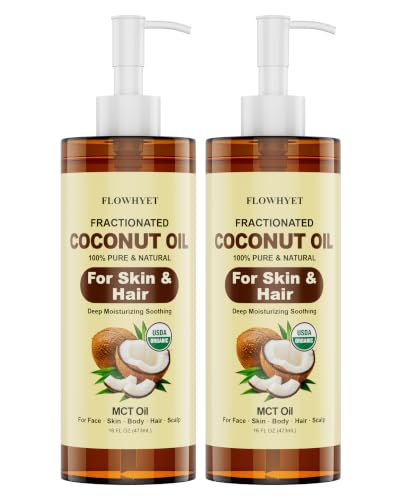
Flowhyet Organic MCT Coconut Oil
USDA organic certification ensures high-quality standards.
Absorbs quickly for non-greasy skin feel.
Versatile use for skin and hair care.
 Brianna York
USDA organic certification ensures high-quality standards.
Absorbs quickly for non-greasy skin feel.
Versatile use for skin and hair care.

Made from 100% organic coconuts.
Contains triple ingredient MCTs: C8, C10, C12.
Perfect for enhancing coffee, tea, and smoothies.
Pure and cold-pressed for quality assurance.
Versatile use for cooking and skincare.
USDA certified organic for trusted sourcing.

Enhanced absorption with zinc picolinate and coconut oil.
Supports immune and enzyme function effectively.
Non-GMO and gluten-free for dietary safety.

Made with organic, natural ingredients.
Pleasant and relaxing coconut scent.
Versatile use as lubricant and massage oil.

Certified Keto, Paleo, Kosher, and Vegan.
Non-GMO and pure virgin coconut source.
Convenient, eco-friendly 16oz glass bottle.
Pure, organic, non-GMO vegetable glycerin.
Ideal for sensitive skin and DIY projects.
Absorbs easily without leaving greasy residue.

Cold-pressed for maximum nutrient retention.
Versatile use for cooking and skincare.
Certified organic and sustainably sourced.

Large 54 fl oz size offers great value.
Versatile for cooking, baking, and skincare.
USDA certified organic for quality assurance.

Made with organic, food-grade coconut oil.
Enhances and preserves cutting board longevity.
Safe and natural for kitchen use.
For food use, start with the serving size and nutrition panel. In the supplied products, one tablespoon commonly provides about 12–14 grams of saturated fat, or roughly 58–70% of the Daily Value. That number matters more than claims about keto diets, energy, metabolism, or “brain fuel.” Human trial reviews in the supplied assessments found that coconut oil raises LDL cholesterol compared with non-tropical vegetable oils, so coconut oil should not be treated as heart-protective. MCT research supports ketone production, but broad promises about weight, cognition, immunity, or disease prevention require product-specific human evidence and should be viewed cautiously.
A meaningful organic claim should be traceable through the USDA National Organic Program’s Organic Integrity Database. Look for a current USDA-authorized certifier, a certificate covering the named product or operation, and a scope that matches the oil’s identity—for example, virgin unrefined coconut oil or refined coconut oil. A package seal or retailer description alone is weaker evidence. Several supplied products carried organic language that could not be matched to a current, product-specific certificate; one publicly posted certificate was expired.
Purity and freshness are separate questions from organic status. The strongest documentation is a recent certificate of analysis tied to the lot printed on the container, with the laboratory identified, methods and dates shown, and results for relevant pesticides, heavy metals, residual solvents where applicable, microbes, and oil deterioration. For freshness, peroxide value and, where relevant, p-anisidine value are useful markers. A general statement such as “lab tested,” “pure,” or “tested for banned substances” does not establish low contaminants or fresh oil. One supplied MCT product had a recent public lot record with composition, peroxide, metals, and microbial results, but the laboratory and accreditation were not identified.
Packaging and sourcing claims also need specifics. A glass jar, PET bottle, HDPE bottle, or squeeze tube is only part of the picture: buyers should be able to identify the material, understand what can be recycled locally, and distinguish reusable packaging from an unsupported environmental promise. Organic certification does not by itself verify farm wages, worker protections, deforestation controls, or farm-level traceability. Stronger supply-chain evidence includes a current Fairtrade, Rainforest Alliance, or comparable certificate, or independently auditable supplier and deforestation records.
Finally, match the product to its intended use. Food oils are not automatically tested or labeled as cosmetics or personal lubricants, and topical carrier oils are not automatically food-grade. Fractionated oil is useful when a liquid carrier is wanted, while virgin oil retains a more characteristic coconut identity. Across the supplied products, the recurring safety issue is saturated-fat load: people managing elevated LDL cholesterol, cardiovascular risk, or a clinician-directed low-saturated-fat diet should not use coconut oil without fitting it into that guidance. Coconut allergy is another repeated exclusion. Oil-based products should not be used with latex, polyisoprene, or polyurethane condoms; one FDA-cleared lubricant specifically disclosed that incompatibility. Topical users should also heed product-specific external-use, eye-contact, patch-test, and irritation warnings, especially with formulas containing botanical oils, beeswax, fragrance, or sweet almond oil.
The scores below reflect the supplied reviews, not a separate certification or overall verdict. Higher scores indicate stronger evidence and clearer safeguards within the products assessed; they do not make coconut oil a health food or prove that every retail lot meets the same standard.
This measures whether the nutrition panel, serving size, saturated-fat amount, and use advice give buyers realistic context. It matters because the supplied food and MCT oils commonly provide 12–14 grams of saturated fat per tablespoon. Higher-scoring products made the amount visible and avoided heart-protection framing; lower-scoring products paired substantial saturated fat with “heart health,” energy, or similar claims.
This measures product-specific screening for pesticides, heavy metals, residual solvents where relevant, microbes, and process contaminants in refined oils. It matters because organic labeling is not a complete contaminant report. Among the supplied products, scores were generally around 70; the stronger result was the MCT product with a public lot record reporting metals, pesticides, and microbial testing, although its laboratory accreditation was not shown. Generic purity claims scored lower.
This measures storage guidance, packaging, date coding, and current testing for oxidation markers such as peroxide value and, where relevant, p-anisidine value. It matters because heat, light, air, and age can degrade oils. The strongest supplied result was the product with a public lot record and peroxide result, scoring 88; products offering only storage advice without lot-linked testing generally scored near 70–78.
This measures whether food, skin, hair, massage, and intimate-use claims include appropriate warnings for allergies, eyes, external use, irritation, and condom compatibility. It matters because a food or body oil is not automatically a personal lubricant. The FDA-cleared oil lubricant scored 90 because its intended use, testing, and condom limitations were clear; products with broad topical marketing but no patch-test or latex warning scored lower.
This measures whether the label distinguishes virgin, refined, steam-refined, fractionated, and MCT oil, and clearly discloses ingredients and intended use. It matters because whole coconut oil and fractionated MCT oil have different composition and behavior. Higher scores, up to 89, came from products with a clearly stated formula or confirmed processing; lower scores reflected identity conflicts, incomplete fatty-acid disclosure, or an MCT label applied ambiguously to whole oil.
This measures whether the organic claim matches a current USDA-authorized certifier, certificate scope, and named product or operation. It carries double weight because certification is a central category discriminator. The strongest supplied products scored 90–91 when the USDA database scope included the relevant oil. Scores near 70–78 reflected claims that could not be independently matched, expired certificates, or ingredient-level organic wording rather than finished-product proof.
This measures whether claims about energy, ketones, weight, brain function, immunity, antimicrobial effects, skin benefits, and cooking performance stay within human evidence and the actual formula. Higher scores, such as 84 for a plainly described refined cooking oil, reflected restrained claims and clear identity. Lower scores, including 45–55, reflected broad heart, fat-burning, brain, or antimicrobial promises without product-specific human support.
This measures whether buyers can obtain a recent certificate of analysis tied to the purchased lot, with laboratory identity, methods, dates, and results for identity, contaminants, and freshness. It matters because in-house testing and non-GMO certification answer narrower questions. Natural Force scored 82 because a public lot record included composition, peroxide, metals, pesticides, and microbes; most others scored about 68–75 because no comparable purchaser-accessible report was found.
This measures whether a product has a responsible U.S. business, readable lot and best-by information, origin and contact details, and no unresolved relevant enforcement signal. It matters because traceable lot information lets a buyer respond to a recall. Scores ranged from 58 to 85: the higher-scoring products offered clearer lot, date, contact, or FDA-device accountability, while weaker records lacked complete labeling or accessible traceability.
This measures traceable coconut origin, farm practices, labor protections, and deforestation-risk controls supported by independent auditing or certification. It matters because “sustainable” and country-of-origin claims do not establish farm conditions. Most supplied products scored about 70, reflecting organic or origin statements without farm-level proof. Nutiva’s virgin oil scored 75 because Fair Trade Certified material identified the product, though package-specific farm and deforestation records were still limited.
This measures whether the container material, size, durability, recycled-content or recycling claim, and disposal instructions are specific and locally realistic. It matters because glass, PET, plastic, and tubes have different recovery options, and a recycling symbol is not a guarantee of local acceptance. Scores ranged roughly from 70 to 80: glass and clearly identified formats helped, while missing resin details or disposal guidance held products back.
This is a two-bottle topical oil set totaling 32 fluid ounces, packaged as two 16-fluid-ounce bottles. The marketplace listing describes it as unscented, fractionated MCT coconut oil for skin, face, body, hair, scalp, and massage use. Those are manufacturer-stated product details, not independently confirmed specifications. The defining limitation is documentation. The available listing names organic coconut oil but does not provide a full ingredient panel, fatty-acid profile, processing description, country of origin, lot-linked certificate of analysis, or accessible results for contaminants and oxidation. The USDA Organic claim could not be matched to a named certifier, current certificate, or identifiable certified operation in the public records searched. It is best understood as a cosmetic-style body oil rather than a verified food or therapeutic MCT product.
This product fits a buyer seeking a large-volume, manufacturer-described unscented liquid oil for straightforward external routines such as post-shower body oil, massage, dry hair lengths, or scalp application. The two 16-fluid-ounce bottles are more practical for a household that expects to use oil regularly than for someone testing a new skin product for the first time. It is most appropriate when the buyer can tolerate coconut-derived ingredients and does not need independently documented purity, organic certification, or food-grade status.
It is not a suitable choice for anyone intending to consume MCT oil, manage cholesterol, follow a measured nutrition plan, or use a product with confirmed food-grade specifications. Coconut oil research does not support presenting it as heart protective, and this product supplies no serving or saturated-fat information. People with a known coconut sensitivity, very acne-prone skin, eczema requiring clinician-guided care, or recent skin irritation should be cautious. It should not be used as a personal lubricant with latex condoms because oils can weaken latex.
The listing frames this as organic fractionated MCT coconut oil, but the organic status could not be independently confirmed. USDA rules require organic retail products to be certified through a USDA-authorized certifier, with the certifier identified on the package information panel. No named certifier, current certificate, or matching public organic operation was located for this product. Likewise, no independent lot testing was located for contaminants, fatty-acid identity, or oxidation markers that would show current freshness. For topical use, the manufacturer states that the oil is unscented and intended for skin, hair, scalp, and massage. The available details did not show specific external-use, eye-contact, patch-test, or latex-compatibility warnings. Public FDA searches did not identify a brand-specific recall, warning letter, or exposure notice, but this is not a substitute for lot traceability. No verified farm origin, labor audit, deforestation control, packaging resin, or recycling guidance was found.
This is a 32-fluid-ounce liquid MCT oil intended to be mixed into coffee, shakes, or other cold or low-heat foods. A tablespoon provides 130 calories, 14 g total fat, 14 g saturated fat, and 14 g MCT oil. An independently captured label identifies coconut oil as its source and advises beginning with one tablespoon daily, then using up to three tablespoons only after tolerance is established. The most concrete assurance is independent banned-substance screening. Informed Choice lists several unflavored Sports Research MCT batches tested on October 3, 2025. The label also carries USDA Organic wording, names QAI as certifier, identifies the Philippines as product origin, and says it is packaged in the United States. Publicly accessible, lot-specific results for pesticide residues, heavy metals, fatty-acid identity, peroxide value, or other freshness markers were not found.
This product suits an adult who specifically wants a neutral liquid MCT oil for measured additions to coffee or protein shakes, rather than a cooking oil. The 32-ounce size offers about 63 tablespoon servings, so it is more practical for a household or regular user who can store it away from heat and light. It also fits buyers who value the independently listed Informed Choice banned-substance program and who can tolerate MCT oil gradually, starting with a small, labeled serving.
It is not a good fit for people trying to minimize saturated fat, people with elevated LDL cholesterol or established cardiovascular risk who need individualized dietary guidance, or anyone expecting a heart-health product. One tablespoon has 14 g saturated fat. It is also unsuitable for people with coconut allergy. Avoid treating it as a high-heat frying oil because its label advises against frying below its stated smoke-point guidance. Buyers who require published lot-specific contaminant and oxidation results should choose a product that makes those records available before purchase.
The label independently captured by the NIH database states USDA Organic certification by QAI, a USDA-accredited organic certifier, and identifies coconut oil from the Philippines as the source. That supports the organic claim, although a current public certificate tying the exact 32-ounce product to a named certified operation was not located. No public, independently auditable evidence was found for farm labor conditions, farm-level traceability, or deforestation controls. For health, the label recommends starting at one tablespoon and warns that excessive use can cause digestive discomfort. It also lists coconut as an allergen and directs users to protect the bottle from heat, freezing, humidity, and light. Independent Informed Choice records confirm testing of listed batches for banned substances, but this is narrower than a public food-safety certificate. Published records for heavy metals, pesticide residues, peroxide value, and lot-specific freshness were not available. MCT research supports ketone production, but broad brain or weight expectations should remain cautious.
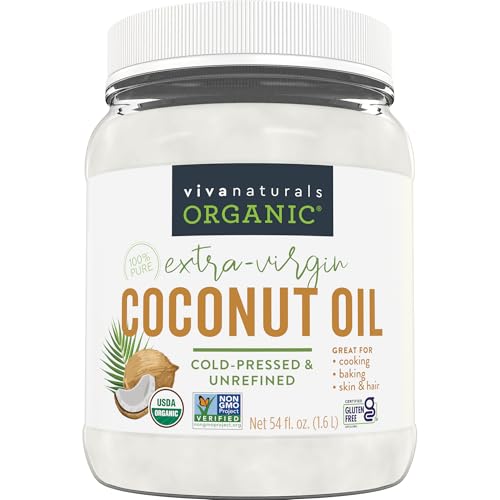
This 54 fluid ounce product is a single-ingredient, unrefined extra-virgin coconut oil sold for cooking, baking, and topical hair or skin use. The manufacturer states that it is cold-pressed in the Philippines, packaged in the United States, and should be kept tightly closed in a cool, dry place away from heat and light. Its nutrition context is important. A tablespoon provides 14 grams of total fat, including 13 grams of saturated fat, or 65% of the Daily Value. Human trial reviews associate coconut oil, compared with non-tropical vegetable oils, with higher LDL cholesterol. Its USDA organic claim is independently supported by a current USDA Organic Integrity Database certificate that includes virgin unrefined coconut oil. Publicly accessible, lot-specific contaminant, identity, and oxidation test results were not found.
This product suits households that regularly cook or bake with coconut oil and can use a large container before its best-by date. It is also relevant for buyers seeking a USDA-certified organic, single-ingredient, unrefined coconut oil with a coconut aroma and a manufacturer-stated 350 F cooking limit. The large format is most practical for people who want one pantry oil for occasional hair or skin conditioning as well as food preparation, and who can store it closed, dry, and away from heat and light.
It is not a good fit for people who need to reduce saturated fat because of elevated LDL cholesterol, cardiovascular risk, or a clinician-directed heart-health eating plan. A tablespoon supplies 13 grams of saturated fat. Anyone allergic to coconut should avoid it. It is also unsuitable as a personal lubricant with latex condoms because oil can damage latex, and the product is not labeled or cleared as a personal lubricant. Buyers who require public lot-specific contaminant and rancidity testing should choose a product that supplies those records.
The organic claim held up to independent checking. A current USDA Organic Integrity Database certificate from a USDA-authorized certifier lists virgin unrefined coconut oil within the certified operation’s handling scope. The manufacturer also identifies the Philippines as the country of origin and states that the oil is packaged in the United States. However, organic certification does not by itself verify farm wages, worker protections, or deforestation performance, and public evidence for those supply-chain outcomes was not found. For health, this is a food oil rather than an MCT oil. Its nutrition panel lists 13 grams of saturated fat per tablespoon. Controlled-trial reviews find that coconut oil raises LDL cholesterol compared with non-tropical vegetable oils, so it should not be framed as heart-protective. The manufacturer states that the jar is PET and BPA-free, but it does not provide product-specific recycling instructions or public, lot-linked contaminant and oxidation results.
This is an adult zinc supplement in a softgel format. The independently listed product specification confirms 30 mg of elemental zinc as zinc picolinate per softgel, with a direction to take one daily with food. The 180-softgel bottle is intended to provide about six months of use when followed as directed. The softgel uses organic coconut oil as its carrier, and it contains coconut, which matters for people with tree-nut allergy concerns. Its non-GMO claim has independent support through SGS Nutrasource's IGEN registry, which reports no detectable genetically engineered proteins or genes in its specified testing panel. The product is positioned for immune support, but it is a high supplemental dose relative to normal adult zinc requirements. It is not a topical oil, food oil, lubricant, or coconut-oil product for skin or intimate use.
This product fits an adult who has been advised to increase zinc intake, or who has a dietary pattern that may provide less zinc, such as some vegetarian or vegan diets. It is also practical for someone who wants a simple, once-daily, single-mineral softgel and prefers a long 180-day bottle. The 30 mg dose is best suited to a deliberate supplementation plan that accounts for zinc from multivitamins, fortified foods, and other supplements, rather than casual stacking.
It is not for children or teenagers, because 30 mg exceeds the upper limits for younger age groups. People using quinolone or tetracycline antibiotics, penicillamine, or thiazide diuretics should seek pharmacist or clinician guidance because zinc can interact with these medicines. It also does not suit people with coconut or tree-nut allergy concerns. Those taking a multivitamin or other zinc product should total their intake first, since this product alone supplies 30 mg.
The clearest independently confirmed quality point is IGEN certification through SGS Nutrasource. That registry identifies this exact 30 mg zinc picolinate softgel and reports that it passed a defined non-GMO testing panel. The registry also confirms the use of organic coconut oil, but it does not provide a USDA organic certificate, coconut origin, pesticide results, heavy-metal results, or a current lot-specific certificate of analysis. The 30 mg zinc dose is well above the adult recommended intake of 8 to 11 mg and below the 40 mg adult upper limit. It should be counted with zinc from food and other supplements. Long-term excess zinc can lower copper status, and zinc can interfere with certain antibiotics and penicillamine. No product-specific FDA recall, safety alert, or warning letter was identified in the regulatory searches performed. Packaging material, recycling instructions, farm-worker protections, and deforestation controls were not publicly substantiated.
This is a 3.3 fl oz, or 100 mL, flavored oil-based personal lubricant in a squeeze bottle. It is intended for penile or vaginal application to add glide and supplement natural lubrication. The manufacturer also markets it for massage, oral contact, and use with toys. Its current formula lists coconut oil, caprylic/capric triglyceride, beeswax, water, stevia, jojoba esters, plant waxes, polyglycerin-3, and natural flavor. The most important independently confirmed fact is that the product received FDA 510(k) clearance in December 2023 as an over-the-counter personal lubricant. FDA's public summary reports biocompatibility testing that found it non-cytotoxic, non-irritating, non-sensitizing, and not systemically toxic under the submitted test program. It is oil-based and is not compatible with natural-rubber latex, polyisoprene, or polyurethane condoms.
This product suits adults seeking an oil-based lubricant for condom-free penile or vaginal intimacy, external touch, massage, or oral play, particularly if they prefer a vanilla-flavored formula and a small 100 mL bottle. It is also a reasonable fit for users who value that the exact lubricant formula and its biocompatibility testing were reviewed in the FDA 510(k) process. Buyers should be comfortable with an oil texture that can firm up in cold rooms and needs warming before use.
It is not appropriate for anyone relying on natural-rubber latex, polyisoprene, or polyurethane condoms for pregnancy or STI protection, because the FDA filing specifically identifies incompatibility. People with a history of irritation from fragranced products, coconut-derived ingredients, beeswax, stevia, or botanical extracts should avoid unsupervised use or patch-test carefully. It is also not the best fit for buyers who require publicly available lot-by-lot contaminant and rancidity testing, certified finished-product organic status, or detailed packaging recycling guidance.
The product's strongest health evidence is device-specific rather than marketing-based. FDA cleared it as an over-the-counter personal lubricant after reviewing a submission that reported acceptable cytotoxicity, sensitization, vaginal-irritation, acute-toxicity, antimicrobial-effectiveness, and microbial testing. The cleared indication is lubrication during intimate activity, not treatment of vaginal dryness, infection, hormonal symptoms, or any medical condition. Oil-based use also has a firm safety boundary, it is incompatible with natural-rubber latex, polyisoprene, and polyurethane condoms. The manufacturer identifies coconut oil, caprylic/capric triglyceride, and beeswax as certified organic ingredients. That ingredient-level statement could not be independently matched to a current USDA-authorized certificate covering this finished product. No public lot-specific certificates were located for pesticides, metals, oxidation measures, or supply-chain practices. The bottle material, recycled content, and local disposal route are also not publicly specified, so the product's environmental footprint and end-of-life handling remain unclear.
This is a 16-fluid-ounce, unflavored food oil intended for coffee, smoothies, shakes, and cooking. A tablespoon is the stated serving, with 32 servings per bottle. It is a fractionated coconut MCT oil, not ordinary virgin coconut oil. The manufacturer describes one ingredient, organic coconut MCT oil, and advises 1 to 3 tablespoons daily with a lower-carbohydrate diet. A publicly posted, recent 16-ounce lot record dated June 2026 measured C8, C10, and C12 triglycerides, plus low peroxide value, heavy-metal results below stated limits, and passing microbial results. The record gives methods and a lot number, but does not identify the laboratory or its accreditation. The nutrition panel lists 14 grams of saturated fat per tablespoon, a meaningful serving-context limitation for people restricting saturated fat.
This product suits an adult who specifically wants an unflavored, measured MCT oil for blending into coffee or smoothies, and who values a public lot record over a generic purity statement. The 16-ounce bottle supplies 32 tablespoon servings, so it fits a regular household user who can use it before its dated shelf life. It is most appropriate for someone already accounting for added fat and saturated fat in a clinician-informed or personally managed eating pattern.
It is not a good fit for people advised to limit saturated fat or lower LDL cholesterol, because one tablespoon lists 14 grams of saturated fat. It is also unsuitable as a sunscreen, personal lubricant, eye-area product, or a substitute for a product formulated and labeled for skin care. People who develop diarrhea, stomach upset, or other intolerance with MCT oil should not escalate intake. Children, pregnancy, breastfeeding, and medically prescribed ketogenic diets warrant individualized clinician advice.
The strongest quality evidence is the public lot record. For the recent 16-ounce lot, it reports peroxide value below 0.20 mEq/kg, metals below stated limits, microbial testing, and measured C8, C10, and C12 content. Storage instructions specify keeping it below 86 F and away from light and heat. However, the laboratory is not named, accreditation is not shown, and pesticide reporting lacks a disclosed analyte list and numerical results. The manufacturer states that the oil starts with USDA Organic coconuts and is steam-fractionated from virgin coconut oil. Its product page also claims sustainably and humanely harvested coconuts from Singapore, but no farm-level audit, labor verification, or deforestation monitoring was located. Glass is durable and broadly recyclable where local programs accept it, though the brand does not provide component-specific disposal guidance. No matching FDA recall or warning-letter signal was found in the reviewed U.S. databases.
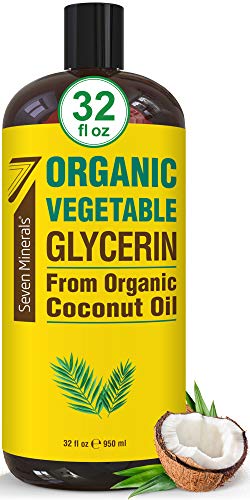
This product is a bottle of vegetable glycerin, not coconut oil. Seven Minerals describes it as a single-ingredient, 32-fluid-ounce liquid derived from organic coconut oil, intended for external DIY skin, hair, nail, and essential-oil-blend use. Glycerin is a water-soluble humectant, so it is generally used diluted or formulated with water-containing products rather than used like a conventional body oil. The manufacturer provides external-use, eye-contact, and irritation warnings. Human trials of glycerin-containing moisturizers support improved skin hydration and barrier measures, but those studies used finished creams or fluids, not this exact undiluted product. The manufacturer claims organic, palm-free, hexane-free, pharmaceutical-grade, and non-GMO status, but no matching current certifier, product certificate, or public lot-specific certificate of analysis was located. Its own page also contains inconsistent size-selection text, despite repeatedly describing this product as 32 fluid ounces.
This product suits an adult DIY skin-care user who wants a large, fragrance-free glycerin ingredient for making diluted humectant blends, adding small amounts to a compatible water-based formula, or using in hair and nail routines. It is most practical for households that will use a large bottle before contamination or storage issues become relevant. It also suits buyers who specifically want the manufacturer-stated palm-free, coconut-derived source, while recognizing that those sourcing and organic claims are not independently documented in public records located for this review.
It is not suited to someone seeking a ready-to-use facial moisturizer, treatment for eczema or another skin condition, food ingredient, or medically tested personal lubricant. People with active dermatitis, broken skin, recurrent irritation, or a history of cosmetic reactions should choose a finished product with appropriate testing or seek clinical advice. Avoid eye-area use and discontinue after redness, rash, or irritation, as the manufacturer instructs. Buyers who require a verified organic certificate, published contaminant limits, or a current lot-specific independent test report should seek documentation before relying on those quality claims.
Glycerin is a well-supported topical humectant when incorporated into moisturizers. Randomized human studies of glycerin-containing creams and fluids report better skin hydration and barrier-related measurements. That supports a modest moisturizing role, not a promise to heal skin problems or treat disease. Seven Minerals states that this product is for external use only and advises avoiding eye contact, keeping it away from children, and stopping use after irritation. The manufacturer says the glycerin is made from organic coconut oil rather than palm oil, and presents that choice as environmentally preferable. However, no publicly matchable current organic certificate, named certifier, farm origin, supplier audit, deforestation-control record, or lot-specific laboratory report was located. The bottle is promoted as reducing plastic through its larger size, but its resin type, recycled content, and local disposal instructions are not clearly documented. No product-specific FDA recall or warning letter was located in the searches performed.
This is a 32 fluid ounce, roughly 1 liter, jar of coconut oil intended for cooking and for skin or hair application. The visible U.S. label lists a 1 tablespoon, 14 gram serving with 120 calories, 13 grams of fat, and 12 grams of saturated fat. The jar is glass, and the label provides designated best-before, batch, and lot-number fields. NaturaleBio states that it is single-ingredient, virgin, unrefined coconut oil from Sri Lanka, made by drying coconut pulp and cold pressing it. The manufacturer also provides storage advice to keep it cool, dry, and away from direct light and heat. The product's most important limitation is its marketing. Its listing imagery says it supports heart health, despite its high saturated-fat content and clinical evidence that coconut oil raises LDL cholesterol versus non-tropical vegetable oils.
This product fits a household that wants a large, multi-use jar of coconut oil for occasional baking, sautéing, body moisturization, or hair conditioning, and that prefers a glass container. It is most suitable for buyers who will use the nutrition label to keep portions modest, rather than treating coconut oil as a heart-health food. It may also suit someone comfortable with manufacturer-stated Sri Lankan origin and unrefined processing who does not require public batch-by-batch laboratory results.
It is not a good fit for people managing elevated LDL cholesterol, cardiovascular disease, or a dietary pattern that limits saturated fat, because one tablespoon supplies 12 grams of saturated fat and the heart-health marketing conflicts with clinical evidence. It is also unsuitable for anyone seeking a current, independently verifiable organic certificate, contaminant report, or oxidation test for the purchased lot. Do not treat this food oil as a condom-compatible intimate lubricant, since oil can weaken latex. Use extra care with babies, broken skin, eye-area use, and coconut allergy.
The label gives an unusually clear serving context for a cooking oil, including 12 grams of saturated fat per tablespoon. That matters because the product imagery also claims heart support, while clinical trial reviews find coconut oil increases LDL cholesterol compared with non-tropical vegetable oils. The manufacturer describes the oil as 100% coconut, virgin, unrefined, cold pressed, and sourced from Sri Lanka. Those are manufacturer statements, not public laboratory confirmation for this jar. The product is sold in a glass jar with a metal lid and a recycling symbol, which can be preferable to a single-use plastic oil container, although material specifications and local disposal instructions are not provided. NaturaleBio publishes an organic operator certificate from Bioagricert, but the posted certificate expired on March 16, 2026, so it does not independently establish current U.S. organic status. No product-specific FDA recall, warning letter, or public lot certificate of analysis was located in the checks performed.
This is a 54-fluid-ounce bottle of single-ingredient organic virgin coconut oil. The label identifies it as cold-pressed and unrefined, with organic virgin coconut oil as the sole ingredient. It is intended for cooking and baking up to 350°F, plus hair and body moisturizing use. The manufacturer identifies the coconut origin as the Philippines and says the oil is packaged in the United States. Its label provides a conventional 1-tablespoon serving with 14 grams of total fat, including 13 grams of saturated fat, or 65% Daily Value. USDA Organic and Non-GMO Project Verified marks appear on the label, although a current public product-specific organic certificate and lot-linked test results were not located.
This product suits households that regularly cook or bake with coconut flavor and want a large, single-ingredient virgin coconut oil bottle. The 54-fluid-ounce size is practical for frequent use rather than occasional recipes. It also fits people who specifically want an oil that becomes solid in a cool room and can be used as a simple hair mask or body oil. Portion-aware users should treat it as a saturated-fat-rich cooking fat, not as a heart-health product.
It is not a strong fit for people managing elevated LDL cholesterol, established cardiovascular disease, or a diet that limits saturated fat, because one tablespoon provides 65% of the Daily Value for saturated fat. It is also unsuitable for anyone with a coconut allergy. Buyers wanting a personal-care product with explicit eye, patch-test, intimate-use, or latex-condom safety directions should choose a product labeled for that purpose. Buyers requiring lot-specific contaminant and rancidity testing should seek transparent batch documentation.
The product's strongest health documentation is its simple identity and serving information. The label lists only organic virgin coconut oil and gives 13 grams of saturated fat per tablespoon. Coconut oil should not be treated as protective for the heart. Clinical-trial meta-analyses have found higher LDL cholesterol with coconut oil than with nontropical vegetable oils. The food-grade format supports cooking and ordinary external moisturizing, but the brand does not provide the fuller safety boundaries expected for intimate or dedicated cosmetic use. USDA Organic and Non-GMO Project Verified marks are displayed on the label. The brand states that coconuts are sourced from the Philippines and that packaging occurs in the United States. It also states that the container is BPA-free. However, no public lot-specific test system, packaging resin identification, recycling guidance, or independently audited farm, labor, and deforestation documentation was located. No relevant FDA recall, warning-letter, or import-alert signal was found in the searches performed.
This is a 12-ounce liquid conditioner for unfinished or regularly maintained wooden cutting boards, butcher blocks, bowls, utensils, and bamboo items. It is applied across all sides of dry wood, left to penetrate for one to two hours, then wiped free of excess. Manufacturer-repeated retail materials describe the formula as refined and fractionated coconut oil, with no mineral oil, additives, or preservatives. That processing description is reasonably consistent across sellers, but no public compositional report confirms it for a purchased lot. The product is marketed with organic wording in some listings, yet a current USDA-authorized certificate or certified-product listing matching this product was not located. Public lot-specific testing for contaminants, oxidation, or identity was also not available.
This product suits a household maintaining one or more unfinished wooden cutting boards, butcher blocks, bowls, or utensils and seeking a plant-based, mineral-oil-free conditioner. The 12-ounce bottle and simple coat, wait, and wipe routine fit periodic board maintenance rather than high-volume commercial finishing. It is most appropriate for buyers who understand that the product is a wood treatment, not a cooking oil, nutritional supplement, antimicrobial treatment, or independently certified organic food ingredient.
It is not for buyers who need an independently verified organic product, a publicly accessible lot certificate, or documented contaminant limits before treating food-contact surfaces. People with coconut sensitivity who want clear allergen guidance should select a product with explicit safety labeling. It is also not intended as a skin, intimate, or personal lubricant. Oil-based products can weaken latex condoms, and this wood conditioner does not provide the labeling or regulatory status expected of a personal lubricant.
The central safety-positive feature is a narrowly stated wood-care use with directions to wipe excess product from the treated surface. Retail materials consistently identify refined and fractionated coconut oil and say there are no added preservatives or mineral oil, but these are manufacturer-stated specifications rather than independently verified lot results. The product should not be treated as a heart-health food. Human trial reviews find coconut-oil intake can raise LDL cholesterol compared with non-tropical vegetable oils, although this product is not sold for eating. The available materials do not provide public lot testing for contaminants or rancidity, and the organic wording could not be matched to a current USDA-authorized certification for this product. No verifiable coconut origin, farm or worker audit, deforestation controls, bottle material, or local disposal guidance was found. Regulatory searches did not identify a product-specific FDA recall or warning, but readable lot coding and public test documentation remain important for food-contact products.