Best Overall

Nuwave Smart Heated Coffee Mug 16oz
Customizable brew modes enhance coffee experience.
Long-lasting 5-hour battery for convenience.
LED display simplifies temperature control.
 Lauren Wilson
Customizable brew modes enhance coffee experience.
Long-lasting 5-hour battery for convenience.
LED display simplifies temperature control.

Long-lasting 5-hour cordless runtime.
Convenient LED touch controls.
Includes stainless steel filter.
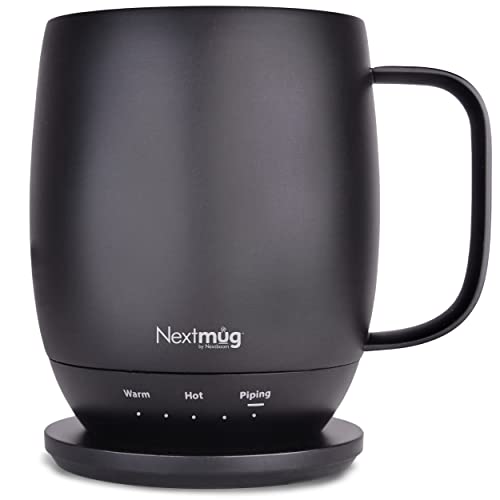
Maintains perfect coffee temperature all day.
Sleek, modern design fits any setting.
Easy to use with intuitive controls.
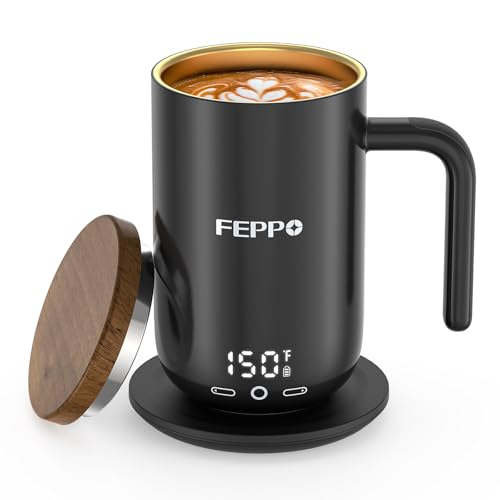
Durable titanium coating ensures long-lasting performance.
Consistent heat keeps your coffee warm for hours.
Sleek design is both stylish and functional.
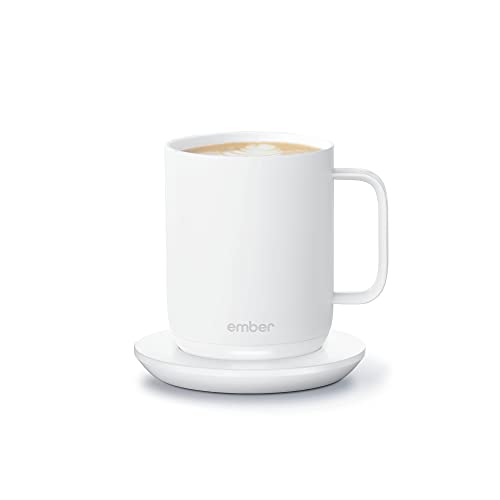
Maintains beverage temperature consistently and effectively.
User-friendly app for precise temperature control.
Sleek design with improved battery life.

Precise temperature control for perfect coffee enjoyment.
Long-lasting 8-hour heat retention feature.
Fast charging for convenient, on-the-go use.

Completely leak-proof for worry-free travel.
Double-walled design keeps drinks hot longer.
Comfortable handle for easy carrying.

Adjustable temperature for personalized coffee warmth.
Long-lasting battery for extended use.
Sleek design with easy-to-clean surface.

Convenient self-heating keeps coffee warm longer.
Automatic stirring ensures a perfectly mixed drink.
Elegant rose design adds a stylish touch.
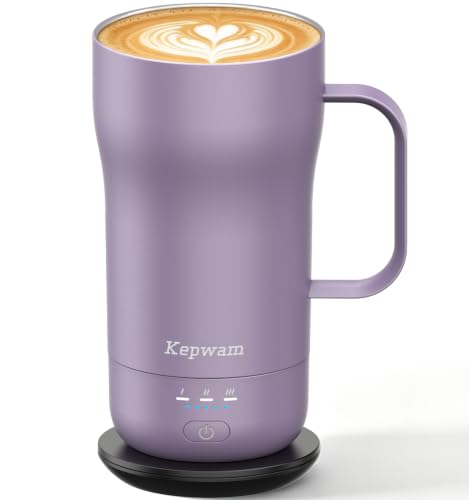
Maintains perfect coffee temperature for hours.
Sleek design with easy-to-use controls.
Durable and spill-proof for daily use.
Start with the complete electrical system: mug, coaster or warmer, power supply, and included cord. The strongest evidence is a current, model-matched listing from a U.S. Occupational Safety and Health Administration–recognized testing laboratory. A logo or seller statement is not enough. Buyers should be able to match the exact product in directories such as UL Product iQ, Intertek’s ETL directory, CSA Group’s listing directory, or TÜV Rheinland’s Certipedia. None of the supplied products had a publicly matchable complete-system NRTL listing.
Rechargeable models need a separate safety check. Look for model-specific third-party evidence addressing overheating, short circuit, overcharge, and unsafe charging, using standards such as UL 2054 or UL 62133-2, rather than treating a general FCC, CE, RoHS, or Bluetooth record as battery-safety proof. The supplied reviews repeatedly found no such evidence. A corded warmer avoids rechargeable-battery charging and battery-disposal concerns, but it still needs electrical and overheating safeguards.
Temperature claims also require careful interpretation. A stated range such as 113–149°F or 120–150°F may describe selectable targets, not measured accuracy. “One-degree control,” “five-hour runtime,” “eight-hour heat retention,” and “all-day warming” can depend on starting temperature, room temperature, lid use, drink volume, whether the mug is on its coaster, and whether the product is heating or merely holding warmth. A credible performance report should identify the exact model, test conditions, measurement method, and laboratory accreditation. Manufacturer testing described in a manual is useful context, but it is not the same as a publicly available independent report.
Look for practical safeguards: empty-mug or dry-boil detection, automatic shutoff when inactive, protection against charging with wet contacts, and clear limits on unattended use. Also check whether the product has a stable base, a secure or spill-resistant lid, a cool enough exterior and handle, and resistance to leaking or cracking with hot liquid. A spill-resistant lid is not necessarily leakproof, and an automatic shutoff claim should not be treated as permission to leave a hot appliance unattended.
Food-contact disclosure matters because the mug repeatedly holds hot drinks. Stainless steel, ceramic, titanium, or a ceramic-reinforced coating may be identified, but buyers should also look for the grade and composition of the interior, lid, seals, coatings, and any stir components. The strongest evidence is exact-product migration testing under hot-use conditions; none of the supplied products had that report. Finally, check cleaning instructions, warranty and traceability details, replacement parts, battery disposal guidance, and whether the mug is hand-wash only, non-microwave, non-dishwasher, or unsafe to submerge.
Recurring safety caveats in the supplied reviews are substantial: every rechargeable model lacked a publicly verified complete-system NRTL listing, and independent battery, temperature, runtime, and food-contact testing was generally unavailable. Many products must be hand washed and kept away from microwaves, dishwashers, immersion, wet charging contacts, damaged chargers, and children. Drinks can reach roughly 149–205°F, creating burn and steam hazards. Built-in batteries complicate repair and disposal; they should not go in household trash or curbside recycling. One product had conflicting capacity claims, while another had conflicting temperature and capacity information, so headline specifications should be checked against the manual.
The topics below focus on the hazards and evidence that matter when a drink container contains heating elements, electronics, a battery, or a powered base. Scores are relative to the supplied products: higher scores indicate stronger documented performance or accountability, while a lower score usually reflects missing model-specific evidence or conflicting claims.
This measures protection against lithium-battery overheating, short circuit, overcharge, and unsafe charging. It matters because rechargeable mugs place a battery, charger, and hot liquid in one product. Supplied scores ranged from 68 to 86: the corded warmer scored highest because it has no rechargeable battery, while most battery mugs clustered around 70 and lacked model-specific third-party battery evidence.
This measures whether the drink reaches its stated setting and whether heating limits itself when empty, inactive, low on charge, or faulted. That matters because supplied products can reach about 149–205°F. Scores ranged from 58 to 79. Higher-scoring products had clearer shutoff documentation or performance evidence; lower scores reflected manufacturer-only claims, inconsistent specifications, or no independent accuracy testing.
This measures stable construction, safer exterior and handle temperatures, lid security, and resistance to cracking or leaking with hot liquid. It matters because a powered mug may be moved while hot and several products lack a lid or only describe it as spill resistant. Scores ranged from 68 to 76; higher scores reflected detailed warnings and supplied lids, not independently verified burn or spill testing.
This measures whether the interior, coating, seals, lid, and other beverage-contact parts are suitable for repeated hot use and supported by migration testing. It matters because heat can increase contact with materials and coatings. Scores ranged from 68 to 72, with higher scores generally tied to clearer stainless-steel or coating disclosures. No supplied product had an exact-model migration report.
This measures whether instructions address predictable misuse such as microwaving, dishwashing, submersion, wet charging, damaged equipment, and unattended charging. It matters because many supplied mugs combine hot liquid with electronics and must be hand washed. Scores ranged from 68 to 84. Higher scores reflected detailed manuals covering burns, charging, battery handling, and cleaning; lower scores reflected incomplete or inaccessible instructions.
This measures whether products avoid unsupported claims about digestion, hydration, formula, comfort, sleep, pain, or other health effects. It matters because maintaining a temperature does not establish a medical benefit. Scores ranged from 50 to 90. The highest-scoring product made no identified wellness claims; lower scores reflected formula or digestion marketing without product-specific human evidence.
This measures whether the complete mug, warmer or coaster, power supply, and cord appear in a current U.S. OSHA-recognized laboratory listing for the exact model. It is the key distinction between a traceable certification and a logo or seller claim. Scores were 68–70 for nearly all supplied products, because no publicly matchable complete-system NRTL listing was located.
This measures whether temperature range, capacity, warm-up behavior, runtime, and coaster-use claims are specific, qualified, and repeatable under disclosed conditions. It matters because runtime changes with lid use, starting temperature, room temperature, and operating mode. Scores ranged from 52 to 79. Higher scores had condition-specific testing or clearer qualifications; lower scores had conflicting capacities or unsupported headline claims.
This measures current model-specific reports from qualified independent laboratories for important safety and performance claims. It matters because self-issued compliance language does not verify heating accuracy, battery protection, or food-contact safety. Scores ranged from 68 to 78. The strongest supplied evidence was a manufacturer-published account of SGS-CSTC runtime testing, although the underlying report was not publicly available.
This measures whether the responsible seller and manufacturer are identifiable, the model can be traced, and recalls or incidents are handled transparently. It matters for products containing batteries, chargers, and heating elements. Scores ranged from 70 to 77. Higher scores reflected named manufacturers, model or component details, warranties, registration, and service contacts; lower scores had thinner support and traceability information.
This measures realistic service life, replacement parts, repair support, packaging, recycling, and safe disposal of batteries and electronics. It matters because rechargeable mugs create more end-of-life complexity than ordinary drinkware. Scores ranged from 68 to 75. Higher-scoring products named parts, offered replacement components, or documented warranty support; lower-scoring products had enclosed batteries and no clear repair or U.S. recycling route.
This is a rechargeable, double-wall stainless-steel travel mug with a 16-ounce stated capacity, LED touch display, charging base, lid, and reusable filter for loose tea or coffee grounds. It is intended to maintain a drink temperature away from the base and to run timed coffee and tea brewing programs on the base. A retailer listing independently corroborates the 18/10 stainless-steel mug and filter construction. The manufacturer’s manual identifies a 50-watt, 20-volt DC model with hot and warm settings adjustable from 70°F to 150°F. It also specifies coffee, green-tea, and black-tea brewing presets at 200°F, 175°F, and 205°F. Empty-liquid detection, automatic heating shutdown, five-hour runtime, and exterior insulation are manufacturer-stated features. No public, exact-model safety listing or independent laboratory report verifying electrical safety, battery protection, temperature accuracy, or runtime was located.
This product fits an adult who wants one large, rechargeable mug for a desk, commute, or travel use and is comfortable following detailed appliance instructions. Its strongest practical fit is someone who wants to hold a drink near a chosen 70°F to 150°F temperature, or brew loose tea and coffee with the included filter and base presets. It also suits a user able to hand-wash the electronic mug body, inspect the lid seal, use the supplied charging equipment, and allow very hot brewed drinks to cool before drinking.
It is not appropriate for children, unsupervised users, or households where a hot, powered beverage vessel may be handled casually. The manual itself calls for supervision around children and warns of hot contents, steam, spills, and residual heat. It is also a poor fit for anyone needing independently verified electrical certification, battery testing, temperature accuracy, or food-contact migration data. Avoid it if you need dishwasher-safe electronics, microwave use, easy battery replacement, or a fully documented recycling pathway for the integrated battery.
The useful material disclosure is limited but meaningful. A retailer listing identifies the mug and reusable brewing filter as 18/10 stainless steel, while the manufacturer materials describe a plastic lid. Stainless steel avoids a ceramic glaze exposure question, but no exact-product migration testing was found for all beverage-contact surfaces, including the lid and seals. No product-specific Proposition 65 warning, recall, or CPSC action was located in the searches performed. The manual appropriately warns that the mug contains a lithium-ion battery, should not be disassembled or exposed to fire, and should be recycled under EPA and local guidance. It also directs hand washing, prohibits submersion and microwave use, and calls for the supplied cord and plug. NuWave offers a one-year limited warranty with repair service, but public information does not establish that the battery, charger, lid seal, or other wear parts are separately available.
This is a rechargeable, stainless-steel temperature-control mug with a charging base, touch controls, a lid, and a reusable steel filter for brewing coffee or loose-leaf tea directly in the cup. The manufacturer identifies it as a 14-ounce mug and its manual sets 14 ounces as the maximum water amount for brewing. That conflicts with the 16-ounce capacity in the catalog record. Manufacturer documentation states that drinking temperatures can be adjusted in 1-degree steps, with a 70°F to 150°F range for warming and up to 205°F for base-supported brewing. It also states that empty detection stops heating and shuts the mug off after about two minutes without liquid. No model-specific NRTL listing, battery-certification record, accredited laboratory temperature report, or independent migration test was located in the reviewed public sources.
It suits an adult who slowly drinks coffee or tea at a desk, wants a cordless heated mug between refills, and is willing to follow detailed handling and cleaning steps. The 14-ounce maximum brewing capacity is best for one personal serving rather than shared use. It also fits someone who uses loose-leaf tea or grounds and values the included reusable filter. The user should be comfortable hand-washing the mug body, keeping the charging contacts dry, and using the supplied charging equipment.
It is not suited to homes where children, people with reduced heat awareness, or anyone unable to reliably follow hot-liquid precautions may use it. Brewing modes reach 200°F to 205°F, and the manual warns that spills, steam, and drinking too soon can cause serious burns. It is also a poor fit for dishwasher-only cleanup routines, users needing a removable battery or established repair-part availability, and anyone who requires publicly verifiable third-party electrical and battery certifications before using a rechargeable heating appliance.
The beverage-contact surfaces are identified by Nuwave as an 18/10 stainless-steel interior, stainless-steel filter, and BPA-free Tritan lid. Nuwave also states that the product is PFAS-free. Those are useful material disclosures, but no public exact-product food-contact migration report was found, so the claims should not be treated as independent chemical-safety certification. The manual contains prominent burn, steam, spill, charging, damaged-lid, and lithium-ion battery warnings. It tells owners to follow EPA and local battery-recycling guidance, which is important because lithium-ion devices should not enter household trash or curbside recycling. Nuwave provides model and serial-number warranty traceability and one year of coverage. No recall or product-specific public incident record was identified in the CPSC sources checked. Repair support is limited by the absence of a stated user-replaceable battery or confirmed replacement-part availability.
This is a 14-ounce cordless, self-heating everyday mug with a stainless-steel body, ceramic matte exterior, docking coaster, power adapter, and spill-resistant lid. It is intended for coffee, tea, and other consumable liquids. A button selects manufacturer-stated 130 F, 140 F, or 150 F settings, while LEDs show heating progress and battery level. The manufacturer documents a lithium-ion battery enclosed in the mug, charging on its supplied coaster, plus automatic shutoff after an empty mug is detected or after two hours of inactivity while docked. Its manual also reports temperature and runtime testing by SGS-CSTC, but the underlying laboratory report, safety-certification file, and model-specific food-contact migration report were not publicly provided for independent review.
This product suits a desk, home-office, or seated-at-home user who wants a 14-ounce serving held at one of three stated drinking temperatures and can keep the coaster on a dry, stable surface. It is most appropriate for someone willing to hand wash the mug, follow the supplied charging instructions, and use the lid when carrying hot liquid. The documented empty-mug shutoff and detailed care guide are particularly relevant for routine, stationary use rather than hurried travel.
It is not suited to households that need dishwasher-safe drinkware, microwave use, or a fully sealed travel mug. It also is not ideal where young children can access hot drinks or charging equipment without close supervision, because the manufacturer specifically calls for supervision near children and cautions against touching the hot inner surface. Buyers requiring independently verifiable U.S. electrical listing, disclosed battery certification, or published food-contact migration testing should select a product with those exact records available.
The manufacturer identifies a stainless-steel mug body with a ceramic matte finish, but does not publish an exact-model test report covering lead, cadmium, other metals, coatings, lid materials, or seal migration into hot drinks. No product-specific Proposition 65 warning, CPSC recall, or public CPSC incident record was located in the reviewed sources. That is not equivalent to chemical or electrical certification. The manual contains practical safety guidance for a lithium-ion product, including avoiding water immersion, using the supplied charger only, unplugging before cleaning, and keeping the mug and coaster dry. It also directs users to follow EPA and local battery-disposal guidance. The battery is enclosed rather than user-replaceable, though extra lids and docking coasters are sold and the company states that shipping packaging is recyclable. A one-year warranty supports repair or replacement for qualifying defects.
This product is a rechargeable heated drinking mug with a charging coaster, lid, adapter, temperature display, and built-in 2600 mAh battery. It is intended to maintain coffee, tea, or similar drinks at desk or home use. The instructions specify settings from 120°F to 150°F, automatic shutoff after two hours of inactivity, and liquid detection intended to stop dry heating. Independent hands-on coverage observed the display heating toward a selected setting and reported about 4.5 hours of use with the lid. Material disclosure is less clear. The brand page calls the interior ceramic-lined, while the manual calls it stainless steel with a titanium coating. An independent review described a titanium-coated ceramic lining, but no exact-product food-contact migration report was located.
This product suits an adult desk worker, reader, teacher, or home-office user who slowly drinks one large serving and can keep the charging coaster on a stable, dry surface. Its useful case is maintaining an already drinkable coffee or tea rather than rapidly boiling a cold beverage. It also fits someone willing to hand wash it carefully, dry the bottom contacts before charging, and use the lid primarily for heat retention instead of carrying a sealed travel drink.
It is not suitable for people who need a genuinely leak-proof commuter mug, frequent car use, or a product that can be tossed into a dishwasher. Households with young children, pets, or people likely to knock over hot drinks should treat the splash-resistant lid and 150°F heating limit cautiously. It is also a poor fit for buyers who require verified U.S. electrical certification, documented battery safety testing, unambiguous food-contact material records, or user-replaceable batteries and service parts.
The safety documentation contains practical instructions to avoid submersion, damaged equipment, microwave use, and dry charging contacts. The maker also states that the product shuts off after inactivity and when no liquid is detected. Independent hands-on coverage supports basic heating and exterior comfort observations, but it is not an accredited laboratory safety or calibration report. Searches of major U.S. and international certification directories did not identify an exact-product electrical listing. Food-contact transparency is the main health documentation weakness. The maker's product page says ceramic-lined, while the manual says stainless steel with titanium coating, and no model-specific migration testing was found. No FEPPO recall was identified in the searched CPSC public recall material. The built-in lithium battery should not go in household trash or curbside recycling. EPA guidance directs consumers to a suitable battery recycler, but the brand did not provide product-specific end-of-life instructions or replacement-battery support.
This is a cord-free, app-controlled 10-ounce heated mug for coffee, tea, and other hot drinks. It has a built-in battery, a charging coaster, and a stated 120°F to 145°F temperature range. The manufacturer specifies 295 mL capacity and a stainless-steel body with a ceramic-reinforced interior coating. It works at a default 135°F without the app, while changing the target temperature requires the app. For this 10-ounce version, Ember states up to 90 minutes of off-coaster runtime at 135°F, or all-day operation on its coaster. That runtime is qualified by beverage starting temperature, room conditions, target temperature, and lid use. Independent kitchen testing of the Mug 2 family found strong temperature holding performance, but no public ISO-accredited report for this exact 10-ounce unit was located. The supplied safety booklet directs users not to microwave it, not to run it empty, and to use only its supplied charging equipment.
This product suits an adult home or desk user who makes a small hot drink, starts with an already hot beverage, and drinks it slowly over roughly an hour. It is especially relevant for someone who wants a selected drinking temperature rather than a mug that merely insulates. The buyer should be comfortable hand washing, charging on a dry coaster, and using a phone app to change the 135°F default setting. It also fits a stationary setting where the included coaster can remain connected.
It is not suited to households seeking a dishwasher-safe, microwave-safe, or child-oriented mug. It has exposed charging contacts and a lithium-ion battery, so it needs careful drying and should not be used with damaged cords, plugs, or coasters. People who need a sealed travel cup for spill control should note that this is an open handled mug and does not include a lid. It is also a poor fit for users who need user-replaceable batteries, independently published electrical certification evidence, or a public food-contact migration report.
The product limits the selected beverage temperature to 120°F through 145°F, and its instructions warn users not to touch hot interior surfaces or operate it empty. Ember identifies the beverage-contact construction as stainless steel with a ceramic-reinforced coating described as FDA food grade. That is a manufacturer statement, not a published migration test. No health or wellness benefit claim was identified, which avoids treating warm drinks as a medical intervention. Its current safety guidance is specific about hand washing, avoiding microwaves, keeping the power supply and coaster dry, and discontinuing use after a malfunction or damage. Searches located no CPSC recall or FDA safety action for this product. The embedded lithium-ion batteries and electronics create an end-of-life responsibility. EPA says lithium-ion devices should not go in household trash or curbside recycling. Ember offers serial-number and proof-of-purchase warranty support, plus lifetime coaster replacement coverage, but does not publish a U.S. battery take-back route or user battery replacement procedure.
This is a cordless, rechargeable 12-ounce travel mug for maintaining a drink at a selected temperature. Tastee states that its stainless-steel interior, built-in four-cell battery, and controls support settings from 130 to 150 F in 1 F steps. It is a compact but relatively heavy format, listed at 3.86 by 3.62 by 8.54 inches and 1.32 pounds. The defining claims are manufacturer-stated, including up to eight hours of operation at room temperature, a double-seal leak-resistant lid, and automatic shutoff when the mug is empty. An independent hands-on reviewer reported active heating of refrigerated milk and found shorter runtime likely at higher heat settings, but this was not an accredited laboratory test. No model-specific NRTL electrical listing, battery certification, food-contact migration report, or independent calibration report was located in the reviewed public materials.
It suits an adult who slowly drinks one modest serving of coffee or tea during a commute, desk session, or outdoor stop, and who specifically wants cordless temperature maintenance rather than a larger insulated bottle. The 12-ounce capacity fits a standard coffee serving, while the stated 130 to 150 F range gives a user who knows their preferred drinking temperature fine adjustment. It also suits someone prepared to hand wash carefully, use a suitable USB-C power source, and treat the stated runtime as conditional rather than guaranteed.
It is not suited to households that need independently certified electrical or lithium-battery safety evidence before bringing a heated drink vessel indoors, near children, or into travel use. It is also a poor fit for anyone wanting more than 12 ounces, temperatures above 150 F, dishwasher or submersion convenience, or field-replaceable batteries. Do not treat it as a dedicated breast-milk warmer. Its lowest selectable setting is 130 F, while FDA guidance says milk ready for feeding should feel lukewarm and be checked before feeding.
The beverage-contact surface is described by Tastee as stainless-steel interior, which is more informative than an unspecified lining, but the public materials reviewed do not identify the steel grade or disclose the plastics and elastomers used in the lid and seals. No exact-product food-contact migration report was found. The product makes no established therapeutic claim, although public product commentary has mentioned warming breast milk. That use needs caution because the product's stated range begins at 130 F and infant milk should be lukewarm when fed. The built-in rechargeable battery avoids disposable cells, but it also makes end-of-life handling more consequential. Tastee's public pages do not provide battery removal, repair, replacement-part, or U.S. recycling instructions. EPA advises that lithium-ion devices should not go into household trash or curbside recycling, and should instead go to an appropriate battery or electronics collection program. As checked September 4, 2026, no matching CPSC recall was located. Tastee does provide a U.S. contact address and one-year warranty.
This product is a manually operated, double-wall stainless-steel travel mug with a side handle and locking flip lid. It is not a heated coffee mug, and has no power cord, charging system, battery, warmer, or temperature setting. BrüMate lists 16.7 ounces without the lid, but only 13.2 ounces of functional volume with the lid fitted. It is intended for hot, cold, and iced carbonated drinks. The manufacturer states that its lockable lid is leakproof when correctly locked, and that the mug retains heat for 4 or more hours and cold for 24 or more hours. Those performance figures are manufacturer claims, not accredited laboratory results located in this review. Its manual includes a material safety warning that hot or carbonated drinks can build pressure, requiring the user to release pressure with the lid facing away before removing it.
This product suits an adult who wants a compact, non-electric mug for a modest coffee serving at a desk, on a commute, or in a bag. It is especially relevant for someone who values a handled format and is willing to close the flip section and engage the lock before transport. It also fits users who prefer to avoid rechargeable drinkware and its charging, battery, and electronic waste concerns. The real usable fill level is closer to 13.2 ounces with the lid on, so it suits smaller servings rather than a large cafe drink.
It is not suited to anyone specifically seeking a heated mug, precise drink-temperature control, or an active warming coaster. People with reduced grip strength, arthritis, limited hand control, or difficulty following multi-step lid instructions should be cautious, because the lid must be opened, closed, and locked correctly, and hot or carbonated drinks need pressure release before lid removal. It is also a poor fit for people who require a full 15-ounce usable serving or who want the Dark Aura finish to be dishwasher safe.
The main safety advantage is what this product does not contain. It is passive insulated drinkware, not an electrical appliance, so it has no lithium battery, charger, heating element, or electrical safety listing requirement. BrüMate identifies stainless steel as the drinkware material and says its gaskets contain plastic and rubberized material that is latex and BPA free. The company also says its materials are Proposition 65 compliant, but it does not publish an exact-product food-contact migration report or named third-party test results. The manual gives useful burn-prevention guidance for hot and carbonated drinks, including pressure release before removing the lid. No product-specific CPSC recall or regulatory warning was located in the reviewed U.S. sources. For longevity, BrüMate sells replacement parts and covers manufacturing defects under a limited lifetime warranty. It states that the 15-ounce lid uses recycled material equivalent to 3.5 water bottles, though that recycled-content claim was not independently verified.
This is a rechargeable, temperature-controlled coffee and tea mug with a charging base, a lid, and a reusable metal brewing filter. The catalog describes this version as a 16-ounce, 50-watt stainless-steel mug with a stated 70°F to 205°F range. It is intended to hold a drink at a selected temperature or brew coffee and tea in the mug. There is an important specification mismatch. NuWave’s current official Smart Mug page identifies a closely related black model as 14 ounces, not 16 ounces, and lists a 4,900 mAh lithium-ion battery, an 18/10 stainless-steel interior, a Tritan lid, and more than five hours of runtime only under stated conditions. The manufacturer’s manual documents empty detection, timer-based shutoff, and detailed hot-liquid warnings, but no model-matched independent temperature, battery, or electrical-safety report was located.
This product suits an adult who wants a cord-free mug for a desk, home office, or short meeting and is willing to follow detailed handling and charging instructions. Its strongest documented use is maintaining a chosen drink temperature, with empty detection intended to reduce dry heating. It also fits users who value a reusable metal tea or coffee filter and who can hand-wash the mug body, keep charging contacts dry, and use the supplied or compatible higher-voltage power source.
It is not well suited to households seeking independently verified electrical and battery safety evidence, exact-model food-contact testing, or independently measured temperature accuracy. It also requires careful supervision around children because the manual warns of very hot contents, escaping steam, and scalding risk. Do not treat it as a baby-formula preparation device. Caregivers should follow formula instructions, test the final temperature, and discard prepared formula according to applicable food-safety guidance. It is also unsuitable for dishwasher cleaning, microwave use, immersion, or charging with damaged equipment.
NuWave’s current Smart Mug materials identify an 18/10 stainless-steel beverage-contact interior and reusable filter, plus a BPA-free Tritan lid. These are manufacturer material disclosures, not exact-model migration tests. No exact product food-contact laboratory report, public U.S. electrical listing, or independent performance report was located. The manufacturer’s public marketing also includes an easier-digestion statement for warmed liquids, without product-specific human evidence supporting that outcome. The available manual gives meaningful safety instructions, including hand washing, no microwave use, keeping the base dry, avoiding damaged cords, checking the lid seal, and not handling an empty mug’s bottom while it warms a cold battery. NuWave offers a one-year warranty, but does not publish a user-replaceable battery or replacement-battery program. At end of life, the built-in lithium-ion battery should not go into household trash or curbside recycling. Use a battery collection or household hazardous-waste option instead.
This is a compact, corded desk mug for warming and magnetically stirring coffee, tea, cocoa, matcha, creamer, milk powder, and light protein drinks. It has a 10-ounce stated capacity and measures 4.5 by 4.5 by 4.7 inches. The listed use is stationary, with a 12V, 2A, 24W plug-in adapter rather than a rechargeable battery. The product page states that its beverage-contact interior is 304 stainless steel, that it offers 101°F, 131°F, and 149°F settings, and that it shuts off after eight hours. Those are manufacturer claims, not independently verified performance results. No matching U.S. NRTL listing or model-specific independent laboratory report was located for the mug, warmer base, adapter, or cord.
This product fits a desk-based user who usually prepares a small, single serving and wants to mix light powders, creamer, cocoa, matcha, or milk into a drink without using a spoon. It is most suitable where a stable outlet is available and rinsing by hand is practical. The corded design can be useful for someone who specifically wants to avoid managing a rechargeable battery. Its stated temperature choices may suit users who want a drink held warm during a work session, provided they treat those settings as unverified manufacturer claims.
It is not a good fit for travelers, commuters, people wanting a cordless mug, or anyone who needs more than 10 ounces at a time. Households with children, pets, or people who may knock over an energized drink should be cautious because no model-specific third-party electrical listing or burn and spill testing was located. It also does not suit users who need dishwasher-safe drinkware, who make thick shakes or soups, or who require independently documented temperature accuracy and unattended-use safety controls.
The listing identifies a 304 stainless steel interior and says it is food grade, but it does not provide an exact-model migration test or disclose the composition of all drink-contact seals, lid parts, coatings, and magnetic stirring pieces. No health or medical benefit claims were identified. The stated maximum drink setting is 149°F, although the actual beverage temperature and control accuracy were not independently verified. No product-specific CPSC recall, FDA action, or California Proposition 65 exposure warning was located in the public-source searches performed. That is not equivalent to certification or proof of absence of risk. The product has no lithium battery, which removes battery disposal concerns, but it remains an electrical appliance. No published replacement-parts program, repair instructions, packaging information, or electronics disposal guidance was found, so its long-term serviceability and end-of-life plan are unclear.
This product is a rechargeable, handled 16-ounce mug intended to keep an already prepared drink warm at a desk or around the home. Product imagery and reseller materials show a charging coaster, cable, sliding lid, and three stated heat settings of 113°F, 131°F, and 149°F. The same materials describe a built-in lithium battery and a claimed automatic shutoff. The drink-contact interior is represented as 304 stainless steel, with BPA-free, food-grade materials stated in product imagery. Those are manufacturer-stated material claims, not independently published migration-test results. Searches did not locate a matchable U.S. NRTL listing, battery certification, or independent laboratory report for this exact product. Runtime and controls also need caution, because exact-product sales materials conflict between up to 120 minutes and up to five hours of battery use, and between app-based and button-only control.
This product suits an adult slow sipper who wants a handled, 16-ounce desk mug for coffee or tea that starts hot and is topped up regularly. It is most practical for someone who can keep the coaster on a dry, stable work surface, will use the lid, and is willing to hand wash rather than use a dishwasher. The stated three-step temperature range may also suit users who prefer simple preset warmth rather than relying on reheating in a microwave.
It is not suited to homes where a verified electrical listing, documented battery certification, or independently proven heat accuracy is required. Avoid it for young children, people with reduced heat sensation or limited ability to respond to a spill, and anyone likely to leave a charging appliance unattended. It is also a poor fit for dishwasher users, travelers who need confidently established cordless runtime, or buyers needing replaceable batteries, readily available service parts, and explicit battery-disposal support.
The key health consideration is that this is a lithium-battery heating appliance used with hot drinks. The product is represented as having a 304 stainless steel drink-contact interior and BPA-free, food-grade materials, but those claims are not backed by an exact-product migration report. No U.S. NRTL listing or model-specific battery safety certification was located. The stated maximum temperature is 149°F, and the product materials describe dry-burn protection and automatic shutoff, but neither function was independently verified. No exact-product recall or public incident record was located in the searched U.S. consumer-safety resources, which is not proof that incidents have not occurred. The mug is reusable, potentially displacing disposable cups, but its sealed battery and electronics complicate end of life. No battery-removal method, replacement-parts program, or brand-specific U.S. recycling instructions were located. Treat the battery as electronic waste and use an appropriate lithium-battery collection route rather than household trash.


