Best Overall

Lefant M330 Pro LiDAR Robot Vacuum and Mop
Advanced 190° obstacle avoidance ensures smooth navigation.
Customizable cleaning with multi-floor mapping feature.
Long 150-minute runtime for extended cleaning sessions.
 Lauren Wilson
Advanced 190° obstacle avoidance ensures smooth navigation.
Customizable cleaning with multi-floor mapping feature.
Long 150-minute runtime for extended cleaning sessions.

Cordless design allows easy maneuverability.
Self-cleaning feature simplifies maintenance.
Long 50-minute runtime enhances cleaning efficiency.

Self-cleaning feature simplifies maintenance.
Efficiently handles both wet and dry messes.
Ideal for households with kids and pets.

Enhanced suction power effectively captures pet hair.
Efficient self-emptying system lasts up to 7 weeks.
Intelligent LiDAR navigation ensures precise cleaning.

Efficiently vacuums, mops, and sanitizes simultaneously.
Cordless design offers easy, hassle-free cleaning.
Self-cleaning feature ensures minimal maintenance effort.

Smart vacuum mop with 180° lay-flat design.
40-minute runtime for extended cleaning sessions.
Triple-sided edge cleaning for thorough results.

Cordless design offers convenient mobility.
Mop feature enhances cleaning versatility.
Extendable wand reaches difficult areas easily.

Powerful 20,000Pa suction for deep cleaning.
Self-cleaning with hot water feature.
Efficient edge-to-edge cleaning capability.
High suction power at 18,500Pa for thorough cleaning.
Efficient mop self-cleaning at 167℉ for hygiene.
Smart obstacle avoidance for hassle-free navigation.

Self-cleaning feature simplifies maintenance.
Efficient edge cleaning for thorough results.
Combines vacuuming and mopping in one tool.
Start with floor compatibility. The supplied products are generally intended for sealed hard floors such as tile, vinyl, laminate, marble, or sealed wood. Robot models may also vacuum carpet, but their mop-lift height and carpet controls determine whether rugs stay dry. A passive cloth is mainly a maintenance wiper; it should not be assumed to remove dried food or sticky soil. For upright washers, tank size and runtime indicate how much area can be covered, but they do not prove cleaning quality.
The strongest performance evidence is an independent report for the exact model and configuration using IEC/ASTM 62885-6 wet hard-floor methods, ASTM F2607, or another clearly described laboratory method. Hands-on testing can still be useful: several supplied reviews reported performance on spills, debris, pet hair, or dried stains. But a suction figure such as 8,000, 11,000, 20,000, or 25,000 Pa is not a cleaning result. It does not show how much dry debris, wet spill, or adhered soil was removed, how much water remained, or how repeatable the result is. Claims about roller speed, hot water, hair avoidance, or “deep cleaning” have the same limitation unless tied to measured testing.
For electrical safety, look for a current listing for the complete appliance, charger, dock, and battery system in UL Product iQ, the Intertek ETL directory, or CSA’s product listings. ANSI/UL 1017 is relevant to vacuum cleaners, while battery claims may require UL 62133-2 or IEC 62133-2 documentation. A CPSC recall search is useful, but finding no recall is not the same as finding a safety certification. FCC authorization, where present, addresses radio compliance rather than complete appliance or battery fire safety.
Wet-operation instructions matter. A credible manual should identify suitable sealed floors, water limits, compatible cleaning solutions, leak precautions, carpet restrictions, and safe docking. Dirty-water tanks, rollers, filters, pipes, trays, and mop pads should be removable, washable, replaceable, and capable of being fully dried. Self-cleaning or hot-air drying may reduce handling, but it is not automatically proof of mold prevention, sanitation, or microbial control.
Treat HEPA, “allergy,” “antibacterial,” “sanitizes,” and “disinfects” claims cautiously. Whole-system filtration evidence should identify the exact model, particle sizes, test setup, and filter condition under ASTM F1977 or F2608, or an appropriate IEST HEPA test. Disinfecting claims should match an EPA-registered product label or applicable EPA device evidence; ordinary roller washing is not disinfection. Connected robots also deserve a privacy check: review map and account controls, data retention, security updates, and vulnerability handling.
Across the supplied reviews, the recurring caveats are substantial: no exact-model safety listing was located for many products; standardized cleaning and whole-system filtration results were commonly absent; wet machines require prompt dirty-water emptying, rinsing, and drying; and built-in batteries often are not routine user-replaceable. Do not use these products on unsuitable moisture-sensitive or unsealed floors, with flammable liquids, hot ash, or standing water. Carpet and rug wetting, leakage after tilting or collisions, hot drying components, disposable bags, and app-connected home maps also require attention.
These topics are separated so a buyer can distinguish cleaning usefulness from electrical, wet-path, privacy, repair, and environmental evidence. Scores are relative to the supplied products; a higher score indicates stronger support or safer design within this set, not a universal certification.
This measures protection against overheating, shock, charger failure, and fire during use or unattended charging. It matters because vacuum mops combine lithium-ion batteries, wet environments, and charging docks. Supplied scores range from 68 to 72: higher-scoring products had clearer operating precautions or fewer identified concerns, but many still lacked an exact-model UL, ETL, or CSA listing.
This measures leak control, excess water, carpet wetting, dock stability, and restrictions on incompatible chemicals. It matters because a wet roller or robot mop can damage flooring or create a slip hazard. Scores range from 53 to 82. Higher-scoring products had clearer floor limits, removable water systems, or tested low residual water; lower scores reflected leak warnings, weak water control, or limited wet-operation evidence.
This measures whether tanks, rollers, pads, filters, and wet paths can be emptied, washed, dried, and replaced without trapping contaminated water. It matters because self-cleaning does not remove the need for maintenance. Scores range from 69 to 86. Higher-scoring designs provided accessible wet parts and drying or cleaning routines; lower-scoring ones offered less documented upkeep or more dependence on disposable components.
This measures fine dust escaping through exhaust, bins, docks, bags, and filter changes. It matters when a vacuum mop is used around dust-sensitive occupants, but a catalog HEPA label alone is not whole-system evidence. Scores range from 50 to 70. Higher scores reflected better practical containment information, while every supplied review lacked robust model-specific whole-system filtration testing.
This measures disclosure and control of maps, cameras, microphones, accounts, and device data, plus security updates and vulnerability handling. It matters mainly for connected robots that map rooms or use cameras. Scores range from 68 to 88. Higher-scoring products had clearer privacy controls or security commitments; lower scores involved general policies, Tuya-based connectivity, unclear support, or camera and map-data concerns.
This measures whether important safety, filtration, cleaning, and environmental claims are backed by current model-specific certification or test reports. It matters because catalog claims can describe a family or configuration rather than the exact product. Scores range from 68 to 76. Higher-scoring products had stronger independent hands-on or third-party evidence, but the reviews commonly found no exact-model UL Product iQ, ETL, CSA, or full laboratory safety report.
This measures independently measured dry-debris, wet-spill, and adhered-soil removal on hard floors under a recognized method. It matters more than suction or roller-temperature figures when choosing a floor cleaner. Scores range from 49 to 91. Higher scores were supported by exact-product testing, including dried-stain or spill results; lower scores reflected passive wiping, poor adhered-stain removal, or no independent hard-floor test.
This measures access to batteries, rollers, pads, filters, tanks, chargers, service information, and repair support. It matters because a worn roller or failed battery should not end the useful life of the whole appliance. Scores range from 58 to 77. Higher-scoring products had replacement parts, maintenance schedules, warranties, or battery-removal guidance; lower scores involved non-replaceable batteries or limited service information.
This measures waste from bags, pads, filters, detergent systems, and non-removable batteries, along with practical replacement and recycling guidance. It matters because robot docks may require disposable bags and wet cleaners need recurring rollers, filters, or solution. Scores range from 63 to 78. Higher scores generally reflected reusable parts and available replacements; lower scores reflected disposable systems or unclear battery end-of-life handling.
This measures electricity and water use per cleaned area, drying or dock energy, and substantiation for environmental claims. It matters because hot washing, heated drying, charging, and disposable consumables add impacts beyond the cleaning pass. Scores range from 68 to 74. Higher scores reflected some measured runtime, coverage, or resource information, but no supplied product had a complete exact-model water-and-energy assessment.
This cordless floor washer vacuums debris and applies water through a roller on sealed hard flooring. Dreame’s US manual identifies a 780 mL clean-water tank, 700 mL used-water tank, 21.6 V appliance, 400 W rated power, and a charging base rated at up to 600 W. It has separate Smart, Turbo, Quiet, and suction-only modes, and is not intended as a carpet washer. The manual instructs owners to empty the used-water tank promptly after self-cleaning, rinse its removable tank, filter, and roller, and fully dry the filter before use. Dreame states that the dock performs heated brush cleaning and hot-air drying, but no public, model-specific laboratory report was located for its drying hygiene, water use, or energy use. Independent hands-on testing found strong pickup of fresh common spills and debris, while dried, adhered residues required many passes.
This product suits someone with mostly sealed hard flooring who wants to collect everyday dry debris and fresh kitchen or pet messes in one pass, and who is willing to handle wet-appliance maintenance. The 780 mL clean-water and 700 mL used-water tanks fit routine room-to-room cleaning rather than a very large uninterrupted job. It also fits buyers who can park it on its dock after use, empty dirty water promptly, and rinse or replace the roller and filter on schedule.
It is not suited to homes needing a machine for carpets, rugs, unsealed wood, or floors that are sensitive to moisture. People unable to manage a roughly 11-pound wet appliance, carry it between floors, or complete the required tank emptying and roller maintenance should avoid this format. It is also a poor fit for buyers who require a published safety listing, verified HEPA-level allergen containment, independently measured energy and water use, or a user-replaceable battery.
The manual includes conventional lithium-ion battery and charging precautions, including temperature limits, use of the supplied charging base, and a warning not to use damaged equipment. No CPSC recall or safety warning specific to this product was located in the checks performed. However, a public UL, ETL, or CSA listing for the exact appliance and charging base was not located, so electrical safety certification could not be independently confirmed. For wet hygiene, the removable dirty-water tank, filter, and roller can be rinsed, and the dock has manufacturer-stated self-cleaning and drying functions. These features reduce the chance of leaving visible dirty water in the system only if the owner empties the tank promptly and dries maintained parts fully. The battery is lithium-ion and requires qualified removal before disposal. Dreame provides replacement rollers and filters, but they are recurring consumables and the built-in battery is not routine user-serviceable.
This product is a cordless upright wet-dry vacuum mop for sealed hard floors. It simultaneously collects debris and washes with a continuously wetted soft roller, then sends recovered liquid to a removable dirty-water tank. The manufacturer lists a 9.4-pound unit, self-cleaning base, replaceable roller and filter, onboard detergent dispenser, and heated drying for the roller, pipe and filter. Independent hands-on testing found strong dried-stain removal and only 0.44 g of water left behind in its test, although this was not an IEC or ASTM certification report. Narwal says the base can self-clean and heat-dry the wet path. Its own pages conflict on maximum suction, with 20,000 Pa on the product page and 14,000 Pa in product support material.
This product fits a household with mostly sealed tile, vinyl, laminate, marble, ceramic tile, or sealed hardwood that needs frequent cleanup of tracked debris, food spills, pet messes, or dried kitchen marks. It is particularly suited to someone willing to empty and rinse a dirty-water tank after each use, clean the wet components, and replace the roller and filter on schedule. The independently observed low water residue is relevant where faster floor drying is important.
It is not appropriate for unsealed wood, water-sensitive flooring, or households expecting a machine to sanitize surfaces without a separately verified disinfectant process. It also is not a substitute for a dedicated carpet cleaner. Independent testing notes that it can put water onto rugs, and Narwal limits washing use to hard surfaces. People with severe dust or allergen concerns should not assume allergy-grade containment because no whole-system filtration or exhaust-particle evidence was published for this product.
The wet-path design has practical hygiene features, not verified disinfection. Narwal instructs users to empty and rinse the dirty-water tank after use, clean the solid-waste box, filter slot and roller, and replace the filter and roller every 3 to 6 months. The base is designed to dry the roller, pipe and filter after self-cleaning. The manual also warns not to touch the heating plate during or shortly after drying because of burn risk. The manual identifies a silver-ion module in the clean-water tank and Narwal calls the filter antibacterial, but no exact-product microbial or EPA-supported antimicrobial performance evidence was located. No model-specific U.S. electrical safety listing was found in the named public registers. Narwal offers replacement wear parts and repair coverage, which can support continued use, but it does not publish battery-removal or recycling instructions for this product. Used rollers, filters, detergent containers and any disposable waste-separation bags remain routine material waste.
This product is a round, Wi-Fi connected robot vacuum with a LiDAR navigation turret, a removable combination dustbin and water tank, a detachable cloth mop, and an auto-empty dock. It uses a 14.4 V, 3200 mAh lithium-ion battery. The dock transfers collected dry debris to a disposable bag, while mopping requires filling the onboard tank, dampening the cloth, and fitting the cloth to its mount. Roborock states 10,000 Pa suction, three water-flow settings, anti-tangle brushes, and up to seven weeks between bag changes. An independent test of the otherwise functionally matching Q7 M5 found strong dry hard-floor pickup and good pet-hair pickup, but only adequate stain removal. The same independent assessment found no camera-based object recognition, so cords, loose items, rugs, and pet waste need to be cleared before unattended runs.
It suits a household that wants scheduled maintenance cleaning of mostly open hard floors and some carpet, especially where dry crumbs, ordinary dust, and pet hair are the main messes. The practical fit is someone willing to prepare floors first, wash the reusable mop cloth, empty unused water after mopping, and replace dock bags. Its app control, LiDAR mapping, and automatic dry-debris emptying are useful where the home has reliable 2.4 GHz Wi-Fi and a stable, clear docking area.
It is not suited to homes where cords, tasselled rugs, children's toys, pet waste, or other floor clutter cannot reliably be removed before each run. The lack of object recognition means it can become stuck or spread contamination. It also does not fit households expecting scrubbed stains, automatic mop washing and drying, or a true wet-cleaning station. Buyers with severe dust or allergen concerns should not treat the washable filter or bagged dock as proof of HEPA-level whole-system containment, because model-specific filtration data was not found.
The safety instructions specify the matching dock and power supply, a 14.4 V lithium-ion battery, indoor use, and a moisture-proof mat on wooden floors. They also require clearing cords and hazards, using only cold water and Roborock-recommended cleaning solution, and emptying unused water after mopping. No product-specific U.S. safety listing was located in the checked UL, ETL, or CSA registers, and no active CPSC recall for this product was found in the checked recall results. The mop cloth, filter, brushes, and several other service items are removable, with filters and mop cloths sold as replacements. That supports routine maintenance, but the dock uses disposable dust bags and the product does not wash or dry its own mop. Roborock provides a one-year limited warranty and says some repair parts may be available on request, but it does not clearly promise model-specific battery availability or a consumer battery replacement procedure.
This is a 9-pound cordless upright wet-dry floor cleaner, not an autonomous robot. It is designed for sealed hard floors, including tile, marble, and sealed wood. The supplied dock charges the lithium-ion product and runs its roller self-clean cycle. The official guide specifies separate clean-water and dirty-water tanks, a removable roller, Eco and Turbo modes, and a 4 to 5 hour initial charging period. The product is intended to vacuum wet and dry debris while washing floors with electrolyzed tap water. iRobot states that it can sanitize and kill 99.99 percent of germs without added chemicals, but it does not publish a model-specific laboratory report, recognized hard-floor performance test, or third-party electrical safety listing in the materials located. Its hygiene design is more concrete, because the official guide gives specific instructions to empty, rinse, and fully dry the dirty-water tank, filter, and roller.
This product suits a person who manually cleans sealed hard floors and wants one tool for crumbs, tracked-in moisture, kitchen spills, and routine washing. It is most appropriate for small to medium hard-floor areas that can be cleaned within the manufacturer-stated 35-minute runtime. It also fits users willing to follow the maintenance routine after each use, including emptying the dirty-water tank, rinsing the filter and roller, running self-clean, and allowing wet parts to dry fully before storage.
It is not for carpet, rugs, unsealed wood, or floors that could be damaged by wet cleaning. The manual specifically limits it to sealed hard floors, and it should not be used to collect foamy, soapy, or sudsy liquids. It is also not suitable for buyers who need independently validated disinfection, allergen containment, electrical certification, or cleaning-performance evidence. People unable to regularly empty, rinse, dry, and maintain wet components should avoid a wet-dry cleaner with internal water paths.
The most useful health feature is the maintainable wet path, not the sanitation marketing. The official instructions call for emptying the dirty-water tank after every session, rinsing the tank and filter, cleaning and fully drying the roller, and running a self-clean cycle. Those steps can reduce standing dirty water and odor risk when they are actually followed. The guide also restricts use to sealed hard floors and warns against foamy or soapy liquids. The product uses tap water rather than a routine detergent cartridge, which can reduce purchased cleaning chemicals and packaging. Its electrolyte-based sanitation claim remains manufacturer-stated. EPA explains that electrolyzed-water generators can be regulated as pesticidal devices, which generally do not receive EPA premarket safety or efficacy review. No exact-product third-party germ test, recognized appliance safety listing, public battery certification, or detailed parts and battery recycling program was located. No product-specific CPSC recall was found in the searched records.
This is a cordless wet-dry hard-floor cleaner that vacuums debris while washing sealed hard surfaces with water and Tineco cleaning solution. The manufacturer specifies a 0.8-liter clean-water tank, 0.72-liter dirty-water tank, 21.6 V 4000 mAh lithium-ion battery, about 35 minutes of runtime in its manual, and a drying and charging dock. It is intended for indoor vinyl, tile, and other hard floors, not carpet or water-sensitive unsealed wood. Its defining design feature is manufacturer-stated 180-degree lay-flat operation, with a claimed 5.1-inch height under furniture. Independent kitchen testing found fast removal of ketchup, mustard, and pasta sauce, while larger egg-shell and cereal pieces took repeated passes. The product self-cleans and heat-dries its roller, but Tineco also advises drying wet rollers and dirty-water tanks after use.
This product fits a household with mostly sealed hard floors, frequent kitchen spills, tracked-in dirt, or pet-related messes that benefit from vacuuming and washing in one pass. It is particularly suited to someone who needs access under low sofas, beds, or cabinets, since the product can lie flat. The 0.8-liter clean-water tank, 0.72-liter dirty-water tank, and roughly 35-minute manual runtime point to routine apartment or moderate-size home cleaning rather than long continuous cleaning sessions.
It is not appropriate for unsealed hardwood, water-sensitive flooring, carpet, or homes where floor moisture can cause damage. Buyers who routinely collect large dry debris, cereal, shell fragments, or heavy workshop-type debris may find the narrow floorhead requires repeat passes. It also is not the right choice for someone needing independently documented electrical certification, verified HEPA whole-machine filtration, or standardized allergen-containment results. People unable to empty dirty water and dry wet components after each use should avoid a wet cleaner format.
Tineco's instructions limit this product to indoor hard floors and specify Tineco cleaning products, rather than acidic or alkaline solutions. That limitation matters for both floor protection and chemical compatibility. The manufacturer describes controlled water flow of about 20 to 100 mL per minute, a 0.8-liter clean-water tank, and dirty-water recovery. Independent testing found only a thin moisture layer after several food-spill tests, but this is not a formal water-damage or slip-resistance certification. The hygiene design is more considered than a simple mop, with separate dirty-water collection, a removable filter, cleaning tool, roller self-wash, and heat drying. Yet regular emptying and air drying remain necessary. No public model-specific UL, ETL, or CSA listing, ASTM or IEC cleaning report, whole-system filtration test, or EPA-registered disinfection claim was located in the checked sources. The manual says the battery must be removed before disposal and batteries and chargers should not go into household trash, but practical battery replacement guidance was not located.
This is a cordless upright wet-dry vacuum mop for indoor hard-floor cleaning. The exact product has an 870 mL clean-water tank, a 720 mL dirty-water tank, a 21.6 V 4,000 mAh lithium-ion battery, and a charging dock that also supports roller self-cleaning and drying. The manufacturer specifies 60 minutes in Eco mode, while its support material specifies 40 minutes in Auto mode. Its clearest strengths are cleanability and documented operating limits. The exact-model manual directs the user to empty the dirty tank after cleaning, remove and rinse the roller, tank, and filter, and let the filter dry for at least 24 hours. Roborock also cites a TÜV SÜD test for over 99.99% bacteria removal from floors and the roller, although the full laboratory report is not publicly provided. No public UL, ETL, or CSA listing for the complete product and dock was located.
It suits a household with sealed hard floors that wants one cordless tool to pick up everyday dry debris and wet messes, then can follow a regular wash-and-dry routine. Its 870 mL clean tank, 720 mL dirty tank, removable roller, and self-cleaning dock are practical for routine kitchen, entryway, bathroom, and pet-related cleaning. It is most appropriate for users comfortable emptying contaminated water after use and replacing wear parts on schedule.
It is not a good fit for buyers who require independently listed electrical safety certification or published, exact-model filtration testing before allowing a battery appliance to charge indoors. It also needs a different cleaning approach for unsealed wood, water-sensitive flooring, flammable spills, hot ash, or areas where a wet roller could create a slip concern. People unable or unwilling to empty the dirty tank, clean the filter, and let components dry should avoid a wet-cleaning system of this type.
The manufacturer provides unusually specific maintenance instructions for the wet components. The dirty tank, filter, clean tank, roller, and dirty-water path are accessible for cleaning. The product dries the roller after self-cleaning, but this does not remove the need to empty dirty water promptly or to wash parts. The manual also warns against adding disinfectant or other non-approved solutions to the clean tank. Roborock cites TÜV SÜD testing for bacteria removal, which is stronger support than an unsupported sanitation claim. That evidence supports removal under the stated test conditions, not household disinfection. The lithium-ion battery can be removed only for disposal through a multi-step process, so it is not designed as a routine user-replaceable part. The manual directs users to a professional battery recycling facility. No exact-model CPSC recall or public safety action was located in the review.
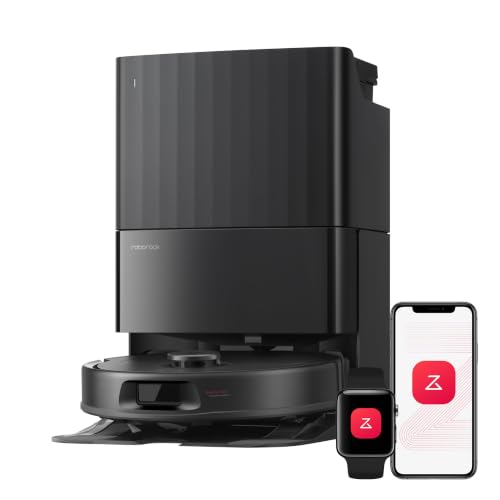
This product is a Wi-Fi connected robot vacuum and mop with a separate multifunction dock. The robot uses a rubber main brush, side brush, LiDAR mapping, structured-light obstacle sensing, and two spinning mop pads. Its dock automatically empties dust into a disposable bag, refills the robot with water, washes the mops, and dries them. Roborock specifies a 5,200 mAh lithium-ion battery, a 13.8 by 13.9 by 3.8 inch robot, and a dock measuring about 13.4 by 19.2 by 20.4 inches. The most defining cleaning evidence is independent studio testing, which found strong dried-on stain and hard-floor mopping results. That is stronger evidence than the manufacturer's 18,500 Pa suction claim, which was not independently certified to an ASTM or IEC cleaning method. Roborock states that the dock washes mops with 167°F water and dries them with warm air.
This product suits a household with mostly sealed hard floors, some rugs or carpet, and enough room for a large dock on a hard, level surface. It is particularly suited to people who want routine dust pickup and frequent light mopping without manually washing pads after every run. Buyers should be comfortable emptying dirty water, cleaning the dock tray and sensors, changing a disposable dust bag, and using an app for mapping, room settings, no-go zones, and schedules.
It is not suited to households needing independently certified electrical safety, HEPA-level whole-system filtration evidence, or ASTM and IEC performance documentation. People with severe dust or allergen sensitivity should not assume the washable filter and bagged dock provide verified fine-particle containment. It is also a poor fit for unsealed wood, delicate water-sensitive floors, thick carpets where mop lift may be insufficient, or cluttered rooms with cords and small objects that could be dragged or missed. Privacy-sensitive households that avoid cloud-connected maps should choose a non-connected cleaning method.
The product has practical wet-cleaning safeguards, including liftable mop mounts for carpet, no-go-zone controls, and instructions to place the dock on a hard, level surface away from water and heat. The manual also directs users to empty and clean wet components, remove and air-dry mop cloths, and maintain the tray and filters. Those steps matter because hot washing and warm-air drying are cleaning aids, not verified disinfection. No EPA-backed antimicrobial or sanitizing claim was confirmed. No product-specific CPSC recall or warning was found in the U.S. recall search reviewed, but an exact-product UL, ETL, or CSA electrical listing was not independently confirmed. The manufacturer sells replacement wear parts and provides a one-year limited warranty, which supports maintenance. Environmental drawbacks remain, including disposable dock bags and a lithium-ion battery with no confirmed user-removal or product-specific recycling instruction. Independent testing found water use slightly above the tester's average, while no exact-product energy-use measurement was located.
This is a cordless upright wet-dry vacuum mop for sealed hard floors. It vacuums while wetting and rolling the floor, then collects used water in a separate 700 mL tank. The manufacturer specifies a 900 mL clean-water tank, 21.6 V battery system, 200 W rated power, and about 4.5 hours of charging. Its dock supports a button-activated self-cleaning cycle, but it does not dry the roller. Independent hands-on testing found it handled wet messes and some dried stains effectively, though no IEC or ASTM performance report for this exact product was found. The manufacturer provides four modes, including dry suction for rugs or short-pile carpet, while its wet modes are limited to sealed hard flooring.
This product suits someone cleaning mostly sealed hard flooring who wants to collect crumbs, pet hair, liquid spills, and routine tracked-in dirt in one pass. It is most practical for a small to medium home where the user can empty the dirty-water tank after each session, rinse the removable parts, and leave the roller out to dry. It also fits users who value a simple upright format rather than an app-connected device, and who can use the manufacturer-approved cleaning solution and follow the stated floor restrictions.
It is not suited to homes dominated by carpet, unsealed wood, water-sensitive laminate, or floors that should not be exposed to regular wet cleaning. People unable or unwilling to handle dirty water, wash the tank and roller, and dry the roller after use should avoid relying on this format. It is also a poor fit where independently documented electrical certification, verified HEPA-level exhaust containment, or standardized cleaning results are required. Do not use it to collect flammable liquids, bleach, ammonia, hot ash, or other prohibited materials.
The manufacturer provides concrete wet-use and battery precautions. It limits wet modes to sealed hard floors, warns against tilting or lifting the running unit because used water can enter the motor, and specifies use of its approved cleaner rather than unknown formulations. No EPA-registered disinfectant claim or model-specific antimicrobial evidence was located, so it should be understood as a cleaning appliance, not a disinfection system. Its removable dirty-water tank, filter, and roller support basic cleaning, but the roller requires manual drying and replacement is recommended every three to six months. The built-in lithium-ion battery can be removed only through a multi-step process and is described as technician-serviceable. At end of life, the battery should go to an appropriate battery or e-waste channel, not household trash or curbside recycling. No applicable U.S. recall or product safety warning for this product was located in the CPSC sources searched.


