Best Overall

Amazon Kindle Scribe Colorsoft 64GB
Vivid 11” color display enhances reading experience.
Premium Pen allows seamless writing and sketching.
Ample 64GB storage for extensive library needs.
 Daniel Kenitz
Vivid 11” color display enhances reading experience.
Premium Pen allows seamless writing and sketching.
Ample 64GB storage for extensive library needs.
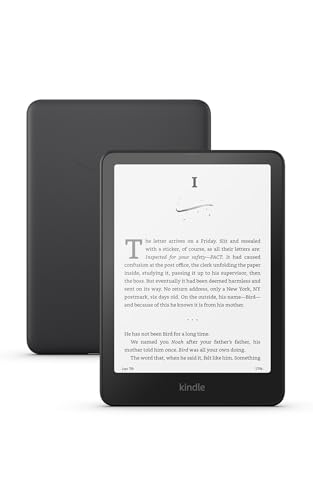
Larger 7" glare-free display enhances reading experience.
Remarkably long battery life lasts weeks.
Faster performance for smoother navigation and use.

Unique matcha color adds a stylish touch.
Lightweight design enhances reading portability.
Long battery life supports extended reading sessions.

Open-source platform for customization and development.
High-resolution display for crisp text clarity.
Long battery life supports extended reading sessions.

High-resolution display for clear, crisp text.
Long-lasting battery for extended reading sessions.
Lightweight design for comfortable one-handed reading.

Complete series in one convenient bundle.
Engaging fantasy storyline captivates readers.
Perfect for binge-reading enthusiasts.
For long-form reading, electronic paper is the main distinction from a tablet LCD. The supplied reviews describe human studies in which E Ink produced less visual fatigue than an LCD device in some tested conditions, but the results depend on image quality and use conditions. This is not evidence that any Kindle prevents eyestrain, improves sleep, or treats an eye condition. Look instead for practical controls: adjustable brightness or warmth where available, font size, boldness, spacing, margins, contrast, page color, orientation, and dark mode. Color models add illustrated-book and highlighting options, but their color resolution is 150 ppi compared with 300 ppi for black-and-white text, and Amazon discloses that the color layer can make the display look darker or more textured.
Battery figures are controlled estimates, not everyday guarantees. Across the supplied products, “weeks” figures assume about 30 minutes of reading per day, wireless turned off, and a specified light setting; Bluetooth audiobook use, brighter lighting, writing, wireless activity, and heavier reading reduce runtime. Charging claims also depend on the power source. Check whether a wall adapter is included, follow the stated charger guidance, and never charge a wet or damaged device.
A substantiated product should be traceable beyond its listing. For wireless models, an exact-model FCC Equipment Authorization record is stronger evidence than a general compliance statement. Electrical and battery-safety claims are more meaningful when matched to UL Product iQ, the Intertek ETL directory, CPSC recall records, or model-specific UN 38.3 battery-test documentation. Waterproofing should state a precise IP rating and limits, such as fresh-water immersion depth and time; an accredited ISO/IEC 17025 laboratory report is stronger support than the rating alone. No supplied review found every one of these records for every device.
Also examine what happens after purchase. A high-quality accessibility offering combines usable text controls with documented VoiceView, text-to-speech, screen magnification, switch access, captions, or other assistive features; child models need meaningful parent controls, clear data practices, and transparent subscription renewal. Security support is strongest when it gives a dated, model-specific commitment rather than merely showing that updates are currently available. Repairability depends on official parts, manuals, service, and whether the battery, screen, and charging port can be replaced without compromising the device.
Environmental claims should be specific and model-level: recycled content, recycled battery materials, recyclable packaging, a certified carbon footprint, or an entry in EPEAT, TCO Certified, or UL SPOT. At retirement, use the seller’s trade-in or electronics-recycling route. Embedded lithium-ion devices should not go in household trash or curbside recycling.
Recurring safety caveats are important. Several products lack public model-specific UL or ETL listings, UN 38.3 documentation, or independently published laboratory reports for waterproofing. Many lack official repair parts or manuals, so a failed battery, screen, or port may mean replacement. Products without a water rating should be kept dry; even IPX8 products are limited to stated fresh-water conditions and should not be charged while wet. Account-linked child features and Kids+ subscriptions require privacy review and active renewal management. Color displays may look dimmer or more textured, and large Scribe models can be tiring to hold one-handed.
The supplied products were assessed across reading comfort, safety, privacy, accessibility, environmental impact, end-of-life handling, and the quality of public verification. The distinctions below reflect the spread of those assessments rather than a promise that any product eliminates risk.
This measures display readability, front-light and warmth controls, text customization, contrast, glare handling, and whether eye-health or sleep claims are appropriately limited. High-scoring products combine E Ink with broad typography and lighting controls; lower-scoring LCD tablets lack a paper-like display or adjustable front light. Color layers can also reduce apparent brightness and texture. No product is shown to prevent eyestrain.
This measures protection against overheating, electrical faults, unsafe charging, and charging after water exposure. Among the supplied products, stronger scores reflect specific charging guidance and documented precautions, while lower scores commonly reflect missing public UL, ETL, or UN 38.3 records. A product’s battery-life estimate is separate from safety: the “weeks” figure is conditional and falls with wireless, Bluetooth, brighter light, or writing.
This measures parent-managed content, age controls, activity settings, data practices, and subscription renewal terms. Dedicated Kids products score better because they provide child profiles, parent controls, reading goals or bedtimes, and replacement guarantees. Lower-scoring general or color products offer less granular child management, require account and profile data, or have less clear support for child privacy. Kids+ also requires attention to automatic renewal.
This measures practical access for low-vision, print-disabled, hearing, or motor-impaired readers. Higher-scoring readers document adjustable typography, dark mode, VoiceView, text-to-speech, or compatible Bluetooth audio; tablets add tools such as magnification, switch access, captions, and color correction. Scores fall where VoiceView is unavailable, book compatibility varies, or no product-specific accessibility conformance report was located.
This measures whether the exact product’s radio, electrical, and charging claims match authoritative records or accredited certifications. Higher-scoring devices have traceable FCC authorizations and, in some cases, accredited RF test material. Lower scores reflect only general FCC statements or no publicly matched model record, with no public UL or ETL listing. A traceable radio filing does not by itself prove complete electrical or battery safety.
This measures whether water, drop, warranty, and durability promises have precise limits and model-specific support. Higher-scoring products state an IPX8 freshwater limit and provide a meaningful guarantee, while lower-scoring products have no water rating or no independent report. Even a precise manufacturer claim is not the same as a publicly available accredited laboratory report, and IPX8 does not cover every liquid or charging while wet.
This measures whether battery, storage, display, color, speed, ads, service, and renewal claims disclose conditions and trade-offs. Higher-scoring products clearly state test settings, available rather than nominal storage, color resolution, or account limits. Lower scores arise when headline specifications conflict with official documentation or omit important conditions. The supplied Fire tablet data illustrates why a listing’s memory figure should be checked against model-specific specifications.
This measures the clarity and duration of software support, account dependence, and continued access to core reading or note features. The strongest supplied result is a dated commitment through December 2030; other products show current updates but no fixed end date, or tie support to when a model was last sold new. A current update is evidence of maintenance today, not a guaranteed long service life.
This measures whether batteries, screens, ports, and other failure-prone parts can be serviced, and whether manuals, parts, and warranty remedies are available. The supplied products generally score modestly because Amazon does not provide consumer repair parts or instructions. Third-party battery guides do not equal an official repair program, and opening a waterproof device can compromise its water resistance.
This measures specific, quantified material and packaging claims rather than broad sustainability language. Higher-scoring products report recycled plastics, magnesium, aluminum, cobalt, recyclable packaging, or a certified carbon footprint; some also have external certification such as ENERGY STAR or SCS certification. Lower scores reflect only general packaging statements or no model-specific recycled-content evidence. Manufacturer disclosures are not automatically independent certification.
This measures whether trade-in, mail-in recycling, or other collection routes cover the device and embedded lithium-ion battery. Scores are higher where Amazon documents trade-in or approved recycling pathways. These routes matter because Kindles and tablets should not enter household trash or curbside recycling. Digital books score differently because they have no physical device or embedded battery, although the reader’s hardware still has an environmental footprint.
This is a 64GB color e-reader and digital notebook with an 11-inch front-lit e-paper display, touch input, and an included Premium Pen. It is intended for reading Kindle books and personal documents, marking up material, and handwriting notes. Amazon states that the color layer delivers 150 ppi color and 300 ppi black-and-white, with approximately 50GB of the 64GB storage available to the user. The product has a documented lithium-ion battery, USB-C charging, Wi-Fi, Bluetooth, and VoiceView support through Bluetooth audio. Amazon publishes charging and wet-device precautions, but public model-specific UL or ETL electrical-safety certification was not located. Its stated security-update commitment is unusually concrete, through December 31, 2030. The product is not presented as waterproof, so it should be treated as an indoor device and kept away from liquids.
This product fits an adult reader or student who wants one large, lighted e-paper surface for long-form reading, handwriting, PDF review, and color-coded notes. It is especially relevant for users who benefit from adjustable text size, Bluetooth VoiceView, or synchronized text-to-speech in supported books. The 64GB capacity suits people keeping a sizable personal library or document collection on-device. It also suits buyers who value a dated security-support commitment through the end of 2030 and who can protect a thin, non-waterproof device from spills and impacts.
It is not well suited to young children who need a dedicated, parent-managed Kindle profile. Amazon documents that Kindle Scribe models lack child-profile support, leaving households with manual PIN locks for the browser, stores, cloud content, and Goodreads. It is also a poor fit for poolside, bath, kitchen, field, or rough-travel use because no waterproof or drop-protection rating was identified. People expecting easy battery replacement, published repair parts, or independently traceable electrical certification should also account for those evidence gaps before relying on it for many years.
For safe use, Amazon directs owners to use the supplied USB cable and a safety-compliant USB charger or port, keep charging equipment ventilated and away from heat, and never charge near water. The product contains a rechargeable lithium-ion battery. If it is dropped, damaged, or wet, Amazon says to stop using it and seek support rather than attempt battery repair. The device is not described as waterproof. Amazon's product-specific sustainability sheet states that the 64GB version contains 11% recycled materials, including a battery made with 100% recycled cobalt and aluminum parts made with 50% recycled aluminum. It also states that 98% of packaging is wood-fiber-based from responsibly managed forests or recycled sources. These are manufacturer disclosures, not an EPEAT or UL environmental certification. Amazon offers mail-back electronics recycling, while EPA guidance says lithium-ion devices should not enter household trash or curbside recycling.
This is a 7-inch, black-and-white Kindle e-reader with 16GB of storage, a touchscreen, USB-C charging, Wi-Fi, Bluetooth audio, and a 7.4-ounce body. Amazon’s device documentation identifies it as the 2024 Kindle Paperwhite, with about 11.5GB available to the reader after system storage. It is designed chiefly for books and personal documents, rather than apps, video, or handwriting. Amazon documents adjustable warm front lighting, Dark Mode, and extensive text controls including font size, boldness, spacing, margins, alignment, and landscape reading. Its stated IPX8 protection has clear limits, including no intentional immersion, no salt or chlorinated water, and complete drying before charging. Amazon has also published a dated security-update commitment through December 31, 2030. The waterproof test result and 12-week battery figure are manufacturer-stated, not independently verified in the reviewed evidence.
This product suits an adult reader who primarily wants portable long-form reading, library books, and personal documents on a larger 7-inch monochrome screen. It is particularly suitable for readers who benefit from adjustable type size, boldness, spacing, margins, warm light, Dark Mode, or Bluetooth VoiceView. It also fits people who read near water but can follow the drying rules before connecting a cable. The published security support date is useful for buyers planning to keep the device for several years.
It is not a good fit for a household seeking a product that a child can use independently with a purpose-built kid warranty and included child subscription, because this standard version is not the Kids edition. It is also unsuitable for anyone who needs user-replaceable batteries, self-service repair parts, physical page-turn buttons, color content, handwritten notes, or apps. People with significant dry-eye symptoms, light sensitivity, or persistent reading discomfort should not treat warm lighting or glare reduction as medical protection and should prioritize their own clinical guidance.
The health-related strengths are practical rather than medical. Amazon documents flexible text presentation, Dark Mode, adjustable warm lighting, Bluetooth VoiceView, and parental restrictions that can block the browser, stores, cloud content, Goodreads, and Wikipedia. Amazon Kids profiles can limit accessible content and block several online services, although this standard product is not sold as the child-focused model. The safety documentation also instructs users not to charge near water, to use safety-compliant USB charging equipment, and to stop using a dropped battery or device if damage is suspected. For ecology, Amazon’s product-specific sustainability sheet states that the 16GB model contains 29% recycled materials and has 100% recyclable device packaging, excluding shipping packaging. Its product carbon footprint is certified by SCS Global Services. Amazon also provides U.S. mailback recycling and certain state drop-off options. The main life-extension limitation is repairability, because the battery is sealed and Amazon directs replacement to qualified service providers rather than providing a consumer repair path.
This product is a compact, black-and-white e-reader with 16 GB of storage, a 6-inch 300 ppi front-lit display, Wi-Fi and Bluetooth. Amazon identifies the 2024 Kindle model as RS23CV, with dual-band Wi-Fi, Bluetooth, Bluetooth Low Energy, a 5.2 V and 1.2 A electrical rating, and a 0 to 35 C operating range. Its reading case rests on the inherent characteristics of electronic ink, not an eye-health cure. Human studies comparing e-ink, LCD, and print have generally found e-ink suitable for prolonged reading, although results do not establish that any screen prevents eyestrain. Amazon documents font, spacing, margin, contrast-inversion, and Bluetooth VoiceView controls. The stated six-week battery figure is conditional on 30 minutes of daily reading, wireless off, and a light setting of 13. The product is not intended for underwater use.
It suits an adult reader who mainly wants portable, distraction-light reading of novels, documents, and library or purchased ebooks. The 6-inch format and 158 g class design are practical for commuting, one-handed reading, and travel. It also fits readers who value adjustable type size, spacing, margins, inverted colors, or Bluetooth VoiceView. A buyer who expects a dated security-support commitment can use the published December 31, 2030 endpoint when planning ownership. Careful users who can keep it dry and use a compliant USB charger are the best match.
It is not for readers who need a water-resistant device around baths, pools, beaches, or wet kitchens, because Amazon states this product is not intended for underwater use. It is also a poor fit for anyone expecting owner-replaceable batteries, readily published repair parts, or a public repair guide. Families seeking a child-focused bundle should examine the separate Kids product and Amazon Kids terms, rather than assuming this standard product includes a child cover or subscription. Readers needing non-English screen-reader speech should confirm accessibility needs before use.
The model has publicly traceable radio compliance. Amazon identifies model RS23CV in its safety guide, and the corresponding FCC authorization record lists the product as an electronic display device. Amazon also gives specific charging precautions, including use of a safety-compliant USB charger, avoiding water and humidity while charging, ventilating the device, and stopping charging if it becomes uncomfortably hot. These are manufacturer instructions, not a public UL or ETL listing for this exact product. For reading comfort, e-ink research supports a cautious advantage over LCD in some prolonged-reading studies, but it does not prove that this product prevents eye strain or improves sleep. Take breaks and adjust lighting to the room. End of life planning is clearer than repair planning. Amazon offers US trade-in and mail-back recycling, including nonworking devices, but embedded batteries must remain in the device for electronics recycling. No exact-model third-party environmental certification or quantified recycled-material disclosure was found.
The XTEINK X3 is a very small button-operated E Ink reader for short sessions away from a phone. The manufacturer lists a 3.7-inch, 259 PPI display, 58 g weight, a 650 mAh battery, a preinstalled 16 GB microSD card, Wi-Fi and Bluetooth, plus magnetic pogo-pin charging. It has neither a touchscreen nor a front light, so it needs ambient light for reading. Its 2.4 GHz wireless radio has a model-specific FCC authorization, independently confirming legal US radio operation. The manufacturer states 10 to 14 days per charge at one to three reading hours daily, but that is a test-condition claim rather than an independent battery result. Its own specifications also conflict on supported formats, with one section naming EPUB and TXT while another lists additional formats.
This product suits an adult who wants a tiny secondary reader for short, well-lit breaks, commuting, waiting rooms, or carrying inside a small bag. The manufacturer-stated 58 g weight, physical page buttons, E Ink screen, and microSD-based storage fit someone who already manages EPUB or TXT files and values minimal hardware over a large display. It is also a more suitable fit when a nearby light source is available and the buyer accepts that real battery life depends on reading time and wireless use.
It is not suitable for readers who routinely read in darkness, need a large page view, or require touch navigation and robust text-to-speech or other documented assistive functions. Households seeking kid profiles, parent-managed content, and clear child-data controls should use a product with those controls documented. It is also a poor fit for wet environments, rough travel, or buyers who need independently certified charging safety, an IP rating, readily available replacement parts, or a published long-term security-update commitment.
The most concrete independent safety finding is the model-specific FCC authorization for the 2.4 GHz Wi-Fi and Bluetooth radio. That authorization verifies radio compliance, not the safety of the battery, charging cable, charger, water exposure, or physical durability. The manufacturer advises using a locally certified charger and keeping conductive objects away from the pogo pins. No public UL or ETL listing or battery transport-test document was located. No XTEINK X3 recall or product safety warning was located in the CPSC recall research. For reading comfort, the manufacturer specifies an E Ink display and no front light. This may suit daylight use, but it does not establish a treatment or prevention benefit for eye strain or sleep. The company offers repair or replacement for confirmed covered defects on direct website orders, but says that policy does not cover marketplace orders. No verified recycled-material, packaging, repair-parts, or US electronics and battery take-back program was found.
This is a very small E Ink reading product, built around a 4.3-inch, 219 PPI display, a touchscreen, physical page buttons, Wi-Fi, Bluetooth, removable microSD storage, and an 1100 mAh battery. XTEINK states that it weighs 72 g, measures 111 x 69 x 5.95 mm, has adjustable warm and cool front lighting, and charges through pogo pins with a magnetic adapter. A cable is not included. Independent hands-on reporting confirms the compact form, touchscreen, front light, and physical controls. It also found the screen clear enough for ordinary text, but the small page area means frequent page turns. The product has no built-in ebook store, so reading depends on transferring compatible files. Its listing creates format uncertainty because the Amazon catalog describes more formats than XTEINK's current specification page.
This product suits an adult reader who already keeps DRM-free EPUB or TXT files, wants a reading device that can fit in a small pocket or attach to compatible phone accessories, and reads in short gaps during commuting, waiting, or travel. It is also relevant for readers comfortable with transferring files by USB or a companion app, choosing or importing supported fonts, and accepting a small amount of text per screen. The front light is useful for brief reading in dim indoor settings.
It is not well suited to readers who need large text immediately, have low vision, or need documented screen-reader, high-contrast, switch, or other assistive features. The lack of built-in text-size adjustment is especially important for anyone who cannot comfortably read small type. It is also a poor fit for households seeking child profiles, parental controls, clearly documented child-data practices, a built-in ebook store, library app access, or simple access to protected commercial ebooks. Avoid relying on it around water or for rough use, because no ingress rating or drop-test evidence was found.
E Ink itself has some human-factors evidence relevant to reading comfort. Research comparing E Ink with LCD found either similar reading comfort or less visual fatigue with E Ink under the tested conditions. That does not establish an eye-health or sleep benefit for this specific product, and the small screen plus lack of built-in text-size control can still be limiting. The warm and cool front-light adjustment is manufacturer-stated, not independently tested for this model. No model-specific public safety certification, radio authorization record, water-resistance rating, environmental certification, recycled-material disclosure, packaging detail, or manufacturer recycling program was located. XTEINK's direct-store warranty covers electrical hardware for one year, but excludes water damage, drops, cracked screens, accessories, and unauthorized modifications. At end of life, do not put the embedded lithium battery or product in household trash or curbside recycling. EPA guidance directs consumers to battery collection, hazardous-waste, or electronics-recycling channels.
This product is a digital collection of Sarah J. Maas's eight-book Throne of Glass fantasy series, published by Bloomsbury in English on November 26, 2020. The publisher lists The Assassin's Blade, Throne of Glass, Crown of Midnight, Heir of Fire, Queen of Shadows, Empire of Storms, Tower of Dawn, and Kingdom of Ash. It is reading content, not a Kindle device, so it has no built-in battery, charger, radio, water-resistance rating, or physical repair parts. Bloomsbury states that the bundle is EPUB 3.0, conforms to EPUB Accessibility 1.1 and WCAG 2.2 AA, and permits reader-controlled changes to text and page appearance. The accessibility outcome still depends on the app or e-reader used. Amazon documents that its Assistive Reader can read enhanced-typesetting Kindle books aloud in supported Kindle apps.
This suits readers who specifically want the complete main Throne of Glass sequence in one digital collection and who already use a compatible Kindle app or e-reader. It is especially practical for readers who prefer reflowable text over fixed print pages, because the publisher states that font, spacing, and color presentation can be adjusted by the reading system. Readers who use text-to-speech can also benefit when reading through a compatible Kindle app with Assistive Reader enabled.
This is not for buyers seeking a physical boxed set, ownership independent of an account, or a device with guaranteed display comfort, waterproofing, battery safety, or repair support. Those issues belong to the separate hardware used to read it. It is also not a purpose-built children's title. Families wanting age filtering, child-specific privacy controls, or content limited to younger readers need to manage those protections through the account, app, and device rather than through this product.
The relevant health consideration is reading accessibility rather than ingredient or electrical safety. Bloomsbury states that the digital edition supports adjustable text presentation, structured navigation, logical reading order, and alternative text for images. Amazon states that Assistive Reader works with enhanced-typesetting Kindle books in supported apps. These can improve practical access, but front-light brightness, glare, contrast, screen size, and any sleep-related blue-light settings are properties of the reader device, not this collection. The product itself contains no battery, electronics, paper, or retail packaging, so it creates no direct charging, water-damage, e-waste, or battery-disposal issue. That does not establish a lower overall environmental footprint, because electricity use and the lifecycle impacts of the separate phone, tablet, or e-reader remain outside this product. Amazon offers recycling and trade-in options for eligible Kindle hardware, but those programs apply to the reader device rather than the digital books.

