Best Overall
19% off
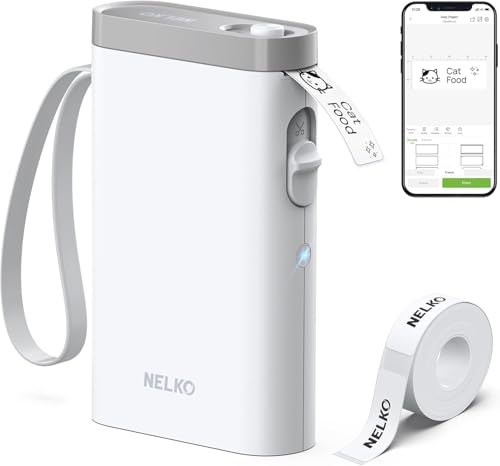
Nelko P21 Bluetooth Label Maker Machine
Easy Bluetooth connection for quick label printing.
Multiple templates for diverse labeling needs.
Compact design, perfect for home and office.
 Daniel Kenitz
Easy Bluetooth connection for quick label printing.
Multiple templates for diverse labeling needs.
Compact design, perfect for home and office.

Easy wireless printing with Bluetooth connectivity.
Compact and portable for small business needs.
Compatible with major shipping platforms.

Easy Bluetooth connectivity for wireless printing.
Includes three tapes for immediate use.
Offers customizable templates and icons.

Bluetooth connectivity for seamless smartphone integration.
Inkless printing reduces ongoing supply costs.
Compact design ideal for home and office use.
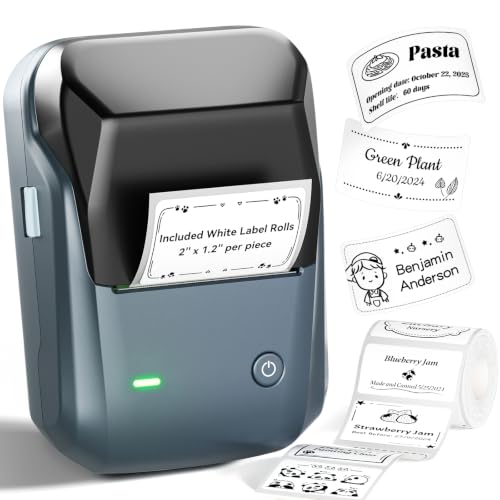
Compact design, perfect for small spaces.
Easy-to-use interface simplifies label creation.
High-quality thermal printing, no ink needed.
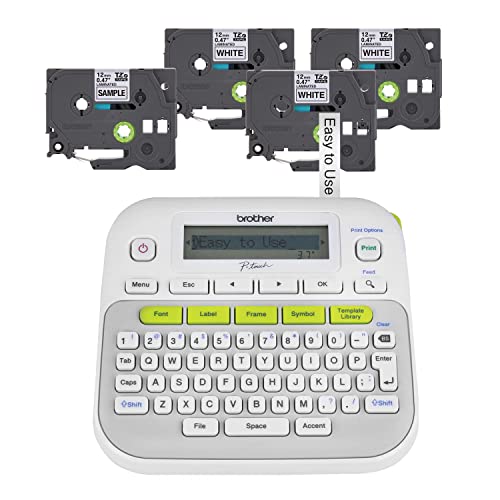
Includes four versatile label tapes.
User-friendly interface for easy labeling.
Ideal for home and office organization.

Versatile app with 1000 icons available.
Easy Bluetooth connectivity with various devices.
Includes wide range of 300 templates.

Compatible with both iOS and Android devices.
Portable design ideal for home or office use.
Inkless printing for hassle-free label creation.

High-resolution 300DPI for crisp, clear labels.
Compact design makes it easy to carry.
Built-in label roll for immediate use.

Compact and portable for easy transport.
Bluetooth connectivity for seamless smartphone printing.
Built-in cutter ensures precise label trimming.
Start with the label format. Small fixed-size rolls suit cables, folders, jars, school supplies, and bins; wider media can support price tags, inventory, address, or 4-by-6-inch shipping labels. Check the actual supported width, face stock, adhesive, liner, roll yield, and compatibility limits. “Waterproof,” “oil-resistant,” “scratch-resistant,” or “long-lasting” claims are not the same as independent evidence of peel adhesion, abrasion, ultraviolet, moisture, chemical, or barcode performance. Stronger evidence would identify test methods such as ASTM D3330/D3330M or D1000 for adhesion, ASTM G154 for UV exposure, ASTM D4060 for abrasion, UL 969 for marking permanence, or ANSI MH10.8.2 and ISO/IEC 15416 for barcode quality.
Decide whether you need a keyboard, a phone app, a computer connection, or more than one. App-based models can offer templates and batch printing, but they may require permissions, collect identifiers or usage information, and depend on continuing app and operating-system support. A keyboard-operated model can avoid an account, Bluetooth connection, and app permissions. Wireless claims should be checked against a model-matched FCC Equipment Authorization record, device label, and manual—not merely a Bluetooth logo.
For rechargeable products, look for independent safety evidence covering the exact printer, battery, charger, and sold configuration. A public UL Product iQ, Intertek ETL, or CSA listing, with the applicable safety standard such as UL 62368-1 or IEC/UL 62133-2, is materially stronger than general charging instructions. Also consider model identification, warranty contact, responsible seller or importer, and recall history. A CPSC search without a recall is useful context, but it is not certification.
Thermal printing is inkless, but “inkless” does not mean waste-free or chemically safer. Direct-thermal models still consume coated labels, adhesive, and usually release liners; tape makers add plastic cartridges and may use replaceable or rechargeable batteries. For frequent handling or food-package use, require current, quantified testing of the actual label stock for BPA, BPS, and other phenolic developers, ideally from an ISO/IEC 17025-accredited laboratory. A vague “BPA-free” statement does not establish BPS-free status or food-contact compliance. Do not infer direct food contact from labels intended for jars or packages; use the outside of containers unless the specific stock has applicable documentation.
Across the reviewed products, the recurring limitations are important: none had the model-specific UL, ETL, or CSA evidence sought for the complete electrical or rechargeable configuration; independent chemical testing and food-contact documentation were generally absent; and independent durability or barcode testing was also generally absent. Several app-based products disclosed tracking, identifiers, usage, location, or other data collection, with some Android disclosures noting sharing or lack of encryption. Treat ordinary thermal labels as non-food-contact and avoid using unvalidated stock for medical, laboratory, safety-critical, outdoor, chemical-exposed, archival, or permanent asset marking. Verify charging connectors and specifications where documentation conflicts, and follow warnings about heat, damaged batteries, water, cutters, and hot printheads.
The reviews assess the printer, its power system, its label materials, and the evidence behind performance and marketing claims. A high score indicates more complete, model-specific support; it does not turn an unsupported claim into proof of safety or permanence.
This measures third-party certification of the exact printer, rechargeable battery, charger, and overheating safeguards. It matters because many portable models contain lithium batteries and use USB charging. Among these products, scores around 70-76 generally reflected useful instructions but no public UL, ETL, or CSA listing; the higher scores still did not establish complete certification. A high score requires model-specific independent listing evidence.
This measures disclosure and independent testing of BPA, BPS, and other thermal-paper developers in the supplied and compatible labels. It matters because direct-thermal labels are handled repeatedly and may be placed on packages. Most scores clustered around 68-72 because “BPA-free” claims lacked quantified laboratory reports and food-contact evidence. A high score would cover the actual stock with current ISO/IEC 17025-accredited testing, not just seller language.
This measures whether instructions clearly address unsuitable uses, charging, heat, damaged batteries, food contact, surfaces, handling, and disposal. It matters because labels can be mistaken for food-contact or permanent materials, while printers can have hot printheads, cutters, or rechargeable batteries. Scores ranged roughly from 68 to 82. Higher-scoring products gave concrete warnings; lower-scoring products left important limits or disposal guidance unclear.
This measures independently evidenced print quality, barcode readability, adhesion, and resistance to the conditions claimed. It matters because a label that fades, lifts, or cannot scan can create operational or safety problems. Scores ranged from 57 to 78. Higher scores reflected clearer specifications or supplied laminated media, but the reviews generally found no independent ASTM, UL 969, barcode-grade, UV, abrasion, or chemical testing.
This measures whether the actual wireless model can be matched to a U.S. FCC authorization, device label, and radio record. It matters because Bluetooth is central to many app-based printers. This was one of the strongest areas: several products scored 88-94 with model-matched records, while products without a match scored lower. FCC radio authorization confirms wireless compliance, not battery or whole-product electrical safety.
This measures permissions, data collection, privacy disclosures, compatibility, firmware support, and app continuity. It matters because many compact printers cannot print normally without a phone application. Scores ranged from 52 to 91. Higher-scoring options offered keyboard or local operation, current updates, or clearer disclosures; lower scores involved tracking, identifiers, usage data, inconsistent disclosures, or dependence on a fragile app workflow.
This measures whether claims about width, speed, resolution, battery life, templates, waterproofing, “inkless” operation, and materials are specific and supported. It matters because the supplied data included conflicting speed figures, connector descriptions, template counts, and resolution statements. Scores ranged from 52 to 79. Higher scores had clearer manuals and fewer conflicts; a high score still does not independently validate every performance claim.
This measures the breadth, model match, and public traceability of independent safety, radio, materials, performance, and environmental evidence. Scores ranged from 68 to 84. The strongest products had public FCC records and better model documentation, while none supplied a complete package of safety, chemical, durability, and environmental verification. Public registers and dated laboratory reports are more meaningful than seller-issued logos.
This measures model and batch identification, responsible seller or importer, warranty contact, support access, and recall status. It matters because buyers need a remedy if a rechargeable device or power system fails. Scores ranged from 70 to 86. Higher-scoring products had named support, warranties, manuals, or U.S. contacts; a clean recall search is useful context but does not replace certification or prove the absence of future defects.
This measures lifecycle waste from labels, liners, plastic cartridges, batteries, packaging, and energy use, including realistic recycling or take-back. Direct-thermal printing avoids ink or toner, but every printed label remains a consumable. Scores generally fell near 69-74. Higher scores reflected cartridge-free or rechargeable designs and, in one tape system, stated plastic reduction and recycled content; no product demonstrated a complete closed-loop consumables solution.
This measures whether buyers can identify face stock, adhesive, liner or linerless format, cartridge plastics, roll yield, and compatibility limits. It matters because material details determine waste, recycling options, and whether safer substitutions are possible. Scores were mostly 69-75. Higher scores provided clearer widths, formats, or tape compatibility, while most products still left adhesive chemistry, liners, plastics, and end-of-life routes unspecified.
The Nelko P21 is a small rechargeable direct-thermal label maker for short home, school, office, jar, storage, and gift-tag labels. It uses Bluetooth and the Nelko mobile app, prints black only, accepts small compatible rolls, and has a manual cutter. Nelko lists a 203 dpi print resolution, 14 by 75 mm maximum media size, USB-C charging, and a supplied white label roll. Its Bluetooth radio has public, product-matched FCC Part 15.247 test documentation, including a passing report for the P21. The manual lists a 1,200 mAh battery, 5 V 1 A input, and an overheat indicator. However, no public UL, ETL, or CSA listing was found for the rechargeable product and charging configuration. Published speed specifications are inconsistent, with the current product page stating up to 20 mm/s while the manual states 60 mm/s maximum.
This product suits a person who needs short black labels for pantry containers, files, school supplies, storage bins, gift tags, or simple item identification, and who is comfortable designing labels from an iOS or Android phone. Its small format and rechargeable battery fit occasional mobile labeling better than a desk-bound setup. It is also appropriate for users who can keep it dry, charge it in a cool ventilated space with a suitable 5 V 1 A adapter, and test a label before relying on adhesion or scan quality.
It is not for shipping-label work, full-page printing, or anyone needing 4 by 6 labels. It is also unsuitable where documented label chemistry, independently tested permanence, or a certified electrical safety listing is required. Avoid direct food contact, and do not assume that an outside-container label will tolerate dishwashing, refrigeration, oily surfaces, heat, or textured materials without a trial application. People who do not want a phone-app dependency, or who need minimal data collection and no tracking disclosure, should use a different format.
The manual provides meaningful practical safeguards. It instructs users to charge in a cool, ventilated area, keep the unit away from water, stop and unplug it if smoke or unusual odors occur, and avoid touching the hot print head immediately after printing. The manufacturer also says labels belong on the outside of food containers, not directly on food. A public FCC radio report matches the product and documents a Part 15.247 pass. The key material gap is thermal-label chemistry. Nelko-compatible label listings state BPA-free, but public evidence did not include an independent, product-matched analysis for BPA, BPS, or other color developers. Direct thermal printing avoids ink, toner, and ribbons, but it still consumes adhesive labels and likely release liner. Public materials do not identify paper, plastic, adhesive, liner, recycled content, or an end-of-life program. No product-specific CPSC recall was found in the checked public sources.
This is a compact, mains-powered direct-thermal shipping-label printer for labels from 25.4 to 117 mm wide, including common 4 by 6 inch parcel labels. It prints only in black and uses heat-sensitive label stock, so it needs neither ink nor toner. Phomemo states a 203 dpi printhead, 150 mm per second maximum speed, USB and Bluetooth connections, and a 24 V, 2.5 A power adapter. The mobile workflow uses the Labelife app, while the manufacturer also documents computer use. The product has serial-number access through the app, a self-test print, or its device QR code, and Phomemo advertises a one-year warranty. Public searches did not locate model-matched UL, ETL, CSA, FCC authorization, or independent performance-test records.
This product suits a home seller, small online shop, or office that mainly prints indoor parcel labels and wants a compact desktop unit without ink or toner purchases. It is most appropriate where labels are short-lived shipping documents, the printer can remain near a power outlet, and the user is comfortable setting up software or Bluetooth. The manufacturer-stated width range accommodates common carrier-label formats and smaller labels. It also fits buyers who can keep label rolls and the printhead clean and who do not need independently validated industrial permanence.
It is not suited to users who require a publicly verifiable electrical-safety listing, a traceable FCC authorization, or independently tested barcode and label-durability performance for regulated work. Avoid using ordinary direct-thermal labels for direct food contact unless the exact stock has separate food-contact documentation. It is also a poor fit for labels exposed to high heat, sunlight, sustained moisture, abrasion, solvents, or long storage without validation. Privacy-sensitive users should review Labelife permissions and policy before using mobile printing, because the app's public disclosures are inconsistent.
The printer itself is mains powered, not a rechargeable portable device. Phomemo's support guidance says to use the original 24 V, 2.5 A adapter and to clean the printhead with 70 percent alcohol pads. Those are practical operating instructions, but public searches did not find a model-matched UL, ETL, CSA, or comparable third-party electrical listing. No CPSC recall specific to this product was located in the searched public recall resources. Direct-thermal printing eliminates ink and toner cartridges, but it still relies on consumable adhesive labels, usually with disposable release liners. Phomemo identifies the compatible format as direct thermal and gives a width range, yet it does not publish model-specific material, adhesive, liner, recycled-content, recycling, BPA, BPS, or other phenolic-developer test documentation for the supplied label stock. Treat labels as packaging labels, not food-contact material, unless the exact roll has separate substantiation.
The Nelko P21 is a compact, monochrome direct-thermal label maker for small household, school, office, and personal-item labels. It is operated from the Nelko phone app over Bluetooth and uses pre-sized P21-compatible label rolls. Nelko lists a 14 by 75 mm maximum label size, 203 dpi output, USB-C charging, and manual cutting. Its own FAQ says it is not for 4 by 6 shipping labels, full-page documents, or color printing. A public FCC authorization and radio test report match the P21 model and Nelko trademark, providing independently traceable evidence for its Bluetooth radio. The manufacturer also provides P21 manuals, app links, firmware support language, and support contact details. In contrast, the supplied-label chemistry, battery safety listing, label adhesion performance, and recycling details are not supported by public model-specific independent reports located in this review.
This product suits a phone-first household organizer, teacher, student, or small office user making short black labels for bins, school supplies, folders, jars, gifts, and personal items. It is most appropriate where Bluetooth printing, small pre-sized labels, and a compact rechargeable device matter more than computer printing or industrial durability. The confirmed FCC record is relevant to buyers who want a traceable U.S. authorization for the Bluetooth function. Users should be comfortable using the Nelko app and granting only the permissions needed for their chosen features.
It is not suited to buyers who need full-page documents, 4 by 6 shipping labels, color output, or a computer-first printer. It is also a poor fit for food-contact labeling, frequent direct handling of thermal media by chemically sensitive users, or any setting that requires documented BPA and BPS testing, adhesive composition, or food-contact compliance. Avoid relying on it for safety-critical, outdoor, medical, industrial, barcode-controlled, or high-abrasion labels because public independent permanence and scan-quality testing was not located. Privacy-sensitive users may prefer a printer with less app dependence.
The P21 uses direct-thermal printing, so it does not require ink, toner, or ribbons. That reduces one recurring consumable stream, but it shifts routine use to disposable adhesive thermal labels. Nelko promotes compatible P21 label rolls and describes some labels as BPA-free, waterproof, oil-resistant, scratch-resistant, and strongly adhesive. Those are manufacturer-originated claims, not public independent laboratory findings for the included rolls. No public evidence was located that rules out BPS or other phenolic color developers. Use labels on the outside of food containers rather than treating them as food-contact materials. Public materials did not establish food-contact compliance, complete adhesive and liner composition, cartridge-plastic details, roll recycling instructions, or a take-back program. The P21 manual provides some charging and maintenance directions, including avoiding fast chargers and disconnecting power before cleaning, but no public third-party electrical safety listing was found. No CPSC recall for this model was located in the reviewed sources.
This is a small, rechargeable direct-thermal label maker for printing black labels from an Android or iOS phone or tablet over Bluetooth. The supplied configuration includes the printer, cable, manual, and one label roll. It is designed for household organization, school supplies, files, cables, name tags, and small tags rather than full-page printing. Phomemo states that the D30 weighs 153 g, uses a 1,000 mAh lithium battery, prints at 203 dpi, accepts 6 to 15 mm media, and has a 12 mm effective print width. The D30 Bluetooth radio has an independently traceable U.S. FCC equipment authorization. However, no model-specific UL, ETL, CSA, battery-cell, or charger safety listing was located. The official documentation identifies Micro USB charging, while the catalog record says USB Type-C, so buyers should check the delivered port and cable.
This product suits a person who needs short, narrow black labels for pantry bins, school items, cables, folders, jars, gift tags, or simple home-office organization. Its small body and phone-based workflow are practical when labels are made in small batches away from a desk. It also fits users comfortable installing a companion app, enabling Bluetooth, checking the media size before printing, and using labels primarily in dry, indoor settings where long-term permanence is not critical.
It is not suited to buyers who need independently listed charging and lithium-battery safety evidence for a workplace, school procurement program, or safety-sensitive household. Avoid relying on it for direct food contact, medical identification, safety labels, high-heat surfaces, outdoor exposure, chemical containers, or permanent asset labels, because product-specific material, adhesive, and durability testing was not found. It also does not suit people who require computer-first printing, a keyboard-only label maker, minimal app data collection, or a confirmed USB Type-C charging port.
The key health limitation is incomplete independent evidence. The D30 has a rechargeable lithium battery and official instructions provide some care boundaries, including avoiding harsh conditions such as oil, moisture, and direct sunlight. But no model-specific NRTL electrical listing or public battery and charger certification was found. A public CPSC recall and warning search did not identify a D30-specific action. The FCC authorization verifies the Bluetooth radio, not battery, charger, thermal-paper chemistry, or label permanence. Phomemo states that D30 thermal labels are BPA-free and BPS-free, and thermal printing eliminates ink cartridges. Those are potentially useful material and waste attributes, but no accredited test report was located for the included roll, its adhesive, liner, or compatible replacements. The product still uses consumable adhesive labels, likely with release-liner waste, and the maker does not provide a material breakdown, recycling path, or take-back program in the reviewed documentation. Keep labels away from direct food contact unless the specific label stock has suitable food-contact documentation.
This is a compact direct-thermal label printer for small adhesive labels, not a general document or shipping-label printer. NIIMBOT’s current specifications list a 132 by 91 by 62 mm body, 293 g weight, 1500 mAh rechargeable battery, 203 dpi print resolution, and an effective print width of up to 48 mm. It accepts gap, transparent, and black-mark label stock in the 20 to 50 mm width range. The product prints without ink or toner and connects by Bluetooth, with Type-C used for charging. Its Bluetooth authorization is publicly traceable to a filing that identifies the NIIMBOT B1. The official manual provides battery and charging precautions, including 5 V, 1 A input, but no model-matched UL, ETL, or CSA safety listing was located. The supplied 50 by 30 mm label roll is a practical starter size, although its complete chemical and material specification was not published.
This product suits a household organizer, student, craft seller, or small office that needs compact black-and-white labels for bins, pantry containers, files, cables, price tags, and short internal inventory labels. It is most appropriate where labels are kept indoors and can be replaced as needed. The 20 to 50 mm media range is useful for small objects, and the rechargeable battery and Type-C charging make occasional mobile use practical. It also fits users willing to design labels through NIIMBOT software on a phone or computer.
It is not suited to users who need independently proven label permanence for outdoor equipment, high heat, solvents, heavy abrasion, regulated assets, or critical barcode workflows. It is also a poor fit where labels may directly contact food, especially for frequent handling, because the supplied roll lacks a product-specific food-contact and phenolic-chemical disclosure. Choose a product with independently listed charging safety if a formal electrical certification is required, or one with a lower-data companion workflow if app privacy is a central concern.
The manual gives meaningful basic precautions for a rechargeable thermal printer. It specifies 5 V, 1 A charging, warns against water, high heat and humidity, damaged operation, corrosive cleaners, disassembly, and use near flammables. Those are manufacturer instructions, not independent electrical certification. A public FCC authorization supports the radio compliance of the B1 Bluetooth configuration, but it does not certify battery, charger, or fire safety. NIIMBOT promotes BPA-free formulations for some label supplies, but no current independent report was found for the specific starter roll supplied here. Direct-thermal papers can use different color developers, so a general BPA-free statement does not establish BPS-free status or food-contact suitability. Inkless printing avoids toner and ink cartridges, and the built-in rechargeable battery avoids routine battery replacement. However, the product still relies on disposable adhesive rolls and liners, with no identified take-back or material-recycling program.
This is a compact, keyboard-operated label maker for home and office organization. The bundle is listed with four black-on-white laminated TZe tapes, including one 12 mm by 4 m starter cassette and three 12 mm by 8 m cassettes. It creates monochrome adhesive labels without ink cartridges, using thermal-transfer TZe tape in widths from 3.5 mm to 12 mm. Brother's manual confirms that the unit runs on six AAA alkaline or Ni-MH batteries, or an optional specified AC adapter. It has no wireless radio, companion app, cloud function, or internal battery charger. Brother also documents a 15-character LCD, manual cutter, five-minute automatic shutoff, and storage for up to 30 labels. The supplied tapes are laminated, but the exact adhesive and full chemical formulation are not publicly specified for this bundle.
This product suits a household, classroom, small office, or workshop that needs short, clearly typed labels for bins, folders, cables, drawers, storage containers, and similar dry-use organization. It is particularly suitable for someone who wants a fully self-contained device rather than phone printing. Buyers who already use rechargeable AAA Ni-MH batteries can reduce disposable-battery use. The four included black-on-white tapes provide a practical starting supply for routine indoor labeling, provided labels are tested first on delicate or heat-sensitive surfaces.
It is not suited to buyers who need independently documented material chemistry for frequent skin handling, children's mouthing environments, direct food contact, medical use, or sensitive food packaging. It is also a poor fit for permanent industrial identification where a specific UL 969-listed tape system, quantified adhesion testing, barcode verification, or exact chemical-resistance documentation is required. Avoid treating standard supplied tape as universally dishwasher, microwave, or outdoor safe without confirming the exact tape type and testing the intended surface and environment.
The most useful health safeguard is the product-specific manual. It tells users not to mix battery types or ages, not to use damaged or leaking batteries, to stop use if there is heat, odor, discoloration, or deformation, and to use only the specified optional adapter. It also warns about the cutter blade, hot print-head area, moisture, heat, and keeping labels and small parts away from children. The product does not charge rechargeable batteries internally. The label maker uses laminated thermal-transfer tape rather than direct-thermal paper, which reduces the relevance of direct-thermal BPA or BPS color-developer concerns. However, no current independent chemical analysis was found for the supplied tapes. Brother's environmental declaration for this model reports removable batteries, 1.86 g of recycled plastic in the product, automatic energy saving, and packaging with at least 50 percent recycled content in its corrugated fiberboard. Tape cartridges and liners remain recurring material waste, and no U.S. take-back program was identified in the reviewed materials.
The Ponek M100 is a portable monochrome direct-thermal label printer for small labels, rather than a full-page shipping-label printer. The available product manual describes Bluetooth printing from Android and iOS phones through the Print Master app, plus USB printing from a PC through Labelife. It states that the printer accepts 20 to 50 mm, or 0.78 to 2 inch, label media and does not require ink or toner. The manual also describes a 40 by 30 mm roll with 100 labels in the box for one configuration, a Type-C cable, an internal cutter, and a rechargeable battery with a claimed NTC temperature sensor. These are manufacturer-originated instructions reproduced by a third-party manual host, not independent safety or performance test results. No public model-matched electrical listing, FCC authorization, material test report, or durability test was located during verification.
This product suits a household, classroom, office, or small operation that needs short monochrome labels for bins, files, stock, price tags, cables, or basic barcode identification. It is most appropriate when labels are used indoors and can be reprinted if conditions change. The stated 20 to 50 mm media range fits compact organization labels, and Bluetooth phone printing can be convenient for occasional work. A PC with USB is useful for users who want an alternative to relying solely on a phone connection.
It is not well suited to safety-critical, medical, food-contact, outdoor, high-heat, chemical-exposure, or permanent asset-marking applications. The included thermal label material has no verified BPA, BPS, adhesive, food-contact, or environmental specification, and no independent permanence testing was located. Buyers who need documented electrical certification, a traceable FCC record, a low-data companion app, or formally tested barcode and label durability should use a product whose exact configuration has those records. Do not use labels for direct food contact unless the specific stock is documented for that purpose.
The instructions provide some practical safety boundaries. They say to use no more than a 5 V power adapter, avoid touching the cutter, avoid extreme temperatures, and note a claimed battery temperature sensor. However, these statements are not backed by a public model-matched UL, ETL, CSA, or battery certification record. No matching public safety recall or incident report was located in the searched U.S. consumer-product databases. Direct-thermal printing eliminates ink and toner, but it creates ongoing label-roll and release-liner waste. The supplied 40 by 30 mm roll is identified by size and count only. Its paper or film construction, adhesive, liner, phenolic color developer, recycled content, and recyclability are not disclosed. Compatible Phomemo rolls are marketed as BPA- and BPS-free, but that is not evidence about the included Ponek roll. Print Master also has documented data collection and sharing disclosures, which matter when printing personal or business information.
This is a compact, rechargeable Bluetooth label printer that uses direct-thermal rolls rather than ink or ribbon. The supplied starter roll is specified as 50 by 30 mm with 230 white labels, and the product is intended for phone-based label design and printing through the NIIMBOT app. NIIMBOT's U.S. store lists support for iOS, Android, and PC use. A model-matched FCC Part 15 filing names the NIIMBOT B21, which is meaningful confirmation that the Bluetooth radio family has a U.S. equipment authorization record. The product's 203 dpi output, 20 to 50 mm label-width range, direct-thermal mechanism, and indoor label life exceeding two years are manufacturer-stated. Battery capacity is less clear, because sources reviewed state 1,200 mAh while the catalog record states 1,500 mAh.
It suits a home organizer, small retailer, craft seller, or office user who needs short-run monochrome labels up to 50 mm wide and is comfortable composing them on a phone or computer. The included 50 by 30 mm roll is practical for bins, jars, cables, price labels, and small inventory labels. It is also suited to buyers who want to avoid replacing ink cartridges or ribbons and who can keep labels in ordinary indoor conditions rather than demanding permanent industrial marking.
It is not the right fit for buyers who require independently listed charging and battery safety for the complete sold configuration, or for households that cannot reliably follow lithium-ion charging precautions. It is also unsuitable where labels will directly contact food, medicines, skin, high heat, strong chemicals, sunlight, or outdoor weathering, because the actual supplied stock lacks public chemical testing and public performance testing for those uses. Privacy-sensitive users may also prefer a printer that does not depend on a data-collecting companion app.
The product has a model-matched FCC radio filing, and its safety guidance tells users not to disassemble the unit, replace the battery themselves, use it near flammables, or use an unsafe power adapter. Those are useful boundaries for a rechargeable Bluetooth device. However, no public UL, ETL, or CSA safety listing was found for the complete printer and charger configuration. A search of CPSC recall resources did not identify a NIIMBOT recall during this review. Direct-thermal operation avoids ink, ribbon, and cartridge waste. It does not eliminate consumables, because each label roll uses adhesive labels and likely release liner. NIIMBOT markets compatible labels as BPA-free and resistant to water, oil, and abrasion, but did not provide a public accredited test report identifying the label face stock, adhesive, liner, phenolic developer chemistry, or recycling route. Treat the labels as non-food-contact unless a specific label stock has appropriate food-contact documentation.
This is a compact, rechargeable direct-thermal label printer for small labels, storage tags, price labels, barcodes, and similar paper or film stock. It prints only in thermal monochrome output, except when used with the brand’s dedicated red-and-black thermal labels. NIIMBOT’s official specifications state a 300 dpi printhead, 48 mm effective print width, 20 to 50 mm label-roll compatibility, Bluetooth and USB-C connectivity, and 5 V, 2 A charging. A filing for the Bluetooth radio names the B1 Pro among covered models, which provides traceable U.S. radio authorization. The available manual specifies a 1,500 mAh battery and a two to three hour charge time. Those are manufacturer materials, not independent battery-performance tests. No public NRTL listing or model-specific battery safety certification was located.
It suits a home organizer, classroom, small office, craft seller, or small retail counter that needs compact labels rather than shipping labels. The stated 20 to 50 mm roll range and 48 mm effective print width fit bin labels, pantry labels, product tags, small barcodes, and filing labels. It also fits buyers who value USB-C charging and Bluetooth printing, provided they are comfortable using a companion app and can keep labels away from demanding outdoor, high-heat, or long-retention uses unless they validate the particular roll themselves.
It is not suited to buyers who need independently certified charging and battery safety evidence, especially for unsupervised shared workplaces or risk-sensitive settings. It is also a poor fit for direct food-contact labeling, high-heat containers, outdoor asset tags, chemical-exposed labels, safety-critical identification, or archival records because model-linked chemical and durability testing was not published. Privacy-sensitive users who do not want an app collecting broad categories of device, usage, location, and account-related data should also consider a printer with a local, minimal-data workflow.
The printer uses a rechargeable battery and direct-thermal printing, so routine use does not consume ink or toner cartridges. That reduces one recurring waste stream, but each printed label still uses adhesive stock and usually a release liner. NIIMBOT publishes supported roll widths and says its compatible rolls use RFID identification, but it does not provide enough material detail to assess the paper or film, adhesive, liner, plastic components, recycled content, or realistic recycling route. Some NIIMBOT-compatible roll listings claim BPA and BPS free materials, but no model-linked accredited laboratory report, test method, or quantified result was found. Treat those claims as manufacturer or seller statements, not independent chemical verification. The Bluetooth radio has a traceable U.S. authorization filing that includes this model. No product-specific CPSC recall, public incident report, or NRTL safety listing was located in the checked sources.
This is a compact, rechargeable direct-thermal label printer for small household, school, and office labels. It uses a lithium-polymer battery, connects to a phone over Bluetooth, prints monochrome labels through an app, and includes a USB-C cable and one pre-installed 15 x 40 mm label roll. A manual cutter separates each printed label. The product documentation states 203 DPI output, up to 30 mm per second print speed, and support for labels up to 15 x 40 mm. Those are manufacturer-supplied specifications, not independently verified performance results. One important point did verify independently: the Bluetooth P21 model is traceable to a U.S. FCC equipment authorization record under the TYPONOS trade name. Public evidence did not establish electrical safety listing, label chemistry, adhesion durability, or full consumable construction.
This product suits a person making short, indoor labels for storage bins, school materials, files, cables, pantry containers, or craft projects. It is most appropriate for someone comfortable creating labels on a compatible smartphone and who needs small monochrome labels rather than shipping labels or wide signage. The supplied 15 x 40 mm starter format and app-based workflow fit occasional organization tasks. The documented 203 DPI specification may be adequate for ordinary text and simple codes, although scanning performance has not been independently tested.
It is not suited to buyers who need independently listed charging safety, documented battery-pack certification, or a fully specified responsible U.S. warranty path. Avoid relying on it for direct food-contact labeling, hot surfaces, medical identification, outdoor labels, chemical containers, or safety-critical barcode workflows because label chemistry and durability are not independently documented. It also does not fit people who need computer-free, phone-free labeling, broad label widths, color output, or assured long-term app and operating-system support.
The clearest independently checkable point is wireless compliance. Public FCC authorization material identifies the P21 portable label maker under the TYPONOS trade name and provides an applicant record, model linkage, and U.S. agent documentation. That confirms traceability for the Bluetooth radio, not a general electrical safety certification for the charger or lithium-polymer battery. The unit uses direct thermal printing, so it does not consume ink or toner. It still requires disposable label stock and likely release liner waste. No public technical sheet was located for the face material, adhesive, liner, cartridge plastic, recycled content, or recycling route. Most importantly for frequent handling, the available product material does not provide independent testing for BPA, BPS, or other thermal-paper color developers. Treat labels as general organization supplies, not confirmed food-contact materials. The available instructions advise avoiding temperatures below 32 F and above 113 F, but give limited battery-damage, disposal, and charging-safety detail.


