Best Overall

Aurora AS890C 8-Sheet Cross-Cut Shredder
Efficiently shreds paper and credit cards.
Compact design fits easily in small spaces.
Built-in handle for convenient emptying.
 Daniel Kenitz
Efficiently shreds paper and credit cards.
Compact design fits easily in small spaces.
Built-in handle for convenient emptying.

Efficiently shreds up to 12 sheets at once.
Handles paper, credit cards, and staples easily.
Convenient transparent window to monitor waste level.

Efficiently shreds up to 10 sheets at once.
Jam proof technology ensures smooth operation.
Safely shreds CDs and credit cards.

Quiet operation at just 48dB noise level.
Handles up to 15 sheets simultaneously.
Secure P-4 level cross-cut shredding.

High-security level P-4 for safe shredding.
Compact design fits easily in small spaces.
Shreds credit cards and paper efficiently.

High-security micro cut for enhanced protection.
Extended 60-minute continuous shredding capability.
Jam-proof system ensures smooth operation.
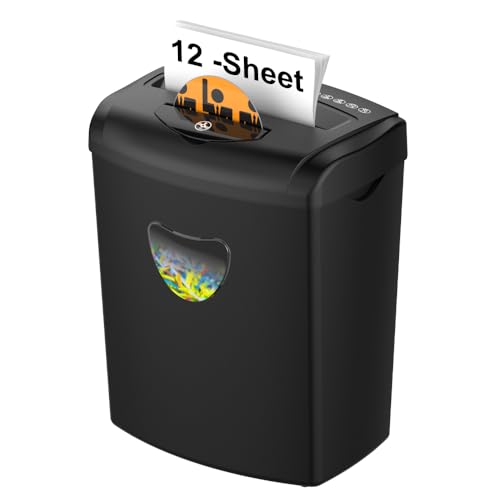
Efficiently shreds up to 12 sheets at once.
Large 5.55-gallon basket reduces emptying frequency.
Jam proof system ensures smooth operation.

High security P-4 cross-cut shredding.
Handles credit cards, CDs, and staples.
Large 6.6-gallon waste bin capacity.

Efficient shredding for secure document disposal.
Compact design fits easily in small spaces.
Quiet operation minimizes office noise.

Efficiently shreds CDs and credit cards.
Jam-proof design ensures smooth operation.
Compact basket for easy waste management.
For document security, look for a stated particle size and a security level that can be checked against ISO/IEC 21964 or DIN 66399 requirements. A P-4 paper claim generally needs output within a 160 mm² particle-area limit; examples in the supplied reviews include 5 × 18 mm and 4 × 35 mm claims. Those dimensions make a claim plausible, but they do not prove that every piece produced by the machine meets the limit. The strongest evidence is an independent laboratory measurement identifying the exact product, or a model-specific test report. “Cross-cut” and “micro-cut” by themselves are not security standards.
Capacity figures also need context. A claim such as 8, 10, 14, or 15 sheets should identify the paper basis weight, such as 20-pound bond, 70 g/m², 75 g/m², or 80 g/m². Runtime and cooldown figures matter just as much: several supplied products specify only two to five minutes of continuous use followed by 20 to 60 minutes of cooling, while one product was independently observed processing repeated 14-sheet stacks for 30 minutes. Conflicting listings, unqualified sheet counts, and “jam-proof” language can make a light-duty machine appear suitable for heavier work than the evidence supports.
Safety claims should be checked in the manufacturer’s exact manual and safety label. Look for a basket or head-position interlock, controls for reverse and jam clearing, overload protection, thermal shutdown, and clear warnings about hands, hair, jewelry, loose clothing, children, and pets. For electrical safety, an ETL, UL, or CSA claim matters only when the exact product can be traced through Intertek’s ETL directory, UL Product iQ, or the CSA certified-product listing. An untraceable badge remains a marketing claim rather than independently confirmed protection.
Noise figures should disclose how sound was measured. Several products list figures from 48 to 70 dB, but the supplied reviews found no declared method or independent measurement for most of them. Similarly, a warranty can indicate some expected service life, but a stronger durability case includes cutter coverage, replacement parts, repair instructions, and a defined service pathway.
Finally, consider what happens after shredding. Cards and CDs can place plastic fragments in the same bin as paper. Shredded paper is accepted differently by local recycling programs, so disposal instructions should distinguish paper from plastic and optical media. Buyers should also look for disclosed operating and standby energy, automatic shutoff, material and packaging claims supported by the FTC Green Guides, and a repair or end-of-life program.
Across the supplied products, the recurring safety caveat is serious: every machine has a feed opening that can pull in fingers, hair, jewelry, or loose clothing, and several reviews specifically highlight the danger to young children. Keep the shredder inaccessible to children and pets, supervise use, and unplug it when idle, before emptying, or before cleaning. No supplied product had independently verified safeguards that remove this category-wide pull-in risk. Also avoid assuming that a P-level claim, ETL wording, “jam-proof” label, or low noise number is proven without exact-model testing or registry evidence.
These topics distinguish a shredder that is merely convenient from one whose safety, security, workload, and environmental claims are clearly supported. The supplied scores show that most products have moderate rather than conclusive evidence; the highest results generally belong to products with specific manuals, longer warranties, or independent workload testing.
This measures whether the feed opening, interlocks, controls, and instructions reduce pull-in and laceration risk. For shredders, a high score means a documented basket or head interlock plus clear warnings and operating controls; lower-scoring products lack a located manual or model-specific evidence. Even the better-scoring machines remain unsafe for children, because no supplied product eliminates the exposed-feed hazard.
This covers protection from shock, overheating, and fire during normal use and jams. A high score combines model-specific electrical ratings, a traceable UL, ETL, or CSA listing, and credible overload or thermal shutdown provisions. Scores were generally moderate because many products described thermal cutoffs but had no exact-model public registry record; an untraceable ETL claim is not equivalent to verified certification.
This measures whether routine operation is reasonably quiet and whether the noise claim is measured transparently. A high score requires a disclosed sound-pressure method or independent test, not just “quiet operation.” Supplied listings ranged from claimed 48 to 70 dB, but the reviews repeatedly found no test method or independent measurement. The products therefore cluster around moderate scores rather than demonstrating verified low exposure.
This measures whether the actual particle size supports the claimed P-level under ISO/IEC 21964 or DIN 66399. A high score requires measured output or a recognized test, not merely “cross-cut” or “micro-cut.” Several products state dimensions within P-4 limits, but most lack independent measurement. VidaTeco is a warning in the opposite direction: Consumer Reports measured pieces about three inches long and rated its document security low despite the listing’s P-3 description.
This measures whether important safety, security, and performance claims can be traced to a third-party registry or an ISO/IEC 17025 laboratory report naming the exact product. Higher scores belong to products with independent evidence, while uncheckable UL, ETL, CSA, or security claims score poorly. VidaTeco stands out for Consumer Reports workload testing and an ETL identification, although the supplied review still notes that a public model-specific registry entry was not located.
This measures whether sheet capacity, speed, runtime, cooldown, and jam resistance hold under stated paper conditions. A high score requires test conditions or a clear manual that closely matches observed performance. Most products rely on manufacturer claims, often with conflicting runtimes. VidaTeco scored highest because Consumer Reports independently fed repeated 14-sheet stacks for 30 minutes without an overheat stop; several others had only short, manufacturer-stated duty cycles.
This measures whether the listing consistently states the model, particle size, paper basis weight, duty cycle, media limits, and warranty. High scores reflect qualified, internally consistent claims. Lower scores occur when listings conflict—for example, when a product is described as both 10 and 13 sheets, or when documentation disagrees on cross-cut versus micro-cut operation and runtime. Specific numbers help only when they refer to the same product version.
This measures whether the exact product and responsible seller have a clean, traceable record and respond clearly to hazards. A high score means no unresolved recall or credible incident pattern plus visible corrective support; a low score would reflect a known unresolved hazard. The supplied reviews generally found no product-specific CPSC recall or warning, but absence of a located record is not proof that the product is risk-free.
This measures warranty coverage, expected durability, repair access, and replacement parts. A higher score reflects meaningful cutter or machine warranties and a documented service path; lower scores reflect one-year coverage with no parts catalog or repair guide. Fellowes scored well on this topic because its current warranty schedule confirms one year for the machine and five years for the cutters, while most others disclose little repair support.
This considers operating and standby energy, automatic shutoff, materials, and packaging. A high score requires specific power figures or substantiated material and packaging reductions, not general environmental language. The supplied products mostly lacked wattage, standby-use, recycled-content, and packaging disclosures, so their scores remain close together. Plastic or metal construction alone does not establish a lower footprint.
This measures whether paper, cards, CDs, staples, and clips can be separated for appropriate disposal. A high score requires practical instructions that prevent plastic or metal fragments from contaminating paper recycling. The supplied products generally use one basket for paper and cards, and some also accept CDs, which limits their scores. Local acceptance of shredded paper varies, so users must check local guidance.
This is a compact, light-duty desktop shredder for household or small-office document disposal. Aurora specifies an 8-sheet maximum using 20 lb bond paper, an 8.7-inch feed opening, a 3.4-gallon basket, and one credit card at a time. It cuts paper into stated 7/32 by 1 27/32 inch pieces and labels that output P-3. The stated dimensions are 12.05 by 6.73 by 15.75 inches. The manufacturer documents a basket-position safety interlock, auto start, manual reverse, and thermal shutoff. Those are useful operating protections, but no exact-model UL, ETL, CSA, or comparable third-party certification record was located. The output dimensions are consistent with the P-3 maximum particle-area requirement, but the product's actual output was not independently measured. Published duty guidance is also inconsistent, with official Aurora instructions saying up to 10 continuous minutes and another Aurora specification listing 2 minutes on and 30 minutes off.
It suits an adult working in a small home office who periodically disposes of mail, routine account papers, and expired payment cards. The compact basket format and stated 8-sheet limit fit short, attended sessions rather than a backroom shredding task. It is most appropriate where the unit can be placed out of reach of children and pets, switched off when unattended, and maintained with regular cutter lubrication as instructed. Its stated P-3 output is intended for ordinary personal-document disposal, not high-security destruction workflows.
It is not appropriate for homes where toddlers, children, or pets can reach the feed opening. CPSC warns that shredders can pull in fingers, hair, clothing, and other items, and adult supervision does not eliminate the child injury risk. It also does not fit users who need independently certified electrical safety, independently verified destruction output, quiet desk-side use, or predictable bulk throughput. Avoid it for confidential records requiring a documented high-security destruction standard or for frequent large batches, given the conflicting published runtime information.
Aurora's documentation confirms a basket-mounted safety interlock and thermal shutoff. The manual also instructs users to keep hands, hair, loose clothing, and jewelry away from the feed opening, to switch it off when unattended, and to keep it away from children. Those instructions matter because CPSC identifies serious pull-in injuries, especially involving young children. No exact-model third-party electrical certification record was located, so a listing should not be assumed from the product description alone. The product has steel cutters and a limited warranty, but Aurora says it does not repair products, which limits repairability. No standby-power figure, recycled-content claim, packaging reduction, or end-of-life program was identified. It shreds credit cards into the same basket as paper, so users should separate card-containing output where practical and check local rules. EPA notes that acceptance of shredded paper depends on the local recycling program.
This is a corded, lift-head cross-cut shredder for home or light small-office document disposal. It uses a 220 mm feed opening, a 5.55-gallon basket with a viewing window, and accepts paper, staples, small clips, and one plastic credit card at a time. The manufacturer specifies 120 V, 60 Hz operation and a 12-sheet maximum based on A4 75 g/m² paper. The manufacturer states that the product cuts paper into 5 x 20 mm pieces, a size consistent with the particle limit for P-4 paper destruction under ISO/IEC 21964. That output size has not been independently measured for this exact product. Its manual also documents a head-on-basket safety interlock, manual forward and reverse controls, and automatic shutdown after overheating. The stated operating limit is about five continuous minutes, followed by roughly 40 minutes of cooling, with a recommended daily maximum of 30 sheets and two cards.
It suits an adult home-office user who periodically destroys bills, tax paperwork, mail, and a small number of payment cards, rather than processing accumulated records in one session. The compact lift-head format and viewing window are practical where floor space is limited and the bin needs occasional monitoring. Its stated 5 x 20 mm output is appropriate for routine confidential paper disposal when the user accepts that the P-4 classification has not been independently verified. Use should follow the stated sheet limits and cooldown interval.
It is not appropriate as an accessible household appliance around young children, pets, or anyone unable to follow feed-slot safety rules. CPSC warns that shredders can pull in fingers, hair, loose clothing, and jewelry, and children should never operate one, even while supervised. It also does not suit sustained office purge work because its stated run time is about five minutes, its cooldown is about 40 minutes, and its recommended daily volume is only 30 sheets. Users needing independently certified electrical safety or independently tested shred security need documented verification.
The manual provides meaningful operating safeguards. It tells users to keep children, hands, hair, loose clothing, and jewelry away from the feed opening, to unplug the product when it is not being used, and to stop use if smoke or unusual odor occurs. It also documents a basket-head interlock and automatic overheating shutdown. These are manufacturer-stated protections, not an independently verified exact-model safety certification. No public exact-model recall or incident pattern was located in the checked CPSC recall resources. Environmental documentation is limited. The manual identifies the manufacturer and gives basic maintenance instructions, but it does not disclose standby power, operating wattage, recycled material content, packaging composition, repair parts availability, or a United States end-of-life program. Because it shreds plastic cards with paper in the same basket, users should keep card-containing output separate from paper recycling unless their local recycling authority explicitly accepts it. The short warranty and absence of parts documentation may also limit service life.
This is a compact, corded strip-cut shredder for occasional home or light desk use. It accepts paper, plus one credit card or CD at a time, and uses Auto, Off and Reverse controls. The product record describes a 3.17-gallon basket, 10-sheet capacity and a one-year warranty. The manufacturer’s product page for the closely matching SD108P identifies 6.0 mm strips, P-2 security, 70 dB noise, overheating protection and a 2-minute run time followed by 30 minutes off. That page instead rates capacity at eight 80 g paper sheets and an 11 L basket. A separate model-specific online manual repeats the 10-sheet and 3.17-gallon figures, but gives a five-minute run time. The conflicting specifications limit confidence in the advertised workload claims.
This product suits an adult in a small home office who needs to dispose of a modest amount of routine, low-sensitivity paper and has space for a compact shredder with a small basket. It is most appropriate when the user can feed conservative paper batches, allow substantial cooling time after short runs, use Reverse if a jam occurs, and keep the unit in an area inaccessible to children. Its stated card and CD capability is useful only when those fragments can be collected and disposed of separately.
It is not suited to households with young children unless the shredder can be stored inaccessible and unplugged whenever unused. CPSC warns that consumer shredders can pull in children’s fingers quickly, even under supervision. It is also not suited to buyers handling financial, medical, legal or other sensitive records, because P-2 strip cutting is a basic security level and no independent output test was found. Heavy or continuous shredding is unsuitable because the available documentation describes short duty cycles and lengthy cooling periods.
The safety information is useful but basic. The available manual tells users to keep hands, hair, clothing, children and pets away from the feed slot, and to unplug before cleaning. Those precautions align with CPSC guidance, which notes serious finger injuries from consumer shredders and specifically advises keeping children away and unplugging the unit when it is not in use. The manufacturer also states thermal protection, but an exact Intertek listing for this product was not located. Intertek itself is an OSHA-recognized testing laboratory, yet that recognition does not verify this particular product. The manufacturer states a one-year replacement warranty and recommends oiling the cutters. No replacement-parts catalogue, repair program, operating-power figure, standby-power figure, recycled-material content or packaging disclosure was found. The unit can shred cards and CDs, but the documentation does not show a separate media bin or explain disposal of mixed output. EPA notes that acceptance of shredded paper depends on local recycling rules, so paper, card and optical-media fragments should not be assumed compatible with the same recycling stream.
This is a corded, black home-office cross-cut shredder with a 4.7-gallon bin. External retail listings identify a 15-sheet maximum feed, 10-minute stated run time, P-4 rating, 48 dB noise claim, and ability to shred paper, cards, CDs, staples, and paper clips. Those are manufacturer-stated specifications, not laboratory-confirmed measurements. A third-party roundup reports a 4 x 38 mm paper particle size, which would fall within the 160 mm² maximum commonly used for P-4 paper destruction. It does not provide a laboratory method or output measurements, so the product's actual security performance remains unverified. The manufacturer offers a one-year warranty for its shredders, but no model-specific manual, electrical rating label, certification record, repair-parts listing, or independent test report was located for this product.
This product suits an adult home-office user who periodically destroys mail, invoices, bank paperwork, and expired cards, rather than running a continuous records-disposal station. Its manufacturer-stated 15-sheet feed, 10-minute run time, and 4.7-gallon bin are practical for occasional batches. It may also fit a shared desk area where lower operating noise matters, provided the 48 dB claim is treated as unverified. Keep it in an adult-controlled location and use it only within the stated feed and runtime limits.
It is not suited to homes where young children can reach or activate the shredder. CPSC warns that shredders can pull in fingers, hair, jewelry, and loose clothing, and no model-specific evidence was found for a child-resistant feed opening or documented safety interlocks. It is also not for organizations needing independently validated P-4 destruction, documented electrical certification, a clear cooldown specification, or sustained high-volume use. Buyers who need serviceable equipment should avoid relying on it until parts and repair support are documented.
Paper shredders create a real pull-in hazard. CPSC advises keeping children away, keeping hands, hair, clothing, jewelry, and ties clear of the feed opening, and unplugging the unit when it is not in use. The product's available public information does not document its feed-slot dimensions, warning labels, bin safety switch, thermal cutoff, or jam-clearing instructions. No exact-product certification in UL, ETL, or CSA public registries was located. No exact-product recall, CPSC warning, or incident pattern was located in the searches performed. That is not proof of safety performance. The brand states a one-year warranty, but public repair, spare-parts, power-consumption, standby-power, recycled-content, and packaging disclosures were not located. Since the unit shreds cards and optical discs as well as paper, do not assume the mixed output belongs in paper recycling. EPA notes that shredded-paper acceptance depends on the local program and contamination can prevent recycling.
This is a compact, corded cross-cut paper shredder for light home or small-office document disposal. It uses a lift-off shredding head over a 4-gallon basket and is intended for paper, small staples, small paper clips, and one credit card at a time. BONSEN states an eight-sheet capacity under its specified paper conditions, a 5 x 18 mm cut, reverse operation for jams, and an interlock that stops operation when the head is lifted. Independent Consumer Reports testing gives the unit more useful evidence than the listing alone. Its test found shreds about 0.875 inches long and found the machine ran 19 minutes when repeatedly fed eight-sheet stacks before it stopped. That is stronger real-workload evidence than the stated short duty cycle. However, Consumer Reports also judged its noise to be on the loud side and speed mediocre. The claimed ETL certification could not be traceably matched to this exact product in the public Intertek directory during verification.
This product suits an adult household or very light home-office user who occasionally destroys bills, mail, tax paperwork, or expired payment cards and can work in short batches. Its compact footprint, lift-off bin, and ability to take staples and small clips reduce preparation for everyday paper cleanup. The strongest workload evidence is the Consumer Reports continuous-feed result, but the unit remains physically small. It is most appropriate where the shredder can be stored out of children’s reach and unplugged when unattended.
It is not appropriate for homes with young children who can access the feed slot, or for settings where the machine cannot be unplugged and secured after use. CPSC warns that paper shredders can pull in children’s fingers quickly, even with adult supervision. It also does not fit a quiet shared workspace, a high-volume office, or users needing verified government-grade document destruction. Buyers who need traceable third-party electrical certification, a confirmed precise duty cycle, repair parts, or separate collection for card waste need more documentation than is available here.
The practical safety measures documented for this product are the lift-off-head interlock, off and reverse controls, overheat indication, and stated automatic thermal shutdown. Those measures reduce foreseeable operating risks, but they do not eliminate pull-in danger at the feed opening. CPSC specifically advises keeping children away from shredders, keeping hands, hair, jewelry, and loose clothing clear, and unplugging the appliance whenever it is not in use. The claimed ETL status was not independently confirmed for this exact product in the public registry. Environmental documentation is limited. BONSEN states a one-year warranty and provides oiling guidance, which may support maintenance, but no replacement-parts program, repair manual, recycled-content claim, standby-power figure, packaging disclosure, or end-of-life program was located. Because it shreds credit cards, staples, and paper into the same basket, users should check local waste rules rather than assuming all shredded output belongs in paper recycling.
This corded, manual-feed paper shredder is a floor-standing home-office unit with a pullout 4.2-gallon bin, viewing window, casters, and a 120V, 60Hz electrical rating. The product manual states that it accepts up to 12 sheets of A4 75 g/m² paper per pass, plus one credit card or CD at a time. Its documented paper output is 5 x 12 mm cross-cut pieces, which falls within the dimensional limit commonly used for P-4 paper destruction. The manual documents a basket-position interlock, manual reverse and forward controls, overload indication, and an overheat indicator with an approximately 20-minute cooldown. These are manufacturer-stated provisions, not independently tested results. The same manual states approximately 60 minutes of continuous operation but also lists a maximum recommended daily use of 30 sheets and two cards, leaving its real sustained workload unclear.
This product suits an adult working in a small home office who wants to destroy routine financial mail, invoices, and client paperwork in small batches. It is most appropriate where the user can follow the stated paper-weight limit, remove unsuitable material, manage jams with reverse control, and allow cooldown when indicated. The pullout bin, clear window, and casters are practical for someone who needs to move the unit occasionally rather than keep it on a desk.
It is not suited to homes where young children can access the shredder, even with supervision. Federal safety guidance warns that shredders can pull in a child's fingers quickly. It also is not suitable for users who need independently certified electrical safety, independently measured noise, or laboratory-verified document destruction. Avoid treating it as a high-volume archive-clearing machine because the manual gives inconsistent guidance on continuous runtime and recommended daily use.
The manual gives meaningful basic injury instructions. It tells users to keep hands, hair, clothing, jewelry, pets, and children away from the feed opening, to unplug the unit when not in use for an extended period, and to use reverse if hair is caught. It also advises safety goggles when shredding CDs because fragments can be thrown. The basket-position interlock is a useful documented safeguard, but no public exact-product listing was found in the major North American electrical-certification registries checked. No exact-product recall or safety warning was located in the consumer-safety sources searched. Environmental documentation is thin. No operating-power, standby-power, recycled-material, packaging, repair-parts, or end-of-life program disclosure was located. The product combines paper with plastic cards, CDs, staples, and clips in one bin. That matters because shredded paper acceptance varies by local recycling program, and mixed material should not be assumed suitable for paper recycling.
This is a compact AC-powered cross-cut paper shredder with a 5.55-gallon basket, listed dimensions of 12.8 by 8.9 by 16.5 inches, and a stated 12-sheet maximum feed. The published product manual says it handles paper, staples, paper clips, credit cards, and CDs, with separate media openings and Auto, Off, and Reverse controls. It also directs users to keep hands, hair, loose clothing, children, and pets away from the feed opening. Its stated paper output is 4 by 35 mm, which fits the dimensional limit for ISO/IEC 21964 P-4 paper destruction. That output size has not been independently measured for this product. The manual states a five-minute run time followed by a 30-minute cool-down. However, the brand's other product material describes a 10-sheet version with a two-minute run time, so workload claims are not fully consistent across published sources. The product is advertised as ETL certified, but an exact model listing was not located in Intertek's public directory.
This product suits an adult home-office user who periodically destroys bills, account paperwork, mail, and small batches of confidential documents. It is sized for a desk-side or small-office location, rather than centralized high-volume disposal. It may also suit users who need to destroy an occasional payment card or optical disc, provided they follow the separate-feed instructions and allow cooling after the stated run period. The buyer should be comfortable treating the sheet count and jam-proof language as manufacturer claims, not independently verified performance results.
It is not appropriate for homes where young children can access the machine, unless it can be unplugged, secured, and kept completely out of reach. CPSC specifically warns that paper shredders can pull in small fingers and cause severe injuries. It is also not suited to continuous office clearing, archive destruction, or workloads that require a confirmed sustained duty cycle. Organizations with contractual, legal, or highly sensitive data-destruction requirements should not rely solely on the unverified P-4 claim or unconfirmed certification listing.
The key health issue is mechanical pull-in risk. The available manual includes standard precautions for hands, hair, loose clothing, children, and pets, plus unplugging before servicing. Those directions are useful, but they do not replace physical access control. The product is advertised as ETL certified and has a stated overheating protection feature, yet the exact product could not be verified in Intertek's public registry. No product-specific recall or CPSC warning was located in the sources checked. The enclosure is listed as ABS plastic, and no recycled-content, lower-energy, packaging-reduction, repair, or take-back claim was substantiated. The product can shred cards, CDs, staples, and clips, but no separate collection system or disposal instructions were found. Keep media fragments separate from paper where possible. EPA notes that acceptance of shredded paper varies locally, and plastic or metal contamination can limit paper recycling.
This is a corded, cross-cut paper shredder for a home office or a small, intermittent office workload. It has a 25-liter, or 6.6-gallon, pull-out waste bin and separate feed capability for paper and single CDs or credit cards. The documented product instructions specify a 14-sheet maximum using 75 g/m² paper, a five-minute run period, and an approximately 30-minute cooldown. The available product instructions state a 4 x 35 mm cross-cut output and label that size P-4. That stated dimension is consistent with the common P-4 particle-size convention, but no independent measurement of this product's output was located. The instructions also claim automatic overheat protection, reverse clearing, 68 dB noise, and ETL certification. The exact product could not be confirmed in Intertek's public listing directory, so those claims remain unverified.
This product fits an adult-only home office or a small office that destroys ordinary financial, medical, or administrative papers in short batches. It is most suitable where a 25-liter bin and a stated five-minute operating window are practical, and where users will stay within the specified 14-sheet limit for lightweight office paper. It also suits users who occasionally need to destroy a credit card or CD and can keep those materials separate from paper waste after shredding.
It is not suited to homes where young children or pets can access the work area, unless the product is unplugged and physically secured whenever it is not actively supervised. CPSC warns that consumer shredders can pull fingers into the mechanism, especially for young children. It is also not for government-class destruction needs, continuous-duty workloads, or buyers who require a publicly traceable electrical listing and independently tested noise, security, or throughput results.
The instructions specify an off position before emptying the bin and advise a cooldown after overheating. Those are useful operating controls, but they do not replace basic safeguards. CPSC advises keeping children away from shredders, keeping hair and loose clothing away from the feed opening, and unplugging the unit when unused. No verified child-protection sensor or independently confirmed safety test record was found for this product. The housing is stated to use ABS plastic, and there are no substantiated recycled-content, low-energy, packaging, or repairability claims. The product can shred paper, cards, CDs, staples, and clips, but no separate media collection system or disposal instructions were found. Shredded paper acceptance varies by local recycling program, while cards and CDs should not be mixed into paper recycling. No product-specific CPSC recall or public incident pattern was located in the checks performed.
This is a compact corded cross-cut paper shredder for home paperwork and occasional credit-card disposal. Independent retail listings tied to the product's UPC identify it as a 10-sheet model with a 4-gallon bin, automatic start and stop, and forward and reverse controls. The stated dimensions are 12.6 by 13.3 by 7.6 inches. The stated cut size is 4 by 35 mm, which is consistent with the dimensional limit commonly associated with P-4 paper destruction, but no independent output measurement or test report for this product was found. The workload claims are unclear. One listing says five minutes of runtime, while another says two minutes followed by a 45-minute cooldown. No product-specific manual, electrical certification record, sound test, or laboratory performance test was located.
This product fits an adult home user with light, intermittent batches of bills, account statements, and other routine personal paperwork. Its stated 10-sheet feed and compact 4-gallon bin suit a small desk-side or under-desk setup where emptying the bin regularly is acceptable. It is most appropriate when the buyer can treat the stated P-4 classification, runtime, thermal cutoff, and credit-card capability as manufacturer claims rather than independently verified performance. Keep it in an area inaccessible to children and unplug it when not in use.
It is not for households where young children or pets can reach the feed opening, because the product-specific safeguards and warning labels could not be verified. It is also unsuitable for sustained cleanouts, shared-office use, or frequent high-volume shredding, since published runtime information conflicts and no independent duty-cycle test was found. Buyers needing audited document-destruction compliance, independently verified P-4 output, low verified noise, or a traceable electrical safety listing should use a product with model-specific documentation and third-party records.
Paper shredders can pull in fingers, hair, loose clothing, ties, and necklaces. CPSC specifically warns that young children can suffer severe finger injuries, and advises keeping children away, placing shredders out of reach, and unplugging them when unused. This product is described as having a safety lock and automatic operation, but supporting instructions and safety-label documentation for this exact unit were not found. Its automatic overheat shutoff is also only a manufacturer-stated feature, not a verified electrical safety certification. No recall, CPSC enforcement action, or public incident record specific to this product was located in the searches performed. The brand states a one-year warranty, but no repair parts, service manual, sustainability program, packaging material disclosure, or energy and standby-power data was found. Shredded paper acceptance varies by local recycling program. Credit-card fragments should be kept separate from paper output to avoid contaminating the paper stream.
This is a compact corded cross-cut shredder for occasional home or small-office document disposal. The product is listed with a 10-sheet maximum using 80 g/m² paper, a 3.43-gallon basket, and separate paper and card or CD feed openings. Its 12.2 by 6.5 by 15 inch format and 8.5-pound weight make it a small desktop or under-desk unit rather than a high-volume departmental machine. The product specification, repeated by independent retail listings, states 4 by 39 mm cross-cut output. That nominal 156 mm² particle area fits the ISO/IEC 21964 P-4 maximum of 160 mm², but no independent measurement of this product's actual output was found. A hosted product manual also describes Auto, Off and Reverse controls, overheating protection, and a one-year replacement guarantee. The claimed ETL status could not be confirmed in an accessible Intertek listing for this exact product.
This product suits an adult in a home office or small workspace who periodically destroys bills, tax papers, account statements, and a limited number of cards or discs. Its small basket, compact footprint, manual reverse control, and stated 10-sheet limit fit short batches rather than archive cleanouts. It is most appropriate where the user can keep the unit unplugged when idle, supervise access, and follow the manual's paper and media limits. The stated P-4-sized cut is relevant for ordinary confidential paper, provided the buyer accepts that output was not independently measured.
It is not suited to homes where young children can reach the shredder, unless it can be stored inaccessible and unplugged when not actively used. CPSC warns that consumer shredders can pull in children's fingers quickly, even during supervision. It also is not appropriate for anyone needing independently certified electrical safety, verified P-4 destruction, measured low noise, or a documented heavy-duty duty cycle. Users with large backlogs, frequent all-day shredding, repairability requirements, or formal information-security obligations need clearer, independently supported performance documentation.
The safety material found for this product is mainly manufacturer-stated. The hosted manual tells users to keep fingers, hair, loose clothing, jewelry, children and pets away from the feed opening, to unplug before cleaning or emptying, and to use Reverse for jams. Those are important precautions because CPSC identifies finger amputations and lacerations as known paper-shredder hazards, particularly for young children. An ETL claim appears in retail copy, but an exact-product record in Intertek's public directory was not located during verification. The housing is stated to be plastic, with a small 3.43-gallon basket. Automatic start and stop may reduce operating time between feeds, but no input-wattage, standby-power, recycled-content, packaging, repair-parts, or recycling program disclosure was found. The product can shred cards and CDs, yet the documented setup has no separate collection bin or disposal instructions. Keep plastic card and optical-media fragments separate from paper recycling where local rules require it.


