Best Overall

Beatbot iSkim Cordless Robotic Pool Skimmer
Solar powered for continuous, eco-friendly operation.
Smart obstacle avoidance ensures efficient cleaning.
28-hour runtime with auto return for convenience.
 Daniel Kenitz
Solar powered for continuous, eco-friendly operation.
Smart obstacle avoidance ensures efficient cleaning.
28-hour runtime with auto return for convenience.

Efficient cleaning with advanced navigation technology.
Long-lasting battery for extended cleaning sessions.
User-friendly design with easy maintenance features.

Solar-powered for eco-friendly pool cleaning.
Dual cleaning modes for versatile functionality.
Soft-touch design protects pool surfaces.

Dual charging options for continuous cleaning power.
Shallow water safeguard prevents skimmer from getting stuck.
Twin motors tolerate salt chlorine pools effectively.

Enhanced AI for swift, efficient cleaning.
Comprehensive 360° coverage ensures thorough cleanliness.
Smart features offer convenient, hands-free maintenance.
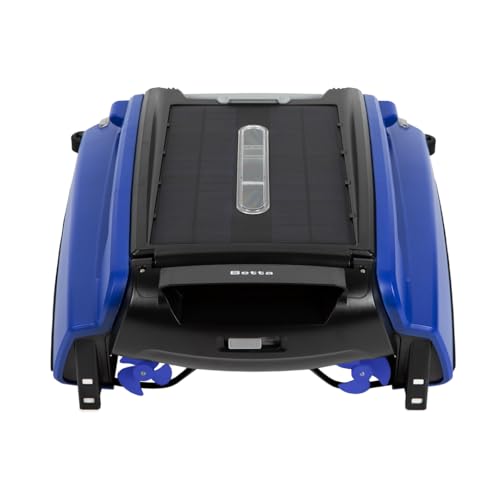
Operates without cords or hassle.
Eco-friendly, uses solar power.
Effective at removing debris efficiently.

Continuous cleaning with solar power efficiency.
Smart obstacle avoidance for hassle-free operation.
Convenient app support for easy control.

Efficient solar-powered operation saves energy costs.
Advanced navigation ensures thorough pool cleaning.
Durable design handles various pool conditions.

Efficient solar-powered cleaning saves energy costs.
Convenient app control for easy operation.
Sleek design available in two stylish colors.

Efficient AI-powered pool mapping for thorough cleaning.
Multi-level platform cleaning for versatile use.
Superior debris detection enhances cleaning precision.
What determines whether one works is more than basket size or a “24/7” label. Surface performance should be demonstrated with repeatable testing that discloses pool size, circulation state, debris type and mass, run time, number of repetitions, and how much debris escapes during turns or basket removal. The strongest evidence would come from an ISO/IEC 17025-accredited laboratory whose scope can be checked through the A2LA directory. A stated 150-, 180-, or 200-micron mesh rating describes the filter, not necessarily real pickup or retention of leaves, insects, fine debris, pollen-like material, or oils.
Pool fit matters just as much. Buyers should check the exact manual for limits involving pool shape, depth, steps, ladders, skimmer openings, drains, returns, ledges, infinity edges, shade, and strong currents. Independent testing should disclose how often the product strands or fails to recover. A large basket can reduce emptying, but it may also become difficult to remove or cause slower movement when full. App control, obstacle avoidance, auto-docking, auto-return, and “AI” navigation are meaningful only when the exact product has clear operating limits and independent results.
Battery and water safety deserve separate scrutiny. Look for a traceable exact-product listing in UL Product iQ, Intertek ETL, CSA, or TÜV Rheinland Certipedia, and for an exact battery report to IEC 62133-2 and an ingress-protection report to IEC 60529. A seller logo, a general declaration, or testing on a related model does not establish protection against overheating, charging faults, water entry, fire, burns, or electric shock. Follow the supplied charging instructions, keep charging equipment and ports dry, and remove the product before swimming unless the exact manual clearly says otherwise.
Runtime claims are especially easy to overread. Solar operation depends on sunlight, shade, clouds, season, battery condition, pool currents, and debris load. “24/7,” “continuous,” or “all-day” language may describe an ideal cycle rather than uninterrupted operation in a real pool. Compare claimed runtime with disclosed recharge conditions and independent testing. Also check whether the maker sells replacement baskets, rotors, propellers, seals, cables, solar parts, and batteries, and whether battery service is available. A warranty can extend useful life, but it is not proof of durability, UV resistance, chlorine or saltwater resistance, repairability, or battery recycling support.
Across the supplied reviews, the recurring safety caveat is to keep swimmers, children, and pets out of the pool while a robot operates. Several products can strand on stairs, skimmer portals, ledges, ladders, returns, or other obstructions, and complex pools, heavy shade, strong currents, and heavy debris loads can reduce performance. No supplied product had publicly located exact-model third-party certification for all relevant electrical, battery, ingress, and performance claims. Lithium batteries should be kept out of household trash and curbside recycling at end of life.
These products are surface-debris collectors first. The scores below reflect the supplied reviews and distinguish documented operating safeguards from manufacturer claims and independently supported performance.
This measures evidence that the exact skimmer, battery, solar system, and charger resist overheating, charging faults, and water ingress. It matters because a lithium-powered device operates directly on pool water. Among the supplied products, scores ran from 68 to 75: higher-scoring reviews had more concrete charging instructions or battery coverage, but none had a publicly located exact-model UL, ETL, IEC 62133-2, or IEC 60529 report.
This measures guards, stability, moving-part hazards, warnings, and limits around fittings and swimmers. Removing the robot before swimming is the recurring baseline safeguard. Higher scores, such as 77 for the EcoSurfer S2, were supported by explicit no-swimmer instructions and retrieval or obstacle guidance; lower scores reflected unclear manuals, conflicting equipment-use instructions, or limited evidence about steps, skimmers, ladders, and other obstructions.
This measures whether the product clearly separates surface-debris collection from filtration, chemical balancing, algae control, and disinfection. It matters because clearer-looking water is not necessarily safe water. Scores ranged from 62 to 84: higher-scoring products explicitly stayed within a debris-collection role, while lower-scoring reviews identified chlorine-dispensing or “clean water” language without sufficient dosing, testing, or sanitation evidence.
This measures whether safety, performance, and environmental claims are publicly traceable for the exact product rather than supported by seller logos or unspecified tests. It is heavily weighted because identity and evidence quality affect every other claim. Scores ranged from 68 to 71. The supplied products had some hands-on or field testing, but none had a complete public package of current exact-model certificates and reports.
This measures repeatable pickup and retention of representative floating debris, including leaves, insects, fine material, and oils, without escape during turns or basket removal. Higher scores included the EcoSurfer S2’s independent synthetic-leaf result and the supplied retention findings for some models. Lower scores reflected only basket-size or mesh claims, with no accredited protocol or disclosed laboratory measurements.
This measures coverage and recovery around pool shapes, steps, ladders, drains, returns, shade, currents, and infinity edges. It matters because a robot that strands is not providing continuous maintenance. Scores ranged from 52 to 75. Higher scores had some hands-on coverage evidence or detailed manuals; lower scores relied on broad compatibility claims while documenting exclusions, random navigation, or no independent obstacle testing.
This measures whether filtration, basket capacity, runtime, pool-size limits, navigation, app functions, and cleaning claims are specific, qualified, and supported. Scores ranged from 48 to 73. Higher-scoring products gave concrete manuals, capacities, or operating limits. Lower-scoring reviews identified conflicting specifications, vague “AI” or all-shapes claims, and headline runtime or filtration figures that could not be reconciled with testing.
This measures whether runtime, solar, dual-charging, and continuous-operation claims hold under realistic sunlight, shade, weather, battery, and debris conditions. It matters because overstated autonomy can lead to unnecessary charging or missed maintenance. Scores ranged from 52 to 81. The strongest supplied evidence was an independent endurance and leaf-collection test for the EcoSurfer S2; many lower scores reflected conflicting figures or no disclosed test conditions.
This measures resistance of the hull, seals, solar panel, basket, motors, and moving parts to UV, chlorinated or salt water, and normal impacts. It matters because early corrosion or material failure turns a rechargeable product into waste. Scores ranged from 68 to 74. Higher scores generally reflected stated chemical limits, warranties, or available wear parts, but no supplied product had a located exact-model ASTM UV or chemical-resistance report.
This measures replacement batteries, baskets, seals, motors, solar parts, service instructions, and responsible lithium-battery take-back. It matters because a repairable skimmer can remain useful after a basket, rotor, or propeller fails. Scores ranged from 68 to 77. Betta products scored relatively well because replacement baskets and mechanical parts are sold, but the supplied reviews commonly found no user-replaceable battery or manufacturer take-back program.
This product is a cordless floating robotic pool skimmer, not a floor or wall cleaner. It uses a claimed 10,000mAh lithium battery and 24W solar panel to move across the water surface, direct floating debris into a 9L basket, and return for retrieval. Beatbot lists Wi-Fi and Bluetooth app control, scheduling, obstacle avoidance, guided wheels, and a three-year warranty. The 9L basket, up-to-28-hour runtime, UV, salt, chlorine resistance, and IP68 protection are manufacturer-stated specifications. A hands-on Tom's Guide test found that it cleaned that tester's pool surface in under an hour, while noting that larger pools can take up to two hours. That is useful real-world evidence, but it is one test rather than a repeatable independent laboratory assessment. No public exact-product UL, ETL, IEC battery, ingress-test, or accredited debris-capture report was located.
It suits a pool owner whose main recurring task is removing floating leaves, insects, pollen, and other coarse surface debris from an in-ground or above-ground pool. It is most practical for a sunny pool where a floating robot can operate without frequent manual charging, and for users who can empty a large basket and use app-based scheduling or retrieval. The published three-year warranty may also matter to buyers who want stated coverage for a seasonal outdoor appliance. Its role is surface maintenance, alongside normal circulation, filtration, and water treatment.
It is not for anyone expecting a substitute for a pool vacuum, circulation pump, filter, chemical testing, algae treatment, or disinfection. Families should remove the robot during swimming, consistent with the safety approach in Beatbot's related skimmer instructions, rather than treating it as harmless pool equipment around bathers. It is also a poor fit for heavily shaded pools, pools with complex obstructions or unusual edges that need independently proven navigation, and users who require public third-party certification evidence for a lithium battery product used around water. Repair-focused owners may find the lack of public battery and parts documentation limiting.
The useful health boundary is clear in the product's function. It captures floating debris, but it does not make pool water sanitary and should not replace filtration, chemical balancing, testing, or disinfection. No CPSC recall or public CPSC safety warning for Beatbot was located in the searched U.S. records. That is not a safety certification or proof that no incidents have occurred. Beatbot states that this product has IP68 protection, UV, salt, and chlorine resistance, plus a three-year warranty. Those claims could support a longer service life if they hold up, but no public ASTM UV or chemical-resistance report, exact-product IP test report, or independently listed electrical-safety certificate was located. The battery is built in, and public repair instructions, replacement-battery availability, and a manufacturer take-back route were not found. Use an established lithium-ion recycling program when the product reaches end of life.
The AquaSense 2 is a cordless, submerged robotic pool cleaner, not a floating surface skimmer. It is lowered into the pool to vacuum and brush the floor, walls and waterline, then its top-loading basket is emptied and rinsed after use. The manual specifies a 10,000 mAh battery, a 2 L filter basket, approximately four hours of runtime and approximately four hours to charge at 77°F. Manufacturer documentation states that the unit uses four motors, 16 sensors, double-pass waterline scrubbing and surface parking for retrieval. It also states compatibility with water depths from 1.64 to 9.84 feet, chlorine up to 4 ppm, salt up to 5,000 ppm and pH 7.0 to 7.8. These are manufacturer specifications, not independently published performance tests. The documentation also says it can become trapped by drains or other floor obstacles and may need manual recovery with the supplied hook.
This product fits an owner of a compatible residential pool who wants a cordless robot for routine submerged cleaning of the floor, walls and waterline. It is most suitable where the pool water stays within the stated chemistry limits, there is a dry shaded place for the charging dock, and an adult can remove and rinse the 2 L basket after each cycle. It also suits users who value manufacturer-stated surface parking because the robot is substantial to lift when wet.
It is not for someone specifically seeking a robotic pool skimmer for leaves, insects, pollen or oils floating on the surface. It also needs a different solution for households where people or pets may enter the water while equipment is running, since the manual says not to enter the pool during operation. Pools with prominent drains, returns, toys, complex obstacles or difficult ledges need careful supervision because the manual says the robot can get trapped and may require hook retrieval.
The safety documentation is more useful than a generic marketplace description. It tells users not to swim while the robot is operating, to use only the specified charging supply, to charge in a dry area away from moisture and direct sun, and not to use a damaged or modified battery. The manual lists IP68 for the robot and IPX4 for the dock, but no public test report was located to independently validate those ratings. No product-specific CPSC recall was identified in the checked records. The manufacturer specifies operation in chlorinated water up to 4 ppm and salt water up to 5,000 ppm, plus an automotive-grade coating claimed to resist sun and heat. Those durability claims lack published ASTM UV or chemical-resistance reports. The manual says lithium-ion batteries contain environmentally hazardous substances and should be recycled under local rules, but it offers no clearly documented battery take-back program or user-level battery replacement path. Its replacement-focused warranty can keep a failed unit covered, though it is not the same as repairability.
Betta Flex is a cordless, surface-only robotic pool skimmer. It is a roughly 19.5-inch plastic unit with a built-in lithium-ion battery and top solar panel. It moves across the water, collects floating debris in a removable basket, and offers Normal and Eco operating modes. It is not a floor cleaner, pool filter, or chemical treatment system. Betta states that the Flex uses a 200-micron basket mesh, works in fresh water and salt water up to 5,000 ppm, and has a soft-touch, UV-resistant body. Its manual also gives practical limits, including direct-sunlight dependence, reduced winter charging, a minimum 6-inch water depth, and possible stranding on stairs, stools, debris, or tangled equipment. A hands-on third-party review found good debris retention and easy basket emptying, but it was not an accredited laboratory test.
This suits a pool owner who mainly wants to intercept leaves, insects, dust, and similar floating debris before it sinks. It is most appropriate for an in-ground, above-ground, or infinity-edge pool with at least 6 inches of water, regular direct sun, and a willingness to empty the basket every few days. It also fits households that can reliably remove the unit before anyone enters the pool. The solar-only design is most practical where a charger near the pool would be inconvenient.
It is not appropriate for a pool that is regularly used while cleaning is underway, or for households where children or guests may enter the water without confirming that the skimmer has been removed. It is also a poor fit for persistently shaded pools, winter-only expectations of uninterrupted operation, or pools with complex stairs, stools, hoses, and other equipment that can trap it. Buyers needing floor cleaning, water filtration, algae control, or sanitation need separate pool systems and chemicals.
The strongest safety measure is behavioral, not third-party certification. Betta’s manual instructs owners not to swim while the skimmer operates, calls it not a toy, and identifies entanglement and stranding risks around hoses, stairs, stools, and debris. The product uses a built-in lithium-ion battery that solar-charges without an external AC, USB, or DC charging port. No public listing or report was located for exact-product UL, ETL, CSA, IEC battery, or water-ingress testing. No relevant CPSC recall or public safety warning was located in the searched records. Solar operation can reduce routine grid charging, but it does not establish all-weather autonomy. The manufacturer specifically warns that weaker winter sunlight can lengthen charging and shorten operation. Betta states that the body is UV resistant and usable in chlorine pools and salt water up to 5,000 ppm, but public ASTM durability reports were not located. The battery cannot be replaced by the user. At end of life, it should not enter household trash or curbside recycling, because EPA advises specialized battery recycling or household hazardous-waste handling.
This product is a cordless, floating robotic skimmer for pool surfaces, not a floor or wall cleaner. It uses a solar panel and an internal lithium battery, with an included adapter for off-pool charging. The manufacturer describes a removable fine-mesh basket for leaves, pollen, insects, dust and pet hair, and states coverage of above-ground or in-ground pools up to 40 by 60 feet. The manual specifically instructs users not to swim while it is operating, not to run it with other pool-cleaning devices present, and to switch it off for adapter charging. Its adjustable anti-stranding bars and automatic strand mode are documented manufacturer features. One independent field report found consistent leaf and insect collection in a shaded 20 by 40 foot pool, but also observed reduced movement in low light and occasional overnight stalling. No publicly traceable NRTL listing, ingress rating, battery test report, or accredited performance report was located for this exact product.
This product suits an owner of a sunny above-ground or in-ground residential pool who mainly wants to remove floating leaves, insects, pollen, and pet hair before that debris sinks. It is most appropriate for someone willing to inspect the pool layout, fit the anti-stranding bars where needed, empty the basket every few days, and use the adapter during poor solar periods. It also suits a salt pool within the manufacturer’s stated 5,000 ppm limit. It is intended as a surface-maintenance tool alongside normal circulation, filtration, chemical testing, and sanitation.
It is not suited to households that expect a product to make the pool sanitary, vacuum the floor, scrub walls, or replace filtration and chemical treatment. Do not leave it in the water while people are swimming, and do not operate it alongside another pool-cleaning device, according to the manual. Pools that are heavily shaded, enclosed, used through low-sun winter conditions, or have unusual ledges, stools, shallow shelves, and infinity edges need careful compatibility checking. Buyers needing publicly documented electrical, battery, water-ingress, or independently accredited performance certification need more evidence than is available here.
The main health safeguard is behavioral, not third-party certification. Betta’s manual says to remove the product during swimming, keep it away from children, avoid concurrent use with other cleaners, and turn it off before adapter charging. The product is a debris collector and makes no sanitation, algae-control, filtration, or disinfection claim. That boundary matters because removing visible debris does not establish safe pool water. The manufacturer states that the body has UV-resistant materials, the motors tolerate chlorine and salt, and the product works in salt water up to 5,000 ppm. Those durability claims were not accompanied by public ASTM UV or chemical-resistance reports. A one-year warranty and US paid out-of-warranty service are available, but public repair instructions and battery replacement details were not found. At end of life, the built-in lithium-ion battery should go to an electronics recycler or household hazardous-waste program, not household trash or curbside recycling.
This is a two-device cordless pool-care set. The Scuba V3 is the submerged robot intended for pool floors, walls and the waterline. The EcoSurfer S2 is a floating surface skimmer for leaves, insects and other debris before it sinks. It uses an app, lithium-ion batteries, a wall charger and a solar panel on the skimmer. Aiper states that the skimmer has a 4 L enclosed basket, 150 μm filter, two brushless propellers and a brushless impeller. It also states 35 hours of adapter-charged battery life, solar-assisted operation and a dispenser for one 3-inch chlorine tablet. Separate retailer specifications list the Scuba V3 for pools up to 15 m long, with 180 μm filtration and a 3 to 3.5 hour cycle. These are manufacturer or retailer figures, not independently validated test results. Both included devices have a verified two-year US limited warranty.
This set suits an owner of a residential pool who already understands routine pool chemistry and wants separate machines for floating debris and submerged debris. It is most relevant where leaves, bugs or pollen collect at the surface while sediment and heavier debris also reach the floor. The buyer should be comfortable emptying baskets, keeping chargers dry, monitoring both devices through the app and checking chlorine with a proper pool test method. The two-year limited warranty and available service route are useful for an owner prepared to document a warranty claim if needed.
It is not suited to households that expect a skimmer to make pool water sanitary, or that want to leave a moving robotic device in use while people or pets are swimming. Do not rely on the chlorine-tablet compartment as a substitute for an EPA-registered pool sanitizer used according to its label and verified with water testing. It is also a poor fit for buyers who need publicly available independent safety certification, third-party performance testing, guaranteed all-day solar operation in shaded pools, or clearly documented compatibility with unusual edges, strong returns, ladders and complex fittings.
The important health limit is that surface skimming is not sanitation. The EcoSurfer S2 can hold a 3-inch chlorine tablet, but Aiper does not publish a pool-volume dosing method, target free-chlorine range or independent sanitation evidence for the dispenser. Pool owners should follow the label of an EPA-registered sanitizer and test water chemistry independently. The skimmer manual also directs users not to operate it while people or animals are in the pool and to use the supplied charging equipment. No current recall for either included model was located. However, the CPSC recalled Aiper's separate Elite Pro cordless cleaner in 2023 after 17 overheating reports and one minor burn. Public exact-model UL, ETL, ingress-protection and battery test records were not located for this set. Aiper offers a two-year limited warranty and some replacement support, but publishes no battery take-back program. Retired lithium-ion equipment should go to an appropriate battery or electronics recycler, not household trash.
This is a cordless, solar-powered floating surface skimmer for above-ground or in-ground pools. It uses propellers and an intake impeller to draw floating material into a removable 200 micron mesh basket. The product is about 22 by 19 by 8 inches and has a wireless remote, but normally drives itself using onboard sensors and a gyroscope. Betta states that the SE has twin salt-chlorine-tolerant motors, UV-resistant housing, a one-year warranty, and solar-only charging. Its stated coverage is pools up to 40 by 60 feet. An independent reviewer reports successful pickup of leaves and insects in a real pool, plus generally smooth wall avoidance, but did not publish a controlled debris-retention, battery-safety, ingress, or coverage test protocol. It is a surface-debris tool, not a pool vacuum, filter, sanitizer, or water-treatment device.
This product suits a pool owner with a sunny, conventional above-ground or in-ground pool, recurring leaves, insects, pollen, or pet hair on the surface, and willingness to empty a basket as debris builds. It is most appropriate where the pool is not being used for swimming while the skimmer runs and where no second in-pool cleaner operates at the same time. The solar-only design is most practical in warm, regularly sunny conditions, particularly for owners wanting surface collection without routing a cord or setting up a charger.
It is not for households that expect a device to operate safely around swimmers, children playing in the pool, or a second submerged cleaner. The manufacturer specifically says to remove it while the pool is in use and not to use it with other pool-cleaning devices. It is also a weaker fit for heavily shaded pools, cold-season use, or locations with frequent prolonged cloud cover because the manual acknowledges charging failures in cold or off-season conditions. It does not replace filtration, floor cleaning, chemical testing, algae control, or disinfection.
The clearest safety positive is the manufacturer’s explicit operating guidance. It says not to swim while the product runs, to keep it away from children, and not to operate it with another in-pool cleaner. The SE has no external AC, DC, or USB charging port, which avoids a separate charger near water. However, no publicly traceable exact-model electrical-safety, battery-safety, or water-ingress certification was located in the major certification registers checked. No relevant U.S. recall or CPSC product-safety warning was located in the search performed. Ecologically, solar charging can reduce grid charging during favorable weather, while the manufacturer sells a replacement basket and offers service channels that may extend use. The product is plastic-bodied and uses a built-in lithium battery. Betta makes UV-resistance and salt and chlorine durability claims, but no public ASTM UV or chemical-resistance report was found. The limited one-year warranty, absent public battery replacement instructions, and no identified battery take-back policy limit confidence in long-term repairability.
The Aiper EcoSurfer S2 is a floating robotic skimmer for pool surfaces, not a floor or wall cleaner. It uses two rear propellers and an impeller to pull floating material into a 4 L basket. Aiper states that the basket uses 150-micron filtration, the unit has a solar panel plus a plug-in charger, and its app supports scheduling, remote steering, battery monitoring, and firmware updates. Its documented operating limits matter. The manual specifies pool water from 50 to 104°F, pH 7.0 to 7.8, chlorine up to 4 ppm, and salt up to 5,000 ppm. It also says not to use it with people or animals in the pool, and not to operate it alongside other pool equipment. Independent hands-on testing supports useful surface-debris collection and strong solar-assisted endurance, but it does not establish standardized performance across debris types or pool designs.
This product fits an owner of a conventional open-air pool who wants to reduce repeated hand-netting of leaves, insects, pollen, and similar floating debris. It is most suitable where there is regular direct sun, normal pool chemistry within the stated limits, and a willingness to empty the basket and inspect the propellers every few days. It also suits someone who already has another method for floor and wall cleaning, because this unit is purpose-built for the surface. App scheduling and remote steering can help when the skimmer needs occasional repositioning.
It is not suitable for households that expect a device to make pool water sanitary, manage chemistry automatically, or replace floor and wall cleaning. Do not operate it while anyone or any animal is in the pool. It is also a poor fit for glass-edge or infinity pools, pools with strong surface jets, or layouts with skimmer intakes, steps, ledges, loungers, and obstacles that could trap it. Buyers who require independently listed electrical-water safety certification, a replaceable battery, or documented long-term chemical and UV test results need more evidence than is publicly available here.
The safety instructions are specific in several useful ways. They require removal during swimming, prohibit hands in the mechanism while operating, require a dry charging port, and specify use only with the supplied charger. The manual also identifies a sealed 56.16 Wh lithium-ion battery pack and warns that it is non-replaceable. It contains a separate CR1225 button cell, which presents a serious ingestion hazard if accessible to children. Solar charging can reduce plug-in charging when sunlight is sufficient, and independent testing supports long operating time in real pool use. That benefit is conditional on weather, shade, basket load, and pool layout. Aiper offers a 24-month product-body warranty, but publicly available evidence did not establish exact-model UL or ETL listing, battery-safety testing, water-ingress testing, accelerated UV testing, chemical-resistance testing, or a replacement-battery route. The chlorine tablet compartment should be treated as a dispensing accessory, not proof of water sanitation or safe chemical balance.
This is a floating, cordless robotic surface skimmer for above-ground or in-ground pools. It collects floating material in a removable basket rather than vacuuming the floor, walls, or waterline. A closely matching Pleco SK01 product page states a 7 L basket, solar and plug-in charging, two speed modes, app control, and surface-only cleaning for pools up to 2,153 square feet. These are manufacturer-stated specifications, not independent test results. A publicly available SK01 manual documents practical safety limits and maintenance, including keeping people and animals out of the pool while it operates, drying the charging port before charging, and cleaning entangled propellers. The manual also says its navigation pattern is random and that leaves can be mistaken for an edge. No exact-product UL, ETL, IP-rating, battery-safety report, accredited debris-capture test, or public performance report was located.
It suits a pool owner who wants a supplemental surface-maintenance tool for leaves, insects, hair, petals, and similar floating debris, and who will still run normal filtration, water testing, and EPA-appropriate chemical sanitation. The best fit is a supervised household pool within the maker's stated chemistry and temperature limits, where the owner can empty the basket, inspect propellers, dry the charge port before plug-in charging, and remove the robot before anyone or any pet enters the water.
It is not for anyone expecting a pool vacuum, a sanitizer, or proven full-surface coverage under difficult conditions. Avoid relying on it in pools used while equipment is running, because the manual specifically prohibits operation with people or animals in the water. It is also a poor fit for buyers who require independently verified electrical water-ingress safety, documented battery certification, published repair parts, or predictable navigation around heavy leaf loads, steps, ladders, unusual edges, and obstructions.
The useful health boundary is clear. This product is presented as a surface skimmer, and matching manufacturer material specifies surface-only cleaning. It should not be treated as a replacement for circulation, filtration, chemical balancing, or an EPA-registered sanitizer. The matching manual includes meaningful use precautions, including no operation around swimmers or pets, dry charging connections before charging, authorized adapters only, and no hands in the moving unit while it runs. Its lithium battery and solar panel may reduce plug-in charging when sun is sufficient, but the claimed continuous solar operation has not been independently tested. There is no public exact-product battery-safety, ingress-protection, UV-resistance, or chemical-resistance test report. At end of life, do not place lithium-ion batteries in household trash or curbside recycling. EPA advises using an appropriate battery collection or household hazardous-waste program, particularly if a battery is damaged. No product-specific battery take-back or replacement policy was found.
This is a floating robotic surface skimmer, not a pool vacuum or sanitizer. It uses a solar panel and internal rechargeable battery to move across the water surface, directing leaves, insects, hair, pollen-like debris and other floating material into a removable basket. The documentation identifies a 5,200 mAh battery, a 7 L basket, two speed modes, Wi-Fi and app control, and a supplied 8.4 V charger. The available manual is titled Talosbo Pleco SK01, while the marketplace record uses BRINBO branding. The specifications align closely, but that branding difference weakens product traceability. Manufacturer material says it is intended for above-ground and in-ground pools up to 2,153 square feet, but the manual says its route is random and excludes infinity and glass pools. It is therefore a surface-maintenance device with meaningful stated operating limits, not proof of complete pool coverage.
This product fits a pool owner seeking help with routine floating debris between manual skimming sessions, especially where leaves, petals and insects regularly collect on the surface. It is most suitable for an above-ground or conventional in-ground pool that is deeper than 7 inches, stays within the stated water chemistry limits, and has an adult available to empty the basket and supervise setup. App-based steering and docking may suit an owner who wants to retrieve the unit from the edge rather than reach across the pool.
It is not suited to households that expect a device to make swimming water sanitary, replace filtration, or eliminate normal chemical treatment. Do not run it while swimmers or animals are in the pool. It is also a poor fit for infinity-edge or glass pools, pools with complex shallow steps unless the anti-stranding bars are adjusted, or locations with persistent shade where solar recovery is limited. Buyers needing independently certified electrical, battery, water-ingress, navigation, or debris-retention performance need more documentation than is publicly available here.
The manual includes useful safety directions. It says not to operate while people or animals are in the pool, not to charge with a wet port, to use the supplied charger, and to keep hands away from moving parts. It also lists an IPX7 water-resistance claim and pool-water limits of 50 to 95 F, pH 7.0 to 7.4, chlorine up to 4 ppm, and salt up to 6,500 ppm. However, no public IEC ingress report, IEC battery report, or recognized North American safety certification was found for this exact product. This is a debris collector, not a sanitizer. The available product claims focus on surface debris and do not claim disinfection. Its solar panel may reduce plug-in charging under suitable sunlight, but all-day operation was not independently tested. The battery is non-replaceable, despite a 12-month battery and motor warranty. At end of life, the lithium-ion battery product should go to an appropriate battery or electronics collection program, not household trash or curbside recycling.
This cordless robotic pool cleaner is a battery-powered unit for residential above-ground and in-ground pools. It is intended to collect floating debris and clean floors, walls and waterlines. The manufacturer also sells an optional clarifying-agent kit that disperses a chitosan-based flocculant intended to bind fine particles for capture by the pool filtration system. Manufacturer specifications list a 13,400 mAh lithium-ion battery, dual baskets totaling 7.7 L, filtration down to 150 microns, and claimed cleaning for pool bottoms up to 3,875 square feet. The manual documents warnings not to enter the pool while it operates and to keep people and animals away. A product-label image in a public USPTO filing identifies conformance to UL 1081 and certification to CSA C22.2 No. 108, though a public UL or CSA directory record for this exact product was not located.
This product suits an experienced residential pool owner with a large, irregular, multi-level above-ground or in-ground pool, who wants one cordless device to address surface debris as well as floor, wall and waterline cleaning. It is most relevant where the pool has adequate Wi-Fi near the water, room for the charging dock in a dry location, and an owner willing to inspect baskets, clean brushes and supervise operation. The published limits matter, including a 1.31 to 9.84 foot working-depth range and saltwater concentration below 5,000 ppm.
It is not suited to households that expect a pool cleaner to make water sanitary or to replace testing, circulation, filtration and EPA-registered pool chemicals. Do not use it while anyone or an animal is in the pool. It is also a poor fit for owners who cannot safely lift a roughly 29-pound unit, cannot provide dry indoor storage and supervised charging, or have pools with drains, obstacles, narrow steps or ledges where the manual's stated risk of stranding would be unacceptable. Buyers needing owner-replaceable batteries or documented repair parts should also look elsewhere.
The most important safety point is operational separation from swimmers. The manual says not to enter the pool while the cleaner is working, directs users to keep children and pets away, and requires charging away from moisture and direct sunlight. Its label publicly identifies UL 1081 and CSA C22.2 No. 108 electrical-pool-equipment conformity claims. The Wi-Fi and Bluetooth module identified on the label has an FCC equipment authorization, but that authorization applies to the radio module, not the whole cleaner's electrical or water-safety performance. The clarifying kit is not a sanitizer. It is described as a recycled crab-shell particle-binding agent, so normal disinfection, filtration and chemical balancing remain necessary. The manual calls for battery removal and recycling according to local rules at end of life, but the battery requires qualified service and no US take-back route was located. Claimed UV, chlorine and saltwater resistance is useful in principle, yet no disclosed ASTM UV or chemical-resistance test report was found.


