Best Overall
19% off

G3 Tankless Reverse Osmosis System
Highly efficient 2:1 pure to drain ratio
Smart LED faucet enhances usability
Tankless design saves space under sink
 Daniel Kenitz
Highly efficient 2:1 pure to drain ratio
Smart LED faucet enhances usability
Tankless design saves space under sink
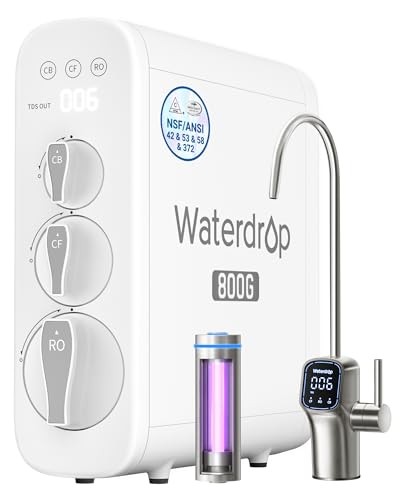
Fast 800 GPD water flow rate
Tankless design saves under-sink space
Smart faucet with LED purifier
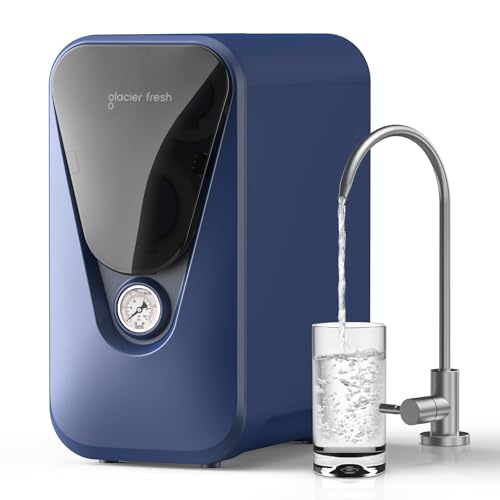
High 800 GPD output for fast filtration.
Non-electric design for energy savings.
Reduces PFAS/PFOS, enhancing water safety.

Compact, tankless design saves under-sink space.
High 400 GPD flow rate ensures quick filtration.
1:1 pure to drain ratio is water-efficient.

Enhanced water taste with alkaline filter.
Effective TDS reduction for cleaner water.
Built-in pump ensures optimal water pressure.

High efficiency with 3:1 pure-to-drain ratio.
Smart LCD faucet for easy monitoring.
NSF/ANSI certified for reliable filtration.

High TDS reduction for cleaner water.
Convenient app control for easy management.
Efficient 2:1 pure-to-drain water ratio.

High filtration capacity at 700 gallons per day.
Space-saving design fits conveniently under sink.
Efficient tankless system for continuous clean water.
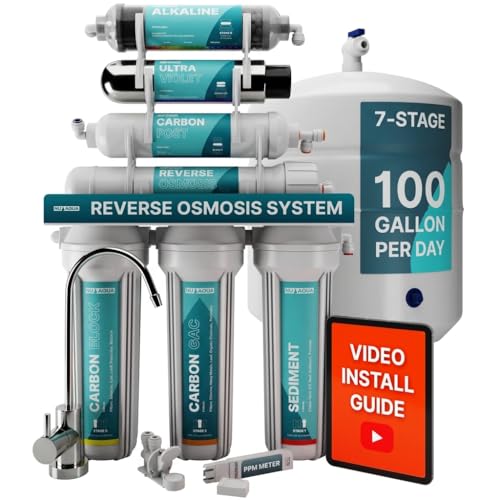
7-stage filtration ensures ultra-pure, great-tasting water.
Easy to install under sink with included faucet.
UV light eliminates bacteria for safer drinking water.

No installation needed, easy to set up.
High 4:1 pure to drain water ratio.
Certified for safety and efficiency.
The most important question is not how many stages a product advertises, but whether its documented treatment matches the water concern you actually have. Start with a current utility Consumer Confidence Report for municipal water. For a private well, use state or local health-department testing guidance and an accredited laboratory. Then match the result to the exact product's certified reduction claims in the NSF Product and Service Listings, IAPMO R&T directory, WQA Gold Seal directory, or EPA WaterSense point-of-use RO search. A claim for total dissolved solids (TDS) reduction does not prove removal of lead, PFAS, nitrate, arsenic, microbes, or another individual contaminant.
Exact-model identification matters. A certification for a similar model, filter cartridge, faucet, product family, or pump-free configuration does not automatically cover the complete product being sold. NSF/ANSI 58 can address contaminant reduction, structural integrity, drinking-water-contact materials, lead content, production, and efficiency, but the listing's scope must be read rather than inferred from an NSF mark. NSF/ANSI/CAN 372 concerns lead content in water-contact components; it is not a claim that the system removes lead from incoming water. A laboratory report can provide useful test evidence, but it is not the same as an ongoing certification listing.
Headline performance figures also need context. Gallons per day depend on feed pressure, water temperature, and test conditions; several supplied reviews identified differences between manufacturer output claims and independently listed or manual figures. Pure-to-drain ratios are often manufacturer-stated and may not have EPA WaterSense or independent efficiency verification. A ratio such as 3:1 usually means three parts treated water for one part discharged, but buyers should confirm how the maker defines it. A faucet TDS reading is not a test for a specific health contaminant, and near-zero TDS is not proof that every relevant substance is absent.
Plan for ownership as carefully as installation. Check pressure and temperature limits, maximum feed TDS, tubing and fitting instructions, drain requirements, leak detection or shutoff features, and local plumbing rules. Confirm filter and membrane intervals, flushing after installation or replacement, sanitation instructions, storage-tank care, parts availability, warranty terms, and what happens after extended nonuse. Replaceable cartridges can reduce whole-unit disposal, but they still create filter, membrane, packaging, UV-lamp, and sometimes plastic-housing waste.
Recurring safety limits in the supplied reviews are important: these products are not substitutes for water testing, emergency treatment, or a response to a boil-water advisory. Most are intended for treated municipal water or already-potable well water, not untreated or microbiologically unsafe sources. No product should be relied on for pathogens, cysts, PFAS, lead, arsenic, nitrate, or another named concern unless the exact documented claim covers it. Private-well users, households with suspected microbial contamination, and immunocompromised users should obtain appropriate testing and professional treatment guidance. Tank, tubing, and filters also require timely replacement, flushing, cleaning, or sanitation because poorly maintained systems can support bacterial growth.
Reverse osmosis can be useful, but its value depends on verified scope, hygienic upkeep, safe installation, and the water and waste created over its service life. The supplied scores reward exact evidence and practical ownership details rather than stage count or broad marketing language.
This measures whether reductions are independently verified for contaminants found in the buyer's water. For RO, a high score means the exact product's certified claims match a utility report or accredited well-water result; the supplied products range from clearly listed lead, fluoride, metals, and TDS claims to broad, unsupported PFAS or pathogen language. A low score means buyers must not infer contaminant protection from RO or TDS reduction alone.
This measures certified pathogen claims plus practical flushing, sanitizing, storage-tank, and filter-change guidance. It matters because tanks, tubing, and neglected cartridges can support bacterial growth, while UV hardware is not automatically validated disinfection. Higher-scoring products provide concrete flushing, storage, or sanitation instructions; lower-scoring products lack a certified cyst or pathogen claim, a UV dose, or a complete sanitation procedure.
This measures verified safety for the faucet, tubing, tank, fittings, and treatment components that touch drinking water. A high score reflects complete-system or clearly scoped third-party material and lead-content verification, such as NSF/ANSI 58 or 372 documentation. Lower scores occur when only a faucet, cartridge, or product family is certified, or when broad low-lead claims cannot be matched to the complete installed system.
This measures structural integrity, pressure limits, backflow and fitting protection, leak detection or shutoff, and code-aware installation instructions. It matters because RO systems add pressurized tubing, drain connections, tanks, and sometimes electricity beneath a sink. Higher-scoring products provide model-specific pressure ranges, leak checks, shutoff features, and installation guidance. Lower scores reflect unclear pressure specifications, missing safeguards, or conflicting product information.
This measures whether the complete product can be matched to a current NSF, IAPMO, WQA, or EPA WaterSense listing with a defined scope. It is the most heavily weighted evidence topic because a similar model or component is not enough. The supplied scores separate products with an exact NSF/ANSI 58 listing from products supported only by manufacturer documents, laboratory reports, component certificates, or no directly matchable listing.
This measures whether contaminant, health, filtration-stage, alkaline, capacity, and efficiency claims stay within the exact documented test scope. Higher scores come from narrow claims that match a certificate or performance sheet. Lower scores reflect broad promises—such as PFAS, lead, arsenic, viruses, or more than 1,000 contaminants—when the available proof covers only TDS, materials, a related configuration, or a limited laboratory test.
This measures whether output, TDS reduction, pressure and temperature ranges, tank capacity, flow, and membrane life are stated with test conditions. It matters because gallons-per-day ratings vary with pressure and temperature, and supplied reviews found conflicting figures. Higher-scoring products explain operating conditions and limitations; lower-scoring products present best-case capacity, unexplained ratios, or contradictory pressure, TDS, flow, and production information.
This measures whether the owner receives a model-specific plan for replacement, flushing, sanitation, troubleshooting, consumable costs, and warranty support. Higher scores indicate that continued safe use is feasible and clearly explained, including startup flushing, long-idle instructions, tank care, and replacement schedules. Lower scores reflect missing sanitation guidance, unclear warranty or service terms, proprietary cartridges, or incomplete information about what must be replaced.
This measures reject water during RO operation using independently verified recovery or waste-to-treated-water data. A high score requires more than a claimed 1:1, 2:1, or 3:1 ratio; the supplied reviews repeatedly note that these figures were manufacturer-stated and not confirmed through EPA WaterSense. Lower scores reflect unknown recovery, while a favorable claim remains only a potential benefit until tested under defined conditions.
This measures cartridge, membrane, packaging, housing, UV-lamp, and electronic waste over the system's life. Higher-scoring products publish longer service intervals, replaceable parts, and ongoing support; the strongest examples specify six-, 12-, 24-, or up-to-three-year intervals. Lower scores reflect frequent cartridge changes, proprietary parts, inconsistent schedules, or required plastic-housing and lamp replacement. Replaceable filters reduce whole-unit disposal but do not eliminate consumable waste.
This is a tankless, electrically powered reverse osmosis system installed under one sink. It supplies a separate smart-display faucet, sends reject water to a drain, and has three replaceable cartridges. The manufacturer lists a 600 GPD maximum production rating, 0.42 GPM flow, 18.12 by 5.67 by 17.72 inch housing, and operation on municipal tap water at 14.5 to 87 PSI and 41 to 100 F. The exact product appears on an IAPMO R&T certificate that identifies certified reductions for total dissolved solids, fluoride, cadmium, hexavalent chromium, and selenium. Its NSF/ANSI 372 low-lead certification is also documented. The manufacturer states a 2:1 pure-to-drain ratio, but no independently verified recovery rating or WaterSense listing was located. Its public marketing lists more contaminants than are clearly reconciled with the exact product's certification scope.
This product suits a household on treated municipal water that wants filtered drinking and cooking water at one kitchen sink, has an outlet and drain connection under the cabinet, and has feed pressure within the stated 14.5 to 87 PSI range. It is particularly relevant when a current utility water report or accredited water test identifies fluoride, cadmium, hexavalent chromium, selenium, or high dissolved solids as a concern. The tankless layout also suits users who want to avoid a conventional storage tank and can keep up with cartridge replacement.
It is not a substitute for testing a private well or for selecting treatment based only on taste, odor, or a TDS display. The manual says well water needs prefiltration, and the product has no clearly documented exact-model cyst or pathogen claim for households managing microbial contamination. It also does not suit locations without a drain, grounded power access, or adequate cabinet space. Avoid installation outside the specified pressure and temperature limits, or where local plumbing rules require work by a qualified installer.
The strongest health evidence is model-specific IAPMO R&T documentation. It identifies certified reduction claims for total dissolved solids, fluoride, cadmium, hexavalent chromium, and selenium. The documentation also supports NSF/ANSI 372 low-lead certification. Those are useful, defined claims, but they should be matched to a utility Consumer Confidence Report or accredited well-water test before treatment is chosen. The product is tankless, so it avoids a stored-water reservoir, and its manual requires an initial automatic flush followed by a 30-minute flush before drinking. It still uses disposable plastic cartridges, with manufacturer-stated six, 12, and up-to-24-month intervals. The claimed 2:1 pure-to-drain ratio could reduce reject water compared with less efficient systems, but it is not independently verified in the material reviewed. The manufacturer also markets broader contaminant coverage than the clearly documented certification scope, so specific claims such as PFAS, lead, or arsenic reduction need additional exact-model proof.
This is an electricity-powered, tankless reverse-osmosis drinking-water system installed beneath a sink and connected to its own faucet. It uses sediment and carbon prefilters, an RO membrane, a drain line, and a UV component. The housing is about 18.1 by 5.7 by 17.7 inches. Waterdrop states a nominal 800-gallons-per-day output and a 3:1 purified-water-to-drain-water ratio. The most consequential evidence is an IAPMO R&T listing certificate for this exact product. It identifies NSF/ANSI 58 reduction claims for total dissolved solids, fluoride, cadmium, hexavalent chromium, selenium, barium, and radium 226/228. Waterdrop also supplies a performance sheet claiming certification to NSF/ANSI 42, 53, 58, and 372, including chlorine and PFAS results, but the accessible independent certificate has a narrower stated claim list. The system has no storage tank, and its manual documents a leak alarm, automatic flushing, and defined feed-water limits.
This product fits a household using treated municipal water that has a documented concern matching its independently listed NSF/ANSI 58 claims, such as fluoride, radium, barium, cadmium, hexavalent chromium, selenium, or high dissolved solids. It also suits a kitchen that has room for a roughly 18-inch-tall powered unit, a nearby outlet, a drain connection, and a separate faucet location. The tankless format and stated high daily output are practical for frequent drinking and cooking use, provided the household will follow cartridge changes and installation limits.
It is not appropriate as a substitute for testing a private well or diagnosing unsafe household plumbing. Buyers with untreated well water, microbial contamination concerns, turbidity above the stated limit, hardness above 7 grains per gallon, or feed water outside 14.5 to 87 psi need water-specific treatment advice first. It also does not fit kitchens without an outlet, drain access, or space for a dedicated faucet. Households prioritizing verified water efficiency should look for a product actually listed by EPA WaterSense, because this product's 3:1 ratio remains manufacturer-stated.
The strongest health evidence is the IAPMO R&T certificate for this exact tankless system. It lists NSF/ANSI 58 reduction claims for total dissolved solids, fluoride, cadmium, hexavalent chromium, selenium, barium, and radium 226/228. Waterdrop's performance sheet also reports chlorine, PFAS, lead, arsenic, mercury, nitrate, and other results, but the accessible independent listing does not establish all of those broad claims. NSF/ANSI 372 low-lead compliance is stated for the product, which concerns lead content in wetted materials, not lead removal. The manual includes automatic flushing, fresh-water circulation, leak detection, pressure limits, and filter-change troubleshooting, all useful safeguards when followed. It also uses three replaceable cartridges, with stated 6, 12, and 24 month intervals. The water-efficiency claim is less secure. EPA notes that WaterSense-labeled RO products must meet independently certified efficiency limits, and this product was not found in the EPA product search. No relevant CPSC recall or California Proposition 65 product warning was located in the searches performed.
This is a tankless, under-sink reverse-osmosis drinking-water system with a separate faucet, drain connection, three replaceable cartridges, and no electrical connection. The manufacturer describes the product as an 800 GPD system for municipal water, with a stated 0.6 GPM flow, 36 to 100 psi inlet range, 41 to 100 F water range, and 1,427-gallon total capacity. Its published manual gives practical installation, start-up flushing, leak-checking, and cartridge-change instructions. It specifies a composite carbon cartridge, RO membrane, and granular-carbon cartridge. However, the manufacturer’s broad certification and contaminant-reduction claims could not be matched to an exact-product listing in the NSF register reviewed. The available NSF listing identifies Glacier Fresh replacement cartridges, rather than this complete RO system.
This system suits a household on treated municipal water that has confirmed its own water concern through a current utility report or accredited water test, has adequate cold-water pressure, and can accommodate a dedicated faucet and drain connection. It is also relevant for users who prefer a tankless layout and are prepared to replace carbon cartridges roughly every 3 to 12 months and the RO membrane about every 12 to 24 months, following the manual rather than relying on broad removal claims.
It is not suited to buyers who need independently documented reduction of a specific contaminant, especially PFAS, lead, arsenic, nitrate, cysts, or microbial hazards. Those households need an exact-product certification listing and performance data matching their tested water problem. It is also a poor fit for untreated water, low-pressure plumbing, very hard water without pretreatment, outdoor installation, or anyone unable to drill or arrange a code-appropriate drain connection. The Classic configuration requires a separate countertop hole.
Reverse osmosis is a treatment approach that can reduce some chemicals and germs, but the relevant question is whether the exact system has verified reductions for the contaminants in the home’s water. The manufacturer makes broad health and safety claims, including NSF certification and reductions for PFAS and other contaminants. The NSF register reviewed did not show this complete product, so those claims should not be treated as independently confirmed for this unit. The manual includes useful hygiene steps, including a 30-minute initial flush, repeated flushing cycles, cartridge replacement, and flushing for 10 minutes after replacement. It does not provide a detailed sanitization procedure or a certified microbial-reduction claim. The manufacturer states a 3:1 pure-to-drain ratio, which would reduce reject-water use if verified, but no exact-product WaterSense listing was found. Replaceable cartridges avoid disposal of the whole appliance, although the recurring carbon and membrane waste remains material over its service life.
This is a powered, tankless under-sink reverse-osmosis system for one dedicated drinking-water faucet. Its housing measures 17.3 by 5.9 by 14 inches, uses separate carbon and RO membrane cartridges, and requires a nearby electrical outlet, drilling, and a drain connection. The manufacturer specifies municipal tap water, 14.5 to 87 psi feed pressure, 41 to 100 F water, and a 400-gallon-per-day maximum production rating measured at 30 psi dynamic pressure and 77 F. The product has a detailed exact-model manual, including leak checks, filter-life alerts, replacement steps, flushing, and storage instructions. Waterdrop states that it is NSF/ANSI 372 certified for lead-free materials, but the current NSF Water Treatment Unit listing searched did not show this exact product. Its contaminant-reduction claims therefore should not be treated as independently certified for the contaminants in a specific home's water.
It suits a household on treated municipal water that wants a dedicated drinking-water faucet, has a cabinet outlet and enough room for a 17.3 by 5.9 by 14 inch powered unit, and is prepared to connect a drain line and drill for the faucet if needed. It is most appropriate when a local water report or test identifies concerns that reverse osmosis can plausibly address, while the buyer is comfortable following filter alerts, flushing replacements, and checking connections routinely.
It is not for a buyer who needs independently certified proof that this exact product reduces a particular contaminant, such as lead, arsenic, PFAS, nitrate, or cysts. It is also not a standalone choice for untreated private-well water, water with microbiological contamination, or homes outside the manual's pressure and temperature range. People who cannot provide an outlet, drain connection, drilling access, or regular cartridge maintenance should use a treatment setup that better matches those constraints.
Reverse osmosis is a treatment mechanism that CDC identifies as capable of removing parasites, bacteria, viruses, and some chemicals. That category-level evidence does not establish the reduction performance of this particular product. The manufacturer calls this product NSF/ANSI 372 certified and describes a lead-free faucet, but the current NSF listing searched did not show the exact product. No current U.S. recall, regulator action, or Proposition 65 warning specific to this product was located in the searched databases. Its manual provides useful hygiene safeguards. It calls for a five-minute carbon-filter flush and a 30-minute membrane flush after replacement. After more than one week unused, it instructs users to isolate power and water, refrigerate sealed filters, then run the faucet for 10 minutes before reuse. It also warns that bacteria can grow during long nonuse. Cartridge replacement creates ongoing plastic and membrane waste. Water efficiency remains uncertain because Waterdrop's own current page conflicts between 1:1 and 2:1 pure-to-drain ratios.
This is a tank-based, under-sink reverse-osmosis drinking-water system with three prefilters, an RO membrane, a post-carbon filter, an alkaline remineralization cartridge, a dedicated faucet, and an electric booster pump. It is intended for cold potable water, including installations with lower inlet pressure. The manufacturer documentation sets a 30 to 70 psi feed-pressure range for versions with the built-in pump, a 40 to 100 F operating range, and a 750 ppm maximum feed-water TDS limit. An older product manual says this exact product line was WQA-certified to NSF/ANSI 58 for specified reductions, including lead, fluoride, several metals, radium, turbidity, and TDS. However, the newer manufacturer manual names other finish variants for current NSF/ANSI 58 certification, not this exact pump-and-alkaline configuration. The broad contaminant and PFAS claims therefore exceed what can be confidently matched to a current exact-product listing.
This product fits a household using treated municipal water that has a documented dissolved-solids, lead, fluoride, or certain metal concern, has room for a storage tank and filter housings, and can follow a recurring maintenance plan. It is particularly suited to an installation where pressure is below the usual RO operating range but at least 30 psi, because the built-in pump is designed for that condition. The household should first compare its water report or laboratory results with a current, exact-product certified claim.
It is not appropriate as the only treatment for untreated surface water, a private well of unknown microbiological quality, or any supply subject to a boil-water advisory. It has no UV stage and its own instructions require adequate disinfection where water may be microbiologically unsafe. It also does not suit buyers seeking a current, easily verifiable exact-product certification for PFAS, pathogens, or every advertised contaminant. Homes with feed water above 70 psi, hot-water connections, high iron, manganese, hydrogen sulfide, excessive hardness, or TDS above the stated limit need pretreatment or another setup.
The strongest health evidence is historical rather than fully current. An older manual identifies this exact configuration as WQA-tested to NSF/ANSI 58 for TDS and specific contaminant reductions, while the newer manufacturer manual identifies NSF/ANSI 58 certification for named related variants instead. That mismatch matters because certification should be matched to the exact product, not assumed from the brand, a filter component, or a similar model. The system has sensible hygiene guidance. It calls for periodic TDS checks, monthly tank emptying, scheduled filter changes, and special membrane storage during extended absences. It is not a microbial disinfection device. Environmentally, the pump is marketed as reducing reject water, but an independent efficiency rating was not located. The unit also uses multiple consumable cartridges, although the membrane is scheduled for up to three years. iSpring was subject to FTC action in 2017 and 2019 over misleading United States-origin advertising, which does not establish a water-quality defect but is relevant to confidence in unverified marketing claims.
The VIOMI V6 Pro is a powered, tankless under-sink reverse-osmosis system that supplies a dedicated smart faucet. It measures 16.3 by 5 by 12.8 inches, needs a cold-water connection, drain connection, electrical outlet, and holes for its faucet and drain line. The manufacturer describes reverse osmosis plus carbon-composite filtration, a 600-gallon-per-day rating, app monitoring, automatic flushing, and compatibility with a refrigerator or ice-maker line. Its clearest independently confirmed point is drinking-water material safety. An Intertek authorization to mark under NSF/ANSI/CAN 372:2024 specifically includes Vortex 6 PRO, covering lead-content requirements for drinking-water system components. VIOMI also states that the product was SGS tested to NSF/ANSI 42, 53, and 58, and makes reduction claims for PFAS, lead, arsenic, nitrate, fluoride, and other contaminants. Public certifier registers and a model-specific performance data sheet were not located to independently confirm the full claimed reduction scope or test conditions.
This product suits a household using municipally treated water that wants a compact, dedicated drinking-water tap and has cabinet access to cold water, a drain, and an unswitched electrical outlet. It is most appropriate when the buyer has first checked a current utility water-quality report or a laboratory result and wants reverse osmosis for a documented dissolved-contaminant concern. The exact-model Intertek lead-content certification is especially relevant to buyers focused on drinking-water contact materials, while the stated filter alerts can help households follow a replacement schedule.
It is not the right starting point for a private-well household, a home under a boil-water advisory, or anyone with a known microbial problem unless testing and a water-treatment professional confirm that this setup addresses the specific organism and source conditions. People choosing a system specifically for PFAS, lead, arsenic, nitrate, or fluoride should not rely on broad marketing language alone, because a public exact-model performance sheet was not found. It also does not suit renters or kitchens unable to drill faucet and drain holes or provide a dedicated unswitched outlet.
The strongest health finding is an independently issued Intertek authorization covering Vortex 6 PRO under NSF/ANSI/CAN 372:2024. That standard concerns weighted lead content of drinking-water components. It is different from a certified lead-reduction claim, so it should not be read as proof that this product reduces lead in a particular water supply. VIOMI's claims of SGS testing to NSF/ANSI 42, 53, and 58 were not matched to a current public certification directory entry or exact-model performance data sheet. Reverse osmosis can reduce some chemicals and some germs, but CDC advises selecting treatment based on tested water and maintaining filters on schedule because germs can grow in neglected filters. The product's tankless design avoids stored treated water, and VIOMI states automatic flushing and replacement alerts. Its 3:1 water-efficiency figure is manufacturer-stated, not WaterSense verified. Replaceable cartridges avoid discarding the whole unit, but published VIOMI materials give inconsistent service-life claims. No product-specific U.S. recall or regulator warning was located in the checked public sources.
This is a powered, tankless under-sink reverse-osmosis water treatment system with a dedicated faucet. The manufacturer lists a compact 12.6 by 5.9 by 16.2 inch body, a claimed 600 gallon-per-day output, app monitoring, automatic flushing, and a claimed 2:1 purified-water-to-drain-water ratio. Installation needs a cold-water connection, drain connection, electrical outlet, and holes for the faucet and drain line. VIOMI states that the replaceable PPC filter lasts one year and the RO filter two years. It also states that SGS tested the system to NSF/ANSI 42, 53, and 58 criteria and reports reductions for PFOS, PFOA, lead, copper, fluoride, nitrate, and TDS. However, an exact-product listing in NSF, IAPMO, WQA, or EPA WaterSense public certification directories could not be confirmed in this review, so those contaminant and efficiency claims remain manufacturer-reported rather than publicly certified.
This product suits a household on treated municipal water that has first checked its local water-quality report or a current lab test and wants a compact, powered RO unit for drinking and cooking water. It is particularly relevant where cabinet space matters, a nearby unswitched outlet is available, and the buyer can accommodate a dedicated faucet, drain connection, and regular cartridge changes. It also fits someone comfortable treating the stated app, flush, and filter-life functions as maintenance aids rather than proof of water safety.
It is not for a household that needs independently listed proof for a specific local contaminant, especially PFAS, lead, arsenic, nitrate, or cyst reduction. Private-well users should test their water first and seek treatment matched to the findings, including microbial treatment when indicated. It is also unsuitable where there is no practical drain route, dedicated faucet location, continuously powered outlet, or space for the unit and tubing. Buyers needing published pressure limits, certified recovery data, or documented sanitation instructions should require those records before installation.
Reverse osmosis can be useful when its certified contaminant scope matches a documented water problem. Here, VIOMI states reductions for PFOS, PFOA, lead, copper, fluoride, nitrate, and dissolved solids, and says SGS tested the product to several NSF/ANSI standards. The public certification registers checked for this review did not provide an exact-product listing, and no exact-model performance data sheet was located. That means the stated reductions and material-safety claims should not be assumed to apply to every water source or installation. The tankless design avoids a storage tank, and the manufacturer states automatic flushing. It also states a 2:1 purified-water-to-drain-water ratio, which would use less reject water than many conventional RO systems if achieved in real use, but this ratio was not independently verified. The PPC cartridge is listed for annual replacement and the RO cartridge for replacement every two years. Those schedules can limit consumable turnover, although the spent plastic cartridges and electronic unit still need appropriate local disposal or recycling.
This is a tankless, under-sink reverse-osmosis drinking-water system with a dedicated metal faucet, plastic housing, tubing, activated-carbon stages, an RO membrane, and an APCM stage. The published dimensions are 14.17 by 4.72 by 14.49 inches. It is intended to treat water at one kitchen tap for drinking and cooking rather than supply the whole home. ANGEL states that the product delivers up to 700 gallons per day and 0.5 GPM, uses a 2.5:1 purified-water-to-drain ratio, and has a 0.0001-micron RO membrane. The company also reports third-party testing to NSF/ANSI 58, 42, and 372 standards and claims reductions for PFAS, lead, arsenic, chromium, perchlorate, chlorine, microplastics, and TDS. Public certification registries checked did not provide a directly matchable exact-product certification listing or performance data sheet, so those contaminant and materials claims remain manufacturer-stated rather than independently confirmed certification claims.
This product fits a household with limited under-sink space that wants a dedicated drinking-water faucet and accepts routine cartridge replacement. It is most relevant when a current local water report or a properly collected private-well laboratory result identifies contaminants that RO can address, such as lead, arsenic, chromium, or elevated dissolved solids. The buyer should have suitable plumbing access, a drain connection, a countertop faucet hole, and a confirmed feed-pressure range from the manufacturer before installation.
It is not a suitable substitute for testing a private well, responding to a boil-water advisory, or treating a known microbial problem throughout a home. Immunocompromised households should not rely on the product's unverified microbial claims without guidance from a water-treatment professional. It also does not suit installations where feed pressure is unknown, outside the confirmed manual limit, or where local plumbing rules require professional work. Buyers who need independently documented PFAS, lead, or materials claims should require an exact-product certification listing and performance data sheet first.
Reverse osmosis is a technically plausible treatment method for many dissolved contaminants and can remove germs, but the useful question is whether the exact system is documented to reduce the contaminant found in a household's own water. ANGEL reports testing to NSF/ANSI 58, 42, and 372 standards and reports reductions for several contaminants. However, the checked public certification directories did not provide an exact-product listing or public performance sheet that confirms those claims, the water-contact materials, or structural testing. The tankless design avoids a storage tank, and ANGEL states a 2.5:1 purified-water-to-drain ratio. That ratio has not been independently verified through EPA WaterSense or a published NSF/ANSI 58 efficiency rating. The stated 2 to 3 year membrane interval could reduce membrane disposal, but the system still uses disposable carbon and membrane cartridges. No product-specific U.S. recall, regulatory action, or Proposition 65 warning was located in the searches performed. Filters still require timely replacement and hygienic maintenance because germs can grow in neglected water filters.
This is a tank-based, under-sink reverse-osmosis drinking-water system with sediment, carbon, RO membrane, post-carbon, alkaline remineralization, and UV stages. It includes a dedicated faucet, leak-stop valve, TDS meter, and a manufacturer-stated 3.2-gallon storage tank. The manufacturer rates production at 100 gallons per day and says the non-pump version requires 45 to 80 psi incoming pressure. The most important independently confirmed point is narrower than the marketing suggests. The exact product appears in NSF's current NSF/ANSI/CAN 61 listing for faucets, which addresses drinking-water contact health effects and lead testing for that listed faucet. This is not an NSF/ANSI 58 certification of complete-system contaminant reduction, structural integrity, or water efficiency. The manufacturer provides unusually detailed filter, sanitation, storage, and leak-check instructions, but its broad reduction and alkaline-health claims are not accompanied by an exact-product performance data sheet.
This product fits a household on treated municipal water that has adequate 45 to 80 psi pressure, room for a tank and filter housings under the sink, and an owner willing to follow a hands-on service schedule. It is most suited to someone seeking RO-style dissolved-solids reduction and a dedicated drinking faucet, while valuing a UV stage and a remineralization stage as manufacturer-described additions. The user should first compare a current local water-quality report with the contaminants they actually want addressed.
It is not a strong fit for a private-well household, a home under a boil-water advisory, or any water source of unknown microbiological quality unless qualified local advice and accredited water testing establish an appropriate treatment train. It also does not suit buyers who require independently certified reduction of a specific contaminant, certified cyst or pathogen performance, or independently verified low-waste RO operation. Homes below 45 psi need the pump configuration or another pressure solution. Anyone unable to sanitize annually, replace filters on schedule, and inspect for leaks should avoid a service-intensive tank system.
The confirmed material-safety evidence is specific but limited. NSF's current NSF/ANSI/CAN 61 register includes the exact product in its faucet listing. That supports the health-effects compliance of the listed faucet's water-contact materials, including the listing's reduced-lead notation. It does not verify the full RO system, tank, tubing, membrane, alkaline media, or UV stage as a completed treatment unit. The manufacturer manual contains practical hygiene safeguards. It directs annual sanitizing, filter-change intervals of roughly 6 to 12 months for most filters, membrane replacement after 1 to 1.5 years, UV-bulb replacement yearly, and special draining and drying steps for long storage. It also requires a leak-stop valve and specifies pressure and temperature limits. Ecologically, the replaceable design avoids whole-unit disposal, but no independently verified recovery or wastewater figure was located. The alkaline media and broad contaminant claims should be treated as manufacturer statements rather than certified health performance.
This is an electric countertop reverse-osmosis dispenser for potable tap water. It uses a removable feed-water tank, two replaceable cartridges, an internal treated-water reservoir, UV operation indicator, and preset 6, 12, and 15 ounce dispensing. The manufacturer lists an 18 by 8 by 16.1 inch footprint, 100 gallon-per-day capacity, and a claimed 4:1 pure-to-drain ratio. An SGS report for the closely named Y7/Y7P sample documented reductions for TDS, fluoride, metals, nitrate, PFOS, and PFOA at the start of filter life. That is useful product-specific test evidence, but it is not a current independent certification listing. The current NSF registry search returns no matching SimPure products under NSF/ANSI 58, despite product marketing that describes this product as NSF/ANSI 58 certified.
This product fits a renter, apartment resident, office user, or RV user who has treated municipal water, limited counter space, and wants reverse-osmosis treatment without modifying plumbing. It is most relevant when a recent utility report or accredited water test identifies contaminants included in the available SGS test scope, such as lead, arsenic, fluoride, nitrate, or PFOA and PFOS. The user should be comfortable filling and emptying the feed tank daily, allowing time for initial flushing, and replacing both cartridges on schedule.
It is not the appropriate first choice for a household relying on a private well, an emergency water source, or water with suspected microbial contamination unless an accredited test and local health guidance support this treatment plan. The available evidence does not verify pathogen reduction for this exact product. It also does not suit buyers who require a current U.S. certification listing for exact-model contaminant claims, full drinking-water contact-material verification, or independently verified efficiency. Households needing high-volume or continuously available drinking water may find the small internal reservoir limiting.
The strongest health evidence is a 2022 SGS challenge test for the Y7/Y7P product family. It reported reductions for several contaminants that can matter in drinking water, including lead, arsenic, fluoride, nitrate, PFOA, and PFOS. Results were measured at the start of operating life, so they do not replace matching treatment to a household water test or a current third-party certification listing. The manual tells users to use potable water and to empty and refill the feed tank daily, which is helpful hygiene guidance. It also identifies UV operation, but independent microbial certification for this product was not found. The manufacturer describes water-contact housing as BPA-free food-grade plastic, without complete third-party materials verification located. Its claimed 4:1 pure-to-drain ratio could reduce reject water, but it lacks WaterSense verification. Both cartridges are replaced about every six months, creating ongoing cartridge waste.



