Best Overall
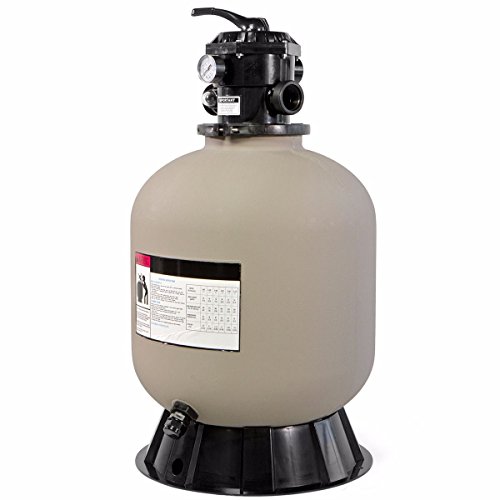
XtremepowerUS 19" Pool Sand Filter System
Efficiently filters pools up to 24,000 gallons.
Durable construction ensures long-lasting performance.
Easy-to-use 7-way multi-port valve system.
 Daniel Kenitz
Efficiently filters pools up to 24,000 gallons.
Durable construction ensures long-lasting performance.
Easy-to-use 7-way multi-port valve system.

Efficient filtration with 4400 GPH flow rate.
Comes pre-installed for easy setup.
Timer feature for convenient operation control.

Easy setup with pre-assembled core.
Efficient filtration for large pools.
Durable, leak-resistant design.

Efficient 7-way valve enhances filtration control.
Built-in 24-hour timer for convenient scheduling.
High capacity supports pools up to 20,000 GAL.

Efficient 7-way valve for versatile pool cleaning.
Powerful 1.5HP motor ensures strong water flow.
Convenient timer for automated pool maintenance.

Efficient 24-hour timer for easy scheduling.
Powerful 1HP pump ensures excellent water flow.
Suitable for large pools up to 13,000 gallons.

Efficient filtration enhances pool water clarity.
Durable construction ensures long-lasting use.
Easy installation simplifies setup process.

Effective filtration for clearer pool water.
Simple setup without complex tools.
Low maintenance with easy-to-clean filter.

Efficient 3800 GPH pump for fast water circulation.
Convenient 24-hour timer for automated operation.
Durable leak-resistant design ensures long-lasting use.

Efficiently filters pools up to 15,000 gallons.
Convenient 24-hour timer for automatic operation.
Easy-to-use 6-way valve for versatile control.
The first sizing question is actual system flow, not the largest number in a product title. A pump-only figure may be measured without the resistance created by filter media, hoses, fittings, elevation, or a dirty filter. A credible comparison should provide installed-system flow or a performance curve, media quantity, filter area, and a turnover basis tied to pool volume. The supplied products illustrate why this matters: several headline gallon-per-hour figures conflict with manuals or manufacturer pages, and some pool-size claims are unsupported by a turnover calculation. Design flow is more useful when its conditions are clear; it still is not the same as measured flow in a particular installation.
Pressure information is equally important. Look for a documented maximum working pressure, pressure gauge, pressure-release procedure, secure tank and valve connections, and instructions that require the pump to be off before changing valve positions or opening pressurized equipment. Backwash, rinse, waste, recirculate, closed, and winter settings should be clearly identified. The manual should explain when pressure has risen enough to backwash, how to rinse afterward, and how to prevent dirty water from returning to the pool.
Electrical protection deserves separate verification because this equipment operates beside water. A built-in GFCI can be useful, but it is not the same as independent certification. For the exact pump model, look for a current listing in UL Product iQ under pool pumps, Intertek’s ETL directory, or the CSA product database, and check the rating label and installation manual. The supplied reviews repeatedly found that seller claims, manual marks, or general compliance language could not always be matched to a current model-specific registry entry. Installation still needs a grounded, GFCI-protected circuit and compliance with local requirements.
For health and durability, look for explicit pool compatibility, suction-entrapment warnings, priming and dry-running instructions, chlorine or saltwater limits, corrosion information, and service instructions. Replaceable gauges, seals, O-rings, valves, hoses, motors, and other parts are stronger evidence of a repairable design than a vague durability claim. A meaningful exact-model warranty also helps, but does not prove safe performance.
For environmental performance, a timer may reduce unnecessary runtime, but none of the supplied products had independently tested energy data sufficient to establish efficiency. Backwashing consumes water and creates chlorinated, contaminated discharge. A waste port and hose connection help route it, but owners must follow local discharge rules and avoid sending treated water toward storm drains, waterways, wells, soil, or neighboring property.
Across the supplied reviews, no product was independently verified across every relevant electrical, pressure, suction, filtration, and environmental requirement. Common limitations included absent or conflicting pump-flow figures, no verified performance curve, unclear working-pressure information, unconfirmed exact-model UL, ETL, CSA, or NSF listings, and incomplete backwash-disposal guidance. Several products also lacked clear saltwater compatibility limits or detailed service documentation. Do not use any of these systems as a substitute for disinfection, and do not connect one without confirming protected electrical supply, safe suction fittings, pressure-release and valve procedures, pool compatibility, and a lawful route for backwash water. Products expressly limited to storable pools should not be treated as suitable for permanently installed or in-ground applications.
These topics address the risks that matter when a powered pump, pressurized filter, pool plumbing, treated water, and wastewater all meet in one system. Higher scores reflect stronger evidence and instructions in the supplied reviews; they do not mean that a product eliminates the need for installation, testing, or supervision.
This measures whether the system’s information supports clean, circulating water while clearly separating filtration from germ control. Higher-scoring products, such as the better-documented Intex and Hayward options, include clearer chemistry or operating guidance. Lower scores generally reflect reliance on circulation claims without a complete sanitizer, pH, and testing plan. A sand filter cannot replace disinfection.
This measures grounding, moisture protection, overheating and fire safeguards, GFCI use, and exact-model independent listing. The strongest supplied result was the 90 score for the VEVOR FlashPure, whose exact pump model appeared in UL Product iQ. Lower-scoring products commonly had only manufacturer instructions or unconfirmed UL, ETL, or CSA claims. GFCI protection remains necessary regardless of score.
This measures whether the tank, valve, gauge, hoses, unions, and fittings have documented pressure limits and safe pressure-release instructions. Hayward and the larger Intex systems scored strongly because their reviews identified working-pressure limits and service procedures. Lower scores reflected missing pressure ratings or incomplete release instructions. A gauge alone is not proof that the pressure vessel is adequately specified.
This measures whether pump and filter sizing is supported by system flow, media capacity, filter area, and a realistic turnover calculation. Hayward and the 2100-GPH Intex scored relatively well because their reviews supplied design or installed-flow data. Lower scores often followed conflicting headline figures or no performance curve. Pump-only GPH should not be treated as actual flow through a pool system.
This measures priming, dry-running, valve-use, plumbing-compatibility, suction, and anti-entrapment guidance. The strongest supplied scores were associated with manuals that required pump-off valve changes, secure suction fittings, priming, and protected power. Lower scores reflected generic hose claims or absent suction instructions. A filter cannot make an unsafe drain or suction arrangement safe.
This measures whether wetted and electrical parts have documented limits for chlorine, saltwater, outdoor exposure, corrosion, and material compatibility. Scores were generally moderate because products often claimed corrosion-resistant plastic without stating salt concentration or chlorine limits. A high score requires specific supported compatibility information; a low score means saltwater use should not be assumed.
This measures whether cleaning removes trapped material without pressurized servicing hazards or dirty water returning to the pool. Hayward, Intex, and VEVOR systems scored well where manuals specified pressure triggers, pump-off valve changes, backwash, rinse, and waste steps. Lower scores reflected only a waste setting or incomplete instructions. Backwashing should follow the manual and local discharge requirements.
This measures whether horsepower, flow, pool-size, timer, pressure, media, and certification claims identify the exact product and conditions. Hayward and the 2100-GPH Intex scored relatively well, while several budget systems scored in the 40s or 50s because manuals, titles, and product pages conflicted. High-scoring evidence is internally consistent; low-scoring evidence requires buyers to verify the delivered label before installation.
This measures current, model-specific certification for applicable pool-equipment safety or performance requirements, rather than a seller-issued logo. The VEVOR FlashPure scored 87 because its exact pump model appeared in UL Product iQ. Most other products scored around 68–71 because no current exact-model UL, ETL, CSA, or NSF listing was located. An unverified mark should not be treated as certification.
This measures electricity use at the needed flow and water consumed during backwashing, including timer or speed controls and testable efficiency data. Timer-equipped systems often scored somewhat better, but the reviews found no independently tested efficiency result. A high score therefore requires more than a timer: it needs right-sized flow, credible energy information, and a maintenance plan that avoids unnecessary backwash.
This measures whether the product provides a proper waste connection and explains how to keep chlorinated, contaminated backwash away from waterways, wells, storm drains, and neighboring property. Scores were moderate because most products had waste routes but incomplete disposal guidance. A high score requires both usable discharge hardware and clear, location-aware stewardship instructions; a waste port alone is not enough.
This measures whether common failures can be repaired rather than turning the whole system into waste. Intex scored particularly strongly because its catalogs identify motors, valves, gauges, seals, hoses, and other parts; Hayward also identifies replaceable filter components. Lower scores reflected missing parts catalogs or service documents. A warranty helps, but accessible exact-model parts are stronger evidence of longevity.
This is a non-powered, 19-inch sand-filter tank with a stand and a seven-position multi-port valve. It is intended to be plumbed to a separate pool pump using 1.5-inch connections. Filter media is not included. The manufacturer states that the tank holds up to 175 pounds of sand and markets it for pools up to 24,000 gallons. The available installation guide provides more operating detail than the storefront listing. It specifies a 50 psi maximum pressure, 2.1 square feet of filter area, and a 25,200-gallon figure based on 10 hours per day. Those figures are manufacturer documentation, not independently validated performance results. The product has a pressure gauge, drain, air-release assembly, and filter, backwash, rinse, waste, recirculate, closed, and winter valve positions. It filters debris from circulating water, but it does not sanitize water or include a pump.
This product suits an owner replacing only a sand-filter tank and valve on an above-ground pool, who already has a correctly matched, pool-rated pump and compatible 1.5-inch plumbing. It is most appropriate for someone comfortable loading up to 175 pounds of filter sand, checking the pressure gauge, and following the supplied backwash and rinse sequence. The claimed pool-size figure should be treated as a manufacturer estimate, so the owner should size the separate pump using real plumbing resistance and the pool's required circulation time.
It is not for buyers expecting a complete plug-in filtration system, because this product does not include the pump that determines flow, electrical safety, and energy demand. It is also unsuitable for anyone who needs independently certified filter performance or a documented compatibility statement for saltwater operation. Pools with unprotected suction outlets, unknown plumbing condition, or uncertain electrical grounding need a qualified pool professional and a compliant circulation design before a filter tank is added. Do not treat sand filtration as a substitute for sanitizer and pH testing.
The useful safety features are mechanical rather than disinfection-related. The installation guide calls for stopping the pump before moving the valve, checking for leaks, using the gauge to identify a roughly 8 to 10 psi pressure rise, and backwashing followed by rinsing. These steps can reduce mishandling of a pressurized sand bed. They do not replace water chemistry control. CDC guidance says owners need to test and maintain disinfectant and pH, because filtration alone does not kill germs. No current independent certification listing for this exact product was identified in the public NSF pool-equipment register or the major North American electrical listing registers. No product-specific recall or regulator warning was identified in the CPSC recall search. The filter has a waste setting, but the materials reviewed do not explain where chlorinated backwash may legally go. Owners need to follow local discharge rules and avoid routing it to storm drains or natural waterways. Replacement parts are listed, which can extend service life, although listed availability varied.
This is a 120 V, 1 HP above-ground, storable-pool sand-filter system with a 16-inch tank, six-way valve, pressure gauge, strainer basket, 1.5-inch NPT connections, and pre-installed filter-ball media. The manufacturer states a maximum flow of 4,400 GPH, a 43-foot maximum lift, a 35 PSI maximum working pressure, and a built-in timer with daily or one-time cycles from 2 to 24 hours. The supplied instruction manual is unusually detailed about GFCI protection, grounding, valve changes, air release, priming, backwashing, and water chemistry. It also limits use to storable pools, not permanently installed pools. However, the stated GPH is a maximum figure, not a published system-flow curve, and no model-specific UL, ETL, CSA, or NSF listing was located in the certification registers searched.
This product suits an owner of a storable above-ground pool who can match 1.5-inch plumbing, use a properly protected 120 V GFCI circuit, and follow hands-on backwash and water-testing routines. It is most appropriate where the owner wants an integrated filter, pump, pressure gauge, and timer rather than separate components. The supplied instructions are useful for an owner willing to monitor clean-filter pressure, inspect seals, keep the pump primed, and maintain sanitizer and pH separately from filtration.
It is not for permanently installed in-ground pools, because the manual expressly limits it to storable pools. It is also not suitable where a qualified pool professional cannot provide code-compliant electrical installation and GFCI protection, or where the suction system lacks compliant anti-entrapment protection. Buyers needing independently certified electrical safety, NSF-verified filter performance, a published operating-flow curve, or documented saltwater compatibility should use equipment with those model-specific records. Do not treat filtration as a substitute for sanitizer testing and chemical control.
Filtration can remove debris and support circulation, but it does not itself disinfect pool water. The manual tells owners to test pH, chlorine, alkalinity, and hardness, and gives target values including pH 7.2 to 7.6 and free chlorine 1.0 to 3.0 ppm. CDC guidance similarly identifies sanitizer and pH control as the first defense against swimming-related germs, with routine testing needed. The product’s safety instructions also require GFCI protection, grounding, and power disconnection before service. The tank is manufacturer-stated polypropylene, with pre-installed filter balls rather than loose sand. The manual provides pressure-based backwash guidance and directs discharge through a waste port to a safe area, which can reduce unnecessary backwashing. It does not provide water-discharge compliance guidance, an energy-efficiency rating, documented saltwater limits, or a model-specific independent safety or performance certification. No CPSC recall or safety warning specific to this product was located in the records searched. VEVOR states a standard 12-month warranty and offers paid repair support after warranty expiration.
This is a 12-inch, above-ground-pool sand-filter system with a 0.33 HP, 120 V pump, a pressure gauge, strainer basket, 1.5-inch connections, and a six-way valve for filter, rinse, backwash, waste, winter, and closed settings. It requires separately purchased No. 20 silica sand. The manufacturer manual specifies a 35 psi maximum working pressure, 20 kg media capacity, and 0.073 square meters of stated filter area. Electrical evidence is unusually strong for this type of product. The exact pump model is listed by UL Solutions in its WCSX Pumps category, which covers equipment evaluated to UL 1081. The manual also requires a GFCI-protected grounded supply. Its published capacity claims are less clear, because official product pages for the same model state both 2,650 and 3,000 GPH, without a system-flow curve or stated test conditions.
This product suits an above-ground-pool owner with conventional 1.5-inch plumbing who can install it on a stable, ventilated pad and connect it to a correctly grounded GFCI-protected outlet. It is most appropriate for a smaller pool system where the owner will select the correct No. 20 sand, monitor the pressure gauge, and handle routine backwash and water testing. The documented pressure limit, valve functions, and UL-listed pump model make it a practical fit for a hands-on owner following the manual closely.
It is not suited to anyone who needs independently verified filter performance for a particular pool volume, long pipe run, heater, vacuum, or restrictive plumbing layout. The published maximum-flow figures do not provide a real operating curve. It is also not for pools with questionable suction-drain protection, because the pump does not replace compliant anti-entrapment fittings or pool-system design. Saltwater-pool owners should not assume compatibility without written confirmation for the complete wetted system. It is unsuitable for users unable to provide GFCI protection, dry weather protection, safe waste disposal, and regular chemical testing.
The clearest health finding is independent electrical traceability. UL Solutions lists the exact pump model under its WCSX Pumps category, and UL identifies that category as covered by UL 1081 for swimming-pool pumps, filters, and chlorinators. The manufacturer manual reinforces this with GFCI, grounding, shutoff, ventilation, air-release, and pressure warnings. These safeguards matter around wet pool equipment, but installation still determines real-world protection. Filtration captures debris, it does not sanitize water. The manual discusses chlorine and pH, while CDC guidance calls for routine disinfectant and pH testing. The system has a waste port for backwashing, but its instructions do not explain responsible disposal of chlorinated discharge. That omission matters because pool backwash can contain chlorine and trapped contaminants. No exact-model NSF performance listing or saltwater-compatibility statement was found. The manual's parts diagram supports limited repair, but a model-specific retail parts catalog was not found.
This is a corded, 120 V above-ground-pool sand filtration system with an 18-inch tank, pressure gauge, hoses and a multiport valve. An online manual associated with this product describes a 1 HP pump, 5,000 GPH claimed flow, 150-pound sand capacity, 1.25-inch or 1.5-inch hose connections, and a 24-hour timer. Those are manufacturer-stated specifications, not independently verified performance figures. The associated manual gives useful operating steps, including priming, avoiding dry running, shutting power off before maintenance, and backwashing after pressure rises 8 to 10 PSI above the clean reading. It also says to test and adjust pool chemicals. However, no model-specific independent UL, ETL, CSA, or NSF listing was located, and no pump curve, working-pressure limit, or filtration test result was found. The product records also conflict on whether the valve is six-way or seven-way.
This system fits an above-ground pool owner who has conventional 1.25-inch or 1.5-inch hose plumbing, can install the unit on a level surface, and is prepared to independently confirm safe electrical protection before use. It is most practical for an owner comfortable with routine water testing, priming, pressure monitoring, and backwashing. The manufacturer-stated 18-inch tank, 150-pound media capacity, timer, and waste mode offer the needed functions for hands-on seasonal pool maintenance, provided the claimed flow and pool-size coverage are treated as unverified.
It is not suited to households that need documented third-party electrical listing for equipment operating beside water, or to installations where the outlet and bonding arrangements cannot be checked by a qualified electrician. It is also a poor fit for pools with rigid plumbing that need guaranteed adapter compatibility, saltwater systems needing written corrosion approval, or owners needing published performance curves and pressure ratings. Do not rely on filtration alone for swimmer health. Pools still need correctly maintained sanitizer, pH testing, and safe suction fittings.
Filtration and circulation can remove debris and support water clarity, but they do not replace disinfection. CDC guidance says residential owners should routinely test chlorine and pH, with chlorine and pH serving as the first defense against germs. The associated manual appropriately tells users to test and adjust chemicals, but it does not provide sanitizer targets or a complete water-quality program. Its backwash sequence is useful, yet it lacks a documented pressure-relief step and environmental instructions for chlorinated waste water. No current recall or safety warning was located for this specific pool product. A September 24, 2026 CPSC warning did cover separate FOTING pressure washers for missing GFCI protection and short cords, not this filtration system. That warning does not establish a defect here, but it reinforces the importance of confirming GFCI protection and inspecting the actual product label before poolside use. No model-specific independent electrical or pool-performance certification was found.
This product is an above-ground-pool sand filter and pump package. The manufacturer states that it combines a 19-inch polypropylene tank, a 1.5 HP pump, a 7-way valve, pressure gauge, hoses, a strainer basket, and a 24-hour timer. It is designed to circulate pool water through up to 88 pounds of sand media, which is not included in the stated package details. The stated maximum flow is 6,075 gallons per hour. That figure and the tank size are repeated by independent retail listings, but no pump curve, system-flow rating, maximum working pressure, or documented pool-volume turnover basis was located. The product can support debris capture and circulation, but it is not a sanitizer. Chlorine or bromine control, pH adjustment, and routine water testing remain necessary for hygienic water.
This product is suited to an owner of an above-ground residential pool who wants a single sand-filter package with a timer, multiport valve, strainer basket, and room for a relatively large sand bed. It fits best where the owner can independently confirm electrical compatibility, grounding, GFCI protection, hose sizes, pool fittings, and allowable flow before installation. It also suits someone prepared to manage sanitizer and pH testing separately, inspect internal parts before filling the tank, and establish a local-compliant method for backwash discharge.
It is not suited to households needing independently certified electrical and pool-filtration performance for the exact product, or to installations where an electrician-approved wet-location connection and GFCI protection cannot be confirmed. It is also a poor fit for anyone relying on a pump and filter alone to control germs, because circulation does not replace disinfection and pH management. Avoid using it on pools with unknown suction protection, incompatible plumbing, saltwater chemistry that has not been approved by the manufacturer, or sites without a lawful place to send backwash water.
Filtration and circulation can remove suspended debris, but they do not by themselves disinfect pool water. CDC guidance identifies disinfectant and pH as the first defense against swimming-related illness, and recommends routine testing of both. The manufacturer does not provide a sanitizer, testing plan, or water-chemistry limits with the publicly available product details, so those controls remain the pool owner's responsibility. The manufacturer states that the tank is polypropylene with stainless-steel components and describes it as UV and corrosion resistant. However, no exact-product listing was located in the public NSF, UL, ETL, or CSA certification resources checked, and no accessible manual established pressure, electrical, saltwater, or backwash-disposal limits. A timer may reduce unnecessary runtime when it is set appropriately, but no independently testable energy rating, motor input rating, or flow curve was found. No relevant CPSC recall was located in the verification search.
This is a corded, above-ground pool sand-filter system that combines a 13-inch tank, pump, pressure gauge, multi-port valve, hoses and a built-in timer. A supplier manual identifies a 1 HP motor, 3,800 GPH maximum flow claim, 66-pound sand capacity, 44-foot maximum head, and suitability claim for pools up to 13,000 gallons. These are manufacturer-stated specifications, not independently verified system-flow results. The available manual provides useful operating directions, including grounding and GFCI connection, priming before startup, shutting off power before changing valve positions, and pressure-triggered backwashing. It also says filtration does not replace chemical management, directing owners to test and adjust pool chemistry. However, no current exact-model listing was found in the searched NSF, UL, ETL, or CSA certification registers. Product documentation is inconsistent, describing a 6-way valve and dimensions that differ from the catalog record's 7-way-valve and size claims.
This product fits an owner of a modest above-ground pool who can install plumbing carefully, has a properly grounded GFCI-protected outlet, and is prepared to manage sanitizer and pH testing separately. It is most appropriate where the owner values a pressure gauge, backwash and rinse functions, and a timer for scheduling circulation. The buyer should confirm the actual valve arrangement, hose compatibility, tank dimensions, and electrical rating label before installation because the available product documents conflict on several specifications.
It is not suited to buyers who require independently listed electrical equipment or independently certified pool filtration performance for permitting, insurance, commercial use, or a high-consequence installation. It is also a poor fit for pools connected to a single unprotected suction outlet, or any system with uncertain compliant drain covers and anti-entrapment protection. Households unable to install GFCI-protected power, prime the pump, monitor pressure, handle backwash water, and test disinfectant and pH should use a professionally specified system instead.
The manual contains useful safety directions, including a grounded GFCI-protected receptacle, no extension cord, power disconnection before service, priming before operation, and turning the pump off before changing valve positions. It also recognizes that clearing water requires proper chemical balance. That matters because CDC guidance identifies disinfectant concentration and pH testing, not filtration alone, as the first defense against swimming-related illness. The pump's timer may help avoid needless runtime, and the multi-port valve provides backwash and waste functions. However, no independent listing for this exact product was found in the searched UL, ETL, CSA, or NSF registers, and no DOE-style efficiency result or system performance curve was available. The manual gives no instruction for managing chlorinated backwash discharge. Owners should keep it out of storm drains, waterways, neighboring property, and areas where it can reach wells, then follow local disposal requirements. No relevant U.S. recall or regulator warning was identified in the searches performed.
This product combines an above-ground-pool sand filter pump with a 50-pound bag of silica filter sand. Its 12-inch tank holds 50 pounds of #20 silica sand, or 35 pounds of glass media. Water is circulated through the media, while a six-position valve provides filter, backwash, rinse, recirculate, drain, and closed settings. Intex states a 2,100-gallon-per-hour pump flow and a more useful 1,600-gallon-per-hour system flow, plus a 0.3 HP motor and 1.5-inch hoses. It is intended for above-ground pools from 2,800 to 12,800 gallons, subject to compatible plumbing and the pool maker's maximum flow limit. The product has a built-in GFCI and is stated to meet UL and CSA standards, but a current model-specific public certification listing was not located. Filtration supports water clarity, but it does not replace routine sanitizer and pH testing.
This product suits an owner of a compatible above-ground pool with roughly 2,800 to 12,800 gallons of water who wants a conventional sand-media system with programmed daily run times. It is most appropriate where the existing pool has compatible 1.5-inch connections, the owner can install the unit on a firm level base, and pool chemistry is actively tested and adjusted. The separate stated system-flow figure helps a careful owner estimate circulation time instead of sizing only from the higher pump-flow number.
It is not suited to in-ground pools, pools with plumbing or fittings that cannot safely accept its stated flow, or any pool with an unprotected suction arrangement. It is also a poor fit for households that cannot routinely test disinfectant and pH, safely handle silica media and pool chemicals, or follow depressurization and valve-position steps before service. Buyers needing independently listed filtration performance, published pressure limits, or documented saltwater and corrosion compatibility should seek equipment with those records available.
This is a circulation and particulate-filtration product, not a sanitizer. CDC guidance emphasizes that clean swimming water still requires regular disinfectant and pH testing. Intex provides a filter, backwash, rinse, timer, and stated 1,600 GPH system flow, which can support circulation when the system is correctly sized and maintained. Its built-in GFCI and stated UL and CSA compliance are useful manufacturer claims, though this review did not locate a public model-specific listing to independently verify them. The product page warns California users about potential BPA exposure. The warning is important, but it does not identify the exposure route, dose, or component. Sand filtration creates backwash wastewater and the available product information does not give detailed disposal stewardship instructions. Owners should route discharge through the waste setting only where permitted locally, rather than toward storm drains, waterways, wells, or neighboring property. The two-year limited warranty and documented parts ecosystem can help avoid premature replacement, although model-specific service parts availability should be checked before purchase.
This corded sand-filter pump is for storable above-ground pools, not permanent installations. It uses a 12-inch tank filled with 50 pounds of No. 20 silica sand or 35 pounds of glass media, then returns filtered water through 1.5-inch hoses. A six-position valve handles filtration, backwashing, rinsing, recirculation, draining and closure. The supplied timer can repeat a selected 2 to 12 hour daily cycle. Intex states 2,100 gallons per hour pump flow and 1,600 gallons per hour system flow, with a stated pool range of 2,800 to 12,800 gallons. The manual gives a 30 psi maximum working pressure, a built-in GFCI test procedure, pressure-gauge backwash prompts and warnings against operating with the valve closed. Filtration catches suspended material, not germs, so sanitizer and pH control remain essential.
This product fits an owner of a compatible storable above-ground pool within the manufacturer-stated 2,800 to 12,800 gallon range, who can install it on a level, ventilated base and connect it to a correctly located grounded outlet. It is better suited to an owner prepared to use sand or glass media, monitor the pressure gauge, backwash when indicated, and separately test and adjust sanitizer and pH. The timer can help a household maintain a repeatable daily circulation routine.
It is not suited to permanently installed pools, pools with incompatible fittings, or installations that lack a properly located grounded electrical supply. It also is not appropriate where the suction strainer is damaged, missing, or not securely installed, since the manual warns of entrapment and drowning risk. Households seeking independently certified filter performance, clearly documented saltwater and corrosion compatibility, or detailed guidance for backwash-water disposal should not rely on the available product documentation alone.
The manual contains useful safeguards around water and pressure. It says the filter removes suspended particles but does not sanitize pool water, and it instructs users to manage chlorine and pH separately. CDC guidance supports that distinction, because disinfectant concentration and pH testing are central to controlling swimming-related illness. The manual also directs users to test the GFCI, avoid extension cords, switch off before changing valve positions, and keep suction strainers intact. A significant health disclosure is the manufacturer-posted California Proposition 65 warning for reproductive harm from BPA. The notice does not specify the component or exposure level. For resource use, the product has a daily timer and its exact pump configuration appears in the DOE certification database with a 9.9 weighted energy factor. Sand media may be replaced about every five years according to Intex, but backwashing still uses water. The instructions specify a waste outlet and proper draining receptacle, without detailed local discharge stewardship guidance.
This is a corded above-ground pool sand-filter system with a 13-inch tank, pump, pressure gauge, multi-port valve, hose adapters, and a timer. Product documentation hosted independently states 120 V, 550 W, 1 HP, 3,800 GPH, and compatibility with 1.25-inch and 1.5-inch hoses. It is intended to circulate water and trap debris in user-supplied filter media. The operating instructions give useful practical safeguards, including GFCI-protected grounded power, no extension cord, priming before use, and switching the valve only with the pump off. They also describe backwash and rinse steps based on pressure rise. However, the stated flow is not supported by a pump curve, system-flow test, media capacity, or documented turnover calculation. No model-specific UL, ETL, CSA, or NSF listing was located during verification. Documentation also conflicts on whether the valve is six-way or seven-way.
This product fits an above-ground pool owner who can install a pump on a stable, level pad, has a nearby properly grounded GFCI outlet, and is comfortable monitoring water chemistry and filter pressure. It is most appropriate where the owner can confirm actual hose compatibility, prime the pump, perform backwash and rinse steps, and treat the 3,800 GPH and 13,000-gallon figures as manufacturer-stated rather than independently validated. It also suits users who value a basic timer for scheduled circulation.
It is not suited to buyers who require independently listed electrical equipment, a certified pool-system flow rating, or documented NSF performance validation. Avoid using it where a GFCI-protected outlet, dry electrical connections, level mounting surface, and correct suction-side pool fittings cannot be assured. It is also a poor fit for saltwater or unusually demanding chemical conditions unless the seller supplies written compatibility limits. Households unable to routinely test disinfectant and pH should not rely on filtration alone for healthy pool water.
Filtration can remove debris, but it does not replace disinfection. CDC guidance says home-pool owners should routinely test and adjust chlorine and pH, with pH kept at 7.0 to 7.8. The available product instructions mention chemical imbalance as a cause of cloudy water, but do not provide a complete sanitizer or testing plan. A sand filter should therefore be operated as one part of a maintained water-treatment system. The manual's GFCI, grounding, priming, shutoff, and backwash instructions are useful safeguards. It also specifies a waste-port backwash function, but gives no clear disposal guidance for chlorinated backwash water. Direct it only to an appropriate disposal point under local rules, not toward waterways, wells, or neighboring property. No CPSC recall for this product was located during the verification search, but no model-specific independent safety or pool-performance certification was located either.
This is a compact above-ground-pool sand-filter system with an integrated 0.75 HP pump. The product is sold for pools up to 15,000 gallons and is described as delivering 3,618 GPH with a 36.5-foot maximum head. Those capacity figures are manufacturer-stated and were not supported by a published system-flow curve or independent pool-equipment listing. The listing describes a 13-inch polypropylene tank, a digital 24-hour timer, a dual-scale pressure gauge, and a six-way valve for filter, backwash, rinse, waste, close, and winter settings. It also states that the tank takes 44.5 pounds of silica sand or 3.3 pounds of filter balls, and includes adapters for 1.25-inch and 1.5-inch hoses. No exact-product manual, electrical rating label, replacement-parts diagram, warranty terms, or third-party certification record was located during verification.
This product suits an above-ground-pool owner who has compatible 1.25-inch or 1.5-inch hose connections, understands basic pool plumbing, and is prepared to independently verify the unit's rating label and installation instructions before use. It is most appropriate for a modest residential setup where the stated 15,000-gallon limit is treated as a manufacturer estimate, not a verified performance guarantee. The owner should already have a GFCI-protected outdoor circuit, pool-water test kit, sanitizer plan, and a lawful place to manage backwash water.
It is not suited to anyone who needs documented third-party electrical certification, NSF-listed filtration performance, or a verified flow curve for engineering a specific pool turnover schedule. It is also unsuitable where a homeowner cannot confirm GFCI protection, proper grounding, safe suction fittings, or local backwash-discharge rules. Families with young children should not treat a circulation pump as a safety device. It does not address barriers, supervision, drain-cover compliance, or other drowning-prevention measures required for a safe pool environment.
Filtration and circulation can remove suspended debris, but they do not replace sanitation. CDC guidance says pool owners should routinely test and adjust disinfectant and pH, with pH maintained at 7.0 to 7.8. The product listing does not provide a sanitizer, water-testing plan, or evidence that filtration alone controls germs. Its timer and backwash functions may help with routine operation, but safe results depend on correct water chemistry and maintenance. The listing states that the tank is polypropylene and offers sand or filter-ball media options, but it does not provide saltwater compatibility limits, material specifications for all wetted parts, or independent corrosion testing. A waste setting provides a route for backwash, yet no product-specific discharge guidance was found. Chlorinated backwash should not be sent into streets, storm drains, waterways, wells, or neighboring property. No exact-product recall or regulatory warning was located, but no independent electrical or pool-performance certification was found either.



