Best Overall
25% off

COSORI 9-in-1 Air Fryer 6 Qt Gray
9-in-1 versatility for multiple cooking options.
450F temperature for extra crispy results.
In-app recipes with nutritional info.
 Lauren Wilson
9-in-1 versatility for multiple cooking options.
450F temperature for extra crispy results.
In-app recipes with nutritional info.

Dual baskets for simultaneous cooking versatility.
Large capacity perfect for family meals.
User-friendly interface with preset options.

Intuitive touch screen for easy operation.
Quick cooking with efficient heating technology.
Spacious capacity for family-sized meals.
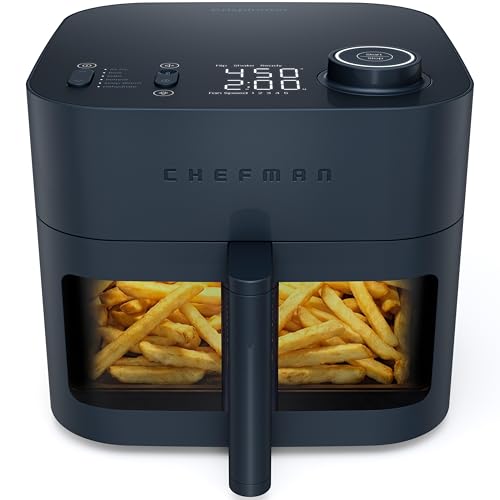
Large 8 Qt capacity for bigger meals.
TurboFry Pro ensures fast, even cooking.
Convenient viewing window to monitor food.

Hi-Fry technology ensures extra crispy results.
Easy-to-use touchscreen with 4 cooking presets.
Nonstick, dishwasher-safe basket simplifies cleanup.
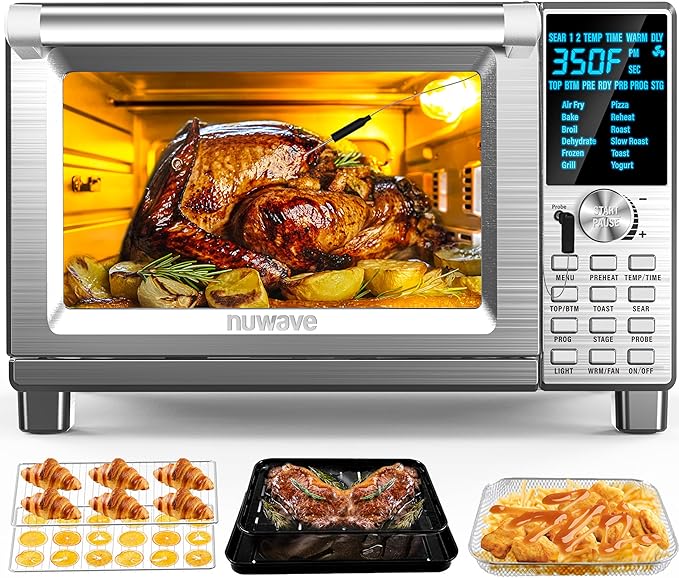
Versatile 12-in-1 cooking functions.
Precise temperature control for perfect cooking.
Large 30-QT capacity for family meals.

Large capacity for big family meals.
Versatile cooking with 100 presets.
Integrated thermometer ensures perfect results.
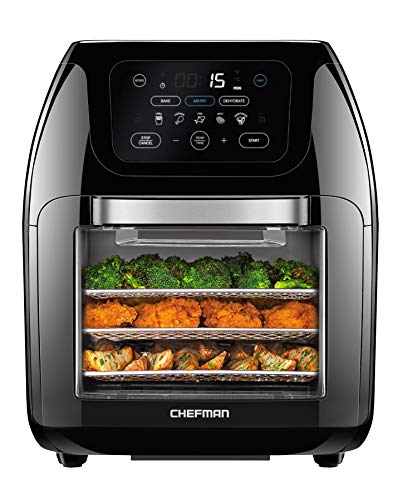
Multiple cooking functions in one appliance.
Large 10L capacity for family meals.
Easy-to-use touch screen presets.

Self-cleaning feature simplifies maintenance and care.
Superior airflow ensures even cooking results.
Large capacity fits up to 32 chicken wings.

Precise temperature control with 5-degree increments.
Versatile cooking with 5 functions and 100 presets.
PFAS-free design ensures safer cooking.
The useful capacity is the space where food can be spread out, not necessarily the printed quart figure. In the supplied reviews, independently measured capacity ranged from 4.5 or 4.6 quarts for products marketed as 6 or 6.5 quarts, to 7.1 quarts for an 8-quart model and 9.8 quarts for a product marketed as 10 quarts. Wide cooking surfaces can be more useful than tall chambers because crowding and stacked food can produce uneven results. Buyers should also consider whether they want a drawer, a front-door oven, or two separate baskets, and whether the appliance fits the available counter space and ventilation clearance.
Temperature and airflow controls matter only if they correspond reasonably well to actual cooking conditions. Independent measurements in the supplied reviews found both close control—one product averaged 395.7°F at a 400°F setting—and substantial problems, including a 47.9°F average undershoot and uneven fries with undercooked portions. Presets, shake reminders, viewing windows, and automatic pauses can help, but they do not establish safe internal temperature. A built-in probe is a meaningful distinction for meat and poultry; otherwise, use a separate food thermometer and follow USDA targets.
A coating or “non-toxic” claim is not a complete materials disclosure. Look for model-specific identification of the basket, crisper plate, racks, trays, drip pan, seals, accessories, coating chemistry, and coating temperature limits, supported where possible by migration or laboratory testing. “PFAS-free ceramic” claims varied in strength: one supplied product had a TÜV Rheinland report testing four materials with listed PFAS analytes below reporting limits, while other products had only manufacturer statements or contradictory coating information. A California Proposition 65 warning should not be treated as proof of a particular risk, but an unexplained warning is a reason to seek clarification.
Electrical safety claims should be traceable to the exact product in a public UL Product iQ, Intertek ETL, or CSA listing. A certification logo or “approved” statement without a matching record is weaker evidence. Buyers should also check the CPSC Recalls database and SaferProducts.gov for matching models and understand the maker’s remedy process. Capacity, speed, “less oil,” noise, self-cleaning, and smart features should be supported by a clear method or independent test; internal laboratory claims are not the same as independent verification.
Across the supplied reviews, the recurring safety caveats are substantial. No product should be treated as unattended cooking: hot baskets, doors, racks, steam, exhaust, grease, and crisper plates can cause burns, and several manuals require clearance and careful handling. Presets do not replace checking doneness, especially because multiple products produced uneven or undercooked food and none of the reviewed products should be assumed to verify internal temperature without a documented probe. Grease buildup can cause smoke or overheating, so cleaning is a safety task. Coating disclosure is incomplete for many products, and several exact-model certification claims could not be publicly matched. Young children and anyone unable to safely handle hot or heavy parts need a different setup or close supervision.
Air-fryer benefits in this set are mainly about cooking method: these appliances can reduce added oil compared with deep frying. They do not establish weight-loss or disease-prevention effects. The most useful comparisons concern food-contact disclosure, temperature control, safe handling, cleanability, service life, and whether claims can be checked for the exact product.
This measures whether the appliance can reduce added oil without making unsupported health promises, and whether its guidance helps avoid excessive browning. A high score reflects realistic, evidence-supported cooking changes: supplied scores reached 79 for the Instant Pot 4-quart model and 78 for several products. Lower scores, such as 72, reflect weaker guidance or less supporting evidence—not proof that the appliance causes harm.
This measures how clearly the maker identifies every food-contact surface, coating, accessory, and temperature limit. It matters because “PFAS-free,” “ceramic,” and “non-toxic” can describe only part of the cooking system. The supplied scores ranged from 44 to 84: the higher-scoring Typhur had a report testing four materials, while lower-scoring products lacked complete declarations, migration testing, or had contradictory coating information.
This measures whether temperature, airflow, usable area, timing, and alerts produce food that is evenly cooked without excessive browning. High scores were supported by findings such as 395.7°F at a 400°F setting or good independent cooking results; the supplied range ran from 53 to 85. A low score can reflect large temperature errors, slow recovery, or meaningful undercooked portions, even when the controls offer many presets.
This measures overheating, ignition, hot-touch surfaces, placement, cords, automatic operation, and credible safety testing. Scores ranged from 70 to 91. The highest-scoring product had an exact UL Product iQ listing; lower-scoring products commonly had certification claims that could not be matched publicly. A high score does not make hot steam, grease, doors, or exhaust safe to touch, nor does it permit unattended cooking.
This measures hot exteriors and exhaust, unstable drawers, weak handles, grease spills, pinches, and glass-door hazards. Scores in the set ranged from 70 to 76, so the distinction is modest but still relevant. High-scoring designs offer better handling evidence, while reviews repeatedly warn that hot racks, drawers, crisper plates, doors, and heavy baskets can burn or fall if tipped or handled carelessly.
This measures whether food- and grease-contact parts can be removed, inspected, cleaned, and reassembled without damaging coatings. Scores ranged from 72 to 83. Higher-scoring products had accessible removable parts, dishwasher instructions, or strong independent cleaning results. Lower scores reflected harder-to-reach cavities, hand-wash burdens, unclear cleaning limits, or grease and residue that can contribute to smoke and overheating.
This measures whether the exact model is identifiable, hazards are communicated, and remedies are usable when defects arise. Scores ranged from 70 to 77. Higher scores reflect no matching unresolved recall pattern in the review searches and clearer accountability; lower scores reflect thinner documentation. A recall affecting another model or product line should not automatically be applied to the product being considered.
This measures whether capacity, speed, noise, oil reduction, self-cleaning, coating, and smart-function claims are specific and supported for the exact product. Scores ranged from 52 to 72. Higher-scoring claims were tied to manuals or independent measurements; lower scores reflected unsupported “faster,” “less oil,” or coating claims, conflicting specifications, or nominal capacity that exceeded measured usable space.
This measures whether an accredited third party publicly lists the exact product and whether certification or performance claims can be traced to a record. Scores ranged from 68 to 90. The strongest example had a matching UL Product iQ listing; many others had manufacturer certification language without a public UL, ETL, CSA, or equivalent record. Independent certification and independent cooking tests answer different questions, so both matter.
This measures comparable cooking energy, standby draw, durability, repairability, replacement parts, warranty coverage, and avoidable disposables. Scores ranged from 65 to 78. The stronger examples combined longer warranties or listed replacement baskets, trays, probes, doors, and accessories; the weaker ones lacked measured energy data, durability testing, or parts support. No supplied product had a complete public picture of energy use and lifespan.
This is a single-drawer, 6-quart countertop air fryer with a removable basket and crisper plate. It runs on 120 volts at a manufacturer-rated 1,725 watts, measures 11.8 by 14.4 by 11.9 inches including the handle, and has nine cooking functions from proofing at 90°F to broiling at 450°F. The maker says it serves 3 to 5 people. Independent laboratory testing found a large usable cooking surface, fast cooking, and generally even crisping. The same testing found substantial temperature cycling and slower recovery after food is added, so the displayed setting is less predictable for delicate foods and recipes requiring close temperature control. The manual identifies the basket and crisper plate as aluminum with a nonstick coating, while the product page calls that coating PFAS-free ceramic-coated.
This product suits a household of roughly two to four people that primarily wants a compact single-basket appliance for fries, vegetables, wings, and other foods that benefit from being spread in one layer. It is also suitable for users who will check and turn food during cooking, use an instant-read thermometer for raw animal foods, and want removable dishwasher-safe cooking parts. The broad low-to-high temperature range can also be useful for proofing dough and dehydrating small batches.
It is not suited to anyone who needs tightly stable cooking temperatures for delicate baking, fish, or recipe replication without adjustment. It is also a poor fit for buyers who require complete third-party disclosure of every food-contact material, a published migration test, or no Proposition 65 warning. Households preparing raw poultry, ground meats, or leftovers should not rely on presets alone, because this product has no probe and the instructions do not replace checking safe internal temperatures. Keep children away during operation and unloading.
Air frying can reduce the added oil needed compared with conventional deep frying, but it does not establish a disease or weight-loss benefit. High-temperature browning can still form acrylamide in potato and grain foods. Use lower settings when practical, avoid excessive browning, and cook fries toward golden rather than dark brown. The product's independent cooking results support crisping with little added oil, not health claims. The maker identifies the basket and crisper plate as aluminum with nonstick coating and markets them as PFAS-free ceramic-coated. An exact-model SGS report found no detected PFAS among the tested compound list, but it was a content screen rather than a food-migration study and does not fully disclose all food-contact parts. The product page also carries a California lead warning without specifying the source or dose. No matching recall was located for this model, although other Cosori models were recalled in 2023 for overheating wire connections. A two-year limited warranty and replaceable accessories support service life, but no measured energy-use or standby-power data were found.
This is a 1,750 watt countertop air fryer with one 9 quart drawer that can be divided into two independently controlled 4.5 quart zones. The manufacturer states a 95 to 465 F range, six cooking modes, Sync and Match controls, and dishwasher-safe basket and crisper plates. Its stated dimensions are 19.0 by 11.9 by 11.1 inches, so clearance and counter depth matter. The defining feature is the removable divider, which gives the product a large single cooking space or two timed zones. The manual provides adjustable time and temperature settings, overheating and loading warnings, and a two-year limited warranty. Independent testing of a closely related TwinFry configuration found fast heating and close temperature tracking, but there is no published accredited performance report for this exact US product. Cosori also posts a California warning for lead exposure, while identifying only the basket and crisper-plate coating as PFAS-free ceramic.
This product suits a household that regularly prepares a main dish and side together, but sometimes needs one uninterrupted drawer for a larger roast, chicken, or batch of vegetables. It is most practical where a 19 inch deep appliance can sit on a stable, heat-resistant counter with at least 5 inches of space above and behind it. It also fits users willing to check food during cooking, avoid overloading, and use a probe thermometer for poultry, ground meat, fish, and other raw animal foods.
It is not a good fit for very limited counters, shallow cabinets, or users who cannot provide the manual's clearance and stable, heat-resistant placement. It is also unsuitable for anyone seeking documented, model-specific third-party testing of all food-contact parts, including PFAS and metals, because that evidence was not located. Households cooking mainly single servings may find the 17.2 pound, 9 quart format unnecessarily bulky. Do not rely on presets or exterior browning alone when cooking raw meat or poultry.
The health advantage of air frying is use-specific, not a blanket healthy-food claim. Cooking with little or no added oil can reduce added frying oil compared with deep frying, but nutrition still depends on the food and portion. High-heat cooking can form acrylamide in starchy foods, especially when foods are cooked darker or longer. This product offers adjustable heat, but its materials do not fully address this issue through recipe guidance. Keep starchy foods lightly browned rather than charred where practical. Cosori identifies the basket and crisper plates as ceramic-coated and PFAS-free, and states that they are dishwasher-safe. However, it provides a California lead warning without component-level disclosure or public test results. No exact-product public certification listing or accredited material test report was found. The two-year limited warranty and care directions may help retain the appliance, but replacement-parts availability, packaging composition, measured energy use, and recycling instructions were not disclosed.
This is a single-basket, app-connected countertop air fryer with a stated 6.5-quart capacity, 90 to 450°F range, six cooking functions, and 1,725W rated power. It has a removable crisper plate and a stainless steel exterior. Cosori states that the basket and crisper plate have PFAS-free ceramic nonstick cooking surfaces, while the product page identifies the basket as 304 stainless steel. Independent testing measured 6.7 quarts of capacity and 74.1 square inches of usable basket area, enough for roughly three to four portions. The same testing found fast cooking after a relatively slow preheat, but only decent temperature stability, with a 27°F variation at 400°F. There is no built-in food probe, so safe doneness for meat still requires a separate thermometer. The manufacturer also posts a California Proposition 65 warning for potential lead exposure, without a public exposure measurement or material test report for this product.
It suits a household of about three to four people that wants a compact single drawer appliance for quick batches of vegetables, frozen foods, wings, reheating, proofing, or dehydrating. The measured 74.1 square inches of basket area supports arranging food in a relatively open layer, which is useful for crisping. It also fits cooks who value app monitoring and a wide 90 to 450°F temperature range, but who will still use a separate food thermometer for meat and follow shake or turn reminders.
It is not well suited to buyers who need publicly documented third-party electrical safety certification or complete food-contact chemical documentation. The Proposition 65 lead warning is especially relevant for people who avoid products carrying unresolved exposure warnings. It is also a weaker fit for cooks who need highly stable temperatures, fully uniform browning, a built-in probe, or hands-off cooking of poultry and other foods where internal temperature must be confirmed. Households with children should follow the manual's hot-surface and hot-crisper-plate warnings closely.
Air frying can reduce the need for added cooking oil compared with deep frying, but it does not itself establish weight-loss or disease-prevention benefits. High-temperature browning can still form acrylamide in potato and grain foods. Use lower practical temperatures, avoid very dark browning, and follow safe internal-temperature guidance for meat. Independent testing supports good crisping and fast cooking, but also found temperature variation, so food should be checked rather than assumed done. Cosori identifies ceramic-coated, PFAS-free and BPA-free cooking surfaces, a 304 stainless steel basket, and a stainless steel structure. Those are manufacturer statements, not a public migration-test package. The company also posts a California Proposition 65 warning for lead exposure. A prior Cosori air-fryer recall in 2023 involved different models and overheating wire connections, not this product. That recall had a replacement remedy. The stated five-year limited warranty may support longer service life, but no public replacement-parts catalog or independently measured energy-use result was located.
This is a 1700-watt, single-drawer countertop air fryer with an 8-quart claimed basket, six modes, five fan-speed settings, a 90 to 450°F range, interior light, viewing window, and shake or flip reminders. Its stated footprint is about 12 by 14 inches, and it uses a removable basket and raised rack. Independent testing measured 8.3 quarts and 81.4 square inches of cooking surface, enough room to spread food more evenly than a deep, narrow basket. The same testing found quick preheating and cooking, but also batches with both undercooked and burnt pieces. Chefman calls the basket and rack nonstick and dishwasher safe. Material disclosure is the central caution, because the product record's PFAS-free ceramic claim conflicts with Chefman's California disclosure, which lists PTFE-coated food-contact parts for this product.
This product suits a household that wants a compact, wide single-basket appliance for several portions at once, especially foods that benefit from being arranged in one layer. Its independently measured cooking area and quick cooking behavior fit weeknight vegetables, frozen foods, reheating, and batch-style snacks. It also suits users willing to shake or turn food when prompted, check doneness with a food thermometer when cooking meat or poultry, and follow the cleaning limits for a nonstick basket and rack.
It is not suited to buyers who need highly consistent browning without monitoring, since independent testing found some food both undercooked and burnt. It is also a poor fit for anyone seeking fully documented PFAS-free or ceramic-only food-contact surfaces. Chefman's own California disclosure lists PTFE-coated components, which conflicts with the product record's coating claim. Households cooking poultry, ground meats, or thick cuts without an instant-read thermometer should not rely on the timer alone, because this product has no probe or internal-temperature alert.
Air frying can realistically reduce added oil relative to deep frying, and published food studies have found substantially lower fat uptake for air-fried fries. That is a cooking-method benefit, not proof of weight loss or disease prevention. High-temperature browning still needs attention. FDA notes that acrylamide can form in foods cooked at high temperatures, and research on air-fried potatoes does not establish that air frying always lowers it. Chefman's manual provides shake prompts and tells users to check doneness, but does not include probe guidance or internal-temperature targets. The main material issue is disclosure quality. Chefman markets nonstick basket and rack surfaces, while its California disclosure for this product lists PTFE-coated pot, rack, and drip-tray parts. The product also carries a California Proposition 65 warning. These disclosures do not by themselves establish harmful exposure in normal use, but they conflict with a PFAS-free ceramic description in the product record. The basket and rack are removable and dishwasher safe, which can support cleaning, though the manual warns that aerosol spray can chip the coating. No matching CPSC recall was located in this review.
This is a compact, drawer-style 6-quart air fryer for countertop air frying, roasting, baking, and reheating. It has a removable basket and rack, touchscreen temperature and time controls, four food presets, a shake reminder, and a short 450°F Hi-Fry finish. The maker specifies 1700 watts, a 200°F to 450°F range, and dimensions of 15.6 by 11 by 11 inches. The strongest product-specific documentation is the user guide. It instructs users not to fill the basket with oil, to avoid crowding, shake or flip food for more even cooking, and check doneness rather than rely on preset timing. The maker also says the basket and rack are top-rack dishwasher safe and that cooking pauses when the basket is removed. No independent temperature-accuracy, cooking-evenness, energy-use, or durability test for this exact product was located.
This product fits a household that wants a relatively compact 6-quart drawer air fryer for batch cooking foods such as vegetables, frozen fries, wings, and reheated leftovers. It is most appropriate for users who will follow the manual's loading, shaking, cleaning, clearance, and food-doneness instructions. The removable rack and dishwasher-safe basket suit people who want accessible grease handling instead of a fixed interior tray. It is also suited to cooks comfortable using a separate instant-read thermometer for poultry, meat, and leftovers.
It is not a good fit for buyers who need independently verified temperature accuracy or evenness, a built-in food probe, or documented exterior-surface heat testing. People seeking PTFE-free food-contact surfaces should avoid it, because the maker's California disclosure identifies PTFE on listed air-fryer components. It also needs clear space around the unit, supervision while operating, and careful handling of hot basket parts and exhaust. Households where children may access a hot countertop appliance without close supervision need particularly cautious placement and use.
Air frying can reduce the need for added cooking oil compared with deep frying. The manual directs users not to fill the product with oil, and its rack is intended to let fat drain away from food. That is a cooking-method benefit, not evidence that this product itself causes weight loss or prevents disease. High-temperature browning still matters. FDA guidance notes that acrylamide can form in plant foods during high-heat cooking, and lighter browning is the prudent approach for potatoes and similar foods. Material disclosure is unusually specific for this series. Chefman's California disclosure identifies PTFE, a PFAS, on the listed pot, rack, and drip tray. However, no exact-product migration report or full food-contact temperature documentation was located. The product also carries a California Proposition 65 warning without naming the relevant chemical or exposure pathway. The basket and rack are removable and dishwasher safe, which can support cleaning, but the one-year limited warranty and lack of documented replacement-part support limit confidence in long service life.
This product is a countertop air-fryer toaster oven with a manufacturer-stated 30-quart capacity, four rack positions, a drop-down glass door, and an 1,800-watt electrical rating. It is designed to air fry, bake, broil, toast, roast, dehydrate, reheat, and hold food, with adjustable top and bottom heating and a plug-in food probe. Consumer Reports independently identifies the same product as a large, nine-slice toaster oven with a 50 to 500 F range, air-fry setting, four rack positions, and a 13-inch pizza capacity. Its lab results describe good baking and reheating, very good ease of use and cleaning, but fair full-batch toast evenness and poor one-slice toasting. NuWave states that the probe monitors internal temperature and ends cooking at the selected target, but its accuracy was not independently verified.
This product fits a household that wants a compact secondary oven for reheating, baking, roasting, dehydrating, and air frying rather than a dedicated toaster. Its large oven format, four rack positions, and independently observed good baking and reheating performance suit people preparing small meals, leftovers, or a pizza up to the stated 13-inch capacity. It also suits cooks who will use the included probe to check internal temperature, especially for poultry and roasts, while following safe-temperature guidance.
It is not well suited to people whose main use is making one slice of toast or a highly even full batch, because independent testing found poor one-slice results and fair full-batch evenness. It is also a weaker fit for households needing publicly traceable third-party electrical certification or complete food-contact coating disclosure before purchase. Keep it away from settings where children may touch the exterior after cooking, or where the required vent clearance cannot be maintained.
Air frying can reduce the need for added cooking oil when it replaces deep frying. Published food studies report lower oil-related frying exposure and, in some potato comparisons, lower acrylamide than deep frying. That is a cooking-method benefit, not evidence that this product causes weight loss or prevents disease. High-temperature browning can still form acrylamide, so avoid excessive browning. The probe can support safer cooking when used correctly, and poultry should reach USDA's 165 F minimum internal temperature. NuWave's manual identifies dishwasher use for most accessories and warns that frequent dishwasher cleaning may shorten their life. It provides a one-year limited warranty, but public energy-use, standby-power, durability, repairability, and exact replacement-parts evidence is limited. NuWave's public PFAS disclosure lists several other Bravo products but does not identify this product, leaving its food-contact coating and material disclosure incomplete. No matching CPSC recall was located in the checked recall records.
This is a countertop, front-door air fryer oven with a stated 15.5-quart capacity, four rack positions, rotisserie accessories, a drip tray, and an integrated food probe. NuWave's current product page lists 900 W, 1500 W, and 1800 W settings, a chrome mesh tray and racks, an enamel drip tray, and a one-year manufacturer warranty. The supplied documentation identifies this product family as 120 V and 1800 W for household use. Its most useful safety-oriented feature is the included probe, but its cooking accuracy and oven-wide temperature uniformity have not been independently published for this exact product. The manual gives handling, placement, preheating, cleaning, and internal-temperature guidance. It also instructs users to keep clearance behind the rear vent and to avoid touching the interior while operating.
This product suits a household that wants an oven-style air fryer for rack cooking, rotisserie use, and foods where checking internal temperature is useful. It is better suited to someone with a stable, heat-tolerant counter, room behind the appliance for ventilation, and time to hand-wash several accessories after cooking. It also fits a user prepared to consult the manual, use the probe as a check rather than an assumed guarantee, and verify safe food temperatures independently.
It is not well suited to buyers who need independently published proof of temperature accuracy, evenness, probe accuracy, energy consumption, or an exact-model third-party safety listing. People seeking complete coating and food-contact chemical disclosure should choose a product with model-specific documentation for every tray, rack, pan, seal, and accessory. It is also a poor fit for cramped counters, households unable to maintain rear ventilation clearance, or users who need dishwasher-safe cleanup confirmed for all food-contact parts.
Air frying can realistically reduce added oil compared with immersion frying because food is cooked by circulating hot air rather than submerged in oil. That is a cooking-method benefit, not evidence that this product causes weight loss or prevents disease. High-temperature browning still matters. FDA notes that acrylamide can form in browned potato and grain foods during frying, roasting, and baking, so cook potatoes to golden rather than dark brown and avoid excessive cooking. The included probe and the manual's temperature table can support safer cooking when users verify USDA minimum internal temperatures. However, no independent accuracy testing for this exact probe or oven was located. NuWave makes replacement components available according to its manual, which can reduce premature disposal. There is a one-year warranty, but no verified standby-power figure, comparable cooking-energy test, complete food-contact material declaration, or publicly matched third-party certification record was found. Searches of the CPSC recall and public incident portals did not identify a matching recall for this product.
This is a 10-quart countertop air fryer oven with three wire racks, a removable drip tray, a glass door, a rotisserie spit and a retrieval tool. It air fries, bakes, dehydrates and roasts. Chefman documents a 95 to 400°F range, 1,700W input, 17 presets, and separate time limits for air frying, baking and dehydrating. The rotisserie is limited to 4 lb. The maker states that the product is cETL approved, and an independent retailer also identifies it as cETLus safety listed, although a public exact-product certification file was not located. The guide has useful operational safeguards, including an automatic shutoff at the end of the timer and a door-open pause that retains settings. It also says multi-rack cooking needs rack swapping or food flipping for more even results.
This product suits a household that wants a compact oven-style format for small batches spread across racks, reheating, dehydrating, or an occasional rotisserie meal up to 4 lb. It is especially practical for a user willing to check food, rotate rack positions, use an instant-read thermometer for meat and poultry, and clean the drip tray after fatty foods. The door window, interior light, removable door, and documented pause function support hands-on cooking rather than unattended cooking.
It is not suited to anyone who needs independently measured proof of temperature accuracy, evenness, coating composition, or long service life before bringing an appliance home. Buyers seeking fully disclosed food-contact materials should avoid relying on the generic nonstick description. It is also a poor fit for users who expect a cool exterior, cannot safely handle hot racks and a hot rotisserie spit with mitts, or want a large single basket that does not require food flipping and rack repositioning.
Air frying can reduce the added oil used compared with deep frying, but the benefit is a cooking-method change, not proof of disease prevention or weight loss. The maker's guide appropriately says to check food for doneness rather than rely only on preset timing. It does not, however, give specific guidance for limiting excessive browning. FDA notes that acrylamide can form during high-temperature frying, roasting, and baking, particularly in plant foods, so avoid overbrowning potatoes and similar foods. Chefman posts a California Proposition 65 warning for this product, but the product page does not identify the chemical or exposure route behind that warning. The public materials record also does not fully identify the coatings and materials of every food-contact part. The product has a documented one-year limited warranty. Its removable door, drip tray and dishwasher-safe accessories can support maintenance, but no measured standby-power data, repair documentation, or official replacement-parts listing was located.
This is a wide, single-basket countertop air fryer with a manufacturer-stated 5.6-quart capacity, 1,750-watt rating, 105 to 450 F cooking range, touch controls, app connection, upper and lower heating elements, and a removable ceramic-coated basket. It is intended for spreading food in one shallow layer, including a 12-inch pizza, rather than stacking food deeply. Independent testing measured 5.7 quarts and 124.3 square inches of basket area. It produced mostly crisp, well-browned food, but testing also found 20.7 percent undercooked fries in a regular batch, slow preheating, and a 25 F temperature variation at 400 F. A TÜV Rheinland report tested four sampled materials from this product for a broad PFAS panel, while a public UL record lists the model as a household cooking appliance certified for Canada.
It suits households that regularly cook wide, shallow batches such as wings, vegetables, breaded foods, bacon, toast, or pizza, and have sufficient permanent counter space. The measured basket area helps keep food in one layer, which supports more even browning. It also suits users willing to wash the basket after use and run the upper-cavity cleaning cycle as maintenance. For poultry, burgers, and other foods where doneness matters, the user should have a separate food thermometer and check the thickest portion.
It is not suited to households with limited counter space or those expecting a compact appliance, because independent measurements confirm a broad, heavy unit. It is also a poor fit for anyone who wants an included probe or automatic proof that meat is safely cooked. The measured temperature variation, slow heat recovery, and some undercooked test food make visual browning and preset timing insufficient for safety-sensitive cooking. People needing complete disclosure of every food-contact material and coating formulation will find the available documentation incomplete.
Air frying can reduce the added oil needed compared with deep frying, but it does not make heavily browned food risk-free. FDA notes that acrylamide can form during high-temperature frying, roasting, and baking. Use the lowest effective temperature and avoid excessive browning. The independent cooking test found no overcooked fries, but it also found some undercooking, so use a food thermometer for meat and poultry. USDA specifies 165 F for poultry. The strongest materials evidence is a January 2025 TÜV Rheinland report for this product. It tested four supplied materials, listed as ceramic plus coating, silicone, and two plastics, with tested PFAS targets below reporting limits. That is more meaningful than an unsupported coating claim, but it is not a complete migration test or a full material declaration. A UL public record lists the model under household cooking appliances certified for Canada. The public record located does not itself establish a United States certification listing. Replacement baskets are sold, which can extend usable life, but no independent standby-power or durability result was located.
This is a compact, drawer-style 8-quart air fryer with a removable base tray and raised circulation plate. It uses touch controls for air fry, bake, roast, dehydrate, toast, and reheat. The manufacturer specifies 50 to 400 F adjustment in 5 F steps, 700, 1500, or 1800 W settings, and a one-year limited warranty. Independent Consumer Reports data lists 7.1 quarts as measured capacity, below the stated 8-quart figure, with strong controls and cleaning test results. Nuwave states that the cooking surface is PFAS-free ceramic, and its California disclosure page lists no PFAS substance for this product. Those are manufacturer disclosures, not a public migration test or a full material declaration. No exact-product public UL, ETL, CSA, or NSF listing was located in this review.
This product suits a household that wants a relatively large drawer air fryer in a compact footprint and is prepared to follow hands-on cooking instructions. It is particularly relevant for users who batch-cook fries, vegetables, snacks, or small proteins, use a food thermometer for poultry and other riskier foods, and value removable wash-up parts. The selectable wattage may also help people using outlets with lower available capacity, although users should follow the electrical instructions and avoid overloading circuits.
It is not well suited to buyers who require publicly traceable third-party electrical certification before bringing a high-watt countertop heater into the home. It also is not ideal for anyone unable to safely manage hot drawers, rising steam, or a very hot removable riser. People who want a fully disclosed food-contact material system, including coating chemistry and migration data, will not find that documentation here. Households cooking raw meat without an independent thermometer should not rely on presets alone.
Air frying can reduce the amount of added oil compared with deep frying, but it does not establish weight-loss or disease-prevention benefits. Research on fried foods also shows that acrylamide can vary substantially with food type, time, temperature, and browning. FDA notes that acrylamide forms during high-temperature frying, roasting, and baking. Cook starchy foods to a lighter color where practical and avoid excessive browning. Nuwave states that this product's ceramic cooking surface is PFAS-free, and its California cookware disclosure lists no PFAS substance for this model. The disclosure remains incomplete because it does not identify every food-contact material or provide public migration testing. The manual supports service life modestly through named replaceable components and a one-year warranty, but it bars unauthorized repair and no measured energy-use or standby-power result was located. No matching CPSC recall was found in the public recall search reviewed.


