Best Overall
11% off

Anker Power Bank 25,000mAh Triple 100W
High-capacity power bank for extended use.
Triple 100W USB-C ports for fast charging.
Built-in retractable cables for convenience.
 Daniel Kenitz
High-capacity power bank for extended use.
Triple 100W USB-C ports for fast charging.
Built-in retractable cables for convenience.

High capacity for multiple device charges.
Built-in USB-C cable for convenience.
Fast charging with 87W power output.

Ultra-slim design fits easily in pockets.
Qi2 certified for efficient, fast charging.
Ergonomic design enhances user comfort.

High-capacity battery provides long-lasting power.
Fast charging for multiple devices simultaneously.
Compact design makes it travel-friendly.

Compact design with retractable InstaCord cable.
High-speed 45W charging for multiple devices.
Smart display shows battery status clearly.

High capacity for multiple device charges.
Built-in USB-C cable for convenience.
Compatible with a wide range of devices.

Ultra-slim design fits comfortably in pockets.
MagSafe-compatible for easy, secure charging.
Qi2 certified for fast, efficient charging.

High-capacity 20000mAh for extended device use.
65W fast charging supports laptops and tablets.
Ultra-compact design for easy portability.
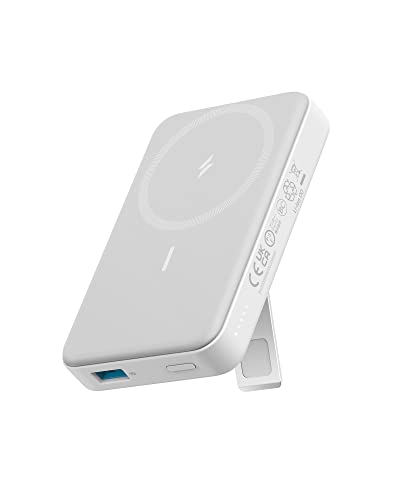
Convenient magnetic attachment for easy charging.
Built-in stand for hands-free phone use.
Fast 20W USB-C charging capability.

High-capacity for extended device charging.
Smart display shows charging status clearly.
Fast charging with 200W power delivery.
Capacity is commonly advertised in mAh, but that figure describes the cells rather than the energy delivered to a phone or laptop. Voltage conversion, heat, charging losses, and the device’s own battery-management system reduce the usable amount. A 20,000mAh product in the supplied reviews delivered roughly 62Wh in one independent test, while other 20,000mAh products delivered about 60Wh or between 80% and 92% of their stated capacity. Look for watt-hour figures, rated output capacity, and independent testing that discloses the load, voltage, temperature, cutoff, sample, and test method. A headline such as 300W or 165W may also mean combined output across several ports, while a single port may be limited to 140W, 100W, or less. Maximum output may be brief or may fall as the battery heats or approaches depletion.
For USB-C products, a useful specification should show the voltage and current profiles for each port, the limits when ports are shared, and whether USB Power Delivery or PPS charging was actually observed. USB-IF certification is stronger evidence than a general compatibility claim, but independent protocol testing can still show whether a product negotiated expected charging modes. Built-in cables reduce what you need to carry, but they are wear points; a manufacturer bend-count claim is not the same as independent cable-flex testing.
Wireless products need separate scrutiny. A magnetic or wireless claim should be matched to the exact product in the Wireless Power Consortium’s Qi or Qi2 database. Wireless output can be lower than wired output and may fall further when another port is in use. Alignment, case thickness, foreign objects, temperature, and phone compatibility all affect results. FCC authorization, where present, addresses the wireless transmitter and is not equivalent to battery-safety certification.
For finished-product safety, check the exact model in UL Product iQ, Intertek’s ETL directory, CSA, or TÜV Rheinland, and distinguish a complete power-bank listing from certification of a component or a seller’s claim. The strongest supplied products combined exact-model certification with product-specific performance testing; several others had useful teardown or hands-on evidence but no matchable UL, ETL, CSA, TÜV, or USB-IF record. Also check the manufacturer’s recall page and CPSC records using the model and serial information.
Recurring cautions in the supplied reviews are significant. Do not use a bank that is swollen, cracked, wet, unusually hot, leaking, crushed, or otherwise damaged, and do not charge one under bedding, in a hot vehicle, in direct sun, or unattended overnight. Recalled units require immediate stoppage and the manufacturer’s remedy; they should not go in ordinary trash, curbside recycling, or standard battery boxes. Power banks must remain in carry-on baggage, not checked luggage, and airline rules may be stricter than the common 100Wh threshold. Built-in cables and sealed batteries also limit repair, replacement, and long-term waste reduction.
## Health and Ecology A power bank is both a portable electrical device and a sealed lithium battery. The topics below separate practical safety and environmental considerations from evidence that helps establish whether a specification can be trusted. Scores are relative to the supplied products: higher scores indicate stronger product-specific support under that topic, not a guarantee of risk-free use.
This measures protection against overheating, thermal runaway, short circuits, unsafe charging, burns, and fire. For power banks, high scores reflect documented safeguards and no unresolved product-specific safety signal; lower scores reflect heat findings or recall concerns. Supplied scores ranged from 15 for a recalled model to 90 for a high-output model with exact-model certification and strong testing evidence.
This measures whether a buyer can identify the exact model and serial or lot, check recall eligibility, and obtain a safe remedy. It matters because lithium-battery failures can require immediate removal from service and special disposal. Supplied scores ranged from 72 to 84; the recalled product scored relatively well because its serial-number check and refund process were clear, despite the underlying hazard.
This measures safe and reliable USB-C Power Delivery behavior, including accurate per-port limits and shared-output rules. High scores were associated with independently observed PD or PPS profiles and clear port tables; lower scores reflected limited testing or unclear negotiation evidence. Supplied scores ranged from 65 to 88, with several products showing useful protocol testing without formal USB-IF certification.
For magnetic or wireless banks, this measures alignment, thermal control, interoperability, and whether the exact product is Qi or Qi2 certified at its stated power. Scores ranged from 70 to 100. The highest scores belonged to products with no wireless claim or with clearly verified compatibility; uncertified magnetic products and products with output discrepancies scored lower.
This measures whether the exact finished power bank—not just a cell, component, or seller claim—is listed by an accredited safety certifier. A high score requires a current, matchable listing in resources such as UL Product iQ, ETL, CSA, or TÜV. Supplied scores ranged from 68 to 94; the strongest products had exact-model UL evidence, while many had no finished-product listing.
This measures usable energy, sustained output, recharge time, and multi-port sharing under disclosed test conditions. It matters because headline capacity and wattage often overstate what a device receives. Supplied scores ranged from 56 to 92. High-scoring products had repeatable load testing, including measured laptop charging or roughly 90Wh delivery; low scores reflected limited or absent product-specific testing.
This measures whether mAh, watt-hours, maximum watts, recharge times, port counts, airline suitability, and compatibility claims match the exact product evidence. High scores reflected clear distinction between cell capacity and usable output, plus disclosed shared limits. Supplied scores ranged from 68 to 90; lower scores were associated with headline figures that required important operating conditions or lacked independent confirmation.
This measures whether the product and manual identify energy, model information, electrical ratings, charging limits, temperature warnings, damage precautions, transport restrictions, and disposal guidance. High scores make safe use and recall checking easier. Supplied scores ranged from 72 to 87. Products with detailed labels, manuals, operating ranges, and per-port limits scored better than those relying mainly on marketplace specifications.
This measures resistance to capacity loss, enclosure damage, connector wear, and premature failure, including warranty and replacement support. It matters because a sealed battery that fails early becomes difficult to repair. Supplied scores ranged from 50 to 78. Higher-scoring products generally had warranty or service support and fewer unresolved durability concerns, while retractable or fixed cables remained recurring wear points.
This measures durability, recycling instructions, take-back support, and materials disclosure. A high score means buyers have a realistic route that avoids trash and curbside recycling. Supplied scores ranged from 69 to 82. Better-scoring products had mail-back or recycling pathways and clearer disposal guidance; lower scores lacked a product-specific take-back route or detailed recovery information.
This is a 25,000mAh, 90Wh lithium-ion laptop power bank with one USB-C port, one USB-A port, and two built-in USB-C cables, one retractable. Anker states that each USB-C output can supply up to 100W, with a 165W maximum across two ports. It weighs 21 oz and measures about 6.2 by 2.1 by 1.9 inches. Independent electronic-load testing measured an average 74.2Wh delivered energy, or about 80 percent of the stated cell energy across several loads. The same test confirmed broad USB-C PD and PPS support, but found that sustained high-load output is thermally reduced. Anker documents a temperature-monitoring system and a pause in recharging when the unit is hot, but no matchable UL, ETL, CSA, or USB-IF finished-product listing was located for this product.
This product fits a traveler, commuter, or field worker who needs a large carry-on-sized battery for a USB-C laptop, phone, tablet, or accessories and values having charging cables attached. It is most practical for one power-hungry laptop or several lower-power devices, rather than continuous maximum-load operation. The display is also useful for people who want to see live input, output, battery temperature, and remaining charge information instead of relying on a simple percentage indicator.
It is not suited to anyone who requires independently listed electrical safety certification for workplace procurement, institutional use, or risk-sensitive household purchasing. It is also a poor fit for users who need sustained 100W or 165W output through most of the battery discharge, because independent testing observed thermal power reduction. Avoid relying on it in very hot environments, if damaged, wet, swollen, or modified. It has no wireless charging, so it does not serve users seeking magnetic or Qi charging.
The product has a 90Wh lithium-ion battery. That is within the FAA's 100Wh limit for spare lithium-ion batteries, but power banks must stay in carry-on baggage and airlines can impose stricter rules. The manual gives meaningful safe-use instructions, including a 32 to 95°F operating range, no rain or snow exposure, no disassembly, and immediate discontinuation if damaged or modified. Anker also states that it pauses recharging after high-power use until temperature drops. There is no identified recall for this exact product in the reviewed recall materials. Anker has, however, operated serial-number-based recalls for other power bank models, underscoring the importance of retaining proof of purchase and checking model and serial information if a future notice is issued. The manual directs users not to discard the battery with household waste and to use an appropriate electronics collection point. A U.S.-specific product take-back path and published battery cycle-life evidence were not verified.
This is a 20,000mAh, 72Wh lithium-ion power bank for charging USB devices away from an outlet. It has a fixed USB-C cable, one additional USB-C port, and one USB-A port. The manufacturer rates either USB-C output at up to 65W and total simultaneous output at up to 87W. Its listed size is 15.75 by 7.35 by 2.6 cm, and its listed weight is about 431g. ([service.anker.com](https://service.anker.com/product-description/a085g00000GjEw8AAF/anker-power-bank-20k-87w-builtin-usbc-cable%3Fref%3DHome_Page)) Independent bench testing supports useful real-world energy delivery. One test measured roughly 61.6 to 65.4Wh at different loads, while another measured 65.3Wh and observed a maximum 87W output, though continuous output was reported lower at 67W. Independent testing also found USB Power Delivery and PPS support on the USB-C outputs. The product does not offer wireless charging. ([techtest.org](https://techtest.org/eine-der-besten-anker-powerbanks-2024-anker-a1383-20000-mah-powerbank-mit-87w-und-integrierten-kabel/))
This suits a traveler, student, or mobile worker who needs a carry-on-sized battery with enough verified delivered energy for repeated phone charging or a meaningful laptop recharge. It is particularly practical for someone using a USB-C laptop that accepts 65W or less, while also needing a second connection for a phone or accessory. The built-in cable is useful for people who regularly forget a USB-C cable, provided they can accept that the cable is not user-replaceable.
It is not for users who need a publicly verifiable UL or equivalent finished-product safety listing before bringing a battery into a workplace, school, or safety-sensitive setting. It also does not fit users who require wireless charging, a replaceable integrated cable, or documented long-cycle durability. Households should not use any swollen, hot, cracked, wet, or modified lithium-ion power bank. Keep it out of heat, do not crush or open it, and supervise use around children.
The most relevant health issue is lithium-ion battery safety. This product has product-specific instructions that limit operating temperature to 0°C to 35°C and explicitly warn against fire exposure, crushing, opening, and use after damage. No U.S. recall naming this exact model was found in the CPSC material checked. However, Anker recalled other power-bank models in 2025 after reports of fire, explosion, burns, and property damage, so model and serial details should be retained and any future recall should be checked promptly. ([lp.ankerjapan.com](https://lp.ankerjapan.com/hubfs/aoos/manual/A1383safety.pdf)) The product is a 72Wh pack, below the common 100Wh airline carry-on threshold, but spare lithium batteries belong in carry-on baggage, not checked baggage. Anker operates a U.S. recycling program for products beyond warranty. That is a useful disposal route, although no product-specific recycled-material content or battery-cell take-back detail was found. Do not put damaged or recalled lithium-ion batteries in household trash or curbside recycling. ([digitalcontent.target.com](https://digitalcontent.target.com/vault/1775174400/CLOUD_cdd44b29-3290-4bd5-ad75-984d2b6d1adf.pdf))
This is a 10,000mAh, 38.7Wh lithium-polymer magnetic power bank for phones and small wireless accessories. It attaches magnetically to compatible Qi2 or MagSafe setups, charges wirelessly at up to 15W, and has one USB-C port rated for up to 30W input or output. It measures about 4.09 by 2.78 by 0.58 inches and weighs about 7.6 ounces. Its defining verified feature is exact-model Qi2 certification from the Wireless Power Consortium, including the 15W Magnetic Power Profile. Anker states that real device capacity is about 5,500 to 6,500mAh after conversion losses. One disclosed independent bench test measured 33.16 to 35.53Wh from the USB-C output at lower loads, while higher-voltage output was less efficient and reduced after sustained use. No exact-model UL, ETL, CSA, or TÜV finished-product safety listing was located.
This product suits a phone user who primarily wants a compact magnetic backup battery for a Qi2-enabled iPhone or another device used with a properly aligned magnetic Qi2 case. It is particularly relevant for day trips, commuting, events, and travel days where a cable-free top-up is useful, but a 10,000mAh battery is still acceptable to carry. Users who also occasionally need wired charging can use the stated 30W USB-C mode for a compatible phone, tablet, or other lower-power USB-C device.
It is not suited to buyers who require independently listed electrical safety certification for a household, workplace, school, or travel policy. It is also a poor fit for people expecting sustained 30W output, routine multi-device fast charging, or cool wireless charging in hot cars, direct sun, enclosed bags, or while using a phone heavily. Do not use a swollen, cracked, wet, unusually hot, or damaged battery. People needing a replaceable battery or documented long-cycle service life should also look for that evidence elsewhere.
The strongest independently verified safety and compatibility point is the exact product's Qi2 certification, which confirms its 15W magnetic wireless charging profile. Anker also publishes product-specific USB-C ratings and says its thermal system monitors temperature, but the latter is a manufacturer claim rather than an independently published safety test. No active U.S. recall or regulator warning specific to this product was located in the reviewed sources. The product can be identified by its model and serial markings, and Anker offers U.S. support plus a 24-month MagGo power-bank warranty. It contains a lithium-polymer battery, so it should never go in household trash. Anker directs owners of expired-warranty or defective power banks to electronics recycling and points U.S. users to Call2Recycle. The company provides general guidance to stop using swollen batteries, avoid puncture or pressure, and arrange appropriate recycling. No product-specific recycled-content, take-back, battery replacement, or repair program was located.
This is a 600 g portable lithium-ion power bank with two USB-C ports, one USB-A port, a display, Bluetooth app control, and a stated 26,250 mAh, 99.75 Wh battery. It is intended to recharge phones, tablets, cameras, handheld consoles, and USB-C laptops away from an outlet. Its size is 6.3 by 2.5 by 1.5 inches. Anker states that the product can supply up to 300W total, with each USB-C port rated up to 140W and USB-A up to 22.5W. An independent reviewer confirmed roughly 50W at a tested phone with a USB power meter, but found that actual phone charge gained varied. Separate detailed load testing found strong usable energy but power reduction during sustained high-output use. The 99.75 Wh rating sits below the FAA 100 Wh threshold for carry-on spare lithium batteries.
This product suits a traveler, field worker, photographer, or mobile professional who needs a carry-on-sized energy reserve for a USB-C laptop and smaller devices, and who can tolerate a 600 g pack. It is particularly relevant for people who already own capable USB-C chargers and 5A cables, because the highest stated recharge rates depend on that equipment. The display and app are useful for users who want to monitor remaining charge and port activity rather than treat the bank as a simple phone accessory.
It is not well suited to someone seeking a pocketable phone bank, a low-complexity charger, or a product backed by a publicly matchable UL, ETL, CSA, TÜV Rheinland, or USB-IF listing. It is also a poor fit for safety-sensitive situations where continuous near-maximum output is expected, since detailed testing found thermal power reduction under demanding loads. Do not use a damaged, swollen, wet, modified, or unusually hot unit, and keep it away from children without close supervision.
The product-specific guide gives meaningful lithium-battery safety instructions. It limits its stated safe laboratory operating environment to 0 to 35 C, warns against fire, liquids, crushing, opening, modification, and use after damage, and says heat can reduce charge speed and available power. Anker also states that its temperature-monitoring system checks temperature frequently. That is a manufacturer claim, not an independently certified safety finding. No exact-product third-party safety listing was located in the certification registers checked. Anker's September 18, 2025 U.S. recall involved five different power-bank products, not this one. At end of life, the built-in lithium-ion battery should not go into household trash or curbside recycling. EPA guidance directs consumers to a separate battery recycler or household hazardous-waste collection point. The available product guide does not give a specific recycling route or verified take-back program.
This is a 10,000mAh lithium-polymer power bank weighing about 0.51 lb, with a built-in 2.3-foot retractable USB-C cable, one additional USB-C port, USB-A output, and a small status display. It is intended for carrying extra power for phones, tablets, and modest USB-C devices. The manufacturer specifies 30W input and up to 45W from either USB-C output when used alone. The 45W figure is a maximum, not a sustained-output promise. An independent load tester measured roughly 30 to 31Wh delivered, which is a plausible usable result for this capacity class, but found output stepped down from 45W during a high-load discharge. The product does not offer wireless charging. No public exact-product listing was found in the reviewed UL certification record.
This product suits a commuter, traveler, or student who usually charges one USB-C phone or tablet at a time and values having a cable already attached. Its measured delivered energy should cover meaningful supplemental phone charging, while the compact 231g format and retractable cable reduce bag clutter. It also fits users who understand that 45W is a short-duration maximum and who can use a separate cable when they need to charge older Lightning-equipped devices.
It is not well suited to someone who needs a power bank to hold 45W continuously for a laptop, handheld gaming device, or other demanding load. Independent testing found power reduction during high-load use. It is also a weaker fit for households that require documented third-party finished-product safety certification, or for users who depend on easy cable replacement after wear. Do not use any swollen, damaged, hot, or malfunctioning lithium-ion power bank.
The product has no wireless charging system, so it avoids wireless alignment and heating concerns. Anker describes temperature monitoring through its ActiveShield system, but this is a manufacturer claim rather than an independently verified finished-product safety certification. The reviewed UL product record for Anker power banks did not include this product among the displayed models. No exact-product recall was located in the CPSC material reviewed. That distinction matters because Anker power banks in several other product lines were recalled in 2024 and 2025 for overheating, fire, and burn hazards. Those notices do not name this product. The built-in cable may reduce use of separate cables, but it also makes cable failure harder to repair. For end of life, lithium-ion power banks should not go in household trash or curbside recycling. EPA guidance recommends using an appropriate battery or electronics collection route.
This product is a 20,000mAh lithium-polymer power bank for charging phones, tablets, and lower-power USB-C devices away from an outlet. It weighs about 365g and combines an attached USB-C cable with a USB-C port and USB-A port. The manufacturer documents up to 30W from either USB-C connection, up to 22.5W from USB-A, 20W USB-C input, and PPS charging support. Its defining safety fact is more serious than its convenience features. On September 18, 2025, the CPSC recalled affected units of this exact product because the lithium-ion battery can overheat, creating fire and burn hazards. The notice reports 33 fire or explosion incidents, four minor burns, and one substantial property-damage report across the recalled power-bank group. An external bench review reported roughly 89 percent usable energy under its stated test conditions, but it was not an accredited laboratory report.
The practical fit is someone who needs substantial phone or tablet backup power over a long day, and values having a USB-C lead permanently attached. It can also suit a user who understands USB-C charging limits and needs occasional 30W charging from a single USB-C connection. Because this product line has a serial-number-based recall, that use case applies only after the specific unit has been checked through the recall process and confirmed not to be affected.
It is not appropriate for anyone who cannot verify the unit's recall status, or for households where a battery with an unresolved fire-risk history would be stored or charged near sleeping areas, children, combustible materials, or unattended equipment. It also does not suit users who need a documented NRTL listing for the finished power bank, independently certified USB-C compliance, field-replaceable cables, or sustained multi-device fast charging. Its documented shared-output limit reduces its usefulness when several devices need high power at once.
The main health issue is the September 2025 CPSC recall affecting this product. The agency says affected batteries can overheat and pose fire and burn hazards. It instructs owners of recalled units to stop using them immediately. Anker provides serial-number screening and states that qualifying units can receive a replacement, refund, or gift card depending on availability and location. The manual includes operating-temperature, damage, moisture, fire, crushing, and disassembly warnings. It also identifies the product as electronic waste rather than household trash. For recalled units, ordinary battery drop boxes and curbside recycling are specifically inappropriate because of fire risk. Anker states it can arrange pickup or provide shipping and certified disposal instructions after recall eligibility is confirmed. No verified finished-product UL, ETL, CSA, or TÜV safety listing was located in the searched registers.
This is a 5,000mAh magnetic lithium-polymer power bank for phone top-ups, built as a flat 0.34-inch pack that attaches to compatible magnetic cases and phones. It has one USB-C port, claims up to 20W wired input and output, and supplies wireless power at 5W, 7.5W, or up to 15W depending on the receiving device and charging mode. The exact product is listed in the Wireless Power Consortium database as a Qi2 Magnetic Power Profile transmitter with 15W potential load power. An independent teardown measured about 8.7mm thick and found a 19.35Wh pouch cell, dual battery-protection circuitry, thermal materials, and temperature sensors at the battery and charging coil. Independent discharge testing measured 16.8Wh at 5V and 2A, while higher-voltage output was less efficient.
It suits a phone owner who needs a slim, lightweight emergency top-up rather than a multi-day battery reserve. It is especially practical for people using a Qi2 or MagSafe-compatible phone and a thin magnetic case, because the certified magnetic wireless system aligns the coils and can provide up to 15W. It also fits someone who carries a USB-C cable and values a wired 20W boost. The independently measured wired energy is enough for meaningful everyday recovery, not repeated full-device charging.
It is not for people who need several full phone charges, charge tablets or laptops, or expect sustained 20W output during long sessions. It is also unsuitable for phones in non-magnetic, thick, metal-backed, wallet, card-holder, or heavily armored cases, since these can disrupt attachment and charging. Do not use a damaged, swollen, wet, modified, crushed, or unusually hot battery pack. Households should keep lithium-ion power banks supervised around young children and away from high heat, bedding, or flammable materials.
The product has unusually strong product-specific wireless evidence. The Wireless Power Consortium lists the exact model as a certified Qi2 Magnetic Power Profile transmitter rated for 15W. An independent teardown also found temperature sensing at both the battery and wireless coil, thermal spreading material, and dedicated battery protection components. These findings support the documented heat-control design, but they do not replace a publicly available accredited battery-abuse test report. No U.S. recall for this exact model was found. Anker's U.S. recall page does list several other power-bank models recalled in 2025, so buyers should retain the product and serial details and check the official recall page if a future notice appears. The pack is sealed and contains a lithium-ion pouch cell, so it should not be opened or placed in household trash. Anker provides a recycling program and states that replacement parts or service for eligible charging accessories released after September 2023 will be available for at least three years after production ends.
This is a lithium-polymer, 20,000mAh USB-C power bank for phones, tablets, handheld gaming devices, and USB-C laptops. It has two USB-C ports and one USB-A port, plus a detachable 100W USB-C cable, a percentage display, and a body measuring about 4.3 by 2.8 by 1.1 inches. The manufacturer specifies 65W from its primary USB-C port, 36W from the second USB-C port, 18W from USB-A, and 45W maximum input. Independent testing provides useful support for its core job. Stiftung Warentest measured 65W maximum USB-C output and a 321g weight. Macworld tested the unit with an M2 MacBook Pro and reported an 87% recharge from empty. Those results support laptop charging, although they do not replace a published laboratory capacity, thermal, or long-term cycle-life report.
This product suits a traveler, commuter, or student who needs a compact battery for a phone and a USB-C laptop, especially a MacBook Air or an efficiently used 13-inch or 15-inch laptop. Independent testing supports the 65W output claim and showed substantial real-world MacBook Pro recharge capacity. It also suits someone charging mixed devices, provided they understand that power is shared and the USB-C2 plus USB-A pairing is limited to 15W total. For flights, its stated energy class is below the FAA 100Wh threshold and it belongs in carry-on baggage.
It is not for buyers who require a power bank with a publicly verifiable finished-product UL, ETL, CSA, or TÜV safety listing. It is also not for users expecting full-speed charging across several devices at once, because the manufacturer states reduced shared-output limits. Owners of large, high-demand laptops, especially while rendering, gaming, or using heavy processor loads, may find 65W insufficient to maintain charge. Do not use any lithium power bank that is swollen, damaged, hot, wet, smoking, or subject to a recall, and never pack one in checked luggage.
The product uses a lithium-polymer battery, so damaged or overheated units create a real fire and burn risk. The manufacturer describes multiple electronic protection functions, but those protections were not independently verified for this exact product. More importantly, no matchable third-party finished-product safety listing was located. The manufacturer also uses UL 2560 in its certification claim, even though UL 2560 concerns emergency call systems rather than power banks. UL 2056 is the relevant safety standard for this type of product. INIU has an active U.S. recall for a different BI-B41 power bank, not this product. The recalled model had reported overheating and fires, and its remedy uses model and serial-number identification. At end of life, do not put this lithium battery product in household trash or curbside recycling. EPA guidance directs consumers to specialized battery recycling, with terminals protected against short circuit. A damaged or recalled battery needs specialized handling rather than a standard collection box.
This is a 218 g magnetic phone power bank with a fold-out viewing stand, one USB-C port, one USB-A port, and a 7.5W magnetic wireless charging surface. It is intended primarily for magnet-compatible iPhones, though its wired ports can charge other compatible handheld devices. The manufacturer states 20W maximum USB-C output, 18W maximum USB-A output, and 7.5W wireless output. An FCC test filing for this exact product documents a 38.5Wh battery and the same 5W and 7.5W wireless ratings, but it is an electromagnetic-emissions report, not a battery-safety listing. Capacity communication needs care. Anker markets 10,000mAh while its product page says two 5,000mAh batteries are connected in series, and the FCC filing identifies the pack as 5,000mAh at 7.7V. The watt-hour figure is the clearer comparison value.
This product suits an iPhone user who values a magnetic backup battery that doubles as a small desk or travel stand. It is most practical for topping up a phone by cable when speed matters, then using the 7.5W magnetic pad for lower-demand charging while watching video or making calls. Its 38.5Wh documented capacity also fits the FAA's routine carry-on power-bank limit. Users should still carry it in cabin baggage and check their airline's current rules.
It is not suited to buyers who need verified third-party safety certification for the finished power bank, independently measured capacity data, or a confirmed Qi or Qi2 certification record. It is also not designed for laptop charging, because its USB-C output is only specified up to 20W. People using thick, non-magnetic, metal, card-holding, or grip-equipped phone cases may have unreliable magnetic attachment or wireless charging. Do not use any lithium battery product that becomes swollen, unusually hot, damaged, smoking, or wet.
The product has some product-specific documentation. Anker publishes port ratings, dimensions, magnetic-force information, and temperature-related operating guidance. Its FCC filing documents testing of the exact wireless product under FCC Part 15 emissions requirements. That is useful evidence of radio compliance, but it does not establish UL 2056, UL 2054, or equivalent independent battery-safety certification. No matching finished-product listing was located in the major public safety-certification databases searched. The CPSC's September 18, 2025 Anker power-bank recall covered five other product numbers, not this product. Anker provides a serial-number based recall process for affected products and offers general power-bank recycling guidance. For end of life, use an electronics recycler or household hazardous-waste program, not trash or curbside recycling. The internal lithium battery is not presented as user-replaceable, and no cycle-life or repairability data for this product was found.
This is a 609 g, upright lithium-ion power bank with two USB-C ports, one USB-A port, and a TFT screen that reports charge level, voltage, current, input, output, and estimated time. It is intended for high-demand phone, tablet, handheld-console, and laptop charging away from an outlet. The manufacturer states 25,000mAh, or 90Wh, with up to 140W from its primary USB-C port, 100W from the second, and 200W total output. An independent hands-on review confirmed 140W from the primary USB-C port and a 100W plus 100W split across the two USB-C ports. That review also found the display readings aligned with a USB power tester after use across several devices. There is no published accredited laboratory report located for measured usable energy, heat under sustained load, or full multi-port discharge testing, so the headline capacity remains manufacturer-stated rather than independently quantified.
This product suits travelers, field workers, and students who need one battery to run a USB-C laptop while also charging a phone or tablet. Its independently observed 140W single-port output and 100W plus 100W USB-C sharing make it relevant where higher-power USB-C devices are involved, not just emergency phone charging. The upright 609 g format and 90Wh manufacturer-stated capacity also fit a carry-on-oriented travel kit, provided the buyer is comfortable carrying a fairly heavy power bank and follows airline-specific rules.
It is not suited to someone who only needs a light pocket battery for a phone, because the 609 g enclosure and laptop-focused power capability add bulk. It is also a poor fit for households that require a finished product with a readily verifiable US safety listing, publicly accessible serial-number recall lookup, or independently published thermal and capacity laboratory results. Do not use any lithium-ion power bank that is swollen, damaged, unusually hot, leaking, smoking, or behaving erratically. Such a product needs manufacturer or hazardous-waste guidance, not continued charging.
The product is a sealed lithium-ion power bank, so overheating, crushing, water exposure, damaged ports, and unsuitable cables remain meaningful fire and burn risks. UGREEN describes multiple protection layers, thermal monitoring, and 21700 cells. Its available European declaration names EMC, general product safety, RoHS, and restricted-substance documentation, including a manufacturer statement that listed SVHC substances were not present above 0.1 percent by weight. Those are useful disclosures, but they are not the same as a verified US safety listing for the complete product. No product-specific CPSC recall was identified in the recall search conducted. At end of life, it should not go in household trash or curbside recycling. EPA advises taking lithium-ion products to a dedicated battery or electronics recycling route. A local Call2Recycle or Battery Network location may be an option for an intact unit, while damaged or defective batteries require special handling and should not be placed in ordinary collection boxes.


