Best Overall

WORX Landroid Vision Cloud Robot Lawn Mower WR320
No perimeter wire needed for setup.
Advanced AI for obstacle avoidance.
Easy app control for seamless operation.
 Daniel Kenitz
No perimeter wire needed for setup.
Advanced AI for obstacle avoidance.
Easy app control for seamless operation.
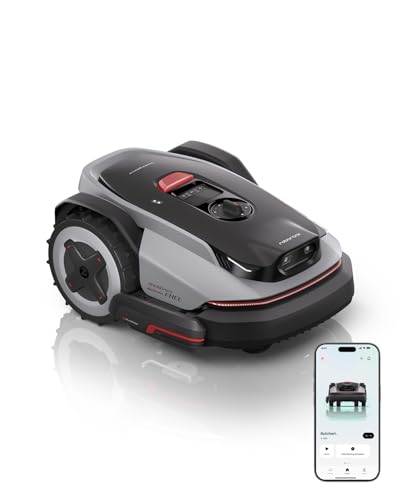
Efficient cutting with advanced navigation technology.
Quiet operation for minimal noise disturbance.
Easy setup and user-friendly mobile app integration.

Operates without boundary wires for convenience.
Handles steep slopes up to 65% efficiently.
Suitable for medium-sized lawns up to 0.37 acre.

Navigates precisely with RTK and Quad-Vision.
Handles steep slopes up to 80% effectively.
Operates without boundary wires for convenience.

No perimeter wire needed for operation.
Advanced 3D obstacle avoidance features.
Zero-edge cutting for precise lawn finish.

No perimeter wire needed; uses RTK+Vision technology.
Quiet operation at only 58dB(A).
Easy control via smartphone app.

No boundary wire needed for easy setup.
Accurate obstacle avoidance for safe operation.
Intelligent anti-theft features for added security.

Efficiently navigates complex lawn layouts.
Quiet operation minimizes noise disturbance.
Smart features enhance mowing precision.
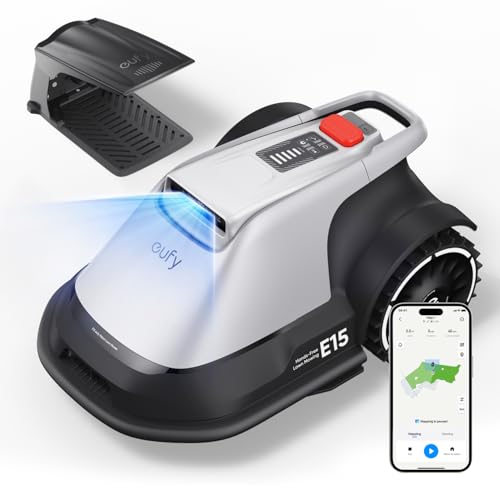
Hassle-free setup with no wiring required.
Smart obstacle avoidance for uninterrupted mowing.
Reliable, low-maintenance solution for lawn care.

Navigates without boundary wires, simplifying setup.
All-wheel drive handles steep 45% slopes.
Auto mapping feature for precise lawn coverage.
Start with the lawn rather than the advertised acreage. A stated capacity such as 0.2, 0.25, 0.5, 0.75, or 1 acre is not a guarantee for every yard. Shade, tree cover, narrow passages, separated zones, wet grass, rough ground, unclear edges, dense vegetation, and weak Wi-Fi, cellular, satellite, or RTK coverage can reduce coverage or cause repeat passes, missed areas, docking failures, or boundary errors. Slope figures also need context: several products qualify their maximum slope claims by dry, obstacle-free conditions, while independent testing found weaker traction or navigation on wet, uneven, steep, or edge terrain.
Safety evidence should be separated from marketing language. Look for exact-product documentation showing that the cutting system stops during lift, tilt, rollover, or abnormal use; physical stop controls, lift sensors, and child or PIN locks are useful, but they do not replace testing. For charging and electrical safety, the strongest evidence would be a traceable listing in UL Product iQ, Intertek’s ETL directory, the CSA Group database, or another OSHA-recognized Nationally Recognized Testing Laboratory record. An IEC 62133-2 battery report or CB certificate should identify the actual battery and product, not merely the brand or product family. FCC authorization confirms radio compliance, not charger or battery safety.
For obstacle protection, claims about recognizing hundreds of objects, pets, people, or wildlife are meaningful only when supported by documented independent testing that identifies the exact product, surrogate used, lighting, grass, weather, and test conditions. Camera or LiDAR detection can be switched off on some products, can miss small or low objects, and is not proof of safe operation around children, pets, or wildlife. For weather claims, an IP rating should be product-specific and supported by an accredited IEC 60529 test report; an IPX6 label alone does not mean unrestricted operation in heavy rain, standing water, snow, or thunderstorms.
Noise figures also need conditions. Manufacturer claims such as 49, 54, 58, or 59 dB may use different sound-pressure or sound-power measurements. Independent testing with a stated distance and operating conditions is more useful. Battery operation avoids direct gasoline-engine exhaust at the lawn, but ecological performance also depends on battery longevity, replaceability, energy use, repair support, and a documented U.S. recycling or take-back route. Adjustable cutting height, daytime scheduling, wildlife settings, and no-go zones can reduce wildlife exposure and preserve taller habitat, but no supplied product established complete small-animal protection.
Across the supplied reviews, the recurring safety boundary is clear: these machines should not be treated as unattended safety systems around children, pets, or small wildlife. Buyers should clear toys, hoses, stones, wires, branches, pet waste, and other debris; block ponds, window wells, drop-offs, and other serious hazards physically where necessary; schedule mowing in daylight; inspect the lawn first; and keep firmware current. Several products also lacked public U.S. electrical-safety listings, independent wildlife testing, or accredited ingress reports. Connected models add dependence on apps, cloud, cellular, or RTK services, and one supplied product had a reported cloud-security vulnerability, so buyers needing offline continuity or independently certified charging equipment should choose accordingly.
Auto-mowers can reduce combustion exhaust and routine mowing effort, but their health and environmental profile depends on blade controls, charging evidence, wildlife safeguards, battery support, and the quality of independent testing. The supplied scores reward documented protections and repeatable evidence, while treating unsupported claims and service gaps cautiously.
This measures whether blades stop or are shielded when the mower is lifted, tilted, rolled over, or accessed. That matters because a small robotic mower still has exposed cutting parts. Higher-scoring products combine documented stop controls and lift or tilt sensing with stronger reviewed evidence; lower-scoring ones rely mainly on manuals or seller claims. One supplied model had independent confirmation that lifting stopped its blades, but no category entry established complete safety certification.
This measures validated avoidance of people, pets, toys, and small animals across realistic grass, light, and weather conditions. A high score reflects independent testing as well as manufacturer detection claims; a low score reflects limited, conflicting, or manufacturer-only evidence. The supplied products ranged from mixed object handling to independent tests that avoided animal dummies or common hazards, but none proved reliable protection for every small animal or condition.
This measures protection against overheating, shock, charger faults, water exposure, and fire during use and unattended charging. It carries extra weight because a mower spends substantial time at its dock. Higher scores indicate clearer independent listing or battery-safety evidence; lower scores usually reflect missing UL, ETL, CSA, CB, or IEC 62133-2 records for the exact mower, battery, or charger. No supplied product had fully established U.S. charging certification.
This measures mowing noise and whether the machine has direct combustion exhaust. Every supplied mower is battery-powered, so each avoids gasoline-engine exhaust at the point of use. Scores were higher where independent measurements supported quiet operation, including tests around 60–66 dB, and lower where only manufacturer figures were available. Sound-pressure and sound-power numbers are not interchangeable, so distance, method, and operating conditions matter.
This measures whether the mower stays inside mapped boundaries, avoids drops, returns to charge, and covers its stated lawn size and slope in real yards. Higher-scoring products had independent field evidence on uneven or complex lawns; lower scores reflected mapping failures, weak traction, boundary overruns, narrow-passage limits, or dependence on ideal signal conditions. Acreage and slope headlines should therefore be read as conditional operating claims, not guarantees.
This measures whether the mower and dock can safely withstand the rain, irrigation, dust, and temperatures claimed. Higher scores reflected clearer manufacturer limits and stronger weather documentation, while lower scores reflected IP claims without accredited product-specific reports or warnings that wet grass, heavy rain, snow, or standing water can impair operation. An IPX6 or similar statement does not by itself establish safe use in every outdoor condition.
This measures whether acreage, slope, obstacle, edge-cutting, noise, and autonomy claims identify test conditions and match the available evidence. Higher-scoring products had claims supported or bounded by independent testing; lower scores included conflicts between marketing pages and manuals, headline capacity claims without real-yard support, or performance that changed sharply with weather and terrain. Clear limitations are more useful than a broad maximum figure.
This measures whether the exact product—not merely its brand or product family—has traceable third-party certification or repeatable testing. Higher-scoring entries had independent evidence for navigation, noise, obstacle handling, or blade stopping, while lower scores depended mainly on manufacturer statements. The supplied reviews repeatedly found no public UL, ETL, CSA, CB, or exact-model safety record, so independent performance evidence should not be confused with electrical certification.
This measures account security, data transparency, software support, and whether the mower remains safe and usable if cloud, app, cellular, or RTK services change. Higher scores reflected clearer update or support documentation and fewer identified gaps; lower scores reflected heavy connectivity dependence, unclear local fallback, telemetry or location collection, or a reported security incident. Buyers should treat remote control as an additional dependency, not a safety guarantee.
This measures access to blades, batteries, sensors, wheels, docks, manuals, firmware, warranty service, and recall handling for the exact product. Higher-scoring products had documented replacement parts, longer coverage, or active support; lower scores lacked parts catalogs, user-serviceable batteries, or clear end-of-life routes. A warranty can support continued use, but it does not substitute for independent charging or blade-safety evidence.
This measures whether scheduling, no-go zones, cutting height, and obstacle evidence reduce harm to nocturnal and small wildlife while allowing less aggressive lawn practices. Higher-scoring products combine daylight or nighttime-stop controls with adjustable height and stronger avoidance evidence. Lower scores reflect night-mowing permissions, missing wildlife tests, or poor recognition in darkness and low light. Across the set, daytime operation and a pre-mow lawn check remain necessary even for better-scoring machines.
This measures energy use, battery longevity, replaceability, repair support, and a credible U.S. recycling path. Higher scores were associated with supported replacement batteries, documented battery specifications, or lower disposal dependence; lower scores reflected non-user-replaceable batteries, high standby draw, unclear battery data, or no verified take-back route. One supplied model had a documented replacement battery and the strongest score in this area, while several others left U.S. recycling arrangements unclear.
This product is a battery-powered, two-wheel-drive robotic lawn mower for lawns up to 0.5 acre. It uses three small cutting blades across an 8.7-inch cutting width, has an adjustable 1.57 to 3.54 inch cut height, and returns to a charging station. Worx specifies a removable 20V 5Ah lithium-ion battery, 100-minute charge time, camera-based Vision AI, RTK Cloud positioning, Wi-Fi, Bluetooth, RadioLink, a rain sensor, and a 30 percent slope rating. The wire-free mapping format is a defining practical feature. Independent testing of the exact WR320 found setup and mapping notably easy, although independent testing of the related 2WD Vision Cloud platform found its real slope performance could deteriorate on steeper, loose edges. The product has a lift and inversion fault response and a safety stop in its manual, but no exact-model third-party electrical or blade-safety certification was located.
It suits an owner of a relatively open lawn of up to about half an acre who wants to avoid perimeter-wire installation, can check RTK service availability at the address, and can schedule mowing while people and animals are indoors. It is better aligned with maintained turf, moderate slopes, and an owner willing to inspect blades, clear the deck, update firmware, and do some remaining edge trimming. The removable PowerShare battery is particularly practical for households already using compatible Worx cordless tools.
It is not a safe fit for households expecting a mower to operate around roaming dogs, children, hedgehogs, turtles, or other small wildlife. Independent testing showed that object recognition can miss a low dog bone, while the manual itself requires supervision when people or pets are nearby. It is also poorly matched to very steep, loose, irregular, heavily shaded, cluttered, or narrow lawns, and to buyers who need independently documented electrical, ingress, or blade-safety certification before allowing unattended charging or operation.
The mower avoids direct gasoline-engine exhaust where it operates, and its adjustable 1.57 to 3.54 inch cut height can support less aggressive mowing when set higher. Its removable 20V 5Ah lithium-ion battery and separately sold blade kits give it a clearer repair and replacement path than a sealed-battery appliance. Worx provides a three-year limited warranty and an owner manual with inspection, blade replacement, charging-temperature, and storage guidance. Safety limits deserve equal emphasis. The manual directs users not to leave automatic operation unattended when pets, children, or people are nearby, and independent testing found the vision system missed a low dog bone that contacted the blades. No exact-product third-party listing for battery, charger, or ingress safety was located. Worx also posts a California Proposition 65 warning for lead and DEHP. No U.S. recall specific to this robotic mower was located, although CPSC records show recalls for unrelated Worx products.
This product is a 27-pound, battery-powered robotic lawn mower for mapped lawns up to a manufacturer-stated one quarter acre. It uses an RTK reference station, GNSS antenna, binocular camera, charging dock, and app. The official U.S. manual specifies an 8.66-inch cutting width, 1.57 to 3.15-inch cutting-height range, 21.6 V and 4.6 Ah lithium-ion battery, and about 150 minutes of mowing per full charge. Its most consequential documented controls are a physical STOP button, tilt and lift status detection that requires local button confirmation to resume, rain sensing, and a camera-based obstacle system. These are manufacturer documentation, not independent safety testing. The manual also provides FCC Part 15 compliance language for the radio-enabled system, but this is not equivalent to a product-safety certification. No exact-model UL, ETL, CSA, or independent obstacle and wildlife test result was located in the reviewed sources.
This product suits an owner of a maintained lawn near one quarter acre or less who can install a dock and RTK reference station in an open location, keep the dock within Wi-Fi reach, and remove toys, wires, stones, pets, and people before scheduled mowing. It is most appropriate for someone comfortable using an app, checking the mower weekly, replacing blades regularly, and scheduling daytime operation. The documented 1.57 to 3.15-inch height range is intended for routine maintenance mowing, not reclaiming overgrown grass.
It is not suited to households that need independently verified protection around unsupervised children, pets, or small wildlife. The camera avoidance system has no located exact-model testing under realistic grass, darkness, or wet conditions, and research on robotic mowers shows small animals can be vulnerable. It is also a poor fit for heavily shaded or enclosed yards with compromised satellite reception, properties without reliable Wi-Fi near the dock, lawns beyond the stated capacity, or users unwilling to perform blade checks and seasonal storage tasks.
The product eliminates direct gasoline-engine exhaust at the mowing point and the manufacturer lists a 51 dB(A) sound-pressure level, although no independent acoustic test was located. The official manual documents a STOP button, lift and tilt status detection, PIN lock, rain sensor, camera system, and instruction to clear the lawn and keep children and pets away before operation. These are useful safeguards, but not substitutes for independent validation of blade stopping or animal detection. For ecology, the adjustable 40 to 80 mm cutting height, scheduled operation, rain delay, and a stated wildlife-friendly app option can support more cautious lawn care. However, exact-model wildlife testing was not found. Published robotic-mower research has found that small wildlife may not be detected before contact, so daylight schedules and pre-mow lawn checks remain important. The lithium-ion battery is removable for disposal, but the manual directs users to professional recycling and says battery replacement should be handled through service or a dealer.
The AirSeekers TRON SE is a battery-powered, wire-free robotic lawn mower for mapped residential lawns. It has a 10 Ah, 25.2 V lithium-ion battery, a fixed 220 mm cutting width, adjustable 30 to 90 mm cutting height, a charging dock, and a separate RTK base-station kit. The manufacturer states 400 square meters per charge, 1,500 square meters as its optimum area, up to 120 minutes of runtime, and a 120-minute recharge. Its defining limitation is evidence quality. AirSeekers documents VSLAM plus NetRTK navigation, a 140-degree RGB camera, rain sensing, and IPX6 water resistance, but no product-specific UL, ETL, CSA, CB, or independent safety test record was located. Independent testing of the related standard TRON, not this SE model, found navigation and obstacle-avoidance shortcomings. The SE has a narrower stated camera field than that model, so its animal and obstacle claims remain unverified.
This product suits a homeowner with an open, clearly defined lawn who is willing to map the property, install an RTK base station, maintain reliable outdoor connectivity, and supervise the early setup period. It is most aligned with lawns that can be maintained frequently rather than allowed to become long or heavily cluttered. The manufacturer states a 400 square meter per-charge capacity and 120-minute runtime, so it is more practical where repeated charging cycles are acceptable. It also suits users comfortable checking the lawn before each scheduled operation and restricting mowing to daylight.
It is not suited to households where children, pets, or small wildlife can regularly enter the mowing area unsupervised. The manufacturer’s own manual requires pausing operation when people or animals are present, and independent research on robotic mowers shows that vision and other sensors cannot be assumed to protect small wildlife. It is also a poor fit for yards with open water, drop-offs, public-path access, persistent rain exposure, dense obstacles, weak RTK reception, or a need for independently certified electrical and blade-safety evidence before unattended use.
This is an electric mower, so it has no gasoline-engine exhaust at the lawn. AirSeekers states a maximum noise figure of 65 dB, though no independent sound test with distance and mowing conditions was located. The published manual identifies an emergency-stop control and instructs users to keep hands and feet away from rotating blades, avoid lifting the mower during operation, clear debris, and stop work when people or animals enter the area. Ecologically, its adjustable 30 to 90 mm cut height can support higher mowing settings, and app scheduling can be used to favor daytime operation. That matters because peer-reviewed robotic-mower research found many tested models made physical contact with hedgehog surrogates before detecting them, and researchers advise daylight mowing and lawn checks. The manufacturer nevertheless markets night operation and small-animal avoidance without a product-specific wildlife test. No U.S. recall for this product was located, but no verified U.S. battery recycling pathway or independent product safety certification was found.
This is a battery-electric, wire-free robotic mower for mapped residential lawns. The manufacturer manual identifies a 21.6 V, 6 Ah lithium-ion battery, a 9.45-inch cutting width, adjustable 1.57 to 3.54-inch cut height, and about 55 minutes of mowing per charge. It uses an RTK reference station, front binocular camera, dual side cameras, Wi-Fi, Bluetooth, and optional 4G anti-theft hardware. Roborock documents lift and tilt detection, a physical stop control, PIN locking, rain sensing, and automatic return to the dock. It also states that the mower body and charging station are IPX6, while the power supply is IP67. These are manufacturer statements, not independently located safety-certification or performance-test results. Notably, the manual's 55-minute runtime conflicts with the catalog record's 120-minute figure.
It suits an owner of a maintained, clearly bounded lawn of up to about 3/8 acre who can install an RTK reference station in open sky, keep the charging area dry and accessible, and remove loose objects before mowing. It is also better aligned with users who value scheduled battery-electric mowing and can accept regular cleaning, camera-lens checks, blade replacement every one to two months, and app-based setup. The stated three-year main-unit coverage may matter for owners planning multi-season use.
It is not well suited to households that expect verified animal-safe autonomous mowing around unsupervised pets, small wildlife, or children. Roborock itself instructs users to keep pets and children off the lawn and clear debris before operation. It also does not fit properties with obstructed sky view, difficult RTK placement, severe storms, standing water, or a need to mow grass above normal maintenance height. Buyers needing a documented third-party electrical listing or independently tested obstacle performance should note that such exact-model evidence was not located.
The product avoids direct gasoline-engine exhaust where it operates and the manual gives a manufacturer-measured 53 dB(A) sound-pressure figure. It documents a physical stop control, PIN lock, lift and tilt sensing, camera-based avoidance, and warnings to keep people, pets, and hands away from the cutting area. These are useful controls, but they are not substitutes for independently located robotic-mower blade, charger, or animal-avoidance certification tests. Roborock offers scheduling and describes a wildlife-friendly app setting, but does not publish an exact-model wildlife test protocol or results. Peer-reviewed research on robotic mowers advises avoiding night mowing and checking lawns for vulnerable wildlife. The manual specifies a removable lithium-ion battery for professional recycling, warns against landfill disposal, and describes a low-power holiday mode. No product-specific U.S. recall or safety warning was identified in the CPSC and SaferProducts public search resources reviewed.
This product is a wire-free robotic lawn mower for lawns up to 8,600 square feet, or about one quarter acre. It uses an 18V, 4,000 mAh lithium-ion battery, an 8.66-inch cutting width, three pivoting blades, and a manually adjusted 1.2 to 3.2 inch cutting-height range. ECOVACS lists about 65 minutes of continuous mowing and about 100 minutes of charging. Its boundary system combines RTK, camera, and 3D time-of-flight sensing, with app-created maps, zones, and no-entry areas. Those navigation, coverage, edge-cutting, slope, and pet-safety results are manufacturer claims, not product-specific independent test results located in this review. The manual documents a lift or trapped condition alert, a physical stop control, rain sensing, blade-access warnings, and maintenance instructions that require powering off first.
This product suits an owner of a contained, maintained lawn up to about 8,600 square feet who wants recurring grass cutting without a perimeter wire or gasoline engine. It is most appropriate where the RTK reference station can be installed in a stable location with usable sky and radio signal, lawn edges can be mapped carefully, and people can inspect the yard before scheduled runs. It also fits users comfortable managing maps, restricted zones, rain delays, firmware updates, and routine blade replacement through the app and official support system.
It is not suited to yards with open access to roads, ponds, steep drop-offs, loose objects, dense signal obstructions, or boundaries that cannot be safely mapped and physically buffered. Households with unsupervised children, roaming pets, or frequent small-wildlife activity should not treat camera-based avoidance as a substitute for clearing the lawn and scheduling cautiously. It is also a poor fit for anyone needing independently listed charger and battery safety evidence, owner-replaceable batteries, independently verified pet detection, or dependable operation without app, RTK, and station infrastructure.
The product eliminates gasoline combustion at the point of mowing, but ECOVACS' 57 dBA noise figure is manufacturer-stated and no independent sound test using a disclosed method was located. Its manual provides meaningful operating safeguards, including a stop control, blade warnings, lift or trapped alerts, rain sensing, a requirement to use the supplied charging unit, and instructions to connect the supply through a 30 mA residual-current device. Public product-specific NRTL electrical listings and battery test reports were not located. ECOVACS claims camera and 3D sensing can avoid pets and small animals, including hedgehogs, but that claim lacks product-specific independent validation. Published research on robotic mowers advises avoiding nighttime operation and checking lawns for vulnerable wildlife. The adjustable 1.2 to 3.2 inch cutting height, no-go zones, and scheduling can support less intensive mowing, but the battery is not intended for owner replacement. Official blades and some accessories are available, while a clear product-specific U.S. battery take-back path was not established.
This is a battery-powered, wire-free robotic lawn mower for lawns up to 1/8 acre. The owner maps virtual work zones and exclusions with the Navimow phone app, then schedules automatic mowing. It uses a 7.1-inch cutting width, a manually adjusted 2 to 3.6-inch cutting height, a 55 Wh lithium-ion battery, a camera, GNSS positioning, and a separate antenna and charging station. Manufacturer documentation specifies IP66 protection for the mower body and charging station, a 30% maximum slope inside the work area, and a 10% maximum slope at boundaries. An independent hands-on test found good boundary adherence, clean mowing, and a measured operating sound of about 60 dB. The same test found that it stopped and redirected when a person stood in its path, but this is not equivalent to validated protection for small animals in grass.
This product suits an owner of a small, mostly open lawn of up to 1/8 acre who can give the antenna a good sky view, install the charging station on level ground, and create careful virtual boundaries around ponds, curbs, beds, and play areas. It is also suited to households seeking lower mowing noise and no direct gasoline-engine exhaust. It works best for someone willing to use the app, inspect the lawn before scheduled runs, maintain the three blades, and keep mowing to dry daytime conditions.
It is not well suited to yards with steep or abrupt boundary drop-offs, frequent tall or wet grass, dense tree cover that compromises satellite positioning, or areas above its 30% internal slope limit. Homes with roaming small pets, wildlife habitat, or children using the lawn during scheduled mowing need active supervision and daylight scheduling, because small-animal avoidance has not been independently validated for this product. It also does not suit buyers who require a verified North American electrical safety listing, owner-replaceable batteries, or proven offline operation without the app and network.
The mower eliminates direct gasoline-engine exhaust at the lawn and was independently measured near 60 dB during use. Its manual documents a lithium-ion battery with protection against overheating, short circuit, overcurrent, and overload, plus a supplied North American power-unit specification. However, no UL, ETL, CSA, or publicly traceable battery test certificate for the exact North American product was located. No CPSC recall for this product was located in the review search. Navimow documents an animal-friendly setting intended to increase clearance around pets and small animals, and schedules can be set for daylight. That caution matters because published robotic-mower research finds that many mowers do not detect small wildlife before physical contact. The manual directs users to professional battery replacement and local waste services for disposal. A product-specific U.S. battery recycling or take-back route was not verified.
This is a battery-powered, wire-free robotic mower for mapped residential lawns. The Genie 3000 uses an RTK reference station, four cameras, a five-blade cutting disc, and an app for mapping, schedules, exclusion zones, cutting-height adjustment, and remote control. ANTHBOT specifies a 10 Ah, 18 V lithium-ion battery, 7.9-inch cutting width, 1.18 to 2.76-inch cutting-height range, 240-minute stated runtime, and coverage up to 3,600 square meters, about 0.89 acre. Independent field reviews confirm that the unit can navigate and mow mapped yards, return to its dock, and work around tested obstacles. They also found meaningful limits. RTK placement needs open sky, thick or weedy grass can require repeat passes, and the mower can hesitate or spin while recovering from obstacles. ANTHBOT documents a stop button, lift-related safety protection, rain sensing, PIN locking, and restricted zones, but publicly traceable US electrical-safety listing records and a product-specific TÜV certificate number were not located.
This product suits an owner of a maintained, mostly grass lawn who wants scheduled mowing without installing perimeter wire. It is most appropriate where the RTK antenna can be placed with a broad, unobstructed view of the sky and where pools, drop-offs, flower beds, muddy areas, and other hazards can be mapped as exclusion zones. It also fits users willing to mow frequently, keep grass below the manual's 7 cm preparation limit, clean camera lenses, and use the app for mapping and firmware updates.
It is not suited to households that need a mower to operate around unsupervised children, pets, or wildlife. Camera avoidance does not eliminate blade risk, and the manufacturer itself directs users to mow only when people and animals are absent. It is also a poor fit for heavily shaded lots, dense tree cover, narrow passages, rough weedy lawns, frequent standing water, steep boundary edges, or yards where an RTK base cannot receive clear satellite signals. Users requiring independently listed charging safety should seek documented certification first.
The product avoids direct gasoline-engine exhaust at the lawn, and independent testing measured 66.2 dB during operation. It has a five-blade cutting disc, an emergency STOP control, lift-related safety protection, a PIN lock, camera-based obstacle detection, and a rain sensor. These are useful risk controls, but they do not make unattended mowing around people, pets, or wildlife safe. The manual specifically calls for clearing animals from the lawn and setting dangerous areas such as pools and cliffs as exclusion zones. ANTHBOT states an IPX6 rating and a TÜV Safety Certification, but a public, product-specific certificate number or accredited test report was not located. The battery is lithium-ion, 18 V and 10 Ah, and the manual says it is replaceable only by skilled persons. ANTHBOT provides support documents, replacement parts, and a two-year battery warranty, but no clear US battery take-back partnership was identified. No US CPSC recall or regulatory action specific to this product was identified in the searches performed.
This is a compact, battery-powered robotic mower for mapped lawns of up to 500 m², about 0.12 acre. It uses a single 7.9-inch cutting disc with five blades, app-adjustable cutting height from 1.2 to 2.8 inches, a charging station, and an RTK reference station. It is intended to mow repeatedly within app-defined zones rather than collect clippings. The manufacturer states that the product combines full-band RTK, dual cameras, Wi-Fi, Bluetooth, and 4G to map up to 20 zones without a perimeter wire. A separate distributor specification broadly matches its 500 m² capacity, 45 percent slope limit, 2.5 Ah lithium-ion battery, and IPX6 rating. The safety evidence is less complete. The product page documents an emergency stop and rain-return feature, but no traceable US certification or independent exact-model safety test was located.
This product fits an owner of a small, generally open lawn, roughly up to one eighth acre, who can install an RTK reference station, make a careful map, remove toys and debris before scheduled runs, and supervise initial operation. It is most suited to people who value wire-free zone control, adjustable mowing height, and frequent light trimming rather than collecting grass. The 45 percent slope claim may suit modest grades, provided traction, boundary behavior, and charging reliability are tested first on that specific yard.
It is not suited to households that expect a robot mower to safely operate around unsupervised children, pets, nesting wildlife, or nocturnal animals. The obstacle claim has not been independently validated for this model, and published wildlife research shows that robotic mowers may contact small animals before recognizing them. It also is a poor fit for yards with heavily shaded RTK placement, unclear edges, frequent loose objects, deep holes, standing water, steep drop-offs, or users who need independently listed electrical safety and verified ingress testing before unattended charging.
The product has no gasoline engine, so it avoids direct on-lawn combustion exhaust. ANTHBOT states a standard-mode noise level of 58 dB or less, but no independent sound test using a stated method or measurement distance was found. The manufacturer also states that the mower has IPX6 water resistance, a rain sensor, an emergency stop, a safety key, and a guarded cutting-disc area. These are useful design claims, not independently verified certifications. For wildlife, schedule mowing in daylight and inspect the lawn first. Published robotic-mower research found that tested mowers did not detect small juvenile hedgehogs before contact, including some models using vision or ultrasonic sensors. ANTHBOT offers adjustable 1.2 to 2.8 inch cutting height and scheduling, which can support less intensive lawn management. Its two-year battery warranty is a positive support commitment, but no US take-back program or product-specific battery recycling route was found. Lithium-ion batteries should never enter household trash or curbside recycling.
This is a battery-powered robotic mower for lawns up to 0.2 acre. It uses an 8-inch cutting deck, a 1 to 3 inch adjustable cut height, app-managed zones and camera-based mapping rather than a buried boundary wire or RTK antenna. The manufacturer states that it can handle slopes up to 18 degrees, return to its dock in rain or low light, and operate at 56 dB. Independent hands-on testing confirms that it can produce an even cut and map a modest yard, but also found a meaningful limitation. In one test it repeatedly stuck on lightly uneven ground and damp grass, missed areas, and showed weak obstacle avoidance around a small hole. That means the autonomous use case is strongest on short, dry, open, well-maintained turf, not on a rough or pet-active yard.
It suits an owner with a small lawn of up to 0.2 acre that is smooth, regularly maintained, mostly open, and within reliable Wi-Fi coverage. It is most appropriate where the owner can first clear toys, pet waste, loose branches, and other objects, then supervise early mapping runs and adjust zones in the app. It also fits someone who values avoiding perimeter-wire installation and can schedule mowing in dry daytime conditions rather than expecting dependable operation through dew, rain, ruts, or dense obstacles.
It is not well matched to uneven, hole-prone, wet, steep, heavily shaded, or frequently cluttered lawns. Households with unattended pets, wildlife activity, or children using the yard should not treat vision-based avoidance as a safety barrier, because exact-product animal-safe validation was not found and an independent test reported weak obstacle handling. It is also a poor fit for buyers who need user-replaceable batteries, traceable U.S. electrical-safety certification, or a mower that can reliably finish edges and traverse damp grass without intervention.
The mower avoids the local exhaust of a gasoline engine and has a manufacturer-stated operating sound pressure level of 56 dB. Its manual directs users to stop and power it off before lifting or carrying it, use the supplied dock and adapter, connect the charging circuit through a 30 mA residual-current device, and keep the charging location away from moisture. Those are useful operating safeguards, but an exact-product U.S. third-party electrical listing or mower safety certification was not located. Its IPX6 water-resistance claim is documented by the manufacturer, and independent testing observed automatic return when rain began. Water resistance does not resolve the traction issue on damp grass. For end of life, eufy directs U.S. users to battery and electronics recycling locations, but its support material identifies blades as the only replaceable mower part. Camera-based mapping can collect mower images for lawn texture maps, according to the privacy policy, so app permissions and data settings deserve review.
This is a battery-powered, wire-free robotic lawn mower for residential lawns up to 0.25 acre. It uses a 5.1 Ah, 110 Wh lithium-ion battery, has a 7.1-inch cutting width, adjustable 2 to 3.6-inch cutting height, and a manufacturer-stated 45 percent maximum slope rating. Setup and control depend on the Navimow app, RTK positioning, camera-based VisionFence detection, Wi-Fi, Bluetooth, and cellular connectivity. The strongest documented safety feature is a lift sensor that the manufacturer says immediately stops blade rotation when the mower is raised. The North American manual also documents a 59 dB(A) measured sound-power declaration under EN 50636-2-107, IP66 ratings for the mower and charging station, and IP67 for the power adapter. Those are manufacturer declarations, not product-specific public certification records from UL, ETL, or CSA.
It suits an owner of a relatively open residential lawn of 0.25 acre or less who wants scheduled electric mowing without installing a perimeter wire. The stated 45 percent slope limit and all-wheel-drive layout make it relevant to modestly uneven yards, provided the mapped area has clear edges, no dangerous drop-offs, and adequate positioning conditions. It also fits someone willing to use a phone app, inspect blades and cables regularly, and schedule mowing during daylight after clearing toys, pets, and wildlife from the lawn.
It is not a hands-off choice for yards with frequent unsupervised pets, active wildlife, children playing outdoors, or small animals that may hide in grass. Published robotic-mower research shows that camera and collision systems cannot be assumed to protect every small animal. It is also unsuitable for lawns larger than the stated 0.25-acre capacity, slopes above 45 percent, poorly defined edges near roads or drops, or locations with heavy rain, snow, thunderstorms, or poor positioning coverage. Buyers who require independently listed electrical safety should seek documented certification first.
The mower avoids combustion exhaust at the lawn and its manual declares 59 dB(A) sound power, which can reduce local noise compared with many gasoline mowers. Its documented lift sensor is intended to stop rotating blades immediately when raised. The manual also specifies battery temperature protections, original-part requirements, a residual-current-device protected supply circuit, and replacement procedures for the battery and blades. The battery is stated to comply with UN/DOT 38.3 transport testing. The product includes adjustable cutting height, scheduling, no-go mapping, and an Animal friendly mode that the manufacturer says increases separation from pets and small animals. Those controls can support daylight mowing and less aggressive grass cutting. However, independent wildlife research on robotic mowers has found that small animals can still be injured, and no model-specific wildlife test was located. The battery is replaceable, but no product-specific U.S. take-back or recycling program was confirmed. No product-specific U.S. recall was located in the CPSC sources reviewed.


