Best Overall

oneisall WiFi Automatic Cat Food Dispenser
WiFi control for convenient remote feeding.
Programmable feeding schedule for precise meal times.
Large capacity hopper reduces refill frequency.
 Brianna York
WiFi control for convenient remote feeding.
Programmable feeding schedule for precise meal times.
Large capacity hopper reduces refill frequency.

Accommodates large kibble sizes easily.
Programmable for convenient feeding schedules.
Generous 3L capacity reduces refill frequency.
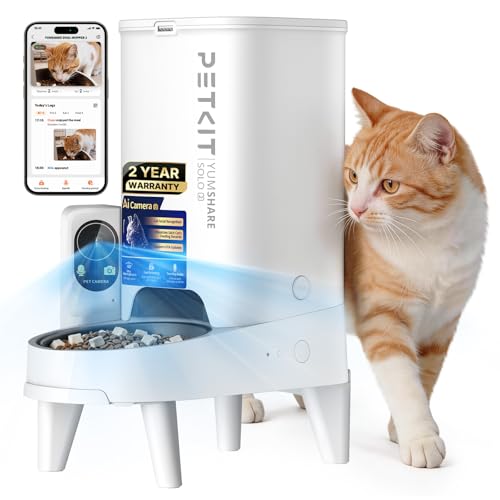
Real-time video lets you monitor pets remotely.
Two-way audio enables easy interaction with pets.
Scheduled feeding ensures consistent meal times.

Convenient remote feeding via smartphone app.
Customizable meal schedules for consistent feeding.
Sleek design fits well in any space.

App control for convenient feeding schedules.
Portion control helps maintain pet health.
Supports WiFi connectivity for easy setup.

Programmable for up to 6 meals daily.
Preserves food freshness efficiently.
Customizable portion sizes for precise feeding.

Convenient WiFi control for easy feeding management.
Anti-jam system ensures reliable food delivery.
Voice recorder feature comforts pets with messages.
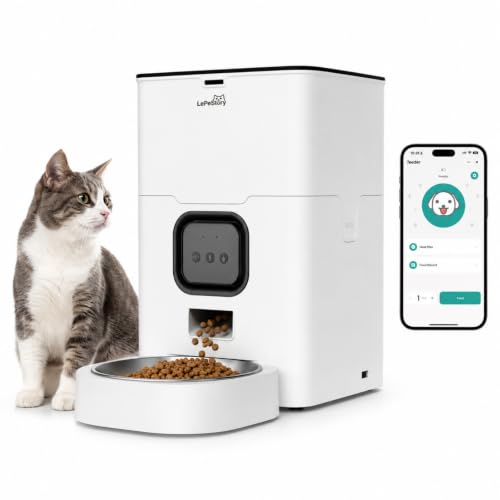
Remote feeding with intuitive app control.
Large 4L capacity reduces refill frequency.
Customizable feeding schedules for pet needs.

Seamlessly feeds two cats simultaneously.
Convenient control via 5G WiFi app.
Customizable feeding schedules for each cat.

Tracks pet's eating habits accurately.
Convenient app-based meal scheduling.
Durable stainless steel feeding bowl.
The key question is not how large the hopper is or how many meals an app can display. It is whether the feeder repeatedly delivers the intended food, at the intended time, without creating a new failure. Portion settings are often volume units, cups, or approximate grams rather than verified weights. Kibble density, shape, and size can change the actual amount. Even products that state a gram range tell owners to weigh their own food, and several manuals note that early portions may vary. A buyer using a calorie-controlled or veterinarian-directed plan should measure repeated servings with the exact food being used and continue monitoring the cat.
Look for a manual that states compatible kibble size, meal and portion limits, cleaning steps, jam behavior, low-food or fault alerts, battery backup, clock retention, and what happens after power returns. A claim such as “anti-jam,” “precise portion,” “up to seven days,” or “food shortage alert” is not the same as independent testing of timing, gram accuracy, overfeeding, empty-hopper detection, missed meals, or restart behavior. In the supplied products, those independent tests were generally not located.
For electrical confidence, a finished feeder or its supplied power assembly should be traceable to a U.S. Nationally Recognized Testing Laboratory listing, such as UL Product iQ, Intertek ETL, or CSA Group. An FCC record can verify a wireless radio's authorization, but it does not establish complete electrical or fire safety. For food-contact claims, look for a model-relevant NSF food-equipment listing, applicable FDA food-contact evidence, and clear identification of removable, smooth parts and wash limits. “Stainless steel,” “food grade,” and “BPA-free” alone do not establish complete food-contact safety.
Multi-pet features also need careful interpretation. Two or three bowls usually create separate eating positions, not separate diets. Only an access-control system such as RFID, a collar tag, or another documented physical barrier is intended to restrict access—and the supplied reviews still found no independent testing for those systems. Camera and app features add privacy questions: buyers should look for published data collection, retention, sharing, account protection, update support, and offline-use information rather than assuming a connected product is secure.
Finally, consider useful life. Replaceable bowls, batteries, desiccant, adapters, or other wear parts can reduce premature disposal, but the supplied products rarely documented repair instructions, spare-parts catalogs, take-back programs, or U.S. recycling routes. A warranty is helpful but is not the same as repairability.
Across the supplied reviews, the recurring safety caveats are substantial: no feeder had independent proof of gram-level accuracy and dependable jam or missed-meal recovery; volume or fixed-unit settings commonly require owner calibration; open bowls do not prevent food theft; and backup batteries do not by themselves prove schedule retention after depletion or restart. These products should not be the sole safeguard for cats with diabetes, medication-linked meals, serious fasting risk, strict therapeutic diets, or calorie plans requiring verified delivery. Wet food is also unsuitable for many models, and several products require kibble within a stated size range. Owners should keep a human-check or backup-feeding plan when a missed or inaccurate meal could cause harm.
These topics distinguish a feeder that merely dispenses food from one that can be used responsibly in a household feeding routine. Scores reflect the supplied reviews and evidence; they do not replace veterinary advice or independent verification.
This measures whether scheduling, portion controls, and instructions can support a veterinarian-directed calorie plan without implying medical treatment. A high score means the product explains limits and encourages weighing food; a low score means free-choice feeding, volume-only settings, or unsupported health promises. Among these products, scores ranged from 52 for a gravity feeder to 76 for a product with stated gram increments and calibration warnings.
This measures demonstrated timing and gram accuracy, plus resistance to jams, overfeeds, empty hoppers, missed meals, and unsafe recovery. It matters because an app schedule is not proof that food reached the bowl. A high score requires model-specific independent testing and fault behavior; the supplied scores were only 51–73, and no product had complete independent delivery evidence.
This measures backup feeding, schedule retention, clock behavior, low-power warnings, and duplicate-feed prevention after outages or restarts. Batteries can keep a motor powered, but they do not automatically prove that the correct schedule survives depletion or recovery. Supplied scores ranged from 68 to 78; the stronger reviews documented backup paths and warnings, while still noting missing outage testing.
This measures whether food-contact parts are identified, smooth, removable, washable, and supported by credible food-contact or sanitation evidence. It matters because bowls, hoppers, trays, rotors, and desiccant areas can retain residue. Higher-scoring products described removable stainless bowls and cleaning access; lower-scoring products had unclear materials or conflicting care instructions. Scores ranged from 54 to 76.
This measures stability, lid security, sharp edges, pinch points, detachable parts, and access to batteries or desiccant. A high score means the manual gives concrete precautions and the design resists tipping or break-in; a low score leaves hazards or pet-access limits unclear. Supplied scores ranged from 70 to 76, but no score established complete mechanical safety testing.
This measures evidence for the complete feeder and supplied power system, including adapter, cable, batteries, heat, shock, and fire risks. A component claim is not the same as a finished-product U.S. NRTL listing. Most supplied products scored around 68–72; the passive gravity feeder scored 92 because it has no electrical or battery system, not because it had a powered safety certification.
This measures whether RFID, collar tags, microchips, or physical barriers actually separate diets, and whether limitations for timid or collar-averse cats are clear. Multiple bowls normally do not identify cats or stop theft. Most ordinary feeders scored 68–70 despite open access; the RFID bowl scored 70, reflecting a meaningful access feature but no independent proof of reliable exclusion.
For app-, Wi-Fi-, camera-, microphone-, or cloud-connected feeders, this measures setup security, account protection, updates, data collection, retention, sharing, and offline use. A high score requires published policies rather than an unspecified app. Non-connected products scored as high as 94, while connected products generally scored 65–74 because disclosures and security-support details were incomplete.
This measures whether capacity, portion, freshness, anti-jam, camera, app, diet, and certification claims apply to the exact model and are properly qualified. High-scoring products distinguish manufacturer statements from tested facts and disclose conflicts; low-scoring products use precise-sounding figures without supporting protocols. Supplied scores ranged from 50 to 74, with inconsistent capacities, food instructions, and portion claims lowering confidence.
This measures traceable, model-specific independent testing, certification, regulatory authorization, and post-market safety records. FCC records support radio authorization but not complete electrical safety; UL, ETL, CSA, NSF, and CPSC records answer different questions. Scores ranged from 68 to 78. The better-supported products had exact-model FCC or other traceable records, but none had complete independent proof of feeding reliability.
This measures durability, repairability, replacement parts, energy and battery burden, packaging, and realistic end-of-life recycling. A high score means the product can plausibly stay in service and has documented support or recycling routes. Supplied scores ranged from 63 to 74. Replaceable parts and warranties helped some products, while recurring D-cell or AA/AAA batteries and undocumented take-back programs limited others.
This is a 5-liter automatic dry-food feeder that splits each programmed serving between two stainless steel bowls. It is intended for indoor cats over six months old and accepts dry kibble roughly 4 to 12 mm across. The manufacturer states that owners can schedule up to 10 meals daily, use a slow-feed interval of 10 seconds per portion, view feeding logs, share app access, and dispense food manually. Its most consequential documented feature is dual power. The manual states that four user-supplied AA batteries keep scheduled meals running during an outage, while app control requires wall power. The same manual provides a reference table of about 10 g per portion using 0.3-inch kibble, but tells owners to weigh their own food because output varies by recipe and shape. No model-specific independent accuracy or outage testing was located.
This feeder fits a household with one or two healthy indoor cats that eat the same dry kibble and can safely share an equal ration. It is most practical for an owner willing to run repeated weighed test portions before relying on the schedule, then periodically check the hopper, outlet, batteries, and feeding log. The dual-bowl format can make simultaneous meal access easier for cats that already coexist calmly. It also suits homes that want scheduled dry-food meals to continue through a short power interruption with installed AA batteries.
It is not appropriate as the sole feeding safeguard for a cat with diabetes, a medically prescribed calorie target, a history of fasting-related illness, or any condition where a missed, late, or inaccurate meal creates urgent risk. It is also a poor fit when cats need different diets or amounts, when one pet steals food, or when cats guard resources. The product has no microchip, collar-tag, or physical access control. Households unable to perform food-output checks and routine cleaning should not treat app logs as proof that a pet actually ate.
Health value comes from scheduling and dividing a known daily dry-food ration, not from a medical feeding function. Veterinary nutrition guidance emphasizes individualized intake, weight and body-condition monitoring, and consideration of food competition. This product's own instructions appropriately tell owners to test actual output with their chosen kibble. Its dual bowls do not provide diet separation, so they cannot confirm which cat received or ate a ration. The washable stainless bowls are a useful hygiene feature, but the nonremovable base must stay dry and the manual does not identify the hopper plastic's food-contact certification. No model-specific NSF food-equipment listing or finished-product U.S. NRTL electrical listing was located. A two-year manufacturer warranty and replaceable desiccant provide limited longevity support, but no documented U.S. take-back program, repair-parts catalog, or recycling pathway was located. No matching U.S. CPSC recall or California Proposition 65 warning was located in the checked public databases as of August 9, 2026.
This is a compact, non-app automatic dry-food feeder for one cat. It has a 3 L, or roughly 12-cup, hopper, a removable stainless steel bowl, a dial-controlled timer, and a stated limit of six feeding plans with one to 12 portions per meal. The manual limits food to dry kibble or freeze-dried treats measuring 2 to 18 mm across. Wet and canned food are not suitable. Its feeding amounts need owner calibration. The manufacturer’s manual gives reference weights based on 0.4-inch kibble, then tells owners to weigh actual output and adjust portions because each portion is fixed. The product can run on wired 5V power with three optional D-cell backup batteries, and the manual states that it beeps when battery power is low. No model-specific independent accuracy, jam, outage-recovery, or safety certification test was located.
This product suits a single healthy indoor cat that eats dry kibble or appropriately sized freeze-dried treats, especially where the caregiver wants an on-device timer without Wi-Fi or an account. It is most appropriate for someone who can set it up while present, repeatedly weigh a serving using their actual food, and periodically inspect dispensing and battery condition. The 3 L hopper and six planned meals are practical for routine feeding, not for leaving a pet completely unmonitored.
It is not suited to cats on a tightly controlled medical calorie plan unless the caregiver has first validated repeated output with the exact diet and continues to monitor it. It is also unsuitable for wet-food feeding, multiple-pet homes where food theft matters, or households with highly food-motivated pets that may challenge the hopper. Do not rely on it as the sole safeguard during extended absences, because independent evidence for jam detection, missed-meal alerts, and outage recovery was not found.
The useful health feature is controlled scheduling, but the health value depends on setup rather than a preset gram promise. The manual identifies fixed portions and says its portion-weight examples are only references based on one kibble size. It directs owners to measure dispensed food and adjust the number of portions. That supports a veterinarian-directed dry-food plan only when the owner validates output with a scale. The manual also says not to use wet food and warns against placing fingers near the rotor. The bowl is stated to be SUS 304 stainless steel, while the feeder body includes ABS plastic. The bowl is removable, but the electronic base must not be immersed. No product-specific NSF food-equipment listing, U.S. NRTL listing, independent laboratory report, CPSC recall, or product-specific California exposure warning was located in the searched records. A 2-year manufacturer warranty may support longer use, but no repair-parts catalog, take-back program, or end-of-life recycling plan was found. The optional three D-cell backup batteries add replacement-battery waste, so depleted cells should be taken to an appropriate battery collection program.
This is a 3 L, single-hopper automatic feeder for dry food and some freeze-dried pieces, intended for cats and small-breed dogs. It uses the PETKIT app for recurring meal plans, live camera viewing, two-way audio, and manual dispensing. PETKIT states that it can schedule up to 10 meals daily and dispense 10 to 50 g per meal, although this mass range was not found in the available user manual. The product manual documents removable food-contact parts, a screw-secured backup-battery compartment, and cleaning access to the bowl, hopper, paddles, impeller cover, and impeller. Its Wi-Fi and Bluetooth radio authorization is independently traceable through an FCC grant for this exact product. No independent laboratory test was located for portion accuracy, jam recovery, outage timing, or feeder safety.
This product suits a household with one healthy cat or small dog that eats compatible dry food, where the owner wants scheduled portions plus remote camera check-ins. It is most appropriate when the owner can weigh a real delivered portion with their own kibble before relying on the schedule, clean the removable hopper parts regularly, and maintain fresh backup batteries. The 3 L capacity and single bowl fit routine indoor feeding rather than long unsupervised travel. It can help divide an established daily ration into multiple meals, but the ration itself should come from the pet's veterinarian or calorie plan.
It is not suited to pets needing tightly controlled therapeutic feeding, such as diabetic animals timed to medication, pets on weight-loss plans requiring verified gram delivery, or animals with a history of food anxiety or missed-meal risk. It also does not solve food theft between cats, because the bowl is openly accessible and lacks pet identification. Avoid relying on it as the sole feeding safeguard during extended absences, since no independent evidence was found for outage recovery, jam handling, or delivery accuracy. Homes with cord-chewing pets need to protect the power cable.
Timed feeding can support portion control when it is based on a veterinarian-directed calorie target. AAHA guidance emphasizes controlling calorie intake and monitoring body weight, rather than relying on a feeder's portion setting alone. PETKIT states a 10 to 50 g meal range, but no independent output testing was found, so owners should weigh dispensed portions using their own food before setting a health-related feeding plan. PETKIT identifies the bowl as SUS304 stainless steel and the storage container as food-grade ABS. The manual provides disassembly and hand-cleaning directions, while warning not to immerse the powered base. No NSF food-equipment certification, finished-product NRTL electrical listing, product-specific CPSC recall, or California Proposition 65 warning was identified in the searched records. The U.S. warranty provides two years for eligible purchases made on or after January 1, 2025, and allows component replacement, but PETKIT does not document a U.S. electronics take-back path for this product.
This is a compact, app-connected dry-food feeder for cats and small-breed dogs. It holds 3 L, listed by PETKIT as about 1.33 kg of food, uses 2.4 GHz Wi-Fi, and has a removable 304 stainless-steel bowl with an ABS body. PETKIT specifies dry kibble up to 12 mm and freeze-dried pieces up to 9 mm. The portion system is volume-based, not a scale. PETKIT states one portion is about 10 g and permits one to five portions per meal, while its manual notes actual weight varies with kibble size and density. Five AAA alkaline batteries can provide backup operation, but they are not included. The product's Wi-Fi transmitter has a model-specific FCC compliance test report. No independent feeding-accuracy, jam, sanitation, or finished-product electrical-safety test was located.
This product suits a household feeding one healthy adult cat or a small dog dry kibble on a repeatable routine, especially where the owner can weigh several dispensed meals with their own kitchen scale before relying on the schedule. It is most appropriate for food within PETKIT's stated size limits, placed on a floor near a wall, with fresh AAA backup batteries installed. The removable bowl and hopper components also fit owners willing to hand-clean and fully dry food-contact parts regularly.
It is not suited to pets on tightly prescribed calorie plans, diabetes schedules, or other veterinary-directed feeding where a few grams can materially affect the daily ration. It is also a poor fit for wet food, oversized kibble, pets younger than three months, large dogs, or homes where one pet steals another's meals. Do not rely on it unattended through an outage without installed, checked backup batteries. Households needing independently verified electrical safety, dispensing accuracy, or access control need documented evidence those functions provide it.
The most important health limitation is portion measurement. PETKIT describes each serving as about 10 g, but the manual says it dispenses by fixed volume and that kibble size and density change the actual weight. Owners using a veterinary calorie plan should therefore establish the real gram output for their specific food and periodically recheck it. PETKIT limits compatible dry kibble to 12 mm and freeze-dried food to 9 mm, and advises keeping the feeder level, indoors, and away from chewing pets and water. The food bowl is stated to be 304 stainless steel, and the manual directs users to remove and wash the bowl, hopper, lid, and dispensing paddles, while keeping the powered base dry. No NSF sanitation listing or food-contact certification was found. PETKIT documents a warranty process that can include component replacement, but no product-specific repair guide, take-back program, or U.S. recycling route for the feeder was located. The five AAA backup batteries add recurring waste, so use an established battery-recycling collection program at end of life.
This is a compact indoor automatic feeder for dry food, with a removable stainless-steel bowl, app scheduling over 2.4 GHz Wi-Fi, manual dispensing, feeding records, and a hopper desiccant compartment. The manual specifies dry kibble below 0.5 inch in diameter, 5V DC input, and four AA batteries for backup. It is intended for pets older than six months. Oneisall states that it can schedule up to 10 meals daily and that battery-only operation continues the programmed schedule during an outage, although remote app use is unavailable then. Its manual also tells owners to weigh their own food because portion output depends on kibble. This matters because the published capacity is inconsistent, the official product page says 3.5 L or 15 cups, while the model manual says 12 cups or 2.7 pounds of dry food. No model-specific independent dispensing, sanitation, electrical-safety, or access-control test was located.
This feeder suits an adult single-cat household that uses dry kibble under 0.5 inch, wants repeatable meal times, and is willing to calibrate servings with a kitchen scale before relying on the schedule. It is most relevant for an owner who wants an app for schedule changes and feeding history, but also wants a battery path for routine outages. It should be placed indoors against a wall and checked regularly for food flow, moisture, and battery condition.
It is not suited to cats that need wet food, prescription-food control without owner calibration, or a veterinary weight-management plan that depends on tightly verified gram or calorie delivery. It is also unsuitable for households where pets steal each other's meals, since there is no RFID, microchip, tag, or physical access barrier. Avoid relying on it unattended for extended travel when a missed meal would be high risk, because independent dispensing and outage-recovery testing was not located.
The food-contact bowl is identified as 304 stainless steel, while the hopper and body are identified as ABS. The manual says to wash the bowl, holder, rim, and hopper, and to keep the main unit and hopper base dry. It also warns owners to stop using the desiccant bag if it is damaged, place the feeder against a wall to reduce tipping, and use the supplied adapter. Portion control is useful only after calibration. Oneisall's manual states that its portion reference came from kibble about 0.3 inch wide and tells owners to measure dispensed food for their own diet. That is important for veterinarian-directed calorie plans. The review found no matching NSF food-equipment listing, finished-product electrical listing, independent performance test, recall, or U.S. take-back program. A stated two-year warranty may support longer use, but replacement-part and end-of-life recycling arrangements were not documented.
This is a compact, mains-powered dry-food feeder with a 3-liter hopper, LED controls, one stainless steel bowl, a recorded meal call, and manually programmed meal times. The manufacturer manual specifies up to six meals daily and up to 50 portion units per meal, but does not state a grams-per-portion value. That means owners need to weigh several dispenses of their chosen kibble before using it for a calorie-controlled plan. The manual limits food to dry kibble 2 to 15 mm in diameter, identifies an anti-jam detector and an E1 blockage indication, and specifies three D alkaline batteries as backup power. These are manufacturer-stated operating provisions, not independently tested performance results. The same manual notes that the first portions may vary and should become more consistent after about six feedings.
This product suits a household with one healthy cat or small dog that eats compatible dry kibble and needs regular, repeatable feeding times rather than app control. It is most appropriate when an owner can initially test and weigh delivered food, then periodically confirm that the daily ration still matches the pet's food and veterinary guidance. The removable hopper components and stainless bowl also fit owners prepared to empty, clean, dry, and reassemble the feeder routinely. Battery backup adds practical resilience for ordinary short power interruptions.
It is not suited to pets prescribed wet, canned, hydrated, or unusually large dry diets, since the manual limits use to dry 2 to 15 mm kibble. It is also a poor fit for diabetes, active weight-management plans, or other cases needing dependable gram-level delivery unless the owner independently validates every portion and has a backup feeding plan. Multi-pet homes with food theft, prescription diets, or markedly different rations need controlled access, which this open single-bowl design does not provide. Avoid unattended reliance if a pet can chew cords or access moving dispensing parts.
Timed feeding can help divide a daily dry-food ration, but veterinary feeding plans are based on an individual pet's calories, body condition, health status, and food energy density. This feeder's portion units are not expressed by weight, and the manual notes that initial portions may vary. Owners using it for a controlled ration should measure their own kibble output with a scale and monitor the pet with their veterinary team. The manual also requires dry kibble only and calls for periodic cleaning and desiccant replacement. The stainless steel bowl and removable food-contact pieces are practical hygiene positives. However, the manual does not identify the grade of stainless steel or the plastic food-contact materials, and no NSF food-equipment certification was located for this finished feeder. The product uses a replaceable external power supply and disposable D-cell backup batteries. A 24-month manufacturer warranty is stated, but no documented U.S. take-back program, repair instructions, or broad replacement-parts catalog was located. No matching CPSC recall was identified in the public recall search reviewed.
This is a compact, indoor Wi-Fi dry-food feeder with a 6 L hopper, a rotating base that can serve one, two, or three bowls, and three stated 304 stainless-steel bowls. The manufacturer lists 5 V, 1 A power, a USB cable and adapter, desiccant pack, cleaning brush, and a compartment for three AA backup batteries, which are not included. Its product manual states that each portion is approximately 8 to 10 g, depending on kibble, and that feeding plans can assign 0 to 20 portions across the three bowl positions. It also documents red alerts for a jam, blockage, food shortage, or limit-switch error, plus a low-battery warning. These are manufacturer statements, not independently verified delivery, outage, or accuracy results. The feeder is designed for dry food, with a stated maximum kibble diameter of 0.47 inches.
It suits a household feeding dry kibble to one to three healthy cats that can share the same food and calorie plan. The documented small, approximate portions can support a caregiver's measured routine when the feeder is checked regularly and the ration is confirmed on a kitchen scale. It is most appropriate indoors, on a stable surface, with kibble below the stated 0.47-inch size limit. The three bowls are useful where cats can eat side by side without guarding food or stealing each other's meals.
It is not appropriate as the sole safeguard for a cat on a strict veterinary calorie plan, a prescription diet, or a condition where a missed, extra, or stolen meal matters. It has no microchip, RFID, tag, or physical access-control system, so it cannot keep one pet out of another's bowl. It also does not suit wet-food feeding, unusually large or sticky kibble, outdoor use, or households unwilling to test dispensing, inspect alerts, and maintain battery backup. Privacy-sensitive households may prefer a feeder without Tuya cloud app setup.
The stated food-contact setup is ABS plastic with three 304 stainless-steel bowls. Stainless steel is a practical bowl material for routine cleaning, and the manufacturer includes a brush and describes a removable food-storage container. However, no NSF food-equipment listing, food-contact certification, or independent sanitation testing was located. The desiccant is placed in a covered compartment under the lid, but the material and replacement specifications are not disclosed. The manufacturer states a two-year replacement warranty, which may extend useful life. It does not publish a spare-parts catalog, repair guide, take-back program, packaging reduction information, or U.S. recycling path. The feeder uses a supplied USB adapter and optional three AA batteries for backup. No model-specific U.S. electrical safety listing was located, so keep the cord protected from chewing, use the documented indoor dry location, and replace depleted batteries promptly. No product-specific CPSC recall or public safety warning was located in the reviewed databases.
This is a compact, Wi-Fi connected dry-food feeder for cats and small dogs. The catalog describes a 4 L hopper, an ABS body, a stainless-steel bowl, app and manual controls, portion scheduling, and a voice recording function. It is intended for dry kibble rather than wet food. Manufacturer material for the closely matched PF440 platform states that the removable bowl is SUS304 stainless steel, the feeder accepts 5 mm to 10 mm kibble, and it uses a 5V adapter with D-cell backup power. It also claims an anti-jam knob and motor protection. No model-specific independent dispensing, outage, sanitation, or electrical-safety test report was located. Published meal-limit details are inconsistent across seller and manufacturer materials, so portions should be checked by weighing actual dispensed food before relying on a calorie plan.
It suits a household with one healthy adult cat or small dog that eats compatible dry kibble, where the owner wants scheduled meals and can test each programmed serving on a kitchen scale. The stated 4 L hopper, stainless-steel bowl, app control, and claimed battery backup fit routine use during workdays or brief interruptions in mains power. It is better treated as a convenience tool within an owner-managed feeding plan, with food level, battery condition, and feeder operation checked regularly.
It is not suited to pets needing tightly controlled veterinary calorie management, insulin-linked feeding, or dependable unattended feeding for extended travel. The available materials do not independently establish gram-level accuracy, jam recovery, or recovery behavior after a restart. It is also unsuitable where pets need separate diets, because the open bowl provides no microchip, RFID, tag, or physical access control. Avoid using it for wet food or kibble outside the manufacturer-stated 5 mm to 10 mm range.
The useful health-related design details are manufacturer-stated rather than independently certified. The feeder platform is described as using a removable SUS304 stainless-steel food tray, a detachable design, a desiccant compartment, and dry food sized 5 mm to 10 mm. These features can make routine cleaning and dry-kibble storage more manageable, but the accessible information does not identify every food-contact component or provide NSF sanitation certification. Weigh several real servings of the chosen food before setting a veterinarian-directed ration. No matching CPSC recall or safety warning was located in the reviewed public records. However, no model-specific NRTL listing for the complete powered feeder or supplied adapter was located, and no independent test report was found. The manufacturer describes OEM and private-label production, but no U.S. spare-parts catalog, repair instructions, take-back program, packaging reduction plan, or end-of-life recycling program was found. Use replaceable alkaline batteries responsibly and recycle them through a suitable local collection program.
This is a 5-liter dry-food feeder with one hopper feeding two stainless steel bowls. It uses a 5V, 1A adapter and can use three D-cell alkaline batteries as backup. The matched product manual limits kibble to 5 to 12 mm, excludes wet food, and describes removable wash-by-hand components. It is intended for scheduled dry-food meals in homes with one or more cats. The model has an FCC equipment authorization for its wireless function, which independently confirms the radio version was evaluated for U.S. FCC requirements. The manual states that programmed meals continue in battery mode and that the app can alert for low battery or dispensing abnormalities. It does not provide gram accuracy data, independent meal-delivery tests, a clock-retention specification, or a finished-product electrical safety listing.
This product suits a household feeding dry kibble to two cats that normally eat peacefully at the same time and do not require individually protected diets. It is most practical for an owner who can first weigh several dispenses of their own kibble, set portions around a veterinarian-directed daily calorie plan, and periodically inspect the outlet. Battery backup may be useful for short outages, provided fresh D-cell alkaline batteries are installed and the feeder is checked routinely.
It is not suited to cats needing separate therapeutic diets, strict calorie control, or protection from a food-motivated housemate, because either cat can access both bowls and the manual acknowledges unequal bowl distribution can occur. Avoid relying on it as the only feeding safeguard during extended travel, since no independent dispensing or outage-recovery testing was found. It is also unsuitable for wet food, kibble outside 5 to 12 mm, pets that chew cords, or pets unable to reach the bowl safely.
The practical health value is scheduling, not verified precision. The instructions support dry kibble only, specify a 5 to 12 mm kibble range to reduce blockage risk, and tell users to clean removable components with water or food-grade detergent and air-dry them. The feeder can issue app alerts for a low battery or feeding abnormality. However, neither a gram-per-portion specification nor independent accuracy testing was found, and the manual acknowledges that kibble shape may distribute unevenly between bowls. The model's wireless function has an exact-model FCC authorization. No U.S. recall or CPSC warning was found for this product in the checks performed. No finished-product UL, ETL, CSA, NSF, or food-contact certification record was found. The product uses ABS and stainless steel, has a stated one-year warranty, and uses replaceable D-cell batteries, but no repair-parts catalog, take-back program, packaging reduction plan, or end-of-life recycling program was identified.
This is a Wi-Fi dry-food feeder with a 3.6 L, or 3.8 qt, hopper, a separate bowl scale, app scheduling, and remote manual feeding. It is intended for cats and small dogs using kibble between 4 and 15 mm. The manufacturer states that the bowl-scale system tracks food removed from the bowl and that app schedules can dispense up to 10 portions per meal. A manual button portion is stated as about 9.1 g, with variation by kibble size. The product has a 5 V adapter and accepts three D-cell batteries, not included, for backup power. Its wireless implementation has model-specific FCC authorization and an associated radio test report. Feeding accuracy, anti-jam recovery, and outage performance have not been independently verified in a laboratory report located for this product.
This product suits a one-pet household feeding dry kibble within the stated 4 to 15 mm range, especially where the owner wants scheduled meals plus a manufacturer-stated record of bowl-weight changes. It is also relevant for owners who can install fresh D-cell backup batteries, keep the unit indoors on a level surface, and treat the app data as a useful observation tool rather than a clinical measurement. The removable food path may suit households prepared to wash components regularly.
It is not appropriate where one cat must be kept out of another pet's prescription, allergy, calorie-restricted, or otherwise separate diet. The open bowl does not identify the eating pet or block food stealing. It is also a poor fit for wet, canned, moist, or oversized kibble, for households unable to maintain battery backup and cleaning, or for situations where an independently validated feeding accuracy and outage-recovery record is required. Buyers concerned about California chemical warnings should consider that disclosed lead warning carefully.
The manufacturer identifies the food-contact surfaces as BPA-free plastic or 304 stainless steel, and the manual describes removal and soap-and-water cleaning of the hopper, lid, agitator, distributor, and bowl. That supports routine hygiene, but it is not equivalent to NSF food-equipment certification. The product page also posts a California Proposition 65 warning for lead. No CPSC recall or product-safety warning match was located in the searched U.S. databases. For power continuity, the product can use three replaceable D batteries, which avoids reliance on a sealed rechargeable pack but creates an ongoing battery disposal burden. Pawsync offers a one-year limited warranty and sells replacement desiccant packs, yet no documented U.S. take-back program, repair guide, broader spare-parts catalog, or complete-product NRTL electrical listing was located. The exact Wi-Fi model does have FCC authorization, which confirms evaluated radio compliance, not feeding performance or full electrical safety.