Best Overall

oneisall WiFi Automatic Cat Food Dispenser
WiFi control for convenient remote feeding.
Programmable feeding schedule for precise meal times.
Large capacity hopper reduces refill frequency.
 Brianna York
WiFi control for convenient remote feeding.
Programmable feeding schedule for precise meal times.
Large capacity hopper reduces refill frequency.

Accommodates large kibble sizes easily.
Programmable for convenient feeding schedules.
Generous 3L capacity reduces refill frequency.
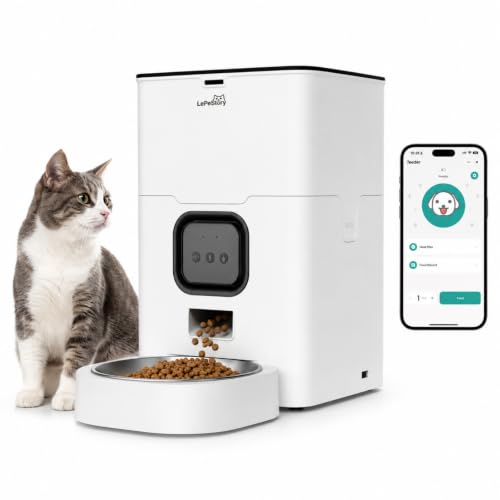
Remote feeding with intuitive app control.
Large 4L capacity reduces refill frequency.
Customizable feeding schedules for pet needs.

Large capacity for fewer refills needed.
Durable stainless steel ensures longevity.
Two-in-one design saves space efficiently.
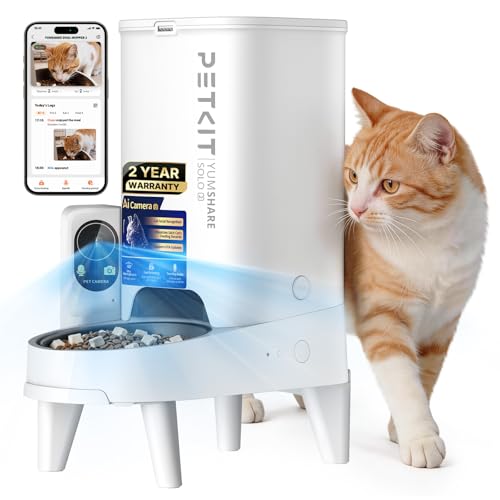
Real-time video lets you monitor pets remotely.
Two-way audio enables easy interaction with pets.
Scheduled feeding ensures consistent meal times.

App control for convenient feeding schedules.
Portion control helps maintain pet health.
Supports WiFi connectivity for easy setup.

Tracks pet's eating habits accurately.
Convenient app-based meal scheduling.
Durable stainless steel feeding bowl.

App-controlled for convenient remote feeding.
Compatible with Alexa for voice commands.
Backup batteries ensure feeding during outages.

Easy-to-use, simple analog timer.
Holds up to three cups of food.
Tamper-resistant design for added security.

Large 7L capacity reduces refill frequency.
Customizable feeding schedule for portion control.
User-friendly interface simplifies programming.
Start with the food. Most supplied products are for dry food only and specify kibble limits ranging from 2–10 mm, 2–15 mm, 2–18 mm, or similar. Moisture, irregular shapes, oversized pieces, low hopper levels, and changing food can alter delivery or cause blockages. A portion described as a cup, milliliters, teaspoons, or “approximately 7 g” is not automatically a gram-accurate meal. A responsible manual tells you how to weigh trial servings and calibrate or adjust output; the strongest evidence would be an ISO/IEC 17025-accredited report naming the exact product, kibble type, hopper fill, number of cycles, programmed and actual grams, timing error, and test date. No such evidence was found for the supplied set.
Look for safe failure behavior, not just “anti-jam” language. Useful documentation identifies jam detection, error handling, low-food warnings, schedule retention, and what happens when internet or mains power fails. Battery backup should specify the battery type, whether schedules continue, and which functions stop. A claim that a product works for 180 days or keeps feeding during an outage remains a manufacturer claim unless the exact setup and endurance have been independently tested.
For food hygiene, the bowl is only one part of the food path. Check whether the hopper, rotor, chute, lid, tray, and other food-touching parts are removable, washable, and fully dryable. Stainless steel is helpful, but a grade, complete material declaration, and food-contact compliance basis were not consistently supplied. Claims such as “food grade,” “BPA-free,” or “304 stainless steel” should not be treated as independent certification without supporting documentation.
Connected products add another decision. An exact-product FCC authorization record supports lawful radio authorization, but it does not prove electrical safety of the supplied adapter, dispensing accuracy, or cybersecurity. For powered products, look for an exact-product or exact-adapter listing in UL Solutions Product iQ, Intertek’s ETL directory, CSA’s listing database, or another OSHA-recognized testing laboratory record. For app, camera, audio, or feeding controls, check data disclosures, account controls, update commitments, end-of-support dates, and whether schedules work without cloud access.
Capacity, meal count, camera resolution, low-food alerts, dual bowls, and “precise” or “healthy” feeding claims can all mislead. Two bowls may simply receive equal portions without identifying pets or preventing food theft. A scale may record bowl changes without proving which animal ate. Scheduled feeding can support a veterinarian’s plan, but it does not determine calories or treat obesity, vomiting, diabetes, anxiety, or other conditions.
Across the supplied reviews, the recurring safety caveat is that no feeder should be the sole safeguard when a missed or extra meal could create urgent medical risk. Independent gram accuracy and timing evidence was absent throughout, and multiple products require owners to weigh trial meals and inspect operation. Shared or open bowls do not provide individualized feeding. Gravity models cannot measure or schedule portions. Dry-food and kibble-size limits, cleaning requirements, battery condition, jams, tipping, food theft, and power failures all require a human backup plan. Wet food, medically critical feeding, and pets with different diets generally need another arrangement.
These topics separate a convenient dispenser from one that is more suitable for a carefully managed feeding routine. Scores compare the supplied products against the same definitions; they do not replace the product-specific limitations described in each review.
This measures whether scheduled time and meal weight remain consistent with the specified kibble and hopper conditions. It matters because volume settings are not fixed calories. The strongest supplied score was 80 for the non-connected PETLIBRO 3L, supported by an independent hands-on report of consistent dispensing, while the lowest was 45 for gravity feeders that do not measure or schedule meals. No product had accredited gram-accuracy testing.
This covers jams, repeat dispensing, empty hoppers, clock loss, alerts, and power outages. A higher score reflects documented error handling and schedule retention rather than an “anti-jam” slogan. Supplied scores ranged from 52 for a gravity dispenser, with no timed-meal safeguards, to 78 for the PETLIBRO 3L basic model. Backup batteries help only when installed and maintained, and offline operation may disable apps or alerts.
This assesses every surface food touches, not only the bowl, plus access for washing and drying. Removable bowls, hoppers, rotors, and chutes reduce trapped residue. Scores ranged from 52 for a gravity set whose fixed water bowl and conflicting cleaning instructions raised concerns to 76 for Pawsync. Across the set, stainless-steel claims were commonly manufacturer-stated, while complete material declarations and independent food-contact compliance evidence were generally absent.
This measures resistance to tipping, prying, chewing, climbing, and unequal access between pets. It matters because a dual-bowl or shared feeder does not identify which animal ate. The highest supplied score was 82 for the PETLIBRO 3L basic model, whose hands-on access tests resisted pawing, probing, and tipping; the lowest was 60 for a Wi-Fi dual-power feeder whose manual advised placing it against a wall. Individualized access remained uncommon.
This topic checks whether claims about weight, slow feeding, vomiting, calm behavior, or nutrition stay within what scheduled feeding can support. Higher scores reflect restrained claims and recognition that calorie needs are individual and veterinary care still matters. Scores ranged from 52 for a feeder making unsupported slow-feeding health claims to 78 for several models. No supplied product established treatment benefits; portion delivery alone is not a medical intervention.
Powered feeders need traceable U.S. safety evidence for the product and adapter; wireless models also need lawful radio authorization. An FCC record supports radio authorization, not complete electrical safety or performance. Supplied scores ranged from 68 for models without located exact certification to 90 for the non-powered gravity feeder, which has no adapter, battery, or radio. Exact listings in UL Product iQ, ETL, CSA, or another OSHA-recognized directory are stronger than logos.
This measures whether buyers can identify the responsible manufacturer or seller, model details, warranty, support contact, and any official corrective action. Scores ranged from 64 for the camera-equipped PETLIBRO dual-tray model to 79 for Pawsync. A named company, accessible support, replacement or warranty process, and traceable labeling improve accountability. The absence of a located recall is not proof that a product is safe or recall-free.
This measures whether capacity, portion size, battery life, range, freshness, anti-jam, camera, and multi-pet claims have clear limits and match the manual. Scores ranged from 48 for a gravity product with conflicting specifications to 78 for PETLIBRO’s 5L Wi-Fi model. Useful specifications include kibble diameter, fill limits, portion definition, cleaning restrictions, and outage behavior. “Precise,” “jam-free,” and “multi-pet” are incomplete without operating conditions.
This topic rewards current, model-specific evidence that can be verified in an issuer’s registry or disclosed test method. Scores ranged from 68 for products supported mainly by seller or manual claims to 81 for Pawsync, which had exact-product FCC documentation and associated wireless test reports. The PETLIBRO 3L basic model also had independent hands-on dispensing and access testing. Neither type of evidence proves every safety or performance claim.
This measures privacy, account security, updates, cloud dependence, and whether feeding remains usable if internet service fails. Scores ranged from 63 for an app-dependent feeder with limited security documentation to 95 for a non-connected gravity model; non-connected products avoid app and cloud exposure but also lack remote controls. Pawsync had exact wireless authorization but no independent security assessment. A published support end date, such as December 31, 2027 for one PETLIBRO camera model, is useful but not a full security guarantee.
This measures whether bowls, lids, rotors, cables, adapters, batteries, and electronic parts can be replaced or repaired instead of discarding the feeder. Scores ranged from 68 for several products with limited parts evidence to 78 for Voluas and PetSafe Healthy Pet Simply Feed. Voluas had independent repair guides for internal parts; PetSafe listed several replacement components. Neither establishes a complete repair program or guaranteed long service life.
This looks for specific, quantified claims about materials, packaging, energy, and waste, backed by certification for the exact product. All supplied products scored between 69 and 72, reflecting limited differentiation. No product had located verified recycled-content, GRS, ISCC PLUS, packaging-impact, energy-use, or product-specific electronics-recycling evidence. Avoid treating “large capacity,” “freshness,” or fewer refills as a substantiated environmental benefit without supporting calculations.
This is a Wi-Fi connected dry-food feeder with one 5 L hopper and two stainless-steel bowls. It is intended to split the same scheduled meal between two cats or small dogs. The manual limits kibble to pieces under 0.5 inch, lists a 4.7-pound dry-food capacity, and states that the unit can run scheduled meals from backup batteries during a power outage. Its portion setting is not a gram-calibrated dose. The manufacturer says its figures were based on approximately 0.3-inch kibble and tells owners to measure the output with their own food. Its own materials conflict slightly, with one source listing six portions as 55 g and another listing 60 g. The feeder has a traceable FCC authorization for its Wi-Fi radio, but no independent model-specific testing was located for dispensing accuracy, endurance, food-contact materials, or the supplied power adapter.
This product suits a household with two cats that normally eat the same dry kibble and have similar calorie targets. It is most practical for an owner willing to measure several test meals with the exact kibble used, then periodically check bowl output and hopper level. The 5 L hopper, two washable bowls, local schedule operation, and battery-backup option fit routine feeding where a person is still available to inspect the device, refill it, and respond if the outlet reports a blockage.
It is not appropriate as the only feeding safeguard for a pet whose meals are medically critical, including cats receiving tightly controlled calorie plans, insulin-linked meal routines, or treatment for conditions where a missed or extra meal creates immediate risk. It also does not solve food theft or unequal eating between cats because both bowls dispense equal portions without pet identification. Choose another arrangement for wet food, kibble larger than 0.5 inch, powerful chewers, or households that need independently verified dispensing accuracy and adapter safety certification.
The main hygiene positive is the manufacturer-stated use of removable 304 stainless-steel bowls, which it says are dishwasher safe. The hopper and dispensing system also contain ABS plastic, but the manufacturer has not published a complete food-contact material declaration, coating details, or an independent food-contact compliance report. Keep dry food dry, clean the outlet if food accumulates, and measure real output after changing kibble size or shape. The wireless radio has a traceable FCC authorization record. That authorization does not establish meal accuracy, electrical safety of the supplied adapter, or cybersecurity quality. The manual documents local schedule operation during an internet outage and battery operation during a mains outage. Replacement bowls are available and the manufacturer offers a two-year warranty, but no broader spare-parts catalog, repair guide, environmental certification, recycled-content claim, or product-specific electronics recycling plan was located. No CPSC recall for this product was located in the search performed.
The Oneisall F1 is a plug-in, non-connected dry-food feeder for a cat or small animal. It has a manufacturer-stated 3 L hopper, one removable stainless steel bowl, dial programming, and a schedule of up to six meals daily with one to 12 portions per meal. It is for dry kibble only, not wet or canned food. The manufacturer manual specifies kibble from 2 to 18 mm and backup operation with three D batteries that are not included. It identifies SUS304 stainless steel and ABS as materials, but does not provide a complete food-contact material declaration or independent food-contact documentation. Most importantly, its own instructions say each portion is not adjustable and varies with kibble, so owners need to weigh trial servings with their own food before relying on a calorie plan.
This feeder suits a single healthy cat that eats dry kibble within the stated 2 to 18 mm range, especially where the caregiver wants several locally programmed meals without an app. It is most appropriate for an owner willing to set it up at home, install fresh backup batteries, keep the outlet clear, and weigh multiple trial servings of the specific food used. The compact hopper and removable bowl also fit a routine where the feeder is cleaned and checked often rather than left unattended for extended travel.
It is not a safe stand-alone solution for cats whose meal timing or calories are medically critical, including cats managed for diabetes, rapid weight change, or medication mixed with food. It does not handle wet food. Households with food-aggressive pets, multiple cats on different diets, or animals that steal meals need individualized access control that this single open bowl does not provide. Avoid relying on its nominal portion figure without weighing actual output, particularly with unusually shaped, large, or variable kibble.
The useful health feature is scheduled dry-food delivery, but the manual makes an important limitation clear. Portion output is affected by kibble, and owners are instructed to measure delivered food and adjust the number of portions. That is more responsible than treating a setting as a fixed calorie dose. The manufacturer also specifies a stainless steel bowl, dry-food-only use, a 2 to 18 mm kibble range, and periodic desiccant replacement. It does not document food-contact compliance for every food-touching surface or the desiccant contents. A 2-year warranty, U.S. support contact, and stated repair or replacement remedies support longer use. However, no feeder-specific spare-parts catalog, electronic repair guide, recycling instructions, quantified packaging impact, recycled-content certification, or independent environmental verification was found. Searches did not identify an official U.S. recall for this feeder, but the available safety and performance evidence remains largely manufacturer-stated.
This is a compact Wi-Fi automatic dry-food feeder for cats, kittens, and small dogs. It has a stated 4-liter hopper, app scheduling, manual feeding, and voice-recording functions. The product is listed at 7 by 7 by 11 inches and 3.57 pounds. A separate marketplace listing corroborates the 4-liter capacity, ABS body material, stainless-steel component, and corded operation. The strongest practical features are manufacturer-stated, not independently performance-tested. The seller says the bowl is stainless steel, detachable, and dishwasher safe. The related manufacturer page describes a removable 304 stainless-steel tray, desiccant compartment, dry-cell backup, schedule memory, and an anti-jam design for dry kibble. No model-specific laboratory data was located for dispensed grams, timing error, fault handling, or long-term reliability.
This product suits a household with one cat or small dog that eats compatible dry kibble and needs a routine rather than medically exact dispensing. It is most appropriate when an adult can check the bowl, hopper level, power connection, and app regularly. The compact 4-liter format may fit an indoor feeding station where a removable metal bowl is useful for frequent cleaning. It can also suit owners who value scheduled meals and occasional manual app feeding, while keeping a separate plan for travel or disruptions.
It is not appropriate as the sole feeding safeguard for animals that need tightly measured meals, including pets on insulin-linked meal schedules, prescription calorie plans, or veterinary-directed weight control. It also is a poor fit for strong chewers, pets known to defeat lids, or multi-pet homes where one animal can consume another's ration. Do not rely on the app or stated battery backup alone during extended absences, because exact-product testing of portion accuracy, jams, notifications, and outage performance was not found.
The disclosed food-contact design is partly favorable for routine hygiene. The product is listed with ABS and stainless steel, while the manufacturer's closely related 4-liter feeder description identifies a removable 304 stainless-steel tray. That makes the bowl easier to remove from the appliance for washing. However, the record does not identify every food-contact plastic, colorant, coating, or desiccant material, and no declaration of food-contact compliance or cleaning manual was located. The research did not identify an exact-product CPSC recall or regulatory action, but that is not independent safety clearance. The manufacturer displays broad FCC, UL, CE, RoHS, and other compliance claims without certificate numbers tied to this product. No verified repair pathway, replacement electronics, parts catalog, recycled-content claim, packaging specification, or end-of-life program was found. The feeder should therefore be maintained to extend service life, and its electronic components should be handled through local e-waste collection when retired.
This is a non-powered gravity feeder and water dispenser for dry kibble and water. A retailer description identifies separate 3 L reservoirs, about 46 oz of dry food and 0.8 gallon of water, and says it is intended for small to medium cats and dogs. Food and water replenish the bowls when a pet consumes them, rather than arriving as weighed, timed meals. Its defining tradeoff is simplicity. The retailer description confirms there is no cord, app, timer, or battery system. Available product instructions depict a removable stainless steel food bowl, but a rotating water bowl that cannot be removed. The same instructions claim 304 stainless steel and a 1.5 cm water depth, yet no accessible independent material, performance, or food-contact test report was found for this product.
This product suits a household with a healthy small or medium cat or dog that already self-regulates dry kibble, and where the owner wants a simple reserve supply of food and water during a normal workday. It also fits buyers who specifically want to avoid plugs, batteries, Wi-Fi accounts, app permissions, and timer setup. The owner should be available to monitor intake, refill levels, clean the bowls frequently, and keep the original food bag details for traceability if kibble is decanted.
It is not suitable for pets needing measured calories, scheduled meals, diabetes management, weight-loss control, medication timing, or reliable individual feeding in a multi-pet home. A gravity outlet leaves food available whenever the bowl is emptied, and one pet can consume another pet's share. It also is a poor fit for strong food-seeking animals that may pry at or knock over the unit, or for households needing a thoroughly removable water bowl for daily dishwashing. Do not treat the stated multi-day capacity as unattended-care assurance.
The product avoids electrical and connected-device risks because its operation is mechanical gravity only. That also avoids batteries, adapters, wireless radios, cloud accounts, and their associated replacement and e-waste burdens. The available instructions identify stainless steel bowls and claim 304 stainless steel, but no grade verification, food-contact declaration, coating disclosure, or independent laboratory report was located. The food bowl is shown as removable, while the water bowl is stated to remain attached. Hygiene is the key practical concern. FDA advises washing and drying food bowls after each use and washing water bowls daily. The available instructions instead recommend dry or slightly damp cloth cleaning and advise against washing with water unless a model is specified as waterproof. That guidance is difficult to reconcile with a water dispenser and non-removable water bowl. No product-specific CPSC recall, FDA alert, environmental certification, recycled-content claim, or independently verified sustainability documentation was located in the sources reviewed.
This is a 3-liter indoor dry-food feeder for cats and small-breed dogs. It combines app-set feeding plans with a built-in Wi-Fi camera, microphone, speaker, and removable food hopper. The manufacturer manual limits kibble to 12 mm or smaller, freeze-dried pieces to 9 mm or smaller, and says not to fill beyond the marked maximum level. The strongest independently checkable point is the radio authorization. FCC documentation identifies this exact product and its 2.4 GHz wireless testing. The manufacturer also documents a five-AAA backup-battery compartment, a removable hopper, dispensing vanes, impeller, and bowl for cleaning. However, no model-specific independent testing was located for meal weight accuracy, jam resistance, endurance, or camera and app security. Portions are scheduled through the app, but the manual does not define a portion in grams or provide a calibration method.
This product suits a household with one cat or small dog that eats compatible dry kibble and has a stable feeding routine. It is especially relevant where a caregiver wants scheduled meals plus a visual check of bowl visits while away. The owner should be comfortable using a 2.4 GHz Wi-Fi app, cleaning removable food-path components by hand, checking battery charge before extended absences, and treating the camera as monitoring rather than proof of exact food intake. It is better suited to routine convenience than medically critical feeding.
It is not well suited to pets that require accurately weighed gram-level meals, wet food, prescription feeding that depends on reliable measured intake, or situations where a missed meal could create an urgent health risk. It also does not solve food competition in multi-pet homes because it has one shared hopper and bowl, with no documented individual access control. Avoid placing it where a determined pet can tip it, and avoid it for cable-chewing pets unless the power cord can be effectively protected.
The manual supports several practical hygiene measures. It directs users to remove and wash the hopper, vanes, impeller cover, impeller, lid, and bowl, then dry every part fully before reassembly. It also limits use to dry food and specifies maximum piece sizes. Those details are useful, but they are manufacturer instructions, not independent food-contact certification. The public manual does not identify every food-contact plastic, coating, colorant, or stainless-steel grade. The product's Wi-Fi authorization is independently traceable through FCC documentation. Its broader electrical safety certification and adapter listing were not independently verified. No relevant CPSC recall record was located in the searches conducted, and PETKIT publishes U.S. contact and warranty information. The feeder has removable cleaning parts, but no public repair guide, spare-parts catalog, or verified recycled-content, packaging, or electronics-recycling claim was located. Five disposable AAA batteries may also be needed for backup operation.
This is a compact indoor dry-food feeder for cats and small animals. It has a 3.5 L hopper, a stainless steel bowl, app-based scheduling through 2.4 GHz Wi-Fi, manual feeding, a weekly feeding log, and a slow-feed setting that spaces portions 10 seconds apart. The manufacturer specifies dry kibble below 12 mm in diameter and states that up to 10 meals per day can be scheduled. Its own manual is unusually clear that portions depend on kibble. Its reference test used roughly 0.3-inch kibble, and owners are instructed to weigh dispensed food and adjust settings for their food. Backup power is manufacturer-stated to continue a saved schedule during an outage, but batteries are not included and app access requires plug-in power. No model-specific independent accuracy, fault, electrical-safety, radio authorization, or cybersecurity test report was located.
This product suits an owner feeding one cat or another small animal dry kibble indoors, who can place the unit on a stable surface near a wall and verify meal output before relying on it. It is most appropriate for routine timed meals where the owner can keep fresh AA backup batteries available, periodically clean the removable food-contact parts, and use a 2.4 GHz Wi-Fi network for app controls. The manual's calibration process is particularly relevant for households willing to weigh several test meals after changing kibble.
It is not well suited to a pet whose feeding amount must be tightly controlled for a medical condition unless the owner has first repeatedly verified output with that exact kibble and has a backup care plan. It is also a poor fit for food-motivated animals likely to tip or defeat a feeder, or for households needing individualized feeding among multiple pets. Choose another arrangement if wet food is required, if reliable app access during an outage is essential, or if independently verifiable electrical and wireless certification is a requirement.
The most useful health safeguard is procedural, not independently tested hardware. The manufacturer specifies dry food below 12 mm and asks owners to measure real output because kibble shape and brand affect portions. That is important for calorie management, but it does not establish that programmed grams or meal times are consistently accurate. The feeder is not a substitute for veterinary calorie planning or care. No relevant official recall or regulatory action was located in the searched U.S. sources. The food-contact bowl is stated to be 304 stainless steel, while the wider product is stated to use ABS plus stainless steel. The hopper, bowl holder, outlet, and bowl can be washed, but the base and hopper-base electronics must only be wiped dry. A 24-month manufacturer warranty and replaceable desiccant supplies may extend use. No quantified recycled-content, packaging, energy-use, repair-parts, or end-of-life recycling claims were found.
This is a dry-food automatic feeder with a 3.6 L hopper, removable stainless-steel bowl and separate bowl scale. It is intended for indoor use with dry, mixed, freeze-dried, or air-dried kibble measuring 4 to 15 mm. Feeding schedules, manual feeds, intake records, and alerts depend on the Pawsync app and a 2.4 GHz Wi-Fi connection. The manufacturer documents a jam response that reverses the dispenser up to three times, low-food and fault indicators, and three D-cell batteries for backup. In battery mode, scheduled meals are stated to continue, but Wi-Fi, remote control, and notifications stop. The wireless unit itself has an exact-product FCC authorization record. There is no located independent laboratory report establishing real-world meal-weight or timing accuracy, and app reviews include reports of false intake records and missed-feed alerts.
This feeder suits a household feeding one cat or small dog dry kibble within the stated 4 to 15 mm size range, especially where the caregiver can check the bowl and app records regularly. It is most relevant for people who value scheduled meals, a removable washable food path, and visibility into reported consumption between home visits. Backup batteries should be installed if missed meals during a short power outage would be a concern. Portion settings should be checked against the pet's actual food and veterinary calorie plan.
It is not a safe substitute for direct supervision of a pet with diabetes, unstable appetite, a history of food guarding, or a medically prescribed feeding schedule where a missed or inaccurate meal could be urgent. It is also unsuitable for wet, canned, moist, or out-of-range kibble. Multi-pet homes that need each animal's access restricted should not treat its bowl scale as individual feeding control. Buyers who need independently verified portion accuracy, dishwasher-safe food-contact parts, or minimal cloud and app data collection need a different setup.
The accessible food path is a practical hygiene strength. Pawsync says the removable hopper components and stainless-steel bowl can be washed with soap and water, then fully air dried. The scale and powered base must stay dry. The manufacturer identifies the bowl as 304 stainless steel and other food-contact surfaces as BPA-free plastic, but did not provide a complete food-contact material or compliance declaration located in this review. Scheduled portions can support a veterinary feeding plan, but they do not set an individual pet's calorie needs. Veterinary guidance calls for calorie targets to reflect body condition, health, age, activity, and diet. No product-specific environmental certification, recycled-content documentation, packaging impact data, spare-parts catalog, or end-of-life electronics guidance was found. Its replaceable D batteries, removable bowl, and warranty repair or replacement pathway offer limited service-life support, while the electronic base remains non-user-repairable.
This is an indoor Wi-Fi automatic feeder for dry or semi-moist dog or cat food. It uses a hopper and conveyor, has a stated 24-cup capacity, and is intended mainly for cats and small to medium dogs. PetSafe states that the app can schedule up to 12 meals a day in portions from 1/8 cup to 4 cups, with a slow-feed mode that spreads larger scheduled meals over 15 minutes. The manufacturer manual documents low-food and no-food indicators, a mechanical-error light for jams or motor problems, optional four D-cell backup batteries, and a reboot that retains programmed meals and settings. It also requires priming whenever food gets low to preserve portion size, and tells owners to check dispensing frequently. No accredited, model-specific dispensing accuracy or endurance test was located, so meal weights in grams and long-term timing consistency remain unverified.
It suits a household feeding dry or semi-moist kibble to a cat or a small or medium dog on a repeatable daily routine. It is most practical for an owner who can set up a 2.4 GHz Wi-Fi connection, periodically verify the activity log and food level, clean the conveyor, and install fresh backup batteries before an outage risk or trip. The 24-cup hopper and up to 12 scheduled meals can reduce refill frequency and support several smaller meals, but the programmed cup setting should be checked against the pet's actual kibble and calorie plan.
It is not suited to wet, canned or moist food, outdoor placement, or puppies, kittens, or disabled pets that cannot reliably reach the bowl. It also is not an appropriate unattended primary safeguard for a pet with diabetes, a tightly prescribed calorie allowance, a history of food-related illness, or any condition requiring gram-level meal control. Homes with determined food thieves should not assume the button lock or bowl holder prevents hopper access. Multi-pet households also should not treat its shared bowl or optional splitter as individualized feeding control.
The useful health-related features are scheduling, a slow-feed delivery mode, low and empty-food notices, and backup-power capability. These are manufacturer-stated operational features, not evidence that the feeder itself treats obesity, vomiting, anxiety, diabetes, or another medical condition. The manual appropriately tells owners to check dispensing frequently, prime the conveyor after food gets low, and avoid use for pets unable to reach the bowl. A veterinarian should set calorie targets for pets with medical or weight-management needs. The product includes a stainless-steel bowl and several washable removable components. The base must stay dry, while PetSafe says the conveyor and crumb catcher are not dishwasher-safe. PetSafe sells a replacement adaptor and bowl holder, which supports limited repairability, but does not publish a full service-parts list, material composition, recycled-content figure, packaging-impact data, or a U.S. end-of-life program. No exact-product recall or regulatory warning was located in the reviewed sources.
This is a compact, battery-powered feeder that stores two separately covered meals rather than dispensing food from a hopper. PetSafe states that each compartment holds up to 1.5 cups of dry or semi-moist food, for 3 cups total. Each lid is set with a mechanical dial for a delay of up to 24 hours in 30-minute steps, and the unit uses one AA alkaline battery. The removable tray is manufacturer-stated BPA-free and top-rack dishwasher safe. The quick-start guide also says to level food and avoid overfilling, because excess food can jam the lids. PetSafe describes the recessed lids as tamper-resistant for paws, but no model-specific independent test of lid defeat resistance, timing accuracy, meal delivery, or battery endurance was located. This is a two-meal scheduling tool, not a measured-by-gram feeder or a connected monitoring system.
This product suits an indoor cat or a small to medium dog that reliably eats dry or semi-moist food and needs only one or two meals prepared within the next day. It is also suited to a household that wants a simple, local timer for a short absence, without an app, wireless connection, account, camera, or outlet. The owner should be able to measure and level each meal before closing the lids, clean the tray between uses, and confirm that the pet cannot open the covers early.
It is not suited to pets whose food must be delivered at a medically critical time, including pets using insulin or other feeding-linked treatment, because no independent reliability or missed-meal alert evidence was located. It is also a poor fit for multi-pet homes where one animal can steal another's diet, for determined pets that can tip or pry containers, or for households needing more than two meals. Do not use it for wet food, and do not treat its cup-based compartments as a gram-accurate diet dispenser.
Scheduled access can help an owner carry out a feeding plan, but it does not establish the right calorie amount for an individual pet. AAHA guidance supports controlled food access as one tool within an individualized nutrition plan, with calories, body condition, treats, health status, and household food competition considered. The product's two compartments are volume based, so owners managing weight or disease should use the food's calorie information and veterinary guidance rather than assume a filled compartment is a precise nutritional dose. For hygiene, PetSafe identifies the removable tray as BPA-free and top-rack dishwasher safe. Its guide calls for cleaning between uses, which aligns with FDA advice to wash and dry pet dishes after each use. No connected electronics or external adapter are supplied, reducing electronic complexity and connected-data exposure. However, no environmental certification, recycled-content claim, repair guide, or model-specific spare-parts program was located. PetSafe provides a one-year limited warranty and identifiable customer support, and no model-specific official recall was located in the review search.
This is a non-connected, button-programmed dry-food feeder for cats and small to medium dogs. It has a manufacturer-stated 7-liter hopper, about 29 cups, and measures 12.1 by 7.3 by 15.5 inches. The documented operating range is 1 to 6 meals daily, with 1 to 16 portions per meal, for kibble 2 to 15 mm wide. The manual and marketplace listing describe a removable hopper and bowl, a desiccant compartment, a Type-C wall supply, and optional four-AA battery backup. The portion is only described as approximately 1/24 cup and the listing warns that kibble shape and size change the delivered amount. No independent repeatability test, electrical certification record, or food-contact compliance declaration for this product was located.
This product fits a household using one kind of dry kibble that falls within the stated 2 to 15 mm range, where a local button schedule is preferred over an app. It is practical for an owner who can weigh several trial portions using their own food, check dispensing during the first weeks, wash the detachable parts regularly, and install fresh AA batteries if outage coverage matters. It is intended for cats and small to medium dogs, not large-breed feeding demands.
It is not appropriate as the sole feeding safeguard for a pet whose medical condition depends on tightly verified meal timing or gram-level intake, including pets on insulin plans unless a veterinarian has approved the overall routine. It also does not individually identify pets, so it cannot prevent one animal from taking another's ration in a shared household. Avoid relying on it with wet food, mixed-size kibble, oversized pieces, persistent food-seeking pets, or pets likely to chew accessible cords.
Scheduled meals can help an owner follow a feeding plan, but the actual calorie target and portion weight still need to be set for the individual pet. Veterinary nutrition guidance treats meal planning as part of wider weight management, not as a substitute for body-condition monitoring or veterinary care. The portion setting is volumetric and stated to vary with kibble shape, so a kitchen scale is important when intake must be controlled. The documented hopper and bowl can be washed, while the powered base must only be wiped. Dry food should be placed only into a clean, dry hopper, and its original bag details should be retained for recall traceability. No recycled-content, recyclability, packaging reduction, repair-parts, or environmental certification claims were substantiated. The one-year warranty is documented, but no replacement-parts catalog or end-of-life program was located.