Best Overall
Betta SE Solar Pool Skimmer Cleaner
Operates without cords or hassle.
Eco-friendly, uses solar power.
Effective at removing debris efficiently.
 Daniel Kenitz
Operates without cords or hassle.
Eco-friendly, uses solar power.
Effective at removing debris efficiently.

Dual charging options for continuous cleaning power.
Shallow water safeguard prevents skimmer from getting stuck.
Twin motors tolerate salt chlorine pools effectively.

Continuous cleaning with solar power efficiency.
Smart obstacle avoidance for hassle-free operation.
Convenient app support for easy control.

Cordless design for hassle-free cleaning.
Self-parking feature enhances convenience.
Portable and ideal for above-ground pools.

Solar powered for continuous, eco-friendly operation.
Smart obstacle avoidance ensures efficient cleaning.
28-hour runtime with auto return for convenience.

Efficient cleaning with advanced navigation technology.
Long-lasting battery for extended cleaning sessions.
User-friendly design with easy maintenance features.

Solar-powered for eco-friendly pool cleaning.
Dual cleaning modes for versatile functionality.
Soft-touch design protects pool surfaces.

Solar powered for eco-friendly operation.
Continuous 24/7 cleaning without interruptions.
Convenient app support for easy control.

Efficient solar-powered operation for eco-friendly cleaning.
User-friendly app for convenient remote control.
Sleek design complements any pool aesthetic.
Efficient solar-powered cleaning for energy savings.
Autonomous operation reduces manual pool maintenance.
Eco-friendly design promotes sustainable pool care.
The first distinction is between **surface skimming and submerged cleaning**. A floor-and-wall robot may collect settled debris, but it cannot intercept floating material before it sinks. For a surface skimmer, useful evidence includes a test that identifies the exact product, pool geometry, debris mixture, collection time, and recovered amount. A manufacturer-stated basket size—such as 3, 4.5, 6, 7, 9, or 10 liters—is useful for estimating emptying frequency, but it does not prove pickup rate. Likewise, a stated mesh or filter rating, such as 150, 180, or 200 microns, does not show that the product captures that size of debris in real use unless a test method and recovery result are supplied.
Navigation is another practical dividing line. Claims about obstacle avoidance, edge cleaning, auto-docking, or coverage should be checked against a compatibility chart or independent test covering the pool’s actual features: steps, ladders, skimmer inlets, returns, slopes, ledges, drains, covers, infinity edges, and irregular walls. A product that works smoothly in an open rectangular pool may still strand or miss debris in a more complicated layout. Manufacturer warnings about shallow water, glass or infinity pools, strong jets, hoses, and unusual obstructions matter more than a broad “all pools” claim.
Runtime figures also need context. “24/7,” “continuous,” or “20- to 35-hour” claims can depend on sunlight, season, temperature, cloud cover, operating mode, battery age, and debris load. A credible runtime report should state those conditions, while charging claims should agree across the manual and listing. Solar panels may reduce plug-in charging in favorable conditions, but they do not establish dependable overnight or winter operation. For battery products, look for an exact-model UN 38.3 lithium-battery test summary and clear charging instructions, including whether charging must occur away from the pool and with the charging port dry.
For electrical safety, a CE, RoHS, IP, or seller-issued badge alone is not independent verification. Look for an exact-model listing in UL Product iQ, Intertek’s ETL directory, or the CSA Group database, with a certification mark and model match. Wireless features can be checked in the FCC equipment-authorization system, but radio authorization is not the same as wet-area electrical or pool-equipment certification. NSF/ANSI/CAN 50 listings or an independent laboratory report can provide stronger evidence for pool-equipment performance.
Across the supplied products, recurring cautions are significant: do not operate a skimmer while people, children, or pets are in the pool; remove it before swimming; and take care during retrieval at the pool edge. Several products can strand on shallow steps, ledges, ladders, hoses, skimmer openings, or other obstructions. Solar runtime can fall in winter, shade, clouds, or cold weather. Battery products generally lack a clearly documented replacement or take-back path, so lithium-ion batteries must not go in household trash or curbside recycling. A passive pump-powered skimmer avoids onboard battery waste, but still requires pump compatibility and supervision. These devices remain convenience aids, not substitutes for circulation, filtration, disinfectant control, water testing, swimmer hygiene, or pool barriers.
The supplied reviews assess these products as maintenance tools rather than water-treatment systems. The scores below reflect the supplied topic scores, with higher values indicating stronger evidence or safeguards within this set; they do not turn an unverified claim into a certification.
This measures whether the exact skimmer, battery, charger, and charging system have credible third-party safety evidence for wet-area use. It matters because most robotic models contain lithium-ion batteries and are charged near a pool. Among the supplied products, scores range from 62 to 82: the higher result belongs to the pump-powered design with no onboard battery, while most cordless models lack a public UL, ETL, or CSA listing.
This measures whether a product clearly presents surface-debris removal as a convenience aid, not as a replacement for filtration, circulation, disinfectant, water testing, or swimmer hygiene. That distinction matters because clear-looking water is not necessarily sanitary. Scores range from 54 to 81: lower-scoring material includes unsupported chemical or water-balance implications, while higher-scoring reviews explicitly preserve the role of normal pool treatment.
This measures safeguards and stated limits around swimmers, children, pets, pool edges, ladders, drains, obstacles, and retrieval. It matters because moving propellers, intakes, pump connections, and wet poolside handling create foreseeable hazards. Scores range from 54 to 86. Higher-scoring products provide clearer instructions such as removing the unit before swimming and unplugging a pump before maintenance; lower scores leave important use conditions unclear.
This measures whether leaves, insects, pollen, and fine debris are independently shown to enter the basket rather than being pushed aside, and whether capacity and filtration match the claim. It carries extra weight because pickup is the product’s main job. Scores range from 20 to 78: hands-on testing supports the stronger results, while the lowest result belongs to a submerged floor-and-wall cleaner that is not a surface skimmer.
This measures reliable surface coverage and recovery around walls, corners, steps, returns, ladders, slopes, skimmer inlets, and special edges. It matters because a skimmer can work in open water yet strand or miss debris in a complex pool. Scores range from 52 to 80. Higher results reflect clearer compatibility limits or observed navigation; lower results reflect conflicting dimensions, limited testing, or warnings about obstacles.
This measures whether battery runtime, solar charging, night operation, and continuous-cleaning claims are repeatable under stated sunlight, weather, temperature, battery-age, mode, and debris conditions. Scores range from 50 to 82. The highest result belongs to the non-battery pump-powered accessory, while robotic products are held back when “24/7” or long-runtime claims conflict with manuals or lack measured solar and recharge conditions.
This measures whether capacity, micron rating, coverage, app control, saltwater resistance, solar operation, and other claims are precise and supported. It matters because large numbers and “continuous” language can conceal conditions or contradictions. Scores range from 45 to 72. Higher-scoring products have clearer specifications and fewer conflicts; lower-scoring listings contain inconsistent product roles, dimensions, charging details, or unsupported absolute claims.
This measures whether meaningful safety, wireless, pool-equipment, and performance claims match a named independent certifier, public registry, exact model, and report or certificate. It matters because seller badges and generic conformity marks are not enough. Scores range from 68 to 78. The stronger results have traceable FCC wireless records or other checkable evidence, but even those do not automatically verify wet-area electrical safety or debris performance.
This measures resistance to chlorine or saltwater, UV exposure, water ingress, corrosion, and wear, along with replaceable wear parts. It matters because early failure can create both cost and electronic waste. Scores range from 68 to 73. The supplied reviews commonly contain manufacturer claims about UV or salt tolerance but no exact-product ASTM UV, corrosion, or ingress report, so a higher score still does not establish tested long-term durability.
This measures energy use, solar contribution, service life, battery and parts replaceability, packaging, and take-back or recycling support. It matters because most robotic skimmers contain integrated lithium-ion batteries. Scores range from 62 to 76. The pump-powered accessory scores highest because it has no onboard battery or charger; battery products score lower when replacement, repair, and take-back pathways are not publicly documented.
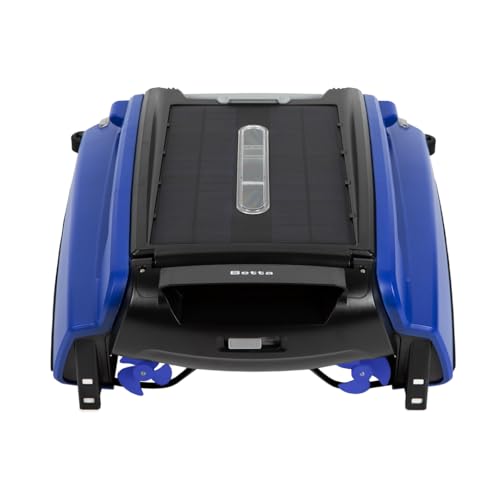
This is a floating, solar-powered robotic surface skimmer for residential pools. It uses twin propulsion motors and a front intake to collect leaves, insects, pollen, and other floating debris in a removable basket. The manufacturer describes a built-in battery charged only by its top solar panel, with no AC, DC, or USB charging port. It also specifies use in fresh water or saltwater up to 5,000 ppm and provides a one-year warranty. Independent hands-on testing by Bob Vila found the product moved quickly, collected surface debris, and navigated pool edges without frequent sticking in that test setting. That is useful real-world evidence, but it is not a controlled laboratory recovery test. The manual also qualifies continuous-cleaning expectations, noting that weaker winter sunlight can lengthen recharge time and shorten runtime. It is a surface-maintenance tool, not a replacement for the pool's filter, circulation system, disinfectant, or water testing.
This product suits a residential pool owner whose main recurring task is removing floating leaves, insects, pollen, and windblown debris before it sinks. It is most appropriate for a conventional fresh-water or salt pool within the manufacturer's 5,000 ppm salt limit, where the pool is not being used while the skimmer operates. It also fits owners who can empty the basket regularly and have enough direct sun for dependable solar charging, especially during the main swimming season.
It is not suitable for a pool that remains occupied by swimmers, children, or pets while equipment is operating, because the manufacturer instructs users to remove it before swimming. It is also a poor fit for pools with shallow steps, prominent ledges, unusual obstructions, or concurrent cleaning equipment unless the owner can actively monitor for stranding or interference. Households needing guaranteed overnight runtime in cloudy or winter conditions should not treat solar charging as dependable continuous power. It does not replace filtration, circulation, disinfection, or routine water testing.
The main health benefit is indirect. Removing floating debris can improve appearance and reduce material that may otherwise enter the pool, but it does not disinfect water or control swimmer-borne germs. CDC guidance identifies proper disinfectant concentration, pH control, routine testing, filtration, and circulation as the core protections for healthy swimming. Owners should continue those practices regardless of surface-skimmer use. The manual gives useful safety instructions, including no swimming during operation, keeping the product away from children, avoiding simultaneous use with other cleaners, and taking care at the pool edge. No public exact-model third-party electrical-safety listing, pool-equipment certification, battery transport summary, or water-ingress test report was identified in the reviewed sources. Solar-only charging can reduce plug-in energy use, but the internal lithium-ion battery needs separate recycling or household hazardous-waste handling at end of life, not disposal in household trash or recycling bins. The manufacturer does not publish a take-back program or battery replacement policy.
This product is a cordless, floating robotic skimmer for pool surfaces, not a floor or wall cleaner. It uses an onboard solar panel, a built-in rechargeable battery, twin drive motors, an intake impeller, and a removable basket. The manufacturer specifies a 200-micron fine-mesh basket, solar plus adapter charging, remote control, and use in above-ground or in-ground pools up to about 2,400 square feet. The strongest product-specific evidence is manufacturer documentation rather than independent certification or laboratory testing. Its manual clearly instructs owners not to swim while it operates, to keep children away, and to remove it when the pool is in use. It also describes adjustable anti-stranding bars for shallow stairs and a stop-and-retry response when the propeller or impeller is obstructed. Betta states 30+ hours per charge, but its own manual says winter sunlight can materially shorten runtime.
This product suits an owner of a residential above-ground or in-ground pool who wants an unattended aid for floating leaves, insects, pollen, and pet hair, and who is prepared to empty the basket and clear hair or string from moving parts. It is most appropriate where the pool receives useful direct sun, or where the owner can use the supplied adapter after extended cloudy weather. The documented anti-stranding bars make it more relevant to pools with shallow steps, provided the unit is monitored during initial setup.
It is not for anyone expecting a substitute for a circulation pump, filter, sanitizer, water testing, brushing, or a floor and wall robot. It should not operate while people are swimming, so households with frequent unscheduled pool use need a reliable routine for removing and storing it poolside. Avoid relying on it unattended around cords, hoses, unusual obstacles, or complex water features. Buyers who require independently listed wet-area electrical equipment, independently measured runtime, or readily documented battery replacement and recycling support need stronger public evidence.
Surface skimming can remove visible floating debris, but it does not disinfect water or replace filtration and recirculation. CDC guidance identifies disinfectant concentration and pH testing as the primary protections against waterborne illness. The product's own materials appropriately identify it as a surface skimmer, and its manual says to remove it while swimmers are in the pool. That is important because the unit has moving propellers and an intake impeller, and poolside retrieval itself creates a slip and balance risk. Betta states that the body is UV-resistant and that its motors tolerate salt-chlorinated pools up to 5,000 ppm, but no exact-model ASTM UV, corrosion, or ingress test report was found. Solar charging can reduce grid charging in sunny conditions, although actual output and lifetime energy use were not independently measured. The one-year warranty is a defined support period, but the review found no public battery take-back program or clear integrated-battery replacement policy. Lithium-ion batteries should not enter household trash or curbside recycling.
The Aiper EcoSurfer S2 is a cordless robotic surface skimmer. It floats rather than cleaning the floor or walls, using propellers and an intake to collect floating leaves, insects, pollen, dust, and similar debris in a 4 L basket. Aiper states that its basket filter is 150 microns, and that the unit has solar charging, a 3-inch chlorine-tablet dispenser, optical obstacle sensors, and app-based status and scheduling controls. The wireless function has a public FCC equipment authorization for this robotic pool skimmer. Performance evidence is less complete. Aiper states up to 35 hours from adapter charging and continuous solar operation, but its support material separately describes about 3 to 4 hours of active skimming, depending on conditions. No independent exact-product debris-recovery, solar-runtime, wet-area electrical-safety, or durability test report was located.
This product fits an owner of a residential pool who primarily wants to reduce routine removal of floating leaves, insects, pollen, and sunscreen film. It is most appropriate where the pool pump has normal circulation, surface return jets are not strong, and someone can empty and rinse the 4 L basket regularly. It also suits a user who values app status checks and can use the supplied charging equipment carefully. The solar feature is most practical where the pool receives regular direct sun, while expectations remain limited to surface debris.
It is not suited to anyone expecting a substitute for the pool's filter, sanitizer, water testing, or floor and wall cleaner. Households with unsupervised children or pets should not treat an autonomous surface device as a pool-safety control. It is also a weaker fit for pools with persistent high wind, poor circulation, strong surface jets, difficult corner dead spots, or edge features where the unit may need manual repositioning. Buyers requiring independently certified wet-area electrical safety, independently measured debris capture, repairable batteries, or readily stocked charging parts need stronger documentation.
Surface skimming can remove visible floating debris, but it is not a health treatment. CDC guidance identifies disinfectant concentration and pH testing as the first defenses against swimming-related illness. The product's built-in chlorine-tablet dispenser therefore needs the same label-directed chemical handling and routine water testing as any other feeder. Its public FCC authorization supports compliance for its wireless radio, not electrical safety in or around pool water. Aiper states that the housing is UV and high-temperature resistant, but no exact-product IP rating or public ASTM corrosion or UV-aging report was found. Aiper's own guidance says saltwater mineral deposits can jam the propeller shaft, so fresh-water rinsing and inspection matter. The lithium-ion battery is not user-serviceable, and the brand does not sell its proprietary replacement cable in its storefront. At end of life, the device should go to an appropriate battery or electronics recycler, not household trash or curbside recycling. A 2023 CPSC burn and fire recall involved a different Aiper Elite Pro model, not this product.
This is a small cordless robotic vacuum for debris on a pool floor, not a surface skimmer. It is placed in the water, runs from an internal lithium-ion battery, collects debris in a removable tray, then is lifted out with a hook on a pool pole. The catalog claims 1,200 GPH suction, 90 minutes of runtime, a 2.5-hour charge, and use in above-ground pools up to 40 feet. The available Seagull SE manual supports the 90-minute runtime, 2.5-hour charging time, wall-side low-battery parking, and a flat-floor limitation. It specifies flat pools up to 850 square feet, with no slopes, rather than broad all-pool compatibility. An independent hands-on review found ordinary dirt and leaves were picked up, while significant slopes and walls were not cleaned. No public third-party certification, measured debris-recovery report, filter-pore rating, or exact-model battery test record was located.
This product suits an owner of a small, simple above-ground or flat-bottom pool who wants a cordless way to pick up settled leaves and ordinary floor debris between normal pool-maintenance tasks. It is most appropriate where the pool floor is within the documented 850-square-foot flat-floor limit, has no meaningful slope, and a pool pole is available for retrieval. The buyer should be comfortable cleaning the debris tray after use, charging the unit fully in a dry, cool location, and maintaining normal pool filtration, disinfectant, and water testing separately.
It is not suited to households seeking an automatic surface skimmer, wall cleaner, or a substitute for the pool’s filter and water-treatment routine. Avoid this format for pools with sloped or irregular floors, walls needing cleaning, deep debris loads, or complex obstacles where the simple wall-bounce navigation can miss areas or become less effective. It also needs careful supervision around children, pets, and swimmers because the manual says not to run it while people or animals are in the pool. Buyers needing independently listed wet-area electrical equipment should require public certification evidence first.
Removing debris can improve pool appearance and reduce material that consumes disinfectant, but it is not a sanitation system. CDC guidance identifies correctly maintained disinfectant concentration and pH, plus regular testing, as the primary defenses against swimming-related illness. Continue filtration, chemical treatment, testing, and swimmer-hygiene practices regardless of using this vacuum. The available manual says to keep the charging port dry, charge in a cool uncovered place, use only the authorized adapter, and keep swimmers and animals out of the pool during operation. These are meaningful operating safeguards, but public third-party certification for this exact product was not located. A March 20, 2025 CPSC recall involved a different Aiper Seagull Pro model, not this Seagull SE product, due to overheating adapters. The Seagull SE uses a lithium-ion battery and has replaceable brushes and wheels, but no public battery take-back or recycling program was found. End-of-life batteries should go to a proper battery recycler, not household trash.
This is a cordless, floating robotic skimmer for pool surfaces, not a floor, wall, or waterline vacuum. It uses a claimed 10,000 mAh lithium battery, a top-mounted 24W solar panel, plug-in charging, app control, and a 9L debris basket. The manufacturer describes it as suitable for above-ground and in-ground pools, including saltwater pools within stated water-chemistry limits. The most consequential product-specific feature is the 9L basket, which is manufacturer-stated and intended to reduce emptying in leaf-heavy pools. A hands-on Tom's Guide test independently observed it picking up grass, leaves, and bugs in a home pool. The claimed 28-hour runtime and continuous solar operation remain manufacturer figures, not independently measured results under defined sunlight, weather, debris load, or battery-age conditions.
This product suits an owner of an above-ground or in-ground pool who regularly sees leaves, grass, pollen, insects, or windblown surface debris and wants to reduce manual net skimming. The 9L manufacturer-stated basket is particularly relevant where nearby trees create repeated daily debris loads. It also fits owners who can maintain a clear pool surface for solar exposure, can retrieve and empty the unit safely, and already maintain normal pump filtration, disinfectant levels, and water testing.
It is not for households expecting a single device to clean floors, walls, settled sand, algae, or waterline buildup. It should not operate while people are swimming, or where children or pets can approach it unsupervised. The safety instructions also call for keeping it away from strong winds, heavy rain, thunderstorms, shock chlorination, and freezing conditions. Buyers with persistently shaded pools should not assume the solar panel will sustain continuous operation, and those needing independently certified wet-area electrical evidence should seek a product with a public exact-model listing.
Surface skimming can remove floating debris before it sinks, but it is a maintenance aid, not a water-treatment system. CDC guidance still calls for appropriate filtration and recirculation, disinfectant control, and routine pH and sanitizer testing. The product's safety instructions say not to swim while it operates, to keep children and pets away, and to use only the specified charger and battery arrangement. Beatbot states that this model has IP68 protection and UV, chlorine, and saltwater-resistant materials, plus a three-year warranty. Those durability claims are manufacturer-stated, with no public exact-model ASTM corrosion or UV-aging report located. The solar panel may reduce grid charging when conditions are favorable, but the fixed lithium battery is described as service-only rather than user-replaceable. No public take-back or recycling program for the product or its battery was located. No relevant CPSC recall or exposure warning was found in the checked public sources.
This is a cordless, battery-powered robotic pool cleaner, not a surface skimmer. It drives along the pool floor, climbs walls, and scrubs the waterline, collecting debris in a 2 L basket. The manufacturer specifies a 10,000 mAh lithium-ion battery, a 150-micron filter, and use in water 1.64 to 9.84 feet deep, with salt below 5,000 ppm. Independent hands-on reviewers reported effective floor, wall, and waterline cleaning in ordinary outdoor-pool use. One tester observed roughly three hours for a full cleaning cycle, which is reasonably consistent with the manufacturer's up-to-four-hour floor-only rating. The product has clear operating warnings, including keeping swimmers, children, and pets away while it runs. No public exact-product UL, ETL, CSA, or NSF certification listing was located in this review.
This product suits a residential pool owner who primarily needs scheduled cleanup of settled debris, wall film, and the waterline in a pool within the stated 1.64 to 9.84 foot depth range. It is better aligned with pools that have manageable debris loads, accessible sides for lifting the robot out, and an owner willing to rinse the basket and brushes after cycles. It can also fit saltwater pools that stay below the manufacturer's 5,000 ppm salt limit. App control is optional because the product has physical cleaning modes.
It is not suited to someone specifically seeking an automatic pool skimmer. The manufacturer identifies this as a floor, wall, and waterline cleaner, and its own product page distinguishes it from surface-cleaning models. It also needs careful use around swimmers, children, and pets because the manual says not to enter the pool while it operates. Households needing reliable cleaning of shallow steps, very fine sand, or a large volume of leaves should account for its depth limits, 150-micron basket, and 2 L collection capacity.
Removing visible debris can make pool care easier, but it does not disinfect water or replace the pool's circulation and filtration system. CDC guidance identifies maintaining disinfectant and pH, regular water testing, and swimmer hygiene as the measures that control swimming-related illness. The product does not make a substantiated health-treatment claim, which is appropriate for a debris-cleaning robot. Its manual includes meaningful safety instructions, including use of the supplied dock only, unplugging it before maintenance, avoiding charging outside 32 to 104 F, and keeping people and pets clear during operation. The robot is manufacturer-rated IP68 and the dock IPX4, but no public exact-product listing from a US Nationally Recognized Testing Laboratory was found. The battery is technician-replaceable only. EPA advises taking lithium-ion batteries and battery-containing devices to dedicated collection or hazardous-waste programs, not household trash or curbside recycling. Beatbot's three-year main-body warranty may reduce early replacement, but consumable baskets and brushes have only three months of coverage.
Betta Flex is a cordless, solar-powered robotic surface skimmer for residential pools. It floats, uses propellers and an impeller to bring floating debris into a removable basket, and has Normal, Off, and Eco switch positions. The manufacturer lists a 19.5 by 16 by 8.5 inch plastic body and a built-in lithium-ion battery. It is not a floor or wall cleaner. The manufacturer states that the basket mesh is 200 microns, and that the unit is suitable for chlorine and saltwater pools up to 5,000 ppm salt. Its manual gives useful operating limits, including reduced winter solar charging, possible stranding at structures, and the need to empty the basket every one to four days depending on debris. I did not locate independent pickup, runtime, durability, or electrical-safety test results for this exact product.
This fits an owner of an above-ground, in-ground, or infinity-edge residential pool who wants help collecting leaves, insects, pollen, and other floating debris before it sinks. It is most suited to a sunny pool with at least 6 inches of water, where the owner can remove the skimmer before swimming, inspect the basket often, and clear hair or string from the moving parts. It also suits someone who values a solar-only, cord-free setup and accepts that solar output changes with season, shade, and weather.
It is not appropriate for pools used continuously by swimmers, children, or pets, because the manufacturer instructs users not to swim while it is operating. It is also a poor fit for heavily shaded pools, winter use where dependable uninterrupted operation is required, or pools with stairs, stools, skimmer openings, hoses, or wired cleaners that regularly trap or obstruct floating equipment. Do not treat it as a replacement for the pool's circulation, filtration, disinfection, testing, or supervision measures.
This is a surface-debris tool, not a water-treatment device. Its product information describes collection of leaves, pollen, insects, and dust, while CDC guidance still calls for routine disinfectant and pH testing, plus functioning filtration and recirculation. Surface skimming may reduce visible debris, but it does not disinfect water or make swimmer hygiene and supervision less necessary. The solar-only design avoids routine mains charging, and the manufacturer offers repair service and replacement motor support, which can extend useful life. The product still contains a lithium-ion battery. No public third-party electrical certification, battery test summary, or formal UV, salt-spray, and ingress test report was located for this exact product. At end of life, the battery-containing device should go to an appropriate electronics or battery collection route, not household trash or curbside recycling.
The Curalk H3 is a cordless, solar-assisted robotic surface skimmer for above-ground pools. It travels on the water surface and routes floating debris into a removable basket, rather than vacuuming the pool floor, walls, or waterline. The marketplace listing states a plastic body measuring 12 by 11 by 6.7 inches, a 3-liter basket, 180-micron filtration, app support, and a 2,600 mAh lithium battery. The H3 hardware has an FCC equipment authorization for its 2.4 GHz wireless radio, which supports the app-control claim. That authorization verifies radio compliance only, not wet-area electrical safety, debris recovery, or long-term durability. The solar and 24/7 cleaning claims are manufacturer-stated. Public materials located for this product family do not provide a controlled runtime test or an independent debris-capture report for this unit.
This product suits an above-ground-pool owner who wants an extra surface-debris tool for leaves, insects, and pollen between manual cleanups. It is most appropriate where the pool gets regular direct sun, the owner can inspect it often, and the built-in circulation, filtration, disinfectant, and water-testing routine already remain in place. The app radio is independently documented, but the practical cleaning and runtime specifications should be treated as manufacturer-stated.
It is not suited to households expecting a replacement for pool filtration, sanitation, water testing, or close swimmer supervision. Avoid relying on it around unsupervised children, pets, unusual pool edges, ladders, steps, strong returns, or complex water features because no independent obstacle and recovery testing was located. It is also a poor fit where shaded conditions, cloudy weather, overnight cleaning, saltwater exposure, or difficult fine debris demand documented runtime and durability performance.
Surface skimming can remove visible floating debris before it sinks, but it is not a water-treatment system. CDC guidance identifies disinfectant and pH control as the first defense against swimming-related illness, with regular testing and functioning filtration still required. Empty and rinse the basket hygienically, especially after collecting insects, animal waste, or contamination. Do not use the product as the tool for a fecal incident, which requires pool closure, removal with a net or bucket, disinfection, and confirmation that filtration is operating. The product is listed as plastic and contains a lithium battery. No public exact-model UL, ETL, CSA, ingress-protection, salt-spray, UV-weathering, battery-replacement, spare-parts, take-back, or recycling program evidence was located. As of August 31, 2026, this review located no Curalk-specific CPSC recall. At end of life, lithium-battery devices should go to a dedicated battery or e-waste collection point, not household trash or curbside recycling.
This is a cordless, floating robotic surface skimmer intended to collect leaves, hair, insects, pollen and other debris before it sinks. The supplied product record describes an ABS-bodied unit with a 37.96 Wh battery, solar panel, app control, two speed modes and a large basket. Independent confirmation of the stated ABS composition was not located. A public manual for the closely matching SK01 model, marketed as Talosbo Pleco SK01, documents a 5,200 mAh battery, 8.4 V, 2 A charger output, Wi-Fi and 2.4 GHz connectivity. It states up to 10 hours of operation from solar plus battery, IPX7 water resistance, and exclusions for infinity and glass pools. That manual also says cleaning follows a random pattern, so full coverage is not assured. No exact-product UL, ETL, CSA, NSF performance certification, battery test summary, or independent pickup and runtime test was located.
This product suits an owner of a conventional above-ground or in-ground household pool who wants supplemental removal of floating debris between normal pool-maintenance tasks. It is most appropriate where the water is at least 7 inches deep, the pool is not glass-sided or infinity-edge, and an adult can inspect the unit, empty its basket, clean tangled propellers, and remove it before anyone or any pet enters the water. Solar exposure helps, but access to the specified adapter is important for cloudy periods.
It is not suited to households that expect a skimmer to replace filtration, disinfectant management, water testing, or adult pool supervision. Do not operate it while swimmers or animals are present, and it is unsuitable for infinity-edge and glass pools under the public SK01 instructions. Buyers who need independently certified electrical safety, independently measured debris capture, predictable mapped coverage, or documented long-term saltwater and UV durability need evidence that was not located for this product. It also needs hands-on clearing of debris and propellers.
Surface skimming can improve appearance by removing floating debris, but it does not disinfect water or prove water is safe for swimming. CDC guidance says chlorine or bromine, correct pH, routine testing, filtration, and swimmer hygiene remain the main controls for swimming-related illness. The public SK01 manual gives useful handling limits, including keeping swimmers and animals out of the pool during operation, charging only with the specified charger, and ensuring that the charging port is dry. The product record identifies a lithium battery, while the related public manual provides a 12-month battery and motor warranty and a disposal symbol for electrical equipment. No US take-back program, replacement-battery policy, spare-parts catalog, battery transport test summary, or third-party durability test was found. At end of life, EPA says lithium-ion battery devices should not enter household trash or curbside recycling, and should go to an appropriate battery or electronics recycler.
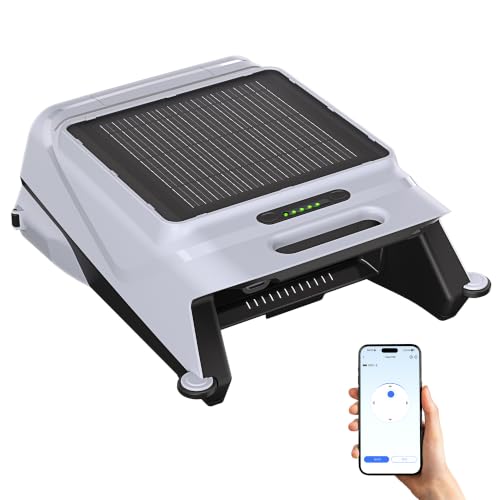
This is a cordless, floating robotic skimmer for pool surfaces. It uses a solar panel and internal lithium-ion battery, with DC charging as a backup. The manufacturer lists a 5L debris basket, app control, dual ultrasonic sensors, an automatic edge-parking function, and a chlorine-tablet compartment. It is intended for above-ground and in-ground residential pools, and it collects floating material rather than cleaning walls or floors. The manufacturer states that the basket filters to 150 microns and that solar plus battery power supports continuous operation. An independent hands-on review did confirm one concrete design benefit, the enclosed basket retained debris when the unit was lifted from the front. The Bluetooth radio also has an FCC equipment authorization for a solar robotic pool skimmer, although that authorization addresses radio compliance, not wet-area electrical safety or cleaning performance. Published claims conflict on filtration size, charge time, and runtime.
This product suits a residential pool owner who mainly wants floating leaves, pollen, insects, and similar surface debris collected before it sinks, and who can supervise a cordless robot around the pool. It is most relevant where manual surface skimming is frequent and access to a conventional outlet is inconvenient. The owner should be comfortable treating the advertised basket size, runtime, navigation, and saltwater durability as manufacturer-stated figures rather than independently measured performance, and should maintain the pool's normal pump, filter, and chemical-testing routine.
It is not suited to buyers who need documented electrical certification for a battery-powered device used in a wet pool environment, or those who require independently proven operation around complex steps, ladders, vanishing edges, tight corners, or water features. It is also unsuitable as a floor cleaner, a replacement for circulation and filtration, or a substitute for disinfectant and pH testing. Households with children or pets should not rely on obstacle avoidance as a safety system, and should retrieve and charge the unit only under its supplied instructions.
The useful health role is limited to removing floating debris. The manufacturer itself describes the unit as independent of the main filtration system. Surface collection can reduce visible debris and organic material, but it does not establish safe water chemistry. CDC guidance says chlorine or bromine and pH control are the first defenses against swimming-related illness, and residential owners should routinely test and adjust them. The built-in chlorine compartment does not publish tablet compatibility, dosing, or water-testing instructions. The product contains a lithium-ion battery and solar panel, but no public battery test summary, wet-area electrical listing, replacement-battery policy, parts catalog, or take-back program was located. The maker claims UV-resistant materials and salt and chlorine tolerant motors, without an exact-model corrosion, UV, or ingress test report. At end of life, EPA advises that lithium-ion batteries and battery-containing electronics go to dedicated collection or hazardous-waste channels, not household trash or curbside recycling.


