Best Overall
10% off

WORX WG547 Cordless Leaf Blower
Lightweight for easy one-hand operation.
Powerful turbine fan technology enhances efficiency.
Compatible with WORX PowerShare battery system.
 Daniel Kenitz
Lightweight for easy one-hand operation.
Powerful turbine fan technology enhances efficiency.
Compatible with WORX PowerShare battery system.
Long battery life with dual 2.0Ah batteries.
Lightweight design for easy maneuverability.
Fast charging for minimal downtime.
Long runtime with dual 2.0Ah batteries.
Six adjustable speed modes for versatility.
Lightweight design for easy maneuverability.

High capacity batteries ensure longer usage time.
Multiple speed modes for versatile applications.
Comfortable shoulder strap for easy handling.

Powerful airflow with 600CFM and 160MPH speed.
Long-lasting performance with two 5200mAh batteries.
Variable speed control for versatile use.

Lightweight design ensures easy handling and use.
Includes two batteries for extended runtime.
Versatile speed modes for tailored performance.
Lightweight design makes it easy to handle.
Powerful motor offers efficient leaf clearing.
Long battery life for extended usage.

Convenient cordless design for easy mobility.
Includes two batteries for extended use.
Lightweight for comfortable and effortless handling.

High RPM for powerful leaf clearing.
Includes two batteries for extended use.
Lightweight design for easy handling.

Lightweight design for easy maneuverability.
Includes battery and charger for convenience.
Brushless motor ensures efficient performance.
Look for airflow and airspeed figures tied to a stated nozzle and mode. CFM describes air volume; MPH describes air velocity. They should not be treated as interchangeable, added together, or assumed to describe one operating condition. A peak figure may represent a short turbo setting, a particular nozzle, or a no-load test rather than normal working output. Claims about wet leaves, snow, heavy debris, or runtime are stronger when the manual or technical sheet identifies the test conditions. Independent testing is more useful when it names the exact model, battery size, nozzle, operating mode, and measurement method, ideally under ANSI/OPEI B175.2 procedures or through an ISO/IEC 17025-accredited laboratory.
Battery claims also need context. Check the battery label and manual for nominal voltage, amp-hours, watt-hours, charger model, charge time, and mode-specific runtime. “Up to” runtime commonly describes a low setting or other favorable condition, not continuous high-output work. A second battery can reduce interruptions, but it does not prove longer usable runtime. A separately available compatible battery, meaningful warranty, parts or service support, battery-care instructions, and a U.S. recycling route are better signs of a system that can be maintained rather than discarded when the supplied pack wears out.
For electrical and fire safety, look for a traceable third-party listing covering the exact blower, included battery pack or packs, and charger together. Relevant directories include UL Product iQ, Intertek’s ETL Listed Directory, CSA Group Product Listing, and TÜV certification databases. The file should identify the product and certification number and cover the applicable tool and lithium-ion battery-system requirements, rather than merely displaying a logo or citing cell-level or transport testing. Also check the CPSC recall database, the responsible U.S. company, model and serial or lot information, an accessible manual, and a working warranty channel.
Noise information should include a credible dB(A) sound-pressure or sound-power result, measurement position, operating mode, method, and uncertainty. A vague “low noise” claim or an unexplained maximum is not enough. Because several reviewed products lacked adequate noise data, hearing protection remains prudent. Blowers also resuspend dust instead of containing it. Use eye protection, keep people and pets away, direct airflow away from traffic and buildings, and avoid ash, moldy material, animal waste, silica-bearing dust, construction debris, and other contaminated material. Do not use a blower from a ladder or where footing and control are uncertain. No single product in the supplied set had a verified complete-system U.S. safety certification, and no category-wide contraindication beyond these recurring exposure, control, documentation, and application limits was identified.
The products were assessed on the specific health, ecology, and evidence topics below. Higher results generally reflected traceable documentation, usable controls, and fewer unresolved contradictions; a high score does not mean that a blower is harmless or that an unverified claim is true.
This measures whether the exact blower, supplied battery pack or packs, and charger are certified together for U.S. electrical and lithium-ion safety. It matters because incompatible or poorly documented charging systems can create fire risk. Scores were tightly grouped: the strongest supplied results were 72, while many were 70; lower scores reflected absent complete-system listings, not proof of a defect.
This measures credible sound disclosure, practical noise control, and hearing-protection guidance. Blowers can be loud even when marketed as low-noise, and several products had no usable dB(A) method or operating condition. The supplied scores ranged from 68 to 74. Higher-scoring products had clearer precautions or at least a disclosed figure; no product supplied a fully independent, complete noise assessment.
This measures eye, breathing, bystander, pet, and debris-direction safeguards, including use limits and protective-equipment instructions. It matters because forced air can project hard objects and spread dust, mold, ash, or contaminated material. Scores ranged from 70 to 81. The highest scores were associated with manuals giving concrete eye, hearing, respiratory, distance, nozzle-direction, or debris warnings.
This measures ready-to-use weight, balance, battery retention, trigger and lock controls, starting and stopping, carrying, and warnings against unsafe positions such as ladder use. It matters because loss of control can turn airflow or thrown objects into an injury hazard. Scores ranged from 53 to 80; higher results reflected documented handling controls and, in one case, a verified supplied-battery weight.
This measures whether the buyer can identify the responsible company, model, serial or lot, manual, warranty channel, and remedy if a safety problem emerges. It matters when batteries, chargers, and tools are sold as a package. Scores ranged from 68 to 79. Higher-scoring products had identifiable manufacturers, accessible support or registration, and stronger warranty or manual documentation, although no reviewed product had complete traceability evidence.
This measures whether CFM, MPH, force, and use-case claims match the actual nozzle and operating mode. It matters because peak-only figures can make a modest tool appear suitable for wet leaves, snow, or heavy debris. Scores ranged from 52 to 80. Higher-scoring products separated air-volume and air-speed modes or gave clearer conditions; lower scores reflected conflicting, implausible, or unsupported headline specifications.
This measures model-specific independent testing of airflow, runtime, noise, and usable force using disclosed conditions. It matters because manufacturer numbers alone do not show how a blower works in ordinary use. Scores ranged from 68 to 81. The highest result belonged to a product listed in Consumer Reports’ laboratory-tested database, although its numerical results were not publicly visible; most others had no independent model-specific report.
This measures whether voltage, amp-hours, watt-hours, charge time, and runtime describe usable conditions rather than peak or no-load operation. It matters because “up to” figures often apply to low power or favorable conditions. Scores ranged from 50 to 80. Higher-scoring products named battery and charger models or supplied capacity and charge information; lower scores had conflicting runtime statements or missing test conditions.
This measures whether the blower can avoid unnecessarily lofting soil and fine debris through usable low-power control and lower-disturbance instructions. It matters because electric operation avoids combustion exhaust at the worksite but does not prevent particulate pollution. Scores ranged from 68 to 78. Higher-scoring products generally offered two or more speeds and clearer guidance to use lower output for light debris.
This measures replaceability, compatible battery availability, warranty and parts support, battery-care guidance, and a U.S. recycling route. It matters because a worn proprietary pack can shorten the tool’s useful life and lithium-ion batteries should not go in household trash or curbside recycling. Scores ranged from 69 to 82. The strongest documentation named compatible replacement packs and gave Call2Recycle or other disposal guidance.
This is a handheld residential outdoor blower with a two-piece tube, two-speed switch, and one included 20V Max, 2.0 Ah lithium-ion battery and charger. The manual identifies 270 CFM and 55 mph in setting I, plus 360 CFM and 75 mph in setting II. It also explains that 20V is the unloaded maximum, while nominal battery voltage is 18V. WORX states that the ready-to-use product weighs 5.5 pounds in its product description, although its specification table says 4.9 pounds and the manual lists 3.5 pounds for the bare tool. It is intended for residential outdoor movement of yard debris, not vacuuming or mulching. The product uses the Power Share battery system, with compatible packs listed separately in multiple capacities.
This product fits a homeowner doing short, routine cleanup of dry loose leaves, grass clippings, and light debris from a patio, driveway, walkway, deck, or garage threshold. The two settings allow a lower-output approach when material is easy to move, and its removable 2.0 Ah battery can be useful for someone already maintaining compatible Power Share batteries. It is also suited to users who can store the battery indoors, follow the manual's protective-equipment directions, and work in brief sessions rather than rely on a single battery for prolonged yard clearing.
It is not suited to large properties or extended cleanup where documented mode-specific runtime is important, because the included battery is only 2.0 Ah and no official runtime table was found. It is also a poor fit for dense, wet, embedded, or heavy debris where a verified blowing-force test would be needed to judge capability. Users working around dust, moldy material, traffic, pets, or people should take particular care, since the blower can resuspend debris. Do not use it in rain, on wet surfaces, or for elevated cleanup where footing is uncertain.
The manual gives meaningful basic exposure controls. It directs users to wear eye protection and hearing protection, use a dust mask when the operation is dusty, keep people and pets away, and avoid blowing hard objects such as rocks, nails, and bolts. It also instructs users to hold the tube about eight inches above the ground and sweep side to side. However, the official materials do not disclose a measured noise level or test method, despite requiring hearing protection. WORX carries a California Proposition 65 warning for lead and DEHP. The warning identifies a potential chemical exposure hazard, but it does not quantify exposure or identify a use-specific dose. The removable lithium-ion battery should not enter household trash. The manual directs recycling through the stated Call2Recycle route for eligible marked batteries. A CPSC blower-vac recall located during review applied to a different WORX model, WG507, not this product.
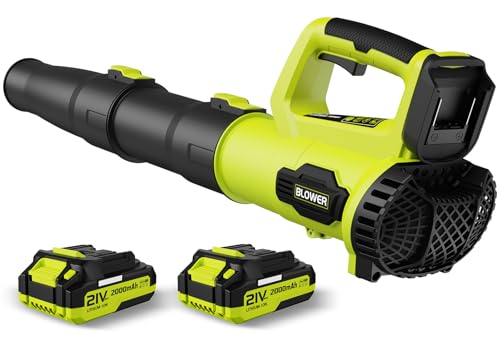
This is a handheld cordless blower intended for small cleanup jobs such as loose leaves, porch debris, garage dust, and patio cleanup. The manufacturer identifies it as the LP69 and says the package includes two 21V, 2.0Ah battery packs, a charger, two nozzle sections, and a manual. It is a blower only, not a vacuum or mulcher. LEAPUL states that the ready-to-use product weighs 4 pounds, produces up to 420 CFM and 150 MPH, and charges each battery in about one hour. It also states up to 20 minutes of total operation across both batteries. Those are manufacturer claims, not independently verified measurements. I did not locate a model-specific independent laboratory report for airflow, runtime, noise, or usable blowing force, and no public sound rating or stated test method was found.
This product fits a household user doing short, light cleanup sessions on a patio, deck, driveway edge, porch, garage, or small lawn. The stated 4-pound one-hand format and supplied second battery are most relevant when storage space is limited and cleanup consists mainly of dry, loose leaves or dust that can be moved in brief passes. It is better suited to someone willing to treat the stated airflow and runtime figures as unverified manufacturer claims and to use eye protection, hearing protection, and a dust mask when conditions call for them.
It is not well documented for a buyer who needs independently measured performance for a large property, dense leaf piles, damp debris, or repeated professional use. It also does not suit users who require verified U.S. third-party certification for the complete tool, battery, and charger system before bringing lithium-ion equipment home. Households with asthma, significant dust sensitivity, children, pets, or nearby pedestrians should be especially cautious because no low-speed control or detailed dust-control guidance was found. Avoid use from ladders, roofs, or other unstable positions.
The key health evidence gap is electrical and lithium-ion safety verification. LEAPUL says its battery has temperature-control protection that delays charging immediately after depletion, but this is a manufacturer statement. I could not confirm a third-party safety listing for the complete blower, included battery packs, and included charger. The manufacturer publishes a U.S. contact address and states a 12-month warranty, but public documentation did not establish serial or lot tracing, replacement-battery support, or a dedicated recall channel. The product is marketed for blowing dust as well as leaves, yet no public noise rating, hearing guidance, or detailed PPE instructions were located. Fine particles can reach deep into the lungs, and the published information does not document a low-speed setting to reduce dust disturbance. At end of life, the removable lithium-ion packs should not enter household trash or curbside recycling. EPA guidance calls for separate battery recycling or household hazardous-waste collection, with terminals taped or each pack bagged to help prevent fires.
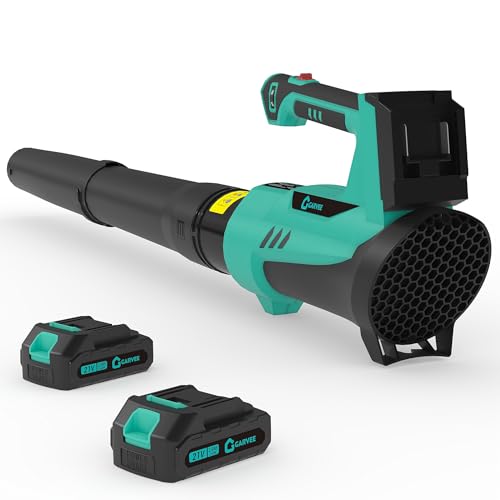
This is a handheld cordless blower sold with two removable 2.0Ah battery packs, a charger, a tube, and six claimed speed settings. The product record lists a 20V DC system, a 6.9-pound weight, and up to 550 CFM. A separately indexed retail mirror confirms the two-battery configuration, six speeds, 550 CFM, 130 MPH, and a manufacturer-stated runtime of up to 40 minutes. The most important limitation is evidence quality. No model-specific independent test report for airflow, runtime, sound, or usable blowing force was located. No exact tool, battery, and charger certification record was found in the checked public UL, ETL, CSA, or TÜV sources. The product information also conflicts on motor type, with the product record calling this version brushed while a matching retail mirror describes it as brushless.
This product fits a homeowner doing brief, light-duty cleanup on patios, decks, driveways, and around entryways, where cordless convenience and a lower-speed setting matter more than documented heavy-debris capability. The two claimed 2.0Ah packs may be useful for intermittent work because a depleted pack can be exchanged. It is most appropriate for dry leaves, grass clippings, and loose surface debris, with the user prepared to wear eye protection and hearing protection because no measured noise figure was found.
It is not suited to buyers who need verified performance for large yards, repeated wet-leaf clearing, commercial work, or long continuous sessions. The 550 CFM, 130 MPH, and 40-minute figures are manufacturer claims without located independent model-specific testing, and the motor description is inconsistent across product information. It is also a poor fit for noise-sensitive neighborhoods or households seeking a documented quiet tool. Anyone who requires a publicly traceable third-party safety listing for the exact tool, battery packs, and charger should select a product with that documentation.
The available safety directions associated with this model advise eye and hearing protection, keeping people and animals clear, avoiding wet conditions, and never aiming the nozzle at people or animals. Those are sensible safeguards because a blower can propel abrasive debris and resuspend dusty material. The six claimed speed settings are useful in principle for beginning at low airflow rather than using maximum output for every job. No measured noise figure was found, so hearing protection remains prudent for operation. The removable lithium-ion batteries should never be placed in household trash or curbside recycling. End-of-life packs should have terminals protected and go to a battery collection or household hazardous-waste program. Garvee provides identifiable support channels and a 12-month repair warranty for direct-site purchases, but no separately available compatible replacement battery, product-specific recycling program, or exact battery and charger safety certification was located. No applicable U.S. recall was found in the checked CPSC recall sources.
This is a handheld plastic cordless leaf blower supplied with an extension nozzle, adjustable shoulder strap, charger, and two removable 20V 5.2Ah battery packs. It has three speed modes and is intended for dry leaves, grass clippings, patio debris, and light dust. The published manual says the tube locks by turning it into place and that each battery should click into its rail-mounted position. The 650 CFM airflow figure, 2.5-hour charging claim, wet-leaf use claim, and light fluffy snow claim are manufacturer-stated. The available manual does not give a sound rating, working weight, battery watt-hours, mode-specific runtime, nozzle test setup, or a disclosed performance-test method. A video review exists, but it is not a controlled independent laboratory report and its description conflicts with the stated battery capacity.
This product fits a user handling brief, light cleanup on a porch, driveway, patio, garage, or small yard, especially when three selectable airflow levels are useful. It is better matched to dry leaves, clippings, and loose surface debris than to compacted or saturated material. The included second battery may be useful for someone who can pause to swap packs and who will follow the manual's eye, hearing, and bystander-distance instructions. Its manufacturer-stated charging time and lack of runtime data make job planning important.
It is not well suited to buyers who need independently measured airflow, sound, runtime, or battery safety certification before using a cordless power tool. It is also a poor fit for long commercial cleanup shifts, large properties, heavy wet-leaf piles, packed snow, or dusty sites near people with respiratory sensitivity. Users who cannot comfortably control a handheld blower, need a documented ready-to-use weight, or require an established parts and repair network should seek a product with those details clearly documented.
The available manual contains useful baseline precautions. It calls for eye and hearing protection, directs users to keep children, pets, and bystanders 50 feet away, and says not to operate in wet conditions or near water. Three speed settings can help reduce unnecessary airflow for lighter tasks. That matters because high-airflow cleanup can resuspend dust and fine particulate matter, including soil, pollen, and mold-containing material. No public certification record was located for the exact tool, batteries, and charger as a combined U.S. safety system. No applicable recall was found in the CPSC material reviewed, but the available documentation does not establish a U.S. importer address, serial or lot traceability, or a detailed warranty channel. The removable lithium-ion packs should not enter household trash or curbside recycling. EPA advises taping terminals or separately bagging batteries and using a battery recycler or household hazardous-waste route.
This is a handheld, battery-powered yard blower that uses two 20V, 5.2Ah lithium-ion packs in series for a stated 40V system. The package is documented as including two chargers, detachable blower tubes, and an adjustable shoulder strap. The available instruction manual lists a ready-to-use weight of about 10.16 pounds and describes a speed dial plus a hold-to-use turbo control. The marketplace listing states up to 650 CFM, 160 MPH, and up to 90 minutes on low. Those figures are not independently verified, and the available manual instead lists up to 600 CFM, creating an unresolved airflow discrepancy. The manual does provide basic safety directions, including eye, hearing, and hand protection, keeping bystanders away, and never aiming the nozzle at people or animals. No model-specific third-party performance report or complete U.S. safety certification record for the tool, batteries, and chargers was located.
This product suits a homeowner doing intermittent cleanup of dry leaves, grass clippings, porch debris, or driveway litter who wants a cordless handheld format with two included battery packs and adjustable airflow. It is more appropriate where the user can work at lower settings, wear eye and hearing protection, keep people and pets clear, and avoid directing airflow at loose gravel or dusty soil. The documented shoulder strap may help users who can comfortably manage a roughly 10-pound handheld tool.
It is not well suited to buyers who need independently substantiated airflow, runtime, noise, or battery-system safety data for commercial work, institutional purchasing, or frequent long sessions. Avoid treating the wet-leaf, snow, and small-stone statements as proven capability, especially near windows, vehicles, pedestrians, pets, or traffic. It is also a poor fit for users unable to manage a two-battery handheld unit safely, or for very dusty sites where blowing can resuspend fine particulate matter.
The available manual gives useful baseline precautions. It directs users to wear eye protection, hearing protection, and gloves, keep bystanders away, avoid wet conditions, and never point the nozzle at people or animals. Those instructions matter because blower noise can contribute to hearing risk and powerful air streams can propel dust and debris. No measured noise value was disclosed, so users cannot judge likely exposure from a product-specific decibel rating. The variable-speed control can support lower-disturbance cleanup when conditions allow, which is preferable on dusty surfaces. Battery care guidance calls for cool, dry storage and avoiding long storage while fully discharged. A U.S. battery drop-off network exists for lithium-ion batteries, but damaged packs need special handling rather than placement in ordinary collection boxes. No applicable product-specific CPSC recall was located in the checked recall resources, but clear system certification, replacement-battery support, and end-of-life program documentation were not found.
This is a handheld, battery-powered leaf blower intended for short cleanup of dry leaves, grass clippings, dust, and light debris on hard outdoor surfaces. Seller reproductions of the product information consistently describe a 20V system, two supplied 2.0Ah lithium-ion batteries, a charger, two speed settings, and a main tube with extension nozzle. Those are manufacturer-stated specifications, not independently tested results. The reported ready-to-use weight is about 3.4 pounds, which is useful for short one-handed work, though no manufacturer manual was located to confirm the working weight, balance, battery latch, or operating warnings. No model-specific independent laboratory report was located for airflow, runtime, sound, or battery temperature behavior.
This product suits someone handling brief, dry-debris cleanup on a small patio, porch, deck, garage entrance, sidewalk, or driveway. Its reported low weight, two-speed format, and supplied spare battery are most relevant when the task is intermittent and close to an outlet for charging. It is better aligned with moving loose leaves, grass clippings, and surface dust than with clearing a deep seasonal leaf layer. The user should be prepared to use eye protection and manage batteries carefully because the product documentation could not be independently confirmed.
It is not suited to people who need documented electrical certification for a complete battery and charger system, or who require a manufacturer-supported replacement-battery and repair path. Avoid treating it as a tool for wet, packed leaves, snow, large yards, or sustained high-output work because no independent force or runtime testing was found. It is also a poor fit near infants, noise-sensitive neighbors, people with respiratory disease, or dusty and moldy debris unless the user can control exposure with distance, lower power, eye protection, respiratory precautions, and hearing protection.
The main health uncertainty is documentation. Searches of public UL, ETL, CSA, and TÜV certification resources did not identify a listing that ties this exact blower, its supplied battery packs, and its charger together. No model-specific sound level, test method, or operator manual with hearing and eye-protection directions was located. OSHA notes that sustained noise at or above 85 dBA can warrant hearing-conservation measures, so the missing sound disclosure matters for longer use. Two speed settings are a meaningful manufacturer-stated control because lower airflow can reduce unnecessary debris lofting. That does not eliminate dust exposure. EPA identifies fine particulate pollution as a respiratory and cardiovascular concern, and University of California research has measured fugitive dust emissions from leaf-blower activity. No matching CPSC recall was located in checked public notices. Lithium-ion packs should never go in household trash or curbside recycling. EPA advises separate recycling or household hazardous-waste collection, with terminals protected for transport.
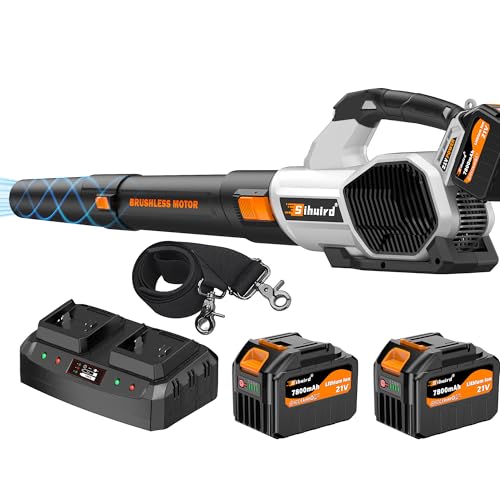
This is a handheld cordless leaf blower supplied with two claimed 21 V, 7.8 Ah lithium-ion battery packs, a dual charger, two tube sections, and a shoulder strap. It is intended for moving loose leaves, grass clippings, and similar dry yard debris. A third-party manual reposting identifies an ABS housing, three speed settings, turbo mode, LED work light, and a brushless motor, but these are manufacturer-originated specifications rather than independently verified test results. The product is marketed at up to 765 CFM and 290 MPH. Those figures were not supported by a model-specific accredited laboratory report or a disclosed test method. A separate retail record identifies the same SL9501 model at 675 CFM, creating an unresolved conflict in its advertised airflow. Runtime, charging time, noise, and working weight also lack independently verified, mode-specific documentation.
This product fits a homeowner who wants a cordless handheld tool for periodic clearing of dry leaves, grass clippings, and light debris from patios, driveways, decks, and small to medium outdoor areas. The claimed two-battery setup may be useful for people who prefer to alternate packs rather than stop for a recharge. It also suits users who will work at low or medium speed when possible, keep the nozzle close to the ground, wear eye and hearing protection, and accept that the advertised airflow and runtime are not independently verified.
It is not suited to commercial crews, buyers who need documented battery-system certification, or anyone whose workplace requires measured noise data and a formal hearing-risk assessment. Avoid relying on it for wet leaf piles, packed soil, snow, or debris near cars, pedestrians, pets, roads, or open windows because the claimed performance has not been independently validated and moving air can propel debris. It is also a poor fit for people with respiratory conditions who cannot avoid dusty cleanup, or for households needing easy access to verified replacement batteries and repair parts.
The main health concern is exposure to noise, flying debris, and dust rather than exhaust, because this is a battery-powered blower. The available documentation describes variable speed and a focused nozzle, which can support lower-disturbance technique, but it does not provide a credible test-method-based sound rating or clear hearing-protection instructions. OSHA notes that prolonged noise exposure can damage hearing, and fine particulate matter can affect lung and heart health. Use eye protection, hearing protection, and low airflow where practical, especially around dry soil, moldy leaves, or animal waste. No Sihuird-specific recall was located in the CPSC leaf-blower recall index reviewed for this assessment. That is not a safety certification. No exact-product listing was located in major third-party safety certification directories for the tool, packs, and charger together. The battery packs should never go in household trash or curbside recycling. EPA guidance calls for separate battery recycling or household hazardous-waste collection, with terminals taped or each pack bagged to reduce fire risk.
This is a compact cordless handheld blower for dry leaves, light yard debris, patios, driveways, garages, and similar cleanup. The documented package configuration is a blower, long and short nozzle tubes, charger, and two removable 20V 2.0Ah lithium-ion batteries. An accessible instruction manual lists the ready-to-use tool at 3.8 pounds and describes a two-position speed switch. WOLFMEN states a maximum of 450 CFM and 150 MPH on high speed, while the accessible manual specifies up to 70 MPH on low speed. The brand also states up to 30 minutes per battery at low speed and about 1.5 hours to charge, but it does not disclose high-speed runtime, watt-hours, sound level, test method, or uncertainty. No model-specific independent performance report or third-party certification listing for the complete blower, battery, and charger system was located.
This product fits a homeowner handling brief, routine cleanup of dry leaves on a small patio, porch, driveway, garage, or compact yard. It is most suited to someone who can use eye and hearing protection, has a dry storage location for lithium-ion batteries, and values swapping between two included batteries rather than operating near an outlet. The low-speed setting is useful where lighter debris needs moving with less airflow. Its stated 3.8-pound tool weight may also help users who need a lighter handheld format.
It is not suited to buyers who require independently verified airflow, runtime, noise, or battery-system safety certification for workplace, institutional, or risk-sensitive use. Avoid relying on it for prolonged high-speed clearing, wet or packed debris, or dust-heavy surfaces because high-speed runtime and real-world performance are not independently documented. It is also a poor fit for households with people, pets, traffic, open windows, or dust-sensitive neighbors close to the work area unless the user can control the area and use appropriate protection.
The accessible manual contains useful basic safety directions. It calls for eye and hearing protection, sturdy clothing and footwear, keeping children and pets clear, two-handed control, avoiding wet conditions, and never directing airflow at people or animals. Those directions matter because blowing can loft soil, dust, pollen, mold spores, and other particulate matter. Use the low setting for light debris, keep the nozzle aimed down and away from people, and do not use this as an indoor dust-cleaning method around occupants. The product uses removable lithium-ion batteries rather than gasoline, but the full electrical system lacks publicly located third-party certification. Store packs cool and dry, away from fire and extreme temperatures, as the accessible manual directs. It also recommends storing packs partly charged for long periods. A U.S. battery-recycling route is available through Call2Recycle, although no brand-specific take-back program or replacement-parts system was located. No applicable U.S. recall was identified in the searched CPSC recall results as of September 13, 2026.
This is a cordless handheld blower sold as a kit with two battery packs, a charger, two extension interfaces, and a storage bag. It is intended for brief cleanup of patios, yards, cars, decks, and similar surfaces. The product page identifies the model and manufacturer as FAOGO, while the marketplace offer is sold by YUQUESEN Mall. Its defining claims are manufacturer-stated, not independently verified. The listing advertises a 990,000 RPM motor, 26 or more minutes of total runtime across two batteries, charging overheat protection, low weight, and use on wet leaves, dirt, and light snow. It does not publish CFM, MPH, sound level, ready-to-use weight, battery voltage, amp-hour or watt-hour capacity, charge time, or test conditions. No model-specific independent performance report, accessible operator manual, or traceable third-party safety certification file was located.
This product fits a user with small, scattered cleanup tasks on hard surfaces, such as a patio, driveway edge, porch, garage floor, car, or deck. The included two-battery kit may be practical where a short cordless session is more useful than sustained yard work, and the claimed light, one-hand format may appeal to people who cannot comfortably manage a larger blower. Use should stay at ground level, with eye protection and care around dust, loose gravel, pets, and bystanders.
It is not well documented for buyers who need predictable performance on a large yard, deep wet leaf piles, pine needles embedded in grass, or repeated commercial use. It is also a poor fit for anyone who requires verified battery and charger certification, published noise data, known battery capacity, replaceable-pack support, or a documented warranty route before use. Do not use it from ladders, roofs, or other unstable positions, despite the listing's gutter-related accessories.
The cordless format avoids gasoline exhaust at the point of use, but it can still create exposure by lofting dust, moldy leaf material, soil, and debris. Fine particles can reach deep into the lungs, so eye protection, a suitable dust mask when conditions warrant, low-disturbance cleanup methods, and directing airflow away from people, pets, traffic, and open doors remain important. The listing provides no measured sound level or hearing-protection guidance, so hearing protection is prudent until actual operating noise is known. The product page claims charging overheat protection, but no third-party listing was found for the exact blower, included packs, and charger together. It also omits battery capacity, charge time, replacement availability, battery-care instructions, and a U.S. recycling route. Keep lithium-ion packs dry and away from heat or damage, use the supplied charger only, and use an established battery-recycling program rather than household trash when the packs reach end of life.
This is a handheld, residential cordless blower with a removable 20V Max battery system. The supplied configuration documented in the manufacturer manual includes a 4.0Ah WA3578 lithium-ion battery and WA3881 charger. The manual lists a 3.8-pound machine weight for that configuration, while the bare blower is listed at 2.3 pounds. Its defining design feature is a sliding nozzle with two distinct operating arrangements. Manufacturer documentation assigns 410 CFM to air-volume mode for hard ground and 130 MPH to air-speed mode for grass, rather than presenting those peak figures as simultaneous output. A non-accredited hands-on review of a closely related WG543E version recorded about 25 minutes of runtime and 81 to 85 dB in its own test, useful context but not a standardized laboratory verification.
It suits a homeowner with a small to medium outdoor area who mainly clears dry leaves and loose debris from patios, driveways, walks, decks, or grass edges. The documented 3.8-pound battery-equipped weight is relevant for users who want a compact tool for short cleanup sessions rather than a wheeled or backpack machine. It is also practical for someone already using the compatible 20V PowerShare battery family, provided they use genuine batteries and the specified charger. Eye and hearing protection remain appropriate for routine use.
It is not intended for commercial work, long continuous clearing sessions, or heavy, wet, embedded debris where a single 4.0Ah battery may limit working time. Avoid using it around people, pets, loose stones, nails, traffic, or dusty contaminated material. It is also unsuitable for cleaning silica dust or other hazardous residues, because forced air disperses particles rather than containing them. Anyone unable to hold and direct a one-handed blower safely on stairs or uneven ground should use another cleanup method.
The manual has meaningful practical safeguards. It directs users to wear eye and ear protection, keep people and pets away, use a face or dust mask in dusty work, avoid hard objects, and use only the specified battery and charger. It also warns against charging outdoors, heat, fire, damaged packs, metal objects at battery terminals, and prolonged charging. These are useful use instructions, but independent certification of the exact tool, battery, and charger combination was not located. This battery is removable and replaceable, with a documented compatible PowerShare platform. The manual says Positec batteries carrying the RBRC-Call2Recycle seal can be recycled through its U.S. program rather than discarded in household trash. Worx also offers warranty registration and a stated warranty channel. A California Proposition 65 warning identifies lead and DEHP, though the available product information does not quantify exposure. No recall specific to this blower model was located, while an older recall applied to a different corded blower-vac model.


