Best Overall
10% off

CASABREWS 5418 PRO Espresso Machine
Fast heating system for quick espresso preparation.
Powerful steam frother creates creamy milk foam.
Sleek stainless steel design enhances kitchen aesthetics.
 Lauren Wilson
Fast heating system for quick espresso preparation.
Powerful steam frother creates creamy milk foam.
Sleek stainless steel design enhances kitchen aesthetics.

High 20-bar pressure ensures rich espresso shots.
Includes steam wand for frothing milk perfectly.
Compact design fits easily on any countertop.

Built-in grinder for fresh coffee grounds.
Adjustable steam wand for perfect frothing.
User-friendly interface for easy operation.
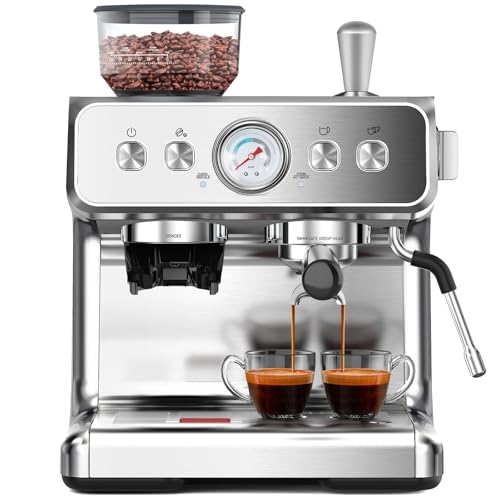
Integrated grinder enhances coffee flavor quality.
20 bar pressure ensures rich espresso extraction.
Versatile steam wand perfect for creamy lattes.

Built-in grinder prevents clogging efficiently.
Steam wand creates perfectly frothy milk.
Sleek design fits any kitchen decor.

Built-in frother enhances cappuccino and latte experience.
Large water reservoir reduces frequent refills.
Stainless steel design ensures durability and style.

Precise temperature control enhances coffee flavor.
44 grind settings offer customized brewing options.
Touch screen interface simplifies operation.

High-pressure 20 bar pump for rich espresso.
Steam milk frother for creamy cappuccinos.
Compact design saves counter space.

Built-in grinder with 30 adjustable settings.
Professional steam wand for perfect frothing.
Large 3L removable water tank for convenience.
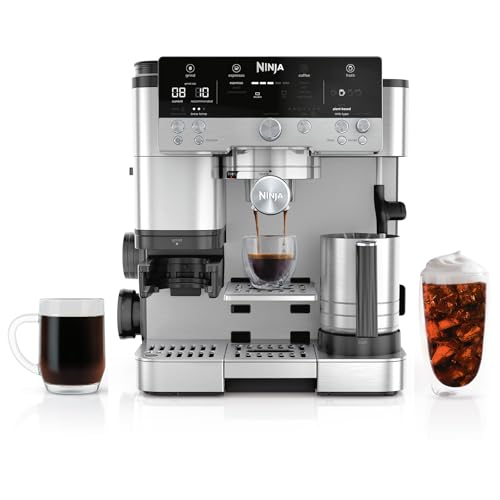
Integrated grinder ensures fresh coffee every time.
Rapid cold brew feature saves valuable time.
Hands-free frother works with dairy and non-dairy milk.
Whether one works well depends on more than the pump’s advertised maximum. Useful espresso evidence measures brew temperature, pressure at the coffee bed, dose, beverage yield, and shot timing across repeated drinks. A claim such as “15 bar” or “20 bar” usually describes pump capacity, not the pressure reaching the coffee puck. It does not by itself show a stable extraction, good flavor, or safe operation. “PID,” “9-bar extraction,” “barista quality,” “cold brew,” and “self-cleaning” also need exact-model manual details or independent testing behind them. In the supplied reviews, several products had no calibrated laboratory report for temperature, pressure, dose, yield, timing, or repeatability; some also used conflicting pressure, power, capacity, grinder-setting, or cold-brew descriptions.
For electrical safety, look for a current, model-matched U.S. household coffee-maker listing—not just a logo, retailer statement, or manufacturer claim. The relevant records include an OSHA-recognized NRTL directory entry, UL Product iQ documentation to UL 1082, an Intertek ETL listing to UL 1082, or a CSA listing to CSA C22.2 No. 64. The model marking on the machine must match the record. A construction report can be meaningful evidence, but it should not be treated as proof that every retail unit carries the required certification mark.
For materials, “BPA-free” or “stainless steel” is incomplete. A buyer concerned about food contact should look for identification of every heated-water, coffee, and milk-contact material, supported by credible testing or listings such as NSF food-equipment materials records, FDA food-contact authorizations, and lead-content evidence under NSF/ANSI/CAN 372. California Proposition 65 warnings should be read as disclosures requiring context: the supplied reviews repeatedly note that warnings did not identify the relevant component, exposure route, or exposure level.
Milk systems deserve special attention. Manual wands need immediate wiping and purging, and sometimes nozzle removal, soaking, or needle cleaning. Automatic milk systems still require washing, inspection, and periodic deep cleaning. A removable or accessible pathway, clear cleaning intervals, and available replacement parts are stronger evidence than a vague “self-cleaning” label.
For the longer view, consider automatic shutoff, standby heating, rinse and purge water, filters, tablets, descaler, packaging, and repairability. Reusable baskets avoid routine capsule waste, but ongoing filters and cleaning supplies still have a footprint. Published parts diagrams, service instructions, replaceable gaskets, pumps, grinder parts, and support channels are more useful than a one-year warranty alone.
Across the supplied products, the recurring safety caveats are substantial: no model-specific NRTL listing was publicly verifiable for many machines; complete heated-water material disclosure and food-contact certification were uncommon; and no independent calibrated espresso test was found for most products. Manual steam wands and pressurized portafilters require adult attention, correct locking and cooling, and immediate milk cleaning. One supplied machine had unpredictable steam onset, and another had reported basket and group-handle leakage concerns. Products carrying Proposition 65 cancer or reproductive-harm warnings, or warnings for styrene and bisphenol A, also lacked enough detail to explain the exposure basis. These limitations matter even where no documented injury pattern or recall was found.
For this category, a strong result means more than a high advertised pressure or a polished feature list. The scores below reflect the supplied model reviews: higher scores indicate more complete, model-specific evidence and safeguards; lower scores indicate missing verification, conflicting claims, or unresolved limitations.
This measures whether the exact machine is independently listed for U.S. household coffee-maker electrical safety. It matters because espresso machines combine mains electricity, heating elements, water, pumps, and pressure. High-scoring supplied products had model-matched UL or ETL documentation, including scores of 88 and 95; many machines scoring around 70 had no publicly verifiable U.S. listing.
This covers safeguards against scalding steam, hot-water leaks, portafilter ejection, broken vessels, and access while pressurized. Buyers should look for pressure relief, thermal protection, pump limits, secure locking, cooling instructions, and clear warnings. Scores ranged from 54 to 88: higher-scoring products documented these controls, while lower results included concerns such as unpredictable steam release.
This measures whether every material touching heated water, coffee, or milk is identified and shown suitable for food contact. It matters because broad claims such as “BPA-free,” stainless steel, or plastic do not identify seals, tanks, boilers, or internal tubing. The supplied scores ranged from 48 to 73; the higher scores still generally lacked complete finished-product certification.
This measures whether milk-contact parts can be cleaned, rinsed, inspected, and dried without trapped residue. Manual wands need prompt wiping and purging; automatic systems need removable or washable reservoirs, tubes, tips, and cleaning cycles. Scores ran from 75 to 84. Higher-scoring products offered removable parts or explicit purge routines, while lower-scoring designs had less accessible pathways or heavier reliance on user discipline.
This measures whether the maker identifies the exact model and production information, provides support and remedy details, and has no unresolved relevant safety action. Traceability matters when a machine develops a pump, heating, pressure, or electrical problem. Supplied scores were mostly 72 to 80, with stronger results tied to registration, date or model codes, support channels, and published recall information.
This measures independently tested temperature, pressure, dose, yield, and shot timing over repeated drinks. It matters because a 15- or 20-bar pump claim does not establish stable pressure at the coffee bed. Scores ranged from 62 to 78. The strongest supplied result included hands-on evidence of a dialed-in, repeatable double shot, while many machines had only manufacturer specifications and no calibrated laboratory report.
This measures whether claims such as “20 bar,” “PID,” “cold brew,” “BPA-free,” “commercial grade,” or “self-cleaning” match the exact manual and available testing. High scores reflect qualified, consistent claims; lower scores reflect conflicting specifications or marketing that implies more than the evidence shows. Supplied scores ranged from 50 to 75, with repeated conflicts over pressure, power, capacity, grinder settings, and cold-brew terminology.
This measures the breadth, currency, and model specificity of third-party verification for safety, materials, and performance. Stronger evidence is publicly checkable and covers the finished appliance rather than only a component or self-issued badge. Supplied scores ranged from 68 to 85. The highest results had UL construction or certificate records, while many products had no public NRTL, NSF, SCA, or calibrated laboratory record.
This measures whether wear items and failure-prone parts can be obtained and replaced, with meaningful service support. Espresso machines may eventually need gaskets, pumps, valves, grinders, electronics, or steam components. Higher-scoring products had parts diagrams, replacement accessories, service documents, or support pathways; lower-scoring products offered only a warranty or accessories. Supplied scores ranged from 69 to 80.
This covers heating, ready-mode power, automatic shutoff, rinse cycles, purge water, and descaling water. A short sleep or shutoff period can reduce unattended heating, but it is not the same as an independently measured energy result. Supplied scores ranged from 69 to 77. The better-documented machines specified five-, seven-, 20-, 29-, or 30-minute shutoff or sleep behavior, while measured watt-hour and water-use data were generally absent.
This measures disposable pods, filters, cleaners, packaging, recycling guidance, and replaceable accessories. Reusable portafilters and baskets reduce routine capsule waste, but water filters, cleaning tablets, descaler, and purge water remain recurring inputs. Supplied scores ranged from 73 to 80. Higher-scoring products commonly used reusable baskets and offered some replaceable parts; almost none had verified take-back or packaging-recycling programs.
This is a compact, 120-volt semi-automatic espresso machine for ground coffee. It has a 34-ounce removable water tank, a 51 mm portafilter, dual-wall one-cup and two-cup baskets, hot-water dispensing, programmable shot volume, and a manual steam wand. The maker lists a very narrow 5.47-inch body and 1,550-watt input. The most substantiated defining feature is rapid heat-up. An independent two-week review found the few-second warm-up claim credible. The supplied baskets are pressurized, dual-wall types intended by the manual for pre-ground coffee. Independent reviewers found the steam wand capable, but reported variable extraction pressure and noted that the stock basket and portafilter setup limits espresso control. The manual documents a 29-minute automatic shutoff and a descaling reminder after 500 brew cycles.
This product suits a space-constrained home user making one or a few milk drinks or pressurized-basket espresso drinks from pre-ground coffee. Its narrow body, programmable single and double volumes, hot-water outlet, and rapid warm-up are useful for a short weekday routine. It also fits someone willing to follow hands-on maintenance, including purging and wiping the steam wand after every milk drink, washing removable parts by hand, and descaling when the machine signals for it. The supplied baskets are designed around convenience rather than fine espresso adjustment.
It is not suited to households that need independently documented electrical listing, food-contact certification, or a fully identified heated-water pathway. People especially concerned by the stated Proposition 65 warning for styrene and bisphenol A should seek a product with clearer material disclosure and third-party certification. It is also a poor fit for users unable to manage hot steam, pressurized parts, and frequent manual cleaning, including homes where children can access the machine unsupervised. Serious espresso users seeking repeatable pressure and unpressurized baskets out of the box should avoid relying on the supplied setup.
The manual includes practical burn-control instructions. It says not to remove the portafilter while hot water or steam is escaping, to release pressure before removal, and to keep hands off hot surfaces. It also stops the pump after specified water or steam use, and powers down after 29 minutes idle. However, no publicly verifiable model-specific NRTL electrical listing was located, and independent reviewers reported portafilter-related handling and leakage concerns. Material disclosure is incomplete. CASABREWS describes a stainless-steel steam wand and says its heating plate uses stainless steel and glass, but it does not identify every wetted material or publish NSF food-contact certification. More importantly, the official manual includes a Proposition 65 warning for styrene and bisphenol A. On waste, the product uses reusable ground-coffee baskets rather than pods. It has a descaling reminder, removable cleaning items, and some accessory availability, but no published take-back or packaging-recycling program was verified.
This compact, 120 V semi-automatic espresso machine uses pre-ground coffee in a 51 mm portafilter, with single and double drink buttons, hot-water dispensing, and a manual steam wand for milk drinks. Its manufacturer states a 34 oz removable water tank, adjustable shot volumes, dual-wall filters, and a 20-bar pump. The supplied manual also specifies a 29-minute idle shutoff. The key independently confirmed point is electrical safety. The exact button-and-gauge model is included in an Intertek construction report authorizing the ETL mark and documenting evaluation to UL 1082 for household coffee makers. The report also identifies an aluminum boiler, a pressure-relief valve, and thermal protection components. Independent editorial testing found repeatable basic espresso and milk steaming, but no calibrated laboratory report was located for temperature, brew pressure, dose, yield, or shot-time repeatability.
This product suits a space-limited home user who wants to prepare occasional espresso-based drinks from ground coffee and is willing to learn tamping, shot-volume programming, steaming, purging, and descaling. Its narrow footprint, removable water tank, manual milk wand, reusable filters, and automatic standby fit a small kitchen or office break area. It is also appropriate for a household that values a model-specific U.S. electrical safety listing, while accepting that drink consistency has not been validated by a calibrated independent laboratory test.
It does not suit a buyer who needs independently documented control of brew temperature, coffee-bed pressure, yield, and timing for repeatable specialty espresso. It is also a poor fit for households unable to handle a hot manual steam wand, purge it immediately, and wait for the portafilter to cool before removal. People who require certified food-contact materials across every wetted component, dishwasher-safe parts, a verified low-energy rating, or a robust published repair-parts system should look for products with those records.
The strongest health finding is electrical safety verification. The exact product model is included in an Intertek ETL report covering UL 1082 household coffee-maker testing. The construction documentation identifies a pressure-relief valve and thermal protection components. The manual adds practical controls, including automatic pump and frothing time limits, explicit burn warnings, and instructions to let the portafilter cool before removing it. For hygiene, the manual instructs users to purge the milk wand after every use, wipe it, and remove the steam tube for rinsing. That is a meaningful cleanability advantage, but it depends on consistent user cleaning. The water path is not fully food-material certified in public records. The construction report identifies an aluminum boiler, AS plastic water tank, and stainless-steel or aluminum steam tube options, without NSF or equivalent finished-product food-contact certification. Reusable filters reduce pod waste, while the 29-minute automatic standby can limit unattended ready-mode energy. No product-specific energy or water-use test was located.
The CASABREWS Marenza is a 120 V, 1450 W semi-automatic espresso machine that combines a 1.7 L removable water tank, 180 g bean hopper, conical-burr grinder, 58 mm portafilter, hot-water outlet, and manual steam wand. It is intended for whole beans or pre-ground coffee, with single-wall baskets specified for about 15 to 17 g or 20 to 24 g doses. The maker documents programmable beverage volumes, temperature selection, flushing, backflushing, descaling, and a 20-minute automatic shutoff. Independent hands-on testing found that it could produce a 22 g in, 44 g out espresso, but also measured uneven grinder particle distribution and found the default beverage volumes poorly aligned with the tester's preferred espresso recipe. The maker advertises TÜV-certified safety and a PFAS-free water path, but no model-matched public certificate or independent material test was located in the reviewed sources.
This product suits a hands-on home espresso user with limited counter space who wants an integrated grinder, a 58 mm portafilter, and reusable baskets rather than capsules. It is better suited to someone willing to weigh shots, adjust grind time and grind setting, and program beverage volume than to someone expecting reliable results from presets alone. It also fits users comfortable cleaning a manual steam wand immediately after every milk drink and completing weekly flushing, backflushing, and periodic descaling.
It is not well suited to households that need publicly verifiable U.S. electrical certification or complete independent disclosure of all heated water-contact materials. Those avoiding products carrying a California warning for styrene and bisphenol-A should take that warning seriously and seek a product with more complete materials evidence. It is also a poor fit for users who want fast milk steaming, highly uniform built-in grinding, dishwasher-safe parts, or a documented repair-parts system. Young children should not operate it without supervision because of hot surfaces, steam, pressure, and the grinder.
The safety documentation gives practical protections, including a grounded plug, warnings not to remove the water tank or portafilter while pressure is present, a water-shortage alert, and automatic stopping of steam after three minutes. The manual also directs users to wipe and purge the steam wand after each milk use, clean its removable tip if blocked, rinse baskets immediately, and run regular flushing and descaling cycles. These are useful hygiene and burn-control instructions, though they are manufacturer documentation rather than independent verification. Material transparency is the main health limitation. CASABREWS states that the internal water path is PFAS-free and identifies a silicone steam tube, but does not publish a complete wetted-material list or independent food-contact testing. Its current manual also includes a California warning for styrene and bisphenol-A. The reusable portafilter and baskets avoid disposable coffee pods, and the 20-minute automatic shutoff can reduce idle energy. No model-specific recycling program, packaging disclosure, or public repair-parts catalog was found.
This is a countertop, semi-automatic bean-to-espresso machine with a built-in grinder, manual steam wand, pressure gauge, removable 2.8-liter water tank, and reusable single and double filter baskets. It is intended for espresso, hot water, and hand-frothed milk drinks. Documentation for the same machine configuration specifies a 200 g bean hopper, 30 grind settings, 15-bar pump, 58 mm portafilter, and programmed single or double drink volumes, but these are manufacturer-stated rather than independently measured. Its documentation gives unusually detailed user maintenance instructions, including removable grinder components, a cleaning brush and pin, cleaning of detachable parts after use, and descaling every four to six months. The machine also has a stated 20-minute standby sleep mode. Retail listings for the same model assert ETL listing, but an exact certification record was not found in Intertek's public search results, so electrical certification remains unconfirmed for this Electactic product.
This product suits a hands-on home espresso user with adequate counter clearance who wants an integrated grinder, reusable baskets, manual milk steaming, and a larger water tank. It is more appropriate for someone willing to dial in grind and dose, wipe and clear the steam outlet after milk use, brush the grinder at least every two weeks, and complete periodic descaling. It also fits households that value a programmed standby mode and prefer whole beans over pod coffee.
It is not suited to households that need independently confirmed electrical certification, fully documented food-contact materials, or laboratory-verified espresso consistency. It is also a poor fit where young children can access a hot steam wand or where users cannot reliably follow cooling, locking, rinsing, and descaling instructions. Buyers seeking a sealed, automatically rinsed milk system, dishwasher-safe water tank, established repair parts access, or a clearly product-specific recall and warranty channel should choose a product with those records.
The available instructions identify real heat and pressure controls, not merely marketing language. They require the portafilter to be locked before brewing, warn against contact with the steam tube, specify a silicone-covered area for moving it, and provide a pin for clearing the steam outlet. Detachable parts are to be washed and dried after use, while the descaling program rinses both the brewing head and steam tube. These are useful cleanability provisions, although the steam pathway is not documented as fully removable. No product-specific recall or California Proposition 65 warning was found in the reviewed sources. No public, issuer-verifiable electrical listing, NSF food-material certification, or independent performance test was located for this Electactic product. The reusable baskets avoid pod waste, and the manual permits ordinary descaling tablets, liquid descaler, or diluted vinegar rather than requiring a proprietary consumable. The grinder can be opened for brushing, which may extend usability, but replacement-parts availability remains unverified.
This countertop, semi-automatic espresso machine combines a bean grinder, 58 mm portafilter, steam wand, hot-water function, removable water tank, and reusable one- and two-cup baskets. It is intended for users who grind, dose, tamp, brew, and steam milk themselves. The published instructions describe 120 V, 1,500 W operation, a 30-setting grinder, and a 77.8-ounce tank, although the same documentation inconsistently labels that volume as 2.8 liters. Its most consequential independently checked fact is electrical safety coverage. An Intertek authorization names the covered CM8031 black configurations and lists UL 1082 coffee-maker safety requirements, alongside related North American standards. The product documentation also gives specific wand-purging, cleaning, grinder-cleaning, and descaling instructions. There is no independent test report located for brew temperature, puck pressure, shot yield, or repeatability. Published pressure claims also conflict, with this product record stating 15 bar while corresponding instructions state 20 bar.
This product suits a home user who wants an all-in-one bean-to-espresso setup and is prepared to do hands-on coffee preparation. The 58 mm portafilter, separate baskets, tamper, grinder adjustment, hot-water control, and manual steam wand fit someone willing to learn dosing, tamping, milk texturing, and regular cleaning. It also fits a household that values a large removable tank and reusable baskets over capsule convenience. The verified North American electrical-safety coverage is particularly relevant for a U.S. countertop appliance.
It is not suited to people who need independently demonstrated shot consistency, precise temperature control, or a fully documented brew calibration process. Those needs matter for users seeking repeatable espresso without trial and error. It is also a poor fit for anyone unwilling to purge the steam wand after each milk drink, clean the grinder and baskets, and descale regularly. Buyers who require complete food-contact material disclosure, readily available factory replacement parts, documented standby consumption, or unambiguous specifications should avoid relying on the current documentation alone.
The main health-positive finding is independently documented electrical-safety coverage. An Intertek authorization covers the corresponding CM8031 black configurations under UL 1082 for household coffee makers, as well as related U.S. and Canadian appliance standards. The instructions also direct users to keep hands away from steam, lock the portafilter before brewing, unplug before cleaning, and use a grounded 120 V outlet. Searches did not locate a corresponding CPSC recall or public exposure warning. Milk hygiene depends on user practice. The instructions call for immediate wiping and purging of the steam wand, daily rinsing of the basket and portafilter, weekly water-tank and group-head cleaning, and descaling every two to three months. Reusable steel baskets reduce recurring pod and paper-filter waste. However, there is no located NSF food-contact listing or full disclosure of all water-path materials, and no public energy, water-use, repair-parts, recycling, or take-back documentation.
The Chefman CaféMaster Pro is a compact, 120-volt countertop espresso machine for ground coffee. It uses a portafilter with single and double baskets, and combines espresso brewing with an automatic milk reservoir and dispensing tube for cappuccinos and lattes. Chefman lists an 1.8-liter removable water tank, a 500-milliliter milk reservoir, 1,350-watt input, and an 11 by 8.3 by 12.6 inch footprint. The manufacturer states that the machine uses a 15-bar pump and is cETL approved. Its published user guide documents a removable water tank, removable milk container, detachable tube and suction straw, a cleaning cycle, and a five-minute sleep mode. No public model-specific temperature, pressure, shot-repeatability, food-contact material, or independent certification record was located during this review.
This product suits a household that wants ground-coffee espresso drinks with automatic milk dispensing, has counter space for a 12.6-inch-tall machine, and will follow a regular cleaning routine. It is particularly suited to people who value a removable 1.8-liter water tank and want to make occasional cappuccinos or lattes without buying pods. The user should be comfortable hand-washing the milk reservoir, tube, and lid parts, then running the documented clean cycle after milk use.
It is not suited to buyers who require publicly verifiable, model-specific evidence for food-contact materials, brew-temperature control, shot-pressure regulation, or electrical certification. Households unable to rinse and hand-wash milk-contact parts promptly after each milk drink should avoid an integrated milk pathway like this one. It is also a poor fit for users seeking dishwasher-safe milk components, detailed replacement-parts support, or precise manual control and independently measured espresso repeatability.
Chefman states that this product is cETL approved and BPA-free, but this review did not locate a public, model-matched Intertek listing or independent documentation identifying the complete heated water and milk-contact material set. More importantly, Chefman publishes a California cancer and reproductive-harm warning for the product. The warning does not identify a chemical or quantify exposure, so it should not be read as a measurement of actual use risk, but it is meaningful missing disclosure for safety-focused households. The removable milk reservoir, tube, straw, and lid components are a practical hygiene advantage because the guide explains how to wash and periodically dismantle them. They still require consistent manual cleaning, and the milk reservoir is not dishwasher safe. Reusable baskets and ground-coffee operation reduce pod waste. A documented five-minute sleep mode can limit idle electricity use, although no independent energy or water-use measurements were located. Chefman provides a one-year assurance, but a public model-specific parts catalog was not found.
This is a compact, semi-automatic whole-bean espresso machine with an integrated grinder, 51 mm portafilter, steam wand, touch display, removable water tank, and cold-drink setting. Published product documentation identifies 44 grinder settings, a 60 oz water tank, 120 V power, and a stated 190 F to 201 F brew-temperature range. Those are manufacturer-stated specifications, not independently validated performance measurements. The strongest practical feature is its reusable coffee workflow. Users grind into a portafilter, tamp, brew a single or double shot, then texture milk with a manual steam wand. The available instructions also describe washing the removable tank, filter baskets, portafilter, and drip tray, plus wiping and purging the wand after milk use. Public evidence did not establish a model-matched U.S. NRTL electrical listing, NSF food-contact certification, or calibrated third-party espresso testing.
This product suits a home user who wants to grind whole beans, tamp a portafilter, and steam milk manually rather than use capsules or an automatic milk system. It fits a small counter footprint and provides manufacturer-stated adjustment of grind and brew temperature for someone willing to dial in coffee by taste. It also suits users able to follow a hands-on cleaning routine, especially wiping and purging the wand immediately after every milk drink and descaling when prompted.
It is not well suited to households that require independently verified electrical certification before bringing a high-wattage heating appliance into the kitchen. It is also a poor fit for people who need documented food-contact material specifications, third-party proof of espresso consistency, or an established repair network with readily listed pumps, seals, burrs, and control parts. Anyone unable to clean a manual steam wand promptly after every use should avoid a milk-drink workflow like this one.
The available product instructions contain ordinary hot-surface, electrical, and cleaning warnings. They tell users to let the appliance cool before cleaning, avoid immersion, secure the portafilter before brewing, and wipe then purge the steam wand after milk texturing. Those directions support safe routine use, but they do not substitute for a publicly checkable certification of the finished U.S. appliance. No model-specific U.S. recall, CPSC safety action, or California exposure warning was located in the reviewed public sources. That is not proof of zero risk. More importantly, no public record confirmed a model-matched UL, ETL, CSA, NSF, or SCA certification. Environmentally, the whole-bean portafilter format avoids disposable pods and the tank, drip tray, baskets, and portafilter are reusable. The tradeoff is limited public evidence on replacement parts and repair support, which may constrain service life if a grinder, pump, gasket, or electronics component fails.
The AMZCHEF EM3131 is a compact, 120 V ground-coffee espresso machine with single and double shot controls, a portafilter, reusable filter baskets, a steam wand that also dispenses hot water, and a removable water tank. It is intended for espresso, Americanos, and manually frothed milk drinks. The manufacturer lists 1350 W power, a 20 bar pump claim, plastic construction, and a compact 12 by 4.7 by 11.6 inch body. Its most important limitation is evidence quality. The available manual describes manual steam-wand cleaning, a 30-minute automatic shutoff, and manufacturer-stated PID control, but no independent temperature, pressure, or shot-repeatability test was located. Capacity documentation is inconsistent. The official page title says 40 oz while its feature text says 51 oz, and an accessible manual copy says 50 oz.
This product suits a budget-conscious home user with limited counter width who already has ground espresso coffee and is willing to learn basic portafilter dosing, tamping, and manual milk steaming. It is also suited to someone who prefers reusable baskets and can commit to rinsing the removable tank and drip tray, wiping the wand after every milk drink, purging it, and descaling on schedule. Its narrow manufacturer-stated footprint is useful where a larger espresso setup would not fit.
It is not suited to households that require independently verifiable electrical listing status before bringing a heated countertop appliance home. It also does not fit users seeking certified food-contact material disclosure, independently measured espresso consistency, or documented low standby energy use. Buyers who need a fully automatic milk system, dishwasher-cleanable milk pathway, readily ordered replacement parts, or a clearly specified tank capacity should use a product with more complete model-specific documentation. Keep children away during use because the brew head, steam wand, and cup warmer become hot.
The available instructions provide practical burn and hygiene controls. They tell users to avoid hot surfaces and steam, lock the portafilter securely, use a grounded outlet, empty and rinse the water tank daily, and wipe and purge the steam wand immediately after milk use. The removable tank, drip tray, portafilter, and baskets make ordinary cleaning accessible. Descaling is instructed every two to three months, depending on water hardness and use. No model-specific CPSC recall or public regulatory warning was located in the checks performed. However, no public model-matched NRTL listing, NSF finished-product listing, food-contact material certification, or independent espresso-performance test was located either. The reusable filter system limits routine pod waste. The machine still needs commercial descaler and periodic rinse water, and the manufacturer does not publish a parts catalog or recycling and take-back instructions for this product.
This is a countertop, semi-automatic espresso machine with an integrated conical-burr grinder, a 58 mm portafilter, single and double baskets, a steam wand, and a removable 3-liter water tank. It is intended for grinding whole beans, tamping the dose, brewing espresso, and steaming milk in a separate pitcher. The official guide specifies adjustable grind time, shot volume, and four brew-temperature settings from 194°F to 205°F. Chefman states that the product is cETL approved, but the model-specific listing was not publicly confirmed through Intertek's directory during this assessment. Its manual documents practical safeguards, including a locking portafilter procedure, a 60-second wait before removal after brewing, a three-prong grounded plug, and overheat protection. The product page also carries a California cancer and reproductive-harm warning, while providing no specific substance or complete heated water-path material disclosure.
This product suits a hands-on home espresso user who wants an integrated grinder, a standard-sized 58 mm portafilter, adjustable brew settings, and a separate steam wand rather than a sealed automatic milk system. It is best suited to someone willing to weigh, tamp, dial in grind size, purge the wand after every milk drink, rinse coffee-contact parts promptly, and descale the machine. The 3-liter removable tank also makes sense for a household making several drinks before refilling.
It is not well suited to buyers who need independently verified brewing consistency or fully documented water-path material safety. California residents, or anyone concerned by chemical-exposure disclosures, should note the product's cancer and reproductive-harm warning and seek a product with a clearer explanation of its materials and exposure basis. It also is not for households seeking a low-maintenance milk system, because the steam wand requires immediate purging and wiping after use. Buyers expecting long-term repair support should seek documented internal-parts availability beyond the one-year warranty.
The manual contains meaningful burn and electrical-use instructions. It requires a grounded three-prong outlet, says to let the machine cool before cleaning, directs users to lock the portafilter fully, and instructs them to wait 60 seconds before removing it after brewing. It also describes overheat protection. Chefman states that the product is cETL approved, although this assessment could not independently confirm the exact model in the public Intertek directory. The product page states BPA-free construction, but it does not identify all materials in contact with heated water, coffee, or milk, and it also displays a California cancer and reproductive-harm warning without further product-specific explanation. Ecologically, it uses reusable portafilter baskets rather than single-use capsules, enters sleep mode after seven minutes, and has a published diagram for several replaceable accessories. It still requires disposable charcoal water filters, with replacement recommended every two months or 60 brews. No product-specific packaging recycling, take-back, or measured energy-use data was located.
This is a countertop, 120 V, 1,650 W bean-to-cup coffee system for espresso, drip coffee, rapid cold drinks, and milk beverages. It combines a 25-setting conical-burr grinder, integrated dose scale, portafilter, assisted tamper, steam wand, and milk jug. The manufacturer lists a one-year limited warranty and whole-bean brewing rather than disposable capsules. Its defining practical feature is a guided workflow. SharkNinja states that Barista Assist recommends grind settings and adjusts brewing variables, but public model-specific laboratory measurements of brew temperature, pressure, dose, yield, and repeatability were not located. The owner guide does document a removable steam-wand tip, automatic wand purge after frothing, cleaning alerts, and replaceable group-head gasket. Public checks did not locate a model-matched UL, ETL, CSA, NSF, or SCA certification record.
It suits a household that wants one full-size machine for espresso-style drinks, drip coffee, cold drinks, and milk beverages, and is willing to follow a hands-on cleaning routine. The guided grinder, dose scale, assisted tamper, and automatic milk-wand purge may be useful for someone learning a portafilter workflow without wanting to buy a separate grinder. It is most appropriate where counter depth and height can accommodate a roughly 13 by 13 by 15 inch appliance and where a one-year warranty is acceptable.
It is not a suitable choice for people who need publicly verifiable UL, ETL, CSA, NSF, or SCA certification for a workplace, regulated setting, or strict household purchasing policy. It also does not fit users who want a low-maintenance machine. The portafilter, basket, milk jug, wand, drip tray, shower screen, and grinder need regular attention, while descaling is required. People unable to safely handle hot steam, hot vessels, or a pressurized portafilter should not use it without capable assistance.
The hygiene design is comparatively transparent in the owner guide. After frothing, the user wipes the steam wand and lowers it to trigger an internal auto-purge. The wand tip can be removed for deeper cleaning, and the guide describes a water-and-dish-soap cleaning run for the whisk and wand. It also specifies a backflush cleaning cycle and descaling cycle. These are useful controls, but they only work when the owner completes them. The product avoids disposable coffee pods and uses reusable baskets, which reduces routine brewing waste. Several removable items are dishwasher-safe, and the guide identifies replacement access for wear items including the gasket. On the other hand, model-specific independent disclosure remains limited. No public NRTL electrical listing, NSF food-contact listing, or SCA performance certification was located, and public material information does not identify the entire heated water and milk path. No product-specific CPSC recall was located in the recall database reviewed.


