Best Overall

AIRVIP 34 Pints Smart Dehumidifier
Efficient smart humidity control for optimal comfort.
Compact design fits easily in small spaces.
Quiet operation ensures minimal noise disturbance.
 Lauren Wilson
Efficient smart humidity control for optimal comfort.
Compact design fits easily in small spaces.
Quiet operation ensures minimal noise disturbance.

Covers large areas up to 2,500 sq. ft.
Includes a convenient continuous drain hose.
Offers intelligent humidity control and dry clothes mode.

Efficiently covers large basement areas.
Continuous drainage with included hose.
Compact design fits in tight spaces.

WiFi-enabled for easy remote control.
Energy Star certified for efficient operation.
Compact design fits small to medium rooms.
Covers large areas up to 5,000 sq. ft.
Includes convenient continuous drain hose.
Energy Star certified for efficient operation.

Large 5,000 Sq. Ft. coverage area.
Convenient auto defrost and self-drying features.
Comes with a handy drain hose.
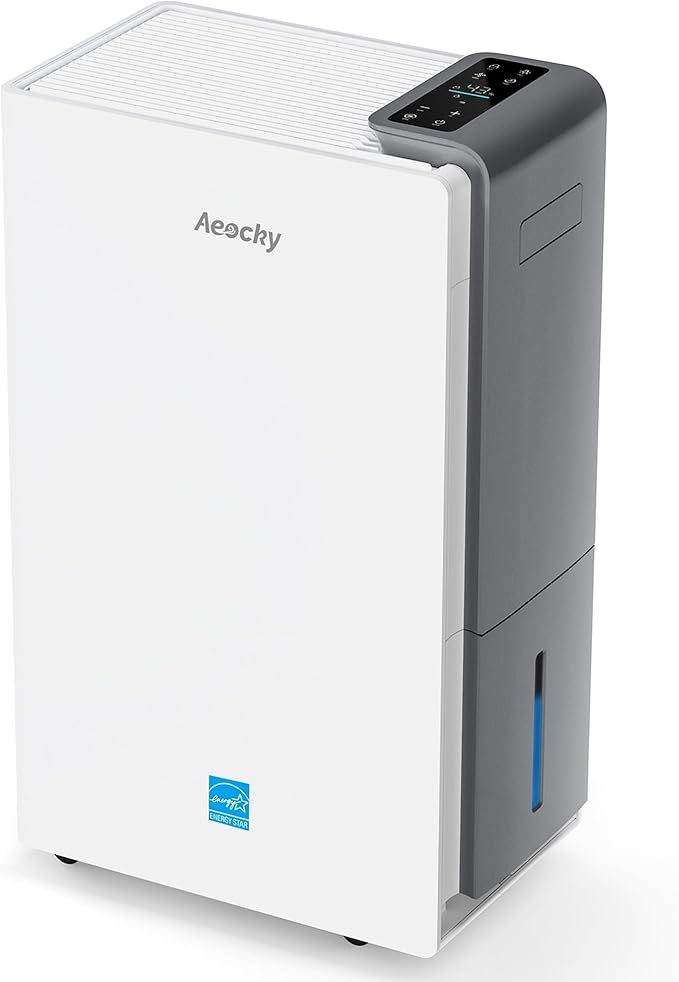
Highly efficient Energy Star 2025 rating saves on electricity.
Smart humidistat maintains optimal humidity levels automatically.
3-Year Warranty for Free Replacement, way exceeds market standards!

Efficiently covers large 3000 sq. ft. spaces.
Intelligent humidistat for precise moisture control.
Includes convenient continuous drain hose.

Energy Star Most Efficient 2024 certified.
Includes built-in pump for easy drainage.
Intelligent humidity control for optimal comfort.

Covers large areas efficiently up to 5000 Sq.Ft.
Includes convenient drain hose for easy use.
Intelligent humidity control for optimal comfort.
For health and comfort, look for an adjustable humidistat—the sensor and control system that measures relative humidity and turns the unit on or off. The supplied reviews use EPA guidance of below 60% relative humidity, ideally about 30% to 50%, as the practical moisture-control target. A high headline range is not enough: sensor accuracy and real-room control were often unverified, so a separate hygrometer is sensible when condensation, mold-friendly conditions, stored goods, or health-sensitive spaces matter. A dehumidifier does not repair leaks, dry every flood-damaged material, or remove existing mold.
Capacity claims require particular care. Maximum figures such as 80, 100, or 120 pints per day are commonly measured at very hot, very humid conditions and are not the same as a standardized daily rating. The more useful comparison is a model-matched record in the U.S. Department of Energy Compliance Certification Database, under DOE test method 10 CFR Part 430, Subpart B, Appendix X1. ENERGY STAR records can provide verified water removal, Integrated Energy Factor, and estimated annual energy use. AHAM verification may also be relevant where applicable. Room-size claims are weaker when they omit temperature, starting humidity, air exchange, moisture load, or test method; square footage alone is not a dependable sizing calculation.
Drainage and maintenance determine whether collected water creates a new problem. Prefer a documented full-tank indicator and automatic shutoff, a secure drain connection, and instructions for checking a hose for blockage, leaks, and downward slope. A built-in pump is different from gravity drainage: it can lift water, but pump operation and failure still require inspection. Accessible buckets and washable filters are useful only when the instructions explain cleaning, rinsing, and complete drying. Small tanks may need frequent emptying when the room is very damp.
Electrical safety is a separate question from energy efficiency. Look for a model-specific listing for the complete U.S. appliance and power supply in UL Product iQ, Intertek’s ETL directory, or CSA’s product database. A brand’s safety badge or a general statement about meeting standards does not establish a matching listing. Buyers should also check the U.S. Consumer Product Safety Commission recall and SaferProducts.gov databases. Automatic defrost and a stated minimum operating temperature matter in basements, but defrost alone does not prove dependable output in a cold room.
Environmental assessment needs more than “energy efficient” wording. Compare verified Integrated Energy Factor and standby or low-power behavior, and look for ENERGY STAR certification where eligible. Check the nameplate or manual for refrigerant type and charge, permitted residential use, flammability labeling, qualified-service instructions, repair support, replacement parts, and responsible recycling guidance. Across the supplied products, recurring limitations include unverified electrical listings, unverified capacity or efficiency, unsupported coverage claims, absent or conflicting manuals, gravity-drain dependence, and operation limits around 41°F. Flammable refrigerants require ignition-source precautions and qualified service. No product should be relied on for active flooding, unresolved water intrusion, or a space where below-limit temperatures are routine.
The scores below reflect the supplied reviews, with higher scores indicating stronger evidence or performance on that topic. They are comparative signals, not guarantees: several products had meaningful documentation gaps, and manufacturer-stated features were not treated as equivalent to independent verification.
This measures whether a product can actually maintain a room in the EPA-referenced 30% to 50% relative-humidity range, using an adjustable control and credible sensor accuracy—not merely collect water. Higher-scoring products supplied a useful setpoint range and stronger control evidence; lower-scoring compact units lacked a humidistat or independent accuracy testing. A separate hygrometer remains useful.
This measures protection against shock, overheating, and fire through a model-specific U.S. NRTL listing and the absence of unresolved recall concerns. It matters because a dehumidifier is a continuously powered appliance operating around collected water. The supplied scores ranged from 58 to 91: the high end had a matching UL record, while many lower-scoring products had no located UL, ETL, or CSA listing.
This measures full-tank shutoff, clear warnings, secure drainage, pump or hose safeguards, and ease of inspection. It matters because a blocked hose, failed pump, or unattended bucket can create dampness and water damage. Higher scores generally accompanied documented indicators, automatic stops, and drainage instructions. Lower scores reflected small tanks, gravity-only drainage, unclear hose protection, or features supported only by marketing statements.
This measures whether the reservoir and reusable filter can be reached, cleaned, rinsed, and dried without leaving standing water or trapped debris. Higher-scoring products had washable filters and specific cleaning schedules, including drying instructions. Lower scores reflected missing manuals or vague care guidance. Routine cleaning matters because collected water and dust can create microbial buildup and restrict airflow.
This measures dependable operation at the product’s stated low-temperature limit, including automatic defrost and honest basement claims. Higher scores were associated with a concrete minimum around 41°F and defrost instructions, while lower scores lacked a temperature range or independent cold-room testing. Auto defrost does not prove effective moisture removal below the stated operating range, and several reviews cautioned against colder spaces.
This measures whether advertised capacity and electricity use are independently confirmed under a recognized test method. High scores came from exact-product or matching-model-family ENERGY STAR records, DOE-aligned ratings, or a government registry. Low scores relied on maximum-condition claims such as 34, 80, or 100 pints per day, with no model-matched DOE rating or Integrated Energy Factor.
This measures whether coverage, noise, extraction, and energy claims disclose test conditions and agree with verified capacity and operating limits. Higher scores had fewer contradictions and clearer standardized figures. Lower scores had conflicting room-size or pint claims, unusually hot and humid test conditions, or unsupported coverage such as several thousand square feet. A headline maximum should not determine sizing by itself.
This measures whether badges apply to the exact product and come from a qualified independent organization. Higher scores were supported by model-level ENERGY STAR or UL records. Lower scores involved unconfirmed ETL, ENERGY STAR, or other certification language, or records that applied only indirectly to a model family. A manufacturer’s claim is not the same as a searchable certification record.
This measures water removed per unit of electricity, low-power behavior, and ENERGY STAR status where applicable. It matters because a dehumidifier may run for long periods. High scores came from model-matched ENERGY STAR or government efficiency records, including Integrated Energy Factor values such as 1.65 to 2.13 L/kWh. Lower scores lacked verified energy data, so wattage alone could not show efficiency.
This measures disclosure of refrigerant type and charge, permitted residential use, safety labeling, service requirements, repair support, and responsible recycling. It matters because refrigerants can affect climate impact and some, including R32 and R290, are flammable. Higher scores had identified refrigerants and documented climate or safety information; lower scores commonly omitted refrigerant, repair, recycling, or disposal details.
This is a compact, compressor-type home dehumidifier with a 2.5 L removable tank, stated 130 W input, digital humidity controls, wheels, automatic defrost, and a supplied 2 m drain hose for gravity drainage. An independent retailer record corroborates the model, dimensions, tank size, hose length, 34-pint daily extraction claim, and full-tank shutoff claim. The most consequential limits are evidentiary. The 34-pint capacity, 2,441-square-foot coverage, quiet operation, and energy-efficiency claims are manufacturer-stated and do not disclose the test conditions. No model-matched DOE capacity or Integrated Energy Factor record, ENERGY STAR certification, NRTL safety listing, or independent humidity-accuracy test was located. Its adjustable humidistat could help target EPA's recommended 30 to 50 percent relative-humidity range, but its sensor accuracy and ability to hold that range have not been independently established.
This product fits a user seeking a portable unit for a modest damp room, bathroom, bedroom, laundry area, or intermittently damp basement, especially where a nearby floor drain can support gravity drainage. It is most suitable for someone prepared to monitor room humidity with a separate hygrometer, empty and dry the tank regularly, and treat the published extraction and room-size figures as manufacturer claims rather than independently confirmed performance. The compact tank can be acceptable when continuous drainage is feasible.
It is not well suited to households that need documented electrical certification, verified energy use, or independently tested moisture-removal performance. Avoid relying on the stated coverage figure for a large, persistently wet basement, a flood-prone area, or a mold remediation project, since actual room conditions and low-temperature capacity are not established. It is also a poor fit for locations where drainage cannot be checked routinely, or for users needing clear refrigerant disclosure, replacement parts, repair guidance, or formal end-of-life support.
Lowering excess indoor humidity can support moisture and mold control. EPA advises keeping indoor relative humidity below 60 percent and ideally between 30 and 50 percent. This unit's adjustable control and claimed automatic defrost could support that goal, but there is no independent test of its humidistat accuracy, removal rate, or ability to maintain a set level in a defined room. No product-specific recall, regulatory warning, or SaferProducts report was located in the reviewed U.S. databases. That is not the same as a verified safety listing. No model-level UL, ETL, CSA, DOE, or ENERGY STAR record was found. The refrigerant type and charge are not disclosed in the located product information, so its climate impact and applicable handling precautions cannot be assessed. The available listing identifies an ABS housing, but does not provide repair, parts, or recycling instructions.
This is a portable, compressor-based dehumidifier with a removable bucket, a gravity-drain hose option, two fan speeds, and adjustable humidity control. The manufacturer says its humidity setting spans 30% to 80% relative humidity in 5% increments, which includes the EPA's preferred 30% to 50% indoor range. Its manual also specifies operation from 41 F to 95 F and describes automatic defrost behavior. The advertised 34-pint daily removal figure is a hot, very humid maximum at 95 F and 90% relative humidity. The same manufacturer manual lists 8.5 pints per day at 65 F and 60% relative humidity, the conditions used in the federal dehumidifier test method. No model-matched DOE certification, ENERGY STAR record, independent capacity test, or model-specific NRTL safety listing was located. The manual identifies 45 g of flammable R290 refrigerant.
This product fits a user who needs a compact, manually managed moisture-control appliance for a room that stays above 41 F, has a nearby grounded outlet, and can accommodate either regular bucket emptying or a correctly routed gravity drain. The adjustable humidistat can be set in the EPA's preferred indoor humidity range. It is more suited to a monitored room with a separate humidity gauge than to an unattended, whole-basement installation, because published capacity and certification evidence for this exact product remain limited.
It is not suited to households that require a clearly verifiable U.S. NRTL safety listing, model-specific DOE capacity data, or ENERGY STAR certification before operating a compressor appliance indoors. It is also unsuitable for unheated spaces that may fall below 41 F, for settings where a drain hose cannot slope continuously downward, or for users unable to inspect the bucket and filter regularly. Avoid placing it near ignition sources, fuel vapors, heaters, or combustibles because the manufacturer identifies flammable R290 refrigerant.
Humidity control can support moisture and mold prevention when it actually keeps a room between 30% and 50% relative humidity, the range EPA identifies as ideal where possible. This product's manufacturer-stated control range includes that target, and the manual calls for cleaning the washable filter every two weeks. A separate humidity gauge is prudent because no independent sensor-accuracy or room-control test was found. The manual identifies a 45 g R290 refrigerant charge and provides flammable-refrigerant warnings. R290 has very low climate impact compared with many older refrigerants, but it is flammable. More importantly, EPA's current residential-dehumidifier substitute list does not identify pure R290 as an acceptable substitute. No model-specific NRTL listing was located to establish the required appliance-level safety evaluation. The manufacturer offers warranty support, but no model-specific recycling, repair-parts, or refrigerant-recovery program was found.
This is a portable, compressor-based home dehumidifier on casters, with a removable water tank and a gravity-drain hose. It is intended for enclosed indoor spaces such as bedrooms, bathrooms, and basements. The manufacturer manual specifies 120 V power, a 230 W rating, a 41 F to 95 F operating range, R290 refrigerant, adjustable dehumidification settings, and automatic defrost. Its verified ENERGY STAR record identifies the product as a portable dehumidifier for the United States and Canada, with 9.53 pints per day water removal and a 1.65 L/kWh Integrated Energy Factor. That does not align cleanly with the current retail claim of 36 pints and 2,800 square feet. The manufacturer manual instead states 34 pints per day only at 95 F and 90 percent RH, and 8.5 pints per day at 65 F and 60 percent RH. The manual documents tank-full shutoff and a washable filter, but no independent humidity-sensor accuracy test was found.
This product suits a homeowner managing moderate moisture in a closed, conditioned room who can monitor humidity with a separate hygrometer and either empty a small tank regularly or route a gravity hose correctly to a lower drain. It fits a room above 41 F where the user wants adjustable settings, automatic defrost, and a washable filter. Its independently recorded ENERGY STAR efficiency data is relevant for people expecting regular seasonal use, rather than a one-time drying task after a major leak or flood.
It is not appropriate for an unheated basement, garage, crawlspace, or other area that may fall below 41 F, because the manufacturer gives that as the lower operating limit. It is also a poor fit where drainage must travel uphill or where hose inspection is impractical, since this product has gravity drainage rather than a documented condensate pump. People who need independently tested room coverage, a verified humidistat accuracy figure, or publicly verifiable model-specific electrical safety certification should choose a product with those records available.
Keeping indoor humidity in the EPA-preferred 30 to 50 percent range can help limit moisture conditions that support mold. This product's adjustable 30 to 80 percent RH setting includes that range, but its humidity-sensor accuracy and whole-room control were not independently tested. The manual gives practical moisture-management instructions, including closing doors and windows, maintaining clearance, cleaning the filter, emptying the tank, and avoiding kinks in the drain hose. The product has an ENERGY STAR data record for 9.53 pints per day and 1.65 L/kWh, which is stronger evidence for efficiency than the retail maximum-capacity claim. Its manual identifies a 45 g R290 refrigerant charge. R290 is a lower climate-impact refrigerant than many older HFC options, but it is flammable, so the manual warns against ignition sources, piercing, and unqualified servicing. No product-specific recall or CPSC warning was found in the searches performed, and no public repair-parts or end-of-life recycling program was located.
This is a portable, compressor-based Wi-Fi dehumidifier with a removable bucket and gravity-drain option. It has manual humidity settings from 35% to 85% relative humidity in 5% steps, plus a temperature-based comfort setting. The supplied manual states a display accuracy of plus or minus 5% relative humidity, but no independent room-control accuracy test was located. Its water-removal rating is independently supported more strongly than its room-size claim. AHAM lists this exact product in its dehumidifier verification program, and Natural Resources Canada records 22.31 pints per day and an integrated energy factor of 1.7 L/kWh. The current product listing says up to 3,000 square feet, while the accompanying model manual specifies 1,500 square feet, so the larger coverage claim is not dependable without room conditions.
This product suits a household that needs a portable unit for a small to medium damp room, such as a bedroom, bathroom, or modest basement area, and can verify conditions with a separate hygrometer. It is most appropriate where there is a nearby floor drain below the unit, or where the user can empty the bucket regularly. Its independently recorded 22.31-pint daily capacity is a more useful planning figure than the larger room-size marketing claim.
It is not well suited to buyers who need a defensible 3,000-square-foot coverage rating, a built-in condensate pump, or documented performance in a cold basement. It also is not the right fit for households that require independently verified U.S. electrical safety certification before using a refrigerant appliance indoors, because a model-specific NRTL listing was not located. Avoid relying on it alone for an active leak, flooding, or established mold problem, which needs source repair and cleanup.
Humidity control can support mold prevention when a room is kept below 60% relative humidity, ideally around 30% to 50%. This product can be set within that target range, and its manual states that the display reads actual room humidity with plus or minus 5% accuracy. Because independent room-control testing was not located, checking it against a separate hygrometer is prudent. The bucket must be emptied and cleaned, and the washable filter should be dried fully after washing. The product uses R32, an A2L flammable refrigerant. EPA lists HFC-32 as acceptable for new residential dehumidifiers subject to use conditions. The manual appropriately warns against ignition sources, piercing, and improper disposal, and directs refrigerant recovery rather than release. Its independently recorded efficiency is 1.7 L/kWh. However, no exact-model NRTL safety listing was located, and the one-year warranty offers limited long-term repair assurance.
This is a portable, compressor-based dehumidifier for indoor rooms, with a 1.14-gallon bucket and a gravity-drain hose option. Its control range is 30% to 80% relative humidity in 5% steps, and the manual specifies automatic defrost. The manual also identifies 90 g of R-32 refrigerant, a mildly flammable refrigerant that needs the stated handling precautions. ENERGY STAR independently lists this exact product for the U.S. market at 24.93 pints per day under the standardized 65°F, 60% relative-humidity test, with a 1.7 L/kWh Integrated Energy Factor and 299 kWh estimated annual energy use. The advertised 80-pint figure is manufacturer-stated and applies only at much hotter, wetter 95°F and 90% relative humidity conditions. The 5,000-square-foot coverage claim is not paired with a reproducible room test.
This product suits someone managing a warm, humid finished basement, large room, storage area, or similar indoor space that stays above about 45°F. It is especially practical where the user can route the included hose downhill to a suitable drain and periodically inspect it. The adjustable setpoint can be used to target roughly 40% to 50% relative humidity, but an independent hygrometer is sensible because no independent sensor-accuracy test was located. It also suits users willing to wash the filter and empty or clean the bucket routinely.
It is not suited to an unheated basement, garage, or crawlspace that regularly falls below 44.6°F, because the manual says normal operation may not continue outside its stated temperature range. It also is not for installations that require pumped, upward drainage, since the documented drain arrangement is gravity-fed. Households that require a product with a publicly verifiable NRTL electrical-safety listing should seek that documentation before installation. People highly concerned about Proposition 65 exposure warnings may also prefer a product without this stated warning.
Humidity control can help reduce conditions that support dampness and mold, but this product should be treated as a moisture-management appliance, not a health treatment. Its control range can target common indoor humidity goals, while the automatic full-bucket stop and cleaning directions help reduce standing-water problems if the instructions are followed. No product-specific CPSC recall was located in the review completed on October 4, 2026. The exact product is currently ENERGY STAR certified, with 1.7 L/kWh efficiency and estimated annual use of 299 kWh. It uses 90 g of R-32, also called HFC-32, which has a global-warming potential of 675 and is lower than many older HFC refrigerants. EPA permits it in new residential dehumidifiers subject to use conditions. R-32 is mildly flammable, and the manual includes leak, ignition-source, servicing, and disposal precautions. No manufacturer recycling program or detailed repair-parts pathway was located.
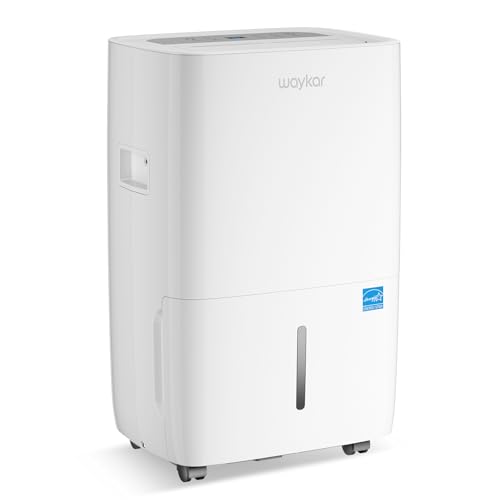
This is a portable, compressor-based home dehumidifier with a removable bucket, a gravity-drain hose connection, two fan speeds, casters, and a 30% to 80% relative-humidity setting range. Its published low-temperature limit is 41°F, with automatic defrost for frost management. The setting range includes the EPA's preferred 30% to 50% indoor humidity range, but no independent sensor-accuracy or in-room control test was found. Its most important independently confirmed figures differ from the prominent headline capacity. ENERGY STAR lists this exact product at 24 pints per day under the current standardized test conditions, with an Integrated Energy Factor of 1.76 L/kWh and estimated annual energy use of 282 kWh. Waykar's 80-pint figure is a manufacturer-stated maximum at 95°F and 90% relative humidity, while it states 62 pints per day at 86°F and 80% relative humidity.
This product suits a homeowner with a warm, humid basement, large living area, laundry space, or bathroom who can route a gravity drain to a lower outlet and wants a portable appliance with a verified 24-pint standardized capacity. It is most appropriate where room conditions are above 41°F and a separate hygrometer can confirm the actual room humidity. The small bucket makes continuous drainage especially practical when moisture loads are sustained.
It is not suited to an unheated basement, garage, crawl space, or seasonal property that can fall below 41°F, because the manufacturer says operation may stop at lower temperatures despite the auto-defrost feature. It is also a poor fit where a pump is needed to lift condensate, where a verified safety-lab listing is a purchase requirement, or where the buyer expects 80 pints per day under ordinary indoor conditions. People sensitive to California exposure warnings should review the manual's styrene disclosure.
Controlling moisture can help prevent mold growth, but a dehumidifier does not remove existing mold or fix leaks. EPA guidance is to keep indoor relative humidity below 60%, ideally 30% to 50%. This product can be set within that range, but its humidistat accuracy and room-level control have not been independently verified. The manual describes a washable air filter, a removable bucket, self-drying, automatic defrost, and full-bucket shutdown. Cleaning and prompt emptying still matter because collected water can become standing water. The ENERGY STAR certification for this exact product is independently verifiable. It lists 1.76 L/kWh, 282 kWh yearly energy use, and HFC-32 refrigerant with a global-warming potential of 675. EPA permits HFC-32 in new residential dehumidifiers subject to use conditions. The manual identifies 105 g of R32 and gives a fire-hazard notice, including a 43-square-foot minimum room area. It also carries a California warning about possible styrene exposure under significant, extended exposure. No model-specific recall was found in the CPSC recall database during this review.
This is a portable, compressor-based home dehumidifier with a 1.45-gallon collection tank, a supplied gravity-drain hose, a garden-hose adapter, and a washable pre-filter. The manufacturer states that its humidistat can be set from 40% to 80%, with automatic defrost and tank-full shutoff. Its manual gives a 41°F to 95°F operating range, while recommending use above 50°F for best dehumidification. Its most consequential claim is independently supported, but the measurement needs context. ENERGY STAR lists this exact product as a U.S. and Canada certified portable dehumidifier and a Most Efficient model, with verified water removal of 24.5 pints per day, 1.86 L/kWh integrated energy factor, and estimated annual energy use of 285 kWh. The manufacturer’s 80-pint maximum is stated for very hot, humid conditions, not the ENERGY STAR test rating. The 4,500 to 5,500 square-foot coverage language is manufacturer-stated and should be treated as a room-condition estimate, not a verified sizing result.
This product fits a homeowner managing persistent humidity in an enclosed basement, living area, or other moderate-temperature space who can set up gravity drainage to a floor drain or can reliably empty a 1.45-gallon tank. It is especially relevant for users who want independently verified energy performance rather than relying only on a maximum extraction claim. A user should still place a separate hygrometer in the room, target roughly 30% to 50% relative humidity, and maintain the washable filter and tank on schedule.
It is not suited to unheated crawl spaces, garages, or basements that routinely remain below 50°F, because the manual recommends operation above that temperature for optimal removal even though the stated minimum is 41°F. It is also not appropriate where a drain hose cannot run continuously downhill and the tank cannot be checked frequently. Households needing a product with publicly verifiable model-level electrical safety documentation, or a tested humidistat accuracy specification, should select a unit with those records available.
Controlling indoor moisture can help limit conditions favorable to mold. EPA guidance recommends keeping indoor relative humidity below 60%, ideally around 30% to 50%. This product’s manufacturer-stated 40% to 80% setting range includes that target range, but independent testing of its sensor accuracy and room-level control was not found. Its manual offers useful hygiene directions, including cleaning the tank bottom and edges every 1 to 2 weeks and washing and fully drying the pre-filter every 2 to 4 weeks. The strongest environmental evidence is the exact product’s ENERGY STAR certification and Most Efficient designation. ENERGY STAR lists 285 kWh estimated annual energy use and an integrated energy factor of 1.86 L/kWh. It also identifies R-32 refrigerant with a global warming potential of 675. EPA lists HFC-32 as acceptable for residential dehumidifiers subject to use conditions, but it is an A2L flammable refrigerant. No product-specific CPSC recall or regulatory warning was located in this review.
This is a portable compressor dehumidifier with a 0.8-gallon bucket, gravity-drain hose, garden-hose adapter, washable prefilter, wheels, and a user-set humidity range. Its manual describes automatic defrost, a full-bucket alarm and shutoff, and continuous drainage that must slope downward to a drain. The headline 50-pint figure is manufacturer-stated and applies at 95 F and 95 percent relative humidity. The manufacturer also states 38 pints per day at 86 F and 80 percent relative humidity. Separately, Natural Resources Canada lists this exact product at 15 pints per day and 1.35 L/kWh Integrated Energy Factor under its regulated product record. That verified figure is the more useful benchmark for expected standardized performance. The 3-year machine warranty and 5-year compressor coverage are manufacturer-stated.
This product suits someone managing moderate indoor dampness in a finished basement, apartment, bedroom, bathroom, or other enclosed area where a floor drain is available. It is particularly practical for a user who can run the included gravity hose with a continuous downward slope and is willing to wash the prefilter every 2 to 4 weeks and clean the bucket regularly. The independently listed 15-pint daily capacity is a more realistic planning figure than the maximum-condition 50-pint claim.
It is not suited to buyers who need independently substantiated performance across a full 3,500-square-foot home, or who need dependable moisture removal in a cold basement below 59 F. It also is a poor fit where there is no safe drainage path and regular bucket emptying is impractical, because the 0.8-gallon reservoir can fill quickly in damp conditions. Households seeking a publicly verifiable model-specific U.S. safety listing or a documented U.S. energy certification should require that evidence before relying on this unit.
Controlling indoor humidity can help limit dampness and mold conditions, but this product should be used as moisture control rather than as a health treatment. Its adjustable humidistat, automatic mode, full-bucket shutoff, washable prefilter, and written cleaning schedule are useful practical controls. The manual instructs owners to clean the bucket every 1 to 2 weeks to avoid bacterial growth and to dry the washable filter after rinsing. The government product record independently lists 15 pints per day and 1.35 L/kWh. The manual identifies R290 refrigerant, a low-global-warming-potential but flammable propane refrigerant, and includes fire-safety warnings. No model-specific public ETL record was confirmed, despite the certification claim in product materials. No U.S. CPSC recall or regulatory warning specific to this product was found in this review. The brand provides warranty support, but no dedicated recycling or end-of-life program was identified.
This is a portable, compressor-based home dehumidifier, measuring 8.65 by 14.38 by 24.09 inches and using a 1.45-gallon bucket. It offers manual collection, gravity drainage, or a built-in pump. The available instructions state adjustable settings from 35% to 80% relative humidity, automatic defrost, a washable filter, and pump lift up to 16.4 feet. Its independently confirmed performance figure is 32 pints per day with a 2.07 L/kWh Integrated Energy Factor, listed by ENERGY STAR for the United States and Canada. The product's 100-pint figure is a manufacturer-stated maximum at 95 F and 90% relative humidity, not the ENERGY STAR rating. ENERGY STAR currently lists this model as certified, but not as Most Efficient.
This product suits someone managing a large, heated basement, garage, or other damp residential area where a drain is accessible or water must be lifted to a sink or elevated discharge point. Its independently listed 32-pint daily capacity and 2.07 L/kWh efficiency make it relevant for ongoing moisture removal rather than tiny closets or bathrooms. It also fits a user willing to inspect hoses, clean the bucket and filter, and verify room humidity with a separate hygrometer.
It is not well suited to an unheated basement, crawlspace, or garage that regularly falls to 41 F or below, because the available instructions set that as the lower operating threshold. It is also a poor fit for households that need independently verified electrical safety certification before operating a high-load appliance unattended, since a model-specific NRTL listing was not verified. Do not rely on the 5,000-square-foot claim alone when sizing for a wet, flood-prone, or structurally damp space.
Controlling dampness can help limit conditions that support mold, but this product should be set and checked rather than treated as a health-treatment device. Its stated humidity adjustment range reaches 35% to 80%, while sensor accuracy has not been independently established. The available instructions describe a full-bucket shutoff, indicator light, cleanable tank, washable filter, and hose checks that can reduce standing-water and leak risks when followed. ENERGY STAR independently confirms 32 pints per day, 2.07 L/kWh, and estimated annual electricity use of 333 kWh for this product family. It also identifies HFC-32 refrigerant with a global warming potential of 675. EPA permits HFC-32 in new residential dehumidifiers subject to use conditions, and classifies it as A2L, meaning lower flammability. The available materials do not provide a refrigerant charge amount, recycling program, repair-parts program, or verified NRTL safety record. No model-specific CPSC recall was identified in the reviewed recall sources.
This is a portable, compressor-based residential dehumidifier with a 1.45-gallon bucket, caster wheels, gravity-drain hose connection, washable pre-filter, and adjustable humidity settings. The product instructions state a 35% to 80% setting range, a 45% to 55% automatic mode, full-bucket shutoff, auto defrost, and operation from 41°F to 95°F. Its most important verified specification is materially lower than the retail headline. ENERGY STAR identifies this product as an alternate model of a certified 32-pint-per-day portable dehumidifier with a 2.13 L/kWh Integrated Energy Factor and estimated annual energy use of 334 kWh. The same official record says it is ENERGY STAR certified, but not ENERGY STAR Most Efficient. The product guide instead claims 70 pints per day under one condition, 100 under another, and up to 5,000 square feet, so those larger performance claims are not supported by the official certification record.
This product suits a homeowner managing dampness in a contained, regularly occupied room or a modest basement area that remains at or above 41°F. It is most appropriate for someone who will size it around the verified 32-pint-per-day capacity, can place it near a suitable floor drain for gravity drainage, and is willing to clean the bucket and pre-filter routinely. The adjustable humidistat can be set near the EPA-recommended 30% to 50% indoor humidity range, although its sensor accuracy was not independently verified.
It is not suited to buyers who need verified performance for a true 5,000-square-foot area, flood recovery, persistent major water intrusion, or a large open basement with a heavy moisture load. It should not be relied on below its stated 41°F operating minimum, where frost can reduce performance. Households requiring documented model-level NRTL electrical certification should request that evidence before installation. It also is not the right product for a location needing pump-assisted upward drainage, because the available instructions describe bucket collection and gravity drainage only.
Humidity control can help reduce dampness that supports mold, and EPA recommends keeping indoor relative humidity around 30% to 50%. This product's stated adjustable range and automatic 45% to 55% mode are relevant to that goal, but there is no independent test of its humidistat accuracy or room-level control. Its maintenance guidance is a practical health strength, directing users to clean the tank every 1 to 2 weeks and dry the washable pre-filter before reinstalling it. The verified energy picture is stronger than the retail performance headline. ENERGY STAR lists 32 pints per day, 2.13 L/kWh, and 334 kWh per year. It also identifies HFC-32 refrigerant, with a global warming potential of 675. EPA permits HFC-32 in new residential dehumidifiers subject to conditions and classifies it as A2L, meaning mildly flammable. The product materials do not disclose refrigerant charge, recovery instructions, recycling support, or a model-specific NRTL listing.


