Best Overall
$15 Coupon

Embark Dog Breed Identification Kit
Tests for over 350 dog breeds
Provides detailed ancestry and family tree
High accuracy and user-friendly process
 Brianna York
Tests for over 350 dog breeds
Provides detailed ancestry and family tree
High accuracy and user-friendly process

Comprehensive breed and ancestry information.
Genetic health screening for potential issues.
Connects with relatives through Relative Finder.

Detailed analysis of 114 genetic traits.
Easy sample collection from your cat.
Provides breed, health, and dental insights.
Identifies over 300 breeds accurately.
Includes genetic age detection feature.
Easy, non-invasive cheek swab method.

Identifies over 350 dog breeds accurately.
Provides a detailed breed report quickly.
Includes a non-invasive cheek swab kit.
Provides insights on your pet's life stage.
Easy at-home testing for dogs and cats.
Ideal for understanding rescued pets' ages.

Estimates dog's age and possible birthday.
Uses DNA methylation for accuracy.
Provides personalized life stage care tips.

Identifies over 350 dog breeds accurately.
Provides detailed health and trait insights.
Offers fast results in 2-3 weeks.

Comprehensive testing with 265+ health screenings.
Identifies over 365 dog breeds accurately.
Includes genetic diversity and ancestry insights.

Provides detailed breed composition analysis.
Offers personalized health insights for dogs.
Easy-to-use and hassle-free testing process.
Whether a test works depends on more than the number of breeds, markers, or health conditions advertised. For ancestry, look for a clear explanation of the marker platform, reference-panel size and composition, covered breeds, treatment of unresolved ancestry, confidence limits, and how database updates can change old reports. Breed percentages are statistical ancestry estimates, not proof of pedigree, purebred status, registration, behavior, or legal breed classification. A large breed list can still mislead if the company does not explain how closely related breeds are separated or how mixed-breed results were validated.
For health screening, a useful report identifies the gene, exact variant, inheritance pattern, breed relevance, and strength of evidence behind each finding. A count such as “265 health tests” does not show whether every variant is clinically meaningful, whether the panel covers all disease-causing variants, or whether a negative result rules out disease. Medication-sensitivity findings can be practically important, but they still belong in a veterinarian-led decision. A genetic risk marker is not a diagnosis, and a negative panel cannot rule out acquired disease or variants outside the test’s scope.
Laboratory quality and analytical validation are separate questions. A current independent accreditation should identify the laboratory and include a relevant scope. ISO/IEC 17025 accreditation, supported by a current A2LA, ANAB, ILAC-recognized, or applicable AAVLD record, is more informative when the scope covers the actual genetic or biological testing performed. A company’s CLIA claim alone does not establish independent accreditation for canine genetic testing. Buyers should also look for independent evidence reporting genotype agreement, repeatability, call rate, sample-failure rate, and breed-inference performance on known samples. A headline accuracy percentage is weak evidence when it is only a company claim, uses an undisclosed sample set, or does not describe mixed-breed performance.
Collection affects reliability and welfare. Prefer instructions covering food and water restrictions, avoiding contact with other dogs, gentle cheek handling, drying, labeling, activation, shipping, rejected samples, and free recollection. Owners should not force a distressed or painful dog to accept a swab. Privacy also matters: check whether research use is opt-in or opt-out, whether relative matching and result sharing can be controlled, how long samples and data are retained, and whether deletion or sample destruction is actually available.
Across the supplied products, recurring cautions are clear: none should replace veterinary examination or confirmatory testing; none establishes pedigree or official registration; and results should not drive medication, treatment, breeding, insurance, housing, or legal decisions without appropriate professional or registry involvement. Several products also lack independent product-specific validation, named laboratory scopes, or clear packaging disclosures. The reviewed ovulation detector is not a DNA test and should not be used as the sole basis for breeding timing.犬
A responsible comparison considers collection safety, clinical usefulness, environmental burden, laboratory competence, validation, interpretation, marketing scope, and DNA-data control. The strongest supplied scores generally belong to products with narrow claims, explicit veterinary limits, concrete collection procedures, or independently documented laboratory accreditation—not necessarily to products with the largest advertised panels.
This measures whether health findings support safer veterinary decisions rather than self-diagnosis or treatment. For dog DNA tests, high scores reflect clear statements that genetic risk is not disease, plus direction to veterinary confirmation; low scores occur when broad health or behavior marketing is easier to overread. Supplied scores range from 20 for the ovulation detector to 89 for a limited ancestry product with clear clinical boundaries.
This measures whether owners can collect a usable sample without unnecessary distress, choking risk, contamination, or avoidable repeat mailing. High-scoring products explain food restrictions, gentle swabbing, drying, labeling, shipping, and failed-sample replacement; lower scores leave eligibility or recollection steps unclear. The supplied range is 70–86, with the strongest procedures combining detailed contamination controls and a replacement or recollection pathway.
This measures whether each reported variant has an identified gene, inheritance pattern, breed relevance, and evidence strength. It matters because a large health-condition count can conceal incomplete coverage or weak associations. High scores among the supplied products are supported by condition or variant lists and breed-specific explanations; low scores rely mainly on aggregate counts. Scores range from 10 for the non-DNA detector to 93 for a breed-only product that avoids health claims.
This measures whether the named laboratory—not only the brand—has current independent accreditation with a relevant genetic-testing scope. High scores require an accreditor record and applicable methods, such as the A2LA ISO/IEC 17025 scope covering Neogen SNP genotyping or the NATA scope covering canine inherited-variant testing. Low scores reflect unnamed laboratories or unsupported CLIA, ISO, or partner-laboratory statements. Supplied scores range from 15 to 93.
This measures independent evidence that the exact product produces correct and repeatable genotypes or ancestry inferences, including concordance, reproducibility, call rate, and sample-failure rate. High scores require more than seller marketing; most supplied products lack a complete product-specific validation package. The DNA My Dog products score 52 after an independent study found the registered breed in 8 of 12 purebred samples, while the strongest supplied score is 76.
This measures disclosure of markers, reference samples, covered breeds, algorithm updates, and treatment of unresolved ancestry. It matters because breed results are estimates of genetic similarity, not pedigree proof. Higher-scoring products explain their chips or marker methods and reference databases; lower-scoring products use inconsistent or high-level descriptions. Scores range from 52 to 90, with age-only and non-breed products requiring a narrower interpretation.
This measures whether marketing distinguishes ancestry, traits, carrier status, risk markers, age estimates, parentage, diagnosis, behavior prediction, and registration. High scores keep the product’s purpose bounded; low scores use broad accuracy or health language that exceeds the supporting evidence. Supplied scores range from 48 to 82. Claims such as 99% accuracy are particularly weak when independent mixed-breed or exact-product validation is unavailable.
This measures whether marketing distinguishes ancestry, traits, carrier status, risk markers, age estimates, parentage, diagnosis, behavior prediction, and registration. High scores keep the product’s purpose bounded; low scores use broad accuracy or health language that exceeds the supporting evidence. Supplied scores range from 48 to 82. Claims such as 99% accuracy are particularly weak when independent mixed-breed or exact-product validation is unavailable.
This measures single-use swabs and tubes, plastic and printed materials, repeat mailing, return shipping, recycling guidance, and support for environmental claims. Nearly all supplied mail-in kits score 70 because their materials and shipping footprints are not publicly specified, so no lower-waste claim can be substantiated. The reusable ovulation probe also lacks material and certification disclosures, although it avoids collecting and mailing a biological sample.
This product is a mail-back canine breed-ancestry test. The owner activates the kit online, rubs the supplied cheek swab inside the dog’s cheek pouch and under the tongue for 30 to 60 seconds, seals it in its stabilizing liquid, then returns it in the provided USPS mailer. Embark instructs owners not to feed the dog for 30 minutes before collection and says samples typically reach its laboratory within 5 to 10 business days. This is the Breed ID version, not a health-screening product. Embark states that it estimates ancestry from more than 400 breeds, types, and varieties, provides an estimated family tree through great-grandparents, and enables Relative Finder. Its family tree is explicitly an estimate of breed contributions, not a record of actual ancestors or registered pedigree. A 2024 independent study of six consumer canine DNA services supports cautious use of these tests for ancestry, while also showing that breed inferences remain inherently challenging.
This product suits an owner of a mixed-breed or adopted dog who wants a breed-ancestry estimate, an approximate recent breed-contribution tree, and the option to look for tested relatives. It is particularly suitable for a household comfortable collecting a cheek sample at home and creating an online account to activate and receive results. It fits curiosity, training-context, and general background questions, provided the owner treats percentages and the family tree as statistical estimates rather than official lineage records or medical guidance.
It does not suit owners seeking genetic disease screening, medication-sensitivity results, inherited-trait results, adult-size prediction, or genetic diversity information, because this version does not include those reports. It is also not appropriate for proving purebred status, securing kennel-club registration, resolving a legal breed dispute, or replacing documented parentage. Owners who need verified parentage should use a program designed for parentage testing and documented chain of custody. Households unwilling to create an online profile, mail a sample, or manage research and privacy settings should also avoid this format.
The main health safeguard is scope. This version is identified by Embark as Breed ID with no health report, so it does not label a dog at risk for inherited disorders or invite owners to act on disease markers without veterinary confirmation. That limits clinical usefulness, but it also avoids presenting genetic risk as diagnosis. The company’s collection guidance is specific: no food for 30 minutes, a gentle cheek-and-under-tongue swab for up to 60 seconds, then sealing the swab in its stabilizing liquid. It states that failed or invalid samples can receive a free replacement. The return process relies on a USPS-labeled mailer and a single-use collection tube containing DNA-stabilizing liquid. This is convenient, but it creates material and transport use for each test and any recollection. No verified recycled-content, recyclability, packaging-reduction, or carbon-impact disclosure was identified. No product-specific FDA recall, animal safety advisory, or warning letter was identified in the reviewed FDA animal and veterinary resources.
This product is a mail-in canine DNA screening kit. The owner activates the kit online, rubs the enclosed cheek swab inside the cheek pouch and under the tongue for 30 to 60 seconds, seals it in its stabilizing tube, and returns it in the prepaid envelope. Embark states that results are generally completed two to four weeks after the sample reaches its laboratory. The Breed + Health service reports breed ancestry, genetic health variants, selected traits, genetic diversity, predicted adult weight, allergy risk scores, and relative matching. Embark states that it screens for more than 270 health conditions and 400 breeds, types, and varieties using a customized SNP microarray. An independent JAVMA study included Embark among six consumer tests and found that five consistently included the registered breed for 12 purebred dogs, but that limited study did not independently validate the full health panel or repeat-sample performance.
This product suits an owner of a healthy adopted or mixed-breed dog who wants a structured breed-ancestry estimate and screening information to discuss at a routine veterinary visit. It is also suited to households able to follow the pre-swab food restriction, activate the correct dog profile, and wait for mail-in results. The useful case is preventive context, such as asking a veterinarian about a reported medication-sensitivity or inherited-risk variant, rather than obtaining treatment instructions. It also fits owners comfortable managing online genetic-data settings.
It is not suited to an owner seeking a veterinary diagnosis for current symptoms, urgent care guidance, or a substitute for bloodwork, imaging, and examination. A positive result can indicate risk without proving disease, while a clear result does not exclude all genetic disease. It is also not appropriate for confirming official purebred status, pedigree, registration, or parentage. Buyers who require independently documented ISO 17025 laboratory scope, comprehensive third-party validation of every reported variant, or low-waste packaging disclosures should seek a service that publishes those records.
The cheek-swab process avoids a blood draw and is designed for home collection. Embark instructs owners not to let the dog eat for 30 minutes beforehand, to swab for up to 60 seconds, and to seal and mix the tube containing DNA stabilizer. The company says quality control detects insufficient or mixed-DNA samples and offers a replacement swab without charge for failed, invalid, or lost samples. Health reports use risk-oriented language. Embark says results are not clinical diagnoses and should be interpreted with a veterinarian, which aligns with canine-genetics guidance on incomplete penetrance and the limits of panel testing. It also publishes a condition list that names genes and variants. Embark states that its laboratory is CLIA-certified, but a current independently verifiable accreditation certificate and genetic-testing scope for the named laboratory was not located. No packaging composition, recycling pathway, or substantiated environmental claim was found for this mail-back kit, which uses disposable collection and return materials.
This is an at-home feline DNA and oral-health screening product. The current manufacturer description specifies one sterile cheek swab, stabilizing liquid, a biohazard specimen bag, registration through an online account, and prepaid return postage for U.S. customers. The sample is mailed to the company for a digital report, with results targeted for 4 to 6 weeks after laboratory receipt. Basepaws currently describes coverage as more than 64 health markers, 50 trait markers, 21 breed reference groups, and an oral-health report. Breed output is framed as genetic similarity to its reference populations, not pedigree certification. The dental portion uses oral-microbiome signatures associated with periodontal disease, tooth resorption, and halitosis. Basepaws states that neither genetic nor microbiome findings diagnose disease and that care decisions should be discussed with a veterinarian.
This product suits a U.S. cat owner who wants an at-home starting point for discussing inherited variants or oral-health concerns with a veterinarian. It is most practical for a cooperative adult cat or kitten that can safely tolerate brief cheek swabbing, and for an owner comfortable using an online account and waiting several weeks after sample receipt. It also fits buyers who understand that breed results are statistical similarity estimates and that dental findings are screening information, not clinical findings.
It is not suited to anyone seeking a veterinary diagnosis, treatment plan, official breed registration, or proof of pedigree. Cats with painful mouths, severe fear responses, active oral disease, or a meaningful risk of swallowing the swab should be assessed by a veterinarian rather than forcibly swabbed at home. It is also a poor fit for owners unwilling to accept the company's broad, irrevocable rights to use pet genetic and microbiome information, including research and commercial uses.
The collection process has meaningful safety safeguards. Basepaws instructs owners to avoid collecting food residue and saliva alone, separate pets before sampling, avoid encouraging chewing, and seek veterinary attention if a swab is swallowed. It also says samples undergo quality checks and that a new kit may be provided when viable DNA is insufficient. Its terms make an important health boundary explicit, results are educational and should not be the sole basis for care decisions. The oral-health portion assesses microbiome patterns associated with dental conditions, rather than diagnosing periodontal disease, tooth resorption, or halitosis. That limitation is appropriate, particularly because feline oral-microbiome evidence is still developing. No relevant FDA recall, warning letter, or public safety action was identified in the reviewed sources. Ecologically, results are delivered digitally rather than mailed on paper, but the physical kit and return process remain single-use and no verified recycling or lower-impact packaging details were found.
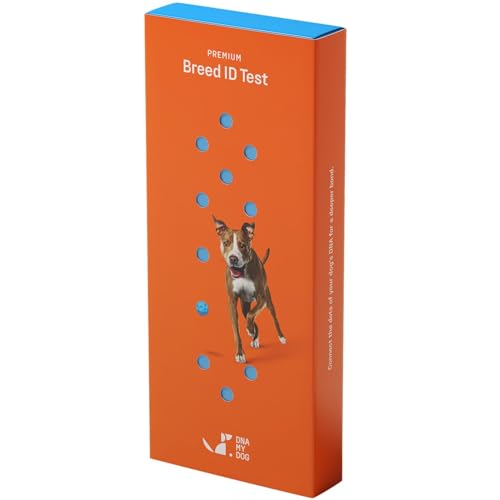
This is an at-home canine cheek-swab product. The owner registers the kit online, collects a mouth swab, mails it back, and receives a digital profile. The current manufacturer description says the Premium version includes breed estimates across more than 350 breeds, wolf DNA identification, a screen of more than 100 health and trait variants, allergy sensitivity scoring, and a telomere-based genetic age result. The company says its breed analysis uses copy number variation data and a reference database of more than 350 breeds. That is a manufacturer claim, not a published validation package. An independent 2024 study of DNA My Dog's CNV service found the registered breed was reported as 100 percent ancestry for 8 of 12 purebred dogs. The company’s terms appropriately state that results are informational and not diagnostic, and direct owners with health concerns to a licensed veterinarian.
This product suits an owner who wants a broad, nonclinical description of a mature dog’s possible ancestry and is prepared to treat the report as an estimate. It is most appropriate where the result is used for personal curiosity, breed-informed enrichment ideas, or a conversation starter with a veterinarian. The owner needs to be comfortable registering an online account, following the one-hour food restriction and contamination precautions, and mailing a dry cheek-swab sample.
It is not suited to owners who need a medical diagnosis, a treatment decision, a definitive allergy assessment, or proof of a dog’s expected lifespan. A positive health marker needs veterinary interpretation and, where appropriate, clinical confirmation. It is also unsuitable for pedigree, purebred registration, parentage, insurance, rental, breed-ban, breeding, or wolf-hybrid determinations that require a defensible official record. The independent study documented unexpected breed assignments in purebred dogs, including a wolf-hybrid result for a Bulldog.
The practical health safeguard is the company’s written limitation that its analyses are informational, educational, and research-oriented, not intended to diagnose, prevent, treat, or cure disease. It tells customers to consult a licensed veterinarian about health concerns. Collection guidance also asks owners to avoid food for an hour and prevent oral contact with other dogs before swabbing, which can reduce sample contamination. The company advises keeping cheek swabs dry for its deceased-dog service. The Premium product adds health, trait, allergy-sensitivity, and telomere-age outputs, but the product-level evidence package is incomplete. The laboratory is not named in the public materials reviewed, and no current independent accreditation or test-specific analytical validation was disclosed. No recycled-content, recyclability, packaging-material, carbon, or lower-waste return-mailer specification was identified. This is a single-use mail-back kit, so repeat sampling or recollection would add packaging and shipping burden.
This product is an at-home canine breed-identification service. The owner registers the kit, firmly swabs the inside of the dog's cheek, air-dries the swabs, and returns them by prepaid mail for an online report. DNA My Dog states that its Essential test estimates ancestry across more than 350 breeds and provides breed-linked health, personality, lifestyle, and allergy-sensitivity information. The company describes a SNP-based process examining hundreds of thousands of markers, but it does not publicly identify the testing laboratory, publish an accreditation certificate or scope, or provide an independent validation study for this exact product. Its stated 99%+ accuracy figure is therefore a manufacturer claim rather than independently confirmed performance. Its current terms appropriately say results are informational and not intended to diagnose, prevent, treat, or cure disease, and direct owners to a licensed veterinarian for health concerns.
This product suits an owner of a healthy mixed-breed dog who wants a noninvasive, mail-in estimate of breed ancestry and breed-linked discussion points for training, enrichment, or a conversation with a veterinarian. It is particularly relevant when the owner can follow the preparation steps, including no food for at least one hour and avoiding recent oral contact with other dogs. It also suits owners who understand that the result is informational, not pedigree documentation, a medical diagnosis, or a substitute for veterinary evaluation.
It is not suited to an owner who needs independently documented accuracy, a named accredited laboratory, or a test result suitable for pedigree, breed-club registration, legal identity, or parentage decisions. Dogs with itching, gastrointestinal signs, recurrent ear disease, medication concerns, or suspected inherited illness need veterinary assessment rather than reliance on the product's allergy-sensitivity, personality, or breed-linked health guidance. It is also a poor fit for buyers who need published evidence for every health-related output or a clearly documented DNA-sample retention policy.
The physical collection method is a dry cheek swab. DNA My Dog's guidance includes useful sample-integrity steps: wait at least one hour after food, avoid recent oral contact with other dogs, rub the inner cheek firmly, and air-dry the swabs for about 20 minutes. The company also states that reports are informational only and that medical concerns should be discussed with a licensed veterinarian. That safeguard matters because breed association and genetic risk do not establish a diagnosis. No FDA animal recall, FDA animal warning letter, or advisory action specifically naming DNA My Dog was identified in the checked public sources. No independent laboratory accreditation, exact-product validation publication, environmental certification, packaging-material disclosure, or recycling instruction was identified. The mail-back format inherently uses single-use collection and shipping materials, and a repeat sample would add another shipment. The privacy policy says personal information is not sold and permits deletion requests where applicable, but it does not clearly state how long canine DNA samples or genetic data are retained.
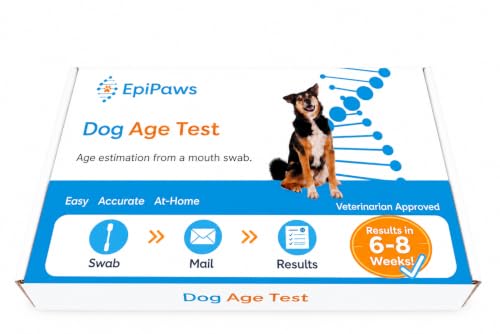
This product is a one-time, mail-in dog age-estimation kit. The owner collects a cheek swab, returns it in the included prepaid mailer, and receives an estimated biological age and suggested birthday through the company portal. The catalog directions limit use to dogs older than one year. EpiPaws states that it measures age-linked DNA methylation markers, rather than reading a fixed breed or disease-gene panel. Independent canine research supports DNA methylation as a way to model age, but no public independent validation located for this exact product established its accuracy, repeatability, sample-failure rate, or laboratory accreditation. The current manufacturer page positions the age test for rescue and shelter pets with an unknown birth date, while separately marketing HealthScore for recurring health-marker tracking.
This product fits an owner, foster family, rescue organization, or shelter that has an adult dog with no reliable birth record and wants a noninvasive age estimate to discuss with its veterinarian. It is most relevant when an approximate life stage could help organize routine preventive-care conversations, nutrition planning, or adoption records. The user should be comfortable treating the output as an estimate, not a verified birth date, diagnosis, or substitute for a veterinary examination.
It is not suited to owners seeking breed ancestry, parentage, inherited-disease variants, medication-sensitivity results, or a diagnostic health screen. It is also a poor fit when an exact date of birth is required for registration, insurance, breeding, or legal documentation. Dogs under one year fall outside the catalog's stated eligibility. Households making treatment, diet, supplement, or end-of-life decisions should use veterinary assessment and appropriate clinical testing rather than an age estimate or biological-health interpretation.
The collection process is physically low burden, using a cheek swab rather than blood draw. EpiPaws states that samples are returned in a prepaid mailer. The company also describes DNA methylation as the measured signal, which is consistent with published canine epigenetic-clock research. That research supports age association, but it does not independently verify the performance of this particular consumer product. No product-specific environmental-material disclosure, recycling instructions, reduced-packaging claim, or third-party sustainability certification was located. The mail-in format necessarily uses a kit, return packaging, and postal transport. No FDA safety communication, recall, or FTC enforcement action specific to EpiPaws was located in the searched public records. EpiPaws' privacy policy says personal information is not sold, permits account-deletion requests, and describes general administrative, technical, and physical safeguards, but it does not provide detailed public retention, research-consent, or genetic-data deletion procedures.
This product is a mail-in saliva swab for estimating a dog’s chronological age and an estimated birthdate range. The owner activates the kit, swabs the inside of the cheek, closes the sample tube containing preservative liquid, and returns it in the supplied mailer. It is intended mainly for rescue dogs and dogs whose birthdates are unknown. Embark states that the current test measures methylation across thousands of genomic markers and was developed from more than 2,000 dogs with known birthdates. Its stated performance is that 77% of known birthdays fell within 12 months of the estimated birthday. The product reports a range, with the displayed birthday as its midpoint, rather than claiming to determine an exact birthdate. Independent research supports DNA methylation as a scientifically plausible canine age marker, but no independent validation study of this exact commercial test was located.
This product suits an owner of an adopted or rescue dog with no reliable birth record who wants a broad age estimate to help choose an approximate birthday or discuss life stage with a veterinarian. It is most appropriate when a result that may span many months is still useful. It also suits households able to keep multiple dogs apart before swabbing, follow the activation steps carefully, and treat the result as one data point rather than a medical or legal record.
It is not suited to anyone who needs a precise birthdate for insurance, breeding, competition, registration, legal, or shelter-record purposes. It is also not a substitute for veterinary assessment when age affects anesthesia planning, medication decisions, senior-dog screening, nutrition, or treatment. Multi-dog households that cannot reliably prevent shared bowls, licking, or swab mix-ups should take particular care, because Embark says contamination is more difficult to identify in this methylation-based Age Test.
The collection method is a cheek swab, so it avoids a blood draw. Embark says the tube liquid preserves saliva for 6 to 12 months in many weather conditions, though it advises avoiding freezing temperatures and heat above 100°F. The company also states that a failed sample due to insufficient DNA can receive a free replacement swab. For this Age Test, however, Embark warns that contamination cannot be detected as easily as in its genotyping tests. The age estimate relies on DNA methylation, a mechanism supported by published canine aging research. The exact product’s reported accuracy remains manufacturer-stated, and the earlier version was withdrawn and refunded after the company found performance problems. No environmental certification, package-material disclosure, recycling instructions, or substantiated reduced-waste claim was located for this mail-in kit. Embark offers research opt-out controls, while its terms allow research use unless the owner deselects that option during account setup.
This product is a mail-in canine DNA kit. The owner registers it, rubs two supplied swabs inside the dog’s cheek and gums, lets them dry, then returns them in the prepaid mailer. The listing states that results arrive by email in two to three weeks and include breed identification, health and trait findings, an allergy-risk score, and personality or behavior insights. DNA My Dog’s own materials describe breed analysis using proprietary microarray and bioinformatics methods, and state coverage of more than 350 breeds. The company also says it reports unresolved ancestry as “Ultimutt” rather than assigning tiny, uncertain segments to a named breed. Its terms state that results are informational, educational, and research-oriented, not diagnostic or a substitute for a veterinarian.
This product fits an owner who wants a noninvasive, mail-back starting point for broad breed curiosity and is prepared to treat all outputs as tentative. It is most suitable for an adult dog with no immediate medical decision pending, especially where the owner can discuss any health flag with their regular veterinarian rather than changing medication, diet, breeding, or treatment based on the report. The owner should also be comfortable with an unresolved ancestry category and with mailing two dried cheek swabs.
It is not suited to owners needing dependable medical screening before breeding, anesthesia, medication selection, or management of a known inherited disorder. Do not use its allergy-risk, health, or personality outputs to self-diagnose a dog or delay veterinary evaluation. It is also a poor fit where reliable identification of a dog’s ancestry, species-level sample verification, or formal pedigree and parentage documentation is important. Independent reports of human samples receiving breed results make rigorous sample-validation needs especially relevant.
The useful health safeguard is in the company’s terms, which say its analyses are informational and do not diagnose, prevent, treat, or cure disease. They direct customers with medical concerns to a licensed veterinarian. That framing is important because canine genetic risk can vary by breed background and variant penetrance, and a positive or negative panel result is not a clinical diagnosis. However, the health panel is not sufficiently documented in public materials to assess every claimed finding. No current independently accredited laboratory scope or product-specific analytical validation report was located. Separate investigations reported dog-breed reports generated from human cheek samples, which raises a material concern about species and sample-quality controls. The kit requires disposable swabs, envelopes, printed instructions, and a return mailing. No packaging-material, recycling, or verified environmental-claim disclosure was located, so its waste and shipping footprint cannot be meaningfully substantiated.
Wisdom Panel Premium is a mail-in canine DNA test. The owner activates the kit, swabs the inside of the dog’s cheek, lets the swabs dry, and sends them back in the included prepaid mailer. Results are delivered through an online account. The manufacturer currently states results arrive within about three weeks. This version is positioned as a broad ancestry, traits, relatives, and health screen. Wisdom Panel currently states that Premium covers 430+ breeds, 270+ genetic health conditions, and 50+ traits, while the catalog record describes 265+ health tests. Its terms make an important boundary clear, the product is informational and educational, is not a substitute for veterinary care, and is not intended to diagnose disease or predict an individual dog’s behavior. For an at-risk health result, the manufacturer states that Premium includes access to a veterinary genetics specialist.
This product fits an owner of a rescue or mixed-breed dog who wants a structured estimate of recent breed ancestry plus a broad genetic health screen, and who can treat the report as a starting point for a veterinary conversation. It is also suited to owners comfortable collecting a cheek swab at home and mailing it back. The most practical health use is identifying a reportable risk or medication-sensitivity marker, then sharing the result with the dog’s veterinarian rather than changing treatment independently.
It is not appropriate for anyone seeking proof of purebred status, registration, pedigree, or parentage. Breed-heritage testing estimates similarity to company reference populations and does not establish official breed status. It is also not suitable as a diagnostic test for a sick dog, a substitute for clinical screening, or the sole basis for breeding decisions. Owners uncomfortable with broad contractual permissions for retention, sharing, or sale of pet samples and genetic data should consider those terms carefully before activating the kit.
The strongest health safeguard is the company’s own limitation language. Wisdom Panel says the service is informational and educational, not a replacement for veterinary care, and not intended to diagnose disease. That matters because disease-associated variants can have incomplete penetrance, breed-specific relevance, and alternative causes. The manufacturer also states that Premium users with at-risk findings can consult a veterinary genetics specialist. I did not identify a product-specific FDA Animal and Veterinary recall or warning in the checked sources. Ecologically, this is a single-use mail-back kit with swabs, protective sleeves, printed instructions, and a prepaid return mailer. The collection guidance calls for drying the swabs before return, which can help sample integrity. However, no product-specific material breakdown, recycling guidance, recycled-content claim, lower-waste packaging claim, or other substantiated sustainability program was identified. Return mailing adds a second shipping leg, and a failed sample may create additional material and transport use.
This product is a mail-back dog DNA kit. The owner activates the kit online, collects cheek cells with sterile swabs, lets the swabs dry, labels the sample, and returns it in the supplied mailer. Orivet states that Genopet provides breed-percentage ancestry results, detects more than 365 breeds and varieties, and normally reports results 3 to 5 weeks after the sample reaches the lab. The health component needs careful interpretation. Orivet's current range distinguishes a breed test with MDR1 medication-sensitivity information from Genopet+ health screening, while the product listing describes health results. Orivet explains that a positive genetic result can indicate predisposition rather than certain disease, and recommends veterinary discussion for management. The company also provides an owner-controlled option to share a report with a veterinarian.
This product suits an owner of a mixed-breed dog who wants a home-collected ancestry estimate and is comfortable treating the health information as screening context for a veterinarian, not as a diagnosis. It is particularly practical for dogs that would be stressed by blood collection, provided the owner can keep the dog away from food and other pets before swabbing, dry the swabs fully, and activate the barcode correctly. It also fits owners willing to wait several weeks after laboratory receipt.
It is not suited to an owner who needs a definitive diagnosis, medication decision, breeding clearance, legal breed determination, or pedigree verification. A positive or negative result does not replace a veterinary examination or confirmatory testing when clinical signs, family history, or a treatment decision are involved. It is also a weaker fit for buyers who need independently published accuracy and reproducibility data for this exact product, detailed reference-panel disclosure, or verified low-waste packaging and return-mailer information.
The strongest independently verified quality point is laboratory competence. NATA's current accreditation register lists Geneseek Australia under ISO/IEC 17025 for canine inherited-trait testing, including genetic recessive and causative mutations, plus DNA extraction from swabs. Orivet identifies this accreditation as part of its testing framework. The public record supports competent laboratory processes, although it does not independently validate every ancestry inference from this specific product. For health use, Orivet explains penetrance and directs owners to discuss at-risk results with a veterinarian. Its privacy disclosure says individual genetic information is not released to third parties without explicit consent, except where law requires disclosure. The FDA recall and warning-letter databases reviewed did not identify a product-specific Orivet action. Environmentally, the kit still uses disposable swabs, packaging, and a mailed return, and no substantiated recycling, material-content, or carbon-reduction details were located.