Best Overall
20% off

Bug Parking Electric Fly Swatter Racket
Rechargeable design for eco-friendly convenience.
High voltage ensures effective bug elimination.
Comes in a handy two-pack for versatility.
 Daniel Kenitz
Rechargeable design for eco-friendly convenience.
High voltage ensures effective bug elimination.
Comes in a handy two-pack for versatility.

Convenient wall-mount design for easy storage.
Safe mesh protects against accidental zaps.
Effective indoors and outdoors on various bugs.
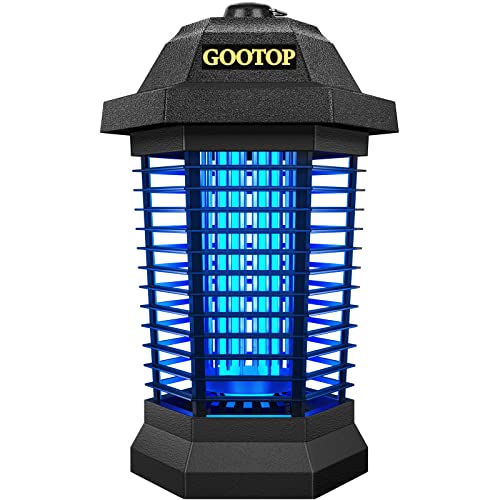
Effective at eliminating various flying insects.
Durable ABS plastic outer shell.
Easy to use with 3-prong plug.

Non-toxic and safe for family use.
Super sticky for effective bug trapping.
Suitable for both indoor and outdoor use.

Covers up to 1 acre effectively.
Powerful 40W bulb attracts insects quickly.
Durable, made in the USA.

Covers a large area effectively.
High voltage for instant insect elimination.
Durable and made in the USA.

Dual pack for convenient use anywhere.
Protective mesh ensures user safety.
Effective for both indoor and outdoor use.

High voltage ensures instant fly elimination.
Rechargeable battery offers long-lasting use.
Ergonomic design provides comfortable handling.

Safe protective mesh prevents accidental shocks.
High-voltage zapper effectively eliminates insects.
Comes in a convenient two-pack for versatility.

Effective suction captures more flying pests.
Built-in timer for convenient operation.
Compact design suits small indoor spaces.
What matters first is the pest and setting. For an individual fly, gnat, moth, or similar insect, direct manual targeting is the clearest supported use in the supplied reviews. The user chooses the target, which can reduce incidental killing compared with an unattended outdoor light trap. UV traps are a different proposition: the supplied CDC-based reviews report that electric high-voltage traps do not provide satisfactory adult mosquito control and can kill insects indiscriminately. A stated voltage such as 2,200V, 3,000V, 4,000V, 4,500V, or 5,600V describes electrical output, not capture rate, mosquito protection, or safety.
For electrical safety, look for the exact finished product in a current North American third-party certification directory—not merely a seller claim, a component certification, or a statement that a product follows a standard. Relevant directories include UL Product iQ, Intertek’s ETL directory, CSA Group’s product listings, and TÜV Rheinland Certipedia. The supplied reviews did not verify a current finished-product listing for the products assessed, including products whose listings claimed UL or ETL certification. A product’s voltage, protective mesh, three-layer guard, or CE, FCC, UKCA, or RoHS marking is not a substitute for a verifiable North American listing.
Power design is another important dividing line. Replaceable AA batteries avoid an integrated lithium battery and in-product charger, but still require correct battery handling and recycling. Rechargeable models should have traceable certification for the battery pack and charger, with safeguards against overheating, overcharging, and charger faults. A USB-C connector alone does not demonstrate those protections. Corded models avoid rechargeable-battery risks but introduce outlet, cord, grounding, extension-cord, and moisture considerations.
Treat outdoor and waterproof language cautiously. A genuine ingress rating should be stated and supported, with clear limits for rain, splashing, outlets, extension cords, and connections. Several supplied products advertised outdoor use without a verified IP rating or rain-use instructions. “Waterproof,” “weatherproof,” and “outdoor” are not interchangeable with documented safe use around moisture.
Food areas need special care. Open electric grids can release insect bodies or fragments. The supplied reviews repeatedly conclude that these products should not be used over exposed food, food-preparation surfaces, clean utensils, dining-service areas, or commercial kitchens. The FDA Food Code expectation for electrocution devices in food settings is that they retain insects and prevent fragments from reaching food or clean equipment. An enclosed glue-pad trap is a different design, but it still needs sensible placement away from preparation surfaces.
Finally, check traceability and evidence. A valid EPA establishment number on packaging, directions, warnings, and a responsible producer or importer support device-label traceability; an EPA establishment number is not EPA approval of efficacy or safety. Independent performance evidence should identify the exact model, target species, setting, test conditions, comparison method, and results. No product-specific independent efficacy report was found across the supplied electric swatter products. No category-wide finding supports using any of them for mosquito-bite or disease prevention. Keep energized grids away from children and pets, keep products dry unless a verified rating and instructions say otherwise, unplug corded devices before cleaning, supervise rechargeable charging, and follow battery-recycling guidance. These are recurring, safety-relevant limits in the supplied reviews—not optional precautions.
The scores below compare the supplied products on the specific safety, ecological, and evidence questions defined for this category. A higher score indicates stronger documentation or design evidence on that topic; it does not turn an unverified claim into proof.
This covers shock, burns, fire, injury, and unsafe use around people or pets. For this category, high-scoring products pair direct-use limits or concrete handling instructions with features such as hold-to-activate controls, protective mesh, dry-use warnings, or placement guidance. Lower scores reflect broader gaps or exposed hazards; even the supplied products’ stronger scores do not establish safety without exact-product certification.
This asks whether the exact finished product has a current North American third-party safety listing in UL Product iQ, Intertek ETL, CSA, or TÜV Rheinland directories. It is especially important for high-voltage grids, mains power, rechargeable batteries, and chargers. Scores clustered around 68–72 show that most products lacked a verified listing; a seller’s UL, ETL, or standards wording alone did not separate a substantiated product.
This measures safeguards against overheating, charger faults, overcharging, and charging-related fires. Non-rechargeable AA products scored relatively well because they avoid an integrated lithium battery and charger; corded products scored highest because they have no battery pathway. Rechargeable products generally scored lower when battery-pack certification, charger certification, protection specifications, or charging limits were not documented.
This measures whether outdoor or waterproof claims are backed by an ingress rating and clear limits for rain, splashing, outlets, cords, and connections. Higher scores reflect practical instructions such as dry connections, GFCI use, or explicit indoor-only limits. Lower scores reflect outdoor marketing without an IP rating or rain guidance. No supplied product established that a general outdoor claim meant safe rain exposure.
This measures whether insect bodies and fragments are contained and whether placement warnings protect food and clean equipment. Open electric rackets and open-grid zappers scored lower because they do not retain remains; the reviews repeatedly excluded exposed food, kitchens, and food-service areas. Enclosed adhesive capture scored higher, but placement away from preparation surfaces still matters. The FDA Food Code expectation is containment around food.
This measures unresolved incidents, recall history, model traceability, a responsible U.S. party, warnings, warranty, and remedy support. Higher scores were associated with a documented warranty, U.S. support information, model identification, or no relevant recall found. A clean search is not proof of safety: the supplied reviews also note a separate 2025 rechargeable-swatter battery-fire recall as a reason to verify the exact model.
This measures credible effectiveness for the stated insect and setting. Direct-contact swatters scored higher, roughly 70–76, because the reviews support killing an insect successfully struck. Light traps scored about 36–48 for broad mosquito claims because the supplied CDC-based evidence does not support satisfactory adult mosquito control. Voltage, light, coverage acreage, and customer reviews are not product-specific efficacy testing.
This measures whether U.S. packaging shows a valid EPA establishment number, directions, warnings, and a responsible producer or importer, without implying EPA efficacy approval. Scores varied from 48 to 86. The highest-scoring product showed an establishment number in its manual; several others lacked visible packaging evidence. An establishment number supports traceability, not proof that the device works or is EPA-approved.
This measures whether voltage, coverage, waterproofing, mosquito control, disease prevention, safety, and certification claims are precise and supported. Higher-scoring products generally described direct swatting, dry-use limits, or the limited role of UV mode. Lower scores, around 38–49, reflected broad mosquito, acreage, waterproof, “safe,” or EPA-registration wording that exceeded the available evidence.
This looks for qualified testing of the exact model or technically identical configuration, with target species, conditions, comparison method, and results. Most supplied products scored about 68–70 despite having no located product-specific independent efficacy report; that score reflects the supplied assessment scale, not a verified laboratory result. A buyer should distinguish documented seller or retailer claims from reproducible independent testing.
This measures whether the device targets nuisance insects deliberately instead of broadly attracting and killing non-target species. Handheld direct-contact products scored about 72–80 because the user chooses the insect; unattended UV traps scored much lower, about 30–42, because the supplied CDC-based evidence describes indiscriminate killing. Adhesive traps can also catch beneficial insects outdoors, especially broad-spectrum yellow sticky designs.
This measures whether a product can remain useful rather than becoming short-lived electronic waste. Higher scores reflected replaceable bulbs, trays, transformers, parts, warranties, or removable AA batteries; the strongest supplied score was 83 for a serviceable corded trap. Rechargeable products scored lower when battery removal, replacement, recycling, or parts support was undocumented. Consumable pads reduce electronic hazards but still create disposable waste.
This is a two-pack of handheld, rechargeable electric fly-swatter rackets with a charging base, a stated 4,000-volt grid, purple attraction light, and manual or automatic operating modes. A separate retail listing and an indexed product guide consistently describe a built-in 1,200 mAh lithium battery, three-layer mesh, detachable handle, and USB charging. Those are seller and manufacturer-stated specifications, not independently tested measurements. In manual mode, the user holds a button and directly contacts a flying insect with the energized grid. In automatic mode, the racket sits in its base while the light is intended to attract insects. The exact finished product was not found in searched UL, ETL, CSA, or TÜV certification records, and no product-specific independent efficacy report was located.
This product suits a household that wants two rechargeable tools for occasional, close-range swatting of visible flies, moths, or similar flying insects indoors, away from food preparation and out of reach of children. Its most defensible use is manual, direct-contact removal, where the user can target a specific nuisance insect instead of leaving the light mode operating outdoors. It also fits someone who accepts manufacturer-stated battery capacity and mesh protection without requiring independently listed electrical equipment.
It is not suited to homes with young children, people who may not follow charging and handling instructions, or settings where pets can mouth, paw, or knock over the rackets or charging base. It is also unsuitable for commercial kitchens, food-preparation areas, or locations where insect fragments could reach exposed food. People seeking yard mosquito reduction, bite prevention, reliable overnight mosquito control, rain-safe equipment, or independently certified charging safety need a product with evidence for those specific conditions.
The key safety limitation is evidentiary. The product claims a 4,000-volt grid, a three-layer protective mesh, a lithium battery, and dual charging, but no current North American NRTL listing was verified for the finished racket, charger, or battery. The product guide also makes broad safety language claims without supplying a test report. A CPSC recall issued July 24, 2025 involved a different rechargeable swatter model after three fire reports, so it does not identify this product, but it reinforces why charging documentation and traceable certification matter for this device type. The manual swat mode can limit non-target killing when used selectively. The automatic purple-light mode is less selective, and CDC literature reports that ultraviolet electric traps do not provide satisfactory adult mosquito control and kill insects indiscriminately. The built-in lithium battery reduces disposable-cell use, but no battery removal or recycling guidance was found. If the product reaches end of life, rechargeable batteries should be recycled through an appropriate program with terminals protected.
This is a two-pack of handheld electric fly-swatter rackets for killing individual flying insects on contact. Independent resale listings describe AA-battery operation, with batteries not included, and a 17.7 by 7.9 inch racket size. That avoids a charging cable and rechargeable battery pack, but it does not make the energized mesh harmless. The seller markets a protective mesh, wall storage, and indoor and outdoor use. Those are seller claims rather than independently tested safety or performance findings. No verifiable North American electrical-safety listing, product-specific laboratory efficacy report, instruction manual, ingress-protection rating, or responsible U.S. support and warranty record was located. The product is therefore best understood as a manual, close-range fly swatter with an electric killing grid, not as a room treatment or a mosquito-population control device.
This fits a buyer seeking a simple, manual tool for occasional indoor spot treatment of visible flies, gnats, or mosquitoes, especially where a cordless device is useful. It is most appropriate for an adult who can keep it dry, store it away from children, and use it only while deliberately striking a target. The two-racket format may suit a small home with separate living areas. AA power is useful for users who prefer replacing cells over charging a built-in battery.
It is not suited to anyone seeking proven mosquito control for a yard, patio, or disease-risk area. CDC evidence does not support electric high-voltage insect traps as satisfactory adult mosquito control, and this manual racket provides no population-control evidence. It is also unsuitable around unsupervised children, people likely to touch the energized mesh, or pets that may mouth it. Do not use it in rain, near sinks or pools, over food, or around exposed food preparation because moisture and food-area safety limits were not documented.
The main safety advantage is limited to its apparent AA-battery format. Independent resale information describes a non-rechargeable design, so the charging and lithium-battery fire issues seen with some rechargeable swatters do not directly apply. However, an energized insect-killing grid still presents a contact risk. The claimed protective mesh was not independently tested, and no finished-product electrical certification could be verified in public North American safety directories. No product-specific recall or public incident report was located. That is not the same as verified safety. Outdoor use lacks a documented IP rating, and no food-area guidance was found. FDA food-safety guidance says devices that electrocute or stun flying insects should retain insects and be installed to prevent fragments from reaching exposed food. This handheld product does not document such controls. Its direct-contact format is more selective than an unattended light trap, but it should not be used as broad outdoor mosquito control.
This is a corded, hanging electric insect killer for indoor or outdoor use. The product listing describes a black ABS-plastic housing measuring about 7.5 by 6.7 by 12 inches, a three-prong AC plug, a stated 4,200-volt grid, and a removable collection tray. It is intended to attract flying insects with a bulb and electrocute insects that contact the grid. The 4,200-volt figure, indoor and outdoor use, and claimed coverage of mosquitoes, flies, gnats, moths, and wasps are manufacturer statements. A compatible 15W replacement bulb is offered by the brand, which is a practical serviceability point. However, no current UL, ETL, CSA, or TÜV listing for this finished product was verified. The product listing also calls it “EPA Registered,” although EPA explains that electric insect devices are not EPA-registered products and an establishment number is not product approval.
This product fits an adult household that wants a plug-in, chemical-free insect-killing device for a sheltered patio, porch, garage, or similar space, with a dry outlet and a way to keep people and animals from touching it. It is most appropriate when the expectation is direct killing of individual flying insects that reach the grid, not reliable mosquito population control. The replacement-bulb availability and one-year stated warranty may also suit someone willing to clean the tray and maintain the unit.
It is not suited to homes with young children, pets, or other people likely to reach the electrified grid. It is also a poor fit for unsheltered outdoor installations, wet locations, or any setting without a protected, dry outlet because no ingress-protection rating was verified. Food preparation, dining-service, and commercial food areas should use equipment designed and installed to retain insects and prevent fragments from contaminating food. Anyone seeking meaningful mosquito bite or disease-risk protection should use CDC-recommended prevention measures instead.
The key safety limitation is evidentiary. This is a mains-powered product with a stated 4,200-volt killing grid, yet no current finished-product listing in the checked UL, ETL, CSA, or TÜV certification resources was verified. Its own safety information says the plug must be dry. There is no battery, so it does not create lithium-battery charging or disposal risks. Public CPSC recall and incident resources were checked without locating a matching published recall or report, but that is not the same as independent electrical-safety validation. The product uses physical electrocution rather than insecticide spray. That avoids pesticide residue, but it does not make the mosquito claim well supported. CDC states that UV electric bug zappers do not provide satisfactory adult mosquito control and kill insects indiscriminately, including non-target insects. The product also needs careful placement away from exposed food, because food-safety guidance requires electrocution devices to retain insects and prevent fragments reaching food or clean equipment.
This product is a four-pack of yellow, rigid sticky cylinders for catching flying insects by contact. Each roughly 10.5-inch trap can stand on a flat surface or hang from its integrated hook. BugBane states that the body is reinforced cardboard with plastic end caps and a non-drying pressure-sensitive hot-melt adhesive. The instructions say to replace a trap after about three months or when it fills with insects. It is a non-electric device, not an electric fly swatter, so it has no battery, charger, shock, or electrical outdoor-use issue. Its instruction sheet does provide meaningful handling directions, including avoiding the adhesive, keeping it away from children and pets, and using vegetable oil plus soap and warm water after contact. The manufacturer claims it catches several common flies, gnats, moths, and similar insects, but no independent test report for this specific product was identified.
This product suits a household user dealing with visible indoor fly, gnat, fruit-fly, or moth activity near windows, doors, garbage areas, pet areas, or enclosed utility spaces. It is also suited to someone who specifically wants a passive trap without insecticide, cords, batteries, charging, or a zapper noise. The user should be comfortable placing it vertically, checking it periodically, and disposing of a trap containing visible insects and exposed adhesive after it becomes full or loses tack.
It is not suited to kitchens, food-preparation stations, restaurants, or other settings where a hanging or standing trap could place insect bodies near exposed food or clean food-contact items. It is also a poor fit for households with curious children or pets that can reach the adhesive, unless it is kept securely inaccessible or used in its partial-exposure box configuration. Outdoor users seeking pollinator protection should avoid open placement near flowers, gardens, or beneficial insect activity.
This is an adhesive, non-electric trap. Its main safety advantage is the absence of high voltage, a lithium battery, charging equipment, and insecticidal active ingredients. The manufacturer describes a reinforced-cardboard cylinder, plastic end caps, and pressure-sensitive hot-melt glue. Its directions warn users not to touch the glue, to keep the product out of reach of children and pets, and to use vegetable oil followed by soap and warm water if adhesive contact occurs. The central ecological concern is the broad yellow sticky surface. Yellow sticky traps are used for monitoring insects and can capture non-target insects, including beneficial species. That matters more outdoors, where the manufacturer permits use but states that heavy rain can reduce tackiness. The product is disposable after roughly three months or once filled. The box is described as recyclable, but no replacement-parts program or broader end-of-life program was identified. No product-specific CPSC recall or public incident report was identified in the searches conducted.
This is a corded outdoor hanging insect electrocution unit with a 40W ultraviolet bulb, a 5,600V grid, and a slow-release octenol cartridge. Flowtron specifies a 100-hour starter cartridge, a weatherproof polycarbonate housing, outdoor-only use, and placement about 25 feet from living space. Its manual also directs users to hang it 6 to 8 feet above ground and use a properly grounded 115/120V outlet. The unit is designed to drop electrocuted insects to the ground rather than retain them. Flowtron claims one-acre mosquito coverage and UL certification, but an exact current finished-product certification record could not be independently confirmed in an NRTL directory during this review. The octenol lure itself is a pesticide product with an EPA label, despite the product page's broad no-pesticides language.
This suits a homeowner seeking a permanently powered outdoor insect electrocution unit for a yard, porch perimeter, or detached outdoor area where it can be hung 6 to 8 feet high and roughly 25 feet from people. It is most appropriate for users comfortable following grounding, outdoor extension-cord, cleaning, and seasonal bulb-replacement instructions. The replaceable bulb and listed service parts are useful for someone intending to maintain the unit rather than treat it as disposable. It should be used for nuisance flying insects, not as a mosquito disease-prevention measure.
It does not suit homes with children, pets, or wildlife that can reach the hanging grid, or any location without a properly grounded outdoor electrical setup. It is not appropriate above or beside grills, outdoor kitchens, food-serving tables, exposed dishes, or commercial food preparation areas because it does not retain insect fragments. People seeking documented mosquito population reduction, bite prevention, or disease protection should not rely on this type of ultraviolet electrocution device. It is also a poor ecological fit where protecting moths, pollinators, and predatory insects is a priority.
The unit has no rechargeable battery, which avoids battery overheating and charging hazards. Its manufacturer and manual provide meaningful use limits, including elevated hanging, distance from people, a grounded outlet, and unplugging before cleaning or service. Flowtron claims UL certification and weatherproof polycarbonate construction, but this review could not independently verify the exact finished model in a public NRTL listing. No relevant CPSC recall was located in the searched recall records. The main health and ecology limitation is the open electrocution design. Insects are intended to fall to the ground, rather than be captured. FDA food-safety guidance says electrocuting devices in food settings should retain insects and prevent fragments from reaching food or food-contact items. CDC guidance also reports that ultraviolet high-voltage traps are not satisfactory adult mosquito control and kill insects indiscriminately. The replaceable bulb, top cover, and other listed parts improve repairability, but the octenol cartridge is a recurring consumable.
This is a corded, hanging outdoor electric insect killer, not a handheld electric fly swatter. It uses two 40W UV bulbs, a 5,600V killing grid, and a replaceable octenol lure cartridge. The manufacturer rates it for outdoor domestic use and says to hang it six to eight feet high and about 25 feet from the activity area. Its manual requires a properly grounded outlet and a three-wire outdoor extension cord for this model. The 1.5-acre coverage, weatherproof housing, UL certification, and mosquito-control language are manufacturer claims. I could not independently verify a current finished-product listing in an NRTL directory. The included octenol cartridge is a separately EPA-registered pesticide product with labeled handling precautions, but that registration does not establish efficacy of the electric insect killer itself. CDC literature finds UV high-voltage traps do not provide satisfactory adult mosquito control and kill insects indiscriminately.
This product suits an adult homeowner who wants a fixed outdoor light trap for nuisance flying insects in a separated yard area, has a properly grounded outdoor electrical setup, and can hang it well away from patios, children, pets, food service, and combustible materials. It also suits someone prepared for routine upkeep, including disconnecting power before cleaning debris, replacing the octenol cartridge on its labeled schedule, and replacing UV bulbs as their output declines. Its replaceable bulbs and two-year warranty support that maintenance-oriented use case.
It is not suited to someone seeking a handheld tool for directly swatting flies, because this is a mains-powered hanging outdoor unit. It is also unsuitable near grills, outdoor kitchens, dining tables, food preparation, or exposed dishes because electrocuted insect fragments can fall or be dispersed. Households unable to maintain a grounded outdoor connection, dry elevated cord connections, and a 25-foot separation from people should avoid this format. It should not be relied on for mosquito-bite or mosquito-disease prevention, especially where mosquito control is a health concern.
The safety case rests mainly on the product manual, not a directory-verified certification. It specifies a grounded three-prong connection, matching three-wire outdoor extension cords, dry connections off the ground, and disconnection before service. It also warns against water spraying, placement near flammable materials, and contact with the energized grid. Flowtron publicly claims UL certification, but a current certification entry for the exact finished product was not independently confirmed. The unit has no rechargeable battery, so it avoids lithium battery and charger hazards. Its UV bulbs are replaceable and the product has a two-year warranty, which can extend useful life. The octenol lure is a separately registered pesticide product containing 1-octen-3-ol and carries caution and hand-washing instructions. Ecologically, the major concern is the trap mechanism. CDC states that UV high-voltage traps do not provide satisfactory adult mosquito control and kill insects indiscriminately. The open electrocuting design also makes it unsuitable for food areas.
This is a two-piece, handheld electric swatter set for killing individual flying insects on contact. Each plastic racket uses replaceable AA batteries, sold separately, and is operated by manually swinging the grid at a visible insect. An externally indexed manual identifies standard AA power, a high-voltage grid, a claimed three-layer protective mesh, and one red plus one blue unit. The product is a direct-contact tool, not a room trap or a population-control system. Its strongest practical distinction is avoiding a rechargeable battery and charger. However, no current North American third-party electrical safety listing for this exact finished product was verified in public certification directories, and no product-specific independent efficacy report was found.
This product fits a household that wants a simple, portable tool for dispatching an occasional visible fly, gnat, or mosquito indoors, on a patio, or while camping. It is most suited to adults who can keep the swatter dry, use it deliberately, replace AA batteries when needed, and store it away from children. The two-piece format is useful where separate locations need an occasional direct-contact pest tool. It is not evidence of meaningful area-wide mosquito control.
It is not appropriate for commercial kitchens, food-preparation counters, buffet lines, or any setting where insect fragments could reach exposed food, clean utensils, or packaging. It also does not suit buyers needing a rain-rated outdoor appliance, verified third-party electrical certification, or independently tested mosquito suppression. Households with young children, people likely to handle the energized grid, or anyone unable to store battery-powered devices securely should use extra caution because the claimed mesh has not been independently certified for this exact product.
The product uses replaceable AA batteries rather than a rechargeable lithium pack, removing charging-related overheating and charger-fault pathways. This does not make it electrically certified. No public North American third-party listing for this exact finished product was verified. A 2025 CPSC recall affected a different brand and model of rechargeable electric swatter after three fire reports, not this AA-powered product, but it illustrates why battery-powered swatters need careful storage and inspection. Direct-contact use can reduce non-target killing compared with a continuously attracting outdoor zapper because the user chooses the insect. It is still not a mosquito-control program. CDC literature finds electric high-voltage traps do not provide satisfactory adult mosquito control and can kill insects indiscriminately. The product documentation also does not provide an EPA establishment number, verified rain protection, parts support, or battery-recycling instructions. Used AA batteries should be managed according to local rules, with recycling preferred where available.
This is a rechargeable electric swatter shaped like a long racket. The seller lists a 22.05-inch ABS plastic body, telescoping handle, rotating head, charging stand, battery display, three-color ambient light, and USB-C cable. It is intended for direct contact with flying insects, with a hands-free upright UV-light mode also advertised for indoor or sheltered outdoor locations. The 5,000V grid and 1,200mAh lithium battery are manufacturer-stated specifications, not independently verified test results. The listing gives useful operating limits, including keeping it from children, avoiding the grid, and avoiding rain or wet conditions. No current North American third-party electrical-safety listing, battery certification, independent efficacy test, or product-specific lab report was located for this product. Its stated mosquito target should be treated narrowly, as a swatter kills insects it contacts rather than demonstrating yard or room mosquito control.
This product suits an adult who wants a manually directed swatter for occasional flies or other visible flying insects in a dry room, garage, RV, or sheltered patio. The useful fit is a person willing to supervise use, keep it away from children and pets, and follow the stated no-rain rule. Its rechargeable battery, dock, long handle, and rotating head may suit users who prefer one stored tool for occasional reach and direct-contact pest removal rather than disposable-battery swatters.
It is not suited to homes where young children, unsupervised visitors, or pets could reach the charged grid or charging dock. It is also unsuitable for wet outdoor exposure, rain, or use near sinks and other moisture. Food-preparation spaces and commercial food settings need insect control that prevents insect fragments from reaching exposed food or clean equipment. People seeking mosquito population control, bite prevention, or disease-risk reduction should not rely on the UV standing mode, because no product-specific efficacy evidence was found and UV bug zappers are not satisfactory mosquito-control tools.
The listing identifies an ABS plastic body, a rechargeable lithium battery, USB-C charging, and a stated 5,000V electric grid. It also includes meaningful basic warnings, to keep the product away from children, avoid touching the grid, and avoid rain or wet conditions. Those warnings matter because the product combines a rechargeable battery with a high-voltage insect-killing grid. No current independent North American electrical-safety listing, battery-pack certification, charger certification, or product-specific laboratory performance report was verified. No recall or public incident report was found for this exact product in the checked sources. That is not proof of safety. A 2025 CPSC recall of a different rechargeable swatter documented battery fires, so charging should be supervised and the product should be removed from service if it overheats, swells, or is damaged. Rechargeability can reduce disposable battery waste, but no battery-removal or recycling guidance was located. Direct manual use is more selective, while unattended UV operation can kill beneficial insects and is not established as mosquito control.
This is a two-piece, hand-held electric swatter set, sold in black and gray and intended for striking visible flies and mosquitoes indoors or outdoors. An independent reseller identifies the model as ZH-M803, made from ABS plastic, with AA batteries required. The product is about 17.7 inches long, so it is a manual, close-range tool rather than a stationary trap or a device for reducing an outdoor mosquito population. The seller describes a high-voltage grid and protective mesh, but no product-specific electrical-safety listing was found in the searched UL, ETL, CSA, or TÜV directories. The product uses removable AA cells rather than an internal rechargeable lithium battery, which avoids onboard charging risks. No independent test report was found for this exact product, and its mosquito claim should be understood as direct-contact killing when the user successfully swats an insect.
This product fits an adult who wants a low-complexity, close-range tool for an occasional visible fly or mosquito in a bedroom, garage, screened porch, campsite, or patio. It is most suitable where the user can deliberately swing the racket, keep it dry, and store it away from children and pets. Removable AA batteries may suit someone who prefers not to maintain a rechargeable device, provided they use batteries of the chemistry and size specified on the product label.
It is not suited to households with young children, people unable to safely handle a high-voltage swatter, or situations where pets could mouth, chew, or contact the grid. Do not use it over counters, dining tables, exposed ingredients, dishes, or commercial food-preparation areas, where insect fragments can create a hygiene problem. It also does not suit buyers seeking verified weather resistance, independently certified electrical safety, unattended operation, or a tested method for reducing mosquitoes across a yard.
The main safety positive is the removable-AA design. The available product information does not indicate a built-in rechargeable lithium battery or charging system, avoiding the charging-related fire pathway seen in some recalled rechargeable electric swatters. That does not establish the safety of the high-voltage grid itself. The protective-mesh claim is seller-stated, and no verified UL, ETL, CSA, or TÜV certification for this finished model was located. No exact-model recall or public incident report was found in the searches performed. A 2025 CPSC recall involving another brand's rechargeable racket was for a different model and does not establish a recall for this product. The direct-contact format can reduce indiscriminate insect killing when used selectively, unlike unattended light traps. However, no tested species selectivity is available. Replaceable AA batteries can avoid discarding the product when cells are depleted, but no product recycling instructions were found. EPA recommends checking local recycling options for used household batteries.
This is a plug-in indoor insect trap, not an electric fly swatter. It is a 5.2 by 5.2 by 10 inch unit that uses ultraviolet light, a suction fan, and an adhesive board to retain small flying insects. The manufacturer identifies fruit flies and gnats as the central targets, while also naming mosquitoes and moths. It includes 10 replacement adhesive refills and offers 6-hour and 12-hour timer settings. The product is manufacturer-described as chemical-free and appropriate around children and pets, but no independent electrical safety listing, exact-model efficacy report, or product manual was located in the checked sources. Independent research supports UV glue-board traps for some indoor flies, but that evidence did not test this product or establish fruit fly or mosquito performance. It should therefore be understood as an indoor supplemental capture device, not proven mosquito protection or source control.
This product fits a household that wants a countertop or nearby plug-in capture device for a limited indoor nuisance problem, especially small flies around houseplants, a trash area, or a fruit bowl. It is most appropriate where the outlet and device can be kept dry, inaccessible to children and pets, and away from exposed food preparation surfaces. The included adhesive refills make it more practical for someone willing to inspect captures and replace boards as they become dusty or filled. Its timer may suit users who prefer scheduled operation.
It is not suited to anyone seeking verified mosquito-bite protection, control of an outdoor mosquito population, or an independently certified electrical appliance. CDC guidance does not support UV electric traps as satisfactory adult mosquito control, and this product has no exact-model performance report. It is also not appropriate for use outdoors, in bathrooms, beside sinks, or where splashing and wet outlets are possible. Food businesses and serious home food-preparation setups should not place it over or immediately beside exposed food or clean food-contact items.
The product is mains powered, so it does not introduce rechargeable lithium-battery charging risks. It also uses glue-board capture rather than an exposed electrocution grid, which should reduce the fragment-scattering concern associated with zapping devices. However, no finished-product North American electrical certification was verified, and no enclosure or moisture rating was found. Keep it indoors, dry, and connected directly to a suitable outlet. The indoor-only positioning is an ecological advantage because it limits outdoor attraction of moths, pollinators, and other non-target insects. CDC literature warns that UV electric insect traps can kill insects indiscriminately, although this unit uses adhesive capture rather than high-voltage electrocution. The manufacturer supplies replacement boards, but provides no verified warranty, material-recycling guidance, or end-of-life instructions. No matching CPSC recall or public incident report was located in the checked searches, but traceability remains limited because the available product page identifies only an email contact and does not show an EPA establishment number.


