Best Overall
15% off
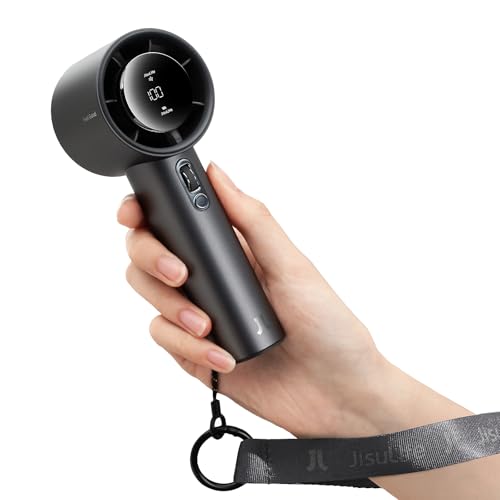
JISULIFE Handheld Fan Pro
Adjustable speed with 1-100 scroll wheel.
Durable metal body enhances longevity.
Fast charging with long-lasting battery.
 Lauren Wilson
Adjustable speed with 1-100 scroll wheel.
Durable metal body enhances longevity.
Fast charging with long-lasting battery.

Long-lasting battery with up to 28 hours runtime.
Five adjustable speeds for customized airflow.
Compact and portable for travel convenience.

Compact design fits easily in bags.
Powerful airflow for quick cooling relief.
Long-lasting battery for extended use.

Efficient cooling with built-in ice compartment.
Lightweight design for easy portability.
Quiet operation for comfortable use.

Efficient dual-mode cooling technology.
Portable design with long battery life.
Quiet operation for peaceful use.

Compact design fits easily in bags.
Rechargeable battery for extended use.
Quiet operation enhances user comfort.

Lightweight design makes it easy to carry.
Rechargeable battery ensures long-lasting use.
Adjustable speed settings for personalized comfort.
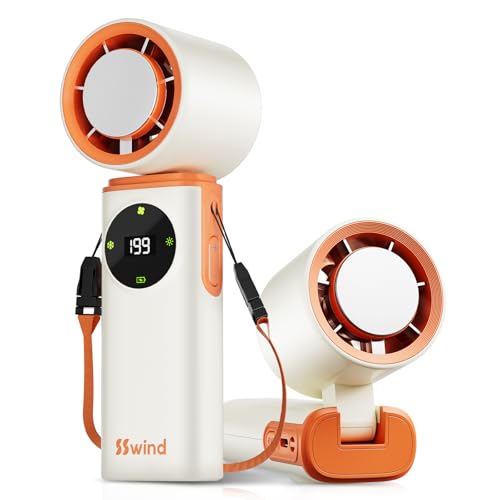
Long-lasting battery ensures extended use.
Compact design for easy portability.
Adjustable speed settings for personalized comfort.

Versatile fan and light combo for strollers.
Flexible tripod easily attaches to various surfaces.
Quiet operation keeps babies undisturbed.

Long-lasting 5000mAh battery for extended use.
Compact design ideal for travel and portability.
Smart LED display for easy speed adjustment.
Start with the finished product, not a component or logo. A meaningful electrical-safety claim should identify the exact model in a listing from an OSHA-recognized testing laboratory, such as UL Product iQ, Intertek’s ETL directory, or the CSA Group database. For portable electric fans, the relevant scope includes ANSI/UL 507. A generic “UL,” “ETL,” “FCC,” “CE,” or “RoHS” statement, without a model-matched listing and file number where applicable, does not establish that the completed fan was assessed for electrical, overheating, enclosure, or accessible-blade hazards. Battery claims deserve similar scrutiny: look for model-specific protection documentation and a manufacturer’s UN 38.3 test summary, while recognizing that the supplied products often lacked these records.
Headline performance numbers are easy to overread. “Up to” runtime usually describes a low setting, not maximum airflow; a credible comparison should show runtime by setting, charging time, battery state, test conditions, and the identified sample. Air speed in meters per second, airflow in cubic feet per minute, motor revolutions per minute, and decibel figures are not interchangeable measures of cooling. A high RPM number does not prove strong airflow at the user’s distance, and a low noise number is not meaningful without a disclosed measurement method. Independent testing should identify the exact model and report its method; seller testimonials, generic certificates, and uncheckable badges are not substitutes.
Check whether specifications agree across the product page, manual, images, and model number. Conflicting battery capacities, runtime ranges, blade counts, materials, speeds, charging times, or noise figures are warning signs that the claim cannot be traced reliably. Features such as a battery display, speed lock, enclosed grille, fold-out stand, lanyard, cooling plate, or mist reservoir can be useful, but they do not by themselves prove safety or performance. For handheld use, keep fingers, hair, lanyards, fabric, and bag contents away from openings; use a stable surface when placed on a desk; and follow the charging, water, heat, and storage instructions.
The supplied reviews repeatedly identify missing model-matched UL, ETL, CSA, or other NRTL certification and missing independent testing. Many products also have built-in batteries with no replacement, repair, cycle-life, or U.S. takeback information. Several contain cooling plates or mist functions whose comfort claims are not evidence of room cooling or heat-illness protection. Fans should not be relied on during dangerous heat, in hot enclosed spaces, or as a substitute for hydration, shade, air conditioning, reduced exertion, or medical help. The reviews also repeatedly caution against use around young children or near loose hair and objects. Lithium-ion devices should not go in household trash or curbside recycling; use an appropriate battery or electronics collection route instead.
These topics look beyond convenience features. The supplied scores reward model-specific evidence and practical safeguards, while lower scores generally reflect unsupported certification, performance, battery, heat-safety, or disposal claims. Scores are comparative signals from this reviewed set, not proof that any product is risk-free.
This measures evidence that the battery and USB charging system address overheating, short circuits, overcharging, and unsafe power sources. It matters because handheld fans combine a rechargeable cell with frequent charging and portability. Among the supplied products, scores range from 66 to 80: higher-scoring products have more concrete charging or battery-use guidance, while lower scores still lack model-specific protection files, UN 38.3 summaries, or verified charging evidence.
This asks whether the exact finished fan has an independently verifiable electrical and moving-part safety listing, including enclosure, overheating, and accessible-blade hazards. A model-matched UL, ETL, or CSA record covering the finished product matters more than a generic logo or FCC reference. Scores are tightly grouped from 68 to 70, reflecting the central limitation in this set: no reviewed handheld fan had a verified exact-model NRTL listing.
This measures protection against finger access, hair or lanyard entanglement, sharp edges, accidental activation, and tipping during handheld or desktop use. Enclosed grilles, switch locks, stable stands, and clear warnings help, but they do not remove the need for supervision. Scores range from 70 to 77; higher scores generally correspond to documented locks, dense guards, or practical mounting features, while lower scores reflect less verified protection.
A responsible product explains that moving air can improve comfort without lowering air temperature or preventing heat illness. This matters especially for misting fans, chilled plates, and advertising that suggests “ice,” “AC-level,” or heatstroke protection. Scores range from 50 to 78. Higher scores reflect more restrained guidance, while lower scores reflect marketing that could encourage reliance on a fan during dangerous heat.
This measures whether model-specific claims are backed by repeatable tests that disclose setting, distance, ambient conditions, battery state, charging time, and noise method. It matters because “up to” runtime usually means the lowest setting, while RPM does not establish delivered airflow. Scores range from 50 to 79; the higher end includes practical exact-product testing, while lower scores rely mainly on undisclosed manufacturer figures.
This requires accessible, model-matched results from a competent independent tester or accredited laboratory covering relevant performance and charging behavior. It matters because seller testimonials and generic certificates cannot verify a handheld fan’s actual airflow, runtime, noise, or durability. Scores range from 68 to 76. Products with exact-model hands-on testing rank higher, but none supplied has a complete independent laboratory record covering every important claim.
This measures whether capacity, speeds, wattage, charging input, runtime, materials, dimensions, and special features are specific and internally consistent for the exact product. Scores range from 48 to 76. Higher-scoring listings are supported by manuals or matching specifications; lower-scoring products contain conflicts such as different battery capacities, runtimes, blade counts, materials, or speed descriptions across their own materials.
This measures whether buyers can identify the maker and model, reach a responsible contact, use a warranty process, find safety notices, and obtain a recall remedy. It matters when a rechargeable fan overheats, fails, or needs support after purchase. Scores range from 55 to 78. Higher scores include identifiable U.S. support and warranty information; lower scores lack clear warranty, recall, service, or responsible-contact details.
This measures battery longevity, replaceability, repair options, spare parts, warranty clarity, and resistance to early failure. A built-in battery with no service route can end the useful life of the entire fan when capacity falls. Scores range from 50 to 75. Higher scores are supported by warranties, support contacts, or documented battery removal; lower scores reflect no replacement battery, repair path, cycle-life figure, or parts program.
This measures whether the maker gives practical U.S. instructions for battery removal, takeback, recycling, and disposal. It matters because damaged lithium-ion batteries can create fires in trash and recycling systems. Scores range from 68 to 75. The strongest example documents a tool-assisted battery-removal procedure, while most products provide no product-specific takeback route and require the buyer to find an appropriate electronics or battery collection program.
This measures substantiated information about materials, recycled content, packaging reduction, and hazardous-material exposure. Naming ABS, aluminum, plastic, or other materials is more useful than an unsupported “eco-friendly” claim, but it does not establish lower environmental impact. Scores range from 68 to 72 and are relatively close because the supplied products generally lack recycled-content certifications, packaging specifications, or broader materials disclosures.
This is a rechargeable, handheld personal fan with a 5,000mAh lithium-ion battery, USB-C charging, a digital display, and a scroll control described as offering 100 airflow settings. It is intended to move air directly across the user rather than cool a room or lower ambient temperature. The most defining claims are manufacturer-stated rather than independently verified. JISULIFE describes a metal, aluminum-alloy-style exterior, up to 40 hours of runtime, and fast charging. Separate product documentation for this fan family lists a 3.5 to 40 hour operating range, 2 to 3 hours with 18W charging, and approximately 280g weight. No accessible independent laboratory report was found for its airflow, runtime, noise, charging behavior, or durability. No finished-product UL, ETL, or CSA listing could be confirmed for this product.
It suits an adult seeking portable, close-range airflow for commuting, waiting outdoors, travel, desk work, or short breaks where a full-size fan is impractical. The adjustable control is useful for someone who wants to reduce airflow and sound when a stronger setting is unnecessary. It also fits users willing to rely on manufacturer-stated battery and charging figures, who can keep a rechargeable device dry, avoid blocking its openings, and use a compatible USB-C power source.
It is not suitable as protection from dangerous heat, for infants or unsupervised children, or for anyone likely to place fingers, hair, loose fabric, or a lanyard near the air openings. During indoor temperatures above 90°F, CDC guidance says a fan can increase body temperature, so people at risk of heat illness should use air conditioning, cooling centers, hydration, and medical advice rather than rely on this product. It is also a poor fit for buyers requiring confirmed third-party electrical certification, quiet-operation testing, repairable batteries, or a documented recycling program.
The available safety instructions are sensible but basic. They direct users to keep the fan dry, avoid inserting objects into the openings, avoid self-repair, keep it from children, and use a compatible charging cable and adapter. However, no publicly verifiable finished-product electrical safety listing, battery test summary, or independent charging safety assessment was found. Searches also found no confirmed U.S. recall or regulatory action for this product. A rechargeable lithium-ion device should never go into household trash or curbside recycling. EPA guidance directs consumers to dedicated battery or e-waste collection points, with special care for damaged devices. JISULIFE offers a one-year limited warranty and U.S. support, which may extend useful life, but no product-specific replacement battery, parts program, repair pathway, recycled-content disclosure, packaging specification, or U.S. takeback program was located. The metal exterior is manufacturer-stated, not a verified lower-impact materials claim.
This is a rechargeable, hand-held personal fan with a USB-C charging port, a stated 5,000 mAh lithium-ion battery, five airflow settings, LED battery display, lanyard, and safety lock. The maker lists a 208 g weight and a body measuring 155 × 60 × 58.5 mm, so it is intended for carrying rather than cooling a room. JISULIFE states a maximum wind speed of 6.0 m/s, up to 28 hours of runtime, and 50 to 63 dB noise. Its Japanese product page gives a more useful stated operating range of about 4.5 to 28 hours, with a 3 to 4 hour charge time at 5 V, 2 A. These are manufacturer specifications, not independently verified test results. No model-matched UL, ETL, or other U.S. NRTL listing was located in the checked public registers.
This product suits an adult who wants a compact, rechargeable source of personal airflow for commutes, queues, travel, outdoor events, a desk, or brief breaks from warm conditions. Its stated 208 g weight, USB-C charging, battery display, five settings, and carry lanyard fit users who value portability and can recharge from a standard 5 V USB power source. It is most appropriate where the surrounding air is not dangerously hot and airflow is being used for comfort, not as heat-illness protection.
It is not for someone who needs independently verified airflow, battery runtime, sound, or electrical-safety certification for workplace procurement or safety-sensitive use. It is also unsuitable as a substitute for air conditioning, shade, hydration, rest, or medical response during severe heat. CDC guidance says fans should be used indoors only below 90°F, because above that temperature a fan can increase body temperature. Keep it away from young children, loose hair, cords, and bags when operating, despite the stated grille and lock.
The product contains a rechargeable 5,000 mAh lithium-ion battery in an ABS plastic housing, according to JISULIFE. The maker states that it has a safety lock and dense grille, which are useful design features for carrying and ordinary hand use. However, no publicly verifiable NRTL listing for the completed fan, no model-specific battery protection documentation, and no independent performance report were located. The manufacturer does provide a U.S. support phone number, email contact, and one-year warranty. No U.S. recall or regulatory action for this model was located in the checked sources. The fixed rechargeable battery can reduce disposable-battery use, but JISULIFE does not publish a U.S. takeback or battery-removal program for this product. At end of life, do not put the fan in household trash or curbside recycling. EPA advises using a dedicated electronics or lithium-battery recycler, and keeping lithium-ion batteries protected from terminal contact to reduce fire risk.
This is a small rechargeable handheld fan intended to move air close to the user during commuting, desk use, travel, and outdoor activity. Independent reseller records identify the GS30 as a white, button-controlled fan with five speed levels and dimensions of about 7.09 by 2.36 by 1.81 inches. Those are seller-stated specifications, not laboratory-confirmed measurements. The product is advertised with a 4,000 mAh battery, USB-C charging, a battery-percentage display, and up to 12 hours of runtime at low speed. No accessible model-matched report was located for airflow, noise, charging behavior, battery protections, or durability. No valid finished-product UL, ETL, or CSA listing was located for this model. Separate marketplace records also use inconsistent descriptions, including a semiconductor cooling plate and different model labeling, which weakens specification traceability.
It suits an adult who wants compact, close-range airflow for short commutes, waiting outdoors, desk work, or travel, and who can treat the advertised capacity and runtime as estimates rather than measured guarantees. The five stated settings and visible charge percentage may help someone tailor breeze and monitor charging between uses. It is most appropriate where the fan is held or placed securely on a stable surface, away from loose hair, cords, bags, and children.
It is not appropriate for anyone relying on a portable fan to prevent heat illness during heat alerts, strenuous outdoor work, or prolonged exposure to very hot conditions. CDC guidance says fans can increase body temperature above 90 degrees Fahrenheit, so cooling centers, shade, hydration, breaks, and medical attention for heat illness remain more important. Households seeking independently certified electrical safety, documented battery protections, accessible repair support, or verified quiet operation should choose a product with those records.
No product-specific recall, CPSC warning, or model-matched NRTL certification record was located in the verification search. That is not evidence of a defect, but it means the rechargeable battery, charging system, motor heating, enclosure, and blade guard lack publicly checkable finished-product safety evidence. Keep the intake and guard clear, stop use if the unit becomes unusually hot, swollen, damaged, smoky, or erratic, and do not charge unattended or on combustible bedding. The product is a plastic rechargeable electronic device, but no verified recycled-material, reduced-packaging, repair, battery-cycle-life, battery-removal, or U.S. takeback information was located. If it contains a lithium-ion battery, EPA says the device should not go into household trash or curbside recycling. Use a battery or electronics collection site, or local household hazardous-waste guidance, instead.
This is a compact, rechargeable handheld personal fan in plastic, listed at about 6.9 by 2.3 by 2 inches. It is intended to direct airflow at one person while travelling, outdoors, or at a desk. Retailer-published specifications describe a 5,500 mAh battery, a brushless motor, 199 speed levels, and an "ice cooler" feature, but no model-specific manufacturer page or manual was located to explain that cooler mechanism. The advertised 20-hour runtime, 20,000 RPM motor speed, 25 dB noise figure, and 10 W rating are manufacturer-stated figures repeated by a reseller. No disclosed test conditions, airflow measurement, charging-time test, or independent laboratory report for this product was found. The listing information also conflicts on intended setting, describing both outdoor travel use and indoor-only use, and describes the format as both handheld and wearable.
This product fits an adult seeking a small, cord-free fan for brief personal comfort at a desk, during transit, or in a bag between uses. Its stated 6.9-inch length and rechargeable battery suit situations where a room fan is impractical and cooling one person is the goal. It is most appropriate for users comfortable treating the battery capacity, long-runtime claim, quiet-operation claim, and speed range as unverified manufacturer statements, rather than independently measured performance guarantees.
It is not suited to anyone who needs documented electrical certification, verified battery protections, or independently tested runtime and noise before using a rechargeable appliance. It is also not a heat-safety device for older adults, children, people with chronic health conditions, outdoor workers, or anyone during extreme heat. CDC guidance says fans should be used indoors only below 90 F, because above that temperature they can raise body temperature. Households needing repair support, replacement batteries, or a clear recycling route should also seek clearer documentation.
No product-specific NRTL certification, battery test summary, charging-protection documentation, or independent performance report was located publicly. A rechargeable battery device should be charged with an appropriate undamaged cable and power source, kept away from heat and physical damage, and stopped from use if it becomes swollen, unusually hot, damaged, or emits odor. The public CPSC recall search did not identify a recall for this product or brand at the time checked. The maker does not appear to provide public repair, replacement-battery, takeback, recycled-content, or packaging specifications for this product. The battery should not go into household trash or curbside recycling. EPA advises taking lithium-ion batteries and battery-containing devices to separate battery collection, electronics recycling, or household hazardous-waste programs, because damaged batteries can cause waste-system fires. The product information also does not substantiate lower-waste material or packaging claims.
The TORRAS COOLiFY iva is a rechargeable handheld fan with a guarded fan head, central semiconductor cooling plate, display, and folding hook that can hang from a bag or support desktop use. The product manual identifies a built-in 4,900mAh, 17.88Wh lithium battery, 5V 2A USB-C input, 0 to 40 C operating range, 1 to 100 airflow control, a physical power switch, and a 10-hour automatic shutoff. TORRAS states up to 6 m/s airflow, up to 12 hours in normal mode, and a cooling plate that lowers skin temperature. Those are manufacturer claims, not disclosed laboratory results. The brand's own materials conflict on some headline figures, including 8 versus 12 hours of runtime and 6,500 versus 17,000 RPM. An independent hands-on review found the breeze strong and the metal plate genuinely cold, but found little added cooling in the outgoing air and described maximum speed as noisy. No model-matched U.S. NRTL listing was located.
This product fits an adult who wants a small rechargeable fan for short outdoor waits, commuting, festivals, makeup touch-ups, or a personal desk breeze. The documented 1 to 100 control range and folding hook suit someone who values fine adjustment and the option to set it down. It is most appropriate where a modest personal cooling tool is useful and a certified USB charger is already available. Buyers should treat the stated long runtime and cooling-temperature claims as manufacturer claims rather than independently verified results.
It is not suited to anyone needing verified electrical safety certification for workplace procurement, child-care settings, institutional use, or risk-sensitive travel. Children under 10 require adult supervision according to the manual, and the product should not be used on a stroller. It is also a poor fit for quiet offices, shared transit, libraries, or sleep use because an independent reviewer found high-speed operation conspicuously loud. Do not rely on it for heat illness prevention during dangerous heat, especially indoors above 90 F.
The manual provides meaningful basic lithium-battery warnings. It says to avoid heat, fire, crushing, disassembly, water exposure, and use after severe swelling. It also specifies 5V 2A charging and advises using a certified charger. The guarded head and warnings against inserting fingers are useful, although no independent certification covering the finished product's electrical or moving-part safety was located. A search of U.S. CPSC recall resources did not locate a matching recall during this review. The built-in battery is not presented as user-replaceable. The manual says replacement and removal should be done by a professional, which can reduce unsafe DIY handling but limits repairability. It instructs owners to keep the product out of household waste and use an appropriate electronics collection center. That aligns with U.S. EPA guidance for lithium-ion devices, but TORRAS does not provide a clearly identified U.S. takeback route, battery cycle-life information, spare parts, or substantiated recycled-material and packaging disclosures.
This is a 250 g rechargeable personal fan with a folding body for hand-held, desktop, or lanyard-worn use. JISULIFE lists five speed settings, a 5,000 mAh lithium-ion battery, USB-C charging, an LED speed and battery display, and ABS housing. Its published dimensions are 84 by 42 by 193 mm. The manufacturer states a maximum air speed of 5.1 m/s, up to 19.5 hours of runtime, four-hour charging, and 48 to 67 dB noise. Those are manufacturer figures, not independently verified test results, and no complete public test protocol was located. The manual gives useful charging, moisture, heat, blockage, and child-use warnings, plus a sliding safety switch. No finished-product UL, ETL, or other U.S. NRTL listing for this exact fan was located in the checked public records.
It suits a person who wants a compact, rechargeable fan for commuting, queues, spectator events, travel, or a small desk. The 250 g body, folding stand, lanyard option, LED readout, and five manufacturer-stated speed settings make its intended use clear. It is also suitable for someone willing to use a compatible 5 V, 2 A certified charger, keep the vents clear, and treat the published runtime and sound figures as estimates rather than independently confirmed results.
It is not suited to households needing independently verified electrical certification for a rechargeable appliance, or to buyers who require tested airflow, runtime, durability, or noise data before use. It should not be treated as a heat-safety device during extreme heat. CDC guidance says indoor fans should be used only when indoor temperatures are below 90 F, because above that temperature a fan can increase body temperature. It also needs adult control around young children and care around loose hair, cords, bags, water, and blocked air inlets.
The manual identifies a lithium-ion battery and gives meaningful basic precautions, including avoiding moisture, damaged cables, blocked vents, extreme heat, and self-repair. It also instructs users to stop using the fan if smoke or fire occurs. However, no public model-matched NRTL safety listing, battery UN 38.3 summary, or independent performance and charging report was found. A public search did not identify a JISULIFE recall for this product. The ABS construction is disclosed, but there is no substantiated recycled-content, packaging-reduction, material-hazard, or U.S. takeback disclosure for this fan. The manual shows battery-removal steps for disposal, though removal requires tools and conflicts with its advice not to disassemble the product. At end of life, the fan should not go in household trash or curbside recycling. EPA advises taking lithium-ion devices to dedicated recycling or household hazardous-waste collection points.
CHEERAIR GT05 is a rechargeable, handheld personal fan intended for close-range cooling while traveling, at a desk, camping, or doing makeup. External product listings describe a plastic body, one lithium-ion cell, a carrying strap, USB-A to USB-C cable, six speed settings, and upright desktop use. The catalog dimensions are 2.17 by 2.32 by 6.42 inches. Its key performance figures are manufacturer-stated rather than independently verified. These include a 5000 mAh battery, up to 15 hours of runtime, about 3.5 hours of USB-C charging, 6 m/s maximum air speed, and 30 dB noise. A public manual copy describes a button lock intended to prevent accidental activation in a bag. No model-matched laboratory performance report or finished-product NRTL certification listing was located.
This format suits an adult seeking occasional, close-range airflow during commuting, makeup application, desk work, travel, or outdoor breaks. Its compact handheld form, stated carrying strap, upright placement option, six settings, and display are useful where a small rechargeable device is easier to manage than a room fan. It is most appropriate when the buyer can charge it with USB-C, keep it dry, inspect it for damage, and treat the stated runtime as an estimate rather than independently tested performance.
It is not suited to anyone needing verified electrical certification, independently measured airflow, dependable all-day runtime at a known speed, or a serviceable battery. It should not be treated as heat-stress protection during severe heat. CDC says fans should be used indoors only below 90 F, because they can increase body temperature above that threshold. Households with young children, long hair near the intake, or a need for unattended charging should use particular caution because finished-product safety testing was not verified.
No matching CPSC recall or safety warning was located in the searched federal recall resources, but that is not proof of safety. More importantly, no publicly verifiable NRTL listing was located for this finished rechargeable fan. A valid listing would provide stronger evidence that the assembled product, not merely a component, met relevant electrical and fan-safety requirements. The available manual copy advises keeping it dry, avoiding prolonged heat exposure, using the supplied cable, and stopping use for unusual noise or damage. The product is described as plastic and battery-powered, with one lithium-ion cell reported in an external retail listing. No replaceable-battery design, cycle-life data, repair pathway, recycled-material disclosure, packaging specification, or brand takeback program was found. At end of life, EPA advises keeping lithium-ion battery devices out of household trash and curbside recycling, and instead using an appropriate electronics or battery collection option.
This is a compact rechargeable handheld fan with a folding stand, lanyard, base, LED light, and a skin-contact cooling plate. A published product manual identifies ABS and PC construction, USB-C input, a 6000mAh battery, 199-level speed control, and dimensions of about 2.4 by 2.4 by 7.1 inches. Those are manufacturer-provided specifications, not independently tested measurements. The product is intended for close-range personal airflow, either in the hand or positioned on a desk. Its published manual also describes a 20,000 RPM motor and up to 20 hours of use, but it does not disclose test conditions, airflow output, sound level, charging time, or runtime at individual settings. No accessible model-matched independent laboratory report or North American safety listing was located in the checked public registers.
This product suits an adult who wants a small, close-range airflow device for commuting, makeup touch-ups, a desk, travel, or brief outdoor breaks. It is particularly relevant for someone who values a folding stand and fine manufacturer-stated speed adjustment instead of a simple fixed-speed fan. The published manual also makes it more suitable for a buyer willing to follow battery-care instructions and arrange proper end-of-life handling, rather than treating it as a disposable seasonal accessory.
It is not a substitute for air conditioning, shade, hydration, rest, or medical response during dangerous heat. People exposed to indoor temperatures above 90°F, older adults, children, people with chronic health conditions, and outdoor workers should follow a heat plan rather than rely on this fan. It is also a poor fit for households requiring independently verified electrical certification, users who need tested noise or runtime figures, or anyone unable to keep a lanyard, loose hair, fingers, and bag contents clear of the fan intake and blades.
The manual contains useful basic precautions. It says not to insert fingers or objects into the blades, use a compatible 5V 2A charger, expose the battery to high heat, use a swollen battery, or leave the product around flammables. It also identifies ABS and PC as the housing materials. However, the accessible documentation does not show a model-matched UL, ETL, or CSA listing, UN 38.3 battery transport summary, battery protection specification, or independently published safety test. The product has a meaningful end-of-life advantage because its manual explains how to disconnect and remove the battery. It does not provide a U.S. takeback program or local recycling locator. Lithium-ion batteries and battery-containing devices should not go in household trash or curbside recycling. EPA advises using separate battery or e-waste collection, and isolating exposed terminals when appropriate. No SSWind-specific recall or regulatory warning was located in the checked public sources.
This is a compact, rechargeable personal fan with a detachable fan head, flexible metal-and-silicone tripod, four airflow settings, 360-degree adjustment, and a two-mode LED light. It is intended to wrap around or stand on a stroller, crib rail, car seat, desk, or travel surface. The maker states that its internal 8000mAh battery runs for 12 to 27 hours depending on the selected wind setting. Its defining practical features are the flexible mounting legs and a claimed protective grille with openings under 5 mm, intended to reduce access to the plastic blades. Momcozy also states that the head detaches for charging through USB-C. These are manufacturer claims, not independently published laboratory findings. No accessible exact-product results were found for airflow, noise, charging time, battery protection testing, durability, or a finished-product electrical safety certification.
This product suits a caregiver who wants adjustable personal airflow during ordinary warm-weather walks, travel, waiting rooms, or bedside use, and who can securely position the tripod well away from a child's hands and face. Its stated long runtime and detachable head are practical for outings where a USB charging source is not always nearby. It also fits users who value a compact fan that can stand on a desk instead of requiring a conventional clamp.
It is not for anyone seeking independently verified electrical certification, measured airflow, low-noise data, or documented battery safety testing for the finished product. It should not be treated as heat-stroke protection, especially in indoor temperatures above 90 degrees Fahrenheit or when a child shows signs of heat illness. Avoid placements where the flexible legs, cable, or fan can be reached, pulled, chewed, or become entangled. It is also a poor fit for buyers requiring a replaceable battery or manufacturer-managed electronics recycling.
The manufacturer describes a guard with openings under 5 mm and tells users to secure the fan at a safe distance from a child's hands and face. That is a useful design claim, but it is not a substitute for supervision or an independently verified fan safety listing. No exact-product UL, ETL, or CSA certification record was located during this review, and no independent performance report was found. Searches did not identify a CPSC recall for this product through August 16, 2026. The fan uses a rechargeable lithium-ion battery, which reduces disposable-battery use but creates an e-waste responsibility. Momcozy publishes a one-year warranty and U.S. support contact, but no product-specific takeback, battery service, or disposal instructions were located. EPA advises keeping lithium-ion batteries and devices out of household trash and curbside recycling, and using an electronics recycler or household hazardous-waste collection route instead.
This is a compact, rechargeable handheld fan for personal air movement during commuting, desk work, travel, makeup application, and outdoor downtime. Independent resale information identifies the product as plastic, about 2.17 by 2.4 by 5.83 inches, with a carrying strap and USB-A to USB-C cable. The product is also described as able to stand on a surface. The seller states that it has a 5,000 mAh battery, a display for battery time and speed, and continuously adjustable settings from 0 to 100. Those are manufacturer claims, not independently tested results. Public listings are inconsistent about endurance and controls, with one describing up to 18 hours and another describing up to 15 hours and six speeds. No accessible independent report was found for this exact product’s airflow, runtime, noise, charging behavior, or durability.
This format suits an adult who wants a small, cord-free fan for brief personal comfort at a desk, on transit, while traveling, or during outdoor waiting. Its stated compact dimensions, wrist strap, USB-C charging cable, standing capability, and display are practical for someone who values portability and frequent adjustment. It is most appropriate where a person can keep the unit nearby, inspect it while charging, and treat its stated runtime as an estimate rather than a verified operating result.
It is not suited to someone who needs verified electrical certification, independently measured runtime or noise, or documented battery protection before bringing a rechargeable device into a workplace, school, healthcare setting, or high-use household. It is also not a heat-safety device. Children, people with long loose hair around the air openings, and users carrying it loose in a crowded bag should use added caution because no independent contact, entanglement, or accidental-activation assessment was located. Do not rely on it during dangerous heat exposure.
No matched CPSC recall or federal product warning was located for this product in the checked U.S. sources. That is not equivalent to a safety certification or a full incident history. Searches of accessible UL, ETL, and CSA listing resources did not identify a model-matched certification for the finished fan. The product’s stated anti-misoperation control and rechargeable battery are useful design claims, but their protective performance is unverified. A fan moves air and may improve comfort, but it does not make extreme heat safe. CDC guidance says fans should be used indoors only below 90°F, because above that temperature they can increase body temperature. The battery chemistry and removability are undisclosed. If it contains a lithium-ion battery, EPA says the device should not enter household trash or curbside recycling because damaged batteries can start fires. Use a separate battery or electronics collection route instead.


