Best Overall
30% off

InoKraft Cordless Rechargeable Pool Vacuum Cleaner
Transparent head for easy debris visibility.
Rechargeable design for cordless convenience.
Extendable pole reaches difficult pool areas.
 Daniel Kenitz
Transparent head for easy debris visibility.
Rechargeable design for cordless convenience.
Extendable pole reaches difficult pool areas.

Long battery life up to 1 hour.
Powerful suction at 18.5 gallons per minute.
Effective for leaves and debris removal.
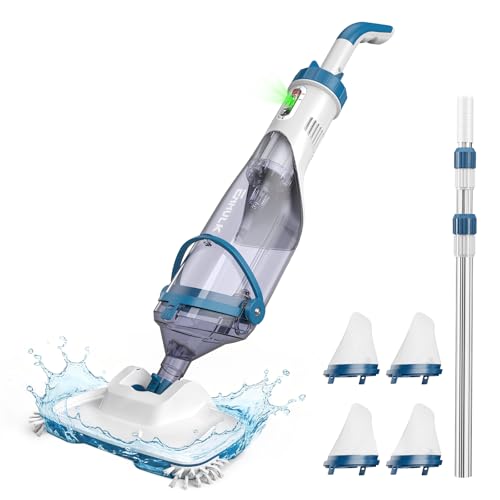
Wide head design covers more pool area.
Cordless operation enhances ease of use.
Long battery life ensures thorough cleaning.

Efficient and powerful 18.5 GPM suction.
Quick recharge with 1.5-hour supercharge technology.
Versatile use for pools, hot tubs, and spas.

Efficient cleaning with strong suction power.
Lightweight design for easy maneuverability.
Cordless operation enhances convenience and flexibility.

Easy-to-use telescopic pole for extended reach.
Cordless design ensures hassle-free maneuverability.
Powerful suction efficiently cleans pool debris.

Powerful suction enhances cleaning efficiency.
Rechargeable, offering up to 1-hour runtime.
Includes multiple vacuum heads and filter bags.

Rechargeable for convenient, cordless cleaning.
Telescoping shaft reaches difficult spots easily.
Interchangeable brush heads for versatile use.

Dual mode offers versatile cleaning options.
Magnetic drive system enhances cleaning efficiency.
Ultra fine mesh filters capture tiny debris.
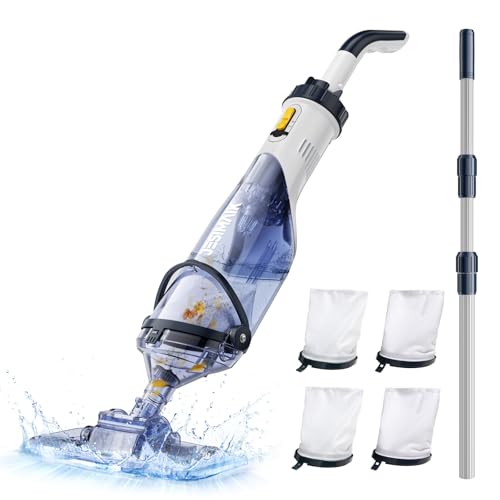
Powerful suction efficiently cleans debris quickly.
Long 60-minute runtime for extended cleaning.
Convenient cordless design with telescopic pole.
The useful question is not simply whether a product claims “powerful suction.” Look for model-specific evidence about what it can collect, how long it runs under stated conditions, and how safely it can be charged near water. A meaningful performance report would identify the exact product, water conditions, filter state, debris load, test method, measured flow, runtime, pickup, and coverage. The supplied reviews repeatedly found headline figures such as 18.5 or 19.5 gallons per minute, 25 to 75 minutes of runtime, or IPX8 water resistance without an independent report confirming them. Runtime can also vary by filter loading, debris, suction mode, and product version; several reviews found conflicting manufacturer figures.
For debris capture, prefer a stated filter rating, secure closure, usable capacity, and clear limits for leaves, sand, silt, and algae. Mesh counts such as 180, 300, or 500 do not by themselves establish micron capture or prevent blowback. A model-specific test from an ISO/IEC 17025-accredited laboratory is stronger evidence. Claims should also distinguish physical debris removal from filtration, circulation, sanitation, algae treatment, and chemical maintenance. A vacuum that says it is not designed for algae or heavy sludge is making a useful scope distinction.
Rechargeable products deserve particular scrutiny. Look for model-specific instructions covering dry-location charging, the supplied charger, charging-port condition, immersion depth, water temperature, and operation while people or pets are in the water. A public listing for the exact product and supplied charging system in UL Product iQ, Intertek ETL, CSA, TÜV Rheinland Certipedia, or another recognized independent directory is stronger than a logo or seller statement. CPSC recall and SaferProducts.gov searches can identify known warnings, but absence of a recall is not certification.
Also check pole reach, weight, brush and wheel design, liner compatibility, seals, corrosion limits, warranty, and replacement parts. Chlorinated or saltwater compatibility should be stated rather than assumed. Battery removability, replacement availability, and end-of-life instructions affect both service life and waste. Reusable bags can reduce routine consumable waste, but they do not resolve disposal of a failed lithium-ion battery.
Across the supplied products, no exact model and supplied charger had a publicly verified independent safety listing. Repeated cautions include charging only when the product and port are dry, charging indoors or away from the pool, using the supplied or original charger, and avoiding operation with swimmers or pets present. Several products lack documented depth, temperature, saltwater, corrosion, replacement-battery, or recycling limits. One product’s documentation included a Proposition 65 BPA warning; another had internally inconsistent battery information. Do not use these vacuums for fecal or vomit contamination, algae treatment, or water disinfection, and do not assume an IPX8 or runtime claim has been independently confirmed.
The reviews assess these vacuums as debris-removal appliances used around pool water. Higher scores reflect stronger model-specific documentation and clearer limits; they do not mean a product is independently certified when the review says no public listing or test was found.
This measures charging, battery, and charger safeguards against shock, overheating, burns, and fire. For pool vacuums, dry-port and indoor charging instructions, supplied-charger requirements, and battery warnings matter. Higher-scoring products generally provided concrete dry-location directions; lower-scoring products had conflicting battery information or fewer charging limits. No supplied product had a verified public safety listing for the exact system.
This measures credible water-ingress protection, operating depth or temperature limits, and no-charging-near-water instructions. It matters because these rechargeable tools are submerged during use but charged outside the water. Higher scores were associated with documented limits such as depth, temperature, full submersion, or dry-port instructions. Lower scores lacked a model-specific manual, rating, or independent ingress test.
This measures filter rating, capacity, closure security, leakage, and stated limits for leaves, sand, silt, and algae. A high-scoring product gives usable filter choices and containment instructions; a low-scoring one provides only a mesh label, unclear micron logic, or no retention test. Among the supplied products, the strongest documentation included stated micron ranges or multiple bags, but independent capture testing was generally absent.
This measures whether marketing keeps debris pickup separate from sanitation, circulation, filtration, algae treatment, and chemical maintenance. Higher-scoring products explicitly say they are not algae or water-treatment devices and describe routine spot cleaning. Lower-scoring documentation creates ambiguity about algae or broader cleaning claims. Every product still requires normal pool filtration, disinfectant, pH testing, and maintenance.
This measures resistance to chlorinated or saltwater exposure, seal failure, and loss of electrical or cleaning performance, along with replacement parts and warranty support. Higher scores came with some stated material or water-use limits, rinsing instructions, replaceable bags, wheels, or accessories. Lower scores offered no corrosion testing, saltwater limit, replacement seals, or parts pathway. No independent corrosion test was supplied.
This measures whether the exact product and supplied charging system appear in a public independent certification directory such as UL Product iQ, Intertek ETL, CSA, or TÜV Rheinland. It is a discriminator because a logo or seller statement is not enough. Scores clustered in the high 60s and 70s because no supplied product had a confirmed exact listing; a high score here still reflects relative documentation, not certification.
This measures repeatable third-party testing of the exact product under stated water, filter, debris, and operating conditions. It matters because advertised flow and runtime often omit filter loading, suction mode, or test setup. The supplied products mostly scored around 68 to 71, while some scored lower because documentation was inconsistent or missing. No reviewed product had the required independent performance report.
This measures whether batteries, filters, chargers, seals, and other wear parts can be replaced, and whether the maker provides take-back or recycling instructions. Higher-scoring products documented replacement batteries, chargers, reusable bags, or service support. Lower-scoring products had non-replaceable batteries or no end-of-life route. EPA guidance in the reviews says lithium-ion devices should not enter household trash or curbside recycling.
This measures whether recycled-content, recyclable, carbon, lower-waste, or safer-material claims are specific and traceable. Most supplied products made no such claim, which avoids unsupported green marketing but does not establish low impact. Higher scores reflected comparatively restrained or documented environmental positioning; lower scores offered little product-specific evidence. Reusable filters help with routine waste but do not remove battery e-waste.
This is a cordless, hand-guided pool vacuum with an integrated rechargeable lithium-ion battery, a brush head, a transparent collection area, and a 59-inch telescoping tube. It is intended for debris removal in above-ground and in-ground pools, spas, and hot tubs. The product weighs about 7.8 pounds and uses a 1.8-liter debris collection capacity, according to the available product manual and brand support material. The available manual states a 40 W, 18 V design, a 2,000 mAh battery, a 90-minute charge time, up to 50 to 60 minutes of operation, 1,100 GPH maximum flow, and IPX8 moisture protection. These are manufacturer-stated specifications, not independently verified test results. It includes 300-mesh and 500-mesh filter bags, and the manual specifically says it is not intended to treat algae blooms or replace appropriate chemical treatment and filtration.
This product suits a residential pool or spa owner who wants a hand-operated tool for spot-cleaning settled leaves, twigs, sand, and small debris, and who can follow the required routine of submerging it before use and charging it only with a dry port away from water. Its stated 59-inch tube and roughly 7.8-pound weight make it more appropriate for reachable steps, corners, shallow areas, and localized cleanup than for unattended whole-pool maintenance. It also suits users who already maintain normal circulation, filtration, water chemistry, and algae control.
It is not suited to buyers who require independently verified electrical certification, third-party performance testing, or a publicly documented ingress-test certificate for a rechargeable device used around water. It is also unsuitable as a sanitation, algae-removal, or filtration-system replacement, because debris pickup does not disinfect pool water. Households needing user-replaceable batteries, a published repair-parts system, or brand-provided lithium-ion recycling instructions should seek a product with those details documented. Users with vinyl liners, saltwater pools, or delicate finishes need compatibility confirmation before use.
The available instructions include useful operational safeguards. They direct users to fully submerge the vacuum before running it, use only the supplied charger, keep the charging port dry, avoid opening the battery pack or motor unit, and store the product clean and dry. The manual also identifies an IPX8 moisture-protection claim, but no public independent certification record was found to confirm that rating or the electrical safety of the supplied charging system. The product does not claim to disinfect water, and its stated exclusion of algae blooms is appropriate. Pool health still depends on maintained chlorine or bromine, pH testing, circulation, and filtration. The lithium-ion battery creates an end-of-life responsibility. EPA advises keeping lithium-ion batteries and devices out of household trash and curbside recycling because damaged batteries can ignite. No product-specific battery take-back, removal procedure, or recycling instruction was found.
This is a cordless, handheld pool vacuum for manual spot cleaning. It uses a rechargeable lithium battery, a filter bag inside the pump casing, interchangeable cleaning heads, and either a short handle or telescopic pole. The product documentation lists a 6.38-pound unit, a pole that extends from 35.8 to 87.5 inches, and up to 60 minutes of runtime. Those are manufacturer-stated specifications, not independently measured results. The supplied documentation describes four reusable filter bags, including finer bags for sand and silt and coarser bags for larger debris. It also describes a check valve intended to keep collected debris from dropping back into the pool when the vacuum is lifted. The instructions require full submersion before operation, say not to use it with swimmers present, and say the charging port must be completely dry before connecting the charger.
This product suits an above-ground or smaller residential-pool owner who wants a manually guided tool for leaves, sand, silt, and localized debris rather than an automated whole-pool cleaner. It is most appropriate where the user can follow the stated operating precautions, fully submerge the unit before switching it on, inspect and rinse the filter bag after use, and charge it indoors in a dry location. The adjustable pole is useful for owners who need more reach than a short handheld cleaner provides.
It is not suited to anyone who requires publicly verifiable third-party electrical certification for the exact vacuum and charger, or independently measured suction and runtime data. It is also unsuitable for poolside charging, use while swimmers are in the water, or households unable to keep children and long hair away from pool drains during cleaning. Buyers needing a product-specific ingress rating, documented saltwater durability, or a clear replacement battery and recycling pathway should choose a product with that documentation.
The safety documentation has several practical controls. It says to fully submerge the vacuum before operation, keep swimmers out of the pool during use, use the supplied charger, and ensure the charging port is completely dry before charging. It also directs users to rinse the filter bag and vacuum components with fresh water after use and store the product dry and shaded. No product-specific public safety certification listing or recall was located in the checked U.S. sources. This is a debris-removal tool, not a water-treatment device. Pool owners still need working circulation and filtration plus routine chlorine or bromine and pH testing, consistent with CDC guidance. The product documentation identifies rechargeable lithium cells but does not provide a removal or take-back path. EPA advises that lithium-ion batteries and products containing them should not go in household trash or curbside recycling, because damaged batteries can create fires. Use a dedicated battery or electronics collection program at end of life.
This is a cordless, handheld pool vacuum for manual spot cleaning. It uses a removable 13.4-inch head with side brushes, a short handle or telescopic pole, and a bagged debris chamber. The published instructions describe use in inground and above-ground pools, spas, inflatable pools, and hot tubs. The unit is listed at about 8.3 pounds and uses a 40 Wh lithium-ion battery pack. Manufacturer documentation states up to 18.5 gallons per minute of suction, up to 60 minutes of runtime, and a 1.5-hour charge. It also specifies 180 micron and 500 micron bags, plus a pole extending to 87.5 inches. These are manufacturer-stated figures, not independently tested results. The instructions include useful dry-port charging, submersion, and inspection directions, but no model-specific public safety listing or independent performance report was located.
This product suits a homeowner who wants a manually guided cordless tool for routine debris pickup from a small or medium residential pool, spa, or above-ground pool. It is most appropriate for leaves, twigs, dirt, and sand when the user can empty and rinse the bag after use. The supplied long pole may be useful where cleaning from the pool deck is preferable. It also suits a buyer willing to treat the stated runtime and suction figures as manufacturer claims rather than independently confirmed performance.
It is not suited to users who require independently verified electrical certification for the exact vacuum and charger, especially where charging practices cannot be closely controlled around children, pets, or wet areas. It is also not the right tool for anyone expecting water disinfection, circulation, or replacement of the pool's main filtration system. Buyers with saltwater pools, unusually deep pools, delicate liners, or a need for long-term repair parts should seek documented compatibility, depth limits, surface guidance, and service support before use.
The published instructions include several relevant electrical precautions. They say to use the supplied charger, ensure the charge port is completely dry, inspect the unit for damage, and store it cool and dry. They also state that the unit shuts off after a minute when it is not submerged. However, no exact public UL, ETL, CSA, or TÜV listing for the product and supplied charger was verified in the searched certification resources. This vacuum removes physical debris only. It is not presented as a disinfectant, and pool water still needs appropriate sanitizer and pH control. CDC guidance identifies disinfectant concentration and pH as the primary defenses against swimming-related germs. The lithium-ion battery is not described as user-replaceable, and no take-back guidance was located. EPA advises keeping lithium-ion batteries out of household trash and curbside recycling, using dedicated battery or electronics collection instead.
This is a cordless, manually operated pool vacuum for lifting settled leaves, sand, and other visible debris from pool floors, steps, and hot tubs. It uses a telescopic pole and reusable debris bags rather than connecting to the pool’s circulation system. A matching retail specification identifies an ABS-plastic body, a lithium-ion battery, and a supplied pole reaching about 7 feet. The advertised 18.5-GPM flow, 40 W motor, up to 60-minute runtime, 1.5-hour charge time, four filter bags, and IPX8 water-resistance rating are manufacturer-stated retail claims. No model-specific instruction manual, accredited test report, or public U.S. safety-listing record was located to independently confirm those figures or the supplied charging system. It is therefore a spot-cleaning tool, not a substitute for the pool pump, filter, disinfectant, or water testing.
This product suits an owner of a small to medium residential pool, above-ground pool, spa, or hot tub who wants a manual tool for occasional removal of leaves, grit, and settled debris between normal filter cycles. The stated 7-foot pole is most useful where the user can reach the target area from the deck or can work close to the water. It also fits a buyer prepared to rinse reusable bags after use and to treat the published flow and runtime figures as unverified manufacturer claims.
It does not suit anyone who needs independently documented electrical safety certification, independently measured runtime, or verified water-ingress protection before operating a rechargeable device around water. It is also a poor fit for large pools needing full-floor cleaning in one session, households that cannot safely keep charging equipment dry and away from the pool, or users seeking sanitation, algae control, or water clarification. Those jobs still require the pool’s circulation, filtration, chemical treatment, and routine water testing.
The product contains ABS plastic and a rechargeable lithium-ion battery, according to matching retail specifications. It is marketed as IPX8 waterproof, but no model-specific test record or accessible operating manual was located to verify that claim or to confirm safe charging directions. Searches of public U.S. safety-listing sources did not locate a listing for the exact product and supplied charger. No product-specific CPSC recall or public warning was located in the records checked. Removing visible debris is not water treatment. CDC guidance identifies disinfectant concentration and pH as the primary defenses against swimming-related illness, with filtration and recirculation also needing normal maintenance. No recycled-content, recyclable, carbon, or other environmental claim was verified for this product. The available information also does not explain battery removal, official replacement parts, or take-back options. EPA recommends taking household lithium-ion batteries to battery collection or household hazardous-waste facilities rather than placing them in household trash.
This is a cordless, pole-mounted pool vacuum for manually sweeping settled debris from pool floors, steps, and shallow ledges. It uses reusable mesh bags rather than the pool pump, and Betta states that it includes a 250-micron bag for larger debris and a 75-micron bag for silt and sand. A standard telescoping pole is required but is not included. The manufacturer documents operation only while fully submerged, a 3-meter maximum depth, water between 41°F and 95°F, and charging indoors in a dry location with the supplied charger. It also states compatibility with fresh water and saltwater up to 5,000 ppm. Runtime is not consistently documented, however. The product page states up to 75 minutes, while the manual also says 90 minutes on a full charge. No model-specific independent performance report or publicly verifiable safety listing was located in the checked directories.
This suits an adult pool owner who already has a standard telescoping pole and wants a self-contained tool for occasional manual removal of leaves, sand, silt, and settled debris. It is most applicable for spot cleaning steps, ledges, spas, and floor areas where setting up a hose vacuum is disproportionate to the mess. The manufacturer-stated 75-micron fine bag is particularly relevant when visible sand or silt is the target, provided the user follows the submersion and dry-location charging instructions.
It is not for anyone needing independently verified run time, suction, particle removal, or electrical certification before using a rechargeable appliance around a pool. It also does not suit users unwilling to manually sweep with a separately purchased pole, empty bags regularly, and manage a lithium-ion battery. Do not treat it as sanitation equipment, or as a substitute for chemical testing, disinfection, circulation, and filtration. It should not be used on a brittle, damaged, or wrinkled liner without addressing that condition first.
The useful safety information comes from the manufacturer's model-specific manual, not from independent certification. It directs users to charge only with the supplied charger in a dry indoor place, not with wet hands or while barefoot. It also sets a 3-meter depth limit, a 41°F to 95°F operating range, and a pH range of 7.0 to 7.4. The manual says to remove the unit and empty the bag if the impeller stops from a clog. No model-specific public safety listing or independent cleaning test was located in the checked certification resources. The manufacturer states saltwater use up to 5,000 ppm and sells replacement bags, but does not disclose battery removal, replacement battery availability, or a take-back program. At end of life, lithium-ion batteries should not go in household trash or curbside recycling. EPA advises using a dedicated battery collection or household hazardous-waste route. Proper pool disinfection and water testing remain essential for swimmer health.
This is a cordless, rechargeable handheld pool and spa vacuum with an aluminum telescoping pole, two cleaning heads, a removable filter bag, and a supplied charging cable. It is intended for routine pickup of loose debris from pool or spa surfaces, rather than for water filtration, circulation, or disinfection. Manufacturer-linked documentation supports dry indoor charging, use only with the supplied charger, a 12.6 V, 1 A charger output check, and rinsing and emptying the filter bags after use. Seller specifications associated with this version state 18.5 gallons per minute suction, about 45 minutes of runtime, a 2.5-hour charge, and a 20 to 69 inch pole. Those performance figures were not supported by an identified independent laboratory test. Documentation found for the product family also contains conflicting water-port language, so poolside charging should be treated cautiously.
This product suits an owner of a small or medium above-ground pool, spa, or hot tub who needs occasional manual pickup of leaves, sand, and visible loose debris between normal filtration cycles. It is most appropriate for someone able to inspect the filter bag often, rinse the unit after use, and charge the vacuum indoors in a dry, temperature-controlled location. The long manufacturer-stated pole may be helpful where reaching steps, corners, or shallow floors without repeated bending matters more than independently demonstrated cleaning speed.
It is not suited to households that require independently certified electrical equipment for frequent wet-environment use, or anyone who expects a product to replace a pool filter, circulation system, chlorine or bromine treatment, or water testing. Avoid relying on it for heavy opening debris, dead algae, silt, or sludge because no micron rating or independent pickup test was located. It is also a poor fit where a replaceable battery, published repair parts, or a documented battery recycling and take-back program is a requirement.
No product-specific recall, CPSC warning, or public safety-listing record was located in the searched U.S. sources. The available manual provides meaningful precautions, including indoor dry charging, supplied-charger-only use, damaged-equipment checks, and keeping children away. However, public independent certification of this exact product and charging system was not found. The conflicting charging-port wording makes dry charging away from the pool especially important. This vacuum removes debris, but it does not disinfect water. CDC guidance still calls for routine chlorine or bromine and pH testing and maintenance. The manufacturer documentation describes a lithium-ion battery as non-replaceable. That limits repair after battery failure and can increase e-waste. EPA advises keeping lithium-ion batteries out of household trash and curbside recycling, then using a battery collection or household hazardous-waste program. No recycled-content, recyclability, carbon, or other environmental claim was found for this product.
This is a cordless, handheld pool vacuum for manual cleaning of above-ground and in-ground pool floors, steps, corners, spas, and similar small water features. It is listed as 31 inches long and 8.4 pounds, with two interchangeable vacuum heads and four filter bags. A third-party retail listing identifies the body material as plastic and describes a 1.18-liter stated capacity. UIRWAY states 26.5 GPM suction, up to one hour of runtime, IPX8 water resistance, and use to 118 inches deep. Those figures are manufacturer claims, not independently verified test results. The public product information does not provide a model-specific manual, charging safety instructions, filter micron rating, materials list, or an independently verifiable safety listing for the product and supplied charger. Battery specifications also need clarification because publicly repeated listing data are internally inconsistent.
This product fits an owner of a small or moderate-depth above-ground pool, spa, or in-ground pool who wants to manually spot-clean settled leaves, sand, coarse debris, or small pebbles without connecting a hose to the pool pump. It is most suitable when the user can confirm that the claimed 118-inch depth covers the pool area being cleaned, can lift and guide an 8.4-pound tool, and is comfortable treating the stated runtime and suction figures as manufacturer claims rather than independently measured performance.
It is not well suited to households that need independently documented electrical certification, especially where children, frequent pool use, or cautious battery-charging practices make verified charger safety important. It is also a poor fit for very large pools that need long continuous cleaning sessions, pools deeper than the stated 118-inch limit, or owners who require quantified fine-silt filtration. Do not treat this vacuum as a substitute for circulation, chemical treatment, water testing, or disinfection. Its public instructions do not establish that it can replace any of those functions.
The important health limitation is that this is a debris-removal tool, not a water-treatment system. UIRWAY claims it can pick up algae and mixed debris, but no claim or evidence shows that it sanitizes water or replaces chlorine, pH testing, circulation, or filtration. CDC guidance continues to treat disinfectant level and pH management as the primary controls for swimming-related germs. UIRWAY states IPX8 water resistance, but no independent certification record or test report was located for this product. Public information also does not provide clear dry-location charging directions. The rechargeable lithium-ion battery should not enter household trash or curbside recycling. EPA directs consumers to use separate battery or electronics recycling channels. Four replaceable filter bags are included, which may delay disposal of the whole product, but battery removability, replacement availability, and manufacturer take-back instructions are not documented.
This is a cordless, hand-operated pool and spa vacuum with a 94-inch telescoping aluminum pole, two cleaning heads, a filter bag, and a finer micro-filter bag. Intex says it is intended for PureSpas and above-ground pools up to 18 feet in diameter. Its manual specifies a sealed, non-replaceable nickel-metal-hydride battery, USB charging from a 5 to 5.2 V, 1 A plug charger, and roughly 40 to 50 minutes of use after an 8 to 10 hour charge. The manufacturer states that the switch is IPX8-rated and that the unit shuts off automatically when it is not submerged. The published instructions give meaningful charging safeguards, including indoor dry-location charging and checking that the charging receptacle is dry. However, no exact-product UL, ETL, CSA, or other public NRTL listing was located, and no independent test report was found for suction, runtime, filtration efficiency, or pool coverage.
This product fits an owner of a small above-ground pool or PureSpa who wants to remove routine settled debris by hand, can work within the stated up-to-18-foot pool limit, and has a dry indoor place to charge it. It is also better suited to someone willing to empty and rinse filter bags frequently, use the micro-filter bag for smaller particles, and follow the manual's requirement to keep the charging port and hands dry during charging. It is a debris-removal tool, not a replacement for the pool's circulation, filtration, chemical testing, or disinfection routine.
It is not suited to buyers who require independently verifiable electrical certification for the exact vacuum and charging system, because a public NRTL listing was not located. It is also a poor fit where the vacuum must handle documented fine-silt performance, large leaf loads, or a larger pool with proven coverage, since no model-specific third-party performance testing was found. Do not use it to remove fecal contamination. CDC guidance says not to vacuum poop from pool water, and proper disinfectant and pH control remain necessary for healthy pool or spa water.
The strongest safety evidence is the manufacturer manual, not an independent certification record. It specifies a sealed nickel-metal-hydride battery, a low-voltage USB input requirement, dry indoor charging, and no charging while operating. Intex also states that the switch is IPX8-rated and the vacuum shuts off when lifted from water. These are useful safeguards, but the IPX8 claim and complete charging system were not independently verified in a public product listing. The product page carries a California Proposition 65 warning for BPA and reproductive harm. The company sells replacement filters, a micro-filter bag, cable, brushes, cover, and pole, but the battery is explicitly non-replaceable. The manual says to dispose of the product according to local laws. EPA guidance says nickel-metal-hydride rechargeable batteries and devices containing them should not enter household trash or curbside recycling, and should go to appropriate battery or electronics collection programs.
This is a cordless, hand-held pool and spa vacuum with an aluminum pole, a debris bin, interchangeable cleaning heads, and a small lithium-ion battery. It is intended for spot cleaning hot tubs and small pools underwater, rather than for filtering, circulating, or disinfecting water. The model-specific manual lists a 3.6 V, 3,350 mAh battery, 0.3 L debris basket, 180-micron base filter, 10-micron cotton filter, IPX8 rating, and pole length up to 200 cm. The documentation does not agree on several key specifications. The model manual states up to 90 minutes and 1.5 m³/h flow, while the manufacturer product page states up to 70 minutes and 12.8 gallons per minute. The manufacturer also states that its spa head can work in 0.6-foot water and includes three fine filter socks. No public independent performance test or exact-model electrical safety listing was located.
This product fits an owner of a hot tub, spa, or small above-ground pool who needs a lightweight manual tool for picking up settled debris between normal maintenance sessions. It is most suitable where the user can work slowly with a pole, empty a 0.3 L bin often, rinse the filter after use, and charge the unit completely away from water. The shallow-water spa-head claim may be useful for benches, steps, and low-water areas, though that claim remains manufacturer-stated.
It is not suited to anyone who needs independently verified runtime, flow, waterproofing, or charging-system certification, especially households that require documented electrical safety assurance around children or frequent pool use. It is also a poor fit for large pools, heavy leaf loads, or routine whole-pool cleaning because it is a small hand-held collector with a 0.3 L bin. Avoid treating it as a substitute for the pool or spa filtration, circulation, chlorine or bromine, and water-testing routine.
The useful health boundary is clear. This is a debris-removal tool, not a sanitizer or water-treatment system. Removing visible dirt can support normal maintenance, but CDC guidance still calls for maintaining disinfectant and pH, testing water, and maintaining the installed filtration and recirculation system. The product materials are described as ABS in the catalog record, while the model manual identifies a small lithium-ion battery and claims IPX8 water resistance. That ingress claim was not backed by a public independent test record. The manual provides some safety directions, including use of original components, a 5 V charging input, a leakage-protected grounded outlet, and disconnecting power when the charger is not needed. No exact-model public safety listing was found. At end of life, its non-replaceable lithium-ion battery must be removed before scrapping and sent to a professional recycler. EPA advises keeping lithium-ion devices out of household trash and curbside recycling because they can create fire hazards.
This is a cordless, hand-guided pool vacuum with a double cleaning head and telescopic pole. It is intended to pick up loose leaves and debris from small above-ground pools, spas, and hot tubs, rather than connect to the pool pump or replace the installed filtration system. An independent retailer listing corroborates a 40 W motor, a claimed 18.5 gallons-per-minute flow rate, and an adjustable 91 to 222 cm pole. The same retailer reports a claimed 1.5-hour charge time and up to 60 minutes of operation, plus a covered charging port. These are manufacturer-stated specifications, not independently tested results. The available product information describes plastic construction and a lithium-ion battery, but it does not provide a filter micron rating, an ingress-protection rating, battery chemistry details, or a model-specific operating manual with poolside charging instructions.
This product fits an owner of a small above-ground pool, spa, or hot tub who needs a portable tool for occasional pickup of visible leaves and loose settled debris. The adjustable pole can be useful where steps, corners, and shallow-to-deeper areas need reach without setting up a hose. It is most appropriate when the owner already maintains normal circulation, filtration, disinfectant concentration, and pH, and can charge the unit indoors in a dry location while treating the advertised runtime as unverified.
It is not well documented for households that need independently verified electrical certification, a published water-ingress rating, or explicit charging instructions for use around children and pool decks. It is also a poor match for large pools, heavy sand or silt loads, persistent algae, or routine deep cleaning, because no filter fineness, debris capacity, or repeatable performance testing was found. Do not treat it as a substitute for the pool filter, circulation system, or chlorine and pH management.
The available listing stays within a relatively narrow claim scope. It presents the product as a debris vacuum and does not claim to disinfect water, kill algae, or replace normal filtration and chemical treatment. That distinction matters because CDC guidance identifies disinfectant concentration and pH as the first defenses against swimming-related illness. No model-specific recall, regulatory warning, or exposure warning was identified in the searched U.S. consumer-safety sources. The product is described as using a lithium-ion battery, but no public certification listing, battery-removal instructions, battery chemistry detail, take-back program, or replacement-parts catalog was located. EPA advises keeping lithium-ion batteries and battery-containing devices out of household trash and curbside recycling, using appropriate battery or electronics recycling instead. The product also makes no substantiated recycled-content, lower-carbon, or recyclability claims.


