Best Overall

Kozyard Alexander Hardtop Gazebo 10x12
Durable aluminum and steel construction withstands weather.
Includes curtains and netting for added privacy.
Stylish design enhances any outdoor space.
 Daniel Kenitz
Durable aluminum and steel construction withstands weather.
Includes curtains and netting for added privacy.
Stylish design enhances any outdoor space.

Durable aluminum frame ensures long-lasting stability.
Double galvanized steel roof offers superior protection.
Includes netting and curtains for privacy and comfort.

Durable polycarbonate roof withstands various weather conditions.
Wall-mounted design offers space-saving functionality.
Stylish and modern addition to outdoor spaces.

Sturdy aluminum frame ensures durability.
Double galvanized steel roof for strong weather resistance.
Included curtains and netting offer extra privacy.

Durable double metal roof withstands all weather.
Sturdy aluminum alloy frame ensures longevity.
Includes net and curtain for added privacy.

Durable galvanized steel roof for year-round use.
Includes breathable netting and privacy curtains.
Sturdy aluminum frame ensures lasting stability.

Sturdy aluminum frame ensures long-lasting durability.
Double polycarbonate roof offers superior weather protection.
Includes curtains and netting for added privacy.

Durable aluminum frame ensures long-lasting stability.
Double roof design offers enhanced ventilation.
Includes curtains and netting for added privacy.
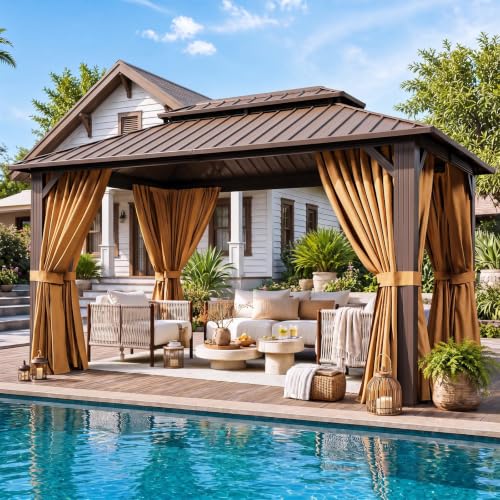
Durable hardtop offers superior weather protection.
Spacious design accommodates larger gatherings comfortably.
Sturdy frame ensures long-lasting stability.

Durable spruce frame ensures long-lasting stability.
Double galvanized steel roof offers superior protection.
Includes nettings and curtains for added privacy.
Whether one works safely depends less on the headline material or size than on the complete load path. A useful product should identify how roof panels stay attached, how posts connect to the actual foundation, and what wind, snow, and exposure conditions the design covers. A statement such as “windproof,” “all-weather,” or “snowproof” is not a site rating. Even numeric claims can mislead when they conflict between listings, omit exposure conditions, describe only proper anchoring, or provide no calculation, test method, or roof-panel-retention evidence. A local permit, setback, footing, deck-capacity, and drainage review may still be necessary.
Look for a model-specific installation manual, hardware list, and engineering package. The strongest storm documentation would include calculations sealed by a licensed professional engineer, with the license checkable through the relevant state engineering board, and terminology consistent with ASCE/SEI 7 design-load criteria. An accredited laboratory report should identify the exact model, test method, conditions, and report number; laboratory accreditation and scope can be checked through A2LA or ANAB, including ISO/IEC 17025 scope where relevant. No supplied product had that level of independent storm-load proof.
Roof performance also needs more than “waterproof.” Look for documented panel joints, fasteners, flashing or wall interfaces, gutters, drainage paths, maintenance instructions, and—where applicable—water-penetration testing such as ASTM E2140. UV claims should identify the actual roof, curtain, or netting material and a result from a recognized method such as AATCC TM183 or ASTM D6603. Percentages such as 99.99% or UPF 100 are not independently meaningful without the tested material, color, method, and report.
For occupied spaces, confirm the manual’s limits for grills, open flames, patio heaters, fuel-burning equipment, and hot cooking surfaces. A flame-resistance claim should identify the material and an applicable test such as NFPA 701. Also check material and coating disclosures, safety data sheets, Proposition 65 information where applicable, replacement parts, warranty terms, inspection intervals, snow removal, storm procedures, and the number of people required for assembly. Environmental claims should state the material, percentage, scope, and end-of-life limitation; vague “eco-friendly,” recyclable, or non-toxic language is not enough.
Recurring safety concerns in the supplied products are substantial. None had independently traceable engineering proof for local wind and snow loads, and many had generic anchoring instructions that did not resolve concrete, deck, soil, footing, or exposure conditions. Several products had conflicting dimensions, materials, wind figures, snow limits, or weights. No product should be assumed suitable for hurricane, high-wind, exposed coastal or ridge-top, heavy-snow, or uncertain-foundation conditions without local professional review. The supplied reviews also repeatedly lacked clear fire-use limits, so grills, open flames, fire pits, and unapproved heaters should not be used beneath these structures. Multi-person assembly, permanent anchoring, fastener inspection, drainage upkeep, and prompt snow removal are recurring requirements.
The topics below focus on the risks and evidence that matter most for a rigid, roofed outdoor structure. Scores distinguish stronger documentation and design provisions within this supplied set; they do not turn an unsupported claim into a certification or replace site-specific review.
This measures whether the exact gazebo has sealed engineering or traceable testing for wind, snow, and roof-panel retention. It matters because a rigid roof can collapse or shed panels when the load path is inadequate. Among the supplied products, higher scores were associated with somewhat clearer storm procedures or better-described construction, but no product had independently verified local storm-load performance; the lowest score reflected especially weak wind and snow evidence.
This measures whether instructions explain safe attachment to the actual concrete, deck, soil, or footing rather than presenting generic stakes or bolts as universal. Anchoring is how wind forces reach the foundation. Higher-scoring products distinguished surfaces or gave more practical attachment guidance; lower-scoring products offered only broad hardware suggestions without footing design, deck-capacity, soil, exposure, or permit guidance.
This measures panel joints, fasteners, sealing, gutters, flashing, and drainage paths that move water away from occupants and foundations. It matters because leaks, pooling, falling water, and corrosion can follow from small assembly or maintenance failures. Higher scores in this set went to products with integrated gutters, sloped roofs, drainage channels, sealing instructions, or clearer runoff paths; lower scores lacked drawings, testing, or detailed leak-control evidence.
This measures whether the actual roof, curtains, or netting has tested UV-blocking or UPF performance rather than an unsupported percentage. It matters because occupants may interpret a roof or sidewall claim as meaningful sun protection. Higher-scoring products had more specific shade or material information, but no supplied product had a located model-specific AATCC, ASTM, or equivalent report. Low scores reflected unquantified “UV resistant” or percentage claims.
This measures whether the manual clearly limits grills, open flames, heaters, and hot equipment and supports any flame-resistance claim. It matters because curtains, netting, coatings, and a roofed enclosure can increase fire, burn, or smoke risks. Scores were generally similar, with somewhat higher results where instructions explicitly kept flames and heat sources away; lower results reflected no clear exact-product guidance. Do not infer permission from product photographs.
This measures disclosure of roof, frame, coating, curtain, netting, and water-repellent materials, including specific warnings when warranted. It matters because outdoor finishes and treated textiles can be long-lived exposure sources, while “non-toxic” would require evidence. Higher scores reflected clearer basic material identification; lower scores reflected missing coating chemistry, safety data sheets, textile composition, treatment details, or Proposition 65 context.
This measures whether instructions identify helpers, lifting precautions, gloves, fastener checks, inspection intervals, snow removal, storm procedures, and replacement support. It matters because these structures are heavy, tall, and often assembled overhead. Higher-scoring products called for several adults and gave practical inspection or weather-care steps. Lower scores lacked exact manuals, maintenance schedules, fire limits, or clear procedures for connections and severe weather.
This measures whether size, materials, wind, snow, UV, waterproofing, occupancy, and year-round-use claims are precise and internally consistent. Higher-scoring products had dimensions and basic construction repeated by supporting documentation. Lower scores reflected conflicts such as 10-by-12 titles paired with 10-by-10 manuals, incompatible wind or snow figures, conflicting frame materials, or implausible floor-area fields. A precise listing is not automatically a tested one.
This measures whether important claims are traceable to an accredited laboratory or licensed engineer identifying the exact model, method, and report. It matters because marketplace badges and generic certificates do not establish structural or UV performance for the delivered gazebo. Scores were tightly grouped because no supplied product had a complete independent engineering or laboratory record; higher relative scores reflected better documentation, not verified certification.
This measures whether the exact model, manufacturer, importer, or substantially similar design has recalls, credible incident reports, and an effective remedy. It matters because a documented correction can reveal and address panel, connection, fire, or collapse hazards. Supplied products generally scored similarly because no exact-product CPSC recall was located in the reviewed searches. That absence is not proof that a structure is engineered or safe for every site.
This measures corrosion-resistant construction, replaceable roof and fabric parts, repair support, warranty coverage, and material breakdown. A durable gazebo can avoid premature disposal of a large mixed-material structure. Higher scores in the supplied set reflected replacement curtains or netting, model-specific parts information, longer or clearer warranties, and maintenance guidance. Lower scores had no parts catalog, uncertain materials, short coverage, or no repair pathway.
This measures whether recycled-content, recyclable, low-waste, or similar claims identify the material, percentage, scope, and limitations. It matters because a gazebo combines metals, coatings, plastics, hardware, and textiles that may have different end-of-life routes. Most supplied products had little substantiated environmental accounting. The strongest score came from a product listing a Recycled Claim Standard blended certification and at least 50% recycled material, although the covered materials and scope still needed clarification.
This is a freestanding 10 by 12 foot hardtop outdoor pavilion for a patio, deck, or backyard seating area. It has an aluminum frame, a galvanized-steel double roof, four posts, curtains, and mosquito netting. The assembly manual independently available through Lowe's documents the model-specific parts, roof-panel fastening sequence, curtain and net installation, and concrete-anchor reference. Kozyard states that the roof is 29-gauge galvanized steel and that gutters carry rainwater down the posts. It also states a 2,500-pound snow-load and 60 mph wind figure when properly anchored. Those weather figures are manufacturer claims, not accompanied by a sealed engineering package, site-specific design criteria, or independently traceable test report. The manual recommends anchoring after assembly and calls for regular fastener inspection.
This product suits a homeowner with a level concrete pad or a professionally evaluated deck, enough room for a 10 by 12 foot structure, and a plan to secure it after assembly. It is most appropriate for routine shade, rain cover, screened dining, or lounging in mild to moderate local conditions where the owner can inspect and retighten connections. It also fits buyers who can assemble a large multi-part structure with several helpers, ladders, gloves, and time for careful roof-panel alignment.
It is not suited to sites exposed to high winds, substantial or drifting snow, coastal corrosion, or conditions requiring code-approved structural design without first obtaining site-specific engineering and permit guidance. It is also unsuitable for buyers expecting a ready-to-install ground stake solution, since the manual instead points to deck or concrete anchoring. Households planning to grill, run an open flame, or use a fuel-burning heater under the roof should choose an arrangement with explicit manufacturer safety clearances and ventilation rules.
The meaningful health issue is structural, not a verified protective certification. Kozyard publishes a detailed assembly manual that calls for multiple helpers during key steps, concrete or deck anchoring, silicone sealing at seams, gloves for roof work, and regular bolt checks. That is useful operational guidance. However, the public evidence reviewed does not include a model-specific independent wind, snow, roof-retention, UV, or flame-resistance report. The product combines aluminum framing, galvanized-steel roof panels, polyester privacy curtains, and mesh netting. These materials may support long service when maintained, and Kozyard states that replacement parts remain available beyond warranty. The roof, frame, bolts, and nuts have a one-year warranty, while the curtains and netting have 90 days. No model-specific recycled-content, recyclability, coating chemistry, or end-of-life documentation was located. No matching CPSC recall or warning was found in the recall search reviewed.
This is a freestanding 10 by 12 foot outdoor gazebo intended to create a covered patio, dining, or lounge area. The manufacturer describes an aluminum frame, powder-coated galvanized-steel double roof, sliding privacy curtains, and zippered insect netting. Its stated covered area is 120 square feet, with an approximately 9.6 foot peak height. The manufacturer supplies anchoring hardware and says the structure can be secured to a wood deck or concrete with M6 expansion bolts. It also recommends three to four people and two to four hours for assembly. Wind, snow, waterproofing, and UV figures are manufacturer claims, not independently verified product-specific ratings. No sealed engineering package, laboratory report, or accredited third-party test report was located for this product.
It suits a homeowner seeking a roughly 120 square foot, freestanding covered sitting or dining area on an already level concrete pad or structurally suitable deck. The buyer should be prepared for a multi-person installation, use the supplied or appropriate site-specific anchors, and treat the curtains and netting as seasonal accessories. It is most appropriate where local permit rules, setbacks, and wind exposure have been checked, and where the owner can inspect fasteners and remove roof snow after storms.
It is not for locations with severe wind, heavy or drifting snow, hurricane exposure, or uncertain ground and deck capacity unless a qualified local professional establishes a compliant foundation and anchoring design. It also does not fit buyers who need independently tested storm ratings, a sealed engineering package, or verified UV performance. Avoid treating it as a fire shelter for grills, open flames, patio heaters, or hot equipment because product-specific heat-use limits and flame-resistance evidence were not located.
The manufacturer identifies a powder-coated aluminum frame and powder-coated galvanized-steel roof. It names Interpon AkzoNobel for the frame finish, but does not provide a coating safety data sheet, full material breakdown for the curtains and netting, or product-specific chemical exposure documentation. A product-specific Proposition 65 disclosure was not located in the reviewed materials. The roof and frame warranty is stated as five years, which can support longer use if warranty service is available. However, no replacement-parts catalog or roof-panel repair program was located. The manufacturer makes a lifecycle carbon reduction and offset statement, but provides no quantified footprint, accounting boundary, certification, or offset records. No recall for this exact product or Aoxun gazebo was located in the CPSC records searched, but no independent structural testing was found.
This is a wall-mounted, lean-to patio cover intended to attach to a structurally sound exterior wall and cover roughly 175 square feet. Published product materials describe an aluminum frame, steel columns, triangular braces, and 5 mm polycarbonate roof panels. The listed footprint is about 19.5 feet long by 8.9 feet deep, with an 8.2-foot peak height. Published instructions call for at least two adults, wall anchoring, final tightening of connections, periodic bolt checks, debris clearing from drainage paths, and snow removal when accumulation is excessive. The product materials state a 38 mph wind rating when properly anchored and a 55 lb per square meter snow-load figure, but no sealed engineering package, site-specific load calculation, or independent test report was located for this product.
This format suits an owner with a broad, level concrete patio beside a sound exterior wall, enough clearance for a nearly 20-foot-long cover, and the ability to use at least two adults for installation. It is most appropriate where shade and light-rain cover are the main goals, and where the buyer can independently confirm local attachment, drainage, setback, and permit requirements. It also suits someone prepared to inspect fasteners, clear roof drainage paths, and remove excessive snow as the published care guidance directs.
It is not appropriate for exposed coastal, mountain, hurricane, high-wind, or heavy-snow sites unless a qualified local professional verifies the wall connection, anchors, foundation, and design loads. It is also unsuitable for renters or households unable to make structural wall penetrations, or for decks without confirmed capacity for the attachment and leg loads. People seeking a fully documented all-weather structure, tested UV protection, clear fire and grill rules, or readily documented replacement parts should not treat the marketplace claims as proof of those protections.
The meaningful health issue is structural safety rather than a health treatment claim. Published instructions identify roof panels and metal components as heavy, call for two adults during assembly, require attachment to a stable wall, and advise periodic fastener inspection, drainage clearing, and removal of excessive snow. Those are useful precautions, but the published wind and snow figures are not backed by a located engineering seal or independent test report. Product materials also do not provide clear guidance for grilling, open flames, patio heaters, or other heat-producing equipment beneath the cover. Materials are described as aluminum, steel or iron, and polycarbonate, with an anti-rust finish stated for the steel columns. No product-specific safety data sheets, coating chemistry, Proposition 65 disclosure, recycled-content statement, end-of-life guidance, or replacement-parts catalog was located. No recall or corrective action for this exact product was located in the searched U.S. consumer-safety sources, but that absence is not independent proof of long-term safety or durability.
This is a freestanding 10 by 12 foot hardtop gazebo intended to cover a patio, garden, or lawn seating area. Independent retail records corroborate a 120-square-foot footprint, 9.5-foot listed height, 209-pound listed weight, galvanized-steel roof, and aluminum frame. Curtains and insect netting are included. The available model-specific instructions describe a double-layer roof, pre-drilled bases, sloped roof drainage openings, and a two to three person assembly process. Those are manufacturer-stated design details, not independently load-tested performance results. No sealed engineering package, site-specific wind rating, snow-load rating, accredited laboratory report, or roof-panel-retention test for this exact product was located. The advertised 99.99 percent UV figure was also not accompanied by a material-specific UV test report.
It suits a homeowner with a level, permanent patio area who wants roughly 120 square feet of covered outdoor space for dining or seating, and who can treat installation as a multi-person project. It is most appropriate where a local installer or building department can confirm the required anchoring method for the actual slab, deck, or footings. The included privacy curtains and netting are useful for users who want adjustable enclosure and insect screening, while accepting routine cleaning, drainage-hole clearing, fastener checks, and snow removal.
It is not suited to sites exposed to high winds, substantial snow, coastal corrosion, or uncertain soil conditions when no local engineering or permit review is available. Buyers who need a documented wind rating, snow-load capacity, tested UV protection, or certified roof-panel retention should select a product with those model-specific records. It is also a poor fit for solo assembly, renters unable to create a properly anchored foundation, or households expecting to use grills, open flames, or unapproved heaters beneath the roof without explicit manufacturer and local fire-code clearance.
The usable health protections are mainly physical shade, rain cover, and insect screening. The roof is listed as galvanized steel and the frame as aluminum, while the instructions describe curtains and netting but do not provide a complete textile, coating, water-repellent, or chemical disclosure. A retailer posts a California Proposition 65 warning for the product, yet gives no chemical identity, affected part, or exposure information. That warning should be treated as an unresolved disclosure issue, not proof of a measured user exposure. No model-specific UV laboratory report was found for the advertised 99.99 percent protection figure. No independent engineering or accredited test report was found for wind, snow, waterproofing, or panel retention. The instructions advise clearing snow, keeping drainage openings clear, tightening fasteners, and checking anchors. No exact-product recall was located in the CPSC search results reviewed, but absence of a located recall is not structural certification or evidence of safe installation in severe weather.
This is a freestanding 8 by 8 foot hardtop gazebo with a stated 64 square feet of floor area and a listed weight of 168.3 pounds. It is intended as a permanent patio, deck, lawn, or garden shelter. The product includes a double metal roof, curtains, and mesh netting. Its listing says the roof uses 27-gauge steel sheet and that the side textiles are polyester. The manufacturer states a maximum snow load of about 15 pounds per square foot and advises clearing heavy snow promptly. It also describes only basic wind resistance and recommends additional securing in wind. No model-specific sealed engineering package, wind-speed rating, laboratory report, or independently traceable certification was located. The listing is internally inconsistent about the frame, calling it aluminum alloy in the title and feature copy while its specifications identify alloy steel as the frame material.
This product fits a household seeking a compact, freestanding outdoor cover for a small paved patio, garden sitting area, or deck that has already been assessed as capable of supporting a gazebo. It is most appropriate where the owner can use multiple adults for installation, securely anchor it to a suitable foundation, periodically tighten and inspect connections, and clear snow before it approaches the manufacturer-stated 15 psf maximum. The supplied curtains and mesh suit users who value adjustable privacy and insect screening.
It is not suited to exposed, high-wind, hurricane-prone, or heavy-snow sites where local code or site conditions require engineered wind and snow calculations. It is also unsuitable for renters or households unable to provide a permanent, appropriately designed anchoring system. Avoid treating it as a structure for grilling, open flames, fuel-burning heaters, or other hot equipment because no product-specific fire-use limits or fabric flame-resistance evidence were located. Buyers needing fully documented materials, certified UV performance, or long-term parts commitments should also look elsewhere.
The listing identifies steel roof sheet, a metal frame described inconsistently as aluminum alloy and alloy steel, plus polyester curtains and mesh. It also claims an anti-rust three-layer finish, but it does not identify the coating chemistry, water-repellent treatment, or any product-specific chemical disclosure. No model-specific UPF result, AATCC ultraviolet test, or recognized UV-product certification was located, so the generic UV-protection statement should not be read as a measured protection level. The manufacturer provides a numerical snow-load statement and advises clearing heavy snow, but no sealed engineering calculation, independent laboratory result, or wind-speed rating was located. Searches of U.S. consumer-product recall sources did not identify a recall for this exact gazebo. No specific recycling, recycled-content, recyclable-material, or other environmental claim was found. Metal construction may be durable if maintained, and the manufacturer says replacement parts can be supplied for delivery damage, but warranty terms and routine spare-part availability are not clearly documented.
This is a freestanding 12 by 16 foot hardtop outdoor gazebo, intended to create a covered patio, deck, or lawn sitting area. The catalog describes an aluminum frame, galvanized-steel double roof, netting, and curtains. A closely matching manufacturer-listed 12 by 16 model documents a powder-coated aluminum frame, galvanized-steel roof, post-routed rain drainage, insect netting, and polyester curtains. Those are manufacturer statements, not independently tested findings. The product needs a level installation surface, multiple helpers, a ladder, gloves, and anchoring after assembly. The manufacturer says expansion bolts can secure it to decks or concrete, and advises checking local requirements. Wind, snow, UV, waterproofing, and year-round-use statements were not backed by an engineer-sealed package or accredited laboratory report for this exact product.
This product suits an owner with a large, level patio or concrete pad who wants a roughly 192 square foot sheltered seating or dining area with curtains and insect screening. It is most appropriate where the owner can assemble a heavy multi-part structure with at least two additional helpers, follow the maintenance steps, and arrange anchoring that is appropriate to the actual surface. Local permit, zoning, setback, and homeowner-association requirements should be checked before installation.
It is not suited to sites with high design winds, substantial snow accumulation, hurricane exposure, weak or unknown deck framing, uneven ground, or no practical way to anchor the posts properly. It is also a poor fit for buyers who need independently certified wind, snow, UV, or water-intrusion performance. Households planning to grill, use open flame, or run unapproved heaters beneath the roof should select an arrangement with explicit fire-clearance guidance and comply with local fire rules.
The matching manufacturer material description identifies aluminum framing, galvanized-steel roof panels, polyester curtains, insect netting, and a powder-coated finish. That is useful basic composition information, but it does not disclose coating constituents, textile treatments, water-repellent chemistry, or safety data sheets. A California Proposition 65 warning was not found for the closely matching model listing, but absence of a warning is not a chemical-safety certification. The manufacturer advises avoiding open flames, clearing heavy snow, securing or removing fabric sidewalls in extreme wind, and periodically tightening fasteners. No exact-product CPSC recall was found in the searched records. The brand’s carbon-reduction and offset statement is broad and provides no product-level footprint, material quantities, recycled-content percentage, certificate, or end-of-life plan. Warranty information also conflicts, with five years stated for roof and frame in one section and one year stated in the FAQ.
This is a freestanding gray outdoor gazebo with an approximately 10 by 12 foot footprint, a double polycarbonate roof, aluminum construction, and curtains plus insect netting. The published dimensions are 142.91 by 117.32 by 107.09 inches, with stated space for 6 to 10 people. Those dimensions, materials, and occupancy are manufacturer-stated details reproduced by an independent retailer. The available product information says the curtain and netting system is removable and that grass installations should use ground spikes and wind ropes. It also describes the unit as waterproof and UV protective. No model-specific sealed engineering package, laboratory report, exact assembly manual, wind rating, snow-load rating, UV transmittance result, or drainage drawing was located in the verification work.
This product fits a homeowner seeking a roughly 10 by 12 foot freestanding cover for fair-weather patio or lawn use, with manufacturer-stated curtains for privacy and netting for insects. It is most appropriate where the owner can prepare a level site, use the stated grass anchors and wind ropes when applicable, recruit several adults for installation, and regularly inspect fasteners and roof panels. The site should have mild, predictable weather or an owner willing to remove snow and secure the structure before storms.
It is not suited to locations with meaningful snow accumulation, high winds, hurricane exposure, or permit requirements that call for engineered structural calculations. It is also a poor fit for elevated decks, concrete slabs, or installations needing specified footing and attachment details, because no model-specific foundation guidance was located. Households planning to grill, operate propane heaters, use fire pits, or hang heavy fixtures under the roof should choose a structure with explicit fire-clearance, heat-use, and load limits.
The disclosed core materials are aluminum for the structure, polycarbonate for the double roof, and polyester for the removable curtains. That basic material identification is useful, but it does not identify alloy grades, polycarbonate formulation, coatings, fabric treatments, flame resistance, water-repellent chemistry, or chemicals of concern. No model-specific laboratory report substantiating UV blocking, waterproofing, or structural performance was located. No environmental claims, recycled-content documentation, end-of-life guidance, warranty terms, or replacement-parts catalog was located. Searches of CPSC recall materials did not identify a recall for this exact product, but that is not independent confirmation of roof-panel retention or storm safety. CPSC has recalled other hardtop gazebos after roof panels dislodged in high winds, illustrating why this product's missing wind and panel-retention evidence matters.
This is a freestanding, roughly 12 by 10 foot outdoor pavilion with an aluminum frame, double-layer polycarbonate roof, zippered insect netting, and removable polyester privacy curtains. The available model-specific manual lists an overall size of 142.91 by 117.32 by 107.09 inches and a product weight of 197.3 pounds. It is intended for a patio, lawn, or other outdoor sitting area. The manufacturer-stated setup guidance is unusually concrete for a marketplace gazebo. It calls for ground spikes and wind rope on grass, appropriate concrete bolts on concrete, and removal of curtains and netting during strong winds. The manual also describes a roof gutter path, annual connection checks, snow clearing, and silicone sealant for gaps. No sealed engineering package, wind-load report, snow-load rating, accredited laboratory report, or tested UV-blocking percentage was located for this exact product.
This product fits a household that wants a fixed outdoor sitting or dining zone of about 120 square feet, has a level patio or lawn, and can recruit at least two additional people for assembly. It is most appropriate where the owner can anchor it promptly, clear roof debris and snow, remove the side fabrics before severe weather, and accept manufacturer-stated rather than independently verified structural performance. The curtains and zippered netting suit routine warm-weather use where privacy and insect control matter.
It is not suited to locations with high wind exposure, substantial recurring snow, hurricane conditions, or a site where local rules require engineered plans or a permitted permanent structure. It also does not fit a deck without confirmed capacity and attachment details, renters who cannot establish an adequate foundation, or anyone seeking documented storm-load certification. Households intending to grill, use a fire pit, or operate a fuel-burning heater beneath it should choose a structure with explicit fire and heat-use guidance.
The available product documentation identifies aluminum framing, polycarbonate roof panels, polyester curtains, and mesh netting. It instructs users to clean the frame and panels with mild soap and water, avoid harsh cleaners on the powder-coated finish, clear accumulated snow and debris, and store the curtains and netting indoors in extreme weather. Those steps can reduce corrosion, roof loading, mildew, and premature fabric wear. The manufacturer states that the roof and frame carry a five-year warranty, while the curtains and netting carry one year. It also makes a broad lifecycle carbon measurement, reduction, and offset claim, but no product-specific carbon inventory, offset program, recycled-content percentage, material end-of-life guidance, or third-party environmental certification was located. Searches of publicly available CPSC recall and warning records did not identify a recall or safety warning for this product, but no independent structural or UV test report was found.
This is a freestanding, self-assembled hardtop gazebo sold for a backyard, patio, deck, or lawn. The product documentation describes a brown, roughly 10 by 12 foot structure with a powder-coated galvanized-steel frame, double galvanized-steel roof, privacy curtains, and insect netting. The listed weight is 200 pounds, and the manual says assembly needs three to four adults. The manufacturer states that the sloped double roof promotes ventilation and drainage, and that the structure can handle winds up to 38 mph and up to 6 inches of snow. Those weather figures were not accompanied by sealed engineering calculations, a site-specific design package, or independent test reports. Public documentation also gives conflicting footprint information, including dimensions that calculate closer to 10 by 10 feet than the stated 10 by 12 foot format.
It suits a homeowner seeking a large, open-air shade and insect-screen enclosure for fair-weather patio use, who has a level installation area and can organize three to four capable adults for assembly. It is most appropriate where the owner can anchor every post to a suitable, verified surface and can routinely inspect fasteners, clear snow, and remove the side fabrics before severe weather. The steel roof and separate curtains and netting support everyday outdoor seating, dining, and bug control rather than an engineered shelter use.
It is not suited to sites with high wind exposure, hurricane conditions, substantial or repeated snow loads, uncertain soil, or an elevated deck without a qualified attachment plan. Buyers needing permit-ready drawings, engineered wind or snow ratings, or documented roof-panel testing should not treat the stated 38 mph and 6-inch figures as a substitute for those records. It also is not for use around grills, fire pits, open flames, or portable heaters beneath the roof, particularly while curtains or netting are installed.
The key health protection is procedural rather than certified. The manual directs users to keep heat sources and open flames away from the curtains and netting, use multiple adults during assembly, anchor the structure, inspect connections, and remove roof snow. It also describes insect netting and a double roof, but the claimed UV protection has no published UPF rating or model-specific laboratory report, so it should not be treated as quantified sun protection. Galvanized steel roof panels and a powder-coated galvanized-steel frame may support a longer service life if maintained, but no public warranty term, replacement-parts catalog, coating safety data sheet, recycled-content documentation, or end-of-life guidance was found. No product-specific environmental certification was identified. Searches of CPSC recall and safety-warning resources found no Breezestival product-specific recall or warning as of August 16, 2026, which is not proof of absence of future issues.
This product is a roughly 10 by 10 foot, four-post outdoor gazebo intended to create a covered seating, dining, or gathering area for a patio, deck, garden, or lawn. Independent marketplace listings corroborate the basic format, a wood-frame pavilion with a double-tier galvanized-steel roof, privacy curtains, and mosquito netting. The advertised footprint is about 100 square feet and is marketed for groups rather than as a portable canopy. The most important limitations are evidentiary. Seller materials claim up to 120 mph wind resistance, 90 percent UV blocking, flame-resistant fabrics, and FSC-certified spruce, but no model-specific sealed engineering package, laboratory report, certification code, or issuer registry record was located. Assembly guidance for a closely matching 10 by 10 version calls for multiple adults, anchoring through the feet, snow removal, and removal of curtains and netting in strong wind.
It suits a homeowner seeking a fixed 10 by 10 foot shaded zone for ordinary fair-weather dining, seating, or insect-controlled backyard use. The buyer should have a level installation area, be prepared to use anchors appropriate to concrete, a properly designed deck, or another verified foundation, and be able to recruit several adults for installation. It is better matched to locations where snow can be cleared promptly and strong-weather preparations are practical, rather than to an unattended installation.
It is not suited to sites exposed to hurricane-force winds, heavy or drifting snow, coastal corrosion, or severe storms unless a qualified local professional establishes a compliant foundation, anchoring plan, and weather-load suitability. It is also unsuitable for buyers who need independently documented wind, snow, UV, flame-resistance, or chemical-safety performance. Households intending to grill, use fire pits, operate propane heaters, or use other hot equipment beneath the roof need clearer product-specific fire-clearance instructions than were located.
The product uses a wood frame, galvanized-steel roof, metal hardware, curtains, and mesh netting. A separate retail listing for the same named configuration claims FSC-certified spruce, galvanized brackets, black stainless-steel hardware, and no California Proposition 65 warning. However, no certificate number or forestry-chain documentation was located to independently confirm the wood claim, and the absence of a listed warning is not a complete chemical-material disclosure. The steel roof and maintainable wood structure could support a longer service life if coatings, roof fasteners, and drainage are routinely inspected. The available guidance also advises clearing snow, checking connections, and removing side fabrics in strong wind. No model-specific independent tests, replacement-parts catalog, or recycling instructions were located. No U.S. product-specific recall or safety warning was located in the searches performed, but the absence of a found recall does not validate the advertised structural or fabric-safety claims.


