Best Overall

BlackSmith Biometric Safe 1.0 Cub
Advanced fingerprint recognition ensures quick, secure access.
Dual alarm system enhances security measures.
Convenient LCD display for easy operation.
 Daniel Kenitz
Advanced fingerprint recognition ensures quick, secure access.
Dual alarm system enhances security measures.
Convenient LCD display for easy operation.

Fireproof and waterproof bag for extra protection.
Dual alarm system enhances security features.
Removable shelf offers flexible storage options.

Quick access with biometric fingerprint technology.
Durable construction with carbon steel cable.
Stealth mode feature for discreet use.

Quick-access biometric fingerprint scanner.
Compact design fits multiple handguns.
Durable construction with anti-theft features.

Quick access with reliable fingerprint technology.
Convenient backlit keypad for easy nighttime use.
Compact size perfect for discreet storage.

Fireproof and waterproof features enhance protection.
Programmable keypad offers customizable security.
Smart alert system provides added peace of mind.

Electronic keypad offers easy and secure access.
Compact design fits easily in small spaces.
Removable shelf allows customizable storage.
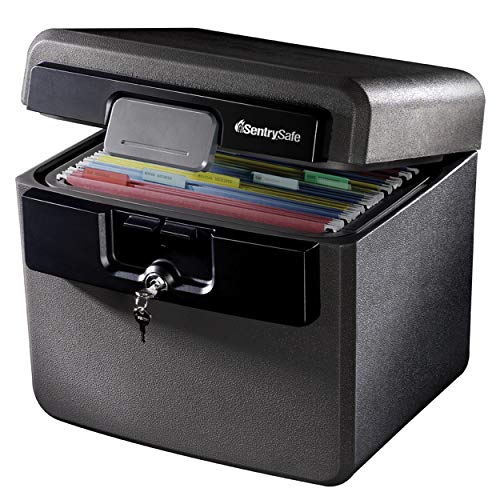
Durable protection against fire and water damage.
Convenient size for easy document storage.
Secure key lock ensures added safety.

Easy-to-use digital keypad for quick access.
Compact size fits discreetly in small spaces.
Reliable fireproof protection for important documents.

Offers reliable protection against fire and water.
Features a user-friendly digital keypad.
Spacious interior for versatile storage needs.
For break-in protection, look for an exact-model listing under **UL 687** for burglary-resistant safes or **UL 1037** for residential security containers. Steel gauge, bolt count, concealed hinges, alarm functions, and “anti-theft” wording are construction or feature descriptions—not substitutes for a tested resistance rating. Anchoring matters too: mounting holes and included screws are useful only when the instructions specify suitable substrates, anchor requirements, and installation limits. A portable or lightly anchored safe can remain vulnerable to grab-and-go theft.
For fire protection, a meaningful claim should identify the test standard, duration, internal-temperature class, and any impact-test limits. **UL 72** is the relevant record-protection standard cited in the supplied reviews. A claim such as “30 minutes at 1,550°F” is more useful than an undefined “fireproof” label, but it still needs to match the exact model in **UL Product iQ** or the **Intertek** directory. A fireproof document bag included with a safe does not establish that the safe itself protects its contents. Likewise, material flammability classifications do not prove finished-product fire endurance.
Water claims should state the tested depth, duration, orientation, and pass criterion, with an exact-product report or listing from an appropriately accredited laboratory. “Waterproof” wording can refer only to an accessory bag, while some products explicitly say the cabinet is not water resistant. Fire insulation may also retain moisture, so delicate contents may need airtight secondary packaging.
Headline capacity figures deserve caution. Several supplied listings claim more cubic feet than their own outside dimensions could enclose. Usable capacity must account for walls, doors, bolts, shelves, lining, and clearance. Check interior dimensions, shelf layout, door opening, and the actual fit of folders, electronics, medication, or any other intended contents. Conflicting published weight or capacity figures are a reason to plan conservatively.
Electronic and biometric locks add convenience but also create battery, reset, enrollment, and lockout dependencies. A dependable product should document low-battery warnings, failed-entry behavior, emergency power, override-key control, and a non-biometric backup path. Firearm use requires particular caution: the supplied reviews repeatedly found no exact-model California firearm-safety-device listing for biometric products, and broader CPSC actions involving other biometric safes show why a fingerprint reader should not be treated as proof of child-access safety.
Across the supplied products, the recurring safety boundary is clear: these are generally not substitutes for independently rated burglary protection, tested fire or flood protection, or verified firearm storage. Several products also require secure anchoring and careful control of override keys. Document chests and soft organizers may help with organization or limited fire protection, but are not designed for tool attacks; some manuals exclude firearms, weapons, medication, or combustible materials. No supplied product supports treating vague fire, water, capacity, or anti-theft language as a tested limit.
The following topics explain the practical safety, environmental, and evidence questions that matter when choosing a home safe. Scores reflect the supplied reviews; higher-scoring products generally had clearer operating instructions or better-supported claims, while lower-scoring products more often had conflicting dimensions, missing manuals, or unsupported protection language.
This measures whether children and other unauthorized people can be kept out without creating avoidable lockout or emergency-access hazards. Among the supplied products, stronger results came from documented key, keypad, or emergency-power backups and clear lockout instructions; weaker results came from unverified biometric access or products marketed for firearms without a firearm-device listing.
This covers predictable keypad, fingerprint, key, and backup-power behavior, including enrollment, failed-entry lockout, low-battery warnings, reset controls, and emergency access. Higher-scoring products documented several access routes and battery procedures. Lower-scoring biometric products lacked an accessible model-specific manual or independent performance record, making fingerprint reliability and reset behavior uncertain.
This measures whether buyers can identify the exact model, manufacturer, support route, warranty, and any future safety remedy. Products with model numbers, manuals, published support, replacement-key procedures, or warranties scored better. Lower scores reflected missing manuals, unclear warranty details, limited support information, or weak documentation for electronics and override systems.
This measures whether fire, water, burglary, biometric, alarm, steel-thickness, and capacity claims match the exact product and disclose limits. Higher-scoring products used specific dimensions or stated protection limits and acknowledged security boundaries. Lower-scoring products claimed capacities larger than their exterior volume or used fireproof and waterproof language that applied only to an included bag.
This asks whether the exact product—not merely a material, component, seller statement, or accessory—has a current third-party listing or test record. The supplied scores were mostly moderate because no model-specific UL or ETL record was found for many products. A high result requires a matching certification mark, model, standard, and issuer in UL Product iQ or the Intertek directory.
This measures tested resistance to prying, drilling, punching, lock attacks, and removal. Higher-scoring products had better-supported anchoring or construction information, but the reviews repeatedly stressed that bolt count, steel gauge, concealed hinges, and “anti-theft” wording are not burglary ratings. A low result means the product is basic protection rather than a UL 687 or UL 1037 container.
This measures whether the exact product has a verified duration, internal-temperature class, and any claimed impact protection appropriate to its contents. Products with specific manufacturer fire limits scored better than products with vague fireproof wording, but several lacked a current exact-model listing. A document chest may protect paper for a stated interval while remaining unsuitable for digital media or other sensitive contents.
This measures independently tested water protection with defined depth, duration, orientation, and pass criteria. Higher-scoring products were more candid about being non-water-resistant or had specific manufacturer water claims, but most lacked an exact-model test record. Buyers should distinguish cabinet protection from a water-resistant document bag and check warranty exclusions and submersion limits.
This measures whether the safe can be fixed securely using suitable hardware, mounting holes, substrate instructions, and load limits. Higher-scoring products supplied bolts and gave more detailed mounting guidance. Lower-scoring products merely said “wall mount” or included hardware without specifying anchor type, hole pattern, substrate, or installation limits. A light safe is especially dependent on correct anchoring.
This measures whether stated capacity reflects real interior dimensions, shelf clearance, door space, and content limits. Higher-scoring products supplied concrete interior measurements or a useful file layout. Lower-scoring products claimed more cubic feet than their outside dimensions could contain, or had conflicting marketplace and manufacturer specifications. Buyers should measure the actual contents rather than trust nominal volume.
This measures durability, repairability, recycled-content evidence, battery burden, and disposal guidance. The supplied products generally used steel or alloy steel and replaceable AA batteries, which avoids permanently embedded packs. The clearest environmental distinction was a displayed Recycled Claim Standard certification, while most lower-information products lacked parts programs, material declarations, battery instructions, or product take-back guidance.
This is a compact alloy-steel home safe intended for cash, jewelry, documents, and small valuables. Blacksmith identifies the product as the SF0602, with a removable shelf, fingerprint reader, keypad, physical override keys, a Type-C temporary-power connection, alarm functions, and hardware for wall or floor mounting. It uses four replaceable AA batteries. The most useful model-specific documentation is manufacturer-stated, not independently certified. Blacksmith specifies 16-gauge steel, two locking bolts, storage for up to 50 fingerprints, and an alarm after three failed code or fingerprint attempts. It also documents an override-key route and instructs owners not to keep spare keys inside. However, no exact-model UL, ETL, burglary, fire, or water-protection listing was located. Capacity claims conflict, with the manufacturer calling it 1.0 cubic foot while the retailer record says 1.2 cubic feet, and the stated 9.8 by 13.8 by 9.8 inch internal dimensions calculate to about 0.77 cubic foot.
This product suits an adult storing modest-value, non-firearm household items such as jewelry, cash, passports, small documents, or electronic media, where compact placement and several manufacturer-documented access methods matter. It is particularly relevant where the owner can install it into a suitable wall or floor substrate, keep the override keys separately secured, replace AA batteries promptly, and treat the fingerprint reader as a convenience layer alongside a strong user code. Its small documented interior makes it better for compact contents than binders, large files, or bulky equipment.
It is not suited to buyers who need independently verified burglary resistance, fire endurance, water protection, or a certified residential security container. It should not be relied on as a firearm storage solution for a household with children or untrained users, because this product is not presented as a firearm safe and its biometric system has no independent exact-model validation. It is also a poor fit for full-size documents, thick binders, or anyone who needs confirmed 1.0 or 1.2 cubic foot usable space, since the published dimensions do not support those figures.
No product-specific CPSC recall or warning was located in the checked sources. That is not proof that the biometric lock has been independently tested. CPSC has recalled and warned about biometric safes from other companies after unauthorized openings, including incidents involving firearms. This product is marketed as a home safe, and the manufacturer says its 1.0 cubic foot format is not compatible with its pistol rack. Physical keys should remain outside the safe, and fingerprints, codes, and battery operation should be tested before relying on it. The body is manufacturer-described alloy steel with a powder-coated finish, which may support a longer service life than a plastic enclosure. The electronic lock uses replaceable AA batteries rather than a sealed rechargeable pack, but Blacksmith does not publish recycled-content, repair-parts, material-disclosure, battery-disposal, or product end-of-life guidance. Used batteries should be handled through an appropriate household battery collection route rather than discarded loosely.
This is a 33.1-pound, keypad-operated home cabinet safe with a keyed override, two removable shelves, interior key hooks, a sensor light, and an included document bag. The published exterior size is 15 by 11.9 by 17.8 inches. It runs on four replaceable AA alkaline batteries and can be opened with a passcode, backup key, or external USB-C emergency power source. The model-specific manual documents a three-attempt alarm, a vibration alarm mode, four supplied expansion bolts, and backup access methods. These are manufacturer-documented operating features, not independent security testing. DAYI promotes pry resistance, four live-locking bolts, and fire and water protection for the included bag, but no model-matched UL, ETL, burglary, fire endurance, or water-intrusion certification record was located. Published capacity and interior measurements also cannot be cleanly reconciled with the exterior dimensions.
It suits an adult household that wants organized, everyday storage for cash, passports, small documents, spare keys, or modest valuables, and can anchor the unit to an appropriate wall. It is most relevant where keypad convenience matters but battery failure remains a concern, because the manual documents both a physical override key and external emergency power. The buyer should measure the intended contents first, since the published capacity and dimensional information are not fully consistent, and should treat the supplied bag as an accessory rather than a verified protective enclosure.
It is not suited to people needing independently rated burglary, fire, flood, or digital-media protection. Buyers storing irreplaceable records, high-value jewelry, or contents exposed to a serious fire or standing water need defined, model-specific test limits, which are not provided here. It is also not appropriate as a firearm safety device where child access is a concern, because it is not marketed or verified as a listed firearm safety device. Avoid relying on it unanchored, or mounting it where the wall construction and anchors have not been assessed.
The keypad uses four replaceable AA alkaline batteries rather than a sealed internal battery pack. The manual directs owners to use alkaline batteries, warns against rechargeable batteries, and provides a low-battery signal plus external emergency power. It also requires owners to change the default passcode and keep backup keys outside the safe. No product-specific recall or public safety report was located in the reviewed CPSC recall and safety-report resources. DAYI states that the enclosure is alloy steel, which may support a long usable life if maintained and securely installed. However, no recycled-content certification, detailed material declaration, replacement-parts program, or end-of-life guidance was located. The manual provides no battery-disposal instructions. EPA guidance recommends checking local options and, where available, recycling used alkaline batteries rather than treating battery disposal as an afterthought. The fire and water claims concern the included bag, not independently verified protection from the metal enclosure.
This is a compact, 2.6-pound carbon-steel lock box intended for handguns and small valuables. The product page lists exterior dimensions of 10.83 by 8.66 by 2.76 inches and 260 cubic inches of capacity. It uses fingerprint access, a digital passcode, or a mechanical key, and it requires four AA batteries that are not included. The manufacturer states that it opens by fingerprint in one second, includes an interior LED, and comes with a two-foot security cable plus two installation screws. The same listing expressly says it is not water resistant and makes no fire-rating claim. No exact-product UL, ETL, California firearm-safety-device roster entry, or independent burglary, fire, water, or biometric test record was located in the checked official registers.
This product suits an adult who needs compact, temporary storage for a small handgun or small valuables in a drawer, vehicle, office, or bedside location. It is best matched to situations where the owner can keep the mechanical key controlled separately, verify every enrolled fingerprint during setup, and attach the included cable to a suitable fixed object. Its stated exterior height and lightweight format favor compact items and space-limited locations rather than broad firearm compatibility or long-term document protection.
It is not suited to households that need independently certified child-access protection for a loaded firearm, particularly where children or untrained people may reach the product. It is also unsuitable for protection against a determined break-in, fire, flooding, or prolonged moisture exposure. Buyers needing a product for a specific handgun, optic, magazine, holster, or document should not rely on the stated two-to-three-pistol claim without measuring the actual contents, because usable interior dimensions and fit limits were not provided.
The key health and safety issue is access control. The product has a mechanical-key fallback, but no exact-product third-party certification or test record was located for its fingerprint programming, lock reliability, or resistance to forced entry. CPSC has issued serious warnings and recalls for other biometric firearm safes after unauthorized fingerprint access was found. Those actions do not name this product, but they make independent validation and careful setup important for any comparable biometric lock. The product page lists steel materials and replaceable AA batteries, rather than a sealed rechargeable pack. Metal construction may support a longer service life, but no recycled-content claim, repair-parts program, warranty detail, or end-of-life guidance was located. Used batteries should be handled through appropriate local battery collection or recycling channels. The product is expressly listed as not water resistant, so moisture exposure can also affect both stored contents and its electronics.
This is a compact, 2.6-pound portable handgun lock box intended for a nightstand, vehicle, or other close-at-hand location. The product listing gives exterior dimensions of 10.83 by 8.66 by 2.76 inches and lists fingerprint, electronic-combination, and mechanical-key access. It also lists a security cable and two installation screws. The steel construction, quick opening, and fit for two or three handguns are manufacturer-stated. No exact-product UL, ETL, or California Department of Justice certification record was identified in the checked public registries. The listing does not claim fire or waterproof protection and labels the product not water resistant. Its stated 260-cubic-inch capacity is problematic because the listed exterior dimensions calculate to only about 258.9 cubic inches, before allowing for steel walls, lining, lock hardware, or door clearance.
This product suits an adult seeking a small, portable lock box for short-range storage of one or a small number of compact handguns or other valuables, where a mechanical key can be kept separately and the box can be secured with its supplied cable or screws. Its shallow listed dimensions make it relevant to bedside, vehicle, or travel-adjacent use where a full-size safe is impractical. The user should independently test every access method before storing a firearm.
It is not suited to households needing independently certified child-access protection, proven resistance to forced entry, or a product that can qualify as a documented firearm safety device. It is also unsuitable for protection from fire, flooding, or prolonged water exposure, since no such protection is claimed. Buyers storing several full-size handguns, firearms with optics, or bulky valuables should not rely on the stated capacity, because the claimed volume exceeds the listed outer dimensions.
No recall or product-specific CPSC warning for AIRMuch A3 was identified in the checked public sources. That is not evidence that the fingerprint reader has been independently validated. CPSC has documented serious unauthorized-opening failures in multiple other biometric firearm-safe models, including models sold on Amazon, so fingerprint access should be treated as a convenience feature until this product's exact lock behavior is tested by the owner. The listed mechanical key is an important alternate path, but its storage and emergency-access procedure could not be verified without an exact-product manual. The listing describes alloy steel or carbon steel construction, which may offer a durable enclosure, but it provides no recycled-content claim, repair-parts commitment, warranty detail, or end-of-life guidance. Battery type and disposal instructions were not available in the checked product materials. Replaceable household batteries should be handled under local disposal rules, and rechargeable or lithium batteries should be taken to an appropriate battery or electronics collection program rather than placed in household trash.
This is a compact, 18.74-pound metal home safe with exterior dimensions of 13.78 by 9.84 by 9.84 inches. It uses a fingerprint reader, a 3 to 8 digit keypad code, or two emergency keys. The supplied materials also describe a removable shelf, interior light, silent keypad mode, four AA batteries, and a USB-C emergency-power input. The maker states that it stores up to 30 fingerprints and can recognize one in under 0.3 seconds. The published instructions describe low-battery replacement, temporary lockout after repeated failed attempts, override-key access, and temporary USB-C power. Those are useful backup paths, but no independent certification or product-specific test record was located for burglary resistance, biometric security, fire endurance, or water intrusion. Its stated 0.80 cubic-foot capacity also exceeds the unit's calculated external volume, so it should not be treated as a reliable usable-storage figure.
This product suits an adult who wants compact, organized storage for small valuables such as passports, cash, keys, jewelry, or small electronics, and who can securely mount it to an appropriate wall, floor, or cabinet substrate. It is more appropriate where keypad, fingerprint, and physical-key alternatives are valued, and where the owner will keep emergency keys outside the safe, maintain fresh batteries, test access methods after setup, and accept that protection claims are manufacturer-stated rather than independently certified.
It is not suited to buyers needing independently certified resistance to burglary, fire, flooding, drilling, or prying. It is also not appropriate as the sole protection for firearms in a home with children or untrained users, because no product-specific listing on the California firearm safety-device roster or independent biometric access test was located. Anyone storing standard documents, binders, large electronics, or contents that require a known internal volume should avoid relying on the stated capacity, which conflicts with the exterior dimensions.
The direct safety concern is access control. The published instructions provide emergency keys and external USB-C power for a dead battery, and advise registering fingerprints from several angles. Those measures can reduce ordinary lockout risk, but the biometric mechanism has not been independently verified for this exact product. CPSC has issued serious warnings and recalls involving other biometric firearm safes that permitted unauthorized access. No recall or regulator action specifically identifying this product was found in the reviewed public sources. The safe uses metal construction and replaceable AA batteries, rather than an embedded rechargeable pack, which can simplify battery replacement. The documentation does not identify recycled content, repair parts, electronics recycling, or an end-of-life product program. EPA recommends checking local options or using battery recyclers for used alkaline AA batteries. The manual does not provide equivalent disposal guidance.
This is a 38-pound, keypad-operated steel home safe measuring 12.2 by 14.96 by 23.62 inches. It has three removable shelves, an interior light, a wrong-code alarm, two override keys, an external battery box, and hardware for wall or floor mounting. The seller describes cold-rolled steel construction, three locking bolts, and a 50 mm door, but these construction and attack-resistance claims were not independently verified. The listing’s strongest concrete provisions are the non-biometric keypad and physical-key backup paths, plus supplied mounting hardware. Important claim limits are unresolved. No exact-product UL or ETL protection listing, fire duration, internal-temperature class, or water-intrusion test was located. The listing explicitly says the safe is not water resistant while marketing a fireproof, waterproof document bag. Its 4.6-cubic-foot capacity is also not credible, because the stated outside dimensions total only about 2.49 cubic feet before allowing for steel walls, door clearance, and shelves.
This product suits an adult storing routine household paperwork, passports, small electronics, medications, or modest valuables who can anchor a 38-pound safe to a suitable wall or floor and keep the override keys controlled separately. Its configurable shelves and modest external footprint are practical for a closet, office, dorm room, or apartment. It is most appropriate where the goal is basic controlled access and organization, with the keypad, external battery box, and physical keys used as documented access options rather than as evidence of certified security performance.
It is not suited to people who need independently rated burglary, fire, flood, or digital-media protection. Do not treat the included document bag as evidence that the safe itself resists water, since the product page says the safe is not water resistant. It is also unsuitable as the sole protective container for firearms or other dangerous items where unauthorized access could cause injury, because no firearm-device certification or independent lock test was found. Buyers needing accurately defined usable volume should not rely on the 4.6-cubic-foot claim.
There is no biometric reader, which avoids the particular fingerprint-enrollment failure mode involved in several recent U.S. safety actions for unrelated biometric firearm safes. This product still uses an electronic keypad, so the physical override keys should be secured away from the safe and access should be tested after setup. No product-specific recall, regulatory action, or exposure warning was found in the checked U.S. consumer-safety sources. The seller identifies cold-rolled steel and states a six-year return or exchange warranty with lifetime technical support. That may support longer use, but no recycled-content certification, replacement-parts catalog, material declaration, or end-of-life plan was found. The safe has external battery support and replaceable power use is implied, yet no battery chemistry or disposal instructions were located. Household batteries should be handled and recycled according to local programs and applicable battery guidance, not assumed suitable for curbside recycling.
This is a compact, steel electronic lock box for small documents, cash, jewelry, and other household valuables. Its stated exterior size is 13.8 by 9.8 by 9.8 inches, while the stated usable interior is 13.6 by 7.2 by 9.7 inches. The removable shelf can be adjusted or taken out. It uses four AA batteries, which are not included. The exact-model manual documents a keypad with a 3 to 8 digit user code, a separate master code, two emergency keys, and a 5 V external backup-power socket. It also documents timed lockouts after repeated wrong entries. Four expansion bolts and mounting instructions are supplied. The product is explicitly listed as not water resistant, and no exact-model independent burglary, fire, or water-protection certification was located.
This product suits an adult who wants a compact, fixed-location lock box for modest-value household items, such as passports, small documents, spare keys, jewelry, or cash. It is most appropriate when installed on a stable, dry floor, shelf-supported wall location, or other solid mounting surface using the supplied hardware. The buyer should be prepared to change the default code immediately, keep the emergency keys outside the box in a separate secure location, and replace AA batteries when the low-battery indicator appears.
It is not suited to anyone needing independently certified resistance to burglary, drilling, prying, fire, or water exposure. It should not be relied on as a fire-document container, a waterproof storage solution, or a substitute for a purpose-built firearm storage device. Households with children or other unauthorized users should recognize that access depends on secure code management and keeping the emergency keys inaccessible. It is also unsuitable where it cannot be securely anchored, because its approximately 18-pound weight makes unmounted removal easier.
The product uses replaceable AA batteries rather than a sealed rechargeable pack, which can extend service life by allowing battery replacement. The manual gives detailed battery safety instructions, including correct polarity, avoiding mixed old and new cells, and promptly removing discharged batteries to reduce leakage risk. EPA guidance recommends checking local options and preferably recycling used alkaline batteries. The enclosure is stated to be alloy steel, a durable material, but no recycled-content claim, repair-parts program, or product-specific US end-of-life plan was located. The manual includes recycling instructions aimed at European collection systems and identifies Amazon.com Services LLC as the responsible party for its FCC supplier declaration. That FCC declaration addresses radio-frequency compliance, not burglary, fire, or water-protection performance. No product-specific CPSC recall was located in the searched records.
This product is a portable, keyed document file with 0.65 cubic feet of stated capacity, 11.5 by 12 by 8.1 inches of interior space, and a weight of 38.85 pounds. It is designed to hold letter-size hanging folders, with in-lid straps for small documents and digital media. The manufacturer states that it holds up to 40 standard hanging folders. Its defining protection claims are specific rather than generic. The manufacturer identifies a UL Classified fire claim of 30 minutes at 1550°F and an ETL Verified flood claim of up to 72 hours of full submersion. The official product information also clearly limits the security function, describing the key lock as basic protection that is not intended for tool attacks. It is a document-protection file, not a burglary safe or firearm storage product.
This product suits a household or small home office storing paper records, passports, certificates, tax files, and similar documents in letter-size hanging folders. It is especially suited to a buyer who wants a compact, non-electronic file box with manufacturer-stated fire and flood protection, and who can keep it closed, locked, correctly oriented, and in a location where its 38.85-pound weight is manageable. It also fits users who value straightforward key access over batteries, codes, or biometric setup.
It is not for firearm, medication, weapon, or combustible-material storage, because the manufacturer expressly instructs users not to store those items in it. It is also unsuitable where protection against a determined burglar, prying, drilling, or grab-and-go removal is the main need. The manufacturer calls its key lock basic protection and says it is not intended for tool attacks. Buyers protecting moisture-sensitive collectibles, loose photographs, watches, or pearls also need a different storage approach or sealed secondary containers.
The product has no battery, keypad, wireless radio, or biometric electronics, avoiding routine battery disposal and electronic failure modes. Its mechanical key system includes two keys, and the official manual offers replacement-key support. The file is substantial at 38.85 pounds, but its construction is described by the manufacturer as resin-cased fire insulation rather than a fully documented recycled or low-impact material system. No recycled-content claim or end-of-life material guidance was identified. The manual gives important content-safety limits. It says the fire-resistant insulation has high moisture content and recommends airtight containers for delicate items. It also warns against storing pearls, firearms, other weapons, combustible materials, and medication. The manufacturer states a one-year limited warranty and a registration-based after-fire replacement program. Its stated UL fire and ETL water claims are specific, though this review did not independently match the exact product to public issuer-directory records.
This is a compact, 16-pound metal home safe with an electronic keypad, two emergency keys, removable shelf, alarm feature, and four expansion screws for wall or floor mounting. The available instruction manual describes a 3 to 8 digit personal or master code, a 20-second keypad lockout with alarm after three wrong entries, and emergency-key access if the batteries fail or the code is forgotten. These are manufacturer-stated operating features, not independent certification findings. The most important limitation is claim consistency. The product title calls it fireproof, while the available manual says it is not fireproof and may not withstand extreme or prolonged fire exposure. No exact-product UL or Intertek fire, water, burglary, or residential-security-container listing was located. Its stated external dimensions also yield less than 0.8 cubic feet before allowing for walls and door hardware, which conflicts with the claimed 1.2-cubic-foot capacity.
This product suits an adult seeking a compact, basic deterrent for cash, passports, jewelry, medication, and small personal papers, provided it is securely mounted to a suitable wall or floor. It is most appropriate where keypad convenience matters but an emergency mechanical key can be stored separately and securely. The buyer should treat the alarm, bolts, steel construction, and capacity as manufacturer-stated features, test the code repeatedly with the door open, and verify the actual interior space before relying on it for specific folders, binders, or boxes.
It is not suited to anyone who needs independently certified protection for irreplaceable records, digital media, high-value jewelry, or cash. The conflicting fire claim makes it unsuitable for buyers relying on a defined fire duration or internal-temperature rating. It also is not appropriate as a firearms storage solution for homes with children or unauthorized users, because it is not presented as a firearm safety device and no applicable certification was located. Buyers needing proven resistance to forced entry, flooding, drilling, or removal should require documented testing and installation specifications.
The available instructions support a practical user-safety point, the keypad has an emergency-key backup for a forgotten code or depleted batteries. Keys should be stored away from the safe, and new codes should be tested with the door open. The instructions also describe an alarm and temporary lockout after repeated wrong entries. No product-specific recall, warning, or incident report was located in the CPSC sources searched, but that is not the same as independent safety validation. The safe is described as metal with replaceable batteries, which avoids a permanently sealed electronic power pack. However, no recycled-content claim, repair-parts program, material declaration, warranty terms, or end-of-life guidance was located. Replace depleted batteries through an appropriate household battery collection route rather than ordinary trash where local guidance requires it. Most importantly, the product's fire marketing conflicts with its own available instructions, so users should not assume fire or water protection for sensitive documents or electronics.
This is an approximately 87-pound, floor-anchorable home document safe with a digital keypad, secondary key lock, four AAA batteries, interior light, adjustable locking drawer, key rack, and door storage. Its manufacturer-stated interior measures 13.8 by 12.6 by 11.9 inches and provides 1.23 cubic feet, so fit should be checked against the usable dimensions rather than the exterior size. The manufacturer manual specifies UL Classified one-hour fire endurance at up to 1,700°F, with an interior target below 350°F. It also documents an ETL-verified 15-foot fire-impact test and the manufacturer states water resistance for 24 hours in up to 8 inches of water. The keypad has a documented three-attempt, two-minute delay, low-battery indication, and a secondary key lock. It is not intended for firearms, medication, or delicate moisture-sensitive contents.
This product suits a household that primarily needs organized storage for passports, paper records, small valuables, USB drives, and other compact items, and can accept a defined one-hour fire limit and limited flood exposure claim. It is also suitable where a user can install it on a wood or masonry floor without relying on the water-resistance claim afterward. Users should keep the factory-code document and secondary keys secured outside the safe, replace batteries promptly, and manage interior humidity with desiccant and periodic airing.
It is not suitable for firearm or medication storage. The manufacturer specifically warns against both, and this is not marketed as a firearm-storage product. It also does not fit buyers who need independently rated burglary resistance against determined tool attack, a true emergency override key, or intact water protection after anchoring. Avoid it for pearls, unprotected watches, stamps, photos, floppy disks, tapes, negatives, and other delicate or humidity-sensitive items unless separately protected and the moisture risk is acceptable.
The main household-safety points are operational. The manufacturer documents a low-battery indicator, a two-minute keypad delay after three incorrect entries, and a secondary key lock. However, the key is a secondary locking feature rather than an override, and the factory code cannot be deleted. The manual says not to store firearms, weapons, combustible materials, or medication in this product. A search of the CPSC recall database did not surface a product-specific recall, while the public incident-report database was temporarily unavailable during this review. The steel-cased fire-insulation construction and replaceable AAA batteries avoid an embedded rechargeable battery, and the manufacturer lists some replaceable organization accessories. Yet no recycled-content claim, comprehensive repairability plan, or product-specific end-of-life guidance was found. EPA recommends checking local options or battery recyclers for used alkaline batteries. The manual also warns that fire insulation and the airtight water-resistant design can trap moisture, so retain desiccant and open the unit periodically.



