Best Overall

Instant Pot InstantChill Ice Cream Maker
No pre-freezing needed, saves preparation time.
Makes various desserts, including non-dairy options.
Easy cleanup and quiet operation.
 Lauren Wilson
No pre-freezing needed, saves preparation time.
Makes various desserts, including non-dairy options.
Easy cleanup and quiet operation.
No pre-freezing needed with built-in compressor.
Versatile: makes ice cream, sorbet, and more.
Comes with two convenient 20oz containers.

Stylish vintage wooden design enhances kitchen decor.
Quickly makes soft serve, frozen yogurt, or gelato.
Large 6-quart capacity for family-sized batches.

Easy-to-read temperature display improves control.
Preset options simplify drink preparation process.
Consistent slushie texture every time.

Versatile 13-in-1 functionality for diverse treats.
Easy-to-use controls for quick dessert creation.
Customizable texture options for perfect consistency.
Versatile 7-in-1 functionality for diverse treats.
Compact design ideal for small spaces.
Easy to use, perfect for family fun.
Quick preparation for slushies and ice cream.
Compact design fits small kitchen spaces.
Easy to clean, user-friendly operation.

Versatile 11-in-1 functionality for diverse treats.
XL capacity for larger family-sized servings.
Includes two convenient 24 oz. storage tubs.

No pre-freezing needed for quick use.
Compact size, perfect for small spaces.
Consistent, creamy texture every time.

Compact design makes it easy to store.
Includes two bowls for variety.
Built-in chute simplifies ingredient addition.
Capacity is one of the easiest claims to misread. A stated 2-quart or 6-quart bowl is not necessarily the usable liquid batch size: expansion, fill lines, and recipe limits often reduce it substantially. One supplied manual limits a 2.1-quart bowl to about 60% liquid fill; another limits a 2.5-liter bowl to four cups; a 6-quart format requires no more than two-thirds canister fill. Timing claims also need conditions attached. “Ready in 15 or 20 minutes” may exclude bowl-freezing, recipe chilling, extra freezer time, or the difference between soft serve and hard-pack texture. Starting temperature, sugar, alcohol, batch size, and recipe composition can change the result.
A useful comparison starts with the intended serving pattern: individual 16-ounce pints, roughly 1–2 quart household batches, or large gathering-size batches. Check whether the machine processes one container at a time, whether consecutive batches require another frozen container, and whether the finished product is soft serve, scoopable, or dependent on further freezing. For dairy, egg, nut, and allergen-containing recipes, accessible food-contact parts and complete disassembly matter more than a “self-cleaning” label. A rinse cycle is not necessarily a substitute for washing the vessel, paddle or auger, seals, lid passages, and dispensing path.
Claims should be checked against the exact model’s manual, rating label, and product documentation. Independent electrical certification should be traceable to a recognized issuer registry such as UL Solutions Product iQ, Intertek’s directory for ETL Listed products, or the CSA Group database; food-equipment sanitation claims should be matched to NSF listings where applicable. A logo or retailer statement alone did not provide that confirmation for the supplied products. Food-contact claims should identify bowls, pints, paddles, lids, seals, and dispensing parts individually, rather than simply saying “plastic,” “metal,” or “BPA-free.”
For health-related recipe claims, “dairy-free,” “low-sugar,” “protein,” or “keto” describes what ingredients a user may choose, not an automatic health outcome. Buyers remain responsible for nutrition, allergens, cross-contact, chilled storage, and egg safety. Several supplied reviews emphasized pasteurized eggs or a cooked base for homemade desserts; freezing does not make raw eggs safe. Follow the model’s limits for sugar and alcohol, and do not assume a soft-serve machine can safely process sugar-free or low-sugar mixtures.
Environmental comparisons are also conditional. Freezer-bowl and frozen-pint machines shift some energy use to the household freezer; compressor machines add undisclosed or disclosed refrigerant and standby considerations; ice-and-salt machines avoid onboard refrigerant but consume ice and salt. Look for measured watt-hours per finished batch, rated power, refrigerant identity and charge, disposal instructions, and credible ENERGY STAR information where claimed. Replacement bowls, pints, paddles, seals, lids, and dispensing parts can reduce waste, but a warranty alone does not establish repairability.
Recurring cautions in the supplied reviews are clear: many products lack model-specific registry-verifiable electrical or sanitation certification, complete food-contact material disclosure, measured energy use, refrigerant information, or replacement-part support. Many require advance freezing or extra freezer time, and several require hand washing despite easier-cleaning claims. Compressor products need ventilation and careful refrigerant handling. Raw egg and dairy recipes require safe handling, and certain frozen-drink machines exclude sugar-free or low-sugar mixtures. No supplied review established a category-wide contraindication beyond these operating, cleaning, and food-safety conditions.
The scores below compare the supplied products only. A higher score indicates stronger evidence or safeguards for that topic; it does not mean every risk is eliminated, and missing certification or disclosure remains a meaningful limitation.
This measures access to food-contact parts, washing instructions, residue control, and safe handling guidance. It matters because paddles, seals, pints, augers, and dispensing paths can retain dairy, egg, or allergen residue. Among the supplied products, scores ranged from 52 to 84: higher-scoring designs gave detailed disassembly and cleaning steps, while lower scores reflected conflicting dishwasher claims or incomplete cleaning documentation.
This measures whether bowls, pints, paddles, lids, seals, and dispensing paths have specific, traceable material information and food-contact support. Broad descriptions such as “plastic,” “metal,” or “BPA-free” do not identify every surface. Scores ranged from 53 to 74. Higher scores generally had more disclosed materials or clearer documentation, but no supplied product provided complete component-by-component transparency.
This measures protection against shock, overheating, fire, jams, moving paddles, pinch points, and unsafe compressor operation. It matters because these machines combine motors, rotating parts, cold systems, and sometimes batteries or dispensing mechanisms. Scores ranged from 69 to 81. Higher-scoring products documented interlocks, overload or overheat shutoff, grounding, ventilation, or operating limits; lower scores had thinner model-specific evidence.
This measures whether claims about low sugar, dairy-free, protein, keto, or “healthy” treats describe ingredient flexibility rather than promise a health result. Scores ranged from 52 to 86. Higher scores used more qualified ingredient-choice language and avoided inflated outcomes. Lower scores reflected broad “healthy” or “guilt-free” framing, even where users could choose different recipes. Nutrition and allergen safety remain recipe-dependent.
This measures whether capacity, cycle time, pre-freezing, soft-serve, self-cleaning, keep-cool, and multi-function claims state their conditions and limits. Scores ranged from 50 to 84. Higher-scoring products clearly distinguished usable fill from bowl size, soft serve from firm ice cream, and processing time from preparation time. Lower scores included headline capacities or timing claims contradicted or narrowed by manuals.
This measures whether the exact model—not merely a component, logo, or seller statement—can be traced to UL, ETL, CSA, or applicable NSF certification records. Because this topic has extra weight, missing model-specific verification matters substantially. Scores ranged from 68 to 76, but no supplied product received confirmed public registry matching. A claimed certification and a traceable certificate are not equivalent.
This measures exact-model testing of usable batch size, preparation, time, texture, consistency, noise, and cleanup. Scores ranged from 68 to 89. Higher-scoring products had independent kitchen or hands-on testing that confirmed texture and timing under stated conditions. Lower scores relied mainly on manufacturer claims or related-model testing, leaving more uncertainty about repeatable real-world performance.
This measures traceable model information, warranty and support routes, recall notices, and the ability to obtain remediation. Scores ranged from 70 to 82. Higher-scoring products had named support paths, registration, clearer warranties, or established manufacturer parts channels. Lower scores lacked warranty terms, repair information, or durable support documentation. A clean recall search is not proof that certification or long-term support exists.
This measures electricity per finished batch, standby or keep-cool use, and refrigerant disclosure for self-freezing machines. It matters because freezer-bowl products shift energy to a household freezer, while compressor products add cooling-system impacts. Scores ranged from 68 to 77. Higher scores reflected disclosed ratings or refrigerant information, but no supplied product had a complete low-energy assessment with measured watt-hours per usable batch.
This measures warranty, service access, and availability of replacement pints, bowls, paddles, lids, seals, and dispensing parts. It matters because a broken accessory should not automatically make a motor base or compressor appliance waste. Scores ranged from 54 to 86. Higher-scoring products had manufacturer-listed replacement parts; lower scores had unclear parts availability, conflicting durability signals, or no repair documentation.
This measures whether claims such as recyclable, reusable, BPA-free, energy-saving, or eco-friendly are specific and supported, including whether they acknowledge trade-offs. Scores ranged from 70 to 75, so the supplied products were relatively close. The stronger examples gave more concrete disposal, refrigerant, or reuse information; none supplied a complete quantified lifecycle or recyclability assessment.
This is a countertop, compressor-cooled frozen-dessert maker with a churn bowl and an integrated cold plate for rolled ice cream. It is designed for ice cream, gelato, sorbet, plant-based desserts, mix-ins, and rolled desserts. The maker states a maximum 2-pint batch in its bowl, while the cold plate holds up to 2/3 cup at a time. The manufacturer states that a one-pint ice cream batch generally reaches soft-serve consistency in about 20 minutes, with longer times for two pints and variation from recipe temperature and composition. It also states that no bowl pre-freezing is needed, but the appliance must stand upright for at least two hours before first use. Independent hands-on coverage exists, but published testing is still limited and does not provide a reproducible energy, temperature, or noise dataset.
It suits a small household that wants freshly churned desserts without reserving freezer space for a pre-frozen bowl. The stated 2-pint maximum is practical for two to four modest servings, recipe testing, or making separate flavors in succession. It is also appropriate for users who want control over ingredients, including dairy-free bases or allergen-aware recipes, provided they separately manage cross-contact and use safe ingredients. A stable, ventilated counter location is important because this is a roughly 20-pound compressor appliance that should remain upright.
It is not well suited to people who need large party-size batches, firm scoop-shop texture immediately after a cycle, or documented low energy use. The manufacturer says the usual one-pint result is soft serve, and two-pint batches take longer. It is also a poor fit for buyers who require traceable food-contact material specifications or a public independent electrical or sanitation certificate for the exact product. People with lifting limitations should avoid frequent cabinet storage because the appliance is heavy and should be stored upright.
The product gives workable cleaning instructions for dairy and egg-based dessert residue. Its removable bowl, paddle, and lid are to be hand-washed with warm, soapy water, while the motor and base must stay dry. The cold plate should be wiped promptly, and all removable parts should be dried before reassembly. Users making custard-style mixes should still follow safe egg handling and refrigeration practices, because the appliance does not pasteurize ingredients. Material disclosure remains incomplete. The maker identifies metal, plastic, and silicone, but not the specific food-contact grades or certifications. The official product information also warns not to cut, pierce, or crush the internal refrigerant circuit, yet does not identify the refrigerant or publish energy-per-batch data. No product-specific recall or California exposure warning was identified in the searched public databases. The manufacturer provides product registration, consumer-care contact information, and a one-year limited warranty, but public repair and replacement-part information is limited.
This is a compact, household compressor ice cream maker that processes one removable pint-sized bucket at a time. It includes two stainless-steel buckets and storage lids, a clear lid, paddle, scoop, and shovel. The manufacturer lists 100W, 120V power, a 16.3-pound weight, and presets for ice cream, frozen yogurt, and Italian ice. The product does not require a bowl to be frozen in advance, according to the manufacturer. Its manual gives default cycles of 50 minutes for ice cream, 40 minutes for frozen yogurt, and 35 minutes for Italian ice. It also clarifies that the finished texture is soft-serve, and that hard-pack ice cream needs about four more hours in a freezer. The manual documents removable, washable food-contact pieces and a motor-protection response when a dense mixture stops the mix function.
This product suits a one- or two-person household that wants freshly churned small batches, different flavors on different days, and does not want to reserve freezer space for a pre-frozen bowl. It is also suited to users who accept soft-serve texture immediately after processing and can move finished ice cream to a freezer for later hardening. The removable buckets and dishwasher-safe accessories make it practical for recipe experimentation, provided users clean and dry every food-contact part after use.
It is not well suited to households serving a crowd from one batch, because each batch uses a pint-sized bucket and hard-pack texture requires additional freezer time. It is also not a good fit for users seeking fully documented food-contact plastics, refrigerant details, measured energy use, or independently verified exact-product performance. People preparing egg-based desserts for young children, older adults, pregnant people, or immunocompromised guests should not rely on freezing to make raw eggs safe.
The removable food-contact parts can be separated for washing, and the manual directs users to unplug the unit, let the chilling cylinder warm, and wash the bucket inserts, lid, and paddle before drying. For egg-containing recipes, use pasteurized eggs or a cooked base. FDA guidance specifically identifies homemade ice cream made with raw or undercooked eggs as a Salmonella risk. The manufacturer identifies the buckets as stainless steel, but does not fully disclose the materials of all other food-contact parts. It also posts a California cancer and reproductive-harm warning without naming the chemical or component. A manufacturer-stated cETL approval was found, but not a public exact-product registry match. The 100W rating is disclosed, while watt-hours per batch, standby use, refrigerant type, replacement-part availability, and end-of-life guidance are not publicly documented.
This is a countertop, ice-and-salt ice cream maker with a wood-slatted outer bucket, plastic liner, aluminum canister, lid, dasher, and electric churning motor. It is intended for homemade ice cream, frozen yogurt, gelato, and similar frozen desserts. The manufacturer states a six-quart capacity, while the instructions say not to fill the canister beyond two-thirds because the mix expands. This is not a self-freezing machine. The instructions call for a chilled mix and canister, one to two medium bags of broken ice, and roughly two to four cups of salt. Churning is expected to take about 30 minutes, after which the product may still yield a thick, milkshake-like texture that needs freezer hardening. The manual includes hand-washing, electrical, moving-part, and raw-egg handling directions. A retailer identifies this exact product as ETL Listed, but a model-specific public Intertek registry match was not located.
This product suits a household that wants to make a large shared batch for a party, reunion, or seasonal gathering and is comfortable with the traditional ice-and-salt process. It is better aligned with users who can chill ingredients ahead of time, supervise a roughly 30-minute churn, manage meltwater and salt brine, and hand-wash every removable part. It also fits cooks who want control over their own dairy, sweetener, fruit, or egg choices rather than relying on preportioned frozen-dessert pods.
It is not suited to someone seeking push-button frozen dessert with no ice, salt, preparation, or freezer hardening. It is also a poor fit for households that need dishwasher-safe food-contact parts, precise material disclosures, or a publicly traceable certification record. People who routinely prepare raw-egg recipes should not treat the machine as a safety control. They need to follow the manual's heating or pasteurized-egg guidance. Keep it away from unsupervised children because it uses an electrical motor near ice-water brine and has moving parts.
The useful health feature is the manual's specific egg-safety direction. It calls for heating egg-containing mixtures to 160 F without boiling, or using pasteurized eggs. It also requires washing the bucket, canister, lid, and dasher with warm, soapy water, drying them thoroughly, and keeping the electric motor out of water. Those are meaningful handling instructions for dairy and egg-based mixes. Material disclosure is weaker. Nostalgia identifies an aluminum canister and a plastic liner, but does not publicly specify the resin or food-contact compliance basis for every food-contact plastic part. The manufacturer also carries a California Proposition 65 warning, and its chemical disclosure links this product to styrene. That warning does not itself quantify exposure. This product has no compressor or refrigerant, but no measured energy-per-batch data or substantiated environmental claims were found. Its ice-and-salt method also creates salty meltwater that should be cleaned up and managed responsibly.
This is a countertop, compressor-based frozen-drink machine for home use. It is designed to freeze prepared liquids without added ice and dispense slushes, frappes, milkshakes, chilled juice, spiked drinks, and soft-serve-style ice cream. The Amazon product page lists six preset programs, a timer of up to 12 hours, a self-cleaning mode, and dishwasher-safe removable parts. Those are manufacturer-stated claims, not independently verified test results. Capacity needs careful reading. The product page markets a 68-ounce vessel, but also identifies 54 fluid ounces as the recommended safe fill and 64 fluid ounces as the maximum liquid fill. The listing requires mixtures above 4 percent sugar and alcoholic drinks between 2.8 and 16 percent alcohol. Those restrictions are important operating limits, especially for low-sugar recipes.
This product fits a household that wants to make several servings of sugar-containing frozen drinks from prepared liquids, rather than crush ice in a blender. It is most suitable for adults who can follow recipe constraints, clean the dispensing components after dairy, juice, or egg-containing mixtures, and have space for a roughly 25-pound countertop appliance. The stated 54-ounce safe fill and multiple presets make it practical for planned family gatherings, movie nights, and small home-bar batches.
It is not well suited to buyers who need documented food-contact materials, independently verified electrical certification, or a traceable manufacturer parts and warranty program. It is also unsuitable for households wanting reliably low-sugar or sugar-free frozen drinks, since the listing requires more than 4 percent sugar for proper operation. Children should not operate it unsupervised. People preparing dairy or egg-based mixtures should not rely on the rinse cycle alone and need to fully wash accessible food-contact parts between batches.
The useful hygiene feature is the manufacturer-stated combination of removable dishwasher-safe parts and a self-cleaning mode. That can help with routine cleanup, but a self-clean cycle is not a substitute for disassembly and washing after dairy, egg-containing, or strongly flavored mixtures. FDA food-safety guidance emphasizes food-contact surfaces that are cleanable and kept clean. The product page does not identify the materials of the tank, lid, seals, stirrer, or dispensing path, so material-specific food-contact assessment is not possible. No model-specific independent electrical or food-equipment certification was verified, and no exact-product independent performance test was located. Searches did not identify a product-specific CPSC recall, but the product page also did not provide a manufacturer recall-registration route, replacement-parts catalog, energy-use figure, or refrigerant disclosure. It makes no specific environmental benefit claim, which avoids unsupported green marketing, but its electricity and end-of-life footprint remain unquantified.
This is a countertop frozen-dessert processor that turns a separately frozen base into scooped desserts or dispensed soft serve. It has 13 automatic programs, an 800-watt motor, two 16-ounce freezer pints, and a tall 15.16 by 10.04 by 17.52 inch footprint, according to the manufacturer. The base must be frozen solid for at least 24 hours before processing, so it is not a self-freezing machine. The defining feature is the dedicated dispensing setup, which processes a frozen pint and pushes the result through a nozzle. In Food Network's independent testing, a 24-hour-frozen vanilla base was smooth after one roughly two-minute soft-serve cycle, though the served dessert was softer than desired and melted quickly. The maker states that removable attachments are BPA-free and top-rack dishwasher safe when separated.
It suits households that plan frozen desserts a day ahead and specifically want both bowl-served treats and a home soft-serve format. Two 16-ounce pints make it practical for small family servings, individual recipe experiments, or separate dietary bases. It is particularly relevant for cooks who want ingredient control for dairy-free, lower-sugar, or protein-focused recipes, while recognizing that the health profile comes from the chosen recipe, not from the appliance itself. A dishwasher with top-rack space also makes the stated cleanup routine more convenient.
It is not suited to people who want ice cream from unfrozen ingredients the same day, since the recommended process requires at least 24 hours of freezing. It also demands substantial vertical counter or cabinet clearance. Households serving many people at once may find two 16-ounce pints limiting. Anyone unable to follow cleaning, disassembly, freezer-temperature, and moving-paddle instructions should not operate it. Children should not operate it, and close adult supervision is required when it is used near children.
The food-handling case is relatively well documented in the owner's guide. It instructs users to wash food-contact parts before first use, separate the paddle, pint, outer bowl, and lids before top-rack dishwasher washing, and inspect the paddle before each use. It also warns against hot liquids, overfilling, damaged cords, and contact with moving parts. The manufacturer says the removable attachments are BPA-free, but BPA-free does not identify the full composition of every food-contact component or establish an independent sanitation certification. This processor relies on a pre-frozen base instead of an onboard freezing system, and the manufacturer lists an 800-watt electrical rating. No independent watt-hour-per-batch measurement or formal environmental certification was located. Waste prospects are better than for an appliance without parts support because multiple removable wear and breakage items are sold separately. No recall specific to this product was located in the CPSC public recall materials reviewed, and the maker provides product support, registration, and a one-year limited warranty.
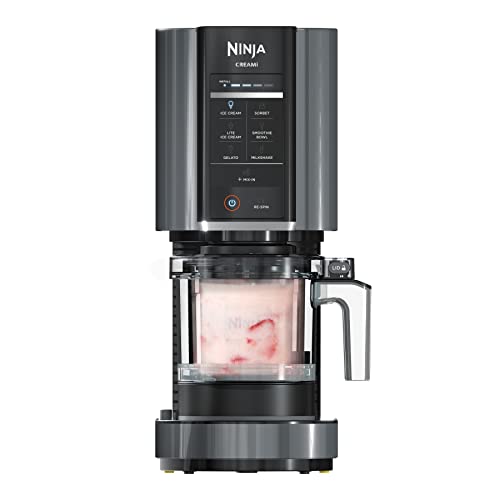
This is a countertop frozen-dessert processor for one 16-ounce pint at a time. It does not freeze a liquid mix itself. The user prepares a base, freezes it level for at least 24 hours, then locks the pint, outer bowl, lid, and Creamerizer paddle into the motor base and selects one of seven programs for ice cream, gelato, sorbet, milkshakes, smoothie bowls, and mix-ins. The manufacturer specifies 120 volts and 800 watts, plus automatic program stopping and an assembly interlock that prevents normal operation when the bowl or paddle is not fitted correctly. A UL Solutions listing independently covers SharkNinja appliances in the NC299 product family. The manual also documents overload protection, requiring a 15-minute cool-down if the motor overloads.
It suits a household that plans desserts at least a day ahead and wants small, individually customized frozen portions. It is especially practical for users who make different dairy, fruit, or plant-based bases for different people, and who have freezer space to keep several compatible pints level. It also fits users willing to follow the preparation limits, inspect the paddle before use, disassemble the lid seal for cleaning, and use the Re-spin program when a low-fat or low-sugar base finishes crumbly.
It is not suited to anyone expecting to pour in liquid ingredients and receive ice cream the same day, because the base must freeze for at least 24 hours. It is also a poor fit for frequent large-batch entertaining, since each finished portion is one 16-ounce pint. Households needing quiet appliance operation should note that independent testing of the related NC300 recorded 75 dB. People serving infants, older adults, pregnant people, or immunocompromised guests should avoid raw-egg recipes unless using pasteurized eggs or a cooked base.
The food-contact parts are manufacturer-stated BPA-free, and the manual provides unusually specific cleaning steps. It directs users to remove the paddle and rubber lid seal, flush the lid's drain passages, and separate parts before dishwasher cleaning. That helps reduce trapped residue, though public material disclosure remains incomplete because the specific resins and full material makeup are not published. FDA guidance remains important for homemade ice cream, especially when recipes use egg. Use pasteurized egg products or a cooked base rather than raw shell eggs. This product has no self-freezing compressor or refrigerant circuit. It processes a base frozen in a household freezer, shifting much of the cooling energy outside the appliance. Its 800-watt motor rating is disclosed, but exact energy per finished batch is not. Replacement pints, lids, paddle, and outer bowl lid are sold by the manufacturer, which can reduce waste from common accessory damage. No CPSC recall identifying this product was located in the reviewed recall records.
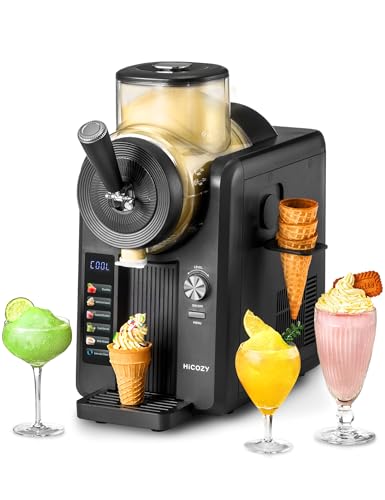
This countertop frozen-drink and soft-serve machine uses a refrigerated evaporator and rotating auger rather than added ice. Independent hands-on reporting identifies a transparent vessel with up to 41 fluid ounces of capacity, a plastic auger, a stainless-steel evaporator, a dispensing handle, and five modes for slushies, soft ice cream, spiked drinks, cold drinks, and milkshakes. HiCOZY states that the appliance uses a variable-speed motor, a self-cleaning mode, removable dishwasher-safe parts, and double-wall insulation. Independent reviewers confirmed that it makes successful slushies without ice and observed roughly 20 to 45 minute drink cycles, depending on recipe and starting temperature. Soft-serve results were more conditional. One reviewer found the preset could produce grainy or overworked ice cream unless speed and prompt dispensing were adjusted. The product is therefore a small-batch refrigerated dessert dispenser, not a hands-off solution for every liquid or every ice-cream formula.
This product suits a household that wants small batches of frozen soda, juice drinks, milkshakes, or properly formulated frozen cocktails without buying or crushing ice. It is most appropriate for users willing to follow recipe constraints, chill ingredients when practical, and take removable parts apart after dairy desserts. The approximately 1.2 liter vessel and countertop format fit couples, small families, and occasional entertaining better than high-volume serving. It also suits users who value a dispensing handle over scooping from a conventional ice-cream bowl.
It is not suited to people who need documented third-party electrical or food-equipment certification before bringing a food appliance home, because no exact-product listing was found. It is also a poor fit for households expecting sugar-free drinks to become smooth slushies, for large parties needing many servings at once, or for anyone unwilling to disassemble food-contact parts after cream-based recipes. Users seeking hard scoopable ice cream, measured energy use, readily available replacement parts, or fully disclosed food-contact plastics should look for a product with that documentation.
For food handling, the important positive is access. Independent reviewers could remove the vessel, auger, drip tray, and dispensing pieces for washing. That matters after milk, cream, or egg-containing mixes, since the self-cleaning program is a rinse aid rather than a substitute for washing fat residue from all surfaces. Available manual information also warns users to keep hands and utensils out during operation and to keep the electrical base dry. Material disclosure remains incomplete. The product is described as having stainless-steel components, but the vessel and auger are plastic and the exact polymer, seals, and food-contact compliance documentation are not clearly published. Independent reporting identifies R290 refrigerant and about 200 watts of rated power in the US version, but no measured electricity-per-batch result was found. R290 has a low climate impact relative to older refrigerants, though it is flammable and makes correct servicing and end-of-life handling important. No US recall, safety action, or product-specific exposure warning was located in the searched public records.
This is a countertop frozen-treat processor, not a self-freezing ice-cream machine. Users prepare a base in one of two 24-ounce storage pints, freeze it level for at least 24 hours, then lock the pint in an outer bowl and select a program. Ninja states that it has 11 programs and an 800-watt motor. The product measures about 12 by 8.4 by 16.7 inches and weighs about 14.4 pounds. Its defining limitation is preparation time. The instructions require a fully level, thoroughly frozen base and warn against processing ice cubes, solid ice blocks, or hard loose ingredients. Independent Good Housekeeping testing of the Deluxe format found creamy, scoopable ice cream and gelato, and smooth results from tested recipes. That testing also found the mix-in step less even than expected.
It suits households that regularly prepare personalized frozen desserts and have reliable freezer space for several upright pints. The workflow is practical for people who want to control the ingredients in dairy, fruit-based, or protein-oriented recipes, and who are willing to plan a day ahead. It also fits users who want to prepare multiple flavors in advance, then run a short processing cycle when serving. A kitchen where brief but intense appliance noise is acceptable is important.
It is not suited to people expecting spontaneous ice cream from room-temperature ingredients, because most bases need a full 24-hour freeze. It is also a poor fit for noise-sensitive apartments, sleeping children nearby, or anyone unable to use a loud motor safely for short periods. Buyers with very limited freezer shelf space should account for the upright pints. Households serving pregnant people, young children, older adults, or immunocompromised people should avoid recipes using raw eggs or unpasteurized dairy.
The removable food-contact parts are a practical hygiene strength. The instructions call for separating the paddle, pints, outer bowl, lids, and lid seal for washing, including cleaning beneath the paddle and draining the outer lid. The pints and lids are stated to be BPA-free, but the manufacturer does not clearly identify the exact polymer used for each food-contact part or provide an exact-product NSF sanitation listing. Homemade frozen desserts also depend on the ingredients chosen. FDA guidance recommends pasteurized eggs or a cooked egg base, plus pasteurized dairy, for recipes that would otherwise contain raw egg or raw milk. This product has no compressor or refrigerant system. It relies on a household freezer to freeze bases before processing, so its full energy burden includes that freezer time, while measured watt-hours per batch are not disclosed. Ninja does make replacement pints, the outer bowl, and the paddle available. That improves repairability for common removable parts, although the motor base has a one-year limited warranty. No exact-product recall was located, but one public no-injury incident report described smoke and damaged plastic during operation.
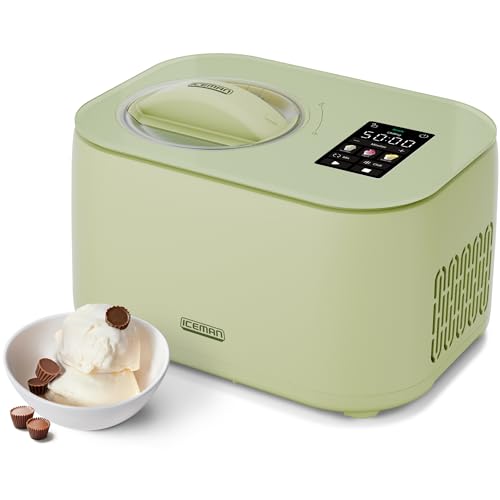
This is a compact, automatic countertop frozen-dessert maker with a stated 1.2-pint bowl capacity, although the listing recommends using about 300 ml of mixture for texture and air incorporation. It is intended for small batches of ice cream, frozen yogurt, gelato, and sorbet. The listed dimensions are 10.25 by 6.7 by 8.08 inches, and the listed weight is 6.9 pounds. The manufacturer states that its active-cooling system removes the need to pre-freeze a bowl, provides soft and firm modes, and can hold desserts cold for up to six hours. It also advises chilling ingredients first and freezing the finished dessert for 30 minutes for a firmer scoop. The removable lid and paddle are manufacturer-stated washable parts, while the product is listed as hand-wash only. No exact-product independent performance test, certification record, instruction manual, wattage, or refrigerant disclosure was located in the checked sources.
This product suits a household making occasional, small homemade frozen desserts where countertop space matters and hand washing is acceptable. Its stated active chilling can be useful for someone who does not want to reserve freezer space for a pre-frozen bowl. It is most aligned with recipes made from chilled ingredients and with users comfortable accepting a softer result directly from the machine, or transferring the dessert to a separate freezer-safe container when they want a firmer texture. The stated warranty gives a basic support path.
It is not well suited to families wanting large batches, because the manufacturer recommends only 300 ml of starting mixture even though the bowl is listed at 1.2 pints. It also is not suited to buyers who require dishwasher-safe components, documented food-contact materials for every part, independently verified electrical certification, or measured energy and noise data. People using raw-egg recipes should not treat the machine as a food-safety control. FDA guidance favors pasteurized egg products or pasteurized shell eggs for homemade ice cream.
The listing identifies aluminum, ABS, polypropylene, and unspecified metal, and calls the interior aluminum food-grade. It also says the lid and paddle are removable. Those disclosures help with routine handling, but they do not identify the material of each food-contact component, provide migration documentation, or establish third-party sanitation certification. For egg-containing homemade recipes, use pasteurized egg products, egg substitute, or pasteurized shell eggs rather than relying on freezing to control Salmonella risk. No product-specific recall or safety warning was located in the checked U.S. consumer-product databases. The listing includes a one-year warranty and support instruction, but no separate parts catalog or repair documentation was found. It makes no explicit green, recyclable, BPA-free, or energy-saving claim. However, it does not disclose watts, energy per batch, standby use, or refrigerant, which limits assessment of electricity demand and end-of-life climate impact.
This product is a compact, plug-in frozen-dessert churner with two freezable mug bowls, a removable paddle, lid, ingredient chute, and 12-watt motor. It makes one cup of chilled mix at a time, which is a personal serving rather than a family batch. The bowl must be frozen upright for 24 to 48 hours and the mix must be chilled before use, according to the manufacturer manual. The stated result is soft serve after roughly 15 to 25 minutes of churning. Independent tests by Reviewed and Good Housekeeping broadly support that timing and compact format. Both also found that a firmer, scoopable result needs additional freezer time. The manufacturer manual is notably candid that longer churning alone will not make the dessert firm.
This product suits one or two people who want occasional, customizable soft serve, sorbet, frozen yogurt, or dairy-free frozen desserts and can keep a clean bowl stored in a 0 F freezer. It fits a small kitchen, dorm-style space, or household where avoiding a large batch is useful. It also suits users willing to plan ahead, chill their mix, wash parts by hand, and accept soft serve immediately after churning or freeze it longer for a firmer texture.
It is not suited to families, entertaining, or anyone needing multiple servings in one cycle. Each batch holds only one cup, and the bowls need lengthy refreezing before reuse. It is also a poor fit for spontaneous dessert making because the freezer bowl requires 24 to 48 hours of advance chilling. People who need dishwasher-safe parts, a documented third-party electrical listing for the exact product, or fully disclosed food-contact materials should seek a product with those records available.
The removable mug, paddle, and lid can be washed with warm water and mild detergent. The motor must only be wiped with a damp cloth, and all parts need to be thoroughly dried before the mug returns to the freezer. Chilled ingredients and clean handling matter particularly for dairy and egg-containing recipes. The manufacturer states that the product passed food-safety testing in accordance with FDA guidelines, but it does not provide a public test report or complete food-contact material disclosure. This is a freezer-bowl machine, not a self-freezing compressor appliance. Its manufacturer-stated motor rating is 12 watts, and no refrigerant is used by the product itself. That can limit running energy, but the household freezer supplies the advance cooling. A one-year limited warranty and support contact are documented. No product-specific CPSC recall was located in the reviewed public recall records, but publicly available replacement-part and repair documentation is limited.


