Best Overall
22% off
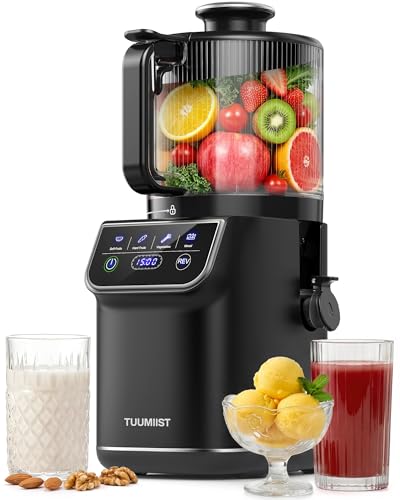
Juicer with Touch Screen
Large chute fits whole fruits easily.
Quiet operation for peaceful juicing.
Touch screen for simple, intuitive use.
 Lauren Wilson
Large chute fits whole fruits easily.
Quiet operation for peaceful juicing.
Touch screen for simple, intuitive use.

Large feed chute fits whole fruits easily.
High juice yield ensures minimal waste.
Simple design makes cleaning straightforward.

Extra large chute for easy fruit loading.
Versatile functions: juice, nut milk, sorbet.
High capacity for large servings.

Extra-wide feed chute minimizes prep time.
Dual-strainers offer juice and sorbet options.
Powerful motor ensures efficient juicing.

Quiet operation for peaceful juicing experience.
Easy to assemble and clean parts.
Preserves nutrients with slow juicing process.

Large 5.5" chute fits whole fruits.
High 99.6% juice yield efficiency.
Easy cleaning with reverse function.

Efficient juice extraction with minimal waste.
Quiet operation for a peaceful experience.
Easy to clean with detachable parts.
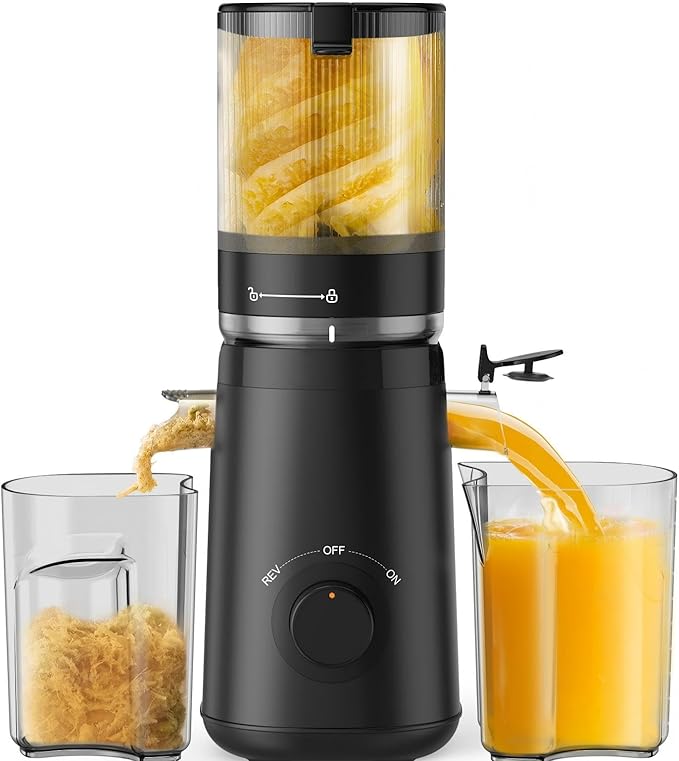
Extra large chute fits whole fruits easily.
High juice yield with minimal waste.
Easy to clean BPA-free design.

Accommodates whole fruits with wide chute.
Effortless cleaning with simple assembly.
High juice yield for maximum nutrient extraction.
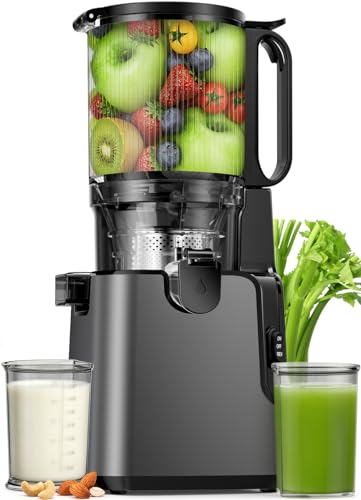
Accommodates whole fruits with large feed chute.
Powerful 350W motor ensures efficient juicing.
Easy to clean with user-friendly design.
A useful purchase starts with the intended ingredients. The supplied testing found strong hard-produce results for one centrifugal model but weaker kale and spinach performance. Slow-juicer listings commonly claim suitability for leafy greens, apples, carrots, beets, nut milk, or sorbet, but most of those claims were not supported by independent comparative testing. Look for tests that identify the exact model, disclose produce weights, yield calculations, operating conditions, and sample counts. A large chute or hopper can reduce cutting and refilling, but it does not eliminate the need to remove pits, hard seeds, tough skins, or to cut fibrous produce when the instructions require it.
Headline yield percentages need particular caution. Claims such as “99%” or “99.6%” are not meaningful without a disclosed protocol, and none of the supplied products with those claims had the required independent, repeatable evidence. The same applies to “quiet,” “high yield,” “nutrient retention,” “reduced oxidation,” and “cold press.” Cold pressing describes a method; it does not prove detoxification, weight loss, disease treatment, or a special health benefit. A juicer’s wattage, RPM, capacity, and chute size should also be checked against the exact manual and product label. Several supplied products had conflicting wattage, voltage, speed, chute, capacity, care, or warranty information.
For powered kitchen equipment, look for a current, registry-confirmed U.S. third-party electrical listing for the complete sold model—not merely a component or a retailer badge. The relevant household-appliance standard is ANSI/UL 982, and useful verification sources include UL Product iQ, Intertek’s ETL directory, and CSA’s product database. A high-quality review should also identify every juice-contact plastic, metal, seal, filter, and coating, with product-specific food-contact compliance or migration documentation. “BPA-free” alone is too narrow to establish that the complete juice path is documented.
Practical hygiene matters as much as convenience. Prefer a design that fully disassembles, including filters, seals, valves, augers, bowls, and pulp outlets, without inaccessible residue traps. Dishwasher-safe claims should be reconciled with the supplied manual. Raw produce juice is not pasteurized: wash produce under running water, clean and dry the machine promptly, refrigerate juice, and follow the product’s limits. Pregnant people, young children, older adults, and immunocompromised people should be especially cautious with untreated juice. No category-wide contraindication beyond that recurring raw-juice food-safety risk was found in the supplied data.
Finally, consider service life. A meaningful warranty, U.S. support contact, exact-model replacement parts, and repairable wear components can prevent a failed strainer, seal, coupler, or latch from becoming early e-waste. Packaging, recycling, end-of-life, and operating-energy disclosures were generally absent, so environmental claims should not be inferred from a low wattage, plastic-free filter, or generic “eco” language.
These products were assessed not only for extraction convenience but also for raw-juice hygiene, electrical safety, material disclosure, repairability, and the quality of evidence behind their claims. Higher scores indicate stronger supplied evidence and fewer unresolved gaps; they do not establish that a product is risk-free or that its marketing claims are true.
This measures whether detox, nutrient-retention, weight-loss, disease, and dietary claims match human evidence for realistic juice servings. For juicers, high scores reflect restrained health language and appropriate cautions about fiber, sugar, whole produce, and unpasteurized juice. The supplied scores ranged from 52 to 76: the higher-scoring products generally made fewer unsupported health claims, while low-scoring reviews flagged nutrient-preservation or wellness messaging without human evidence.
This measures whether the entire juice path—plastics, metals, seals, filters, and coatings—is identified and supported by product-specific food-contact or migration documentation. A generic BPA-free statement is not enough. Supplied scores were tightly grouped from 68 to 72 because most products lacked complete resin, seal, coating, or migration records. The stronger disclosures named more components, but no supplied product provided a complete safety file.
This measures whether juice-contact parts can be fully removed, washed, brushed, and dried, while recognizing that home juice from raw produce remains unpasteurized. Higher-scoring products documented removal of filters, augers, bowls, seals, valves, or pulp outlets and gave practical cleaning steps. Scores ranged from 70 to 78. Lower scores reflected incomplete instructions or conflicting dishwasher and hand-wash directions, not proof that cleaning was impossible.
This measures guards, lid or hopper interlocks, stable operation, pusher guidance, reverse functions, and protection against reaching moving parts or encountering broken filters and covers. Scores ranged from 70 to 82. Higher-scoring reviews described a specific start-prevention or stop mechanism and clear pusher instructions. Lower-scoring products often had only manufacturer-stated locks or lacked an accessible manual and parts diagram to verify safe-use limits.
This measures whether the complete U.S.-sold model has a current, registry-confirmed third-party electrical listing to the applicable household-appliance standard, such as UL 982. It carries extra importance because these are powered appliances. Most supplied products scored 68–70 with no public listing located. One product scored 91 because an Intertek authorization traced its model family to UL 982; that was the clearest separation in this category.
This measures independently repeatable yield, pulp dryness, clogging, noise, throughput, and performance across hard produce, leafy greens, and soft fruit. High scores require an exact-model test with disclosed methods rather than an unqualified percentage. Scores ranged from 68 to 78. The strongest supplied evidence came from comparative testing of one centrifugal model, including a 190 mL beet result, while most other products had only manufacturer claims.
This measures whether claims about cold pressing, quietness, easy cleaning, whole-fruit use, yield, materials, wattage, capacity, speed, and chute size are model-specific and supported. Scores ranged from 50 to 73. Higher scores reflected clearer documentation and fewer contradictions; lower scores commonly involved conflicting voltage, wattage, chute, RPM, capacity, dishwasher, or warranty information.
This measures identifiable independent certification or testing, recall and incident accountability, and a traceable U.S. maker or support pathway. Because electrical and independent-accountability topics carry extra weight, missing records materially affect overall standing. Scores ranged from 68 to 84. The strongest supplied cases had traceable Intertek electrical documentation or established manufacturer support and parts; most products relied mainly on retailer and manufacturer materials.
This measures durability signals, warranty support, U.S. service access, and affordable replacement parts for strainers, augers, seals, couplers, latches, and motors. A higher score means a better chance of keeping the appliance in use instead of discarding it after a wear-part failure. Scores ranged from 55 to 77. The strongest supplied example had a documented warranty and replacement components; lower scores reflected missing parts catalogs, inconsistent warranty terms, or limited repair information.
This measures disclosed operating energy, separable and durable materials, packaging, repair access, and end-of-life guidance. For juicers, a wattage number alone does not prove lower impact because lifetime use, durability, and disposal also matter. Scores ranged from 68 to 72 and remained close because packaging specifications, recycling instructions, recycled content, take-back programs, and lifecycle data were generally not supplied.
This is a countertop, single-auger masticating juicer with touch controls, a claimed 6.5-inch feed opening, and a 100-ounce juice cup. It is intended for fresh fruit and vegetable juice, plus soaked-nut drinks and frozen-fruit sorbet. The published instructions identify removable hopper, auger, strainer, bowl, juice cup, and pulp cup parts, and direct users to rinse them immediately after use. The maker states that the unit has a lid-lock condition, auto-reverse, overheat protection, selectable produce modes, and a 120-volt, 350-watt maximum-power specification. TUUMIIST also publishes a one-year limited warranty and US support email. However, the accessible materials do not identify the polymers, seals, coatings, or stainless-steel grade used in juice-contact parts, and no current model-specific NRTL electrical listing, NSF sanitation certification, or accredited performance report was located.
This product suits a household that wants to make several servings of fresh juice at once and has counter space for a roughly 17-inch-deep appliance and large collection cup. It is also suited to users willing to wash produce, remove pits and unsuitable peels, cut very hard or fibrous items when needed, and promptly disassemble, rinse, brush, dry, and reassemble the juice path. The documented warranty and US email support provide a basic service route for a buyer comfortable with a one-year coverage period.
It is not well suited to buyers who need independently verified electrical certification, NSF sanitation certification, or documented food-contact composition before bringing an appliance into the kitchen. People who are pregnant, immunocompromised, elderly, or serving young children should not treat home-made raw juice as pasteurized, and should follow food-safety guidance carefully. It is also a poor fit for users seeking proven juice-yield figures, a published replacement-parts catalog, long warranty coverage, or confirmed repair pricing before purchase.
Fresh juice can contribute nutrients from produce, but it is not a detox treatment and does not replace eating whole fruits and vegetables. Juice generally has less fiber and more freely available sugar per serving than the intact produce used to make it. The maker's nutrient-preservation language is not backed here by human research on juice made with this unit. Raw home juice is also not pasteurized, so careful produce washing, prompt refrigeration, and immediate cleaning of the machine matter. The removable bowl, auger, strainer, hopper, and cups can support cleaning and continued use, while the stated one-year limited warranty and US support provide some accountability. Still, TUUMIIST does not publish a full material bill, food-contact migration documentation, packaging details, energy-use data, recycling instructions, or a priced parts catalog for this product. No product-specific public safety certification or sanitation certification was found in the reviewed registries, and no relevant US recall or exposure warning was located.
This is a countertop, single-auger slow juicer for fruit and vegetables. It uses a locking hopper, auger, filter, separate juice and pulp containers, and a dial with on, off, and reverse positions. The available product manual describes a 6.5-inch feed chute, a 100-ounce hopper, 60 RPM operation, a detachable pulp outlet, and removable juice-contact parts that should be rinsed promptly after use. These are manufacturer-stated details, not independently tested performance results. Documentation is inconsistent on core electrical specifications. The product listing states 120 V and 350 W, while the available manual lists 230 V and 400 W. No current U.S. UL, ETL, or CSA listing for this specific model was located in the searched public certification records. No independent comparative yield, noise, clogging, or durability test for this product was located.
This product suits an adult household that wants a compact slow-juicing format for occasional to regular fruit and vegetable juice, accepts manufacturer-stated rather than independently measured performance, and is prepared to wash and dry the removable parts immediately after each use. Its described wide chute and reverse setting are most relevant for someone processing washed apples, citrus after peeling, carrots, cucumbers, celery, leafy greens, and similar produce. It is better suited to users comfortable checking the product label and manual for the final electrical rating before first use.
It is not suited to buyers who require registry-confirmed U.S. electrical certification before bringing a motorized kitchen appliance home, because no model-specific UL, ETL, or CSA listing was located. It also does not suit households needing fully documented food-contact materials, readily listed replacement strainers or seals, or a longer clearly published warranty. People who are pregnant, immunocompromised, very young, older, or otherwise at higher foodborne-illness risk should be especially cautious with freshly made unpasteurized juice and should follow raw-produce washing and refrigeration practices.
Fresh juice is not a detox treatment, and cold pressing does not establish a special disease-prevention or weight-loss effect. Human evidence suggests that 100 percent juice can contribute nutrients, but it contains less fiber than whole produce and its calories and sugars still matter. Whole fruit remains the more fiber-rich default. Juice made at home from raw produce is unpasteurized. Washing produce, cleaning the machine promptly, refrigerating juice, and avoiding cross-contamination are important, especially for people at elevated foodborne-illness risk. The available manual supports full removal of the main juicing assembly and a detachable pulp outlet, which can help practical cleaning when parts are rinsed and dried immediately. However, it does not provide traceable food-contact material specifications, migration testing, packaging specifications, recycling instructions, or a repair-parts catalog. No product-specific recall or California exposure warning was located in the searched public records, but that is not equivalent to independent safety certification.
This is a countertop, single-auger masticating juicer with a stated 250-watt AC motor, a 100-ounce hopper, and two strainers intended for juice, nut milk, and frozen-fruit sorbet. Its listed size is 13.7 inches deep, 7.48 inches wide, and 17.4 inches high, so it needs meaningful counter height as well as footprint clearance. The brand's installation guide says the unit will not start unless the hopper lid is closed, and it instructs users to secure the bowl latch. The same guide describes a lower pulp-outlet latch and supplied brush for cleanup. Specifications and care instructions are less consistent, however. The listing says hand wash only, while the product manual describes detachable dishwasher-safe parts. No registry-confirmed U.S. electrical-safety listing, sanitation certification, exact-model laboratory performance test, or complete food-contact material documentation was located.
This product suits a household that wants to make sizable batches of juice, nut milk, or frozen-fruit sorbet and has the counter clearance for a 17.4-inch-tall appliance. It is more appropriate for users willing to wash produce carefully, follow the assembly steps, use the pusher rather than reaching into the feed area, and hand-clean parts unless the seller gives model-specific dishwasher confirmation. Its stated large hopper may be useful for meal preparation, but it is not evidence that juice is nutritionally equivalent to whole produce.
It is not well suited to buyers who require a registry-confirmed U.S. electrical-safety certification, NSF sanitation certification, or documented food-contact testing before bringing an appliance into the kitchen. People who are pregnant, immunocompromised, older, or serving young children should take particular care with unpasteurized home juice and raw produce. It also is a poor fit for users who need clear dishwasher instructions, readily published replacement parts, defined long-term warranty coverage, or independently measured proof of yield, noise, and reliability.
Fresh juice from this product is unpasteurized unless the user treats it separately. FDA guidance notes that cutting, peeling, or fresh-squeezing produce can move bacteria from the exterior into the food. Wash produce thoroughly, refrigerate juice promptly, and use extra caution for people at higher risk of foodborne illness. Juice can provide nutrients, but it has less fiber than whole fruit and may contain substantial free sugars. The product's nutrient-retention language is manufacturer marketing, not exact-product human evidence. The stated juice-contact material is polycarbonate, and the manual makes a broad BPA-free claim. It does not provide a component-by-component material list, food-contact compliance record, or migration test. The 250-watt rating discloses operating power, but no packaging specification, recycled-content claim, repair-parts catalog, recycling guidance, or lifecycle assessment was found. No EanOruus juicer recall was located in the searched CPSC recall sources, but that does not substitute for third-party safety certification.
This is a countertop, single-auger electric juicer intended for fresh fruit and vegetable juice, homemade nut or oat milk, and frozen-fruit sorbet. Canoly lists a 6-inch feed chute, 90-ounce stated capacity, 250 W AC motor, 45 to 47 RPM operation, and a stated 30-minute continuous-use limit. It includes juice and sorbet strainers, an auger, cup, pulp container, and cleaning brush. The maker identifies the hopper, chamber, auger, and containers as polycarbonate, the strainers as Tritan, and the base as ABS and polycarbonate. Those are manufacturer material declarations, not product-specific migration test records. Canoly sells several replacement parts and has a US contact address. Independent comparative yield, noise, sanitation, electrical-listing, and food-contact test reports for this product were not located.
It suits a household that wants one countertop machine for occasional or routine juice, soaked-nut milk, and frozen-fruit sorbet, and that is willing to wash and fully dry removable parts immediately after use. It is also a more practical fit for an owner who values replaceable wear parts, since Canoly lists several service items for sale. The large stated feed chute may reduce cutting for appropriately sized produce, but users should still cut hard or oversized items rather than force them through.
It is not suited to buyers who require registry-confirmed electrical certification, independently verified sanitation performance, or documented food-contact migration testing before bringing an appliance into the kitchen. It also needs caution in households serving pregnant people, young children, older adults, or people with weakened immune systems, because home-extracted raw juice is not pasteurized. Anyone expecting demonstrated maximum yield, a verified 35 dB noise level, or proven nutrient superiority from cold pressing will not find that evidence here.
Juicing can provide nutrients from fruits and vegetables, but it separates out much of the fiber found in whole produce. Human evidence on 100 percent juice is mixed and depends on the juice, serving size, and overall diet. It does not support detox, stamina, skin, or disease-prevention promises. Canoly's featured wellness and detox language therefore goes beyond what can be established for juice from this appliance. Canoly identifies the major plastic families and states that its materials are food-safe and BPA-free, but no product-specific migration report or third-party food-equipment sanitation certification was found. The maker says its shipping boxes are recyclable and biodegradable, and it sells several replacement parts, both of which can reduce premature disposal. It does not provide a lifecycle assessment, packaging specification, recycling instructions for the appliance, or independently verified environmental claims. No relevant US recall or exposure warning was located in the searched public sources.
This is a countertop, single-auger masticating juicer intended for raw fruit and vegetables, with separate juice and pulp collection. The manufacturer describes a 6.5-inch self-feeding chute, a 100 oz hopper, two speeds, reverse operation, and filters for juice, nut milk, and frozen-fruit sorbet. Its listed U.S. electrical specification is 120 V AC with maximum power stated as 600 W. The most defining practical feature is its large, manufacturer-stated hopper and wide chute, which can reduce produce preparation for batch juicing. The manufacturer also says removable parts can be rinsed and that the unit has a lid safety stop. These are manufacturer claims, not independently validated performance or sanitation findings. Product documentation is incomplete and internally inconsistent on important details, including blade material, dishwasher suitability, dimensions, and warranty length.
This product fits a household that wants to make several servings of fresh juice at once and values reducing cutting and frequent hopper refills. It is also suited to users who want one appliance for juice, strained nut milk, and frozen-fruit desserts, provided they are comfortable hand washing parts promptly after use. The buyer should treat the stated 100 oz capacity, quiet operation, easy cleaning, and whole-produce capability as manufacturer information rather than independently tested performance.
It is not well suited to buyers who require a registry-confirmed U.S. electrical-safety certification, independently tested food-contact materials, or NSF sanitation certification. It is also a poor fit for households that rely on dishwasher-safe parts, because the manufacturer page lists both hand-wash-only and dishwasher-safe instructions. People who need readily orderable replacement filters, seals, augers, or latches should seek a product with an exact-model parts catalog. Pregnant people, young children, older adults, and immunocompromised people should not assume home-juiced raw produce is pasteurized.
Fresh juice made here is not pasteurized. FDA guidance notes that bacteria on raw produce can enter juice when fruit or vegetables are cut or fresh-squeezed. Wash produce, clean and dry juice-contact parts promptly, refrigerate juice, and use extra caution for people at higher risk of foodborne illness. Human evidence does not support treating juice as a detox or disease-prevention treatment. One hundred percent juice can contribute nutrients, but it has less intact fiber than whole produce and should fit within an overall dietary pattern. The manufacturer identifies plastic and stainless-steel elements only in broad terms. It does not provide a complete material breakdown for juice-contact plastic, seals, filters, or coatings, nor a product-specific migration report. No U.S. third-party electrical listing, sanitation certification, independent laboratory performance report, or exact-model replacement-parts catalog was identified during verification. No CPSC recall page naming this product or brand was located in the searches performed.
This is a compact household slow masticating juicer with a hopper-style feed chute, auger, filter basket, reverse function, two collection cups, and a cleaning brush. It is intended to press fruits and vegetables into unpasteurized juice. Published product documents describe removable juice-contact assemblies that are rinsed and brush-cleaned by hand, rather than dishwasher cleaned. The most consequential verified record is an Intertek authorization that lists MJ-01H among slow-juicer models certified to UL 982, the household food-preparing-machine standard. The available manual also states that the machine will not operate unless its parts are assembled and locked. In contrast, the advertised 99.6 percent juice-yield figure has no located independent test protocol or laboratory result. Product documents also conflict on physical specifications, including chute width and dimensions.
This product suits an adult household user who wants a small counter juicer for occasional fresh fruit and vegetable drinks, is prepared to wash produce and hand-clean the removable parts immediately after use, and values a documented electrical-safety certification. It is most appropriate for users comfortable cutting difficult produce when needed, using the supplied pusher rather than hands, and treating the stated yield and whole-produce capability as manufacturer claims rather than measured performance guarantees.
It is not a suitable choice for households needing pasteurized juice, or for pregnant people, young children, older adults, or immunocompromised people who may drink untreated juice. It also does not fit users who need dishwasher-safe parts, a verified sanitation listing, a clearly documented food-contact material specification, or dependable access to replacement augers, filters, seals, and latches. Buyers who require repeatable high-volume juicing data should not rely on the advertised yield percentage alone.
Freshly made juice from this product is not pasteurized. FDA guidance notes that bacteria on raw produce can enter fresh-squeezed juice, and that children, older adults, pregnant people, and people with weakened immune systems face greater risk from untreated juice. Wash produce under running water before cutting, clean the filter and juice path promptly, dry all parts fully, and refrigerate juice. Juice can provide nutrients, but it is lower in fiber than whole fruit and is not a detox treatment. The product is described as BPA-free, but that statement does not identify every juice-contact polymer, metal, seal, or coating, and no migration documentation was located. A positive safety record is the published Intertek authorization listing this model to UL 982. No model-specific recall or exposure warning was located in the checked U.S. sources. The manufacturer provides no clear repair-parts catalog, packaging specification, recycling plan, or end-of-life instructions, limiting its demonstrated resource and repair profile.
This is a countertop slow masticating juicer sold for juice, plus manufacturer-stated sorbet and nut-milk preparation. The listing describes a 6.5-inch feed chute, a 100-ounce hopper, 350-watt maximum power, and a footprint of about 8 by 10 by 15 inches. It is intended for raw fruits and vegetables such as apples, carrots, celery, greens, and citrus. The defining conveniences are manufacturer-stated rather than independently verified. The large hopper and wide chute are meant to reduce cutting and batch refilling. ACOQOOS says detachable parts can be rinsed with water and a brush, and its general support guidance describes a reverse mode for jams. No model-specific independent yield test, food-contact migration documentation, third-party sanitation certification, or confirmed U.S. electrical listing was located in the reviewed sources.
This product suits an adult household that wants a compact, batch-oriented juicer for routine fruit and vegetable juice and is comfortable treating the large chute, hopper, sorbet, and nut-milk functions as manufacturer claims. It is most practical for users willing to wash produce, take the machine apart after each use, brush and dry its parts, and accept a one-year stated warranty. It also fits buyers who value a reverse setting for occasional fibrous-produce jams and do not require independently documented performance figures.
It is not suited to households that require confirmed U.S. third-party electrical certification, NSF sanitation certification, or complete food-contact material documentation before bringing an appliance into the kitchen. Pregnant people, young children, older adults, and people with weakened immune systems should not assume home-pressed raw juice is pasteurized or microbiologically safe. It is also a poor fit for repair-focused users who need a published exact-model parts list, or for anyone needing validated juice-yield, noise, and leafy-green performance data.
Cold pressing is a mechanical extraction method, not a proven detoxification, disease-treatment, or weight-loss intervention. Evidence on 100% juice is mixed, and juice generally supplies less fiber than whole produce. Frequent extra servings can also add calories, so whole fruit and vegetables should remain central to the diet. FDA notes that fresh-squeezed juice can contain harmful bacteria from raw produce, including after produce is cut or squeezed. The product is advertised as BPA-free ABS, but that broad statement is not complete food-contact documentation. The reviewed sources did not provide exact identification of every juice-contact polymer, metal, seal, coating, and filter, nor a migration report. No third-party electrical, sanitation, or performance certificate for this product was confirmed. ACOQOOS offers general cleaning guidance and a stated one-year warranty, but no exact-model spare-parts catalog, packaging specification, energy-use disclosure, or end-of-life recycling instructions was located.
This is a countertop, single-auger masticating juicer for extracting juice from fruits and vegetables. The available product manual specifies an 8 by 8 by 17 inch body, 300 watt motor, approximately 60 ounce hopper capacity, reverse setting, juice cup, pulp cup, and cleaning brush. It also advises a 15 minute rest after more than 10 minutes of operation. The operating instructions describe a locking hopper and a stop function when the hopper cover opens. These are manufacturer-stated safety features, not third-party certification. The same documentation says removable pieces can be rinsed, brushed, air-dried, and are dishwasher safe. However, the published specifications conflict on important details, including 5.3 versus 5.8 inch chute size, 43 versus 55 RPM, and hand-wash-only versus dishwasher-safe care guidance.
This product suits a budget-conscious home user who wants a compact juicer for occasional batches of washed apples, citrus, carrots, cucumbers, and other produce, and who is willing to follow a hands-on cleaning routine. The stated wide hopper may reduce cutting for some round produce, but fibrous ingredients still need to be cut smaller. It is better suited to users who can pause after short runs, promptly rinse the removable parts, and accept manufacturer-stated rather than independently verified yield and safety-performance claims.
It is not well suited to households that require independently confirmed electrical certification, fully documented food-contact materials, or a clearly published parts and repair system. People who juice in long sessions should note the manual's stated 10 minute operating interval followed by a 15 minute rest. Pregnant people, young children, older adults, and people with weakened immune systems should be particularly cautious with home-made raw juice, because this appliance does not pasteurize it. It also is not ideal for users who need fully consistent, verified dishwasher-care instructions.
Cold pressing is a mechanical extraction method, not a safety treatment. Fresh juice made with raw produce is generally unpasteurized, so careful washing of produce, clean assembly, prompt refrigeration, and thorough cleaning are important. The manufacturer language about preserving nutrients and maximizing vitamins is not backed here by human testing of juice from this particular product. Juice can contribute nutrients, but it does not establish detox, disease, or weight-loss benefits and does not replace whole produce. The product is described as BPA-free and as using ABS in at least one listed component, but complete juice-contact material identification and migration testing were not found. No recall or product-specific exposure warning was located in the searched U.S. sources. From a waste perspective, the 300 watt rating is disclosed, but no lifecycle assessment, packaging details, material-separation instructions, or end-of-life program were found. The brand does state that it can help with replacement parts, but it does not publish an exact-model parts catalog.
This is a vertical, single-auger cold-press juicer for fresh fruit and vegetable juice at home. It uses a lidded feed chute, auger, pressing cup, plastic filter assembly, juice cup and pulp cup. The manufacturer states that its chute measures 5.8 inches and is intended to accept whole or large produce, although the downloadable instruction manual for the same model lists a 5.3-inch chute and a 550 mL juice cup. The manual documents a safety-cover interlock, a supplied pusher, reverse operation for jams, removable juicing components, and overheat protection. These are manufacturer-stated safeguards, not third-party verified findings. The product page claims up to 99% juice yield and vitamin protection, but no model-specific independent yield or nutrient-retention testing was located. Documentation also conflicts on cleaning and warranty terms, which limits confidence in several advertised specifications.
This product suits an adult household that wants a compact vertical juicer for occasional fresh juice and is prepared to wash, brush, dry, and reassemble the juicing parts immediately after each session. Its manufacturer-stated wide chute may be useful for people who want less produce cutting, but hard and fibrous foods still require preparation under the manual. It is most appropriate where the user accepts unverified performance claims and can follow the pusher, lid-lock, cooling, and hand-cleaning instructions carefully.
It is not well suited to households needing independently verified electrical certification, documented food-contact materials, or a clearly traceable U.S. warranty and parts system. Avoid relying on it for dishwasher cleanup, because the product listing and manual conflict. It also needs extra caution around children and people unable to follow appliance instructions, since this is a powered raw-produce processor with a wide feed opening. Pregnant people, young children, older adults, and immunocompromised people should not treat home-pressed raw juice as pasteurized.
Fresh juice from this product is not pasteurized. FDA guidance notes that bacteria on raw produce can enter fresh-squeezed juice, so produce should be rinsed thoroughly, the machine cleaned and dried promptly, and raw juice handled cautiously by people at higher risk of foodborne illness. Juice can provide nutrients, but it has less fiber than whole produce. Human evidence does not support treating cold pressing as a detox method or assuming that this product preserves vitamins better than other juicers. The manufacturer says the product is plastic and includes reusable bottles and cups, but it does not identify the polymers, silicone composition, food-contact compliance records, recycled content, packaging specification, recycling instructions, or replacement-part catalog. No applicable U.S. third-party electrical or sanitation certification was located. No product-specific CPSC recall or regulatory action was located in the checks performed, but that is not the same as independent safety validation.
This is a countertop, corded single-auger cold-press juicer for fruits and vegetables. The manufacturer describes a 400 W, 120 V machine with a slow 55 rpm extraction process, a wide feed chute, a juice container listed at 500 mL, and a 700 mL pulp container. It is intended for fresh juice and, by the maker's description, nut or soy milk. The most concrete product-specific features are manufacturer-stated, not independently tested. The maker says the feed chute is 5.8 inches, the lid safety lock stops operation when opened, and removable parts come apart in three main pieces. Published instructions also tell users to unplug before assembly, disassembly, or cleaning and to use the supplied push rod rather than hands. No product-specific third-party performance report, sanitation certification, or electrical listing was located.
This product suits an adult household that wants a compact, corded masticating juicer for occasional fresh fruit and vegetable juice, accepts manufacturer-stated performance information, and is prepared to wash and dry the removable parts after every use. The stated wide chute may be useful for people who want to reduce produce cutting. It also fits buyers who value a published one-year warranty and identifiable U.S. contact information, while recognizing that replacement-part availability was not established.
It is not suited to households needing independently verified electrical certification, NSF sanitation certification, or documented food-contact material testing for a particular appliance. It is also a poor fit for people who need proven yield or quiet-operation results before choosing a juicer, or who expect a verified dishwasher-safe cleaning routine. Pregnant people, young children, older adults, and immunocompromised people should not assume fresh home juice is pasteurized, because raw-produce juice can carry harmful bacteria.
The maker promotes 55 rpm cold pressing as preserving nutrients and claims up to 99 percent yield, but no product-specific independent testing or human evidence was found to show that this machine's juice has uniquely greater nutritional benefit. Fresh juice can contribute nutrients, but it generally contains less fiber than whole produce. FDA warns that juice made from raw fruits and vegetables is not pasteurized and can contain harmful bacteria, so wash produce, clean the machine promptly, and refrigerate juice. The product is described as plastic or PVC in marketplace-derived specifications, without a complete identity for every juice-contact component, food-contact compliance documentation, or migration test. No verified NRTL electrical listing, NSF certification, environmental product declaration, packaging specification, recycling instruction, or replacement-parts catalog was found. The manufacturer publishes a one-year limited warranty and a U.S. contact address, which provides a route for warranty support, but its broad sustainability language is not substantiated with measurable practices.


