Best Overall
22% off
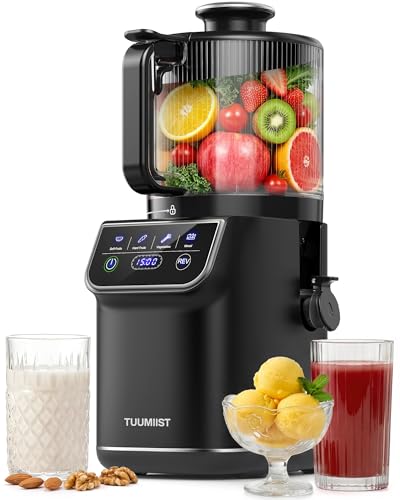
Juicer with Touch Screen
Large chute fits whole fruits easily.
Quiet operation for peaceful juicing.
Touch screen for simple, intuitive use.
 Lauren Wilson
Large chute fits whole fruits easily.
Quiet operation for peaceful juicing.
Touch screen for simple, intuitive use.
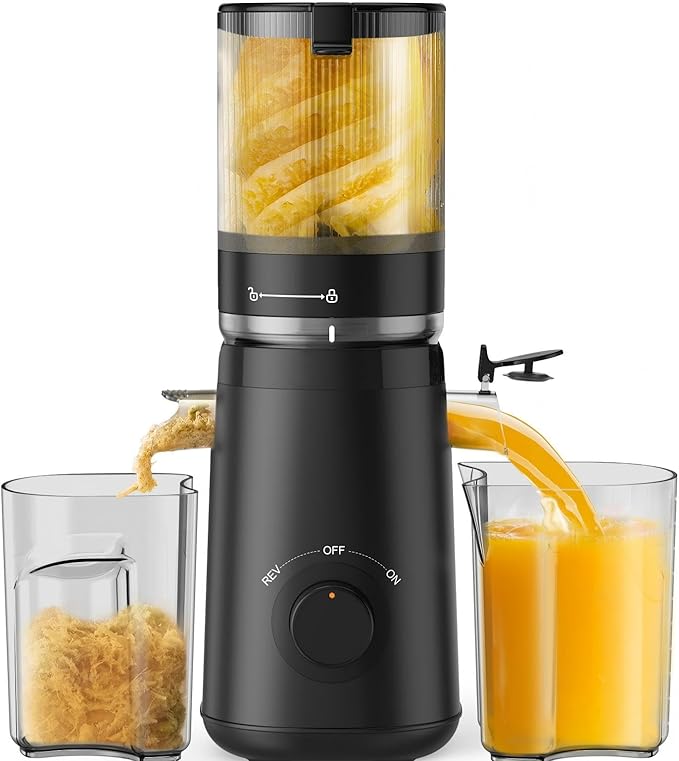
Extra large chute fits whole fruits easily.
High juice yield with minimal waste.
Easy to clean BPA-free design.

Accommodates whole fruits with wide chute.
Effortless cleaning with simple assembly.
High juice yield for maximum nutrient extraction.

Efficient juice extraction with minimal waste.
Quiet operation for a peaceful experience.
Easy to clean with detachable parts.

Extra-wide feed chute minimizes prep time.
Dual-strainers offer juice and sorbet options.
Powerful motor ensures efficient juicing.

Large feed chute fits whole fruits easily.
High juice yield ensures minimal waste.
Simple design makes cleaning straightforward.

Extra large chute for easy fruit loading.
Versatile 3-in-1 functionality for diverse uses.
High capacity, ideal for large families.
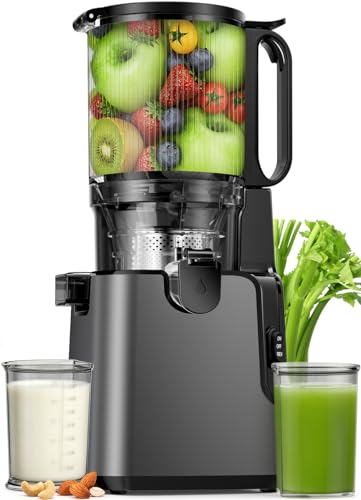
Accommodates whole fruits with large feed chute.
Powerful 350W motor ensures efficient juicing.
Easy to clean with user-friendly design.

Simple one-button operation for effortless juicing.
Easy to clean with dishwasher-safe parts.
Versatile design suitable for various citrus fruits.

Heavy-duty design ensures long-lasting durability.
Easy-to-clean for hassle-free maintenance.
Efficient juice extraction with minimal effort.
For electric models, look for a model-matched listing from an OSHA-recognized Nationally Recognized Testing Laboratory or another recognized certification program. The supplied reviews checked registers including UL Product iQ, Intertek’s ETL directory, CSA listings, TÜV databases, and the UL 982 standard for household food-preparing machines. A manufacturer statement, seller badge, or certification of a component is not equivalent to a current listing for the complete product. The electrical rating should also be clear and consistent; several supplied products had conflicting voltage, wattage, capacity, speed, or chute specifications.
Food-contact material claims need similar scrutiny. “BPA-free,” “food-grade,” stainless steel, ABS, polycarbonate, or Tritan identifies only part of the material picture. A meaningful disclosure identifies the plastics, seals, strainer or screen, metals, coatings, and their intended food-contact compliance. A model-specific declaration, migration documentation, or applicable NSF/ANSI evidence is more useful than a general marketing statement.
Cleaning is part of performance and food safety. Prefer removable juice-contact parts, an accessible strainer, a parts diagram, and instructions to disassemble, rinse, brush, dry, and clean the machine promptly. Do not treat “self-cleaning,” “easy clean,” or “dishwasher safe” as complete evidence: supplied reviews found conflicts between broad listing claims and manuals that limited dishwasher use or required hand washing. A machine that leaves pulp in seams, filters, seals, or outlets can be difficult to sanitize.
Be cautious with yield, nutrient retention, oxidation, noise, cleaning-time, and “whole fruit” claims. A credible performance claim should be tested on the sold model with a stated method, produce type, weighed input and output, pulp moisture method where relevant, and reproducible results. The supplied evidence shows why a single percentage misleads: one independently tested model produced 75% juice from apples but about 35% from a carrot-and-ginger mixture. A wide chute may reduce preparation, but manuals still commonly require cutting hard or fibrous produce and removing pits, large seeds, or unsuitable peels. Juice capacity and motor wattage describe the product; they do not prove extraction quality.
Across the supplied products, no current finished-product safety listing was found for most electric models, and no category-wide evidence established advertised nutrient or oxidation benefits. Fresh juice is untreated and can carry bacteria from raw produce. Wash produce under running water, clean juice-contact parts promptly, refrigerate prepared juice, and use particular caution when serving pregnant people, young children, older adults, or people with weakened immune systems. Keep hands out of feed chutes and citrus pressing zones, use the supplied pusher, supervise children, unplug before cleaning, and follow duty-cycle or cooldown instructions. A wide opening is not proof of child-safe operation. No supplied product established complete food-contact documentation, independently verified performance across produce types, and independently certified finished-appliance safety at the same time.
These topics assess the product evidence that matters beyond convenience and customer popularity. Scores reflect the supplied reviews; higher scores indicate stronger documentation or safeguards within this set, not proof that every claim is established.
This measures whether juicing is presented as food preparation rather than detoxification, disease treatment, or a replacement for whole produce. It matters because juice generally contains less fiber than the original fruit or vegetable. Higher-scoring products used more restrained dietary framing; lower scores were associated with wellness or nutrient language that was not supported by product-specific human or performance evidence.
This measures whether every surface touching juice—plastic, seal, metal, coating, strainer, and container—is identified and supported for food contact. It matters because a general BPA-free, ABS, stainless-steel, or Tritan statement may omit other parts. The supplied scores were generally moderate: higher scores reflected more component detail, while lower scores reflected broad material descriptions without a model-specific compliance declaration.
This measures whether pulp and juice-contact areas can be reached, removed, and cleaned, and whether instructions address prompt rinsing and brushing. It matters because fresh juice is perishable and trapped residue can remain in filters, seals, outlets, or chambers. Higher scores corresponded to accessible removable parts and concrete manual instructions; lower scores reflected harder-to-document cleaning or conflicting dishwasher claims.
This measures protection against reachable crushing or cutting parts, unintended starting, pinch points, damaged screens, and fragments entering juice. It matters because electric juicers have feed chutes and moving augers, while citrus presses create compression zones. Higher scores were linked to documented lid locks, guarded operation, pushers, reverse controls, or automatic stops; manufacturer claims without independent testing scored less strongly.
This measures protection against shock, motor stall, overheating, cord failure, and fire, including clear voltage and power information. It matters for every powered juicer. Most supplied electric products lacked a located model-matched North American listing and scored around the middle; the strongest electrical score belonged to the non-electric citrus press, while one compact model had an Intertek authorization covering the listed model under UL 982 and applicable CSA standards.
This measures whether the complete sold model—not merely a component or seller statement—has a current, independently searchable listing to an applicable safety standard. It matters because powered kitchen appliances present electrical and mechanical risks. Most supplied products scored around the middle because no matching listing was located; the EUHOMY MJ-01H was the clear higher-scoring exception, with an Intertek authorization naming the model under UL 982 and applicable CSA standards.
This measures reproducible testing of yield, nutrient retention, oxidation, noise, capacity, or cleaning time on the sold model. It matters because “high yield,” “quiet,” and nutrient claims can vary by produce and method. Most products had no such report and scored around the middle; the AMZCHEF 1902B stood out because independent home testing weighed apples and juice and reported a 75% yield, while also showing weaker results for another produce mixture.
This measures whether terms such as cold press, high yield, BPA-free, hands-free, and nutrient preservation are qualified and consistent with the manual and product record. It matters because several supplied listings conflicted with their manuals on voltage, wattage, chute size, speed, capacity, or dishwasher use. Higher scores reflected clearer, more restrained documentation; lower scores reflected unsupported percentages, wellness language, or substantial specification conflicts.
This measures warranty terms, service responsiveness, repair guidance, and realistic access to replacement screens, seals, augers, containers, and safety parts. It matters because wear parts can determine whether a juicer is repaired or discarded. Higher scores came from documented replacement-part routes or unusually long coverage, such as available parts for citrus presses or stated long motor coverage; lower scores reflected warranty-only support with no parts catalog.
This measures credible evidence about recycled content, packaging reduction, hazardous waste, and disposal. It matters because an electric juicer contains a motor base and mixed materials. The strongest supplied score was tied to Amazon-identified Global Recycled Standard certification for one product. Most other products had no product-specific recycled-content, packaging, take-back, or end-of-life evidence, so broad recyclable or sustainability language was not treated as proof.
This measures usable juice output, wet pulp, jams, reprocessing, and residue across representative produce using weighed inputs and outputs. It matters because a headline yield may apply to one ingredient but not another. Scores were moderate across the set, except where independent testing documented results; that testing showed 75% apple yield but roughly 35% for a carrot-and-ginger mixture, illustrating why one advertised percentage is insufficient.
This is a countertop, single-auger masticating juicer with a large feed hopper, touch controls, auto-reverse, and separate juice and pulp collection. The documented manual specifies 120 V power, up to 350 W, a 100-ounce juice cup, and dimensions of 16.92 by 7.59 by 13.58 inches. It is intended for household juicing, plus manufacturer-described nut-milk and frozen-fruit sorbet preparation. The manual independently available online documents removable hopper, auger, strainer, bowl, and cups, with instructions to rinse them immediately and brush the strainer. Its 6.5-inch chute can reduce cutting for some produce, although the manual still directs users to cut hard or fibrous ingredients and remove pits, large seeds, and unsuitable peels. The manufacturer claims high yield, nutrient preservation, quiet operation, overheat protection, and a metal-free filter mesh, but no model-specific independent test report or complete food-contact material specification was found.
This product fits a household that wants to make fresh juice in relatively large batches and is prepared to clean the machine immediately after use. Its 100-ounce collection cup, large hopper, removable components, and manual guidance for apples, leafy greens, carrots, and mixed produce suit users who want a countertop appliance for routine home preparation. It also suits people who will follow the stated limits, including cutting hard or fibrous produce, removing pits and thick peels, and using the supplied pusher instead of reaching into the feed area.
It is not well suited to buyers who require independently verifiable electrical certification before bringing a powered food appliance into their home. It is also a poor fit for households with people at higher risk from foodborne illness, including pregnant people, older adults, young children, and immunocompromised people, if fresh unpasteurized juice will be served without careful produce washing and prompt refrigeration. Choose another format if you need complete food-contact material documentation, a published warranty term, established repair instructions, or independently measured juice-yield and noise results.
Fresh juice made in this appliance is not pasteurized. FDA guidance notes that bacteria on raw produce can enter fresh-squeezed juice, so users should wash hands and produce, scrub firm produce, discard damaged items, and take extra care when serving people at elevated risk of severe foodborne illness. Juicing can be part of a diet, but it does not replace whole fruits and vegetables. Dietary guidance notes that juice contains less fiber than whole fruit. The available manual gives useful hygiene directions to rinse detachable parts immediately, brush the strainer, dry parts before storage, and keep the motor base out of water. However, it does not identify all food-contact plastics, seals, and coatings. No product-specific recycled-content, packaging-reduction, end-of-life, or independently verified extraction-efficiency evidence was found. No recall or regulatory warning specifically identifying this product was found in the CPSC resources searched.
This is a countertop, single-auger cold-press juicer for raw fruit and vegetables. Manufacturer materials identify 120 V, 300 W operation, about 60 oz capacity, 8 by 8 by 17 inch dimensions, and a roughly 7 lb product weight. It separates juice and pulp into separate containers, with a reverse setting for clogs. The defining convenience feature is a manufacturer-stated 5.8-inch feed chute intended to accept whole produce. The exact-product manual instead describes a 5.3-inch chute, so buyers should treat the stated opening size cautiously. The manual also directs users to stop after 10 minutes of continuous operation and let the product rest for 15 minutes. No current, model-matched North American third-party electrical safety listing or independent juice-yield test was located during verification.
This product fits an adult household that wants a compact countertop juicer for modest batches of washed produce and values less cutting before juicing. It is more suitable for users willing to disassemble and rinse components immediately after each session, follow the locking instructions, and pause after the stated 10-minute run limit. It also suits buyers who can accept manufacturer-stated performance claims rather than requiring independently verified yield, nutrient, or noise data.
It is not well suited to buyers who require a product with a readily verifiable North American third-party electrical safety listing, complete food-contact material documentation, or independently measured juice yield. Avoid relying on it for prolonged back-to-back juicing because the manual specifies a 15-minute rest after 10 minutes of use. Households serving untreated fresh juice to pregnant people, young children, older adults, or immunocompromised people should use extra food-safety care and consider the risks of raw juice.
Fresh juice is a food-preparation option, not a detoxification treatment or replacement for whole produce. The brand's general healthy-routine messaging does not establish health outcomes from this product. Federal food-safety guidance notes that raw juice can carry bacteria from produce. Wash hands and produce under running water, remove damaged areas, clean the product promptly, and refrigerate juice. People who are pregnant, immunocompromised, older, or serving young children face greater risk from untreated juice. The product is advertised as BPA-free, but verification did not locate a full model-specific list of juice-contact polymers, seals, coatings, and food-contact compliance records. No product-specific recycled-content, packaging reduction, recycling, or end-of-life program evidence was located. A search of CPSC recall resources did not identify a recall or warning for this product. The brand offers support for damaged seals and other replacement requests, but does not publish a parts catalog or repair documentation.
This is a compact, single-auger electric juicer for home use. It has a stated 300 W, 120 V motor, a 5.8-inch feed chute, separate juice and pulp collection, reverse operation, and a stated 16-inch height. It is intended for fruits and vegetables, with the supplied pusher used to guide food through the chute. The manufacturer states that the product uses a removable metal-free filter, a safety lock, overheat protection, and dishwasher-safe removable parts. A manual found for this product instructs users to unplug it before cleaning, rinse removable parts promptly, and use the brush for filter residue. That same manual says very hard or fibrous ingredients may need cutting, which qualifies the manufacturer’s no-prep whole-fruit message. The manufacturer also claims up to 99% juice yield and vitamin protection, but no independent model-specific test report was located.
This product fits a household that wants a narrow countertop juicer for occasional to regular fresh fruit and vegetable juice, and is willing to wash parts immediately after use. Its stated wide chute can reduce prep for softer or moderately firm produce, while the pusher, reverse control, and separate pulp cup suit a hands-on juicing routine. It is more appropriate for adults who will follow the cleaning and produce-washing instructions, rather than treating juicing as a health treatment or a substitute for eating whole produce.
It is not well suited to households that need independently certified electrical safety, documented food-contact materials, or validated yield and nutrient-retention data. Pregnant people, young children, older adults, and people with weakened immune systems should not assume fresh home juice is pasteurized, since raw produce can introduce harmful bacteria. It is also a poor fit for users expecting true no-prep processing of all produce, for people who need readily orderable replacement screens or seals, or for those seeking repair documentation and verified end-of-life planning.
Fresh juice is a food-preparation option, not a detox treatment or a replacement for whole fruits and vegetables. The manufacturer’s wellness framing does not make disease claims, but its vitamin-protection language and up-to-99% extraction claim were not supported by an independent model-specific test report. FDA guidance also notes that fresh juice made from raw produce can carry bacteria. Wash hands and produce under running water, clean the appliance promptly, refrigerate juice, and use extra caution for people at greater risk from foodborne illness. The product is described as mostly plastic with a metal-free filter, but the manufacturer does not identify the food-contact plastic resins, seals, or compliance documentation. Godspeeds states that two reusable plastic bottles are included and offers a one-year limited warranty. However, no product-specific recycled-content, packaging, environmental certification, replacement-parts catalog, or repair guide was located. No product-specific U.S. recall or regulator warning was located in the searches performed.
This is a countertop, single-auger slow juicer sold for juice extraction, plus sorbet and nut-milk preparation. The product record lists a 6.5-inch feed chute, a 100-ounce hopper, 350-watt maximum power, two cups, and an 8.7-pound body. A separate retailer description corroborates the broad 6.5-inch, 3-in-1, BPA-free, dishwasher-safe marketing description, but it does not supply a full parts list, manual, or test report. The manufacturer-facing material presents whole-produce loading and easy cleaning as key conveniences. Those are useful format features, not proof of juice yield, nutrient retention, or reduced oxidation. The accessible brand site also uses wellness-oriented language, but no disease-treatment or detox claim was identified. Use it as a food-preparation appliance, while treating fresh juice as perishable and not as a replacement for whole fruits and vegetables.
This product fits a home user who wants a compact vertical slow juicer with a wide stated loading chute and occasional options for sorbet or nut milk. It is most suited to someone comfortable washing removable parts promptly after each use and treating large-chute loading as a convenience rather than permission to put hands or tools into the feed area. It also suits buyers who accept manufacturer-stated dishwasher-safe and BPA-free claims while recognizing that full material and certification records were not located.
It is not well suited to households that require independently verifiable electrical certification before bringing a powered food appliance home, including buyers with strict landlord, workplace, insurance, or institutional equipment requirements. It is also a weaker fit for people who need documented food-contact composition because of a specific material sensitivity or compliance policy. Those making juice for pregnant people, young children, older adults, or immunocompromised people should be especially careful with produce washing, prompt cleaning, and refrigeration.
Fresh juice can be a way to prepare produce, but it should not be framed as detoxification or treatment. Federal dietary guidance favors whole fruit for at least half of fruit intake, and FDA notes that cutting or juicing produce can move surface bacteria inward. Wash produce, fully clean juice-contact parts after use, refrigerate fresh juice promptly, and use extra caution for people at higher risk of foodborne illness. The product is marketed as BPA-free, yet no model-specific declaration was located for all food-contact materials. The manufacturer states that parts are dishwasher-safe, but an accessible manual and parts diagram were not found to confirm where residue can collect. No product-specific recycled-content, packaging, repair, or end-of-life evidence was found. A CPSC recall search did not identify an ACOQOOS juicer recall, but no independently searchable safety listing or performance test report was located for this product.
The Canoly C16 is a vertical, single-auger electric juicer for fresh fruit and vegetable juice. It is also sold with strainers intended for frozen-fruit sorbet and nut milk. The manufacturer lists a 6-inch feed chute, a 90-ounce hopper, a 250-watt AC motor, 45 to 47 RPM operation, and a 30-minute continuous-use limit. It weighs about 13 pounds and is intended for countertop batch preparation. The most defining convenience feature is the manufacturer-stated wide hopper, designed to take larger pieces of produce with less cutting. Canoly also identifies the auger, chamber, hopper, and containers as polycarbonate, the strainers as Tritan, and the base as ABS and polycarbonate. Those material claims are useful, but they are not accompanied by a model-specific food-contact declaration or independent certification. Publicly available testing of this exact product is limited to informal reviews, not a reproducible accredited laboratory report.
This product suits a household that wants to make fresh juice soon before drinking it and values a large, hands-free loading hopper more than independently certified performance data. It is suited to users with enough counter and storage space for a roughly 13-pound vertical appliance, who will disassemble and wash the juice-contact parts after every batch. The sorbet and nut-milk attachments may also suit cooks who want those uses in the same appliance. It is most appropriate for people comfortable treating the stated specifications as manufacturer information rather than verified laboratory results.
It is not well suited to buyers who require a publicly verifiable North American electrical-safety listing before bringing a powered appliance into the home. It is also a poor fit for households with people at higher risk from foodborne illness if fresh unpasteurized juice will be stored or served without careful food-safety practices. Those seeking documented food-contact compliance for every seal and component, or independently measured yield and nutrient-retention results, will find important evidence missing. It also does not suit anyone expecting dishwasher use without checking the actual supplied manual and part markings.
Juicing separates much of the pulp from produce, while blending retains it. Fresh, unpasteurized juice should be treated as perishable, and FDA notes that unpasteurized juice can contain harmful bacteria. This matters especially for children, older adults, pregnant people, and people with weakened immune systems. Wash produce, clean the appliance promptly, refrigerate juice, and do not frame juice as a detox treatment or replacement for whole fruits and vegetables. Canoly identifies the major plastics as PC, Tritan, and ABS, and calls them food-safe and BPA-free. That is more specific than a bare BPA-free claim, but there is no public model-specific declaration covering every food-contact component or independent NSF food-equipment listing. The brand says its shipping boxes are recyclable and biodegradable, but no third-party packaging or recycled-content certification was located. No product-specific recall was found in the CPSC resources searched.
This is a corded, single-auger cold-press juicer with a stated 6.5-inch feed chute, a 350-watt motor, 60 rpm operation, reverse mode, and separate juice and pulp containers. The current product page states 120 volts, 3-liter capacity, and 7 by 13 by 17 inch dimensions. ([amazon.com](https://www.amazon.com/Cold-Press-Juicer-Machines-Vegetables/dp/B0F83M3QYX)) The model-specific manual documents removable hopper, chamber, auger, strainer, juice container, pulp container, and pusher parts, plus an assembly condition that prevents starting when alignment is incorrect. It also identifies several juice-contact materials. However, accessible documentation does not provide a model-matched third-party electrical-safety listing or independent yield, nutrient, oxidation, noise, or cleaning-time test. The manual available for this model specifies 220 to 240 volts, which conflicts with the current U.S. product page's 120-volt specification. ([device.report](https://device.report/m/9e51751da6649ddb86cab7ca220f78f3340f586d0f7666fdaad1cefe6fe9a48d))
This product suits an adult home user who wants a compact vertical masticating juicer for fresh, small-to-medium batches and is prepared to wash the removable parts promptly after use. It is most appropriate for someone comfortable following a manual, cutting fibrous produce into shorter pieces when directed, removing pits and tough rinds, and observing the stated 20-minutes-on, 20-minutes-off duty cycle. The documented removable chamber, strainer, auger, containers, and pusher make hands-on cleaning possible. ([device.report](https://device.report/m/9e51751da6649ddb86cab7ca220f78f3340f586d0f7666fdaad1cefe6fe9a48d))
It is not a suitable choice for unattended use, children, or anyone unable to safely manage a powered appliance with sharp internal food-cutting parts. The manual says not to insert fingers or utensils into the feed area, warns about hair and loose items near the hopper, and requires unplugging before cleaning or disassembly. It is also not suited to buyers who require a verified North American safety listing, independently measured juice yield, or fully reconciled 120-volt documentation before purchase. ([device.report](https://device.report/m/9e51751da6649ddb86cab7ca220f78f3340f586d0f7666fdaad1cefe6fe9a48d))
Fresh juice is a food-preparation option, not a substitute for whole fruits and vegetables. Federal dietary guidance prioritizes whole produce, and notes that juice is lower in fiber and should be limited or diluted. The product materials table is more specific than a bare BPA-free claim, although it is still manufacturer documentation rather than a food-contact declaration of conformity or independent certification. ([fns.usda.gov](https://www.fns.usda.gov/cnpp/dietary-guidelines-americans?utm_source=openai)) Freshly made juice is untreated. FDA advises washing produce under running water before cutting or juicing, and notes that unpasteurized juice can carry harmful bacteria, especially for young children, pregnant people, older adults, and people with weakened immune systems. The manual appropriately says to drink freshly extracted juice promptly and describes cleaning removable food-contact parts, but gives no packaging, recycled-content, take-back, or replacement-parts evidence. ([fda.gov](https://www.fda.gov/food/buy-store-serve-safe-food/what-you-need-know-about-juice-safety?elq=90a46829787c449c89ed8fe64366f6ef&elqCampaignId=428&elqTrackId=a49cacdcef6a43b9803434e99fa80d7e&elqaid=853&elqat=1&utm_source=openai))
This is a countertop, single-auger masticating juicer with a 100-ounce hopper, a 6.5-inch feed chute, a 250-watt AC motor, juice and sorbet strainers, cups, a pulp container, pusher, and cleaning brush. Product documentation describes three intended uses, juice extraction, nut milk preparation, and frozen-fruit sorbet. It is a household food-preparation appliance, not a treatment or detox device. The maker’s installation guide says the machine will not start unless its lid is securely closed, and it identifies a bottom-bowl latch that must be secured during use. The available product instructions also describe removable juice-contact parts, a brush, reverse mode for clogs, and an opening pulp outlet. The stated plastic material is polycarbonate, but the published documentation does not identify the composition of every strainer, seal, or other juice-contact component.
This product fits an adult household that wants one appliance for occasional batches of fruit or vegetable juice, soaked-nut drinks, and simple frozen-fruit desserts. Its stated 100-ounce hopper and wide feed opening suit users who value less ingredient pre-cutting and who can make room for a tall countertop appliance. It is most appropriate for people prepared to wash produce, promptly disassemble and clean the juice-contact parts, and treat fresh juice as a perishable food rather than a health treatment.
It is not suited to households needing independently certified electrical safety, fully documented food-contact materials, or published laboratory evidence of yield and nutrient-retention claims. People with weakened immune systems, pregnant people, older adults, and caregivers of young children should be particularly cautious with fresh, unpasteurized juice because raw produce can introduce harmful bacteria. It also does not suit anyone unwilling to hand-clean screens and crevices, or anyone who needs confirmed replacement screens, seals, augers, and repair instructions before purchase.
Fresh juice is not pasteurized by this appliance. FDA guidance notes that bacteria on raw produce can enter fresh-squeezed juice, and that higher-risk groups can become seriously ill from untreated juice. Wash hands and produce under running water before cutting, clean the machine immediately after use, refrigerate juice promptly, and do not frame juicing as a substitute for whole produce. Federal dietary guidance favors whole fruit for much of fruit intake because juice contains less fiber. The stated polycarbonate construction is incomplete material information, not a food-contact declaration for every part. No model-matched third-party safety certification, environmental certification, recycled-content evidence, packaging disclosure, or independent performance report was found. No product-specific CPSC recall or regulatory warning was identified in the reviewed public sources. The maker provides a basic installation and cleaning guide, but no public repair manual or replacement-parts catalog was located.
This is a countertop, corded single-auger juicer for fruits and vegetables. The available product manual describes a 400 W, 120 V appliance operating at 55 RPM, with 500 ml juice and 700 ml pulp containers, a reverse function, a push rod, and a cleaning brush. It is intended for freshly made juice, not for heating or blending food. Its most defining features are manufacturer-stated rather than independently tested. The manual describes removable juicing parts, a lid lock that stops operation when opened, and instructions to wash produce, use the push rod, unplug before cleaning, and clean promptly. Specifications are not fully consistent across available listings. The manual calls the chute 5.4 inches, while the marketplace description calls it 5.8 inches. No model-matched North American third-party safety listing or independent yield, noise, oxidation, or nutrient-retention test was located.
This product suits an adult household that wants to make small batches of fresh fruit or vegetable juice and is willing to wash the juicing assembly immediately after use. Its stated wide chute may reduce cutting for some produce, but fibrous ingredients still need preparation according to the manual. It is most appropriate for buyers who can follow the push-rod, lid-lock, unplugging, and hand-cleaning instructions, and who accept that performance and certification claims remain unverified.
It is not suited to households that require independently listed electrical equipment, documented food-contact materials, or readily available replacement screens, seals, augers, and containers. It is also a poor fit for unsupervised use around children, anyone likely to reach into the feed opening, or users who cannot clean components promptly after juicing. Buyers seeking verified yield, nutrient-retention, oxidation, or noise results should not treat the product's marketing figures as established performance evidence.
Fresh juice should be handled as a perishable food. FDA guidance emphasizes food-safety precautions for juice, and national dietary guidance favors whole fruit for at least half of recommended fruit intake because juicing removes much of the food's original structure and fiber. This product should therefore be framed as a preparation appliance, not as a detoxification tool, treatment, or replacement for whole produce. The manual's prompt-cleaning advice is useful, but no independently verified sanitation certification was found. There is also no model-specific food-contact material declaration, recycled-content evidence, packaging disclosure, repair guide, or parts catalog. Public recall searches did not identify a matching product recall at the time checked, but that is not evidence of third-party electrical or material safety testing. The stated one-year warranty is limited support where wear parts and repair pathways are undocumented.
This is a corded, household citrus press for halved limes, lemons, oranges, and grapefruit up to 4.5 inches across. It uses a motorized reamer under a latching lid, with a button starting the extraction cycle. The manufacturer manual specifies a 12-ounce juice bowl, 50-watt, 120-volt operation, and fine and coarse pulp filters. The manual documents that the bowl, lid, reamer, holding cone, and pulp filter can be removed for hand washing or top-rack dishwasher cleaning. It also documents a reset function for excessive force or interrupted power, plus instructions to keep the lid latched during use. Vinci offers replacement-parts support and a one-year warranty. Public searches did not locate a model-matched UL, ETL, CSA, or comparable North American finished-product listing, nor an independent performance test report.
This product suits a household that primarily juices citrus, wants a button-operated press instead of a manual reamer, and has room for a 12.5-inch-tall countertop appliance. It is most practical for people making a glass or small batch at a time, since the bowl holds 12 ounces and fruit must be halved and loaded one piece at a time. It also fits users who will disassemble and wash the bowl, lid, reamer, and filter after each session rather than expecting a self-cleaning appliance.
It is not for households seeking a documented third-party electrical safety certification, fully traceable food-contact material specifications, or independently measured extraction performance. It is also not for people who want to juice apples, carrots, leafy greens, or other non-citrus produce. Young children should not operate it without close supervision. People who are pregnant, immunocompromised, elderly, or serving very young children should be particularly careful with unpasteurized fresh juice and should follow FDA food-safety guidance for produce washing and juice handling.
The manufacturer identifies the juice bowl as BPA-free Tritan, but the available product documentation does not provide a complete, model-specific material declaration for all juice-contact components. That leaves the food-contact status of the reamer, filters, holding cone, seals, and any coatings unverified. No product-specific recycled-content, reduced-packaging, or end-of-life certification was found. Fresh squeezing does not pasteurize juice. FDA advises washing produce under running water before cutting, because bacteria on a peel can transfer into juice. Whole fruit remains the more fiber-rich default dietary form. The manual’s broad fresh-juice health framing is not adequately qualified. On the positive side, removable washable parts, replacement-parts support, and a one-year warranty can help avoid premature disposal. No relevant U.S. recall or regulator warning was located in the official sources reviewed.
This is a countertop, lever-operated citrus press for halved lemons, limes, oranges, and grapefruit. Available instructions identify a cast-iron body, a stainless steel strainer and juice collector, a 5-inch fruit bowl, and a listed weight of about 13.9 pounds. Juice is directed through a spout into a glass beneath the press. The supplied instructions say the strainer cup, collector, and press cone detach for washing, while the cast-iron body should be wiped rather than immersed. They also direct users to keep fingers away from moving parts, use a level non-slip surface, inspect for damage, and keep the product away from children. The manufacturer advertises mechanical leverage and a lifetime warranty, but no independently published yield testing, food-contact declaration, or finished-product safety listing was located.
This product suits an adult household, bar setup, or food-preparation station that primarily makes fresh citrus juice and has a stable, dedicated section of counter space. Its manual lever design is relevant for users who want to avoid a powered appliance and who can safely operate a downward press with two hands available for positioning and stabilization. It is also practical for users willing to remove, wash, rinse, dry, and reassemble the juice-contact pieces promptly after each session.
It is not suited to households where children may access the press, or where an adult cannot reliably control a heavy lever and keep fingers clear of moving parts. It is also a poor fit for buyers who need verified food-contact alloy and coating specifications, independently certified product safety, or laboratory-backed juice-yield figures. People seeking juice from leafy greens, roots, or other non-citrus produce should not treat this citrus press as a general-purpose juicer. Anyone who cannot clean parts promptly should avoid leaving fresh juice residue in the strainer or collector.
Fresh juice is a food-preparation choice, not a detoxification or disease-treatment tool. Federal dietary guidance favors whole fruit for much fruit intake because juice has less fiber. Freshly squeezed juice also is not pasteurized. Wash hands and rinse produce before cutting, clean the press after use, and refrigerate juice that will not be consumed promptly. The accessible documentation identifies cast iron and stainless steel, but does not disclose the stainless grade, the composition of any coating, or a model-specific food-contact declaration. No product-specific recycled-content, packaging, chain-of-custody, or end-of-life certification was located. The product has no motor or electronics, which avoids electrical waste from a powered juicer. Zulay provides a limited lifetime defect warranty, though it excludes normal wear, is limited to eligible original purchasers, and may require the customer to pay shipping after 30 days.


