Best Overall
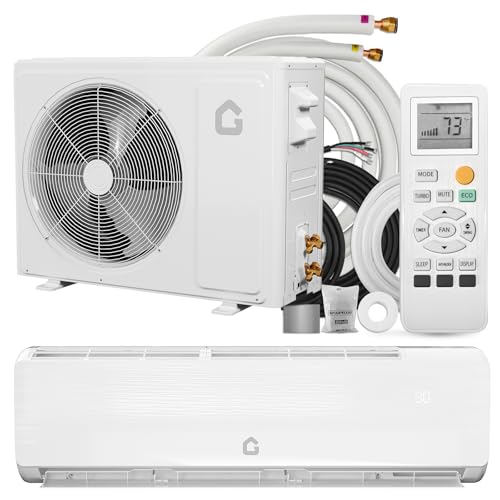
Garvee 12000 BTU Mini Split AC Heat System
Energy-efficient cooling and heating solution
Quiet operation for peaceful environment
Easy installation with user-friendly instructions
 Daniel Kenitz
Energy-efficient cooling and heating solution
Quiet operation for peaceful environment
Easy installation with user-friendly instructions

Energy-efficient with 18.5 SEER2 rating.
Convenient WiFi and remote control features.
Quiet operation suitable for home use.

Compatible with Alexa for voice control.
Energy efficient with 19 SEER2 rating.
Includes pre-charged installation kits.

Efficient cooling and heating with 19 SEER2 rating.
Covers large areas up to 750 sq. ft.
Easy installation with ductless inverter technology.

Efficient cooling and heating for year-round comfort.
Covers large areas up to 750 sq. ft.
Easy installation with included kit and remote.

Efficiently cools and heats up to 1500 sq. ft.
Alexa and WiFi enabled for easy control.
Comes with a 16ft installation kit included.

Energy-efficient operation lowers electricity bills.
WiFi control adds convenient remote access.
Easy installation kit simplifies setup process.

Energy-efficient operation with 19 SEER2 rating.
Includes pre-charged condenser for easy setup.
Provides both cooling and heating functions.

Energy efficient with 19 SEER2 rating.
Cools and heats spaces up to 750 sq.ft.
Pre-charged condenser for easy installation.

Energy-efficient with SEER2 18 rating.
User-friendly with remote and app control.
Self-cleaning feature for easy maintenance.
The first sizing question is not the advertised square-foot number. A proper room-by-room load calculation accounts for climate, insulation, windows, sunlight, ceiling height, occupancy, moisture, and the way rooms connect. The supplied listings commonly give broad coverage estimates ranging from about 450 to 1,500 square feet, but several reviews warn that these figures are manufacturer estimates rather than load calculations. Oversizing can impair comfort and moisture control; undersizing can leave a space unable to meet its cooling or heating demand.
A credible efficiency claim should apply to the exact indoor-and-outdoor combination, not merely to a product family or an online title. The strongest evidence is an active listing in the AHRI Directory of Certified Product Performance, with matching model information and reported SEER2, EER2, HSPF2, cooling capacity, and heating capacity. ENERGY STAR records can provide another independent check. A headline such as “21 SEER2” or “25 SEER2” is not enough when the manual, nameplate, catalog, or certificate reports a different rating—or when no matched system can be found.
Electrical details deserve the same scrutiny. Before installation, the delivered nameplate and installation manual should agree on voltage, minimum circuit ampacity, wire size, breaker or maximum overcurrent protection, grounding, and disconnect requirements. The supplied products include both 115-volt and 208–230-volt designs, so a buyer should not arrange a circuit from the listing title alone. An OSHA-recognized independent laboratory listing should be traceable to the exact equipment through UL Product iQ, Intertek’s ETL directory, or CSA’s listing database; a logo or manual reference to a safety standard is not equivalent evidence.
Refrigerant information also changes the safety and environmental picture. R-32 and R-454B are A2L refrigerants with mild flammability and EPA use conditions; R-410A is classified as A1 but has a higher stated global-warming potential than the lower-impact alternatives in the supplied data. Buyers should look for the exact refrigerant, factory charge, room-size limits, warnings, leak precautions, line-length limits, and recovery instructions. Installation should include appropriate pressure testing, evacuation, leak checking, and condensate drainage—not merely connection of a bundled line set.
Across the supplied products, recurring cautions are material: exact performance and safety listings were often unverified; model identities and specifications sometimes conflicted; low-temperature heating output was generally not documented; refrigerant charge and A2L safeguards were often incomplete; and electrical protection details were sometimes missing. Professional installation, a Manual J load calculation, nameplate verification, code-compliant drainage, and qualified refrigerant handling are therefore category-wide practical requirements. No supplied product should be treated as suitable for DIY refrigerant work or as guaranteed primary heat in severe cold without product-specific low-temperature data.
For mini-splits, health and environmental performance depends less on a single advertised feature than on traceable equipment identity, correct sizing, safe installation, refrigerant containment, and routine filter and drain maintenance. The supplied scores reward documentation and independent verification, while lower scores commonly reflect contradictions, missing records, or unverified claims.
This measures whether the exact equipment is listed by an OSHA-recognized independent testing laboratory for applicable U.S. safety requirements. A high score means the listing can be traced to the actual model through UL, ETL, or CSA records; a low score reflects an untraceable logo or claim. Among the supplied products, exact public listing evidence was generally not confirmed, limiting confidence before installation.
This measures disclosure of refrigerant and charge information, room-size limits, labels, leak precautions, and installation instructions suited to the actual refrigerant. High-scoring products disclose more of these controls, including R-32 or R-454B A2L precautions; low-scoring products omit charge, room-size, or equipment-specific safeguards. This matters because refrigerant leaks can create both climate and ignition risks.
This measures whether the documentation gives consistent voltage, grounding, dedicated-circuit, wire-size, disconnect, and overcurrent requirements. High scores are associated with concrete circuit information, such as stated ampacity and breaker limits; low scores leave installers to guess at protection requirements. The supplied products include both 115-volt and 208–230-volt systems, making nameplate verification especially important.
This measures support for mounting, line-length limits, pressure testing, evacuation, torque, refrigerant work, and condensate drainage. High scores come with detailed instructions for leak checks, vacuum verification, piping limits, and drain routing; low scores lack model-specific procedures. Correct installation reduces refrigerant loss, water damage, unsafe operation, and moisture problems around the indoor unit.
This measures practical maintenance support, including accessible filters, coil and drain cleaning, humidity or dry mode, and restrained air-cleaning claims. High-scoring products describe washable filters, drain checks, or scheduled cleaning; low-scoring products provide little maintenance guidance or imply unsupported health benefits. These features help manage dust and condensate but do not prove particle-filtration or mold-prevention performance.
This measures independently documented heating output and efficiency at low outdoor temperatures, along with defrost behavior and any backup-heat limits. A high score requires more than a general claim that a heat pump operates near a stated temperature. Among the supplied products, heating was often certified only at 47°F or lacked low-temperature tables, so severe-cold primary heating remains uncertain.
This measures whether the exact matched indoor and outdoor units have independently certified SEER2, EER2, HSPF2, cooling capacity, and heating capacity. High-scoring examples have active AHRI certificates with matching equipment and multiple reported ratings; low-scoring products make seller-reported claims without a matched AHRI or ENERGY STAR record. The difference is verifiability, not the size of the advertised number.
This measures agreement across the listing, nameplate, manual, and independent records for capacity, voltage, efficiency, noise, heating range, refrigerant, and certification. High scores reflect coherent documentation; low scores reflect contradictions such as different BTU ratings, SEER versus SEER2 values, conflicting refrigerants, or mismatched model identities. Several supplied products had material inconsistencies that make installation planning risky.
This measures whether the manufacturer or importer, model and serial identification, warranty, parts route, and safety contacts can be traced. High scores give buyers a clearer path to identify affected equipment and seek a remedy; low scores involve short or conflicting warranties, unclear model identity, or weak service information. No product-specific recall was identified in the supplied reviews, but traceability still varied.
This measures refrigerant global-warming impact, charge disclosure, leak-prevention guidance, and lawful recovery at service or disposal. High scores favor disclosed lower-impact refrigerants such as R-32 or R-454B plus practical handling guidance; lower scores reflect undisclosed refrigerant or charge information. The supplied data identifies R-410A at GWP 2,090, R-32 at 675, and R-454B at 470.
This measures independently supported seasonal efficiency together with honest sizing information. High scores combine matched-system ratings with a clear warning that square-foot estimates are not load calculations; low scores rely on seller ratings or universal coverage claims. Correct sizing matters because a nominally efficient inverter system can waste energy or control humidity poorly when its capacity does not match the room load.
This is a single-zone, wall-mounted ductless mini-split heat pump with a remote, an indoor air handler, outdoor condenser, line-set components, and a drain hose. The product is presented as a 12,000 BTU cooling system with 12,300 BTU heating, R-32 refrigerant, dry mode, washable filter, and a claimed 19 SEER2 rating. Those capacity, efficiency, noise, and coverage figures are manufacturer-stated, not independently confirmed for this matched system. The most important issue is conflicting electrical information. The product record and Garvee product page identify a 230V unit, while the accessible manual tied to the same technical model code calls it a 115V system and tells installers to wire it as such. Garvee also varies the coverage claim between up to 750 and up to 1,000 square feet. An exact AHRI certification, ENERGY STAR record, and independent safety listing were not located in the reviewed registers.
This product may suit a buyer planning a professionally installed, single-room ductless system where the electrician and HVAC contractor can inspect the actual outdoor-unit nameplate before work begins. It is most relevant for a moderate-load bedroom, office, workshop, or similar separated space, not for selecting capacity from square footage alone. The buyer should be prepared to obtain the exact electrical requirements, certification evidence, warranty terms, and parts contact in writing before installation.
It is not suited to DIY electrical or refrigerant installation. The voltage conflict makes it unsuitable for anyone who has already prepared either a 115V or 230V circuit without first checking the physical equipment nameplate. It is also a poor fit for homes relying on the unit as primary cold-weather heat, installations requiring confirmed utility-rebate eligibility, or buyers who need documented AHRI performance, independently traceable safety certification, clear parts access, and settled warranty terms before committing.
The product is stated to use R-32. EPA classifies R-32 as an A2L refrigerant and permits it in new residential and light-commercial air-conditioning and heat-pump equipment subject to use conditions. Its global-warming potential is listed by EPA as 675. That is useful refrigerant disclosure, but the accessible product material does not state the refrigerant charge or provide detailed A2L room-size, ignition-risk, recovery, and end-of-life instructions. The manual describes a washable indoor filter, dry mode, self-cleaning evaporator claim, drain-line troubleshooting, and professional annual inspection. These measures can support moisture control and maintenance when performed correctly, but they are not evidence of air-cleaning performance. No product-specific CPSC recall notice was identified in the review search. More importantly, the unresolved 115V versus 230V conflict and incomplete electrical data should be settled from the installed equipment nameplate before connection.
This is a single-zone ductless mini-split heat pump sold as a 115 V, 12,000 BTU cooling and heating system for rooms up to 750 square feet. The stated package includes indoor and outdoor equipment, a remote, and an installation kit. Its retailer-supplied description also states Cool, Heat, Dry, Fan, and Auto modes, a timer, inverter operation, and a washable filter. The central limitation is evidence quality. The advertised 21 SEER2 rating and ETL and AHRI certification claims were not traceable to an exact matched indoor and outdoor combination in the public certification sources checked. Public pages tied to the same product record also conflict materially on capacity, voltage, efficiency, dimensions, and included features. Those conflicts make the stated 12,000 BTU, 115 V, 21 SEER2 configuration less reliable for electrical planning, load sizing, and expected energy use.
This product may suit a buyer planning a professionally installed, single-room ductless system where the installer will inspect the delivered nameplates before work begins. The intended use is a moderate-size bedroom, living area, garage, or similar zone where both cooling and supplementary heating are wanted. It is more appropriate where the buyer can treat the published room-size and efficiency figures as preliminary claims, then have capacity, voltage, disconnect, conductor, breaker, refrigerant, and drain requirements confirmed from the equipment actually delivered.
It is not well suited to a buyer who needs documented eligibility for an efficiency program, tax incentive, permitting file, or cold-climate heating design. It is also unsuitable for anyone choosing a circuit, breaker, wire size, or mounting plan before checking the actual nameplate and installation instructions, because public specifications conflict. Households relying on the unit as primary winter heat should select equipment with independently documented low-temperature capacity, defrost behavior, and heating efficiency for their local design temperature.
The listing describes a washable filter and Dry mode, which can help with routine filter upkeep and moisture management. It does not provide independently verified filtration or air-cleaning performance. A cited Health mode claim involving negative ions, electrostatic dust removal, and PM2 removal is not accompanied by AHAM filtration testing or other independent evidence, so it should not be treated as a demonstrated indoor-air-health benefit. Refrigerant type, charge, safety classification, and leak or flammability safeguards were not disclosed in accessible product documentation. That matters because refrigerant selection determines both climate impact and installation safeguards. EPA rules require careful recovery and disposal practices for stationary air-conditioning equipment. No product-specific CPSC recall or regulatory warning was located in the sources checked, but traceable manufacturer support, parts, safety-contact, and complete warranty documentation were not established.
This product is a wall-mounted, single-zone ductless heat pump with an indoor air handler, outdoor condenser, remote and nominal 16.4-foot line set. It is intended to cool and heat one open area, with the manufacturer describing coverage up to 1,000 square feet. Actual suitability depends on insulation, window area, ceiling height, climate and a room-by-room load calculation. Its core capacity and efficiency claims are independently supported for the matched indoor and outdoor equipment. AHRI lists 18,000 BTU per hour cooling, 19,600 BTU per hour heating, 19 SEER2, 9.4 EER2 and 8.5 HSPF2. The product documentation identifies R-410A refrigerant, 208-230V power, a 13A minimum circuit ampacity and a 20A breaker. That conflicts materially with the supplied marketplace record, which describes 21 SEER2 and R-454B.
This product fits a buyer conditioning one reasonably insulated, open room or small studio where a 208-230V dedicated circuit can be installed and a qualified technician will perform the refrigerant, electrical and condensate work. It is suited to applications that need both summer cooling and ordinary-season heat, rather than a unit selected solely by square footage. It also suits an owner who values a documented 19 SEER2 AHRI rating, washable filter access and a manufacturer parts path for routine maintenance or repairs.
It is not for a buyer expecting the supplied listing's newer R-454B refrigerant or 21 SEER2 rating. The exact matched equipment is documented as R-410A and 19 SEER2. It is also not for an uninsulated garage, a room with large solar gains, a multi-room layout with closed doors, or a home that needs proven low-temperature heating output. Avoid self-installation where local rules require licensed electrical or refrigerant work, or where a dedicated 208-230V, 20A circuit and reliable gravity drainage cannot be provided.
The documented product uses R-410A, an A1 refrigerant that EPA lists as nonflammable. Its installation guide calls for a leak test, vacuum pumping, insulated piping, a downward-sloped drain hose and confirmation that water drains correctly. Those instructions matter because poor drainage can cause water damage and microbial growth, while refrigerant must not be intentionally vented during service or disposal. The washable filter and three-month cleaning schedule can help limit dust buildup, but this is not evidence of high-efficiency particle filtration or an air-cleaning health benefit. The major ecological limitation is the refrigerant. EPA lists R-410A with a 2,090 global-warming potential, substantially higher than current lower-GWP alternatives. Proper leak prevention, qualified servicing and refrigerant recovery are therefore important. The AHRI-certified 19 SEER2 rating supports efficient operation when the product is correctly sized, but the broad coverage estimate is not a substitute for a load calculation. No product-specific CPSC recall or safety warning was located in the review.
This is a wall-mounted, single-zone ductless mini-split heat-pump system for cooling, heating, drying, and fan operation. Garvee states that it uses 115V power, provides 12,000 BTU of cooling and heating, and is intended for spaces up to 750 square feet. The package is described as including indoor and outdoor units, a remote, connecting pipe, and installation accessories. The manufacturer states 19 SEER2, 9.1 HSPF2, inverter operation, a washable filter, evaporator self-cleaning, and indoor sound as low as 23 dB in sleep mode. It also claims AHRI and ETL certification, but an exact matched-system certification record and traceable safety-listing record were not located in the relevant public directories. The product page contains conflicting warranty information, showing both a 12-month warranty and a five-year manufacturer warranty.
This product is most suitable for a buyer conditioning one moderate-size room or open area who already has a suitable dedicated 115V circuit and will use a qualified HVAC installer. Its stated 12,000 BTU cooling and heating capacity, heat-pump format, dry mode, remote control, and washable filter make it a practical layout for a bedroom, office, enclosed garage, or similar single-zone space. The stated 750-square-foot figure should be treated as an upper estimate, especially in sunny, poorly insulated, high-ceiling, or humid rooms.
It is not well suited to anyone who needs independently documented efficiency, cold-weather output, or a confirmed safety listing before installation. It is also a poor fit for homes without a verified dedicated circuit, renters who cannot obtain permission for outdoor equipment and condensate routing, or buyers expecting simple plug-in setup. Do not rely on the stated 750-square-foot coverage for a whole floor, a high-load kitchen, a heavily glazed room, or a space with major air leakage without a proper load calculation.
The relevant health issue is safe installation, not air purification. Garvee states that this product has a washable filter and evaporator self-cleaning feature, which can support routine maintenance, but it does not provide verified filtration or air-cleaning performance. Keep the filter, coil, and condensate route maintained to limit dust accumulation, standing water, and moisture-related mold risk. The manufacturer claims AHRI and ETL certification, yet a public record linking those claims to this exact matched system was not located. Public documentation for this product also did not disclose the refrigerant or charge, which prevents a product-specific assessment of climate impact and refrigerant leak safeguards. No Garvee mini-split recall was found in the CPSC recall search reviewed, but buyers should retain the equipment nameplate, serial information, installation paperwork, and warranty documentation because the published warranty terms conflict.
This is a single-zone, wall-mounted ductless mini split with a separate outdoor condenser. It is intended to cool and heat one room, using a 230V connection, a remote, WiFi controls, and a supplied line-set and drain accessory package. GARVEE states a 9,000 BTU capacity, 18.5 SEER2 efficiency, and 41 dB noise figure for its corresponding 9,000 BTU product page. Those figures are manufacturer-stated, not independently confirmed for this exact product through an AHRI certificate or EPA ENERGY STAR record. Coverage information is materially inconsistent. The catalog page says up to 750 square feet, while GARVEE's corresponding 9,000 BTU page says 450 square feet. Treat a load calculation, room insulation, sun exposure, and local climate as more meaningful than either universal coverage claim.
It suits a buyer conditioning one modest, separately used room such as a bedroom, office, workshop, or small addition, where a permanently installed 230V circuit and outdoor condenser location are feasible. It is most appropriate when a qualified HVAC installer will verify the room load, electrical protection, drainage slope, line-set length, evacuation, and commissioning. The ductless layout can be useful where extending central ductwork is impractical. Plan around the lower 450 square foot manufacturer coverage figure until a load calculation supports more.
It is not appropriate for someone relying on the 750 square foot coverage statement without a room-by-room load calculation, especially in a sunny, poorly insulated, high-ceiling, garage, or open-plan space. It is also a poor fit for homes without suitable 230V service, renters unable to install an outdoor condenser, or buyers seeking documented subfreezing heating capacity. Households requiring a traceable AHRI rating, confirmed ENERGY STAR status, or independently verified safety listing should require those records before installation.
The corresponding GARVEE documentation identifies R32 refrigerant. EPA classifies R-32 as A2L, meaning lower flammability, and lists its global warming potential as 675. That is a lower climate impact than older high-GWP blends, but it still requires leak prevention, trained service, and refrigerant recovery at end of life. The available product materials did not disclose the charge quantity or provide product-specific R32 room-size and ignition-safeguard instructions. A product-specific AHRI performance certificate, ENERGY STAR record, and independent safety-listing record were not located during verification. That leaves advertised efficiency, heating performance, and electrical safety confirmation unresolved. No product-specific CPSC recall was located. GARVEE does publish support contacts, but its general website warranty says 12 months while the catalog record states two years, so purchasers should obtain the applicable written warranty and serial-number documentation before installation.
This is a single-zone, wall-mounted ductless heat-pump system for 208 to 230 V service. It includes indoor and outdoor equipment, a remote, refrigerant piping and drain components. The catalog presents it as a roughly 1,500 square foot cooling and heating system. Its core output claims are independently supported for the matched equipment. AHRI lists 22,000 Btu per hour cooling capacity, 17.0 SEER2, 8.7 EER2, 22,000 Btu per hour heating capacity at 47°F, and 8.0 HSPF2. However, product records materially conflict. The exact AHRI certificate and the manufacturer support record identify a 22,000 Btu R-410A system, while the catalog describes a 23,000 Btu R-32 version. Confirm the outdoor-unit nameplate, refrigerant label, and matched indoor equipment before installation.
This product fits a buyer conditioning one large, open zone who has 208 to 230 V service and will use a qualified HVAC installer. Its strongest evidence is the AHRI-certified matched-system performance, including 22,000 Btu cooling and heating capacity at the standard 47°F heating test point. It is most appropriate where a proper load calculation lands near this capacity, the installer can verify the equipment nameplates before work starts, and the property does not rely on independently documented high-output heating during deep winter conditions.
It is not suited to buyers who need one unambiguous current product specification before committing to electrical work or permitting. The catalog's 23,000 Btu R-32 description conflicts with documentation for the exact 22,000 Btu R-410A equipment. It is also a poor fit for homes relying on heat-pump performance well below 47°F, spaces needing multiple independently controlled rooms, or installations planned after January 1, 2026 if the delivered product is a new R-410A system. Do not use the 1,500 square foot estimate as a substitute for a load calculation.
The exact matched equipment has independently certified performance, but its electrical safety listing could not be traced to an OSHA-recognized laboratory directory for this configuration. The installation material does contain meaningful safety instructions, including qualified electrical work, grounding, a protected circuit, torque-controlled refrigerant connections, evacuation, leak checks, and condensate drainage. Those details reduce risk only when followed by a trained installer. The refrigerant issue needs close attention. Manufacturer support identifies this equipment generation as R-410A, an A1 refrigerant that is not classified as flammable, but it has a global warming potential near 2,090. EPA rules prohibit import of new R-410A residential and light-commercial AC products from January 1, 2025 and prohibit new installation of R-410A systems from January 1, 2026, with limited transition provisions. The conflicting R-32 catalog claim should be resolved from the nameplate because the refrigerant changes both environmental and installation considerations.
This product is presented as a 230V, single-zone 12,000 BTU ductless mini split with cooling, heating, dry, fan, inverter, remote-control, and installation-kit functions. The seller states that it serves rooms up to 750 square feet and uses R-32 refrigerant. The central issue is product identity. The supplied product model is also used in Honeywell documentation for a portable air conditioner, not a mini split. A separate Garvee product page for a similar 12,000 BTU mini split uses a different product code and makes different claims, including WiFi capability, 28 dB operation, and ETL listing. The catalog record also says SEER 19, while a mirrored manual for this exact listing says SEER 18.5. No exact matched indoor and outdoor combination was located in AHRI or ENERGY STAR records.
This product is only a possible fit for a buyer who can inspect the delivered indoor and outdoor nameplates before installation, obtain the actual installation manual from the seller, and use a qualified HVAC installer to verify voltage, breaker sizing, matched equipment, refrigerant charge, and safety listing. The claimed 12,000 BTU size may suit a single modest zone, but 750 square feet is only a seller estimate. A Manual J load calculation should determine whether that capacity is appropriate for the room, climate, insulation, windows, and occupancy.
It is not suited to buyers who need a documented rebate-eligible system, reliable cold-weather heat, a confirmed safety listing, or independently certified efficiency. It is also unsuitable for anyone planning a casual self-install. EPA states that work such as connecting or disconnecting precharged mini-split lines, or otherwise opening the refrigerant circuit, requires Section 608 technician certification. Households without a dedicated 230V circuit, a suitable outdoor mounting location, dependable condensate drainage, or a local service path should not rely on the listing alone.
R-32 is the main positive environmental attribute claimed for this product. EPA lists HFC-32 as an acceptable refrigerant with use conditions for residential and light-commercial air-conditioning and heat-pump applications. Its global warming potential of 675 is lower than that of some older HFC refrigerants, but it is classified A2L, meaning lower flammability rather than nonflammability. That classification makes exact documentation important. The product materials available here do not establish the unit's refrigerant charge, leak controls, room limits, warning labels, or exact electrical protections. No exact independent safety listing or certified system-performance record was located. No product-specific CPSC recall was found in the reviewed recall sources, but traceability is weakened by the conflicting model identity and inconsistent specifications. Proper installation, leak testing, evacuation, drainage, and refrigerant recovery remain essential for moisture control, fire-risk management, and climate protection.
This is a single-zone, wall-mounted ductless mini-split heat pump with a 120-volt outdoor condenser, indoor air handler, remote control, and included line-set kit. It is intended to cool and heat one room without ductwork. The available product documentation states 9,000 BTU cooling capacity, coverage up to 450 square feet, 19 SEER2, dry mode, and a pre-charged R-32 refrigerant circuit. Those are manufacturer-stated specifications, not independently confirmed ratings for this exact indoor and outdoor pairing. Searches did not locate an exact AHRI performance certificate, ENERGY STAR certification record, or traceable UL, ETL, or CSA listing for this product. The listing also lacks a verified nameplate, refrigerant charge, minimum circuit ampacity, maximum overcurrent protection, expanded heating data, and complete installation instructions.
This product fits a buyer conditioning one small to medium open room, such as a bedroom, office, addition, studio, or insulated outbuilding, where adding ducts is impractical. It is most appropriate when heating is supplementary or the local winter climate is mild, because low-temperature output is not independently documented. The installation should be handled by a qualified HVAC and electrical professional who can inspect the delivered nameplate, confirm an accepted safety listing, size the circuit and disconnect, pressure-test and evacuate the lines, and verify condensate drainage.
It is not well suited to buyers who need documented cold-climate primary heat, utility-rebate eligibility, tax-credit documentation, or confirmed seasonal efficiency. It also is not appropriate for a whole home, a large multi-room layout, or a poorly insulated space selected solely from the 450-square-foot estimate. Avoid relying on it where local permitting requires an identifiable NRTL listing unless that marking can be confirmed on the delivered equipment. It needs professional review before installation in small rooms or other locations affected by R-32 refrigerant safety rules.
The product documentation identifies R-32 refrigerant. EPA lists HFC-32 as an A2L, mildly flammable refrigerant that is acceptable for this equipment category with specific use conditions. Its listed global-warming potential is 675, but the product documentation available for review does not disclose the charge amount, room-area limits, leak response measures, warning labels, or recovery directions. Those omissions prevent a product-specific assessment of refrigerant safety and leak impact. A ductless heat pump avoids combustion at the point of use, so it does not create indoor combustion emissions from a furnace or unvented heater. However, its claimed efficiency and heating performance were not verified in AHRI or ENERGY STAR records for this exact system. No product-specific CPSC recall was located in the searched recall records, but the accessible warranty, importer, serial-number, parts, and safety-contact information was too limited to establish strong recall and service traceability.
This is a single-zone, wall-mounted 115 V ductless mini-split system with an indoor air handler, outdoor condenser, remote, and stated installation kit. The product page describes cooling, heating, dry, and fan modes, a washable dust filter, automatic defrost, and R-32 refrigerant. It is marketed for rooms up to 750 square feet, but that is a manufacturer-stated estimate, not a load calculation. The evidence record is incomplete for a permanently installed heat pump. No exact matched indoor and outdoor combination was located in the AHRI or ENERGY STAR records, and no traceable UL, ETL, or CSA listing was found. The listing also conflicts with itself, describing the unit as 12,000 BTU while its product-information table reports 3.75 tons, which would represent a much larger capacity. It also labels efficiency as both 19 SEER2 and 19 SEER.
This product fits a buyer planning a professionally installed single-zone system for a modest room, addition, office, or other space without ductwork, where a 115 V supply is available. The buyer should treat the stated 750-square-foot coverage as preliminary only and arrange a Manual J load calculation. It is more suitable where cooling is the main need and a qualified installer can inspect the actual nameplate, safety marks, electrical data, refrigerant charge, drain route, and included line set before installation.
It is not suited to buyers who need documented efficiency for a rebate, tax-credit eligibility, utility program, or energy-use forecast, because no exact-system AHRI or ENERGY STAR record was located. It is also not appropriate for cold climates that rely on the unit as primary heat, since low-ambient output, efficiency, operating limits, and backup-heat needs are not documented. First-time installers should avoid relying on the listing alone, especially because R-32 is mildly flammable and installation, evacuation, wiring, drainage, and safety labeling need product-specific instructions.
The stated R-32 refrigerant is relevant to both safety and climate. EPA lists HFC-32 as an A2L, or mildly flammable, refrigerant with a 100-year global-warming potential of 675. It is an acceptable refrigerant for new residential and light-commercial air-conditioning and heat-pump equipment only subject to EPA use conditions. Those conditions can involve compliant equipment design, charge limits, labels, and safety requirements. The product page identifies R-32 but does not disclose the refrigerant charge, room-size safeguards, fire-safety labeling, or a product-specific installation manual. No independent safety listing for this exact equipment was located. The listed washable filter and self-cleaning claim may help routine maintenance, but they are not evidence of air-cleaning performance or mold prevention. No product-specific CPSC recall was located in the checked sources, although the available listing does not provide a clear manufacturer service, parts, or safety-notice route.
This is a single-zone, wall-mounted ductless mini split with an indoor air handler and outdoor condenser. The selected 115V configuration is represented on the product page as a 12,000 BTU heat pump with cooling, heating, fan, auto, and dehumidifying modes. It is intended for a room or defined open area, not for ducted whole-home distribution. The 18 SEER2 rating, 750-square-foot coverage estimate, 29 dB indoor noise claim, WiFi control, and R-32 refrigerant are manufacturer or seller-stated specifications. An independent product manual repeats the 12,000 BTU, 115V, 18 SEER2, and R-32 details, but an exact matched-system AHRI performance record and an ENERGY STAR certification record were not located in the public sources checked. The listing calls for an HVAC technician, which is appropriate because refrigerant piping, evacuation, electrical work, and condensate drainage are installation-critical.
It suits a buyer conditioning one room, addition, workshop, office, or similarly defined area who has a qualified HVAC professional confirm the load, electrical circuit, local code requirements, equipment listing, and installation details before work begins. The stated 115V configuration may be practical where a suitable dedicated circuit can be installed. It is most appropriate when the 750-square-foot figure is treated only as a starting point and the final capacity is based on insulation, glazing, sun exposure, ceiling height, occupancy, and local design temperatures.
It is not suited to households needing verified seasonal performance for rebates, utility programs, permit documentation, or cold-climate primary heat, because product-specific AHRI, ENERGY STAR, HSPF2, and low-temperature heating data were not located. It is also unsuitable as a casual self-install project. R-32 system work, electrical connections, evacuation, leak testing, and condensate routing require competent installation. Buyers without a clear path to parts, written warranty terms, and local technical service should seek those details before committing to installation.
The stated refrigerant is R-32, also called HFC-32. EPA lists it as acceptable with use conditions for new residential and light-commercial air-conditioning and heat-pump equipment. Its listed global-warming potential of 675 is materially lower than older R-410A, but it is classified A2L, meaning lower flammability rather than nonflammability. Correct labels, charge limits, leak prevention, and recovery practices therefore matter. The available care guidance supports routine filter washing, coil cleanliness, drain inspection, and annual professional service. Those steps can reduce dust buildup, standing condensate, and overflow risk, but the mesh filter is not evidence of high-efficiency particle filtration or a health-protective air-cleaning function. No exact-product public AHRI performance certification, ENERGY STAR listing, or independently traceable electrical safety listing was located. No relevant CPSC recall was found in the sources checked, although the seller and support path remain relatively limited.



