Best Overall

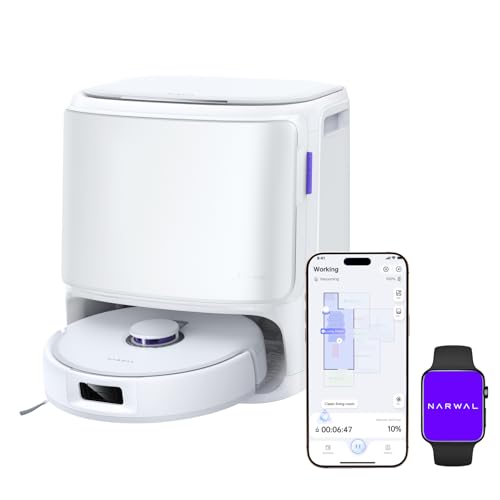
Narwal Flow 2 Robot Vacuum and Mop
Powerful 31,000Pa suction for effective cleaning.
AI object recognition for smarter navigation.
Self-cleaning mop with 212℉ hot water.
 Lauren Wilson
Powerful 31,000Pa suction for effective cleaning.
AI object recognition for smarter navigation.
Self-cleaning mop with 212℉ hot water.
Powerful 11,000Pa suction for deep cleaning.
LiDAR navigation ensures precise movement.
Self-emptying and auto mop wash features.

Powerful 25,000Pa suction for thorough cleaning.
Smart obstacle avoidance prevents collisions.
Self-emptying and mop washing for convenience.

Dual function: vacuums and mops simultaneously.
Self-cleaning feature for low maintenance.
Intelligent navigation for efficient cleaning paths.

Powerful suction effectively handles pet hair.
Self-emptying feature minimizes maintenance effort.
Adapts well to hard-to-reach areas.

Powerful 20000Pa suction for efficient cleaning.
Cordless design offers easy maneuverability.
Self-cleaning feature enhances maintenance convenience.

Powerful 31,000Pa suction for deep cleaning.
Convenient self-emptying feature reduces maintenance.
Dual function: vacuums and mops efficiently.

Powerful suction with 31,000Pa for deep cleaning.
Dual functionality: vacuums and mops simultaneously.
Sleek design complements any home decor.

Self-cleaning feature simplifies maintenance.
Efficiently handles both wet and dry messes.
Ideal for households with kids and pets.

Strong 25,000Pa suction for effective cleaning.
Self-washing mop keeps maintenance minimal.
Smart obstacle avoidance for seamless navigation.
For robot vacuums, look for independent testing that identifies the exact product and reports surfaces, debris, settings, repetitions, and limitations. Useful results include pickup on hard floors and carpet, edge and corner cleaning, wet-spill handling, hair tangling, navigation, and obstacle avoidance. For upright wet-dry cleaners, the same principle applies to wet spills, dried stains, residual water, and dry debris. A pressure figure such as 11,000, 20,000, 25,000, or 31,000 Pa is not a substitute for measured floor performance; the supplied reviews repeatedly found that high suction claims could coexist with weak fine-particle, carpet, edge, or large-debris pickup.
Connected models need a second level of scrutiny. Mapping, cameras, microphones, voice functions, and cloud accounts can expose home-layout and usage information. Check the product’s privacy notice, app disclosures, deletion and reset controls, vulnerability-reporting process, and security-support period. A physical stop button, no-go zones, child lock, cliff sensors, and repeatable obstacle tests are more meaningful than “AI avoidance” wording alone. Several supplied products still required users to clear cords, clothing, toys, tassels, pet items, or other small objects before a run.
Wet systems should document removable tanks, rollers, filters, trays, and cleaning instructions. Washing and warm-air drying can reduce the time a mop or roller remains wet, but they do not establish disinfection. A germ-control claim needs an exact-product microbiological challenge test using a disclosed method, such as an AOAC method or ASTM E2315, and any disinfectant claim should be traceable through the EPA Pesticide Product and Label System. For cleaning liquids, prefer a full ingredient disclosure and SDS; EPA Safer Choice status is stronger evidence than broad “antibacterial,” “deodorizing,” or “hygienic” language.
Electrical and battery claims deserve separate verification. FCC authorization confirms radio compliance, not appliance, charger, battery, overheating, or fire safety. For those issues, look for an exact-model UL, ETL, CSA, or TÜV listing with appropriate vacuum and battery or charger scope, and check the CPSC recalls and SaferProducts.gov databases. Also check the manual, rating label, warranty, and corrective-action history.
Across the supplied reviews, recurring cautions are clear: no exact-model electrical-safety listing was located for the products reviewed; whole-appliance exhaust or sealed-filtration testing was generally absent; heated washing and drying were not proven to disinfect; connected robots still required floor preparation; and proprietary detergents, fragrance, incomplete ingredient disclosures, disposable bags, and recurring filters or mop parts can matter for sensitive households and long-term waste. Some products also performed poorly on carpet, corners, edges, large debris, or liquid spills. Buyers should match the cleaner to their floor types and avoid treating missing evidence as proof of safety or performance.
These topics assess the practical risks and longer-term impacts of robot vacuums and cordless wet-dry cleaners. Scores are most useful when read alongside the product-specific evidence: a high score indicates stronger support within this set, not proof that every risk has been eliminated.
This measures exhaust containment and the hazard profile of included or required liquids. For these products, a washable or labeled filter alone does not prove low particle emissions, and fragrance or incomplete detergent disclosure limits confidence. Scores ranged from 60 to 72; the higher-scoring products had better chemistry or filtration documentation, while none had independent whole-appliance emissions testing.
This covers shock, overheating, battery failure, and dock fire risks. Robots combine lithium-ion batteries with charging docks, while upright cleaners combine batteries, water, and heated bases. An exact-model UL, ETL, CSA, or TÜV listing plus clear instructions would support a high score. Scores ranged from 68 to 74, but the reviews repeatedly found no exact-model listing.
This measures tank, roller, mop, washing, drying, and detergent practices that can limit odor and microbial growth. Removable parts and documented drying are useful, but heated water is not proof of sanitation. Scores ranged from 68 to 80; the stronger products combined independently observed cleaning or drying with practical maintenance instructions, while no supplied product had independent microbiological validation.
This concerns stairs, cords, tassels, pets, children, people, hot areas, wet areas, entrapment, stopping, and recovery. Robots need repeatable avoidance testing and usable barriers or no-go controls; upright cleaners need safe handling around hot plates and dirty water. Scores ranged from 66 to 82, with independently tested obstacle avoidance separating higher results from manufacturer-only claims.
This measures model-specific recalls, incident patterns, warnings, service actions, firmware corrections, and warranty responses. It matters because leaks, charging failures, overheating, and unsafe operation may appear after purchase. Scores were tightly grouped from 69 to 72. No product-specific U.S. recall was located in the supplied reviews, but that absence is not independent proof that a product is defect-free.
This measures reproducible pickup, mopping, spill handling, edge work, carpet behavior, and hair performance on claimed surfaces. It matters because suction pressure and feature lists often failed to predict real pickup in the supplied reviews. Scores ranged from 56 to 88; the strongest products had exact-model editorial or laboratory results, while lower-scoring products showed weak carpets, edges, corners, or large debris.
This tests whether suction, runtime, noise, coverage, drying temperature, storage intervals, and allergy or pet claims are qualified by method and conditions. Scores ranged from 48 to 77. Higher-scoring products had claims that aligned more closely with independent measurements; lower results reflected conflicting specifications, internal-only testing, or headline numbers that overstated practical cleaning.
This measures exact-product testing and certification from competent independent bodies. FCC records verify radio compliance, not appliance electrical safety, and seller badges or unverified reviews are not equivalent to accredited testing. Scores ranged from 69 to 83; the strongest products had multiple exact-model editorial or laboratory checks, while many still lacked NRTL and whole-appliance filtration evidence.
This measures collection, retention, account security, update support, local controls, and user control over maps, cameras, microphones, and usage data. It matters mainly for connected robots; offline upright cleaners avoid much of this exposure. Scores ranged from 70 to 80. App-free operation scored well, while connected models had useful deletion or encryption disclosures but cloud and privacy-policy limitations.
This measures access to genuine batteries, filters, brushes, rollers, tanks, mops, chargers, service, repair instructions, and software support. These parts commonly wear in both robots and wet-dry cleaners. Scores ranged from 70 to 77; higher-scoring products had official parts stores, replacement schedules, warranties, or repair intake, while some lacked detailed battery replacement or repair documentation.
This measures recurring dust bags, filters, mop pads, rollers, detergent, deodorizer modules, and proprietary replacement parts. Washable filters and reusable pads reduce some waste, but self-emptying docks and upright cleaners may still require disposable bags. Scores ranged from 55 to 72; the lowest result reflected frequent bags and replacement modules, while higher results had more washable or supported parts.
This covers electricity for charging, heated washing and drying, water use, standby behavior, battery longevity, packaging, recycling, and takeback. Heated docks and plumbed or large water systems can add resource demands, while documented battery recycling improves end-of-life planning. Scores ranged from 66 to 72; independent energy and water measurements and clear takeback routes were generally missing.
This product is a Wi-Fi and Bluetooth connected robot vacuum and mop with a self-emptying, mop-washing dock. The robot uses a rolling track mop, a dust bag in the dock, clean and dirty water tanks, and a detergent reservoir. Its documented robot battery is a 14.4 V lithium-ion pack rated at at least 6,500 mAh, while the dock is specified for 1,200 W water heating, 450 W dust collection, and 110 W drying. Manufacturer materials state 31,000 Pa suction, real-time mop rinsing, hot-water washing, hot-air drying, and dual-camera obstacle recognition. Independent testing supports strong navigation, long battery life, quiet operation, and capable routine mopping. The same testing found below-average dust pickup for its class, weak corners and edges, and less convincing carpet pickup of fine debris. The large suction number is therefore not a reliable stand-alone measure of real cleaning performance.
This product suits a household with mostly sealed hard floors that wants automated daily upkeep rather than replacement of a full-size vacuum or deep-cleaning routine. It is particularly relevant for people who value a dock that empties debris, rinses the mop during larger jobs, and dries it afterward. It also fits homes with ordinary thresholds, provided loose cords, fringed rugs, clothing, and small objects are picked up first. Buyers should be comfortable using a connected app and periodically replacing bags, filters, brushes, mop tracks, and detergent.
This product is not well suited to households that need strong deep cleaning of thick carpet, very fine powder, edges, corners, or cluttered floors without preparation. People with severe dust or fragrance sensitivities should not assume allergy-grade exhaust control, because no whole-machine emissions test or sealed HEPA system documentation was found. It also deserves caution in homes with stairs, high ledges, tasselled bath mats, loose cables, or small toys, since the manual still calls for barriers and floor preparation. Privacy-sensitive households should consider the onboard cameras and app account requirements carefully.
The health-positive elements are practical rather than medical. The dock washes the mop with hot water and dries it after a task, and independent testing found the mopping system effective for routine hard-floor cleaning. The manual also documents no-go zones, child lock, physical start and return controls, anti-drop sensors, and instructions to remove loose household items. No U.S. recall or regulator warning for this exact product was located in the checked public sources. Important limits remain. The product uses disposable dust bags, replaceable filters, detergent, wear brushes, and a replaceable mop track. It has a manufacturer-published safety data sheet for its floor cleaner, but no full ingredient disclosure or Safer Choice certification was located. The dock's stated 1,200 W water-heating load means hot washing can increase electricity demand. The lithium-ion battery should be taken to an appropriate battery recycler at end of life. The public documentation supports radio authorization, not an independently located electrical-safety listing.
This is a round, Wi-Fi connected robot vacuum and mop with a separate floor dock. The robot has a 5,000 mAh battery, 72 W maximum output, spinning mop pads, a roller brush, and a 107.7 mm height. Its dock adds dust-bag collection, mop washing, clean and dirty water tanks, and warm-air mop drying. It is intended mainly for routine hard-floor and carpet cleaning, with app-set maps, schedules, and no-go zones. Narwal states 11,000 Pa suction, a 12 mm mop lift, 104°F drying, and up to 120 days between dust-bag attention. Independent editorial testing supports strong dry pickup on hard floor and short-pile carpet, plus very good edge wiping. The same testing found that liquid spills were handled only adequately and obstacle detection had weaknesses, so its advertised collision-avoidance language should not be treated as a safety guarantee.
It suits a household that wants scheduled maintenance cleaning across mostly hard floors with some low or medium-pile carpet, and that has space for a substantial dock with water tanks. It is especially practical for people willing to clear cables, small toys, pet bowls, and loose textiles before runs. Independent testing supports it for routine crumbs, hair, and dry debris, while the washable mop system and dock reduce hands-on pad washing. It also fits users comfortable managing maps, schedules, and firmware through a 2.4 GHz Wi-Fi app.
It is not suited to households that need dependable avoidance of charging cables, pet waste, scattered toys, tassels, or other low obstacles. Independent testing found meaningful limitations in object avoidance and in liquid-spill mopping, so active spills and safety-critical areas need manual attention. It is also a poor fit for buyers who require a publicly verifiable third-party electrical-safety listing, independently tested exhaust filtration, local-only smart controls, or clearly documented user replacement of the battery and major dock parts. Avoid running it unsupervised around stairs or wet hazards unless the area has been prepared.
The product can mop with water alone and does not include floor cleaner. Narwal says optional cleaning tablets should be kept away from children and pets. Its published compliance page links safety data sheets for Narwal floor-cleaning products, but the supplied product does not require detergent and no exact tablet ingredient disclosure was located during this review. No whole-machine particle-emissions result or independently verified sealed-filtration result was found, so allergy and indoor-air benefits remain unproven. Its wash-and-warm-air-dry dock can reduce the chance that damp pads remain wet after cleaning. An independent test observed complete pad drying in about three to four hours, though no microbiological challenge test was found. The exact model has FCC authorization for its wireless functions, not an electrical appliance-safety certification. Public searches did not identify an exact-model CPSC recall. Ongoing waste includes disposable dust bags, filters, brushes, mop pads, and eventually a lithium-ion battery. Narwal lists an accessory kit and maintains a vulnerability-reporting policy, but it does not publish a clear product-specific repair or end-of-life takeback path.
This is a round, app-connected robot vacuum and mop with a separate self-emptying, mop-washing dock. The robot is 13.98 by 13.78 by 4.24 inches, weighs 9.92 pounds, and has a manufacturer-stated 5,200 mAh battery. Narwal says it uses lidar navigation, structured-light obstacle detection, 25,000 Pa maximum suction, a 12 mm mop lift, and a dock that washes and dries its mop pads. Some important real-world evidence is available, but it is not laboratory certification. In a two-week Gizmodo home test, it completed nearly all scheduled runs, handled most common floor clutter, and cleaned a 750-square-foot apartment on one vacuum-and-mop charge with about 40% battery left. That test also found a roller jam, later cable snags, a temporary clog that stopped pickup, and poor handling of a ketchup spill. Independent testing therefore supports capable routine cleaning, not hands-free recovery from every household mess.
This product fits a household that wants automated maintenance of mostly hard floors plus ordinary rugs, has space for a large dock, and can prepare rooms before scheduled cleaning. It is especially suited to routine crumbs, dust, loose hair, and everyday kitchen residue, where repeated scheduled passes are more valuable than fast cleaning. It also suits a privacy-conscious app user who prefers lidar and structured-light navigation instead of an onboard camera, while accepting cloud-connected account and Wi-Fi setup.
It is not suited to households that need proven HEPA-level exhaust control for severe allergy concerns, or buyers who require independently listed electrical safety certification for the exact product. It is also a poor match for homes with frequent cords, paper, pet waste, vomit, large debris, or fresh sticky spills left on the floor. The robot can encounter jams and cable snags, and it may spread a wet food spill. People without room for a 16.97 by 15.88 by 18.17 inch dock should also avoid this format.
The wet-cleaning system has useful hygiene-oriented hardware. Narwal states that the dock washes mop pads with 113 to 167 F water, dries them with 104 F air, and uses separate clean and dirty water handling. Those measures can reduce prolonged dampness, but no independent microbiological challenge test was found. The manufacturer publishes safety data sheets for its floor-cleaner products, which is better chemical documentation than an undisclosed liquid, although the material reviewed did not establish a lower-hazard certification or full consumer ingredient disclosure for the supplied cleaner. The product uses a rechargeable lithium-ion battery, a corded dock, washable mop modules, and a disposable sealed dust bag. Narwal sells a replacement kit, but the reviewed listing showed it out of stock and did not provide a repair guide or battery service procedure. No exact-product CPSC recall or public electrical-safety listing was located in the reviewed searches. App use requires account and Wi-Fi information, and Narwal's policy says it collects device and network data, while stating the Wi-Fi password remains local to the app and robot.
The Freo 20 is an app-connected robot vacuum and mop with a dock that charges it, washes its track-style mop, and collects dry debris into a 2.4-liter disposable bag. An early-access hands-on report describes a 3.74-inch-tall robot with a 6,400 mAh battery, dual RGB cameras, rear LiDAR, structured-light sensing, an extending side brush, and a mop that can lift for carpet. The reviewer received the product through Narwal's early-access program, so these are not independent laboratory findings. Narwal stated through that report that the dock washes the mop with water up to 212 F and dries it with air up to 140 F. The exact product's Wi-Fi and Bluetooth radios have an FCC equipment authorization. However, at this review date, August 16, 2026, Narwal's announced North American launch date was August 20, 2026. Public exact-product documentation, independent performance testing, electrical-safety listing evidence, and detergent ingredient documentation were consequently limited.
This product fits a household with mostly sealed hard floors, modest thresholds, enough open space around a dock, and a willingness to empty dirty water and replace dust bags. It is particularly relevant for people who value automated mop washing and drying but can accept that the evidence currently comes mainly from manufacturer statements and early-access use. It also suits a connected-home user comfortable with an account, Wi-Fi connection, app permissions, and camera-based navigation. Carpet should be a secondary surface rather than the main cleaning challenge.
It is not suited to buyers who need independently verified allergen containment, detailed cleaning-chemical disclosure, or a confirmed third-party electrical-safety listing before bringing a battery-powered appliance into the home. Avoid using it as an unattended solution around pet waste, cords, tassels, or tightly packed low furniture, since the available exact-product report found it could be forceful near the dock and under furniture. It is also a poor fit for homes dominated by thick carpet, or for privacy-sensitive households unwilling to connect a camera-equipped robot to Wi-Fi and an account.
The strongest confirmed compliance evidence is for the connected radios. The exact robot has FCC authorization for Bluetooth and Wi-Fi operation, but that should not be read as a whole-appliance electrical or battery-safety certification. No exact-product recall was located in the public CPSC recall search at review time, though the product's announced North American launch was still August 20, 2026, leaving little field history. Narwal's app disclosures say photos, videos, and voice recordings may be collected when users choose those functions. The app says data are encrypted in transit and that users can request deletion. Narwal also publishes a vulnerability-reporting policy. On waste and upkeep, the dock's disposable 2.4-liter dust bag creates recurring material waste, while the washable mop system may reduce disposable-pad use. Heated washing and drying can improve mop drying, but exact electricity, water-use, detergent chemistry, battery-recycling, and repair-part evidence was not publicly documented.
The Narwal Freo Z10 is a connected robot vacuum and mop with a separate base station for dust collection, water handling, mop washing, and drying. An FCC test report identifies this version as a 2.4 GHz Wi-Fi and Bluetooth Low Energy robot vacuum and mop. Narwal states that it has 15,000 Pa suction, spinning mops with edge-extension movements, hot-water mop washing, hot-air drying, and a dust bag in the base. Those performance figures are manufacturer-stated, not independently reproduced in a published laboratory report. A hands-on TechRadar test used oats, tea, talcum powder, hair, and dried ketchup on tile and carpet. It found mopping notably stronger than vacuum pickup, especially on carpet, and found that the base kept mop pads clean over six weeks. The product is therefore a mopping-centered automated cleaner, not evidence of uniformly strong dry-debris removal on every floor type.
This product suits a household that mainly wants automated maintenance of sealed hard floors, has room for a water-and-dust base station, and will empty dirty water and inspect the robot regularly. It is better aligned with people who value frequent mop-pad washing, drying, and edge-focused mopping than those seeking maximum carpet pickup. It can also suit homes with ordinary floor clutter if small socks, cords, and pet waste are cleared before a run. Buyers should be comfortable using an app and connecting the product to Wi-Fi.
It is not well suited to homes where thick carpet, fine dust, or heavy pet-hair pickup is the main cleaning problem. The independent test found that high-power repeat passes were needed for some dry debris, while carpet pickup remained incomplete. It is also a poor fit for households that cannot consistently remove socks, cords, pet waste, or water hazards from the floor. People avoiding fragranced cleaners, disposable bags, cloud-connected home mapping, or regular dirty-water tank handling should choose a simpler cleaning approach.
The base's hot-water washing and hot-air drying have practical hygiene value. In a six-week independent use test, the mop pads remained visibly clean and the reviewer found no odor. That is useful real-world evidence for routine wet-system maintenance, but it is not a microbiological challenge study and does not establish disinfection or a specified germ-kill rate. Narwal discloses that the compatible floor cleaner contains surfactants, builders, film-brightening agents, fragrance, dispersants, penetrants, and water. The lemon-and-basil fragrance and absent full ingredient concentrations matter for fragrance-sensitive households. The product also uses bags, detergent, filters, brushes, and mop pads, although official replacement supplies exist. Searches through August 16, 2026 found no product-specific CPSC recall, but also no publicly verifiable exact-model North American electrical-safety listing or whole-appliance filtration-emissions test.
This is a cordless, upright wet-dry vacuum mop for sealed hard floors. It vacuums loose debris while applying water and detergent through a roller, then collects dirty water in a separate 720 ml tank. The documented clean-water capacity is 790 ml, the empty-machine weight is about 9.6 pounds, and the battery is rated 4,000 mAh. Narwal states that the base hot-washes and dries the roller and internal components at up to 194°F, while the product manual still requires users to empty and rinse the dirty-water tank and clean the pipe, roller, and filter. Independent editorial use found it effective for compact, high-traffic hard-floor spaces, but also found setup and water-tank handling less intuitive than expected. The product operates from onboard controls, with no smartphone app required.
This product suits someone with predominantly sealed tile, vinyl, laminate, or sealed hardwood who wants to address crumbs, tracked-in dirt, pet messes, and small wet spills in one pass. It is especially relevant for an apartment or compact home where storing separate vacuum and mop equipment is inconvenient. Buyers should be comfortable emptying a dirty-water tank after use, running the base cleaning cycle, replacing wear parts, and using Narwal detergent rather than treating the product as fully maintenance-free.
It is not appropriate for homes centered on carpet cleaning, since this is a hard-floor wet vacuum mop and even its suction-only mode can leave moisture on the floor. It also does not suit people seeking independently verified sealed filtration for significant allergy or fine-dust concerns, or those who need publicly confirmed electrical-safety certification. Avoid it where routine dirty-water handling, disposable bag waste, detergent use, or keeping cords, shoelaces, and plastic bags clear of the roller would be difficult.
The most relevant hygiene feature is the manufacturer-stated hot self-wash and drying cycle. It may help reduce retained moisture in the roller and internal pathway, but it is not a disinfectant claim backed here by a disclosed microbiological test. The manual makes clear that hygiene still depends on emptying and rinsing the dirty-water tank, cleaning the filter and pipe, and removing blockages. It also warns users not to touch the heating plate and to keep cables, plastic bags, and shoelaces away from the roller. The product includes a washable filter and replaceable roller, which can extend use of the main unit. However, it also uses proprietary detergent, a deodorant module, and disposable waste-separation bags. Narwal recommends replacing the bag as often as daily under heavy use. No full detergent ingredient disclosure, safety data sheet, model-specific sealed-filtration evidence, or publicly verifiable exact-model electrical listing was located. No U.S. recall for this exact product was found in the review search.
The Narwal Freo 20 Edge is an app-connected robot vacuum and mop with a separate all-in-one dock. The robot measures 13.7 by 14.3 by 3.7 inches, while the dock washes and hot-air dries its track-style mop, empties collected dust into a bag, and manages clean and dirty water. It is intended for hard floors and low-pile carpet, with the mop lifting when carpet is detected. Narwal states that its FlowWash system continuously rinses the mop using 16 nozzles, 12N of mop pressure, residue scraping, and dirty-water extraction. It also states 31,000 Pa suction, 3D obstacle avoidance, and a 2.5 L dust bag. These are manufacturer claims, not laboratory-verified performance results. Independent three-week home testing found strong hard-floor pickup, good stain removal, low brush tangling in a dog-owning home, and an odor-free dried mop, but it was not a standardized lab test.
This product suits a household with mostly sealed hard floors, routine crumbs, pet hair, and frequent light kitchen or entryway messes. It is especially relevant where reducing mop handling matters, because the dock washes, dries, and flushes parts of the wet-cleaning system. The available independent testing was conducted in a home with hardwood, tile, a low-pile rug, cables, furniture, and a shedding dog. Buyers should be comfortable using an account-connected app and regularly refilling clean water, emptying dirty water, and replacing dust bags.
It is not well suited to buyers who need documented allergen containment, verified low particle emissions, or a confirmed HEPA-sealed vacuum system. It is also a poor fit for households with thick or high-pile carpeting, because available independent reporting supports hard-floor performance more clearly than carpet pickup. Privacy-sensitive households that do not want an app-connected, map-capable device should consider a cleaner with clearer local-only controls. It also requires clearance for a 20.8-inch-high dock and ongoing attention to tanks, dust bags, filters, and wet-system maintenance.
The wet system has useful hygiene-oriented design features, but they should not be mistaken for disinfection. Narwal states that fresh water rinses the track mop during cleaning, while the dock washes it, flushes the dirty-water system, and dries the mop with 113 F air. A three-week independent home test reported an odor-free dried mop. No independent microbiological challenge test, EPA disinfectant registration, or germ-kill evidence was located for this product. Its wireless hardware has exact-model FCC authorization, but that is radio compliance rather than electrical-safety certification. No exact-model recall was located in the CPSC recall database search as of October 4, 2026. The app offers deletion and reset controls, but its policy covers collection of device, network, account, and usage information. Waste is moderated by the reusable track mop, while disposable dust bags, replaceable filters, and battery end-of-life remain practical environmental limitations.
The Narwal Flow 2 is a Wi-Fi connected robot vacuum and mop with a self-emptying, self-washing dock. The robot is 13.8 by 14.3 by 3.7 inches, uses a 7,000 mAh battery, and has a rolling track mop. It vacuums, mops, or performs the jobs sequentially, with maps, restricted zones, and controls managed through the Narwal app. The 31,000 Pa suction rating, 212 F dock washing, and 140 F drying are manufacturer-stated specifications. Independent testing gives more useful real-world evidence, including 84% embedded-grit removal from medium-pile carpet, 88% pickup of flattened pet hair, and no hair wrap in a 7-inch hair test. The same testing found mixed mopping results on dried stains, while another hands-on stress test found that dirty parts could smell after heavy messes unless cleaned manually.
This product suits a buyer with mostly hard floors plus low or medium-pile rugs, regular pet hair, and a clear floor plan who wants automated routine cleaning rather than a replacement for close-detail work. Its independently tested hair handling, carpet pickup, and above-average obstacle avoidance are useful in active homes with toys, pet items, and everyday clutter. It also fits someone willing to use an app, permit connected-device data collection, empty tanks, inspect the dock, and perform weekly hygiene maintenance.
It is not well suited to households that require independently verified electrical certification, whole-machine HEPA or particle-emissions evidence, or substantiated disinfection performance. Avoid relying on it around loose cords, sharp debris, elevated edges, or unsupervised wet hazards, because the manual still requires floor preparation and its obstacle system missed four test objects. It is also a poor fit for privacy-sensitive homes that do not want a camera-equipped robot, cloud-connected maps, or app-linked device and network data collection.
The product has meaningful hygiene hardware, including a dock that Narwal says uses 212 F water washing and 140 F hot-air drying. Its manual directs owners to use Narwal detergent and to maintain the cleaning system. However, the available evidence does not establish microbial kill, and a hands-on stress test reported odor after messy food and oil tests until the dock and parts were washed and dried manually. The supplied cleaner has an SDS posted by Narwal, but a complete lower-hazard ingredient assessment for the exact supplied bottle was not located. The dock uses disposable dust bags, while filters, detergent, brushes, mop tracks, and cleaning filters require replacement. Narwal does sell genuine consumables and kits, which supports routine upkeep, but it also creates ongoing material waste. Heated washing and drying may improve mop hygiene, yet they add electricity demand. No independent measurements of energy, water use, standby draw, or battery longevity were located. Public records searched did not identify an exact-product US recall or regulatory safety action.
This is a cordless upright vacuum mop for sealed hard floors. It vacuums dry debris while a water-fed roller washes the floor, then returns to a charging base for self-cleaning and heated drying. Narwal lists a 790 mL clean-water tank, 670 mL waste tank, 9.41-pound body, and battery capacity of 4,000 mAh. It is not intended as a deep carpet cleaner, and its own support page says water must remain in the tank even when using suction mode. Independent testing is the strongest evidence for this product. Vacuum Wars bought and tested it, recording above-average dried-stain removal and only 0.44 g of water left after its test. The maker documents self-cleaning followed by roller, pipe, and filter drying, but its disinfecting, odor-free, tangle-free, suction, and noise claims lack publicly located model-specific test reports or verifiable certification records.
It suits a household with mostly sealed hard flooring, frequent food spills, tracked-in dirt, or pet messes that benefits from combining vacuuming and wet cleaning in one pass. It is especially relevant for users who will empty the dirty tank, rinse its components, clean the filter, and run the drying cycle after use. The independent test results support its use for routine hard-floor stain removal where leaving less water behind matters, such as kitchens, entryways, and homes with children or pets.
It is not suited to homes that need a primary carpet vacuum, because it applies water even in suction mode and is not designed for deep rug cleaning. It is also a poor fit for anyone unable or unwilling to empty and rinse dirty water after each use, or to replace filters and rollers every three to six months as directed. Households with chemical sensitivities should seek disclosed detergent ingredients and an accessible Safety Data Sheet before using the supplied solution. People needing independently verified electrical certification should also seek clearer documentation.
The hygiene design has practical strengths, not proof of disinfection. Narwal’s manual describes a three-to-five-minute self-cleaning cycle and heated drying that lasts at least 30 minutes. It also warns users not to touch the heating plate during or soon after drying because of burn risk. The tank and internal pathways still require manual cleaning, and the dirty-water tank should be emptied and rinsed rather than left standing. The supplied detergent is a meaningful exposure uncertainty. Narwal directs owners to use its dedicated formula, but a full ingredient list and Safety Data Sheet were not located in the sources checked. The washable filter and reusable roller avoid disposable bags, although both are recommended for replacement every three to six months. Official replacement parts are available, but there is no documented battery replacement procedure or manufacturer takeback path. No model-specific U.S. recall was identified in the CPSC sources checked.
This is a Wi-Fi-connected robot vacuum and mop with a large dock that empties collected debris into a 3.2 L bag, washes the two rotary mop pads, refills the robot with water, and stores 4.5 L of clean and 4.0 L of used water. The manufacturer lists a 5,200 mAh battery, 25,000 Pa maximum suction, 10.5 mm mop lift, and 20 mm threshold crossing. The best independent evidence found is a three-month real-home review. It reported strong debris and pet-hair pickup, stable mapping, and no repeated crashes, but rated carpet cleaning and obstacle avoidance as only middling. Its key limitation was mopping. The reviewer found the pads are wetted at the dock and can become dry on larger whole-home runs, making this more convincing as a vacuum-first machine with light-duty mopping.
It suits a household that primarily wants scheduled vacuuming on hard floors and carpets, with a small kitchen, bathroom, or other limited hard-floor zone that benefits from occasional maintenance mopping. It is especially practical for someone willing to keep floors pre-cleared, empty the used-water tank, replace dock bags, and maintain pads and filters. The dock's water tanks and automatic emptying reduce routine handling, while the independent test suggests the vacuum function is the stronger reason to consider this format.
It is not suited to homes that expect reliable wet mopping across a large hard-floor layout. Independent testing found the pads can dry during a whole-home run. It is also a poor fit where cords, small toys, pet messes, tassels, or other floor hazards cannot be consistently removed, because avoidance was only moderate and the manual requires pre-clearing. Households with strict privacy minimization needs, or those requiring an independently verifiable North American electrical-safety certification, should account for the missing public evidence.
The dock separates clean and used water, and the manual directs owners to empty and rinse the used-water tank, clean the washboard filter, and fully dry washable parts before reuse. These are useful hygiene controls, but no independent microbiological challenge test was located. The manufacturer claims mop washing and drying, while the manual does not state a drying temperature or substantiate a sanitizing or disinfecting result. Only clean water and Dreame-approved cleaning solution are permitted in the tank. The available safety data sheet for Dreame's multi-surface cleaner classifies the concentrate for eye irritation and acute inhalation toxicity category 5, so it should be diluted as directed and stored away from children. The dock also creates recurring waste through disposable dust bags, specified for replacement every two to four months. Mop pads, filters, brushes, and bags are replaceable, but the battery is designated for skilled-person replacement. No product-specific US recall was located in the CPSC recall search.


