Best Overall
38% off

Beatbot Cordless Robotic Pool Cleaner Dark Grey
Efficient cleaning with advanced navigation technology.
Long-lasting battery for extended cleaning sessions.
User-friendly design with easy maintenance features.
 Daniel Kenitz
Efficient cleaning with advanced navigation technology.
Long-lasting battery for extended cleaning sessions.
User-friendly design with easy maintenance features.

Strong double jet power enhances cleaning efficiency.
Comes with a long 31ft hose for flexibility.
All-purpose debris bag captures various pool waste.

Convenient cordless design enhances mobility and ease.
Outdoor charging caddy simplifies recharging process.
Remote control offers user-friendly operation.
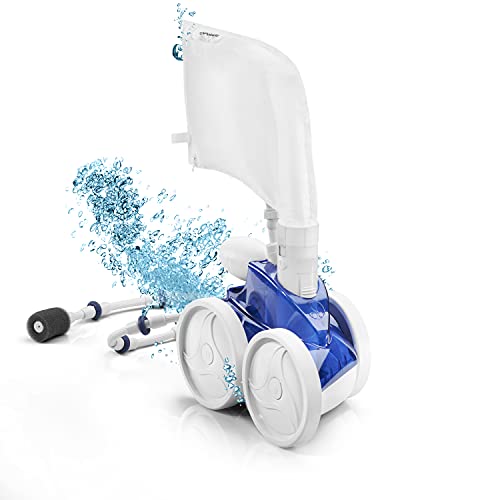
Powerful triple jet cleaning action.
Large debris bag holds more.
Long 31-foot hose for extended reach.
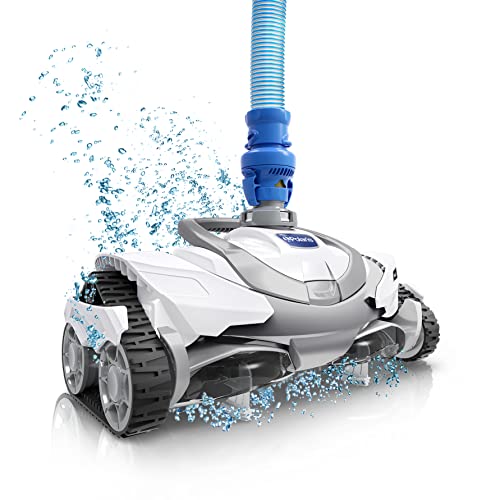
Smart navigation ensures thorough pool cleaning.
Energy efficient for lower power consumption.
Halo technology simplifies debris removal.

Smart app control for easy operation.
Large filter canister for fewer cleanings.
Easy lift system for effortless removal.
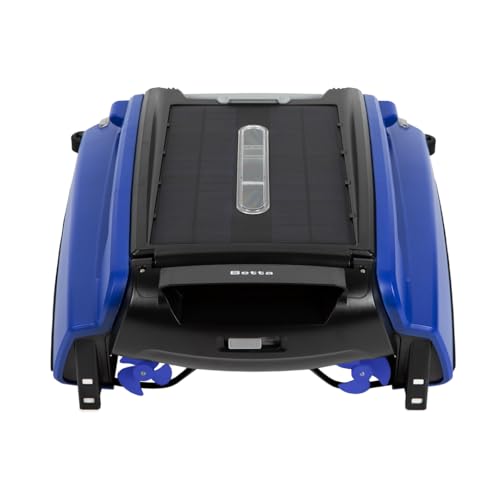
Operates without cords or hassle.
Eco-friendly, uses solar power.
Effective at removing debris efficiently.

Triple jet power for efficient cleaning.
Dual chamber bag holds more debris.
Durable and robust for long-lasting use.
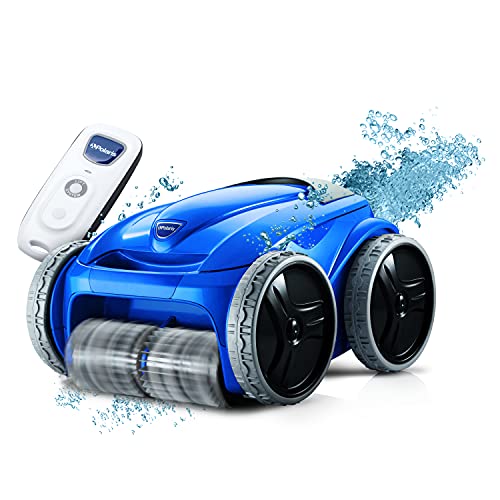
Strong suction for deep and thorough cleaning.
Easy-to-use remote control for convenience.
Efficient wall climbing for comprehensive pool coverage.
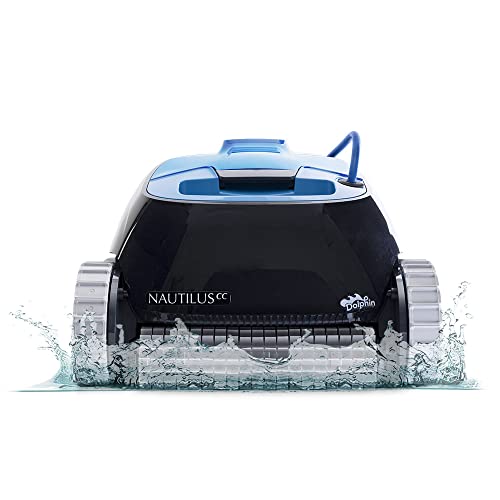
Efficiently climbs walls for thorough pool cleaning.
Easy-to-access top load filter system.
Suitable for both above-ground and in-ground pools.
Start with the cleaner type. Cordless robots avoid suction hoses, pressure lines, booster pumps, and floating power cables, but add battery charging, battery aging, and end-of-life handling. Corded robots keep the battery out of the product but require a properly located GFCI-protected outlet, dry control equipment, cable management, and a no-swimming operating rule. Suction-side and pressure-side cleaners avoid submerged electrical power, but depend on compatible pool plumbing, adequate flow, compliant suction fittings or a booster pump, and sometimes additional electrical installation. Surface skimmers only collect floating material; they do not replace a floor, wall, or waterline cleaner.
Compatibility is a safety issue, not merely a convenience. Check the stated pool type, water depth, pool length or area, surface, water temperature, salt concentration, hose or cable reach, required flow, and equipment connections against the model-specific manual. Steps, tanning ledges, sharp corners, curved floor-to-wall transitions, ladders, coping, and shallow shelves can limit climbing, coverage, or retrieval even when a product claims whole-pool cleaning. A hose or cable that is too short, or a pressure cleaner installed without the correct flow and wheel speed, can produce poor results and unnecessary wear.
Treat runtime, cycle time, suction, gallons-per-hour figures, sensor counts, pool-size limits, and “complete coverage” as conditional unless the test method is disclosed. Debris load, water temperature, clogs, pool geometry, wall angle, path planning, pump flow, and filter condition can all change the result. A reusable basket or bag is useful, but its capacity does not establish filtration quality. Look for a stated micron rating and practical cleaning instructions; several supplied products had no published rating, while standard filters around 150–200 microns may allow finer dust, silt, sand, or algae-scale particles through.
For electrical and water safety, look for a model-specific UL, ETL, or CSA record that can be checked in the relevant public directory, not just a general catalog statement. Check the CPSC recall database and follow the exact manual for GFCI protection, charger placement, charging temperature, submerged operation, extension-cord restrictions, and no-swimming requirements. For wireless products, model-specific FCC authorization is useful evidence. A certification mark, IP rating, or low-voltage output can support the safety case, but it does not replace correct installation or handling.
Finally, consider the equipment’s full environmental burden. A cordless cleaner may avoid booster-pump demand, while a pressure or suction cleaner shifts energy use to the pool pump or booster pump. Reusable bags and baskets reduce disposable-cartridge waste, but rinsing consumes water; empty debris into appropriate solid-waste or green-waste handling rather than drains. Replaceable tracks, brushes, wheels, cables, bags, canisters, motors, and rebuild parts support longer use. Battery replacement instructions, recycling guidance, warranty coverage, and material or chemical disclosures are often incomplete.
Recurring safety cautions in the supplied reviews are significant: do not allow swimming while a cleaner operates; use GFCI-protected, correctly placed power equipment and never substitute an extension cord where prohibited; remove cleaners before chemical shock, superchlorination, backwashing, or filter service when the manual requires it; and treat suction fittings, booster-pump wiring, vinyl-liner abrasion, ladders, steps, and charging batteries as model-specific hazards. Lithium-ion products should use the specified charger, remain dry while charging, and be inspected for damage. No single category-wide contraindication beyond these repeated operating warnings was found in the supplied data.
These products differ in how they interact with pool water, electrical equipment, circulation systems, debris, and replacement parts. The scores below distinguish documented limits and serviceable designs from claims that remain largely manufacturer-stated or lack model-specific verification.
This measures protection against shock, overheating, fire, battery failure, and water ingress. Cordless robots require safe charging and battery handling; corded robots require GFCI protection and dry, correctly placed control equipment; hydraulic cleaners shift risk to pumps and plumbing. Scores ranged from 68 to 82: higher-scoring products had clearer safeguards or a cETL-US mark, while lower scores lacked confirmed model-specific third-party listings.
This measures whether pool type, depth, surface, hose or cable reach, flow, and required equipment match the installation. A mismatch can cause unsafe modifications, poor climbing, suction hazards, or equipment strain. Scores ranged from 62 to 82. Higher-scoring products gave concrete depth, length, surface, temperature, or connection limits; lower scores depended more heavily on professional setup or undisclosed pool conditions.
This measures whether a cleaner retains the debris it claims to collect and provides a practical, serviceable basket or bag. It matters because many products return fine particles to the pool or send debris into the main filter. Scores ranged from 72 to 78. Higher scores reflected reusable collection and clearer debris handling; no supplied product established fine-particle retention solely through capacity claims.
This measures disclosure of plastics, hoses, coatings, batteries, warnings, and chemicals used around pool water. It matters when owners handle filters, chargers, batteries, and clarifying products. Scores ranged from 52 to 70. Higher scores still generally offered only limited material information; the lowest score reflected a product with a documented Proposition 65 and button-cell warning but little explanation of the underlying materials.
This measures independently demonstrated floor, wall, waterline, surface, and debris performance in comparable pools. Scores ranged from 58 to 86. Higher-scoring products had disclosed hands-on testing supporting meaningful floor, wall, or waterline results. Lower scores relied on manufacturer cycle times or coverage claims, with missed steps, corners, ladders, fine debris, or waterline areas reported in testing.
This measures whether safety, wireless, energy, and performance claims can be traced to a qualified lab, regulator, or public certification record. Scores ranged from 68 to 81. Higher scores included a cETL-US label or public cybersecurity certification, while many products had no model-specific UL, ETL, or CSA record confirmed. Manufacturer statements about listing status were treated more cautiously than independently checkable records.
This measures whether runtime, pool size, filtration, navigation, smart functions, and cleaning modes include meaningful conditions and exclusions. Scores ranged from 52 to 78. Higher-scoring reviews noted concrete depth, temperature, chemistry, cycle, or installation limits. Lower scores involved conflicting versions, unclear included filters, unsupported coverage claims, or headline figures that changed with debris, geometry, temperature, or operating mode.
This measures cleaning delivered relative to electricity and, for suction or pressure cleaners, the hidden demand placed on the circulation or booster pump. Cordless and independent corded robots avoid added hydraulic load, while pressure cleaners require a booster pump. Scores ranged from 60 to 83. Higher scores included measured or specified electrical use and no booster-pump demand; lower scores reflected separate pump energy with little product-specific measurement.
This measures reusable collection, ease of emptying, and whether routine maintenance avoids unnecessary rinsing or improper disposal. Most supplied products scored 73 to 80. Higher scores had accessible reusable baskets or bags and clear emptying instructions. These scores do not mean zero water use: baskets commonly need rinsing, and collected leaves, sediment, and litter should not be washed into drains or waterways.
This measures resistance to pool chemicals, UV exposure, cable or hose wear, battery aging, and the availability of replacement parts and repair support. Scores ranged from 66 to 82. Higher-scoring products had documented parts such as bags, tracks, tires, brushes, cables, valves, motors, or rebuild kits and stronger frame or body coverage. Lower scores involved sealed batteries, difficult basket replacement, or limited user repair.
This cordless robotic pool cleaner is a battery-powered unit intended to scrub and vacuum pool floors, walls, and the waterline. Beatbot states that it has four motors, a 10,000 mAh lithium-ion battery, a 2 L filter basket, a 150 micrometer filter, and a charging dock. It is intended for pools up to 3,230 square feet, with a stated operating depth of 1.6 to 9.8 feet and salt concentration below 5,000 ppm. The manufacturer states that the robot can run for up to four hours in floor-only cleaning, double-scrub the waterline, and park at the surface after a cycle or low battery. Independent hands-on testing exists, but its results are mixed. One long-term reviewer reported smooth setup and strong routine cleaning, while another test reported inconsistent navigation, missed corners, and weaker fine-debris pickup. No model-specific UL, ETL, CSA, or FCC certification record was located in the public directories reviewed.
This product suits an owner of a residential pool within the stated 3,230 square foot floor-area limit who wants cordless, routine cleaning of the floor, walls, and waterline without connecting a hose, pressure line, or booster pump. It is most appropriate where ordinary leaves, hair, insects, and sand are the main debris, the pool has sufficient depth, and the owner is prepared to empty and rinse the 2 L basket after each run. It also fits someone who values surface parking for retrieval and accepts manufacturer-stated runtime limits.
It is not well suited to pools shallower than the stated 1.6-foot operating minimum, pools with steps that cannot support the robot, or saltwater pools above Beatbot's 5,000 ppm limit. Households that require a publicly verifiable third-party electrical-safety listing should seek a product with one. It is also a weaker fit for heavily leaf-loaded pools or pools with persistent very fine silt, algae, or powdery sand, because the stated 150 micrometer basket has limited fine-particle retention and independent testing reported some remaining fine debris.
The product combines a lithium-ion battery with pool water, so charging and storage practices matter. The available instructions say to keep the charging dock dry and shaded, use the original dock and accessories, remove the robot before adding pool chemicals, and avoid operation while swimmers are in the pool. Public searches of the CPSC recall database did not identify a Beatbot AquaSense 2 recall. However, no model-specific UL, ETL, CSA, or public FCC authorization record was located in the directories reviewed. Its reusable 2 L basket can keep captured debris out of the pool when it is emptied after each cycle. Beatbot instructs users to rinse it, which consumes water, and does not provide detailed disposal guidance for collected debris or public battery end-of-life instructions. Beatbot offers a three-year main-body warranty in the United States and sells replacement accessories, but the battery is not presented as a user-replaceable part. Material disclosure is limited to plastic construction and a lithium-ion battery, with no model-specific material declaration or Proposition 65 warning located.
This is a water-powered pressure-side cleaner for in-ground pools. It connects to a dedicated pressure return line, uses two Venturi jets and a separate booster pump, then moves on three wheels while directing debris into a single-chamber zippered bag. The included feed hose is 31 feet, but the official instructions require it to be measured and cut so it reaches the pool's farthest point. Polaris states that the cleaner sweeps, scrubs and vacuums floors and walls, although it has no active brush and uses a random travel pattern with a back-up cycle about every three minutes. Its manual confirms required operating adjustment, including a target wheel speed of 28 to 32 RPM and flow restrictors or pressure relief adjustment. Independent hands-on testing found inconsistent coverage and weak pickup of fine or adhered debris, so broad cleaning claims should be treated as setup-dependent rather than assured.
This product fits an in-ground pool that already has a dedicated pressure-cleaner line and a correctly installed compatible booster pump. It is most practical for an owner or pool service professional willing to measure the hose, verify wheel RPM, clean the in-line screen and empty the bag regularly. The bag-based design is especially relevant where leaves, acorns, pebbles and similar larger debris would otherwise load the skimmer basket or main filter. A pool professional should confirm hydraulic fit before installation.
It is not suited to above-ground pools, pools without a dedicated pressure line, or households expecting an all-in-one cleaner with no pump or plumbing work. Do not use it while swimmers are in the pool, and remove it before chemical shock treatment, as the manual directs. It is also a poor fit where waterline cleaning, active brushing, reliable fine-debris removal or repeatable navigation is needed. Vinyl-liner owners should review the manual warning, because some liner patterns may abrade or lose pattern from contact with automatic cleaners.
The cleaner itself is hydraulic and has no onboard battery, charger or submerged electrical cord. Its required booster pump is separate, so electrical safety depends on that pump's listing, installation and pool wiring rather than on this cleaner alone. The manual directs users to remove the cleaner before swimmers enter, before shock treatment and during filter cleaning or backwashing. Professional installation is recommended. The bag is reusable and can be removed and emptied directly, which can keep collected solid debris out of the pool's main filtration path and out of drains when disposed of with solid waste. The official parts diagram supports repair of many wear components, while the frame carries a five-year warranty. However, the cleaner needs a booster pump and supporting circulation pump, creating additional energy demand. Retail listings also carry California Proposition 65 warnings, while model-specific chemical and material disclosure was not found.
This is a cordless, lithium-ion robotic cleaner for in-ground pools. It runs from an onboard battery, collects debris in a 4 L removable canister, and recharges by direct contact on an outdoor-rated caddy. Polaris states that a full charge takes under five hours and that the standard floor, wall, and waterline cycle runs up to 2.5 hours. The manufacturer specifies floor-only, floor-wall-waterline, waterline-only, and Smart Cycle modes, plus app control and an underwater LiFi remote. The owner manual requires a GFCI outlet at least 11.5 feet from the pool, removal after each cycle, and filter cleaning after each use. In an independent hands-on test, cleaning coverage averaged about 95 percent over several weeks, though a corner, some shallow-end leaves, and in-water app connection were recurring limitations.
It suits an in-ground-pool owner who wants a self-contained cleaner without connecting to the pool plumbing or running a cord across the deck. It is most practical for routine debris maintenance where the owner can remove it after every cycle, empty the 4 L canister, rinse it, and recharge it on a properly located GFCI outlet. The selectable floor, wall, waterline, and Smart Cycle modes also fit owners who prefer to target a specific cleaning task rather than always run a full cycle.
It is not suited to above-ground pools, since the manufacturer identifies it for in-ground use. It also does not suit households that lack a suitable GFCI outlet at least 11.5 feet from the pool, or those unable to keep the caddy protected from direct sun and bad weather as instructed. Buyers needing independently certified electrical safety, a published micron filtration rating, or proven fine-sediment performance should note that those model-specific records were not located. It is also unsuitable for unattended permanent submersion.
The key safety controls are manufacturer-documented, not third-party certification records. The manual calls for charging from a GFCI outlet at least 11.5 feet from the pool, using the supplied charging equipment, keeping the cleaner out of the pool when adding acid or superchlorinating, and removing it after each cycle. It also describes an automatic stop feature when the powered cleaner is not submerged. No product-specific CPSC recall was located in the searched public recall records as of August 16, 2026. Cordless robotic operation avoids added hydraulic load from a suction or pressure connection and uses a reusable debris canister. The tradeoff is a lithium-ion battery and eventual electronic waste. Polaris provides a two-year limited warranty for battery-powered robotic cleaners, but wear items are excluded. No model-specific material declaration, Proposition 65 warning, battery replacement procedure, or public UL, ETL, CSA, NSF, or FCC authorization record was located during this review.
This product is a hydraulic pressure-side cleaner for in-ground pools. It connects to a dedicated return line through a 1.5-inch threaded wall fitting, uses a separate booster pump, and includes a 31-foot feed hose and a single-chamber zippered debris bag. It has no onboard battery, charging system, or submerged power cord. Polaris states that three venturi jets, all-wheel belt drive, and automatic backup allow it to sweep, scrub, and vacuum floors, walls, and steps in three hours or less. The owner manual independently confirms the mechanical configuration, a 28 to 32 wheel-RPM setup target, random travel, and bag-emptying procedure. A published hands-on review supports useful broad debris pickup, but it does not disclose a controlled test protocol sufficient to confirm the three-hour result across pool shapes and debris types.
This product fits an in-ground pool owner who already has a compatible booster pump, dedicated cleaner return line, and 1.5-inch threaded wall fitting. It is particularly suited to someone comfortable checking hose reach, wheel speed, bag fullness, and pressure adjustments, or willing to use a pool professional. Its reusable bag and pressure-side pickup are practical where leaves and larger outdoor debris are routine. The pool should have enough hose reach to come within 6 inches of its farthest point.
It is not suited to above-ground pools or to an in-ground pool without a dedicated pressure-cleaner line and compatible booster-pump installation. It is also a poor fit for buyers seeking a self-contained cleaner with predictable mapped coverage, low added pump load, or independently verified cycle-time performance. Owners of patterned vinyl liners should take the manual warning seriously, because abrasion or pattern loss may not be covered. Remove the cleaner before swimmers enter, chemical shock treatment, filter cleaning, or backwashing.
The cleaner itself is hydraulically powered, so it has no lithium battery, charger, or electrical cord in pool water. Its safety depends in part on the separately required booster pump and pool installation. The manual gives meaningful operational precautions, including removing the cleaner before swimming and chemical shock, disconnecting it for filter service, and allowing filtration to run for five minutes after cleaning or backwashing before reconnection. The reusable zippered bag can keep captured debris out of the pump basket and is emptied directly, which can reduce disposable filter waste. The manual also calls for rinsing the in-line screen and advises dry bag emptying. However, the booster pump adds electricity use that the product documentation does not quantify. No model-specific UL, ETL, CSA, or NSF certification record was located, and no product-specific CPSC recall was found. A retailer displays a California Proposition 65 warning, but no model-specific material declaration or chemical identity was located.
Polaris MAXX is a mechanical suction-side cleaner for in-ground pools. It attaches to a skimmer or 1.5-inch vacuum line with a 39-foot twist-lock hose and uses the pool filtration pump, not a cord, charger, or onboard battery. The manufacturer specifies a 15-inch cleaning footprint, two inlet configurations for small or large debris, and floor, wall, and tile-line cleaning. Its manual gives concrete setup controls, including sizing the hose to the pool’s farthest point, using a FlowKeeper valve for single-skimmer installation, and targeting 10 wheel rotations in 20 to 25 seconds. The manual also says movement is random and wall climbing depends on pool shape, available flow, traction, and correct setup. Manufacturer claims for HALO debris handling and broad coverage were found, but no independent model-specific comparative test with disclosed methods was located.
This suits an owner of a conventional in-ground pool who already has a sound skimmer connection or dedicated 1.5-inch vacuum line, a functioning filtration system, and enough pump flow to meet the manual’s wheel-speed check. It is most appropriate for someone comfortable measuring and trimming a 39-foot hose, checking baskets and filters, and making small flow adjustments. The two inlet modes make its intended use broad, covering routine sand and silt as well as occasional leaves or longer debris.
It is not appropriate for a pool with damaged, missing, or noncompliant suction fittings, or for households unable to keep swimmers and children away while the cleaner is connected. Do not install it on an aged or damaged vinyl liner without professional assessment, as the manual specifically cautions against that condition. It is also a poor fit where the pump cannot provide stable cleaner flow, where filter maintenance is neglected, or where the buyer needs independently demonstrated wall and waterline coverage rather than manufacturer-stated performance.
The main safety issue is hydraulic, not electrical. This product has no onboard battery, charger, or submerged electrical lead. Its owner manual prominently warns that unsuitable suction connections can cause serious injury or death. Installation therefore depends on compliant suction fittings, a safety vacuum lock where appropriate, shutting off suction before handling the hose, and removing the cleaner before swimmers enter the pool. Debris travels into the existing pump basket and pool filter rather than a disposable onboard bag. That avoids a separate consumable bag, and brushes, tracks, hose sections, and the internal engine can be serviced or replaced. The manual also advises keeping the cleaner out of direct sun, removing it during chemical treatment, and replacing worn brushes. However, Polaris does not provide model-specific plastic or chemical material declarations, a filter micron rating, or independently measured energy and water-use data. No MAXX-specific CPSC recall or material exposure warning was located in the reviewed public sources.
This corded robotic cleaner is for permanently installed in-ground pools, across stated surface types, up to 50 feet long. It runs from a control box on 100 to 125 VAC power and supplies the robot at 30 VDC. Polaris specifies a 60-foot floating cable, a 4 L reusable filter canister, and floor-only or floor, wall, and waterline cycles of 1.5 or 2.5 hours. The owner manual gives unusually concrete use limits, including a GFCI-protected outlet, no extension cord, control-box distance from the pool edge, and a 55 to 95 F water-temperature range. Those are manufacturer instructions, not a confirmed third-party product listing. The stated app control, cyclonic pickup, wall climbing, and brush performance have not been supported by a model-specific independent comparative test located in this review.
This product suits an owner of a permanently installed in-ground pool no longer than 50 feet who has a correctly located GFCI outlet and enough deck space to keep the control box at least 5 feet from the water. It is most appropriate for someone who wants a corded robot that can be removed after each cycle, prefers a reusable top-access canister, and is prepared to rinse that canister after every use. It also fits pools where avoiding added hydraulic demand from a pressure-side or suction-side cleaner matters.
It is not for storable or temporary pools, pools outside the stated 55 to 95 F operating-water range, or anyone unable to provide a direct GFCI connection without an extension cord. It is also unsuitable where children or swimmers may enter the water while it operates. Vinyl-liner owners with easily abraded or patterned liners should assess that risk carefully because the manual warns that brushes and automatic cleaners can mark or remove liner patterns. Buyers needing independently tested fine-filtration or coverage results should not treat manufacturer claims as proof.
Electrical safeguards are documented in the owner manual. The robot uses 30 VDC at the cleaner, has double-insulated construction, and is intended for a GFCI-protected outlet. The manual also says not to swim while it is operating, not to submerge the control box, and not to use an extension cord. A public UL, ETL, or CSA listing for this specific product was not confirmed. No product-specific CPSC recall was located in this review. The reusable canister avoids disposable bags, but routine care calls for emptying and hosing it after every cycle, which uses water. The manual calls for removal during superchlorination or acid addition, storage out of sun and weather, and replacement of worn brushes, generally by two years. Replacement parts are available, although the two-year warranty excludes wear items. A California Proposition 65 warning is displayed, while a model-specific chemical or material disclosure was not found.
This product is a cordless, solar-powered robotic surface skimmer, not a floor, wall, or waterline cleaner. It floats on the pool, uses onboard propellers and an intake impeller to collect floating debris, and stores it in a removable basket. Betta states that the sealed unit has an internal rechargeable battery, a solar panel, automatic navigation, and an included remote control. It has no AC, DC, or USB charging port. The strongest product-specific evidence is its surface-cleaning role. Betta specifies a reusable 200-micron fine-mesh basket, while an independent owner report from a sunny Arizona pool found useful pickup of flowers, bugs, pollen, dust, and light storm debris over about a year. That evidence is not a controlled comparative test. The manual also makes important limits clear, including no swimming during operation, no concurrent use with other pool cleaners, and reduced winter runtime.
This product suits an owner of a sunny freshwater or saltwater pool, up to the manufacturer-stated 5,000 ppm salt limit, who mainly wants to intercept routine floating debris before it sinks. It is especially relevant where pollen, insects, leaves, flower bracts, pet hair, or wind-blown dust regularly collect on the surface. The buyer should be willing to check and empty the basket, keep the solar panel clear, and remove the unit before swimmers enter. It is most practical where no other cleaner remains in the pool at the same time.
It is not suitable for a buyer seeking one machine to vacuum the floor, scrub walls, clean the waterline, or manage pool chemistry. Households with frequent swimming should not leave it operating during pool use, because the manufacturer instructs users to remove it before swimming. It also warrants caution in shaded pools, winter climates, pools with shallow steps or structures that can strand it, or pools where a corded or other in-water cleaner normally operates. Those conditions can reduce runtime, create interference, or require more hands-on management.
The key safety benefit is that the product is self-contained and solar charged, with no external charging lead or poolside power supply. Betta nevertheless instructs users not to swim while it runs, not to operate it with another in-water cleaner, and to keep it away from children. Public searches did not identify a product-specific CPSC recall or warning, but no model-specific UL, ETL, or CSA safety certification was found in the public directories reviewed. Its reusable basket can keep collected leaves and litter out of the pool circulation system when emptied into solid waste, but the basket still needs rinsing and creates some water use. Betta specifies plastic construction and an internal lithium-ion battery, yet does not publish a model-specific material declaration, battery replacement procedure, or end-of-life battery handling instructions. A one-year warranty, replacement basket availability, and paid out-of-warranty repair are positive repairability signals, though battery-service options remain unclear.
This is a hydraulic pressure-side cleaner for in-ground pools. It connects to a dedicated return line and is driven by a separately required booster pump, rather than using an onboard battery or submerged power cord. The product uses three Venturi jets, a three-wheel drive system, a sweep hose, and a dual-chamber reusable debris bag. The manufacturer specifies a 2.5-inch vacuum inlet and automatic backup movement. The manufacturer states that the bag circulates an additional 40 gallons of filtered water per minute and that the TailSweep PRO helps move debris from corners while limiting spray outside the pool. Its supplied owner manual provides concrete setup, hose-sizing, pressure adjustment, maintenance, and swimmer-safety instructions. Independent hands-on video reviews exist, but no rigorous public comparative test with disclosed debris loads, pool geometry, and repeatable coverage results was located.
It suits an in-ground-pool owner who already has, or is prepared to have a qualified pool professional install, a dedicated pressure return and compatible booster-pump system. It is especially relevant where leaves and larger debris make a reusable bag useful, and where the owner values serviceable mechanical parts rather than a sealed cleaner. The buyer should be comfortable checking wheel speed, fitting the hose to the pool's dimensions, emptying the bag, and periodically replacing normal wear components.
It is not suited to above-ground pools, pools without a dedicated pressure line, or households seeking a simple plug-in or battery-powered cleaner. It also needs caution in pools with vinyl liners that have delicate or easily abraded patterns, because the manual expressly identifies that risk. Do not use it while swimmers are in the pool, during super-chlorination, or to remove plaster dust from a new pool. Owners unable to safely manage pump, plumbing, and electrical installation should use a licensed pool professional.
The cleaner has no onboard battery and no submerged electrical supply cord. That removes charger and battery failure issues from the cleaner itself, but it shifts safety dependence to the separately required booster-pump installation. The owner manual says to remove the cleaner before swimmers enter, before super-chlorination, and before filter cleaning or backwashing. It also directs users to let filtration run for five minutes before reconnecting the product. Its reusable dual-chamber bag can keep collected leaves and sediment out of the pool circulation system when it is emptied properly. The manual says to empty the bag at half full, especially with sand, and to rinse the in-line filter screen. The product is unusually serviceable on paper, with current replacement listings for mechanical and wear components. However, no detailed material declaration or product-specific exposure warning was located, and the added booster-pump load means energy use cannot be judged from the cleaner alone.
The Polaris 9550 Sport is a corded, four-wheel-drive robotic cleaner for permanently installed in-ground pools. It runs from an external control unit that supplies 30 V DC through a 70-foot floating cable. Polaris specifies a 5 L removable filter canister, floor, floor-and-wall, and waterline-only modes, a seven-day schedule, motion-sensing remote control, and transport caddy. Its stated pool-length limit is 60 feet. The owner instructions give concrete electrical controls. They require a GFCI-protected outlet, placement of the control unit at least 5 feet from the pool in the US, no extension cord, and no swimming while the cleaner is in the pool. Polaris specifies a 150 W maximum installed load. Independent hands-on testing supports useful floor, wall, waterline, and debris pickup, but it does not provide laboratory-grade coverage or filtration measurements. No model-specific UL, ETL, or CSA listing was readily confirmable in the public directories reviewed.
This product suits an owner of a permanently installed in-ground pool up to 60 feet long who has a correctly located GFCI outlet and can keep the control unit dry and at least 5 feet from the water. It fits a household that wants scheduled cleaning, targeted waterline scrubbing, and a large reusable debris canister for leaves and ordinary pool debris. It also suits owners willing to rinse the canister after use and inspect replaceable brushes, tires, and cable as routine maintenance.
It is not suited to above-ground or storable pools, pools outside the stated size limit, or any installation that would require an extension cord or leave the control unit exposed to rain. It is not appropriate for use while people are swimming, for unsupervised child operation, or during shock chlorination. Buyers who need independently certified electrical safety documentation, quantified fine-filtration performance, or reliably measured coverage in complex pool shapes should not treat the product's advertising claims as proof of those outcomes.
The cleaner itself is corded, with a manufacturer-specified 30 V DC supply to the unit and a 150 W maximum installed load. It does not require a separate pool booster pump, which avoids an added hydraulic load. Its safety depends heavily on installation and handling: use a GFCI outlet, keep the controller dry and away from the pool edge, do not use an extension cord, and keep swimmers out while it operates. The reusable canister can reduce disposable-bag waste, and current manufacturer support lists replaceable cable, canisters, motor block, brushes, and tires. Rinsing the canister still uses water, and the instructions do not provide detailed debris-disposal or water-saving guidance. Polaris does not publish a model-specific material declaration or a micron rating for the included all-purpose canister. No product-specific CPSC recall or California Proposition 65 warning was located in the public searches reviewed, but that is not a materials-safety certification.
This is a corded robotic pool cleaner for above-ground and in-ground pools up to 33 feet long. It is lowered into the pool, connected to its separate deck-side power supply, and run on a two-hour cleaning cycle. Maytronics specifies floor and wall coverage, one active scrubbing brush, and a removable top-load fine-filter basket. The product is not marketed by Maytronics as a waterline cleaner. The supplied model-specific user guide specifies a 120-watt power supply with output below 30 VDC, IP54 protection for the power supply, and IP68 protection for the motor unit. It also requires a GFI-protected outlet, placement at least 12 feet from the pool edge, and no swimmers in the water during operation. Independent hands-on reviewers report effective pickup of leaves and ordinary floor debris, but do not provide laboratory filtration measurements or repeatable coverage data across pool shapes.
This product suits an owner of a small residential above-ground or in-ground pool, no longer than 33 feet, who wants a self-contained cleaner for routine floor and wall debris. It fits users with a GFI-protected outlet that can be kept at least 12 feet from the water, and who can remove the cleaner and rinse its basket after each cycle. It is also appropriate where avoiding booster-pump plumbing and added circulation-pump load matters. The light weight can be helpful for users regularly lifting it in and out of the pool.
It is not suitable for pools longer than 33 feet, pools deeper than the manual's 16.4-foot maximum, or installations where the power supply cannot remain dry, shaded, and at least 12 feet from the pool. It is also a poor fit where people may swim while cleaning is underway, because the manual specifically says not to enter the pool during operation. Buyers seeking dedicated waterline cleaning, a verified ultra-fine included filter, or a longer warranty should recognize that those are not established for this supplied configuration.
The key health protection is electrical separation. The manual specifies a deck-side 100-125 VAC, 120-watt supply that delivers below 30 VDC to the cleaner, plus IP54 protection for the supply and IP68 protection for the motor. It requires a GFI-protected outlet, instructs users to keep the supply out of standing water and at least 12 feet from the pool, and prohibits swimming during operation. These use conditions are important, not optional handling details. The cleaner has no battery, and its reusable top-load basket can keep leaves and sediment out of the pool when emptied into solid waste rather than washed toward storm drains. Rinsing the basket still uses water. Maytronics sells replacement cables, brushes, filters, motors, and power supplies, which supports repair of wear items. However, the warranty is one year, and no model-specific plastics declaration, chemical-content disclosure, or public product-specific certification record was located. Maytronics reports broader Intertek, UL 1081, RoHS, and REACH compliance practices, but that is not a substitute for a model-specific certificate.


