Best Overall
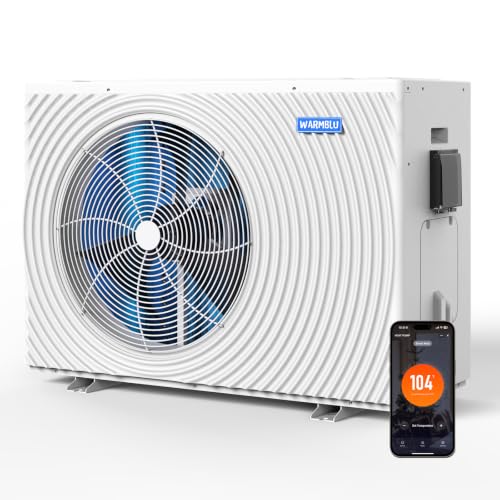
Warmblu H18 Pool Heat Pump 60,000 BTU
High energy efficiency reduces electricity costs.
Smart inverter control for precise temperature settings.
Suitable for large pools up to 21,000 gallons.
 Daniel Kenitz
High energy efficiency reduces electricity costs.
Smart inverter control for precise temperature settings.
Suitable for large pools up to 21,000 gallons.

Efficient heating and cooling for pools.
Convenient WiFi control and scheduling.
Suitable for above or inground pools.

Efficient heating and cooling for versatile use.
Convenient WiFi control for easy scheduling.
Suitable for both inground and above ground pools.

Efficient heating with full inverter technology.
Quiet operation with top air discharge design.
Suitable for various pool sizes and climates.

Efficient heating for consistent pool temperature.
Suitable for both above and inground pools.
Compact design fits various pool sizes.

Energy-efficient heating for pool comfort.
Convenient smartphone control via WiFi.
Tested for reliable outdoor performance.
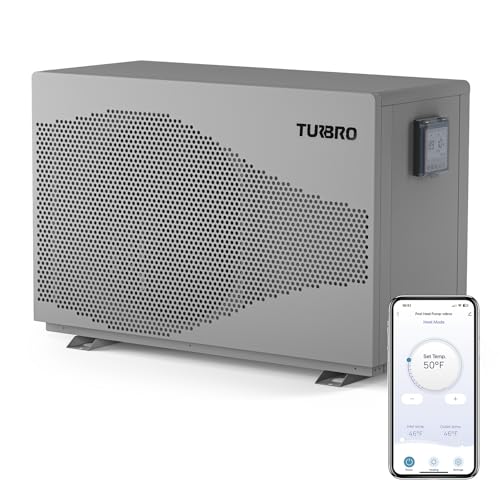
Efficient heating and cooling for any pool.
WiFi control ensures convenient temperature management.
High COP of 15.8 for energy savings.

High efficiency, saves on energy costs.
No need for natural gas or propane.
Works for above and in-ground pools.

Efficient heating and cooling with 12 COP.
Smart WiFi control for convenient adjustments.
Suitable for pools up to 21,000 gallons.

Efficient heating for medium-sized pools.
Eco-friendly and energy-saving operation.
Durable and weather-resistant construction.
The first question is whether the advertised output and efficiency have been independently tested. Look for the exact product in the AHRI Directory of Certified Product Performance for Heat Pump Pool Heaters and for ratings made under ANSI/AHRI 1160 conditions. A substantiated performance record identifies heating capacity in Btu/h, electrical input, and coefficient of performance (COP). COP is the heat delivered relative to electricity used. A headline such as “up to” a particular Btu/h or COP is not enough: the supplied reviews repeatedly found missing AHRI records, unexplained efficiency claims, or figures that changed between product pages and manuals.
Test conditions matter. Warm-air ratings can look much better than expected seasonal performance. Among the supplied products, some manuals reported substantially lower output and COP at 50°F or 59°F outdoor air than at 80°F. Buyers should compare capacity, input, COP, humidity, air temperature, water temperature, and whether the figure is a maximum, peak, or part-load result. Pool-size guidance is only a starting point; a covered pool in a mild climate places a different load on a heat pump than an uncovered, shaded, windy, or cold-weather pool.
Electrical safety is a separate question from efficiency. Look for a valid North American third-party listing for the exact product in UL Product iQ, Intertek’s ETL directory, or the CSA listing database. The certification record should identify the applicable safety standard, such as UL 1995 or UL/CSA 60335-2-40. FCC or California energy-compliance claims do not replace an equipment electrical-safety listing, and a listed plug does not necessarily establish certification of the complete heat pump.
The installation manual should clearly state voltage, circuit and breaker requirements, disconnect location, grounding, bonding, GFCI requirements, water flow, clearances, drainage, airflow, and professional-installation requirements. Pool equipment combines electricity, water, refrigerant, and outdoor exposure; a plug-in format does not automatically make installation simple. Also check water-chemistry limits and whether the exchanger, fittings, and warranty are suitable for chlorine, bromine, salt, and the pool’s pH. Titanium exchangers were commonly claimed or documented in the supplied products, but a titanium claim alone does not establish allowable chemistry limits.
Finally, verify the refrigerant type and charge, defrost and freeze behavior, low-ambient output, service instructions, parts access, warranty, and authorized support. Refrigerant work should follow EPA Section 608 requirements. Repeated category-wide cautions in the supplied reviews include the absence of exact-model AHRI and safety-listing records, incomplete code-ready installation information, inconsistent refrigerant or warranty documentation, and insufficient low-temperature data. Several products were specifically unsuitable for DIY installation, cold-climate expectations, or use without qualified electrical and pool professionals. No product should be treated as a simple plug-and-play appliance beside a pool without checking the delivered nameplate, manual, local code, grounding, bonding, GFCI, disconnect, water flow, drainage, and clearances.
For this category, health and ecological performance depend on more than a claimed Btu rating. Safe installation, pool-water compatibility, low-temperature behavior, electricity use, refrigerant stewardship, and the availability of repair support all affect the product’s real-world impact. The supplied scores show meaningful differences in documentation quality, but no product received independently verified performance and complete electrical-safety evidence across every area.
This measures safeguards for low water flow, high refrigerant pressure, overheating, freezing, electrical faults, and unsafe restart. They matter because a heat pump sits in a wet pool system and can operate in cold outdoor conditions. Higher-scoring products documented several specific fault responses, such as flow, pressure, temperature, freeze, or defrost controls; lower-scoring products offered only general protection claims or incomplete manuals.
This measures whether the product tells an installer how to size the circuit, provide overcurrent protection and a disconnect, ground and bond the equipment, use GFCI protection where required, manage clearances and drainage, and meet local pool and electrical codes. Higher scores went to products with detailed voltage, ampacity, bonding, clearance, flow, and drainage instructions. Low scores reflected missing or confusing electrical guidance.
This measures whether the exchanger, fittings, flow requirements, and warranty fit the pool’s chlorine, bromine, salt, and pH conditions. Corrosion can cause leaks, poor heat transfer, and premature failure. Higher-scoring products documented titanium exchangers and some saltwater guidance; lower-scoring products relied on a material claim without chemistry limits, warranty details, or clear compatibility for the delivered unit.
This measures whether the exact product’s Btu/h capacity, electrical input, and COP are certified under ANSI/AHRI 1160 conditions and listed in the AHRI directory. It is the clearest way to distinguish tested performance from seller claims. The supplied scores were generally low to moderate because no exact-model AHRI record was located; the better-scoring products at least supplied condition-rated manufacturer tables.
This measures whether the exact outdoor electrically powered unit has a traceable UL, ETL, or CSA listing under an applicable safety standard. The listing should cover the complete product, not merely a plug or electronic component. Higher scores reflected manufacturer documentation that named a safety certification or more complete installation material, but the reviews repeatedly noted that an exact public listing record was not independently located.
This measures whether Btu/h, COP, noise, operating range, pool-size guidance, and savings claims state test conditions and limitations. Higher scores went to products with manuals showing warm- and cool-weather figures and clear context, particularly the more detailed installed-appliance documentation. Lower scores reflected “up to” ratings, unexplained savings, conflicting capacities, or claims that did not match the manual.
This measures whether the exact product, manufacturer, or importer has an identifiable U.S. recall, enforcement, or energy-compliance issue. A high score means no unresolved problem was found in the reviewed records, not that the product is certified safe. Most supplied products scored in a relatively narrow range because no exact recall or enforcement action was located, while missing certification evidence remained a separate concern.
This measures disclosed capacity, COP, operating limits, and defrost behavior at cooler outdoor temperatures. Heat pumps can lose output as air gets colder, so a warm-weather rating may not support a shoulder-season or winter expectation. Higher-scoring products provided manufacturer tables at conditions such as 50°F or 59°F and described defrost. Lower-scoring products supplied only headline ratings or inconsistent temperature limits.
This measures verified COP and auxiliary or standby electricity in relation to delivered heat, together with sizing guidance that avoids chronic undersizing. Higher scores among the supplied products reflected condition-rated performance tables and clearer efficiency context, although no exact-model AHRI result was located for the products reviewed. Lower scores reflected unexplained COP or savings percentages, conflicting figures, or no input and seasonal-use information.
This measures disclosure of refrigerant type and charge, climate impact, regulatory acceptability, leak prevention, and qualified recovery and service requirements. Higher-scoring products identified R32 and its charge and described qualified servicing, while lower-scoring products disclosed conflicting refrigerants or nothing at all. R32 has lower climate impact than many older HFCs but is mildly flammable; R410A avoids ozone depletion but has high climate impact.
This measures corrosion-resistant construction, parts and service information, realistic warranty coverage, and support for repair rather than replacement. Higher scores reflected documented warranties, durable exchanger materials, or more usable service information. Lower scores reflected short or conflicting warranty terms, no parts catalog, no authorized-service network, or unclear repair documentation. A product that cannot be serviced or repaired can create avoidable material waste and refrigerant losses.
This is a 220-240V air-source pool heat pump intended for above-ground or in-ground pools. The manufacturer markets it for pools up to 21,000 gallons, with app and touch-panel control. Its manual identifies a titanium tube water-side heat exchanger, 28.6 gpm stated water flow, a 46 to 104 F heating setpoint range, and a 110-pound net weight. The exact-product manual provides manufacturer-stated capacity tables, 16,378 to 65,000 Btu/h at 80 F air and 12,966 to 52,888 Btu/h at 50 F air, both with 80 F water and 63 percent relative humidity. These figures have not been independently verified in the AHRI directory. The retail claim of COP up to 16 conflicts with the manual, which lists COP ranges of 6.60 to 12.00 at 80 F air and 4.8 to 7.6 at 50 F air.
This product suits an owner with a roughly mid-size pool who has a qualified pool and electrical installer, an outdoor equipment pad, and the patience to heat gradually rather than expect gas-heater speed. It is most appropriate where pool use occurs mainly in mild conditions and a thermal cover can reduce heat loss. The manufacturer provides 50 F and 80 F performance tables, so an installer can use those stated conditions as a starting point for a site-specific load calculation and electrical plan.
It is not suited to anyone who needs independently certified heating output, COP, or North American electrical-safety listing documentation before installation. It also is a poor fit for do-it-yourself electrical work, installations without a dedicated properly protected outdoor circuit, or enclosed locations. Households seeking dependable cold-weather heating should not rely on the warm-weather COP claim, because the manual shows lower output and efficiency at 50 F air and the actual performance still lacks third-party verification.
The strongest safety documentation is manufacturer-provided rather than independently certified. The manual describes flow-switch monitoring, high- and low-pressure protection, low-temperature shutdown behavior, voltage protection, fault alarms, and automatic defrost. It also instructs use of a dedicated branch circuit and outdoor-rated wiring. A licensed installer should still determine grounding, bonding, disconnect, overcurrent protection, and GFCI requirements under local pool and electrical rules. For durability, the manual specifies a titanium water-side exchanger, which is commonly selected for resistance to pool-water corrosion, but it does not provide a detailed chemistry range or clear saltwater warranty terms. The refrigerant section needs improvement. It warns that the refrigerant is flammable and says only that it is an R refrigerant, without clearly naming it. Servicing should therefore be limited to qualified personnel using the exact unit nameplate information. No CPSC recall or FTC action was located in the checked public records, but no independent safety listing or AHRI certification was found for this exact product.
This is a 110-120V air-source pool heat pump for above-ground or inground pools, marketed for pools up to 8,000 gallons. It heats and cools circulating pool water through a titanium water-side heat exchanger, requires about 20 gpm water flow, and has 1.5-inch plumbing connections. The supplied documentation specifies a 35 by 14 by 22 inch outdoor unit, a 15 A maximum current, WiFi scheduling, and a 52 dB(A) noise claim. The manufacturer-stated heating rating is 30,000 Btu/h with COP 5.8 at 80°F air, 80°F water, and 63% relative humidity. It also states 16,400 Btu/h and COP 3.9 at 50°F air under the same water and humidity conditions. These figures are more usable than an unexplained peak claim, but no exact-model AHRI certification record was located. No exact-model UL, ETL, or CSA electrical safety listing record was located either.
This product fits an owner of a modest above-ground or inground pool who has an outdoor location with good airflow, a compatible circulation pump capable of the stated flow, and a qualified pool or electrical installer available. Its documented 50°F performance figure is useful for a shoulder-season user who understands that output drops substantially in cool weather. It also suits a saltwater-pool owner only where the installer confirms compatibility of the rest of the plumbing and local electrical requirements.
It is not suited to households that need independently certified heating output or a confirmed North American electrical safety listing before installing powered equipment near a pool. It is also a poor fit for installation locations without a weather-protected receptacle, proper grounding, accessible disconnect, drainage, or required code protections. Buyers expecting rapid cold-weather heating, dependable operation below freezing without winterization, or assured access to replacement parts and refrigerant service documentation should not rely on the available records alone.
The available exact-product manual describes meaningful operating protections, including water-flow, refrigerant-outlet overheat, high-pressure, and water-outlet overheat fault codes. It also directs outdoor installation, grounding, an accessible disconnect, an IPX6-rated protected outdoor socket, and draining the water circuit during freezing conditions. Those are manufacturer instructions, not third-party safety certification. Searches did not locate a matching UL, ETL, or CSA listing record. The water-side exchanger is identified as titanium and is marketed for fresh and saltwater pools, which can help resist normal pool-water corrosion when chemistry and flow remain within the unit's requirements. The unit contains 22.9 ounces of R410A. Refrigerant release during service or disposal must be handled under EPA Section 608 requirements, but the available documentation gives little detail on leak prevention, recovery, service parts, or authorized repair support. No exact-product CPSC recall was located.
This is a 220V air-source pool heat pump intended to add heat or cooling through a pool’s circulation plumbing. The available product documentation describes 1.5-inch water fittings, WiFi control through the Smart Life app, a stated 59°F to 104°F heating setpoint range, and a stated 45°F to 86°F cooling range. It is intended for outdoor installation with a running filtration pump. The defining issue is evidence quality. A third-party-hosted manual matching this product’s name reports 35,100 BTU per hour, a COP of 6.5, and pools up to 10,000 gallons, but these are manufacturer-stated figures, not AHRI-certified ratings. Other public manuals carry the same model name while reporting 58,000, 65,000, or 140,000 BTU capacities. That unresolved conflict makes the advertised capacity, pool-size guidance, dimensions, and efficiency claims unsuitable for precise sizing.
This product is most suited to a pool owner who already has a qualified pool and electrical professional available, uses a 220V outdoor circuit, and can confirm the unit’s installed nameplate data before work begins. It is better matched to a temperate-season pool where the owner accepts manufacturer-stated heating and cooling figures as preliminary information, rather than as a final sizing basis. The installer should verify water flow, plumbing adapters, clearances, electrical protection, grounding, bonding, and local inspection requirements.
It is not suited to buyers who need a documented capacity for a large pool, a cold-weather extension of the swim season, or a tightly calculated operating-cost estimate. Do not rely on the published 10,000-gallon guidance alone because public documents tied to the same product name report incompatible capacities. It is also unsuitable for households without access to licensed electrical and pool installation support, or for saltwater and chemically demanding pools until heat-exchanger material, permitted water chemistry, and warranty coverage are confirmed in writing.
No product-specific AHRI performance certification was located, so the stated COP of 6.5 and 35,100 BTU output remain manufacturer-stated rather than independently confirmed. This matters because heat-pump output and efficiency vary strongly with air temperature, water temperature, humidity, water flow, and defrost operation. No extended low-temperature performance or defrost data was found. No exact-product UL, ETL, or CSA listing was independently verified. The available instructions advise grounding, ventilation, secure water connections, and qualified installation, but do not provide enough U.S.-specific electrical design detail to replace a licensed installer’s code review. No CPSC recall or product safety warning for Varpoolfaye was located in the searched records. Refrigerant type and charge, saltwater limits, corrosion warranty, parts availability, and recovery or service instructions were not independently documented, limiting assessment of leakage risk and end-of-life stewardship.
This is a compact, top-discharge electric pool heat pump sold for above-ground, in-ground, and indoor pools. The product page describes a 35,000 Btu heating capacity, mobile app control, a titanium-tube water-side heat exchanger in a PVC shell, and a 19.09 by 19.09 by 27.16 inch enclosure. Those are manufacturer-stated specifications, not independently certified performance figures. There is a material identity problem in the available documentation. The model number supplied with this product is listed by GRAT's technical site as a much larger 14 to 40 kW, 220 to 240 V, 50 Hz residential heat pump, rather than a 35,000 Btu pool unit. The seller page also says both 220 to 240 V and standard-outlet power. No exact-model AHRI certification, North American electrical listing, installation manual, or independently verified pool-heater performance record was located.
This product is most suited to an owner of a small pool who already has a qualified pool and electrical contractor involved, can inspect the delivered nameplate before installation, and can obtain the actual installation manual from the seller. The stated titanium water-side exchanger may suit a chlorine or saltwater pool if the installer confirms the chemistry limits, flow requirements, electrical frequency, and safety listing on the delivered unit. It is better matched to mild-season use than to an owner relying on independently verified cold-weather capacity.
It is not suited to a household that needs documented North American electrical certification before connecting equipment near a pool. It is also unsuitable for a do-it-yourself installation, for a property with only ordinary 120 V receptacle service, or for buyers who need confirmed breaker, disconnect, GFCI, bonding, and grounding instructions. Do not treat the stated 19.4°F operating limit as proof of useful winter pool heating. Buyers needing predictable capacity, electricity use, or repair support should require exact-model documentation first.
The water-side construction is the clearest positive disclosure. GRAT states that this product uses a titanium-tube heat exchanger in a PVC shell, which is a corrosion-resistant arrangement for chemically treated pool water. That claim is manufacturer-stated and does not replace confirmation of acceptable sanitizer, salt, pH, water-flow, or pressure limits. The supplied model number creates more important safety and environmental uncertainty. GRAT's technical site identifies that model as a 50 Hz, R32 residential heat-pump model with a much larger rated capacity range. R32 has lower climate impact than many older HFC refrigerants, but EPA classifies it as mildly flammable and subject to use conditions. The product materials do not disclose charge quantity, leak procedures, service instructions, or a verified safety listing. Refrigerant work should therefore be limited to EPA-certified technicians. No exact-product CPSC recall or FTC enforcement record was located in the searches performed.
The AQUASTRONG HEX016 is a 115V electric pool heat pump for above-ground pools and small in-ground circulation systems. It is sold for pools up to 5,000 gallons, with 1.25-inch and 1.5-inch hose connections. The manufacturer states a 16,000 BTU/h heating capacity at 80°F air, 80°F water, and 80 percent relative humidity. Its manual also lists 10,440 BTU/h and a COP of 4.06 at 59°F air, 80°F water, and 70 percent humidity. The manufacturer identifies a titanium water-side heat exchanger, R32 refrigerant, heating and cooling modes, an RCD adapter, and automatic flow checking. These are manufacturer-documented specifications, not independently certified performance figures. No exact-product AHRI performance certification or North American third-party electrical listing could be independently verified in the searched official directories.
This product suits an owner of a covered above-ground pool or small plunge pool, roughly within the manufacturer’s 5,000-gallon guidance, who wants a compact 115V heat-pump format and can maintain the required water circulation. It is more appropriate for mild-weather season extension than for rapid recovery or cold-climate heating. The owner should have a qualified pool or electrical professional confirm the outlet, circuit, grounding, bonding, clearances, drainage, and local inspection requirements before installation.
It is not well suited to large pools, uncovered pools, windy sites, or households expecting dependable heating through cold weather. The manufacturer’s output falls at cooler air conditions, and its own documents conflict on the lowest operating temperature. It is also unsuitable for an installation where a qualified person cannot verify code-compliant electrical protection and pool bonding. Buyers needing independently certified capacity, COP, or a verified UL, ETL, or CSA safety listing should use equipment with those records available.
The manual documents several practical protections, including an RCD adapter, grounded-power requirement, independent switch, water-flow monitoring, delayed restart, anti-frost mode, and temperature-related fault codes. It also directs users to keep the unit clear of standing water, service it through qualified technicians, and drain and store it during extended winter shutdowns. These are useful safeguards, though they are not a substitute for a verified third-party product safety listing or local code review. The manufacturer identifies R32 refrigerant and a titanium heat exchanger. R32 has a lower global-warming impact than many older refrigerants, but it is mildly flammable and should be serviced and recovered by appropriately qualified technicians. The available documentation does not disclose refrigerant charge, detailed service procedures, saltwater and sanitizer limits, or replacement-parts availability. No exact-product recall or enforcement record was identified in the searched U.S. sources.
This is a compact, 110-120 V air-source pool heat pump for above-ground and portable pools. It heats or cools circulating pool water through 1.25 to 1.5 inch hose connections and requires a separate filter pump. The manufacturer lists 21,000 BTU/h maximum heating capacity, 1.25 kW rated input, 480 to 600 GPH water flow, WiFi controls, and a titanium heat exchanger. Its manual gives useful condition-specific performance data. It lists 21,160 BTU/h and COP 4.97 at 80.6°F air, 80% relative humidity, and 80°F entering water, but only 6,180 BTU/h at 50°F air. Those are manufacturer-published figures, not independently confirmed through an AHRI directory record. The product page and manual also conflict on outdoor pool volume guidance, so pool sizing should be treated cautiously.
This product suits an owner of a small, above-ground or portable pool who has a properly grounded 110-120 V outlet, a compatible filter pump, and the ability to install the required pool bonding conductor. It is most appropriate in mild shoulder-season weather, especially for a covered pool. The manufacturer’s own revised guidance places the covered outdoor maximum at 7,000 gallons, but the conflicting manual guidance means buyers should favor the smaller end of the stated range or obtain written sizing confirmation for their pool, climate, and desired warm-up time.
It is not appropriate for in-ground pools requiring rigid PVC piping, because the manual specifically says not to use it for that application. It also is a poor fit for large, uncovered, windy, or cold-climate pools, where the disclosed 50°F output is far below the warm-weather rating. Households unable to provide proper grounding, pool bonding, drainage, outdoor clearances, and direct wall-outlet connection should not use it. Buyers requiring independently verified AHRI performance or independently listed electrical safety should select a product with those records.
The manual contains meaningful installation safeguards. It calls for direct connection to a grounded three-prong wall outlet, elevated plug and outlet locations away from standing water, bonding to the pool grid with at least #6 AWG bare copper, specified outdoor clearances, and no extension cords. It also documents water-flow and high-pressure fault detection, plus a restart delay. However, an independent North American electrical safety listing for this exact product was not located, so these features should not be mistaken for third-party certification. The refrigerant is disclosed as R32, 10.58 ounces, with a stated GWP of 675. EPA classifies HFC-32 as an A2L refrigerant and lists it as acceptable with use conditions for certain heat-pump applications. The manual correctly treats it as mildly flammable and directs leak inspection and qualified HVAC repair. It also advises draining water before winter storage. Titanium heat-exchanger and long compressor coverage claims may support service life, but saltwater and pool-chemistry limits are not published.
This is a 120 V plug-in, air-source pool heat pump for in-ground or above-ground pools, with a manufacturer-stated maximum pool size of 10,000 gallons. It requires a separately supplied circulation pump, hard plumbing, 2-inch water connections, and a 20 A minimum breaker. The manual specifies 17.92 GPM rated water flow and an R32 refrigerant charge of 1.59 lb. TURBRO documents a maximum 32,412 Btu/h and COP up to 15.8 at 80°F air, 80 percent humidity, and 80°F water. It also publishes a more useful cooler-condition figure of 24,453 Btu/h and COP up to 7.6 at 59°F air, 70 percent humidity, and 80°F water. These are manufacturer-stated figures, not an independently located AHRI certification. The published warranty information also conflicts, with the product page stating two years on the unit and five on the compressor while the manual states one year plus a registration extension.
This product suits an owner of a properly plumbed, non-inflatable pool within the manufacturer’s 10,000-gallon guidance who has a dedicated 120 V, 20 A outdoor circuit and can provide the required circulation pump, hard-pipe connection, drainage, base anchoring, and clearances. It is most appropriate for mild-season temperature maintenance, where the disclosed 59°F performance data can inform expectations. It also suits a buyer who values app control, heating and cooling modes, and a plug-mounted testable RCD, while arranging qualified installation and annual refrigerant-system inspection.
It is not suited to inflatable or low-pressure pools, which TURBRO expressly excludes. It is also a poor fit for buyers who need an independently verified AHRI performance certificate or a publicly verifiable North American whole-product safety listing before a permit or inspection. Avoid treating the 10,000-gallon figure as universal sizing for cold, windy, uninsulated, or frequently uncovered pools. Buyers using saltwater or unusual sanitizer programs should not proceed without written chemistry limits, and cold-climate users should seek a unit with quantified output below 59°F.
The manual documents meaningful operational safeguards. These include a testable reset and test plug, water-flow monitoring, high and low refrigerant-pressure fault detection, exhaust-temperature fault detection, freeze-operation indication, and defrost operation. It specifies a 20 A minimum breaker, drainage, a solid anchored base, ventilation clearances, and yearly checks of wiring, earthing, pressure, and refrigerant. Installation still needs to meet local pool and electrical requirements, and no independently searchable whole-product safety listing was located. The product uses R32, with the 1.59 lb charge disclosed. R32 has a global-warming potential of 675 and is classified A2L, meaning lower climate impact than many older HFC options but mild flammability that requires appropriate siting and trained service. TURBRO instructs users to have refrigerant work handled by professionals. No exact-product CPSC recall or FTC enforcement record was identified in the searched public sources. Titanium is documented for the heat exchanger, but chemistry limits and saltwater terms are not.
This product is a fixed-speed outdoor electric pool heat pump intended for small above-ground pools and in-ground pools of up to 7,500 gallons. The manufacturer identifies the FH135 as a 120 V unit with a 35,000 BTU per hour nominal output, a 1.5-inch water connection, 16 ounces of R-410A refrigerant, and a titanium water-side heat exchanger. The supplied marketplace record is internally inconsistent. Its title describes a 70,000 BTU, 240 V FH270, while the model number, manufacturer page, and manufacturer manual identify the FH135 as a 35,000 BTU, 120 V product. The manufacturer publishes performance at 82 F air, 82 F water, and 82 percent relative humidity, plus a cooler 60 F air, 75 F water condition. A PSEG Long Island eligible-equipment list independently identifies the FH135 as a 35,000 BTU, 120 V heat pump with a 5.5 COP, but no exact-model AHRI certification record was located.
This product suits an owner of a relatively small pool, roughly up to the manufacturer-stated 7,500-gallon limit, in a warm and reasonably humid swimming season. It is particularly relevant where a correctly installed 120 V, 20 A GFCI-protected outdoor outlet and pool bonding are already available. The buyer should be prepared to use a qualified installer, maintain adequate water flow, keep the unit outdoors with clear airflow, and use a pool cover to reduce heat loss during initial warm-up and routine use.
It is not suited to anyone relying on the marketplace title's 70,000 BTU or 240 V specifications. It is also a poor fit for larger pools, cool or dry climates, or buyers expecting strong shoulder-season heating below 60 F air temperature. Households without a correctly protected 120 V circuit, #8 AWG equipotential bonding, safe drainage, and code-compliant pool equipment should not treat the supplied plug as eliminating installation work. It also requires full winter draining where freezing is possible.
The manufacturer documents useful operational protections, including a GFCI plug requirement, equipotential bonding, water-flow monitoring, high and low pressure fault handling, compressor-temperature monitoring, defrost control, and freeze-protection states. Its installation material calls for qualified installation, outdoor placement, drainage of condensate, airflow clearances, and plumbing after filtration but before chlorination equipment. These are meaningful safeguards, but an independently searchable UL, ETL, or CSA safety listing for this exact product was not located. The water path is manufacturer-stated to use titanium tubing and to be compatible with fresh or saltwater pools when installed upstream of a salt cell or chlorinator. Its R-410A charge is disclosed at 16 ounces. EPA notes that R-410A does not deplete ozone but can contribute to climate change if released, so sealed-system repair and refrigerant recovery should be handled by EPA-qualified technicians. No exact-product CPSC recall or FTC enforcement record was located in the public sources checked.
This is an air-source electric pool heat pump for above-ground or in-ground pools. Vidapool states that it can heat and cool pools up to 21,000 gallons, deliver up to 75,000 BTU, use inverter control, and offer WiFi temperature scheduling. The company also lists 1.25-inch and 1.5-inch connection options, a 115V GFCI plug, and a footprint of about 42.5 by 15.4 by 27.4 inches. The key limitation is evidence quality. The 75,000 BTU, maximum COP of 12, 36 dB noise figure, 70 percent energy-saving claim, and pool-size guidance are manufacturer claims without disclosed test conditions. A public AHRI certified-performance record for this exact product was not located. Vidapool also claims ETL certification, but an exact product record and applicable safety standard were not independently located in a North American certification directory.
This product suits an owner of a moderate-size above-ground or in-ground pool who has a compatible 115V GFCI outlet, adequate circulation, outdoor space for the stated airflow clearances, and a pool cover for colder conditions. It is most appropriate where heating is mainly needed in mild or warm weather and the owner accepts manufacturer-stated capacity and efficiency figures. The WiFi scheduling and supplied hose and PVC connection options may be useful for an owner who wants basic remote control and a simpler connection path.
It is not suited to buyers who need independently certified output, COP, electrical safety documentation, or a confirmed safety listing before installation. It is also a poor fit for cold-climate or shoulder-season heating where low-ambient output and defrost performance matter, because those figures were not published. Saltwater-pool owners, households requiring documented corrosion compatibility, and anyone needing readily available parts or a named U.S. service network should seek written confirmation before relying on this product. A licensed installer should assess electrical and pool-code requirements.
The available setup material describes a GFCI plug, required water circulation, and generous outdoor airflow clearances. Those are useful safety provisions, but the available documentation does not fully describe protections for high refrigerant pressure, overheating, freeze conditions, unsafe restart, or electrical faults. The manufacturer claims ETL certification, yet an independent listing record for the exact product was not located. Public CPSC recall searches did not identify a recall for this product or brand during this review. For energy use, inverter operation may reduce cycling once the target temperature is reached, but the claimed maximum COP of 12 and energy savings versus gas lack stated test conditions and independent certification. The manufacturer does not publish this product's refrigerant type, refrigerant charge, low-temperature capacity, defrost behavior, water-chemistry limits, or confirmed heat-exchanger material. A two-year manufacturer warranty is published, though a parts list, service manual, and authorized repair network were not located.
This is a compact electric air-source pool heat pump for above-ground or small in-ground pools. The product is listed at 18,000 BTU per hour for pools up to 5,200 gallons, with heating and cooling modes, 110 to 120 V power, WiFi control, and an on-unit touch panel. Its listed cabinet measures 16.65 by 15.35 by 17.21 inches and weighs 73.8 pounds. The output, pool-size guidance, COP of up to 4.1, titanium heat-exchanger claim, and claimed 45 percent energy savings are manufacturer-stated claims reproduced by retail-listing sources. No AHRI certified performance record for this product was located, so the stated BTU output and COP are not independently confirmed under the published pool-heat-pump rating conditions. No exact-product UL, ETL, or CSA listing record was located in the searched North American certification registers.
This product suits an owner of a covered, small above-ground pool or compact in-ground pool that is genuinely at or below 5,200 gallons and already has compatible filtration flow. It fits a buyer seeking gradual seasonal temperature maintenance rather than rapid heat-up, and who values manufacturer-stated heating and cooling plus app control. Installation should be planned with a qualified pool or electrical professional who can verify the product nameplate, supply circuit, grounding and bonding, disconnect, GFCI requirements, water flow, and local permit rules before connection.
It is not suited to pools above the stated 5,200-gallon limit, households expecting fast recovery from cold water, or cold-climate users needing documented low-ambient output and defrost capability. It is also unsuitable for anyone who cannot obtain the exact installation instructions and confirm a recognized North American electrical safety listing before installation. Avoid treating the supplied cord claim as proof that an ordinary outlet, extension lead, or existing pool circuit is adequate. Pool equipment wiring and bonding must meet the local authority's requirements.
The searched CPSC recall resources did not return a recall for NATURAQUELL, Naturaquell Technology Limited, or the product model at the time checked. That is useful but limited, because an absence of a recall is not independent proof of electrical, pressure, or water-side safety. No exact-product listing was found in the searched UL, Intertek ETL, or CSA registers. A qualified installer should therefore inspect the nameplate and verify the listing mark and electrical requirements before energizing the product near a pool. A titanium heat exchanger is manufacturer-stated, which can improve resistance to saltwater and standard pool sanitizers. The maker's chemistry ranges, flow limits, and warranty exclusions were not found. The refrigerant type and charge were also not disclosed in the available product information, so its climate impact and service requirements cannot be assessed. Any sealed-system work should be performed by an EPA Section 608-qualified technician.


