Best Overall
20% off

Elevate Your Home 1115 Sq Ft Air Purifier
Covers large areas effectively up to 1,115 sq ft.
Removes 99% of common allergens and pollutants.
Operates automatically for hassle-free air cleaning.
 Lauren Wilson
Covers large areas effectively up to 1,115 sq ft.
Removes 99% of common allergens and pollutants.
Operates automatically for hassle-free air cleaning.

Captures 99.97% of airborne particles.
Whisper-quiet operation for peaceful environments.
Compact design fits small spaces perfectly.

Covers large areas quickly and efficiently.
HEPASilent technology ensures quiet operation.
Smart features enhance air quality monitoring.

Efficiently removes allergens and odors effectively.
Quiet sleep mode ensures undisturbed rest.
Built-in PM2.5 monitor for air quality tracking.

Covers large areas up to 1740 sq.ft.
H13 HEPA filter captures fine particles.
Built-in PM 2.5 air quality sensor.
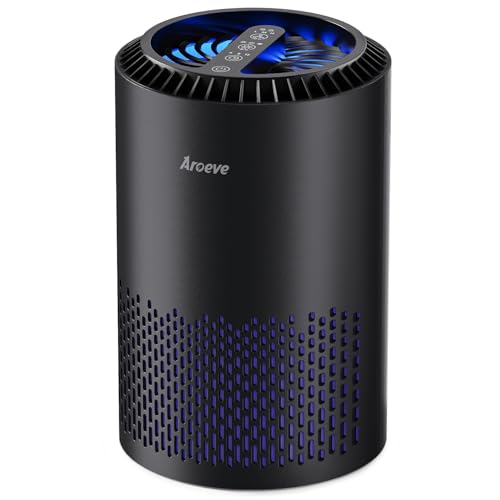
Efficiently removes smoke, pollen, and dander.
Portable design suitable for multiple rooms.
Quiet sleep mode for undisturbed rest.

H14 HEPA tested by SGS
Filtration efficiency ≥ 99.99%
YearChange Filter 5X Lifespan

Covers large 2000 Ft² area efficiently.
Equipped with a washable filter for convenience.
Includes fragrance sponge for added freshness.

Covers large areas effectively up to 1076 ft².
H13 True HEPA filter ensures cleaner air.
Built-in night light for added convenience.

Efficiently removes pet hair and odors.
Covers large spaces up to 1076 ft².
Quiet operation with 360° air intake.
Room size should be calculated from that verified output, not accepted as a headline number. A large square-foot figure may assume only one air change per hour, while a smaller independent room-size field may represent faster cleaning, such as roughly 4.8 air changes per hour. Ceiling height, fan setting, target air changes, and whether the space is open or divided all change the result. A filter percentage, such as 99.97% capture, describes media performance only unless it is tied to a recognized ISO 29463 or EN 1822 report and clearly separated from whole-device CADR.
Independent records also matter for safety and accountability. Check the exact model in ENERGY STAR, the California Air Resources Board list of certified air-cleaning devices, and—where claimed—in UL Product iQ, the Intertek ETL Directory, CSA listings, or another OSHA-recognized testing-laboratory directory. CARB or UL 2998 evidence is especially relevant when a product uses ions, plasma, electrostatic charging, UV, or other electronic treatment. Mechanical fan-and-filter designs generally avoid intentional ozone generation, but a claimed certification should still match the exact product.
Carbon layers deserve similarly careful reading. A thin activated-carbon sheet does not establish broad removal of odors, VOCs, formaldehyde, solvents, or smoke gases. Meaningful claims need model-specific gas testing that identifies the challenge gas, airflow, duration, carbon quantity or capacity, and breakthrough. Virus, bacteria, mold, sanitizing, and disinfection language should not be read as proof of disease prevention unless the exact device has appropriate testing, labeling, and legally compliant claims.
Maintenance affects both performance and safety. Buyers should be able to identify genuine replacement filters, follow instructions for removing packaging, cleaning prefilters, keeping filters dry, and resetting reminders, and understand the replacement interval. Filters that clog, are installed incorrectly, or become unavailable can reduce airflow. Washable prefilters may reduce loading, but the principal filter is usually a recurring waste stream. Compare verified clean-air delivery with ENERGY STAR annual energy use or integrated energy factor rather than judging efficiency from wattage alone.
Across the supplied products, repeated caveats include unsupported large-room claims, absent model-specific CADR, unproven gas and VOC capacity, and filter-media claims that are stronger than the available whole-product evidence. Several products also lacked a confirmed exact-model electrical listing. Ozone-generating products are a serious exception: they are not appropriate for occupied rooms, and ozone can irritate lungs and react with indoor chemicals to form unwanted byproducts. A product with an aroma or fragrance tray adds airborne compounds rather than removing them. Portable filtration does not fix mold or moisture, combustion sources, carbon monoxide, major chemical sources, or ventilation problems, and it is not a substitute for medical treatment or infection-control measures.
The supplied scores reward evidence that applies to the complete appliance, not just a filter sample or brand claim. Higher-scoring products generally have exact-model records for CADR, ozone, efficiency, or maintenance; lower-scoring products more often rely on unexplained coverage figures, unsupported filter percentages, or unverified certifications.
This measures whether the purifier avoids ozone and reactive byproducts from ionizers, plasma, UV, electrostatic, or photocatalytic systems. That matters because the appliance operates in occupied indoor air. Higher-scoring supplied products include exact-model zero-ozone or mechanical-design records, reaching 96; the lowest score, 15, belongs to an intentional ozone generator. Unverified ionizer claims score substantially lower than documented mechanical filtration.
This measures whether allergy, asthma, sleep, infection, or healthier-air claims are supported by relevant human evidence rather than advertising. For a portable purifier, the defensible benefit is usually reduced particle exposure, not treatment or guaranteed disease prevention. Supplied scores range from 45 to 78: higher-scoring reviews keep claims cautious and connect them to documented particle cleaning, while lower-scoring products make broader claims without product-specific clinical evidence.
This measures credible electrical certification and the absence of unresolved overheating, shock, fire, or recall concerns for the exact product. It matters because purifiers often run unattended for long periods. Among the supplied products, scores range from 48 to 88. Higher scores reflect cleaner safety records and stronger supporting documentation; lower scores reflect missing public NRTL listings, uncertain certification claims, or, in one case, a known intentional ozone device.
This measures credible electrical certification and the absence of unresolved overheating, shock, fire, or recall concerns for the exact product. It matters because purifiers often run unattended for long periods. Among the supplied products, scores range from 48 to 88. Higher scores reflect cleaner safety records and stronger supporting documentation; lower scores reflect missing public NRTL listings, uncertain certification claims, or, in one case, a known intentional ozone device.
This measures independently verified smoke, dust, pollen, or PM2.5 CADR for the exact model. It is the clearest indicator of how much genuinely cleaned air the complete appliance can deliver at a stated room size. Supplied scores range from 35 to 95. Higher scores come from AHAM or ENERGY STAR CADR records; lower scores rely on manufacturer airflow or area claims without whole-device testing.
This measures whether important performance, safety, and environmental claims appear in regulator-backed or credible third-party records. It matters because brand badges and summaries are difficult for buyers to check. Scores range from 30 to 91. Higher-scoring products have multiple exact-model listings, such as ENERGY STAR, CARB, or laboratory records; lower-scoring products have claims that could not be matched to public directories.
This measures whether HEPA grade, particle size, and removal percentage are tied to recognized media testing and clearly distinguished from whole-room CADR. A filter percentage cannot tell a buyer how quickly a room is cleaned. Supplied scores range from 35 to 84. Higher scores provide stronger classification or transparent limitations; lower scores use H13, True HEPA, or micron language without an ISO, EN, or whole-device report.
This measures whether bacteria, mold, virus, sanitizing, or disinfection claims are specific, tested, and legally presented. Particle capture is not the same as killing organisms or preventing infection. Supplied scores range from 69 to 84. Higher-scoring products avoid implying medical protection without evidence; lower-scoring products use broad germ-related language or provide no model-specific test showing disinfection in an occupied room.
This measures whether room size, air changes, quietness, pollutant removal, and medical or hospital-grade statements show their assumptions and limitations. It matters because the supplied products repeatedly pair modest verified CADR with very large headline coverage. Scores range from 40 to 86. Higher scores explain the sizing basis; lower scores leave fan setting, ceiling height, or air-change assumptions unclear.
This measures clean-air delivery per watt together with the recurring material burden of replacement filters. A low wattage figure alone is not enough if airflow is unverified. Supplied scores range from 68 to 94. Higher-scoring products have ENERGY STAR energy records and useful CADR data, while lower-scoring products lack verified efficiency or create frequent disposable-filter waste. Washable prefilters can reduce loading, but they do not eliminate the main filter stream.
This is a compact, floor-standing, plug-in room air cleaner with a pre-filter, particle filter, activated-carbon layer, air-quality sensor, automatic mode, timer, child lock, and filter-change indicator. The manufacturer says its replacement filter is normally changed every 90 days. It is intended for a single room or open area, not whole-home filtration. Its strongest independently confirmed figure is the ENERGY STAR record for this exact product, which reports 183 CFM smoke CADR, 181 CFM dust CADR, and 204 CFM pollen CADR. The same record lists fan-and-filter technology and 0.0 ppb ozone emissions. PuroAir advertises coverage up to 1,000 square feet, but ENERGY STAR lists a 284-square-foot room size. Those figures can reflect different air-change assumptions, yet the manufacturer does not make that assumption prominent enough for the larger claim to be readily interpreted.
It suits someone cleaning particles in a bedroom, office, nursery, or other modest enclosed room, especially when smoke, dust, pollen, or pet dander are the main concerns. The independently reported 183 CFM smoke CADR provides a usable sizing anchor for an approximately 280-square-foot room with an 8-foot ceiling under ENERGY STAR guidance. It also fits users who want automatic fan adjustment and are prepared to replace a proprietary filter about every three months.
It is not well suited to buyers expecting one unit to provide strong, rapid cleaning across a 1,000-square-foot open plan, high-ceiling area, or multiple connected rooms. Its independently listed room size is far smaller than the headline coverage claim. It is also a poor fit where formaldehyde, solvent vapors, combustion gases, or persistent odor control are the main issue, because the public evidence does not establish gas-sorbent capacity. It cannot fix moisture, mold growth, or a pollution source.
The health-positive finding is unusually concrete for this product. ENERGY STAR lists verified particle CADRs of 183 CFM for smoke, 181 CFM for dust, and 204 CFM for pollen, plus 0.0 ppb ozone. It uses mechanical fan-and-filter cleaning rather than an ionizer or plasma process. Portable filtration can supplement source control and ventilation, but it cannot remove every indoor pollutant or resolve mold and moisture problems. The product uses a replaceable combined particle and carbon filter. PuroAir says replacement is typically needed every 90 days, so continuous use means four disposable filters per year. ENERGY STAR lists annual energy use of about 244 kWh. The manufacturer promotes allergy and VOC benefits, but those outcomes depend on room sizing, run time, pollutant source, and carbon capacity. No model-specific public gas-capacity report or filter recycling instruction was located.
This compact, corded tabletop air purifier is intended for bedrooms, offices, dorms, and other small rooms. It measures 7.87 by 7.87 by 12.68 inches, weighs 4.39 pounds, uses a three-layer disposable filter with a pre-screen, HEPA media, and activated carbon, and offers four fan modes plus Wi-Fi app and voice controls. Its key performance figures are independently confirmed. ENERGY STAR lists 75 cfm smoke CADR, 74 cfm dust and PM2.5 CADR, and 88 cfm pollen CADR, with a 116 square foot room-size field. The manufacturer instead markets up to 600 square feet in one hour, which represents a lower air-change target. California lists this exact product as a mechanical air cleaner, and ENERGY STAR records zero ozone emissions. The manufacturer recommends replacing the filter about every 90 days.
This product suits someone cleaning airborne particles in a genuinely small enclosed room, such as a bedroom, home office, dorm, or nursery, who wants independently listed CADR rather than relying only on a filter percentage. Its 74 cfm PM2.5 CADR is most useful when it can run for long periods and the room is close to the independently listed 116 square foot sizing field. It also fits buyers who value app scheduling, a filter reminder, and a mechanical design with independently recorded zero ozone emissions.
It is not a good fit for a large living area if the goal is frequent air changes. The manufacturer’s 600 square foot figure is based on one hourly air change, while the ENERGY STAR record uses a 116 square foot room-size field. It is also unsuitable as a solution for active mold, radon, combustion gases, or a serious VOC source. People seeking documented removal of formaldehyde or other gases should require published sorbent capacity and full-duration gas testing. Anyone unable to replace a disposable filter every few months should also avoid this maintenance burden.
The strongest health-related finding is the absence of an ozone-generating mechanism. California’s registry identifies this exact product as mechanical, meaning physical filtration rather than ionization or other electronic air-cleaning technology. ENERGY STAR independently records zero ozone emissions. That matters because EPA advises avoiding air cleaners that intentionally produce ozone, which is a lung irritant. Particle filtration is meaningfully documented through ENERGY STAR CADR values, but expected health benefits should be framed carefully. EPA finds that portable HEPA cleaners can reduce airborne particles and may provide small improvements in some respiratory and cardiovascular outcomes, not guaranteed treatment of allergy or asthma. The activated-carbon layer may help with some odors or gases, but the manufacturer has not publicly supplied capacity or breakthrough data. Ecologically, verified energy performance is solid at 98 kWh annually, though a disposable replacement filter every roughly 90 days adds recurring material waste. No product-specific CPSC recall was identified in the reviewed sources.
This is a 19-inch-tall, app-connected portable room air cleaner with 360-degree intake, a washable fabric pre-filter, a replaceable particle-and-carbon filter, auto mode, and a PM2.5 sensor. Blueair says its HEPASilent system combines mechanical filtration with electrostatic particle charging. The supplied filter is intended for particles and light household odors, not comprehensive chemical control. Its core particle performance is independently established. AHAM lists CADRs of 283 cfm for smoke, 314 for dust, and 365 for pollen. That smoke rating is the most useful figure for fine-particle exposure. Blueair's 439 square foot figure corresponds to fast cleaning at its highest setting, while its larger 2,107 square foot claim describes one hour of operation. ENERGY STAR certification also applies to this exact product. Intertek zero-ozone verification below 5 ppb and CARB ozone certification address the electrostatic mechanism.
It fits someone seeking independently verified particle reduction in a bedroom, home office, or enclosed living area of about 400 square feet with a standard 8-foot ceiling. It is especially relevant for pollen, dust, pet dander, cooking particles, and wildfire-smoke particles, provided it can run at a sufficiently high fan setting. The connected controls, auto mode, washable pre-filter, and replacement alerts suit a household that will actively maintain the unit. It is not a substitute for controlling the pollution source or bringing in clean outdoor air when appropriate.
It is not designed for people who need demonstrated removal of formaldehyde, solvents, persistent odors, or other VOCs. The included carbon filter has no independently documented gas capacity, and source control remains essential. It also should not be treated as a medical device, a mold remediation tool, or an infection-control solution for crowded spaces. People with very high ceilings, large open plans, or a need for rapid smoke reduction across more than one room should size the unit using the 283 cfm smoke CADR, not the one-hour coverage claim.
The product has unusually broad third-party support for its particle and ozone-related claims. AHAM verifies the particle CADRs, ENERGY STAR lists the exact model as certified, and Quiet Mark reports both CARB ozone certification and Intertek Sustainability verification of ozone below 5 ppb. That matters because the HEPASilent design uses electrostatic particle charging, and ozone can be a lung irritant when electronic air cleaners are poorly controlled. The health benefit is exposure reduction, not a guaranteed medical outcome. Evidence supports portable cleaners lowering indoor fine-particle concentrations, while improvements in allergy or asthma symptoms are possible but inconsistent. The washable pre-filter can reduce premature clogging of the main filter, but the main particle-and-carbon filter is a recurring waste stream that Blueair says lasts up to nine months. No product-specific CPSC recall was found in the checked public database as of August 9, 2026.
This compact, corded room air cleaner is a 5.6-pound tabletop or floor unit with touch controls, a PM2.5 display, auto, turbo, sleep and normal modes, plus an aroma-pad compartment. The manufacturer sells a compatible three-layer replacement filter with a prefilter, HEPA layer and activated-carbon layer. It states 99.97 percent capture at 0.3 micrometers for the filter media, while the whole product has independently listed room-cleaning data. ENERGY STAR product data lists 115 CFM smoke CADR, 121 CFM dust CADR, 131 CFM pollen CADR and 118 CFM PM2.5 CADR. Those figures correspond to a 178-square-foot AHAM-sized room, not the 856-square-foot coverage stated in the retail listing. CARB lists the product as mechanical, and ENERGY STAR data reports 0.00 ppb ozone emissions.
This product suits someone cleaning particle pollution in a small bedroom, nursery, home office or similar enclosed space near 178 square feet. Its independently listed smoke and PM2.5 cleaning figures make it relevant for dust, pollen, pet dander and smoke particles when operated at an appropriately high speed. It also fits a buyer who wants auto response to particle readings, a quiet low-speed setting for overnight use and a readily identifiable genuine replacement filter. Source control and ventilation still matter.
It is not suited to someone expecting verified cleaning across an 856-square-foot open room, or rapid smoke reduction in a large living area. Its independently listed room size is 178 square feet. It is also not a substantiated solution for chemical fumes, persistent odors, formaldehyde, wildfire smoke gases, mold remediation or infection prevention. People with severe asthma, chemical sensitivities or smoke exposure should prioritize source control, ventilation and a cleaner sized to the actual room and use case.
The strongest health evidence is for particle removal. Independent certification records list smoke, dust, pollen and PM2.5 clean-air delivery figures, and the product is listed as mechanical by California Air Resources Board. ENERGY STAR data also lists 0.00 ppb ozone emissions. This matters because EPA warns against cleaners that intentionally generate ozone in occupied spaces. No ionizer, plasma or UV treatment mechanism was identified for this product. Portable HEPA cleaners can reduce indoor particles, but EPA describes health improvements as generally small and not always noticeable. This product has no verified germ-killing or disease-prevention claim. The manufacturer sells a sealed, disposable three-layer replacement filter and suggests replacement intervals of three, six or nine months depending on use. ENERGY STAR lists 125 kWh annual energy use, but no filter recycling instructions or model-specific evidence of meaningful VOC and odor capacity was found.
This is a compact, floor-standing portable air cleaner with touch controls, a PM2.5 display, automatic fan adjustment, timer, child lock, and an essential-oil scent pad. Its documented filter is a replaceable H13 HEPA assembly with a vacuumable prefilter layer. The manual directs users to replace it every 3 to 6 months and not to wash it. The product manual states a 300 m³/h CADR and coverage up to 2,400 square feet, but neither figure was found in AHAM or ENERGY STAR records for this exact product. Those figures also do not align with EPA sizing guidance for a 2,400-square-foot, 8-foot-ceiling room. The manual calls the product CARB, ETL, and EPA certified. CARB's public register lists related Lunino E-201 and E-202 models, not this E-200, and EPA says it does not certify air cleaners.
This product suits a buyer who wants a small, straightforward portable cleaner for a bedroom, office, nursery, or another defined room, and who is prepared to treat the published coverage figure cautiously. Its most practical use is particle reduction from ordinary dust, pollen, and pet dander, with the unit placed unobstructed and run regularly. It also suits someone willing to follow frequent filter maintenance, use the specified replacement filter, and regard the PM2.5 display and auto mode as convenience features rather than calibrated air-quality instrumentation.
It is not suited to someone who needs independently documented clean-air delivery for a large open-plan area, wildfire smoke planning, severe allergy management, or respiratory vulnerability. Those uses require a model-specific, verified CADR matched to the actual room volume and noise setting. It is also not appropriate as a substitute for mold remediation, source control, ventilation, a carbon monoxide alarm, or medical infection control. People sensitive to fragrances should avoid using the aromatherapy pad, since essential oils add intentional airborne chemicals rather than removing them.
The unit appears to use mechanical filtration rather than an advertised ozone-generating technology, which is preferable to intentionally ozone-producing cleaners. Still, low-ozone verification for this exact product was not found. EPA advises avoiding cleaners that intentionally produce ozone and notes that portable filtration supplements, rather than replaces, source control and ventilation. EPA also notes that health and allergy or asthma benefits from portable HEPA cleaners can be modest and inconsistent. The manual's upkeep guidance is comparatively specific, including regular replacement, dry cleaning of the prefilter layer, and a warning not to wash the filter. However, frequent disposable filter replacement adds material waste. No product-specific energy-use figure, ENERGY STAR record, filter recycling program, recall, or public safety incident specific to this product was found. The unsupported certification wording is important, particularly the claim of EPA certification, because EPA expressly states that it does not certify portable air cleaners.
This is a compact, corded tabletop air cleaner with a fan-and-filter design, touch controls, four fan settings, a timer, sleep mode, child lock, and an essential-oil tray. The manufacturer says it uses a washable outer layer, pre-filter, efficient particle layer, and activated-carbon layer. It also specifies a 2,000-hour replacement reminder and recommends a new filter every 3 to 6 months. Its most important independently confirmed figures are modest but concrete. ENERGY STAR reports smoke, dust, and pollen clean-air delivery rates of 31, 33, and 36 cfm, respectively, and sizes it at 48 square feet. It is also listed by California as a mechanical air cleaner, while ENERGY STAR reports zero ozone emissions. The manufacturer’s 108-square-foot hourly-refresh claim is less conservative than the independently listed room size, and the marketplace’s 287-square-foot claim is not supported by the verified CADR data.
This product suits someone wanting quiet, low-energy particle filtration close to where they sleep or work, in a genuinely small enclosed space of roughly 48 square feet. It is appropriate for routine dust, pollen, pet-dander, and smoke-particle reduction when run consistently at a useful fan setting. It also fits a buyer who values a compact tabletop format, a child lock, and a clearly identified replacement-filter path. The essential-oil tray is optional, not part of the air-cleaning function.
It is not appropriate as the sole cleaner for a normal bedroom, living room, open-plan area, or any space near the 108 or 287 square feet claimed elsewhere in its marketing. Its verified smoke CADR is too low for those uses. Buyers managing wildfire smoke, substantial cooking smoke, severe allergies, or high particle loads should not rely on this small unit alone. It is also not a solution for mold growth, moisture damage, carbon monoxide, or broad VOC control, because filtration does not remove the source and gas-removal evidence is absent.
The strongest health finding is the product’s independently documented mechanical design. California lists it as a mechanical air cleaner, and ENERGY STAR reports fan-and-filter technology with 0.0 ppb ozone emissions. That matters because ozone is a lung irritant, and the product does not rely on ionization, plasma, or UV technology. No germ-killing, disease-prevention, or EPA-registration claim was identified for this product. Particle filtration can reduce exposure in a correctly sized room, but health benefits should be framed cautiously. Portable HEPA-style cleaners may improve some respiratory or allergy outcomes, yet effects are usually limited and do not replace source control or ventilation. The product uses replaceable filters, creating recurring material waste, but its verified 33 kWh annual energy use is low. The brand’s published recall concerns MK04 units sold from September 2024 through June 2025, not this product.
This compact, 5.9-pound portable air purifier is intended for one room. It uses a fan and replaceable YearChange multi-effect filter, two washable prefilters, a PM2.5 sensor with automatic mode, sleep mode, turbo mode, and an optional fragrance capsule. The manufacturer sells replacement filters separately and gives the unit a three-year warranty. The strongest independent evidence is the exact product's ENERGY STAR record. It reports a fan-and-filter design, zero measured ozone emissions, and CADRs of 74 cfm for smoke, 90 for dust, and 86 for pollen. Those are useful small-room capacities. They do not support the product page's 2,300-square-foot coverage statement or its stated 240 CADR. California also lists this model as a mechanical air cleaner, but a claimed ETL certification could not be independently confirmed in a public NRTL record reviewed for this assessment.
This product suits someone who wants independently documented particle cleaning in a bedroom, office, nursery, or similarly small enclosed room, and who values low ozone emissions and measured energy efficiency. It can also suit households with hair or pet dander that will consistently clean and fully dry the washable prefilters. Use the independently listed smoke CADR of 74 cfm as the practical sizing reference, especially for smoke or fine-particle concerns, rather than relying on the much larger marketing coverage figure.
It is not suited to a 2,300-square-foot open area, a large living room needing several air changes per hour, or wildfire-smoke use across a whole home. Its verified smoke CADR is far below what those spaces require. It is also a poor fit for people who need verified true-HEPA media documentation, substantial and tested gas or VOC removal, or independently confirmed electrical listing information. Fragrance-sensitive households should avoid using the optional scent capsule, since it intentionally releases scented compounds.
The product has meaningful independent air-safety support. ENERGY STAR records it as a fan-and-filter cleaner with 0.0 ppb ozone emissions, and California lists it as mechanical. That matters because EPA advises avoiding cleaners that intentionally generate ozone. Particle filtration can supplement source control and ventilation, and may produce small health improvements, but it cannot eliminate all pollutants or solve mold, moisture, or ventilation problems. Its independently reported energy use is 93 kWh per year, with a 5.2 cfm/W integrated energy factor. The washable prefilters may extend the main filter's service life if they are cleaned and completely dried before reinstallation. However, the replaceable proprietary filter remains a recurring material expense and waste stream, and no recycling or end-of-life program was identified. The optional fragrance capsule is not a filtration benefit and may be unsuitable for scent-sensitive occupants.
This is a compact, corded room air cleaner for bedroom or living-space use. The KJ190L manual specifies a 120 V, 26 W unit measuring 12.2 by 6.0 by 15.7 inches, with four fan speeds, sleep mode, timer, child lock, fragrance tray, and a three-layer filter made up of a washable pre-filter, HEPA layer, and activated-carbon layer. Its most important independently confirmed fact is California certification. CARB lists the KJ190L as a mechanical air cleaner, which means physical filtration rather than ion generation. The manual's 2,200 square foot claim is stated as coverage per hour, but no independent smoke, dust, or pollen CADR was found for this product. The manufacturer's HEPA and odor claims therefore describe the filter construction, not verified whole-room cleaning capacity.
This product suits someone who wants a small mechanical purifier for a bedroom, pet area, or another single room and is prepared to operate it continuously, especially during periods of dust, pollen, or smoke particles. It is also suited to users who value low-ozone verification and straightforward upkeep, including washing and fully drying the black pre-filter. Use the manufacturer’s large-room figure cautiously because an independently verified CADR was not found. It is most appropriate where the buyer can judge performance in their actual room rather than relying on the advertised maximum area.
It is not suited to someone who needs a purifier sized precisely for wildfire smoke, a large open-plan room, infection-risk reduction, or a medically sensitive household. Those uses need a published smoke CADR and a room-volume calculation, neither of which was independently available for this product. It is also not the right tool for controlling mold, combustion gases, formaldehyde, or persistent VOCs at the source. Buyers who cannot maintain and replace filters, or who are sensitive to essential-oil fragrances, should avoid relying on its washable pre-filter and aroma feature.
The strongest safety finding is that California CARB lists the KJ190L as a certified mechanical air cleaner. CARB defines mechanical units as physical-filter devices that do not generate ozone or ions. This is meaningful for households seeking to avoid ozone-generating technologies. No product-specific recall or regulator warning was found in the checked U.S. public records. The filter arrangement is intended mainly for airborne particles. The activated-carbon layer may help with some odors, but no independent evidence was found for VOC removal capacity, breakthrough time, or smoke-gas removal. The washable pre-filter can reduce replacement waste, but the main filter remains a disposable consumable. Its 26 W rated power is modest, yet no ENERGY STAR record or verified CADR was found, so clean-air delivery per watt and overall filter-waste efficiency cannot be established.
This is a compact tabletop or floor air purifier, about 7.1 inches square and 11.1 inches tall, using a cylindrical three-stage replacement filter with a prefilter, claimed H13 HEPA layer, and activated-carbon layer. It has four fan settings, timers, a night light, child lock, and a separate DC power adapter. The manufacturer states that it delivers six air changes per hour in a 215 square foot room and one air change per hour in 1,076 square feet. Those coverage figures are not backed by an independently listed smoke, dust, or pollen CADR for this exact product. The manufacturer also states 20 dB operation and a 3 to 6 month filter interval. An official replacement filter is currently listed by the manufacturer, which makes routine upkeep more practical.
This product suits a buyer seeking a compact mechanical air cleaner for a bedroom, nursery, desk area, or other roughly 215 square foot room, especially when a low-light, timer, child-lock, and simple filter-reminder setup is useful. It is also suited to someone willing to replace a disposable filter about every 3 to 6 months and who wants an official replacement route. Its manufacturer-stated air-change claim is most relevant when run in a smaller, enclosed room rather than across an open home.
It is not for someone who needs independently verified cleaning capacity for wildfire smoke, high particle loads, allergy management, or infection-risk planning. The exact product lacks a public AHAM CADR record, so its advertised coverage cannot be checked against a standardized whole-unit result. It is also not a good fit for households managing persistent chemical odors, VOCs, combustion gases, mold moisture, or carbon monoxide. The thin integrated carbon layer has no disclosed gas capacity, and filtration cannot solve source or moisture problems.
The product is presented as a mechanical filter cleaner with a prefilter, HEPA layer, and activated-carbon layer. That design does not describe intentional ozone-generating technologies such as ionization, plasma, or UV. The manufacturer also sells a dedicated replacement filter and gives handling instructions that include unplugging before service, removing the protective bag, and fitting the base securely. These are useful hygiene and operating details. The product's current public evidence is incomplete. A manufacturer manual reports cULus by Intertek, while the exact entry was not independently confirmed in the public directory checked. No exact AHAM CADR or ENERGY STAR certification record was found. Disposable filters are recommended every 3 to 6 months, which creates recurring filter waste, and no recycling or end-of-life program was identified. No product-specific CPSC recall or exposure warning was found in the sources checked. Carbon may help with some odors, but its capacity is not disclosed.
This is a small, corded tabletop air cleaner with a 6.69-inch square footprint, three fan settings, timer controls, a filter-change indicator, and an aroma tray. The available manual describes a pre-filter, H13 HEPA filter, and activated-carbon layer, while the manufacturer lists 5-watt power use and sleep-mode noise as low as 22 dB. Those are manufacturer-stated specifications, not independently measured performance figures. The product is marketed for spaces up to 1,076 square feet, but no exact-model AHAM smoke, dust, or pollen CADR was located. The available documentation instead frames 250 square feet as being cleaned every 15 minutes, which is not a directly comparable room-size rating. The manufacturer also claims CARB certification, yet the current CARB registry lists other VOOPNU models and not this product.
This product suits a budget-focused user seeking a compact, low-rated-power unit for a desk, bedside table, dorm room, or a genuinely small enclosed room. It is most appropriate where the aim is supplemental particle filtration, routine filter changes are acceptable, and the user can run it continuously at a comfortable fan setting. The supplied maintenance instructions and filter indicator make it more workable for someone who wants a basic mechanical-filter appliance rather than app controls or automated air-quality sensing.
It is not well suited to anyone sizing an air cleaner for a large living area, wildfire smoke, a serious allergy or asthma plan, or infection-risk reduction in a shared room. Those uses need a known smoke CADR matched to the room and operating speed, which was not located for this product. It is also a poor fit for households needing documented electrical certification, verified low-ozone status, or meaningful gas and VOC control. Avoid using the aroma tray when reducing fragrances and VOCs is a priority.
The available product documentation describes a mechanical combination of pre-filter, particle filter, and activated carbon, with no stated ionizer, plasma, or UV feature. That design direction avoids the intentionally ozone-generating mechanisms EPA cautions against, but exact-product CARB certification was not confirmed. The claimed certification should therefore not be treated as independent confirmation of low ozone or electrical safety. For health, portable filtration can supplement source control and clean-air ventilation, but it cannot resolve mold, combustion, or major chemical-source problems. The product's activated-carbon claim has no located capacity or gas-removal test, so odor and VOC performance remain unproven. Its aroma tray is optional, not an air-cleaning function. Essential-oil fragrances add volatile compounds indoors, so leaving the tray unused is the more cautious choice for fragrance-sensitive occupants. The filter is a recurring disposable consumable, with replacement suggested about every three to six months depending on conditions.


