Best Overall
35% off

ARCCAPTAIN 135A MIG Welder 2025 Model
Clear large LED display simplifies adjustments.
Versatile 3-in-1 functionality for various tasks.
User-friendly IGBT inverter technology enhances efficiency.
 Daniel Kenitz
Clear large LED display simplifies adjustments.
Versatile 3-in-1 functionality for various tasks.
User-friendly IGBT inverter technology enhances efficiency.
Versatile 3-in-1 welding capabilities.
Large, easy-to-read LED display.
Compact and user-friendly design.

Lightweight design makes it easy to carry.
User-friendly interface suitable for beginners.
Efficient performance with stable arc output.

Lightweight design makes it easily portable.
Versatile 3-in-1 welding functionality.
User-friendly large digital display.

Lightweight and easy to transport.
Compatible with common rod sizes.
Efficient performance on standard 110V outlets.
Large LED display for easy monitoring.
Synergic control simplifies welding settings.
Portable design with dual voltage compatibility.
Lightweight and easy to carry.
Adjustable current for versatile welding needs.
Compatible with common 3/32" wire rods.

Compact and easy to transport.
Efficient IGBT inverter technology.
Adjustable current for precise control.
Versatile 3-in-1 welding functions.
Easy to use with synergy control.
Compact design perfect for DIY projects.

Dual functionality: MIG and stick welding.
Compact design with powerful 250A output.
Easy gasless operation with flux core.
Whether a welder works for a particular job depends on more than its largest advertised amperage. Check the output range, rated output voltage, electrode or wire sizes, input voltage, input current, plug type, breaker requirement, and duty cycle. A duty cycle describes how long the machine can weld during a stated period at a stated output and temperature; “60% duty cycle” is incomplete unless the output current and test basis are also given. A headline such as 200A, 250A, or 4,600W can mislead when the published input data, circuit requirements, or output figures conflict. Some supplied reviews found incompatible weight, electrode-range, voltage, wattage, or output claims. Match the rating plate and manual to the actual circuit rather than relying on a marketplace title or a household-outlet claim.
For electrical confidence, look for a publicly traceable listing for the exact welder model from an OSHA-recognized Nationally Recognized Testing Laboratory. A general statement that a product conforms to IEC 60974-1, ANSI, or NEMA requirements is not the same as an independently traceable listing. A buyer should be able to identify the model in a certification directory such as UL Solutions Product iQ, Intertek’s ETL directory, or CSA’s product listings. The supplied products did not provide that level of model-specific evidence.
Also inspect the complete current path: input cord, grounded enclosure, welding leads, electrode holder, work clamp, terminals, insulation, and strain relief. Look for instructions to inspect, replace, and correctly connect these parts. Thermal shutdown, over-current, over-voltage, fan cooling, anti-stick, and safe restart or cooldown instructions are useful safeguards, but the reviews generally identified them as manufacturer-stated rather than independently tested. A credible product should distinguish tested specifications from marketing language and provide a manual, rating plate, support contact, warranty route, and model or serial traceability.
Welding PPE and work controls remain separate from the machine. Welding produces fumes, UV and infrared radiation, sparks, hot metal, burns, fire, and shock hazards. Use suitable eye and face protection, protective clothing, gloves, ventilation or local exhaust, arc screens for bystanders, grounding, and a hot-work plan. Several supplied products included helmets, goggles, or gloves without documented lens shade or ANSI/ISEA Z87.1 marking; included accessories should not automatically be treated as verified protection. The recurring contraindications are substantial: the reviewed products are not appropriate for untrained users, confined spaces, wet conditions, combustible areas, production or structural work requiring documented capability, or coated, galvanized, lead-bearing, cadmium-bearing, stainless, or unknown metals without task-specific exposure and fire controls. Published electrical data should be confirmed before connection, especially where input-current figures could exceed an ordinary household branch circuit.
A portable welder’s practical safety profile depends on the machine, its leads and accessories, the electrical installation, the material being welded, and the work environment. The scores below reflect the supplied reviews; they do not establish certification or prove that an unverified claim is true.
This measures whether the machine’s accessories and instructions address fumes, arc radiation, sparks, hot metal, ventilation, material hazards, and confined spaces. Higher-scoring products supplied more specific PPE and fume guidance; the strongest example was the documented manual for the ARCCAPTAIN MIG135, scored 76, while several kits scored 68-70 because their eye protection, lens shade, material-specific fume controls, or confined-space guidance remained unclear.
This measures whether the exact welder model—not merely a component or seller statement—can be traced to an OSHA-recognized testing laboratory and an applicable welding-power-source standard. Scores clustered around 68-70, but the reviews repeatedly found no public UL, ETL, CSA, or equivalent exact-model listing. A higher relative score therefore means better assessed evidence, not confirmed certification.
This measures protection and inspectability of the input cord, enclosure, welding leads, electrode holder, work clamp, terminals, insulation, and strain relief. Higher scores reflected clearer inspection, connection, and replacement instructions or better-documented supplied leads. The supplied products ranged from 68 to 76; the higher-scoring reviews still generally relied on manufacturer documentation rather than independent accessory testing.
This measures stated thermal shutdown, over-current, over-voltage, fan, anti-stick, and related fault protections, including cooling and restart instructions. Higher scores, such as 78 for the ARCCAPTAIN stick model and ARCCAPTAIN MIG135, were associated with multiple documented fault responses and cooldown guidance. Lower scores reflected more general claims or missing reset details; the reviews did not independently test these safeguards.
This measures whether instructions address sparks, combustibles, wet conditions, energized workpieces, ventilation, extinguishers, and fire-watch or hot-work limits. Higher scores reflected usable, specific setup warnings; the ARCCAPTAIN MIG135 scored 80 and described combustible clearance and fire precautions. Lower-scoring products commonly supplied only general warnings and lacked complete hot-work, fire-watch, or confined-space procedures.
This measures whether advertising separates tested specifications from marketing language and stays consistent with the manual and rating plate. Higher scores, including 72 for PLOWIC, reflected more restrained or better-supported claims. Lower scores reflected broad beginner, professional, universal-material, one-handed, or household-outlet language alongside conflicting weight, power, material, or output information.
This measures whether advertising separates tested specifications from marketing language and stays consistent with the manual and rating plate. Higher scores, including 72 for PLOWIC, reflected more restrained or better-supported claims. Lower scores reflected broad beginner, professional, universal-material, one-handed, or household-outlet language alongside conflicting weight, power, material, or output information.
This measures model-specific third-party evidence for output, duty cycle, efficiency, protection, or accessory performance, including the laboratory, method, and result. Scores were generally 68-70 because no supplied product had a located independent report that verified those claims. A relatively high score should therefore be read as stronger review evidence, not as proof that performance was independently demonstrated.
This measures manufacturer or importer identity, model and serial or lot traceability, accessible manuals, warranty and support contacts, parts access, and a route for corrective action. Higher scores, such as 78 for several established-brand products, reflected published manuals, warranties, U.S. support, or serial-based processes. Lower scores reflected unclear service routes, absent manuals, or limited manufacturer identity.
This measures whether leads, clamps, holders, fans, contact tips, liners, drive rollers, and other parts can be replaced, and whether the maker explains electronics recycling. The YESWELDER YWM-160 scored 74 because its manual identifies replaceable cables and consumables and provides service routes. Most other products scored 68-72 because parts catalogs, repair documentation, take-back programs, or recycler guidance were incomplete or absent.
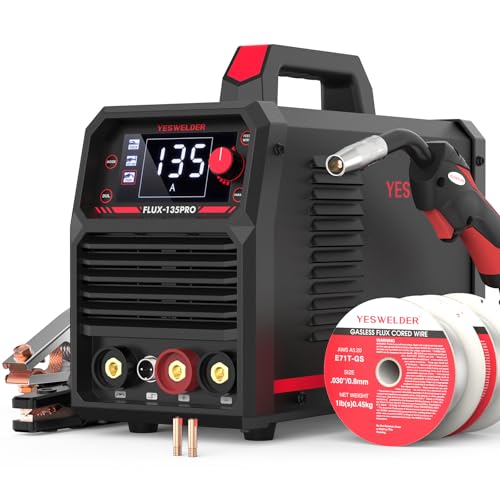
This compact, single-input 110V flux-core wire welder is intended for small repair, fabrication, and DIY metalwork. It comes with a 6.5-foot MIG torch, 9.8-foot ground clamp, 9.8-foot electrode holder, and a 2-pound spool of .035-inch flux-core wire. The manufacturer states that it also supports stick welding and Lift TIG, although a TIG torch and tungsten are not included. The accessible manufacturer manual specifies a 30 to 135A MIG range, 20 to 135A stick and TIG ranges, 60 percent duty cycle, IP21S enclosure rating, and claimed overcurrent and overtemperature protection. It also provides unusually substantial hazard instructions for a low-cost portable unit. However, its 5.8 kVA and 47.6A input figures conflict with advertising that frames it as ready for a standard household outlet, while the manual does not specify the required breaker, receptacle, or branch circuit.
This product suits a trained home user who needs a light, portable flux-core machine for intermittent repairs, brackets, gates, frames, and practice on clean ferrous steel. It is most appropriate where the user can verify that a properly grounded, suitably rated dedicated circuit is available, inspect the leads and clamps before use, and weld in an open or mechanically ventilated area. Its documented wire-size guidance, setup instructions, manual adjustment, and basic maintenance checks can help a novice learn, provided that proper welding PPE and hot-work controls are already in place.
It is not suited to anyone expecting safe operation from an unspecified ordinary household circuit, because the published input figures are far above a typical 15A or 20A branch circuit and no breaker requirement is stated. It is also unsuitable for enclosed spaces, near flammables, on coated or unknown metals without exposure assessment, or around bystanders lacking arc shielding. Choose a product with a publicly traceable NRTL listing and independently verified ratings for regulated workplaces, commercial sites, critical structural work, or situations where electrical inspection and documented compliance are required.
Welding itself remains the main health concern. OSHA identifies fumes, ultraviolet radiation, sparks, hot metal, fire, and shock as significant welding hazards. This product's manual provides useful, specific direction on ventilation, keeping the head out of fumes, air-supplied respiratory protection for confined spaces, shade-10-or-darker eye protection, dry insulating gloves, fire-resistant clothing, and clearing combustibles within 35 feet. Those instructions are stronger than a generic warning, but the product does not include protective equipment or fume extraction. The manual states that the product has overcurrent and overheating protection and directs users to inspect cables and insulation. No publicly traceable NRTL certification or product-specific independent test report was located during review. No product-specific CPSC recall was identified in the reviewed public recall search. For end of life, the manual warns against burning capacitors or plastic components and calls for industrial-waste disposal, but it does not provide a practical electronics-recycling program or recycler referral.
This product is a compact 110V, gasless flux-core wire welder that also offers stick welding and DC lift TIG operation. It is intended for steel repair, maintenance, hobby fabrication, and other light-duty work. The manufacturer states that the current version uses .030-inch and .035-inch flux-core wire, accepts a 2-pound spool, and includes a MIG gun, work clamp, electrode holder, contact tips, wire, and manual. A separate lift-TIG torch is required. The available manufacturer documentation includes substantial arc-welding safety instructions, a protection indicator, and an overload troubleshooting section. However, the published electrical data are not fully consistent across the product materials. The manual lists 135A at a 20 percent duty cycle and 54A maximum input, while the current product page lists 50A input but omits duty cycle and circuit requirements. No model-specific public NRTL listing or independent laboratory performance report was located.
This product suits an informed home user doing intermittent, noncritical steel repairs, practice coupons, brackets, garden equipment repairs, and small fabrication projects where a portable 110V gasless wire welder is useful. It is also suited to someone who understands that flux-core welding produces fume and spatter, has a proper welding helmet, gloves, protective clothing, ventilation, and a suitable dedicated electrical circuit. The included work clamp, electrode holder, and flux-core setup support getting started without a shielding-gas cylinder.
It is not suited to structural, code-regulated, production, or safety-critical welds that require documented output verification, a stable duty-cycle basis, formal electrical listing, procedure qualification, or traceable accessory ratings. It is also unsuitable for use in confined spaces, near combustibles, on painted, galvanized, lead-coated, cadmium-coated, or unknown materials without hazard assessment and effective controls. Buyers without a dedicated circuit, appropriate arc-rated eye and face protection, fume control, and hot-work precautions should not treat its beginner-oriented marketing as a substitute for welding training.
Arc welding creates serious fume, ultraviolet and infrared radiation, burn, spark, and electric-shock hazards. The available operator manual addresses these categories and tells users to use a properly filtered welding shield, protective clothing, ventilation, dry insulation, and fire precautions. This is meaningful documentation, but it does not eliminate the need for local exhaust or respiratory protection when material, coating, or work location creates an exposure risk. OSHA notes that welding fumes can cause acute irritation and that prolonged exposure can contribute to serious disease. The manufacturer posts a California Proposition 65 warning for this product. The public product page does not specify the chemical or exposure route. No product-specific recall was located during the review, and the manufacturer provides support contact channels. Environmental information is limited. No verified repair-parts catalog, recycler partnership, take-back program, or end-of-life electronics disposal instruction was found, so responsible disposal would need to use an appropriate local electronics recycler.
This is a plug-in, handheld stick welder for 110V AC power. The available product documentation describes five fixed output selections, 20A, 45A, 70A, 95A, and 120A, and compatibility with 3/32-inch to 1/8-inch electrodes. It is intended for basic arc welding of carbon steel, alloy steel, and iron, using a ground lead and an electrode held directly at the unit. The maker states that the kit includes a helmet, gloves, goggles, rods, a ground wire, brush, chipping hammer, and carry case. It also states over-temperature, overload, and over-current or short-circuit protection. These are manufacturer-stated features, not independently tested results. Public documentation does not provide a duty cycle, input-current draw, plug or breaker requirement, output-voltage rating, helmet lens shade, ANSI eye-protection marking, or a model-specific electrical-safety listing.
This format suits an occasional DIY user who needs a compact, plug-in stick welder for practice coupons or small repairs to known carbon-steel or iron items, and who already understands basic arc-welding technique and hot-work setup. The five manufacturer-stated current steps, ground lead, rods, and carrying case can simplify initial setup. Use should be limited to a dry, ventilated workspace on a correctly assessed electrical circuit, with independently selected, properly rated welding PPE rather than reliance on the included eye and face accessories.
It is not suited to production welding, structural or safety-critical repairs, vehicle repairs with unknown coatings, tanks or containers, confined spaces, wet locations, or tasks requiring documented electrical certification and duty-cycle data. It is also unsuitable for a person who expects safe, reliable welding with no training. The supplied helmet lacks published shade and ANSI marking details, and the product lacks published circuit requirements. Users who cannot establish ventilation, fire control, safe grounding, and appropriate PPE should not use this product.
Arc welding can create ultraviolet and infrared eye hazards, burns, sparks, electric-shock hazards, and metal fumes. OSHA identifies welding fumes and UV radiation as health hazards, and NIOSH notes that fume composition varies with the rod, base metal, coatings, and process. The available instructions call for a helmet, gloves, safety glasses, protective clothing, ventilation, dry conditions, cable checks, and an extinguisher. Those are useful basics, but they do not identify helmet shade, ANSI eye-protection compliance, respirator selection, coated-metal limits, or confined-space controls. No product-specific recall, public safety warning, or regulatory action was located in the reviewed U.S. sources. No public independent safety listing or performance test was located either. The maker provides a contact route and return policy, but no public parts catalog, repair manual, replacement-lead information, serial-traceability detail, or electronics-recycling instructions were found. Treat the unit as electronic waste at end of life and use a responsible electronics recycler where available.
This is a compact, single-phase 110V inverter welder intended for flux-core wire, stick welding, and lift TIG. The available instruction manual lists a 30A to 135A flux-core range, a 20A to 135A stick range, a 15A to 135A TIG range, and a 7.71-pound machine weight. A TIG torch and shielding-gas equipment are not included. The available manual gives unusually detailed operator warnings for arc radiation, fumes, hot metal, fire, electric shock, and gas cylinders. It also states a 60 percent duty cycle at 135A, with automatic thermal shutdown and fan cooling. However, these are manufacturer-stated specifications, not independently verified results. The manual also contains a significant electrical documentation conflict, listing 110V input while its wiring diagram is marked AC220V, and it omits a plug type and explicit breaker requirement.
This product suits a trained home or farm user doing intermittent, light fabrication or repair work on carbon steel, especially where a compact flux-core setup is useful and the user can provide complete welding PPE. It is most appropriate when the buyer can verify the unit's rating plate, plug, and dedicated electrical circuit before energizing it. The supplied manual's 0.8mm and 0.9mm flux-core guidance and up to 3.2mm stick-electrode guidance make the intended operating envelope concrete.
It is not suited to anyone who needs a publicly verifiable NRTL-listed welder for workplace, inspection, insurance, or project requirements. It is also unsuitable for users relying on a normal household receptacle without first confirming that the circuit matches the product's unusually high stated input-current figures. Do not use it in wet conditions, confined spaces without appropriate ventilation and rescue controls, around combustible vapors, or for coated and galvanized material without controls matched to the material hazards.
The available manual contains useful safety content. It calls for dry leather gloves, insulated footwear, a dry and ventilated work area, insulation from live parts, proper work-clamp placement, a minimum #11 lens, flame-resistant clothing, welding screens, and cooling time before touching hot metal. These steps align with the major fume, UV, burn, shock, and fire hazards identified by OSHA. The documentation also warns against breathing fumes and welding coated materials, although its broad instruction to use an OSHA-approved respirator does not identify respirator selection by metal, coating, ventilation conditions, or exposure level. No product-specific NRTL listing or independent performance test was located. The manual supports replacement of consumables and inspection of leads and clamp connections, but no parts catalog, repair-service program, or electronics-recycling instructions were found. No product-specific CPSC recall was located in the searched sources.
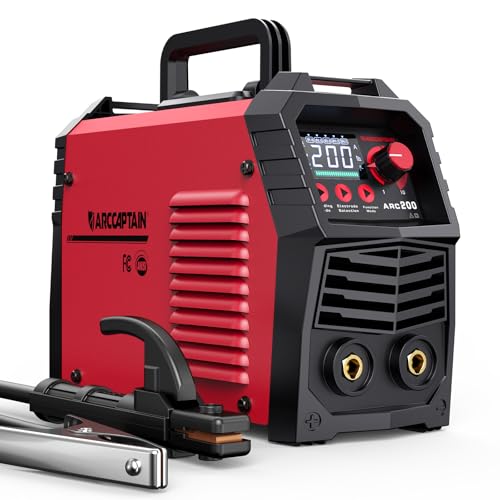
This compact corded inverter product is a DC stick welder with a Lift TIG mode. It is intended for manual metal arc welding with common electrodes, while Lift TIG requires a separate compatible torch. The manufacturer lists a 20 to 200 amp range on 110 or 220 volt input, a 60 percent duty cycle, 78 volt open-circuit voltage, IP21S enclosure rating, and 10-foot electrode-holder and work-clamp leads. Its manual gives practical setup, polarity, cable-inspection, ventilation, and cooling instructions. It also states that VRD, overload, over-current, over-voltage, and over-temperature protections are fitted. These are manufacturer-stated features, not independently verified results. Published specifications conflict on key details, including product weight, electrode-size range, and the named compliance standard. The available material also does not state the rated-output current at the 60 percent duty cycle, input amperage, plug type, or required breaker size.
This product suits a trained home, farm, or mobile repair user who needs a small DC stick machine for occasional steel work and has access to a correctly sized, dry, grounded electrical installation. Its manual supplies useful baseline instructions for lead connection, polarity, cooling clearance, and electrode-current selection. It can also fit a user who already owns, or will separately source, a compatible Lift TIG torch. The user should confirm circuit capacity and actual product specifications with the seller before setup.
It is not suited to first-time users who lack welding PPE, fume control, fire controls, and hands-on safety instruction. It is also unsuitable for confined spaces, coated or contaminated metals, or locations near combustibles unless a qualified hot-work plan addresses ventilation, material hazards, fire watch, and emergency controls. Buyers needing a traceable North American electrical safety listing, independently confirmed output and duty cycle, clearly specified circuit requirements, or readily documented spare parts should use a product with that documentation available before installation.
The manual addresses major arc-welding hazards. It tells the operator to avoid live parts and wet clothing, insulate from the workpiece, ventilate welding smoke, use a welding mask and protective clothing, protect bystanders with a mask or curtain, keep combustibles away, maintain an extinguisher, and avoid welding closed containers. Those are useful baseline controls, but they do not replace hazard-specific respiratory protection or local exhaust decisions. OSHA notes that welding fume risk depends strongly on the rod, base metal, coatings, and work location. The manufacturer claims VRD and electrical and thermal protections, but an exact-model NRTL listing and independent test report were not publicly traceable. The manual directs users to inspect and replace damaged cable insulation and says electrical waste should not enter ordinary trash. It does not provide a parts catalog, repair manual, or a US electronics-recycling route. The published two-year warranty and support contact improve service traceability, though replacement-part availability is not clearly documented.
This is a compact, corded 110V stick welding tool with an integrated holder format, a five-level current control, and a work clamp. The accessible product manual states a 20 to 120 amp claimed output, compatibility with 3/32-inch to 1/8-inch electrodes, and intended use on iron and carbon steel. It also states that the unit uses IGBT inverter electronics, hot start, cooling airflow, and overheat protection. The manual tells users to place the unit on a stable, heat-resistant surface, inspect cords and clamps, keep it dry, wear a welding helmet, gloves, and protective clothing, and unplug after use. These are useful baseline instructions. However, output duty cycle, input current, required breaker size, plug rating, rated output voltage, and a publicly traceable electrical-safety listing were not provided in the evidence reviewed.
This product is suited to a technically cautious home user who needs a compact stick-welding format for brief, noncritical repairs on clean carbon steel or iron, and who already has suitable welding PPE, ventilation, fire controls, and electrical knowledge. The stated 110V input and adjustable output may fit occasional garage or field tasks where portability matters. Its use should remain within the manufacturer-stated electrode range and only after confirming that the actual circuit, plug, leads, and work clamp are in sound condition.
It is not suited to production welding, structural work, vehicle safety repairs, pressure-containing parts, code-regulated jobs, or any task needing documented output and duty-cycle capability. It is also unsuitable for a beginner who expects the product alone to make welding safe. Do not use it where ventilation is inadequate, near fuels or combustibles, on coated or unknown metals, in wet conditions, or in confined spaces. Those conditions require more complete hazard controls than the accessible instructions provide.
Arc welding creates fume, intense UV and infrared radiation, sparks, hot metal, and shock hazards. The accessible manual calls for a helmet, gloves, protective clothing, dry storage, inspection of cords and clamps, clear air vents, and separation from flammable areas. Those measures are helpful, but they do not substitute for adequate ventilation, suitable lens selection, or material-specific fume controls. OSHA identifies additional controls for confined spaces and for metals or coatings involving zinc, lead, cadmium, mercury, beryllium, and fluorine compounds. No publicly traceable NRTL electrical-safety listing or model-specific independent performance report was identified. The manual states a one-year limited warranty, but no parts catalog, replaceable lead or clamp program, repair documentation, or electronics recycling plan was located. No exact-product CPSC recall or safety warning was identified in the sources reviewed. At end of life, treat this as electronic equipment and use a responsible electronics recycler rather than household trash.
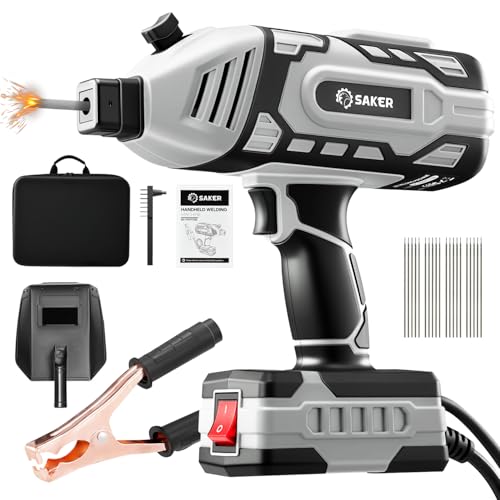
This is a compact, handheld 110V stick welder intended for light metal repair and DIY welding. Saker states that it has five current settings across a claimed 20 to 120 amp range, accepts 3/32 to 1/8 inch electrodes, uses IGBT inverter electronics, and weighs 3.3 pounds. The listed package includes a ground wire, helmet, brush, case, and manual. A model-matched online manual, published by an independent manual site rather than Saker, reports 4.6 kVA input capacity, 59V no-load voltage, 24.8V rated output voltage, a 20% duty cycle, IP21 enclosure protection, and Class F insulation. Those figures are useful but were not located in a manufacturer-hosted downloadable manual or independent laboratory report. Saker also advertises cooling and overheat protection, but the protective functions, ratings, and reset behavior are not independently verified.
This product suits an experienced hobbyist who needs a very compact 110V stick-welding setup for occasional, small carbon-steel or iron repairs and can independently assess a household circuit, electrode choice, grounding contact, PPE, ventilation, and fire controls. It is more appropriate where portability matters and short duty-cycle work is acceptable. The buyer should treat the published electrical figures and protection claims as manufacturer or third-party manual statements, not independently confirmed performance data.
It is not suited to beginners who may interpret plug-and-play or one-handed marketing as a substitute for welding training and complete PPE. It is also unsuitable for confined spaces, wet locations, combustible areas, structural or safety-critical repairs, vehicle fuel-system work, pressure vessels, or jobs requiring documented electrical certification. Users needing sustained welding, traceable duty-cycle verification, specified breaker compatibility, certified eye protection, replacement parts, or service documentation should use equipment with those records available.
Arc welding produces UV and IR radiation, hot metal, sparks, electric-shock risk, and potentially hazardous fumes. The available model-matched manual calls for a helmet, flame-resistant clothing, gloves, footwear, ventilation, dry conditions, cable inspection, removal of flammables, and a nearby extinguisher. Those are meaningful basics, but no evidence was located that the included helmet carries an ANSI/ISEA Z87.1 marking or that the product has an exact-model NRTL electrical-safety listing. Saker states that the unit has cooling and overheat protection. However, no independent validation of those functions was found. The brand supplies a customer-service email and Delaware address, but a model-specific parts catalog, repair manual, electronics-recycling guidance, and documented replacement leads, clamp, holder, or fan were not located. No exact-model CPSC recall or public safety action was located in the searches performed through August 9, 2026.
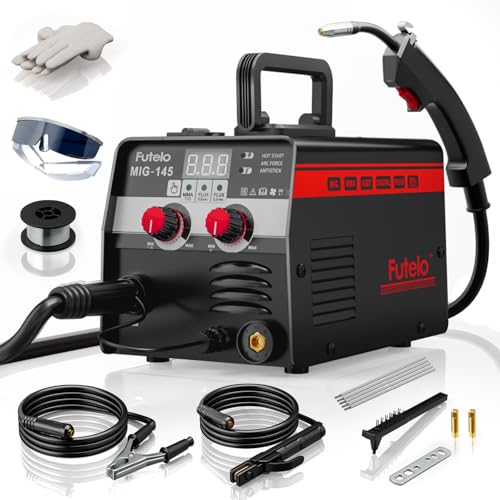
This is a compact, corded 110 V inverter welder marketed for gasless flux-core MIG welding, stick welding, and lift-TIG welding. Independent retail records corroborate the stated 110 V input and a small 11.22 by 5.9 by 6.3 inch enclosure. The catalog lists a 7.48 pound machine weight, while one retailer reports a heavier packaged weight, so the lighter figure should be treated as the maker's unit-only specification. The defining limitation is documentation rather than the basic format. Retail and brand-store listings consistently state 145 A, three welding modes, and synergic control, but publicly accessible materials did not provide a full rating plate, duty cycle, input-current, breaker, wire-size, electrode-size, or thermal-protection specification. No model-specific NRTL listing or independent laboratory performance report was located in the searched public registers.
It suits a hands-on home user doing occasional light steel repair or practice work in a dedicated, dry, well-ventilated workspace, who specifically wants a compact 110 V machine and understands flux-core, stick, or lift-TIG setup. The user should already have a properly rated welding helmet, flame-resistant clothing, gloves, ventilation, fire-control equipment, and the ability to verify the circuit before use. Its stated three-process format can be useful for learning and intermittent maintenance, not for assuming professional-duty output.
It is not for production welding, long duty-cycle work, critical structural repairs, vehicle safety components, or jobs where documented output and electrical certification are required. It is also unsuitable for garages or homes without effective fume control, fire separation, and an inspected electrical circuit. Do not rely on the included goggles as arc protection without a documented welding shade and ANSI marking. Anyone welding coated, galvanized, lead-painted, stainless, or unknown metals needs hazard-specific ventilation and respiratory controls beyond what is documented here.
Welding itself creates substantial hazards independent of the machine. OSHA identifies fumes, ultraviolet radiation, burns, shock, and fire as core welding hazards. NIOSH notes that welding fumes can affect the eyes, skin, respiratory system, and central nervous system, and that composition changes with the wire, flux, and base metal. Flux-core welding therefore needs ventilation that keeps fumes out of the breathing zone, and confined-space work requires much more rigorous controls. The searched public UL, Intertek ETL, and CSA listing routes did not produce a traceable listing for this exact product. No product-specific recall or CPSC warning was located during this review, but absence of a recall does not establish certification or tested safety performance. The maker's public retail presence confirms that the product is being sold in the United States, yet accessible materials did not establish spare-part support, repair instructions, or end-of-life electronics recycling guidance. Replace damaged leads, clamp, holder, or goggles rather than improvising repairs, and use a responsible electronics recycler when the machine reaches end of life.
This product is a compact 110 V, flux-core MIG and stick welding machine intended for light farm, automotive, home, and repair work. The supplied kit is stated to include a wire-feed gun, stick-electrode holder, 1/32-inch flux-core wire, 3/32-inch rods, basic tools, and auto-darkening welding glasses. A reseller reproduces dimensions of 11.02 by 3.35 by 9.65 inches and an 8.03-pound item weight, though those figures have not been independently laboratory verified. Its most important limitation is conflicting output information. The product title presents 250 A, while a separately published description for the same model states a 20 to 120 A adjustment range. No rating plate, duty-cycle table, input-current requirement, plug specification, instruction manual, or test-standard report was located to reconcile that conflict. Treat the claimed output and suitability for material thickness as unconfirmed.
This product is most suited to an experienced hobby user doing occasional, light-duty steel repairs who already has a properly rated welding helmet, protective clothing, gloves, ventilation, and a suitable 110 V circuit. Its compact form and stated flux-core and stick functions can make it practical for short outdoor or garage repair tasks where portability matters. The user should be prepared to confirm actual output from the product rating plate before selecting wire, electrodes, material thickness, circuit protection, or welding settings.
It is not suited to production welding, structural work, long welds, commercial sites that require documented equipment approval, or any task needing a known duty cycle and verified output. It is also unsuitable for beginners who would rely on the included glasses as their primary arc-welding eye and face protection. Do not use it for welding coated, painted, galvanized, lead-bearing, or unknown metals without hazard assessment and appropriate fume controls. Confined-space work needs a dedicated hot-work and ventilation program, not this product alone.
Arc welding creates UV and infrared radiation, sparks, hot metal, electric-shock risk, and fumes. OSHA calls for an arc-welding helmet or hand shield, appropriate filter lenses, protective equipment, and ventilation. The supplied glasses are not backed by located ANSI/ISEA Z87.1 marking or manufacturer documentation, so they are not confirmed as adequate primary protection. No evidence was found of a model-specific electrical safety listing from an OSHA-recognized laboratory. A product listing states overheat and overload protection, but no test report, manual, or verified shutdown specification was found. No product-specific recall, regulatory action, or public incident report was located in the checked U.S. sources. The maker's public support, replacement-parts, repair documentation, warranty route, and electronics takeback program were not located. For end of life, the power source should be handled as electronic equipment and taken to an R2 or e-Stewards certified recycler where available, rather than placed in household trash.



