Best Overall
11% off

Jackery Explorer 1000 v2 Portable Power Station
Fast 1-hour charging for quick power.
High 1500W AC output for heavy-duty use.
Durable LiFePO4 battery for extended lifespan.
 Daniel Kenitz
Fast 1-hour charging for quick power.
High 1500W AC output for heavy-duty use.
Durable LiFePO4 battery for extended lifespan.

Compact design for easy portability.
High power output with multiple AC outlets.
Efficient LFP battery for reliable backup.

Fast charging, fully recharges in 70 minutes.
High power output with 1500W surge capability.
Durable LiFePO4 battery ensures long-lasting performance.

Long-lasting LFP battery ensures reliable power supply.
Multiple outlets support diverse charging needs.
Compact design is perfect for outdoor activities.

Fast charging: 0-80% in 45 minutes.
High power output: 1800W with 2700W peak.
Versatile use: camping, off-grid, and outages.

Fast USB-C PD 100W charging.
20ms UPS for uninterrupted power.
High-capacity 2042Wh LiFePO4 battery.

Reliable 110V pure sine wave for sensitive electronics.
Convenient foldable 60W solar panel for easy setup.
Lightweight design perfect for outdoor adventures.

Ultra-fast charging reaches 80% in 1.13 hours.
High 3400W output supports various appliances.
Durable LiFePO4 battery ensures long-lasting use.
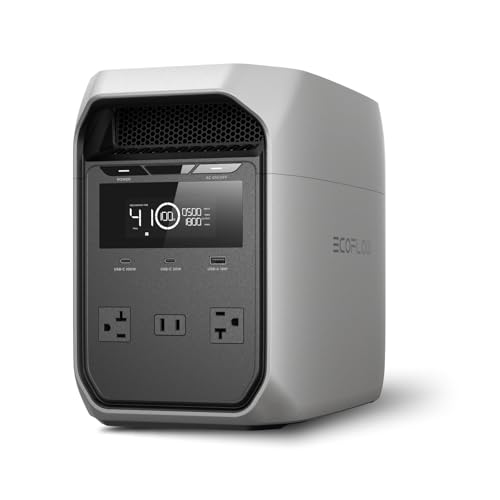
Fast 1-hour charging for quick power access.
High 1800W output suitable for many devices.
Versatile with solar and home backup options.

Lightweight and easy to carry around.
Fast charging with multiple output options.
Compatible with solar panels for eco-friendly use.
Start with usable energy, not the headline watt-hour number. A battery’s stated capacity is usually measured inside the pack; energy delivered at an outlet is lower after inverter and charging losses. In the supplied testing, stations rated around 768Wh to 1,152Wh delivered roughly 600Wh to 1,030Wh through AC, depending on load and method. Look for an independent test of the exact product that discloses load, temperature, cutoff, and whether AC, USB, or DC energy was measured. Continuous output and surge behavior matter just as much: a 1,800W rating does not mean every appliance will start, and a temporary “lifting” or “boost” mode may be limited to resistive loads or reduce voltage.
Charging claims also need conditions. “Fast” charging can refer to a particular wall-input mode, temperature, or percentage range. Independent tests in this group found full AC recharges ranging from about 55 minutes to under two hours, while solar charging was substantially slower on larger batteries with limited solar-input ceilings. Runtime, solar, UPS, expansion, and cycle-life claims should be checked against the exact manual and specification sheet rather than treated as universal figures.
For electrical safety, the strongest evidence is a current, model-specific listing from an OSHA-recognized Nationally Recognized Testing Laboratory. Check the exact model in UL Product iQ for UL 2743, the Intertek ETL directory, or the CSA Group listing database. A brand’s general statement that a product “meets” a standard, or a logo that cannot be independently searched, is weaker evidence. Battery safety documentation should identify the chemistry, pack protections, charging and discharge limits, and provide a model-matched UN 38.3 transport test summary. Protection details should cover overheating, short circuit, overcurrent, overvoltage, overload, and low-temperature charging, with clear fault behavior.
A UPS or home-backup label is not permission to connect the product to household wiring. Confirm the transfer equipment and installation requirements in the exact manual; never backfeed through a wall outlet. Many supplied reviews exclude servers, workstations, medical or other safety-critical equipment because transfer may take several milliseconds. Also check recalls and corrective actions for the exact product in CPSC and related safety databases.
Common limitations recur across this category. These products are generally not weatherproof, should be kept dry and ventilated, and should not be used when damaged, swollen, hot, or wet. Small stations cannot provide long appliance runtime; larger ones can be heavy and may have meaningful idle draw. A gasoline generator has additional carbon-monoxide, exhaust, fuel-fire, and hot-surface hazards and must be operated outdoors. Finally, lithium batteries should not go in household trash or curbside recycling; use an appropriate battery or household-hazardous-waste route, especially for damaged packs.
## Health and Ecology The review scores below reflect the quality and completeness of the evidence supplied for each product. A higher score means the relevant documentation or testing was stronger and more model-specific; it does not mean a product is risk-free or suitable for every load.
This measures whether the exact product is listed by an OSHA-recognized testing laboratory to an applicable portable-power-pack standard, such as UL 2743. It matters because a searchable, current listing is stronger than a self-issued logo. Among these products, the Jackery Explorer 1000 v2 scored 94, while several products scored 62–74 because no exact public UL, ETL, or CSA record was confirmed.
This measures whether chemistry, pack protections, operating limits, and a model-matched UN 38.3 transport summary are documented. Lithium stations need this evidence for both fire-risk planning and transport. The Jackery Explorer 2000 Plus scored 87 because an exact transport report was available; many others scored 68–75 because no public model-matched summary was found.
This measures documented safeguards for overheating, short circuit, overcurrent, overvoltage, low-temperature charging, and overload, including what the product does after a fault. Clear limits in an exact manual matter more than a generic BMS claim. Scores ranged from 54 for the EcoFlow Delta 3 Plus, where high-load thermal concerns were reported, to 87 for the Jackery Explorer 1000 v2.
This measures whether backup and UPS claims explain transfer time, output limits, compatible transfer equipment, and installation requirements without implying that a station can safely backfeed a building. Most products are plug-in backup sources, not grid-connected systems. Stronger scores went to products with clearer limits, such as the Jackery Explorer 2000 Plus at 78; medical, server, workstation, and home-wiring exclusions remain important.
This measures whether relevant recalls, regulator warnings, or unresolved defect actions affect the brand or exact product. A higher score reflects no relevant unresolved action found and transparent handling where applicable. Scores were generally 70–78 because exact-product recalls were not identified, but the EcoFlow reviews noted a separate Delta Max 2000 recall, showing why buyers should check the exact model rather than rely on brand reputation.
This measures outlet-level watt-hours, continuous output, surge behavior, voltage stability, and recharge performance under disclosed conditions. It is one of the most useful ways to distinguish nominal capacity from delivered energy. Scores ranged from 60 for the ALLWEI product, with no credible independent capacity test, to 91 for the Jackery Explorer 500 v2, which had independent AC, USB-C, DC, and continuous-output measurements.
This measures whether headline claims state the conditions and limitations that make them true. High-quality evidence distinguishes a temporary surge mode from continuous output, cell capacity from outlet energy, and a UPS transfer of several milliseconds from zero interruption. Scores ranged from 50–57 for products with conflicting or weakly supported specifications to 82 for the Jackery Explorer 500 v2, whose claims were better aligned with testing and manual limits.
This measures the amount of current, model-specific third-party evidence available beyond brand marketing, including certifications, test reports, warranty terms, and technical documents. The Jackery Explorer 1000 v2 scored 84 because its exact model appeared in a public SGS certification record and had independent efficiency testing. Products without searchable certification, transport documentation, or calibrated performance reports generally scored 66–76.
This measures expected cycle life, warranty, service, firmware support, spare parts, and whether components can be repaired or replaced. Longer use can reduce early electronic waste, but manufacturer cycle claims are not the same as independent testing. Scores reached 82 for the Anker SOLIX C300 DC, supported by a three-year warranty and documented support, while sealed products with limited repair information scored closer to 69–73.
This measures energy lost during charging, AC or DC conversion, and standby. Efficiency matters because losses reduce runtime and require more electricity to refill the battery. Independent results separated products clearly: the Jackery Explorer 500 v2 scored 89 and delivered 73% overall AC charging efficiency in its test, while the Anker SOLIX C300 scored 69 for measured overall AC efficiency.
This measures whether the brand gives U.S. buyers a practical collection or take-back route and safe instructions for damaged batteries. Lithium products must not enter household trash or curbside recycling. Scores were mostly 69–75: Anker’s C300 DC scored 74 with recycling and a mail-back route, while several brands offered only general recycling instructions without a named U.S. collection partner.
This measures whether claims about solar use, recyclability, recycled content, or environmental benefit are specific and supported, rather than suggesting the battery is impact-free. Scores clustered from 64 to 74. A solar-input option alone is not lifecycle evidence, and the reviews generally found no product-specific life-cycle assessment or recycled-content substantiation. Higher-scoring claims were still qualified rather than treated as proof of zero impact.
This is a 23.8-pound portable battery power station with a 1,070Wh lithium iron phosphate battery, three 120V AC outlets, USB ports, a 12V car outlet, and a shared 1,500W continuous AC output. It is intended for powering small appliances, tools, electronics, and selected backup loads, rather than for permanent household electrical installation. Solar input is limited to 400W total, and battery expansion is not supported. Jackery documents a 3,000W surge rating, 4,000 cycles to at least 70 percent capacity, and a 20 ms backup transfer function. Independent hands-on testing measured about 910Wh delivered, which is materially below cell-level capacity but plausible after conversion losses. Public documentation identifies the battery chemistry and operating temperatures, but a model-specific UN 38.3 test summary and a publicly searchable NRTL listing for the complete product were not located.
It suits a buyer who needs a portable, single-unit source of backup or off-grid power for phones, laptops, cameras, lighting, power-tool batteries, a compact refrigerator, or other loads that remain within 1,500W continuous demand. Its 23.8-pound format is manageable for vehicle travel, camping, workshops, and short outage coverage. It also fits someone who can use the USB-C output directly and understands that actual AC runtime will be lower than the battery's stated 1,070Wh cell capacity.
It is not appropriate for connecting directly to household wiring, a breaker panel, or a generator inlet without properly selected transfer equipment and qualified installation. It is also unsuitable for servers, workstations, medical equipment, or other loads that cannot tolerate a 20 ms transfer interruption. Choose a different setup if you need battery expansion, outdoor rain exposure, a replaceable battery, public third-party certification records for the complete unit, or sustained loads above 1,500W.
The product uses lithium iron phosphate cells, and Jackery documents charging only from 32 to 113°F and discharge from 14 to 113°F. The manual instructs owners to stop use after damage, overheating, odors, or unusual conditions, keep ventilation unobstructed, avoid water and fire, and seek qualified service rather than disassembling the pack. Its stated backup mode is not a true zero-transfer UPS, so sensitive electronics need compatibility testing. No applicable CPSC recall or safety warning for this exact product was identified in the reviewed U.S. recall sources. Jackery provides a return-for-recycling service for qualifying U.S. customers and warns against placing lithium battery products in household trash. The sealed design and lack of user battery replacement remain repairability limits. Environmental benefits from solar charging depend on an optional panel, available sunlight, and actual use, and no product-specific life-cycle assessment was located.
This is a 25.3-pound portable power station with a 1,024Wh lithium iron phosphate battery, four 120V AC outlets, USB ports, 12V outputs, and a 1,800W AC-output limit. It is intended to run plug-in devices during camping, travel, or a short outage, and to recharge from AC power, solar, a vehicle, or a generator. The official manual documents 0°C to 40°C charging and -20°C to 40°C discharging limits. BLUETTI states 1,200W maximum AC charging, 1,000W maximum solar input, 80 percent charging in 45 minutes at 25°C, and UPS switchover within 10ms. Independent reviewers confirmed it operated several household loads separately, while one test noted that a sustained 2,000W induction load exceeded its capability. No publicly searchable model-specific UL, ETL, or CSA portable-power-pack listing, model-matched UN 38.3 test summary, or calibrated usable-capacity report was located.
It suits a camper, road-tripper, renter, or homeowner who needs a portable source for lights, phones, laptops, a router, small kitchen appliances, or a refrigerator during a brief outage. The 1,024Wh capacity and 1,800W AC limit fit intermittent loads rather than whole-home demand. It also suits users who will operate it indoors in a dry, ventilated space, follow the stated temperature limits, and plug essential devices directly into the unit instead of attempting household-panel connection.
It is not appropriate for anyone planning to energize household circuits, use a wall outlet to feed power back into a building, or install it as a substitute for listed transfer equipment. It is also unsuitable as the only backup for servers, workstations, or other equipment needing a high-performance UPS, because the manual expressly excludes those uses. Avoid it for sustained loads above 1,800W, wet or dusty exposure, cold-weather charging below 0°C, or safety-critical use where independently verified electrical listing and capacity data are required.
The documented safety information is reasonably detailed for operating limits. The manual identifies overload, short-circuit, overtemperature, DC-overcurrent, PV-overvoltage, and low-temperature charging faults. It instructs users to keep the unit away from flammable materials during storage, avoid damaged ports and cables, and use qualified service personnel. It also says the UPS mode should not be used for servers or workstations requiring high-performance backup. No exact-product CPSC recall or regulator warning was located in the searched US sources. The battery uses lithium iron phosphate chemistry, and BLUETTI lists a five-year warranty plus a manufacturer-stated 4,000-plus cycles to 80 percent capacity. Those are favorable durability signals, but public independent cycle testing and repair documentation were not found. The disposal guidance directs owners to recycling centers and warns against putting a malfunctioning battery in a collection box, but it does not provide a named US take-back route. Environmental claims for a bio-based enclosure apply to a separately identified version, not clearly to this dark-gray product.
This is a compact lithium iron phosphate portable power station for charging and running small electronics, lights, networking gear, tool batteries, and limited household loads. BLUETTI states that it stores 288Wh, supplies 600W continuously, weighs about 9.5 pounds, and provides two AC outlets, USB-C ports rated to 100W and 140W, USB-A, 12V, and car-style DC outputs. Its manual gives useful operating limits that qualify the headline claims. The 1,500W Power Lifting mode is only for pure resistive loads, while actual output remains 600W. BLUETTI also states an outage switchover of 10ms and 80 percent AC charging in 45 minutes at 77°F. A TechRadar reviewer used a unit for about 130 days during work, travel, and storm outages, but did not publish calibrated capacity, efficiency, voltage-regulation, or transfer-time measurements.
It suits a person who needs a carryable power source for phones, laptops, cameras, routers, small lights, tool-battery charging, or short outage tasks, and who can keep combined AC loads within 600W. The low weight and broad port selection make it practical for car travel, camping, job sites, and moving around a home during a blackout. It also fits buyers who value a documented LiFePO4 battery and a manufacturer-stated 5-year warranty, while accepting that runtime will be modest for AC appliances.
It is not appropriate for someone seeking whole-home backup, long refrigerator runtime, medical equipment that requires a specified uninterrupted supply, data servers, or workstations. BLUETTI itself says the UPS mode is not for high-performance UPS applications. It should not be used outdoors in rain or high humidity because the documented enclosure rating is IP20. Do not connect it to household wiring or attempt backfeed through an outlet. A properly selected transfer setup and qualified electrical guidance are needed for building-circuit backup.
The product uses a LiFePO4 battery, and the manufacturer documents charging from 32°F to 104°F, discharge from minus 4°F to 104°F, ventilation, grounding, and storage away from flammable materials. The manual also lists responses for overload, short circuit, inverter overtemperature, PV overvoltage, and charge or discharge temperature faults. Those are useful documented safeguards, but they are manufacturer documentation rather than a model-specific public NRTL listing. No model-matched UN 38.3 summary was publicly located. BLUETTI states more than 3,000 cycles, up to 10 years of service, and a 5-year warranty. The manual tells owners to use designated recycling centers, not household trash, and to contact a professional battery recycler for a malfunctioning battery. It does not identify a U.S. product take-back program or named collection partner. A search of CPSC recall materials did not identify a recall or product-safety warning for this exact product as of August 10, 2026.
This is a compact lithium iron phosphate portable power station with a 299Wh battery, two AC outlets rated at 600W continuous output, a stated 1200W peak, three USB-A ports, one 60W USB-C port, and 12V DC outputs. It is intended for low to moderate power devices during camping, travel, and short outages, rather than sustained household backup. The manufacturer says it weighs 14.8 pounds and can expand to 939Wh with a separately sold battery. The core capacity claim has meaningful independent support. A detailed third-party test of the same PB-20 version measured 273Wh from the AC output at a 150W resistive load. The manufacturer also documents a LiFePO4 battery, a 12V to 30V and 100W maximum input, and a 0°C to 55°C charging range. Its published specifications conflict in places, including an earlier page claim of 200W solar input alongside a 100W specification table.
This product suits campers, road trippers, and apartment dwellers who need a portable reserve for phones, laptops, lights, small fans, a CPAP within its load limits, or modest 12V equipment. It is particularly relevant when a roughly 299Wh battery and 600W AC ceiling fit the actual devices, and when the user can charge it before travel or has a correctly matched solar panel below the stated 30V input limit. It also fits users who value independently measured outlet capacity more than rapid wall charging.
It is not appropriate for automatic outage protection of networking equipment, medical equipment, sump pumps, refrigerators that need dependable unattended restart, or any device that requires UPS behavior. The manual specifically says outputs must be turned on manually and that it cannot operate as a UPS. It should not be connected to household wiring, an RV electrical system, or a generator inlet without correctly specified transfer equipment and qualified installation. Buyers needing an independently listed U.S. electrical safety certification should select a product with a model-specific NRTL listing.
The battery is manufacturer-identified as LiFePO4, and the documented charging range starts at 32°F, which is an important cold-weather limit for lithium batteries. VTOMAN describes overcharge, overdischarge, overvoltage, overcurrent, short-circuit, temperature protections, and a 600W output limit. Those protections are manufacturer claims, not a substitute for a publicly searchable UL, ETL, or CSA listing. No relevant U.S. CPSC recall or product safety warning was located in the searched records. The product is not a disposal-in-trash item. EPA guidance says lithium-ion devices should go to dedicated battery, electronics, or household hazardous-waste collection, not curbside recycling or household garbage. VTOMAN did not provide a clearly identified U.S. take-back or recycling route for this model. Its solar use claims describe a charging option, but no product-specific recycled-content, lifecycle, or carbon-impact evidence was found.
This is a 1,152Wh LiFePO4 portable power station with four AC outlets, USB ports, a 12V vehicle-style output, wireless charging, and solar, car, generator, or wall charging. The manufacturer rates its AC output at 1,800W continuous with 2,700W surge capacity. It weighs about 36 pounds, so it is portable but substantial for one-person carrying. Its most meaningful performance claim has outside support. Independent AC tests measured 970Wh at an 800W load and 1,007Wh at a 200W load, close to the rated battery energy after inverter losses. The manual also discloses a roughly 15W self-consumption figure and explains that low-load runtime is reduced by that draw. The manufacturer specifies a UPS transfer time of 20ms, while also instructing users to test it before use because data loss remains possible.
This product suits a camper, tailgater, mobile worker, or outage-prepared household that needs a self-contained battery for refrigerators, networking gear, lighting, laptops, and occasional higher-draw appliances within a 1,800W continuous limit. It is also suited to buyers who value independently measured AC runtime rather than relying on nominal watt-hours alone. At about 36 pounds, it fits best where it can be carried short distances or stored near the intended loads, not moved repeatedly throughout the day.
It is not appropriate for connecting directly to household wiring, a breaker panel, or the utility grid. The manual explicitly limits it to off-grid use, so home circuits require properly selected transfer equipment and qualified installation. It is also not the right sole backup for medical, aviation, safety-critical, or other equipment that cannot tolerate transfer time or an unexpected shutdown. Buyers who need verified exact-model electrical listing records, a public transport-test summary, or a documented U.S. battery take-back program should require that documentation before relying on it.
The product uses lithium iron phosphate battery chemistry, and its manual documents temperature-related charging and discharge limits. It lists fault indications for inverter overload, inverter short circuit, cigarette-lighter overtemperature, charging and discharge temperature limits, and solar-input overvoltage. The manual also includes a grounding point, an AC-input fuse, a warning not to exceed 60V open-circuit solar voltage, and an explicit prohibition on connecting its AC output to the grid. An Intertek authorization found online covers the related AC180P model to ANSI/CAN/UL 2743, but that is not verification for the AC180 reviewed here. No matching public exact-model safety listing or UN 38.3 test summary was found. No relevant CPSC recall or warning was identified in the searched U.S. recall records. BLUETTI states 3,500+ cycles and a five-year warranty, but it does not provide a clear U.S. recycling or take-back path for this product. Generic green-energy language is not supported by product-specific lifecycle evidence.
The Jackery Explorer 2000 v2 is a 39.5 pound portable power station with a 2,042Wh lithium iron phosphate battery, three 120V AC outlets, USB outputs, a 12V car outlet, and a 2,200W continuous AC inverter. It is intended for portable appliance power, camping, RV use, and limited backup of individual household loads during an outage. Its rated capacity, output, 4,000-cycle claim to at least 70 percent capacity, and 1.75-hour emergency AC recharge figure are manufacturer-stated. Independent testing measured about 1,740Wh delivered through AC outlets, or about 84 percent of nameplate capacity, and confirmed 2,200W sustained output. The same independent test fully recharged it in 2.5 hours, not the advertised 1.7 hours. Its documented UPS mode switches within 20ms, but it is not a zero-interruption UPS and has a lower 1,500W bypass-mode limit before an outage.
This product suits a camper, RV user, or outage-prepared household that needs to run a few portable essentials directly from the unit, such as refrigeration, lighting, communications equipment, a laptop, or moderate cooking loads. The independently measured AC energy and sustained 2,200W output support those uses, while the roughly 39 pound weight remains manageable for many adults. It also fits buyers who can use the documented USB, 12V, and AC ports without connecting the unit to household wiring.
It is not for a household seeking a permanently connected whole-home battery, automatic transfer equipment, or a product approved for direct connection to a service panel. Do not use it to backfeed an outlet or connect it to building wiring without properly specified transfer equipment and a qualified installer. It is also unsuitable for servers, workstations, or medical and other equipment that cannot tolerate a transfer delay. Buyers who need outdoor rain exposure, detailed repair access, or independently published battery transport documentation need stronger documentation.
The product uses lithium iron phosphate cells, a chemistry generally selected for long cycle life, and Jackery states 4,000 cycles to at least 70 percent capacity. Its manual specifies charging only from 32 to 113°F and discharging from 14 to 113°F, warns against heat, moisture, physical damage, disassembly, and improper repair, and documents overload behavior in UPS use. Those are useful operating safeguards, but a model-specific NRTL electrical-safety listing and a public UN 38.3 test summary were not independently verified. No CPSC recall specific to this product was located in the reviewed U.S. recall sources. Jackery offers a return-for-recycling program for verified purchasers and gives damaged-battery handling guidance. The environmental messaging needs caution, because broad claims such as eco-friendly energy are not backed here by a product life-cycle assessment, recycled-content evidence, or quantified carbon information. Recycling return shipping for out-of-warranty units is the customer's responsibility.
This product is a compact lithium-ion portable power station intended for small electronics, camping gear, lights, laptops, and other loads below its stated 300W ceiling. The included package is represented as adding a foldable 60W solar panel. The station itself is listed at about 5 pounds and 8.5 by 6.7 by 4.1 inches. Its key figures are manufacturer-stated rather than independently measured. The available R200 manual specifies 280Wh capacity, two 110V AC outlets rated to 300W maximum, one 9V to 12.6V DC output, and USB outputs. It gives a rough runtime formula using 85 percent of rated capacity, and states that AC output does not operate while the unit is charging. I found no public, model-specific UL, ETL, or CSA listing, calibrated capacity test, or public UN 38.3 test summary for this exact product.
This product suits a camper, road-trip user, or outage-prepared renter who needs a light, carryable power source for phones, USB devices, LED lighting, a modest laptop load, or similarly low-watt equipment. It is most appropriate when the user can check each device's running and startup wattage, keep the combined load under the stated 300W maximum, and treat the 280Wh figure as a manufacturer rating rather than a tested delivered-energy result. The included solar panel can be useful where slow daytime recharging is acceptable.
It is not appropriate for households expecting a home backup system, transfer-switch connection, refrigerator-scale loads, heating appliances, hair dryers, kettles, coffee makers, or equipment with substantial startup surges. It should not be used as a grid-connected power source or as a substitute for approved home standby equipment. Buyers who need a medical-device power plan, uninterrupted computer power, verified battery transport documentation, independently confirmed capacity, or an independently listed electrical safety certification need product-specific evidence that was not publicly located for this unit.
The product uses a lithium-ion battery. Its manual warns against disassembly, modification, moisture exposure, and operation beyond the stated 300W limit. It also states that AC output will not pass through while charging. These are useful operating limits, but the public documentation does not identify the cell chemistry, detailed battery-management thresholds, low-temperature charging behavior, or a model-matched UN 38.3 transport test summary. No exact-model electrical safety certification record was located in the public registers checked. No relevant U.S. recall or regulator warning for this exact product was located in the sources reviewed. A solar panel can reduce reliance on wall power during use, but it does not make the battery product impact-free. No ZeroKor take-back or U.S. recycling plan was located. At end of life, EPA guidance says lithium-ion devices should not enter household trash or curbside recycling, and damaged batteries need specialized handling.
The EcoFlow DELTA 3 Max is a 44.8-pound portable power station with a 2,048Wh lithium iron phosphate battery. It provides four 120V AC outlets, USB-A and USB-C ports, and a 12V car-style outlet for camping, RV use, and short-duration backup of ordinary plug-in equipment. Its rated continuous AC output is 2,400W, with a manufacturer-stated 3,400W X-Boost mode for selected loads. The manufacturer documents a 500W maximum solar input, charging from 32°F to 113°F, discharge from 14°F to 113°F, and a less-than-10-millisecond UPS switching claim. Independent hands-on testing confirmed a 68-minute 0 to 100 percent AC recharge and found 79 percent AC delivery efficiency, with about 27W idle draw when the AC inverter was left on. Publicly searchable model-specific electrical-safety certification and UN 38.3 transport-test documentation were not located.
This product suits a buyer who needs a self-contained, roughly 2kWh portable source for a refrigerator, router, computers, chargers, lights, small kitchen equipment, or campsite loads during short outages. It is also suited to users with dependable wall power before an event, since independent testing supported rapid AC recharging. The 2,400W continuous output is relevant for households that will keep total appliance demand within that limit and can manage the 44.8-pound weight safely.
It is not suitable for powering life-sustaining medical equipment. The manual specifically excludes medical-grade ventilators and similar equipment, and advises checking compatibility for other medical devices. It is also not a substitute for a correctly designed household transfer-switch installation, because the documentation reviewed does not identify a supplied or specifically compatible UL 1008 transfer switch. Buyers needing multi-day solar recovery, expandable battery capacity, wet-weather operation, or a unit that can be carried frequently should consider the documented 500W solar cap, fixed capacity, IP20 rating, and weight.
The documented safety controls are relatively detailed. The manual lists temperature, overload, short-circuit, voltage, and current protections, specifies charging only from 32°F to 113°F, and requires a grounded AC outlet. It also warns against wet use, instructs owners to stop using a wet or severely damaged unit, and describes emergency handling. However, a public model-specific electrical-safety listing from an OSHA-recognized laboratory and a model-matched UN 38.3 transport summary were not located. This exact product was not identified in the CPSC recall search. EcoFlow did have a separate CPSC recall on October 9, 2025 for older Delta Max 2000 stations after six reported fires, resolved through a firmware remedy. For end of life, the manual directs owners not to place the battery product in household waste and to use professional recycling if it cannot first be discharged. It does not name a U.S. take-back or collection partner. The LFP chemistry and five-year warranty may support longer service, but public cycle-life and repair-parts evidence is limited.
This is a 26.6 pound portable power station with a 1,024Wh lithium iron phosphate battery, 1,800W of rated 120V AC output, three AC outlets, USB-C charging up to 100W, USB-A, and solar input rated to 500W. It is intended to run plug-in appliances, electronics, and selected essential loads during camping, RV use, or short utility outages. It is not a fuel generator and it should not be connected to household wiring without appropriate transfer equipment. Its core capacity and charging performance have some independent support. The Solar Lab measured about 83% AC inverter efficiency and a full wall charge in just under 55 minutes. A separate test discharged 0.898kWh through a 1,500W heater, about 87.7% of rated capacity. EcoFlow documents a 10 ms standby UPS transfer, but this is manufacturer documentation rather than certification of critical-load compatibility.
This product suits someone who needs a movable, approximately 1kWh battery for short outages, a home office, CPAP use, camping, or an RV, and plans to power devices directly from its outlets. It is particularly practical for users who value fast wall recharging and will use USB-C directly for laptops and other compatible electronics. It also fits a buyer who can monitor battery level, set the AC timeout appropriately, and understands that appliance runtime varies substantially with load and inverter losses.
It is not appropriate for anyone seeking a whole-home backup system, direct connection to a breaker panel, or a substitute for properly installed transfer equipment. Do not use it to backfeed a home through an outlet. It is also a poor fit for multi-day refrigerator coverage, large resistive heaters, high-draw cooking appliances, or continuous heavy tool use, since its stored energy is about 1kWh before conversion losses. Households protecting medicines or critical equipment should account for the AC timeout setting and verify device compatibility before relying on UPS operation.
The battery is lithium iron phosphate, and the manual identifies protections for overvoltage, overload, overcurrent, short circuit, and battery temperature. It blocks charging below the specified temperature range and provides fault messages for thermal and output problems. These are meaningful documented safeguards, but public searches did not locate a model-specific listing in the UL, ETL, or CSA product-certification registers, nor a matching public UN 38.3 transport test summary. No recall for this exact product was found in the CPSC material checked. EcoFlow did recall a different Delta Max 2000 model on October 9, 2025 after overheating and fire reports, with a firmware-update remedy, so firmware updates and the manual's storage instructions matter. EcoFlow documents disposal precautions for damaged batteries and says not to put an incompletely discharged product directly into a battery recycling box. It does not identify a U.S. take-back or collection partner for this product. Its solar and long-life messaging is plausible, but no product-specific life-cycle assessment or recycled-content evidence was located.
The Jackery Explorer 300 is a 7.1-pound portable lithium-ion power station with 293.8 Wh of stored energy, two 120 V AC outlets rated for 300 W continuous output, a 500 W surge rating, USB outputs, USB-C PD, and a 12 V car socket. It is intended for small electronics, lights, cameras, and other loads below its stated output ceiling. Its capacity claim has meaningful independent support. One tester measured 288 Wh in a controlled discharge test, while another repeatedly measured 265 Wh from USB-C PD, about 90% of rated capacity. Jackery's manual states charge and discharge protections, a 300 W overload shutdown, and an 800-cycle claim to at least 80% capacity. Those safety and lifetime specifications are manufacturer-stated, not supported by a public accredited lab report located for this exact product.
This product suits campers, road travelers, photographers, and outage-prepared households that need a compact source for phones, tablets, cameras, LED lighting, USB-C laptops, routers, or other modest loads. The independently measured capacity is close to the stated battery size, so it is practical when runtime is calculated from the actual wattage of the connected device. It also fits users who can keep loads below 300 W and use it in a dry, ventilated location.
It is not suited to anyone needing to power high-wattage heating appliances, kettles, hair dryers, microwave ovens, large tools, or loads that exceed 300 W. It should not be used to backfeed house wiring, connect to the utility grid, or substitute for an approved transfer-switch installation. It is also unsuitable where uninterrupted power, precise runtime indication, or power for safety-critical medical equipment is required, because no validated UPS switching specification was located and capacity reserve is limited.
The manual gives concrete handling instructions, including keeping the station dry, ventilated, undamaged, and away from high heat. It states multiple electrical and battery protections and identifies a lithium-ion battery. Jackery also documents UN 38.3 compliance, but it does not publicly provide the model-matched transport test summary that would allow independent review of that claim. No exact-product CPSC recall or regulator warning was located in the checked U.S. sources. For longevity, Jackery states 800 cycles to at least 80% capacity and offers warranty and repair intake. However, the battery cells are not offered as an end-of-life replacement part. Jackery does provide a return-for-recycling program for eligible U.S. customers, including handling guidance for damaged batteries. Its environmental claims for this older product are limited, and no product-specific lifecycle or recycled-content substantiation was located.



