Best Overall

ThermoMaven Max Fire Cooking Torch
Easy ignition with one-touch max fire feature.
Enhanced safety with built-in safety lock.
Versatile use for cooking and grilling tasks.
 Daniel Kenitz
Easy ignition with one-touch max fire feature.
Enhanced safety with built-in safety lock.
Versatile use for cooking and grilling tasks.

Adjustable flame for versatile culinary use.
Durable design ideal for outdoor activities.
Easy-to-use trigger for quick ignition.

Built-in igniter for easy startup.
Long reach torch for versatile tasks.
High flame output for effective weed removal.
Adjustable flame control for precise cooking.
Versatile use for cooking and camping.
Durable design ensures long-lasting performance.

Adjustable flame for precise cooking and welding.
Versatile use for grilling, camping, and welding.
Compatible with standard propane tanks.

High flame output for efficient use.
Comfortable handle ensures easy grip.
Versatile for multiple applications.

Easy ignition with reliable trigger start.
Adjustable flame for precise control.
Durable construction ensures long-lasting use.

High temperature for efficient, quick lighting.
Easy one-touch ignition for convenience.
Adjustable flame for versatile use.

Precise flame control enhances cooking versatility.
Ergonomic design ensures comfortable handling.
Durable construction for long-lasting performance.

High temperature capability for versatile applications.
Ergonomic design ensures comfortable handling.
Durable construction for long-lasting performance.
Start with the fuel connection. The product should clearly identify compatible cylinders, fittings, valves, seals, regulators, and any hose or adapter supplied with the configuration. A claim that a torch fits “all propane tanks” is not enough. Look for model-specific documentation and markings, and for evidence that the complete setup is appropriate under ANSI/UL 147 or CSA 2.29. For hose-fed designs, the hose and connector should also be documented for LP-gas service, rather than inferred from appearance. Disposable one-pound DOT-39 cylinders must not be refilled.
Controls matter because a torch can continue releasing gas or retain enough gas in its hose to sustain a flame after a control is released. Look for clearly described ignition, flame adjustment, trigger, lock, valve, and shutdown steps. A high-quality control system should make unintended ignition less likely and should explain whether a residual flame may remain briefly. Product instructions should also cover connection checks, leak testing, cylinder position, maximum continuous operating time, cool-down, storage, and what to do if the igniter fails.
Reach and heat shielding can reduce—but do not eliminate—burn risk. Long barrels, forward grips, heat shields, and hot-nozzle indicators are useful only when their behavior and limitations are explained. A stated maximum temperature, such as 1,800°C or 3,272°F, does not tell you the heat reaching the grip, the flame's actual size, or whether the product can safely perform welding, weed control, or sustained heating. Similarly, BTU figures, flame length, “windproof” claims, ignition-cycle counts, and “60-second” lighting claims can mislead when no test method, fuel pressure, runtime, or exact-model laboratory report is supplied. Conflicting temperature figures are a warning sign.
Treat indoor-use language cautiously. Propane combustion can produce carbon monoxide, nitrogen dioxide, particles, and other pollutants. A product marketed for kitchen use should provide clear ventilation and combustion-air guidance that matches an unvented open flame; a general cooking label is not proof of safe indoor operation. For outdoor use, look for instructions about clearance from vegetation and structures, extinguishers, cool-down, wind, fire restrictions, and burn bans.
Certification claims also require verification. A seller's “CSA” or “UL” statement is not the same as a current listing for the exact model and supplied fuel configuration. Check the UL Solutions Product iQ database, CSA Group's certified-product listings, or Intertek's ETL directory, using the manufacturer, model, marking, and applicable standard. Also check CPSC recalls and SaferProducts.gov incident reports. Across these products, no model-matched independent listing was located; several claimed certification without a traceable file. Recurring limitations included missing fuel-consumption, BTU, runtime, pressure, parts, and repair information. Do not use these torches indoors or near combustible clutter, dry vegetation, structures, children, pets, or stored fuel; do not assume trigger release immediately makes the nozzle safe; and do not select one for professional welding or continuous-duty work without the required documentation.
These products all use an exposed propane flame, so the relevant comparison is whether the design and documentation limit burns, leaks, unintended ignition, combustion exposure, fire spread, fuel waste, and avoidable disposal. Scores below reflect the supplied reviews, not independent testing beyond what those reviews documented.
This measures the overall risk from burns, fire injury, gas exposure, and combustion during the product's intended tasks. Among the supplied products, higher scores around 72–73 were associated with clearer operating limits, leak checks, cool-down, cylinder handling, or outdoor-use precautions; lower scores around 59–64 reflected missing ventilation guidance, shutdown vulnerabilities, or broad use claims without matching instructions.
This measures the entire fuel path: cylinder fitting, valve, seals, regulator, hose, and stated compatibility. It matters because a poor connection can cause a propane leak, flash fire, or rupture. Higher-scoring products generally identified a connection format or supplied components and gave connection or storage steps; lower-scoring products lacked pressure, seal, hose, regulator, leak-test, or compatible-cylinder details.
This measures ignition, trigger, valve, flame adjustment, locking, and shutdown behavior. A high score requires controls that reduce unintended ignition and clearly explain what happens when the user releases a trigger or closes a valve. The supplied scores ranged from 50 to 73: stronger products documented adjustable controls and ignition steps, while weaker ones had residual-flame concerns or no verified shutdown behavior.
This measures spacing from the nozzle, heat-resistant grip areas, radiant-heat protection, hot-surface warnings, and cool-down instructions. It matters because a long or metal torch can remain dangerous after the flame is off. Higher scores up to 78 were supported by heat-sensitive nozzle indicators, long barrels, shields, or explicit handling guidance; lower scores lacked tested heat-transfer or cool-down information.
This measures whether instructions correctly address outdoor use, ventilation, carbon monoxide, and other combustion pollutants. Propane torches are unvented open flames and should not be treated as ordinary indoor appliances. Higher scores reflected direct cross-ventilation or outdoor-use guidance; lower scores commonly accompanied indoor-use marketing without carbon-monoxide or enclosed-space warnings.
This measures whether the exact torch and its supplied hose, regulator, or cylinder configuration appears in a current UL Solutions, CSA Group, or Intertek listing for the applicable fuel-gas standard. It is weighted more heavily than the other topics because a seller badge is not certification. Scores clustered at 68–70 because no supplied product had a confirmed model-matched public listing.
This measures whether the exact torch and its supplied hose, regulator, or cylinder configuration appears in a current UL Solutions, CSA Group, or Intertek listing for the applicable fuel-gas standard. It is weighted more heavily than the other topics because a seller badge is not certification. Scores clustered at 68–70 because no supplied product had a confirmed model-matched public listing.
This measures whether buyers can identify the responsible maker and exact model and obtain instructions, warnings, warranty support, and recall information. Higher scores up to 76 reflected model numbers, manuals, contact channels, and warranties; lower scores reflected missing manuals, unclear branding, inconsistent specifications, or limited support and parts information.
This measures whether operation and instructions reduce ignition of vegetation, structures, nearby materials, or accumulated gas. It matters especially for weed burners, campfire starters, and high-output torches. Higher scores around 73–74 came with clearer clearance, cool-down, or attended-use precautions; lower scores reflected broad fire-starting or weed-control claims without site-clearance, extinguisher, wind, or burn-ban guidance.
This measures whether fuel consumption, heat output, runtime, and task capability are documented well enough to avoid unnecessary propane use. Propane combustion creates greenhouse-gas emissions, but most supplied products lacked verified fuel-flow or runtime figures. Higher scores near 70 reflected more specific task and output information; lower scores reflected unsupported output claims or no data for estimating fuel demand.
This measures whether the torch can remain safely usable and whether seals, igniters, valves, hoses, or other wear parts can be replaced instead of discarding the product. Scores were generally 69–73 because warranties and stated materials were common, but replacement-parts catalogs were usually absent. A warranty alone does not establish repairability or responsible end-of-life handling.
The ThermoMaven PT03 is a hand-held torch that screws directly onto a separately purchased fuel cylinder. It is intended for brief high-heat tasks including charcoal lighting, grilling, food searing, crafts, and outdoor work. ThermoMaven states a maximum flame temperature of 1,800 C, or 3,272 F, with a twist gas valve, piezo ignition, safety lock, and a trigger that temporarily raises the flame from low to maximum. The available product manual gives unusually specific operation guidance for this format. It specifies compatible CGA600 propane, MAP-Pro, and MAPP-style cylinders, hand-tightening, a three-minute maximum continuous burn, cool-down, and ventilation for indoor culinary use. The same manual also says the maximum-fire trigger can release gas even after the gas valve is turned off, making re-engaging the safety lock and disconnecting a cooled cylinder important steps.
This product suits an informed adult who needs a direct-connect cylinder torch for short, attended outdoor tasks, or very brief culinary finishing in a kitchen with reliable cross-ventilation and a working exhaust hood. It is most appropriate for users willing to follow the detailed sequence of hand-tightening the cylinder, lighting at a low setting, limiting continuous operation to three minutes, cooling the unit, engaging the trigger lock, and storing the fuel cylinder separately.
It is not suited to households seeking independently certified fuel-gas equipment, people who may treat a closed valve as the only shutdown control, or anyone unable to monitor a live flame continuously. Do not use it in tents, trailers, vehicles, enclosed workshops, garages, or other poorly ventilated spaces. It is also a poor fit for prolonged heating, unattended weed control, or work during local burn restrictions, because the documentation does not provide task-specific clearance, extinguisher, fuel-use, or wildfire guidance.
The strongest safety evidence is manufacturer documentation, not independent certification. The manual identifies a lockable maximum-fire trigger, a color-changing hot-head label, hand-tightened cylinder connection, a three-minute operating limit, and a cool-down procedure. It also directly warns that combustion consumes oxygen and produces carbon monoxide. EPA guidance confirms that propane combustion can release carbon monoxide, nitrogen dioxide, particles, and other combustion pollutants, particularly where ventilation is poor. No matching CPSC recall or public incident report was located in the public databases checked, but that does not establish an absence of risk. No model-matched UL, CSA, or ETL listing was found during verification. Propane use also creates direct climate emissions, while the product does not publish fuel-use or runtime data that would help users minimize consumption. No replacement-parts catalog or disposal guidance for the torch was located.
This product is a hand-held propane torch head that attaches directly to a separately purchased cylinder. It is listed at about 24 inches long and 1.9 pounds, with ABS, copper, and iron named in the catalog materials. Its stated uses span steak searing, charcoal lighting, campfires, soldering, welding, weeding, and ice melting. The brand states that the torch has trigger ignition, adjustable flame control, and a maximum flame temperature of 2,462°F. Its instructions tell users to wait one minute after connecting a cylinder, avoid maximum-flame ignition, limit continuous operation to one or two minutes, and disconnect the cylinder after use. The brand also claims CSA certification, but a current model-matched certification record or certificate number was not located in the major public certification directories. Available warranty information is inconsistent, with one year in the catalog record and 36 months on the brand store.
This product suits an experienced adult who needs a tank-mounted propane flame for short, attended outdoor tasks such as lighting charcoal, starting a campfire where open flames are allowed, or brief food searing in a genuinely well-ventilated cooking area. The user should already know how to inspect a propane-cylinder connection, conduct a soap-water leak test, keep combustibles clear, and allow the nozzle to cool. It is most appropriate where the stated one-to-two-minute continuous-use limit fits the task.
It is not suited to households that need a fully documented, independently verifiable safety listing before using a fuel-gas tool. It is also a poor fit for indoor use in enclosed kitchens, garages, tents, sheds, or other spaces without robust ventilation, because propane combustion can create carbon monoxide, nitrogen dioxide, and particles. Children, people unfamiliar with propane connections, and anyone seeking a tool for sustained heating, extended weed burning, or unrestricted wildfire-season use should choose a product and operating plan with more specific safety documentation.
This is a high-temperature, open-flame propane device, not a low-exposure kitchen accessory. The available instructions include useful basics, including a connection wait period, limited continuous operation, cylinder disconnection, and separate storage. An independently hosted manual for a different Koackl torch model also describes soap-water leak checks, cool-down, and well-ventilated use, but it does not establish the exact instructions or construction of this product. The brand markets the torch for indoor and outdoor work, yet the product-specific page does not explain ventilation or carbon-monoxide precautions. EPA guidance identifies carbon monoxide, nitrogen dioxide, and particles as combustion pollutants, with heightened concern for children and people with asthma or respiratory disease. Propane also creates fossil-fuel emissions when burned. No fuel-use figure was supplied, so buyers cannot estimate task-level emissions or fuel efficiency. PHMSA warns that disposable one-pound DOT-39 propane cylinders must not be refilled.
This is a hose-fed propane weed torch kit with a detachable long-reach wand, built-in igniter, and a 10-foot hose for connection to a propane supply. It is marketed for outdoor weed treatment, ice and snow melting, asphalt work, and similar high-heat tasks. The seller states a maximum 1,800,000 BTU output, a roughly 30-inch flame, and a triple-layer PVC hose rated to 855 PSI. Those are manufacturer-stated specifications, not independently tested figures located for this product. The marketing also says the torch is CSA certified with an automatic shut-off connector, but no current model-matched listing in a recognized U.S. certification directory was located. A one-year warranty is stated in the product record.
This product is suited to an experienced outdoor user who needs a long-reach propane flame tool for spot weed scorching, thawing ice, or limited asphalt heating in a clear, open area. The stated 10-foot hose may be useful where keeping the cylinder away from the immediate work zone matters. It fits a buyer prepared to inspect fittings, perform leak checks, use protective equipment, keep ignition sources controlled, and follow local open-flame restrictions. Its claimed high output calls for conservative, task-specific use rather than casual household operation.
It is not suited to indoor, garage, shed, greenhouse, or other enclosed-space work. Combustion emissions can include carbon monoxide and other pollutants, and the product's documentation located during review does not provide independently verified ventilation or emissions evidence. It is also unsuitable for buyers who need a model-matched UL, ETL, or CSA certification record before using a fuel-gas torch. Avoid use near dry vegetation, mulch, structures, vehicles, stored fuel, children, pets, or where local burn bans, red-flag conditions, or site rules restrict open flames.
The important health issue is the combination of propane, a high-temperature open flame, and an advertised very high output. EPA materials identify carbon monoxide as odorless and potentially fatal at high concentrations, and identify nitrogen dioxide and particles among combustion pollutants. This product should therefore be treated as an outdoor tool, not a heater or enclosed-space appliance. The seller's CSA certification statement was not substantiated by a model-matched public listing in a recognized U.S. certification directory. No recall specific to Athnevy or this product was located, but CPSC records show that propane-torch hoses and controls have previously been recalled by other firms for leaks, hose rupture, and triggers that did not disengage. Propane also has a carbon impact, with federal emissions data reporting about 12.68 pounds of carbon dioxide per gallon burned. No replacement-parts or disposal guidance for this product was found. Disposable one-pound propane cylinders should not be refilled, according to PHMSA.
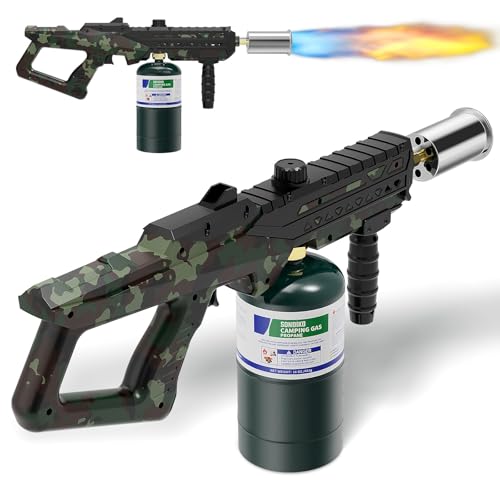
The Sondiko L8012 is a hand-held propane torch that screws directly onto a compatible propane cylinder, which is not included. It is intended for high-heat tasks including browning food, lighting charcoal or campfires, weed removal, and some craft work. The listed body combines aluminum and plastic, weighs about 836 g, and has an extended angled burner tube. The available model-specific instructions describe piezo ignition, a manual gas-valve knob, adjustable flame size, cooling before handling, cylinder disconnection for storage, and action if a leak is suspected. These are manufacturer-stated operating provisions, not independent test results. The product claims a 3272 F maximum flame temperature, but its available instructions also print a conflicting Celsius value alongside that Fahrenheit figure. No current model-matched UL, CSA, or ETL safety listing was verified.
This product suits an experienced adult who needs a direct-cylinder propane torch for brief, attended outdoor work such as lighting charcoal, starting a campfire where local rules permit it, or spot-browning food in an appropriate well-ventilated setting. The useful fit is someone comfortable inspecting a threaded propane connection, controlling an open flame with a manual valve, keeping combustible materials clear, and allowing the burner head to cool fully before storage. It is not a set-and-forget kitchen appliance.
It is not suited to homes with children who can access the connected torch or fuel cylinder, or to anyone seeking independently certified evidence for the complete torch and connection. Avoid it for indoor use in enclosed kitchens, garages, tents, vehicles, or other poorly ventilated spaces because propane combustion can create carbon monoxide and other pollutants. It is also a poor fit for unattended fire-starting, work near dry vegetation during restrictions, or buyers needing documented fuel use, replacement seals, igniters, or other repair parts.
Propane combustion produces carbon monoxide, nitrogen dioxide, particles, and other combustion pollutants. EPA guidance advises avoiding unvented combustion appliances indoors. The available instructions say to use the torch in a well-ventilated area, keep children and flammables away, disconnect the cylinder for storage, and stop use if a leak persists. Those are useful directions, but they are manufacturer-stated and no independent certification listing was verified for this exact product. A 2025 CPSC recall involved a different Sondiko product, the S400 butane torch, for missing child-resistant mechanisms. It does not identify this propane model as recalled, but it is relevant brand-level recall history. This product provides no documented propane-consumption rate, runtime, or emissions data, and no replacement-parts or disposal program was found. Do not refill disposable DOT-39 one-pound propane cylinders, which federal guidance says are nonrefillable.
This is a 25.8-inch hand-held propane torch head for attachment to a separate propane cylinder. It is sold for outdoor fire starting, charcoal lighting, ice melting, weed control, cooking, soldering, and general heating. The product itself is listed at 2.4 pounds, with an ABS-listed material specification and a silver-and-black grip housing. KOACKL states that the torch has piezo trigger ignition, an adjustable fuel control, and a maximum flame temperature of 1,350 C or 2,462 F. Its published instructions say to connect the cylinder securely, wait about one minute before lighting, avoid lighting at maximum output, limit continuous use to one or two minutes, then disconnect the cylinder after use. The maker claims CSA certification, but a current exact-product listing or certification file number was not located in an independent certification register during this review.
This product fits an experienced adult who needs a direct-attach propane torch for short, attended outdoor tasks such as lighting charcoal, spot heat work, occasional soldering, melting a small area of ice, or controlled vegetation work where open flames are permitted. The user should already understand propane-cylinder handling, have a noncombustible work area, and be able to inspect the connection before every use. Its stated one to two minute continuous-use limit makes it better suited to intermittent work than prolonged heating.
It is not suited to indoor cooking, garage use, enclosed workshops, tents, vehicles, or any poorly ventilated location. EPA guidance identifies fuel combustion as a carbon-monoxide exposure source, and the product materials reviewed do not provide adequate ventilation or carbon-monoxide instructions for those uses. It is also unsuitable for users who need documented certification, verified cylinder compatibility, sustained-duty performance, replacement seals or igniters, or a clearly traceable manufacturer address. Do not use it for weed burning during local burn bans, near dry vegetation, structures, fuel, or other ignitable materials.
Propane combustion creates a real burn, flash-fire, and air-quality burden. EPA identifies carbon monoxide as odorless and toxic, and notes that combustion sources can also release nitrogen dioxide and particles. KOACKL does publish basic use steps, including secure cylinder connection, non-maximum ignition, short operating intervals, and cylinder removal after use. Those directions are useful but do not replace clear outdoor-use, ventilation, site-clearance, fire-extinguisher, or local burn-restriction guidance. KOACKL calls the product CSA certified. CSA Group is an OSHA-recognized testing laboratory in the United States, but the exact product could not be confirmed in an independent listing database from the information provided. No product-specific recall or safety warning was located in the CPSC materials reviewed. Propane use also has a climate impact. EPA lists propane at about 12.68 pounds of carbon dioxide per gallon, while no fuel-use or runtime specification was published for this product. No replacement-parts program or end-of-life guidance was found.
This is a long-handled outdoor propane torch for lighting charcoal and campfires, burning weeds, melting snow or ice, and general heating. It is sold without a fuel cylinder and is stated to fit standard 1 lb CGA600 propane cylinders. The product page lists a 25-inch length, 2.8-pound weight, and aluminum alloy, copper, iron, and ABS construction. Those are seller-supplied specifications, not independently verified measurements or materials testing. The maker states that an adjustment knob varies flame intensity, while a separate high-flame handle can boost the flame to up to 16 inches after ignition. The page also calls the nozzle wind-resistant and says the unit was tested to safety requirements, but it identifies neither a test laboratory nor a safety standard. No model-matched independent certification listing or independent performance test was located.
This product fits an adult who needs a long-handled propane flame source for occasional outdoor jobs such as starting charcoal, lighting a campfire, treating small patches of weeds, or thawing ice. The buyer should already understand safe propane-cylinder connection and leak checks, have a compatible 1 lb CGA600 cylinder, and be able to work in an open area away from structures, dry vegetation, people, pets, and combustible materials. Its stated detachable format may suit someone who needs compact storage between infrequent uses.
It is not suited to indoor, garage, tent, camper, workshop, or other enclosed-space use, because propane combustion can produce dangerous carbon monoxide. It is also unsuitable for a buyer who requires documented third-party certification, a traceable hose or valve rating, replacement seals or igniter parts, or a detailed manufacturer safety manual before using a fuel-gas tool. Avoid it for wildfire-prone conditions, locations under burn restrictions, use near dry vegetation or structures, and any task requiring certified welding or brazing performance.
Propane torches create an open flame and combustion gases. Carbon monoxide is odorless, colorless, and toxic, and EPA guidance notes that combustion equipment must be properly adjusted and maintained. This product is presented for outdoor work, which is appropriate to the stated campfire, charcoal, weed-burning, and heating uses. However, the visible product information does not supply detailed ventilation, carbon-monoxide, leak-check, cool-down, clearance, fire-extinguisher, or local burn-restriction instructions. The listing names aluminum alloy, copper, iron, and ABS, and says the body separates into two sections. It does not document repair parts, service procedures, end-of-life handling, fuel consumption, BTU output, runtime, or emissions. Searches did not identify a recall for this product or a model-matched certification in publicly searchable UL, CSA, or ETL records. That absence is not evidence of a defect, but it leaves the claimed safety testing unverified.
This product is a handheld propane torch head that attaches to a separately purchased fuel cylinder. The supplied product record identifies an aluminum-bodied TBTeek unit with an adjustable flame, a one-touch maximum-flame control, and a safety lock. Its stated uses range from searing and lighting charcoal to weeding, soldering, and crafts. Those controls and uses are manufacturer-stated, not independently performance-tested for this exact product. The record names model SL-11-002 and states a 12-month warranty, which provides some product-level traceability. However, no model-matched instruction manual, fuel-consumption figure, compatible-cylinder list, replacement-parts catalog, or current third-party safety certification listing was located in the verification work. That leaves important questions about connection ratings, shutdown behavior, hot-surface handling, and appropriate operating environments unresolved.
This product fits an experienced adult who wants a compact propane torch head for brief, attended outdoor tasks such as lighting charcoal, searing food outdoors, or localized heat work. That user should already understand propane-cylinder handling, leak checks, ignition control, and post-use cool-down. The product record makes the intended control features and warranty easy to identify, but the buyer should treat the listed functions as manufacturer claims and obtain usable instructions before connecting fuel.
It is not suited to indoor cooking, enclosed garages, tents, vehicles, or any poorly ventilated space, because propane combustion can create carbon monoxide, nitrogen dioxide, and particles. It is also unsuitable for children, unsupervised use, users who need a documented certified fuel-gas tool, or anyone expecting validated compatibility with a particular cylinder. Avoid using it for vegetation clearing during burn restrictions, near dry fuel, or where a stray flame could reach structures, stored fuel, or accumulated gas.
Propane torches present inherent burn, fire, leak, and combustion-exposure risks. EPA guidance identifies carbon monoxide, nitrogen dioxide, and particulate pollution as combustion products, and carbon monoxide is odorless and can be fatal at high concentrations. The available product materials did not provide a model-specific manual to confirm outdoor-only use, ventilation requirements, leak-test steps, or the complete cool-down procedure. Those omissions matter for a product promoted for cooking, fire starting, weeding, and heat work. No recall matching this TBTeek product was located in the CPSC material checked. That is not a safety certification or independent test result. CPSC recalls of other propane torch guns have involved gas leaks, hose failures, and triggers that did not disengage, which reinforces the importance of documented connection and shutdown performance. No fuel-consumption, runtime, repair-parts, or recycling guidance was located for this model. Do not refill disposable one-pound propane cylinders, which PHMSA identifies as nonrefillable DOT-39 cylinders.
This is a direct-connect propane torch attachment for a separately purchased gas canister. It is intended for high-heat tasks including lighting charcoal, outdoor grilling, searing food, weed burning, pipe thawing, and general DIY work. The product does not include the fuel canister. Its listing instructs users to check for a tight connection, ignite by turning the control knob, avoid lighting with the maximum-power button, avoid 90-degree operation, and detach the canister for separate storage after use. The manufacturer states a maximum flame temperature of 2,000°C, or 3,632°F, adjustable flame control, a lock for the maximum-flame button, a leak-minimizing seal, and a nozzle that changes color when hot. Those are seller claims, not independently tested findings. Searches did not locate a model-matched UL, CSA, or ETL safety listing, an accessible instruction manual, or independent performance testing for this product.
This product suits an experienced adult who needs a compact direct-connect propane torch for brief, attended outdoor tasks such as lighting charcoal, searing food outdoors, or localized heating. The user should already understand propane-cylinder handling, inspect the connection before ignition, keep combustible materials clear, and allow the nozzle to cool before touching or packing it away. It is most appropriate where the separately purchased fuel canister is compatible with the product and local open-flame rules allow the intended task.
It is not suited to unsupervised use, children, people unable to respond quickly to a flare-up, or households seeking a fully documented and independently certified gas appliance. Avoid relying on it for indoor kitchen searing or other enclosed-space work because the visible product information does not give adequate ventilation or carbon-monoxide guidance. It is also a poor fit for wildfire-prone settings, areas under burn restrictions, work near dry vegetation, or jobs needing documented welding capability, output, or runtime.
The visible instructions include several useful basics, including checking the connection, avoiding a 90-degree operating angle, detaching the canister after use, and storing the two pieces separately. The listing also claims a hot-nozzle color cue, a maximum-flame safety lock, and a leak-minimizing seal. These features were not independently verified. No product-specific CPSC recall or public incident report was located in the searched databases, which does not establish that the product is free of hazards. Propane combustion can produce carbon monoxide, nitrogen dioxide, particles, and other pollutants. EPA guidance identifies combustion emissions as an indoor-air concern, especially where ventilation is poor. That makes the product's indoor-kitchen promotion notable because the visible listing lacks matching ventilation and carbon-monoxide precautions. Propane also creates greenhouse-gas emissions when burned. The listing provides no fuel-use, BTU, or runtime data, so users cannot estimate task-specific fuel use or emissions. No replacement-parts program or disposal guidance for the torch was found.
This is a hand-held propane torch head that screws directly onto a small camping-style propane cylinder, which is not included. The product is about 13.6 inches long and 14.1 ounces according to its product documentation. It uses a piezo igniter button and a fuel-flow knob, and is intended for culinary browning, lighting charcoal or fire pits, and other outdoor heat tasks. The manufacturer states a maximum flame temperature of 1,800 C or 3,272 F, plus an adjustable flame and non-slip handle. Its official manual gives basic connection, ignition, shutoff, angle, three-minute operating-limit, and cool-down instructions. However, no current model-matched UL, CSA, or ETL listing to the hand-held fuel-gas torch standard was located in the relevant certification registers.
This product suits an experienced adult who needs a compact, direct-cylinder torch for brief outdoor jobs such as lighting charcoal, starting a fire pit, or applying finishing heat to food in a well-controlled cooking area. It is most appropriate for someone comfortable checking a propane connection for leaks, keeping the cylinder below the stated angle limit, and allowing the torch to cool before storage. The published manual and one-year warranty offer a basic operating and support framework.
It is not suited to indoor use in enclosed kitchens, tents, vehicles, garages, or other spaces where combustion gases could accumulate. It is also unsuitable for children, unsupervised users, or anyone unable to manage an exposed high-temperature nozzle and a propane cylinder. Buyers needing a torch for sustained heating, precise professional welding, or a documented safety-certified tool should choose equipment with model-specific independent certification, full fuel-output specifications, and serviceable replacement parts.
Propane combustion creates a real exposure issue. EPA guidance identifies carbon monoxide as odorless and toxic, and notes that combustion can also produce nitrogen dioxide and particles. The product manual labels carbon-monoxide, fire, and explosion hazards, requires a secure connection, limits continuous burning to three minutes, instructs users not to point the nozzle at people, and requires cool-down before storage. Those are useful controls, but they do not replace clear outdoor-use discipline and separation from combustible materials. The documentation identifies a direct connection to a small propane cylinder. Disposable one-pound DOT-39 cylinders must not be refilled under PHMSA guidance. Propane also produces greenhouse-gas emissions when burned, and this product has no published fuel-consumption or runtime specification to help quantify that impact. The manufacturer offers a one-year warranty and extended coverage registration, but no replacement-parts catalog or verified independent safety listing was located for this model.
This is a handheld propane or MAP-Pro torch kit for soldering, brazing, heating, and DIY repair. It combines a trigger-style torch handle with a stated 3.6-foot hose, a CGA600 cylinder connection, and a cylinder clip. The product page identifies a brass nozzle and claims up to 3,600 F output, push-button piezo ignition, and dual-valve flame adjustment. Those performance and control details are manufacturer-stated, not independently test-verified. The hose can place the cylinder outside a cramped work area, but it also adds a hose, regulator, seals, and connection that require inspection before every use. TAUSOM publishes general torch safety guidance, including leak checks, ventilation, fuel compatibility, cool-down, and avoiding flammables and high wind. No model-matched UL, CSA, or ETL listing, independent test report, or detailed model-specific manual was located in this review.
This product suits an adult DIY user or tradesperson doing occasional soldering, brazing, heating, or repair work who specifically wants a compact torch with a remote one-pound propane or MAP-Pro cylinder. The hose format is most useful where moving the cylinder away from the immediate joint improves access. It fits users prepared to inspect the connection and hose before each session, wear eye and hand protection, keep fuel upright, and work in a ventilated, clear area with appropriate fire-control equipment nearby.
It is not suited to indoor torch use in occupied homes, enclosed garages, poorly ventilated spaces, or work near children, pets, dry vegetation, vehicles, structures, fuels, or other combustibles. People who require a verified certification listing for workplace procurement, insurer requirements, or professional safety programs should choose a product whose exact torch, hose, and regulator configuration can be matched to a current UL, CSA, or ETL record. It is also unsuitable for users unwilling to perform leak checks and cool-down, storage, and local fire-restriction checks.
The main health issue is combustion and open-flame exposure. EPA guidance identifies carbon monoxide, nitrogen dioxide, and particles as combustion pollutants, and carbon monoxide is odorless and can be dangerous at elevated concentrations. TAUSOM says to work in a safe, ventilated area, check for leaks or damage before lighting, disconnect fuel when appropriate, and stop if gas is smelled. Those are useful manufacturer instructions, but they are not a substitute for an exact model safety evaluation. The product uses disposable propane or MAP-Pro style cylinders, which add fossil-fuel combustion emissions and cylinder waste. No verified fuel-consumption, runtime, repair-parts catalog, hose replacement program, or end-of-life guidance for this specific product was found. The brand provides a support email and a 30-day return policy, but a model-matched independent safety listing and more complete technical documentation were not located. No matching CPSC recall or public incident report was identified in the sources reviewed.



