Best Overall
44% off

WYBOT C1 Cordless Pool Vacuum
Efficient cleaning with strong suction power.
Easy to use with cordless design.
Long-lasting battery for extended cleaning time.
 Daniel Kenitz
Efficient cleaning with strong suction power.
Easy to use with cordless design.
Long-lasting battery for extended cleaning time.

Efficient cleaning with smart navigation technology.
Cordless design for hassle-free operation.
Long battery life ensures thorough pool cleaning.
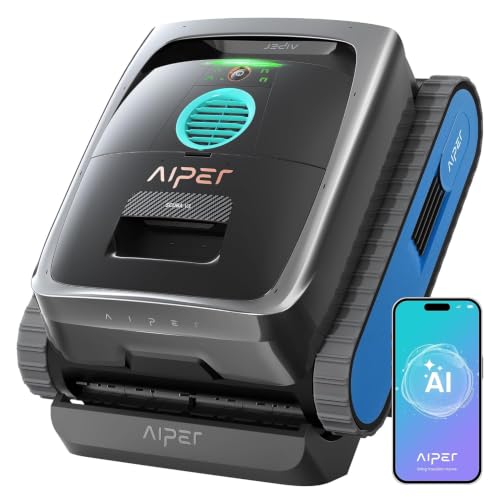
Efficient AI Patrol ensures thorough pool coverage.
Convenient cordless design offers hassle-free operation.
Smart waterline parking for easy retrieval.
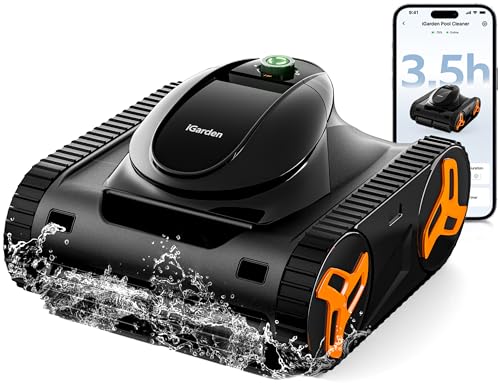
Efficient 3D navigation for thorough cleaning.
Long 210-minute runtime for extended use.
Energy-saving technology reduces power consumption.

Efficient AI sonar ensures thorough pool cleaning.
Long-lasting 180-minute battery for extended use.
Designed specifically for inground pool compatibility.
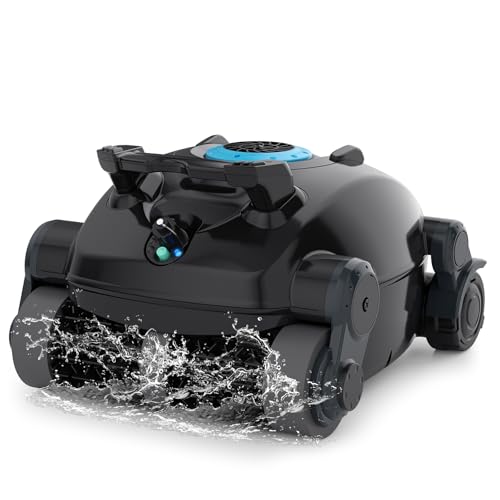
Climbs walls easily for thorough cleaning.
Lightweight design for effortless handling.
Extended battery life ensures longer cleaning sessions.

Long 180-minute cleaning time per charge.
Efficiently navigates and cleans pool surfaces.
Sleek deep gray design enhances pool aesthetics.

Efficient 180-minute cleaning cycle.
Sleek design with Onyx finish.
Advanced navigation for thorough cleaning.

Efficient cleaning of floor, walls, and waterline.
Long 300-minute runtime for thorough cleaning.
Waterline parking feature for easy maintenance.
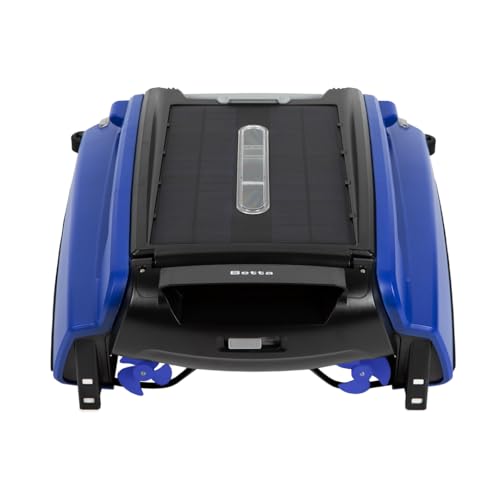
Operates without cords or hassle.
Eco-friendly, uses solar power.
Effective at removing debris efficiently.
The useful question is not how large the suction number or runtime headline looks. It is whether the exact product repeatedly cleans the pool shapes and surfaces it claims to handle. Look for testing that identifies the exact model and states pool dimensions, geometry, surface, slopes, obstacles, cleaning mode, cycle count, debris type, and missed areas. Claims such as wall climbing, waterline cleaning, artificial intelligence, mapping, or coverage of a very large pool are weaker when they come only from a product listing or are not qualified by exclusions for steps, ledges, raised drains, beach entries, tile, vinyl, or reflective surfaces.
Filtration also needs a defined boundary. A stated micron rating describes the intended filter size, not necessarily how much debris the cleaner retains in real use. A 150- or 180-micron basket can be useful for ordinary leaves, insects, sand, and settled debris, but it is not proof of ultra-fine water polishing or sanitation. Buyers should look for a removable basket, secure containment, clear emptying and rinsing instructions, and replacement-filter documentation. Fine filters may capture smaller particles while taking more effort to rinse.
Runtime figures can mislead because maximum duration may apply only to Eco or floor-only mode, rather than a full pool with walls, waterline work, or heavy debris. Charging time, parking behavior, retrieval method, and realistic performance under load matter just as much. A cleaner that parks at the wall or surface is easier to recover than one that may remain on the floor, but a claimed parking feature still benefits from exact-product testing. Corded operation avoids recharge interruptions but creates cable-management and electrical-separation requirements.
For a battery product used around water, check the exact model, charger, and battery in UL Product iQ, Intertek’s ETL directory, or the CSA Group listing database. Also check the CPSC recall and incident databases, the charger and battery labels, the manual, and any UN 38.3 lithium-battery test summary. For corded products, look for clear GFCI, dry-placement, grounding, no-swimming, and maintenance instructions. Wireless claims should be traceable to an exact FCC authorization and a named app with documented support, privacy, update, and offline-use limits.
Across the supplied products, no exact-model UL, ETL, or CSA listing was located, so independent pool-use electrical certification remains an important unresolved issue. Several brands also had recalls involving different cleaners, chargers, or batteries; those events did not name every reviewed product but make careful charging and inspection important. Repeated limitations include unreliable app control underwater, incomplete step or complex-geometry coverage, heavy lifting or awkward retrieval, unclear battery replacement and recycling support, and conflicting model specifications. None of these cleaners replaces circulation, filtration, water testing, or EPA-registered pool sanitation.
These products remove physical debris; they do not by themselves make pool water sanitary. The topics below distinguish practical health safeguards, lifecycle impacts, and the evidence needed to judge whether a cleaner’s claims are dependable.
This measures whether the exact cleaner, charger, and battery have credible pool-use electrical evidence and clear charging and water-exposure instructions. It matters because a lithium battery, charger, or cord is being used near swimmers and water. Higher-scoring products supplied concrete safeguards such as dry ports, GFCI use, distance from the pool, and no-swimming instructions; lower-scoring products lacked exact certification records or charger documentation.
This measures unresolved recalls, serious incident patterns, serial-number traceability, and the quality of any remedy. It matters because several supplied brands had recalls involving different pool cleaners or chargers, even when the reviewed model was not named. Higher scores reflected no matching recall and clearer response evidence; lower scores reflected brand-level overheating or fire history and less certain model traceability.
This measures whether sellers distinguish debris removal from disinfection, algae control, and water sanitation. A robotic cleaner can collect leaves, insects, sand, or suspended particles, but it does not replace circulation, filtration, water testing, or EPA-registered sanitizers. Higher-scoring products clearly stated that boundary; lower scores appeared where cleaning or water-clarity language could imply broader pool-health protection.
This measures filtration performance, secure debris containment, and whether baskets or filters can be emptied and rinsed hygienically. It matters because a cleaner that releases collected material can undermine its own work. Higher-scoring products had exact-model testing or defined filters plus practical rinse instructions; lower-scoring products relied on micron or capacity claims without retained-versus-released testing, or had difficult-to-clean fine mesh.
This measures demonstrated coverage of floors, walls, waterlines, steps, slopes, drains, and stated surface types. It matters because independent tests repeatedly found missed corners, weak step coverage, or exclusions for raised drains and unusual geometry. Higher scores came from exact-product testing that documented floor, wall, or waterline performance; lower scores relied mainly on broad seller claims without pool conditions or missed-area results.
This measures real runtime, charging time, parking or docking, and retrieval under realistic debris and pool conditions. A maximum runtime may apply only to Eco or floor-only operation. Higher-scoring products had observed cycle completion, reliable surface or wall parking, or tested retrieval; lower-scoring products had repeated recharge needs, time-limited parking, unclear runtime evidence, or awkward lifting requirements.
This measures whether app control, scheduling, mapping, updates, radio authorization, privacy practices, and offline operation work as described. It matters because several products lost connectivity underwater or required setup before immersion. Higher scores reflected a maintained app, useful physical controls, or documented offline operation; lower scores reflected missing FCC records, unreliable scheduling, poor app feedback, unclear support, or data-collection concerns.
This measures whether pool size, runtime, suction, filtration, navigation, wall climbing, and cleaning modes are specific and qualified by operating limits. Higher-scoring products separated manufacturer claims from independent results and disclosed exclusions. Lower-scoring products had conflicting battery, filter, warranty, pool-size, or runtime specifications, or promoted broad coverage without test conditions.
This measures traceable exact-model safety certifications and meaningful independent cleaning tests. It carries extra importance because buyers need evidence for both electrical safety and real pool performance. Higher-scoring products had exact-model editorial or practical testing for coverage, filtration, parking, or retrieval; lower-scoring products had only seller assertions, missing certification records, or unreliable documentation. No supplied product had complete verification across every relevant area.
This measures electricity per completed job, battery longevity, replacement wear parts, repairability, and end-of-life support. Cordless operation is not automatically lower impact: batteries eventually become waste, and some are not user-replaceable. Higher-scoring products supplied power or battery information and documented replacement parts or repair support; lower-scoring products lacked measured energy use, battery service, recycling, take-back, or parts pathways.
This is a cordless, rechargeable robotic pool cleaner for above-ground and in-ground pools. It uses a rechargeable lithium battery, tracked drive, brushes, a top-access filter basket, and Bluetooth app controls. The manufacturer states that the C1 covers floors, walls, waterlines, steps, and slopes in pools up to 1,615 square feet, with five cleaning modes and up to 150 minutes of runtime. Independent testing identified the same C1 model and found effective floor and wall cleaning, although small floor areas were sometimes missed. The manufacturer specifies a 180-micron filter and says the cleaner self-parks at the wall for hook retrieval. Its quick guide gives useful battery precautions, including drying the charging port and charging at least 3 meters from the pool.
This product suits an owner of a small or medium residential pool who wants a cordless cleaner for routine leaf, sand, and settled-debris pickup, and can remain involved in pool care. It is most appropriate where the pool has reachable walls, uncomplicated geometry, a standard pole for the supplied hook, and an existing circulation, filtration, and chemical-treatment routine. It also suits someone comfortable rinsing the filter after every use, removing the unit for storage, and planning around a roughly three-hour recharge period.
It is not suited to households that need independently certified electrical pool-equipment safety evidence, or that cannot reliably keep a lithium-battery device dry during charging and stored out of sun and weather. It is also a weaker fit for heavily soiled pools, pools needing ultra-fine suspended-particle removal, or layouts with ladders, ledges, complex obstacles, and places where missed sections are unacceptable. Buyers who depend on flawless app scheduling or remote control should account for reported app reliability issues and Bluetooth-only operation.
The strongest health-related point is claim restraint. WYBOT says the C1 cleans debris rather than managing water quality or providing ultra-fine filtration, and directs owners to maintain pool circulation, filtration, and chemical treatment. That boundary matters because a pool robot does not disinfect water. The 180-micron basket should be rinsed after each use, and the guide instructs owners to keep the charging port dry and charge at least 3 meters from the pool. The exact model has an FCC authorization for its Bluetooth radio, but no exact UL, ETL, or CSA electrical-safety certification was located. WYBOT has a current CPSC recall for different Osprey 700 Max and S1 models because their batteries could overheat or catch fire. The C1 is not listed in that recall. For longevity, C1 filters, chargers, caps, belts, covers, and hooks are available, although no battery replacement or take-back program was found.
This is a cordless, battery-powered robotic cleaner for above-ground and smaller in-ground pools. It has a 6.5 kg dry weight, a top-access basket, a stated 180-micron filter, Bluetooth app control, and a supplied hook for lifting it out. The manufacturer specifies 100 to 120 minutes of runtime, three-hour charging, 35 W power, and pools up to 100 m². Its most useful evidence is mixed. Independent hands-on testing found good floor debris pickup and nearly two hours of floor-mode operation in a real pool. The same testing found weak waterline cleaning and difficulty at a prominent underwater ledge. The manual gives detailed dry-charging, GFCI, distance-from-pool, and retrieval instructions, but no exact-model UL, ETL, or CSA electrical listing was found in the checked directories.
This cleaner suits an owner of a small or moderately sized pool with a relatively open floor, routine loose debris, and a safe indoor or sheltered charging location at least 10 feet from the pool. It is most appropriate where floor cleaning matters more than consistently scrubbing a waterline. It also fits a user able to rinse the basket after every cycle, retrieve the unit with a hook, keep swimmers out during operation, and use the app near the pool edge rather than while the cleaner is submerged.
It is not well suited to pools with a continuous underwater ledge, raised drains over 3 cm, demanding waterline buildup, or slippery tile, mosaic, and acrylic walls. Those conditions are specifically flagged by the manual or exposed by hands-on testing. It is also unsuitable for households that cannot provide dry, supervised charging away from water on a GFCI-protected outlet. Buyers requiring independently listed electrical certification, fine-particle performance testing, a replaceable battery, or long-term parts and recycling documentation need more evidence than is available here.
The product is a debris cleaner, not a sanitizer. Its materials and cleaning claims do not establish disinfection, algae control, or safe water chemistry, so normal filtration and EPA-registered pool sanitation remain necessary. The manual gives meaningful risk-control instructions for its lithium-ion battery, including a dry charging port, GFCI-protected outlet, charging at least 10 feet from the pool, and storage away from heat and direct sun. Exact-model UL, ETL, and CSA listing evidence was not located. A Wybotics recall announced April 9, 2026 involved earlier Osprey 700 Max and S1 products, not this B1. It cited battery overheating and fires, with a replacement remedy. That history makes the B1's charging instructions especially important. The manufacturer calls the B1 modular, but no battery replacement instructions, take-back program, or verified lifecycle data were found. Its 35 W stated power and two-hour maximum cycle suggest modest operating energy, but that is not an independently measured lifecycle result.
This is a cordless, battery-powered robotic cleaner for in-ground pools. It has a plastic housing, weighs 18.1 pounds, uses a top-loading 3.5-liter debris basket, and is intended to scrub floors, walls, and the waterline. It is recharged on a separate wireless dock after removal from the pool. Aiper states that the product uses a camera, distance sensing, dual brushes, 4,800 GPH suction, and a removable MicroMesh fine filter. Independent hands-on testing confirmed strong collection of organic debris over roughly 170 to 190 minutes, plus a 96% result in one synthetic-debris test. The same testing found that difficult corners could retain a few leaves, the fine mesh needs thorough cleaning, and scheduled cleaning behavior was inconsistent in that test.
This product suits an in-ground pool owner who wants a cordless cleaner for routine debris, fine dust, pollen, and light organic material, and who can inspect and rinse the basket after runs. It is most appropriate for an accessible pool where a user can respond to the waterline retrieval alert or use a pole and hook when necessary. The independent testing supports its use for regular floor, wall, and waterline maintenance, not as a substitute for manual attention to corners or pool chemistry.
It is not suited to buyers who require a publicly traceable UL, ETL, or CSA listing for the exact charger and cleaner before bringing a battery product near water. It is also a poor fit for people unable to retrieve an 18.1-pound device promptly, especially if the pool has no easy pole access. Do not rely on it for pools with fecal, vomit, or other contamination, because debris cleaning does not disinfect water. Owners who cannot regularly rinse a fine filter should also avoid treating its smallest-particle capability as maintenance-free.
This product makes debris-removal claims, not disinfection or antimicrobial claims. That boundary matters because pool chemicals, such as chlorine or bromine, are the measures used to kill germs. A debris robot can reduce visible material, but it does not replace normal filtration, circulation, water testing, or EPA-registered sanitation. The brand has a meaningful safety history. On March 20, 2025, the CPSC recalled a different Aiper cordless product after 19 reports of melting, smoking, or fire while charging, including five property-damage incidents. The recalled unit was a different model, and the remedy was replacement. For this product, no matching public UL, ETL, or CSA listing was located. Aiper offers replacement filters and a debris basket, but its fine filter is treated as a short-life consumable and no battery replacement or end-of-life recycling program was identified.
This battery-powered robotic pool cleaner corresponds to iGarden's KN35 configuration. It is a cordless unit for above-ground and in-ground pools, with a stated 127 Wh battery, three cleaning modes, a 3.2 L debris basket, dial controls, and app connectivity. The maker specifies 180 μm filtration, 20 to 100 W running power, a 3-hour charge time, and up to 210 minutes in floor-only operation. The strongest concrete documentation is manufacturer documentation, not independent laboratory testing. iGarden states that it can clean floors, walls, and waterlines, operate in water 3.3 to 8.2 feet deep, and park near an edge at low battery. The published maximum-pool-size presentation is inconsistent, however. It pairs 6 by 10 m dimensions with a 3,617 sq ft figure, although those dimensions describe about 646 sq ft of plan area.
This product suits an owner of a residential pool within the maker's stated 6 by 10 m operating envelope who wants cordless routine pickup of leaves, insects, pollen, and ordinary grit. It is most appropriate where the owner can empty and rinse the basket after each use, can retrieve a roughly 18 lb unit from the water, and values dial-based operation over remote control. It also fits users who treat the app as optional, rather than as the only means of starting, scheduling, or managing cleaning.
It is not suited to buyers who require independently documented electrical certification or independently measured cleaning coverage before putting a battery-powered device in a pool. Avoid relying on it for a pool with prominent raised drains, complex curved walls, ledges, beach entries, or other obstacles unless support confirms compatibility. It is also a poor fit for anyone who needs reliable live app control, uses only 5 GHz Wi-Fi, cannot safely lift the cleaner, or expects debris removal to replace normal circulation, filtration, water testing, and sanitation.
The cleaner uses a 127 Wh lithium-ion battery and a charger, so safe handling still depends on dry charging and a fully sealed charging-port cover before immersion. iGarden documents the sealed-cover check and specifies water chemistry and temperature limits, but no exact-product UL, ETL, or CSA listing or public battery transport-test summary was located. No matching CPSC recall or public safety action was found in the reviewed searches. This is a debris cleaner, not a sanitizer, and its marketing does not make antimicrobial or disinfection claims. That boundary matters because pool health still depends on correctly maintained chlorine or bromine, pH, circulation, and filtration. The maker lists 20 to 100 W running power and a two-year warranty for major components, while baskets, tracks, brushes, and retrieval hooks have six months of coverage. Replacement wear parts are identified, but a battery-replacement pathway, take-back program, and end-of-life recycling policy were not established.
This is a cordless, rechargeable robotic pool cleaner intended to travel across pool floors, walls, and the waterline, then collect debris in an onboard basket. The listing states a maximum 180-minute cycle and specifically excludes pools with sharp steps or raised floor drains. It is meant for debris removal, not pool-water sanitation. Documentation found for the matching SAT25 design is published under Seauto rather than MOREBOT. That documentation states a 7,800 mAh lithium battery, a 56 W charging system, 2.5-hour charging, an IPX8 cleaner rating, self-parking, a retrieval hook, and a 294 μm actual basket-filter rating. These are manufacturer-stated figures, not independently confirmed performance results. The available technical claims are inconsistent across materials, including motor configuration, dimensions, power, coverage language, and pool limits.
This product suits a pool owner who wants a cordless debris cleaner for a relatively simple pool with broad floor transitions, climbable walls, and no sharp steps or raised floor drains. It is most appropriate for someone comfortable treating the stated 180-minute runtime, 2.5-hour recharge time, and 294 μm filtration as manufacturer figures rather than independently verified results. The buyer should also be prepared to rinse the basket after each cycle, retrieve the unit with a pole and hook, and maintain normal pool filtration and chemical treatment.
It is not suited to pools with sharp steps, prominent drains, beach entries, complex ledges, or geometry where missed areas would be unacceptable. It is also a poor fit for households that require independently verifiable electrical certification before using a lithium-powered appliance around water. Do not rely on this cleaner after a fecal accident or as a substitute for chemical disinfection, circulation, and the main pool filter. Buyers who need proven app support, a documented battery replacement path, or independently measured cleaning coverage should seek more complete evidence.
The important health boundary is clear. This is a debris cleaner, not a sanitizer or disinfectant. Pool health still depends on filtration, circulation, and maintaining the appropriate disinfectant and pH. The available materials do not make a specific antimicrobial or water-treatment claim, which is appropriate for this type of appliance. The basket should be emptied and rinsed after use. It should not be used as the cleanup tool for a fecal contamination event. The cleaner uses a lithium battery and is stated to have IPX8 water protection, while its charger is meant to be used out of the pool. The manual provides charging and hook-retrieval instructions, but independent U.S. safety certification for this product was not located. Repairability is better supported than many sealed appliances because matching SAT25 parts are sold, including tracks, a charger, gears, plugs, covers, and a basket. A replacement battery, battery recycling program, take-back program, and independently measured energy use were not found.
This is a cordless, battery-powered robotic pool vacuum intended to collect physical debris from pool floors, walls, and slopes. It has an 8-liter debris basket and is sold for both in-ground and above-ground pools. The product is listed at 8.6 pounds, with a charger and retrieval hook included. An independent retailer repeats the seller's core specifications of dual 50 W motors, 2,700 GPH suction, a 180-micron basket, up to 100 minutes of runtime, and use in pools up to 1,100 square feet. These are manufacturer-stated performance figures, not independently measured results. I found no product manual, test report, or verified safety-listing record that identifies this exact cleaner and its charger.
This product suits an owner of a modestly sized residential pool who wants a cordless cleaner primarily for routine leaves, sand, and visible floor debris, and who can inspect it after each cycle. It is most appropriate where the owner is comfortable treating the stated 1,100-square-foot coverage and 100-minute runtime as estimates rather than guaranteed results. The light stated weight may also help a person who wants a cleaner that can be lifted out with a supplied hook and emptied by hand.
It is not well suited to households that need independently documented electrical certification for a battery product used in water, or that need clear charger, battery replacement, and recycling instructions before purchase. It is also a weak fit for pools with many steps, tanning ledges, beach entries, raised drains, unusual surfaces, or difficult corners because exact configuration limits were not documented. Do not treat this cleaner as a sanitation device, particularly after fecal contamination or other water-quality incidents.
The product's advertising is appropriately bounded in one important respect. It describes debris collection, suction, and wall cleaning, not disinfection, algae control, or antimicrobial protection. That matters because pool cleanliness does not replace chemical disinfection and pH management. CDC guidance identifies disinfectant level and pH as the first defense against swimming-related germs. The battery-powered, cordless format eliminates a live power cord in the pool, but exact-product electrical safety evidence remains incomplete. Searches did not locate a matching UL, ETL, or CSA certification entry, and no product manual, charger label, battery test summary, or UN 38.3 document was found. No matching CPSC recall record was located in the searched databases, but this is not proof of safety. Lack of published replacement parts, battery service instructions, and take-back information also leaves repairability and end-of-life handling uncertain.
This is a cordless, rechargeable robotic cleaner for private in-ground pools. It is intended to vacuum debris from the floor, walls, waterline, and slopes, then be lifted out with an included hook on a standard pool pole. Letexpool's own storefront describes triple motors, dual filtration, seven modes, app selection, wall climbing, and coverage for pools up to 1,615 square feet. Those are manufacturer claims, not independently measured results. Documentation for a matching C1 platform sold under another name specifies a 5,000 mAh, 19.2 V lithium-ion battery, 60 W motor power, 180 μm basket, auxiliary sponge filter, IPX8 rating, and up to 180 minutes only in Eco mode. It also records important limits, including weaker performance on smooth tile or glass, no cleaning of narrow steps, and app disconnection once submerged.
This suits a private in-ground pool owner with a roughly rectangular, oval, or irregular PVC or concrete pool within the stated 1,615 square foot limit, who wants scheduled debris collection from the floor, walls, and waterline. It is especially relevant when a cordless cleaner and poolside hook retrieval are more practical than handling a cord. The buyer should be comfortable rinsing the basket and sponge after every run, selecting the mode before immersion, and treating the stated runtime as an Eco-mode maximum rather than a guaranteed full-pool result.
It is not a suitable choice for a buyer who needs independently certified electrical safety evidence, a removable battery, or documented replacement-part support. Avoid relying on it for narrow steps, very smooth tile or glass finishes, complex ledges, beach entries, or pools outside the stated depth and area limits. It also does not suit anyone expecting live underwater phone control, since the manual says wireless communication disconnects underwater. Households should keep children and pets out of the pool while it operates, as the safety instructions require.
The product is a debris cleaner, not a sanitizer or algae-control device. Its marketing focuses on vacuuming, brushing, and clearer-looking water, without making an antimicrobial claim. That boundary matters because pool health still depends on maintaining filtration, circulation, disinfectant concentration, and pH. A cleaner can remove leaves, sediment, and some fine debris, but it does not replace normal water testing or EPA-registered pool sanitation. The detailed platform manual has practical electrical and battery precautions, including keeping the port dry, charging at least 10 feet from the pool, using the supplied charger, avoiding heat and direct sunlight, and stopping use if moisture enters a sealed compartment. No matching CPSC recall was identified in the reviewed public sources. However, no exact-product North American safety listing or battery transport test summary was located. The nonreplaceable lithium-ion battery creates an eventual e-waste concern, although the manual directs proper disposal and states a 24-month limited warranty for the battery, motor, and control board.
The BRINBO C1 is a cordless, battery-powered robotic cleaner intended for inground pools. It is designed to vacuum debris from the floor, climb walls, and scrub the waterline. The product listing identifies a triple-motor layout, dual filtration, app-selected cleaning modes, and a stated maximum pool area of 1,615 square feet. BRINBO states that runtime reaches 180 minutes in Eco mode, while full-pool cleaning is stated as 90 to 100 minutes. Its own product page also says it can climb pool steps for navigation but does not clean the step surfaces. The public product information supports a two-year warranty, but no accessible instruction manual, exact electrical certification record, battery test summary, or independent laboratory performance report was located.
This cleaner suits an inground-pool owner who wants a cordless unit for routine removal of ordinary settled debris and accepts manufacturer-stated performance limits. It is most relevant for pools within the claimed 1,615-square-foot maximum where floor, wall, and waterline cleaning are wanted from one machine. The buyer should be comfortable selecting the cleaning mode before use, rinsing the filtration system after each cycle, and treating the longest runtime as an Eco-mode claim rather than a verified full-pool result.
It is not suited to households that need independently verified electrical certification, documented charging safeguards, or a published battery transport and test record before using a lithium-powered appliance around water. It is also a poor fit for pools with important step surfaces, broad ledges, beach entries, unusual slopes, or complex obstacles, because those configurations were not validated and steps are specifically excluded from cleaning. Buyers who need proven ultra-fine silt capture, app support guarantees, or replaceable battery support need more documentation than is publicly available.
This product is a debris cleaner, not a sanitizer. Its marketing focuses on vacuuming leaves, dirt, and fine debris, and no antimicrobial, algae-treatment, or water-disinfection claim was found. Normal pool filtration and an appropriate pool sanitation program remain necessary. The available product information identifies an ABS plastic body and a 96 Wh lithium battery, but accessible public materials did not establish an exact-product UL, ETL, or CSA listing, charger safety documentation, or a UN 38.3 battery test summary. No matching BRINBO C1 recall was found in the CPSC recall search reviewed, though the available material does not provide a public serial-number lookup or detailed corrective-action process. BRINBO states a two-year warranty, which may support a longer service life. However, no replacement battery, wear-parts catalog, repair instructions, recycling pathway, or take-back program was located. Those omissions leave the product's long-term repairability and e-waste handling unproven.
This is a cordless, battery-powered robotic pool cleaner for above-ground and in-ground pools. It has a 5L debris basket, a standard 150-micron filter, dual front roller brushes, Wi-Fi and Bluetooth app control, and waterline parking for retrieval. Beatbot states that it cleans floors, walls, waterlines, and submerged shallow platforms down to 12 inches. The manufacturer specifies up to five hours for floor-only cleaning, up to four hours for full floor, wall, and waterline work, and a 7,800mAh lithium-ion battery. Independent editorial testing found it capable at routine cleaning and easy to handle, while also identifying weak performance on steps and a brief waterline-parking window. Its standard filter is not intended for very fine dust or algae-sized particles, which Beatbot says can pass through it.
This product suits a pool owner who wants a cordless cleaner for regular debris removal from a conventional above-ground or in-ground pool, especially one with open floor space and accessible walls. It is better matched to leaves, insects, hair, and ordinary sand than to persistent fine dust. It also fits someone able to rinse the basket after use, charge the unit indoors within its stated temperature range, and retrieve it soon after it parks at the waterline. The optional fine filter is relevant for pools that regularly collect small particles.
It is not well suited to a pool where steps, complex ledges, steep ramps, raised drains, or unusual obstacles must be cleaned reliably on every cycle. Independent testing and the manufacturer's support guidance identify geometry-related sticking, tilting, and step-cleaning limits. It is also unsuitable for anyone expecting a cleaner to sanitize water, remove all algae-sized particles with the included basket, or operate without timely retrieval and charging. Households that require independently verifiable electrical certification for a battery-powered pool device should seek documentation before use.
The product is a debris cleaner, not a water sanitizer. Its marketing does not make a disinfection or antimicrobial claim, which is appropriate because chlorine or another properly managed sanitizer and pH control remain necessary for swimmer health. The standard basket should be emptied and rinsed after use. Beatbot acknowledges that fine sand, dust, and algae-sized particles can pass through its 150-micron basket, so visible cleaning is not proof of sanitary water. The robot uses a lithium-ion battery and is stated to have an IPX68 water-protection rating, a 64.4W to 65W charger, and specified charging conditions. However, no exact-model public UL, ETL, or CSA listing was found. No matching CPSC recall or public safety action was found as of September 20, 2026. A two-year warranty and replacement filter option may reduce premature disposal, but battery replacement, take-back, and broader repair support were not documented.
This is a floating, solar-powered robotic surface skimmer, not a floor or wall pool vacuum. It travels across the water surface, draws in floating leaves, dust, pollen, insects, and pet hair, then holds debris in a removable basket. Betta states that the product uses twin salt chlorine tolerant motors, a built-in battery, a 200-micron basket, and solar charging only, with no external AC, DC, or USB charging port. The manufacturer states up to 30 hours of operation from a charge and five to six hours of direct-sun recharge. Its manual gives concrete operating limits: do not swim while it is running, do not use it alongside other pool cleaners, and retrieve it with two hands while keeping it flat to avoid releasing collected debris. Independent owner-use reports support useful routine surface-debris pickup, but also document sticking near skimmer throats and reduced reliability in unfavorable layouts or low-sun conditions.
This suits an owner of an above-ground or in-ground residential pool with regular floating debris, open sun exposure, and easy shallow-end access for retrieval. It is most relevant where leaves, pollen, insects, flower litter, or pet hair accumulate before they sink. The owner should be comfortable emptying and rinsing the basket every few days, or more often after storms. It also fits a pool routine that keeps other robotic cleaners out of the water while the skimmer is operating, as the manual directs.
It is not for a buyer seeking one product to vacuum floors, climb walls, clean tile, or remove sediment. It is also a poor fit for pools with frequent swimmer use, because the manual says to remove it while the pool is in use. Households with complex shallow shelves, stairs, stools, protruding skimmer throats, or loose cleaner cables need extra caution, since the product can strand or be impeded by those structures. Low-sun locations may also experience interruptions because this version has no plug-in charging option.
The main electrical safety advantage is the absence of an external mains charging cable. The product runs from a built-in battery charged by its top solar panel. However, this does not substitute for third-party electrical safety verification. No exact-model UL, ETL, or CSA listing was verified in the public directories reviewed. The manual also says not to swim while it operates, to keep it away from children, and to avoid pressure washing or leaving it hot and dry out of the pool. It removes floating debris but makes no disinfection, sanitizer, algae-control, or antimicrobial claim. Normal filtration, water testing, and EPA-registered pool sanitation remain necessary. Solar operation can reduce grid electricity use during operation, and the availability of replacement baskets, rotors, propellers, wheels, and remotes is a positive repairability sign. The built-in battery remains an e-waste limitation because consumer battery replacement instructions and a recycling or take-back program were not located. No matching product-specific CPSC recall was located during this review.


