Best Overall
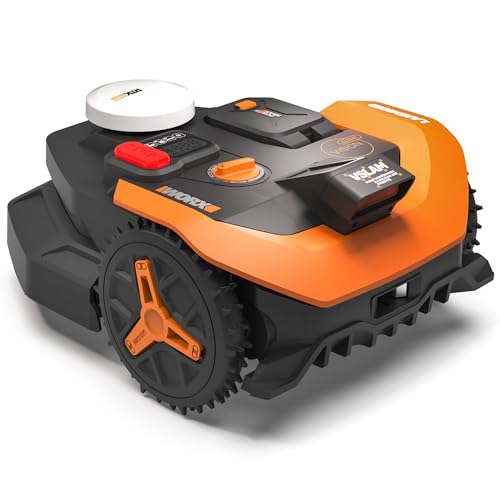
WORX Landroid Vision Robot Lawn Mower WR310
No perimeter wire needed for operation.
Smart AI for effective obstacle avoidance.
App control for easy, remote management.
 Daniel Kenitz
No perimeter wire needed for operation.
Smart AI for effective obstacle avoidance.
App control for easy, remote management.

Handles steep slopes with ease.
Quick 45-minute charging time.
Advanced GPS anti-theft protection.

Wire-free operation simplifies lawn maintenance.
Dual-LiDAR ensures precise and efficient mapping.
Built-in edge trimmer tackles hard-to-reach areas.
Efficient wire-free dual-LiDAR navigation system.
Built-in TruEdge edge trimmer for precision.
Convenient smart app control for easy management.

No boundary wires needed for setup.
Efficiently maps and navigates your lawn.
Quiet operation at just 59 dB(A).

No perimeter wire needed; uses RTK+Vision technology.
Quiet operation at only 58dB(A).
Easy control via smartphone app.

No boundary wire needed for setup.
Efficiently covers up to 1/2 acre.
Easy-to-replace cutting blades.

Navigates precisely with RTK and Quad-Vision.
Handles steep slopes up to 80% effectively.
Operates without boundary wires for convenience.
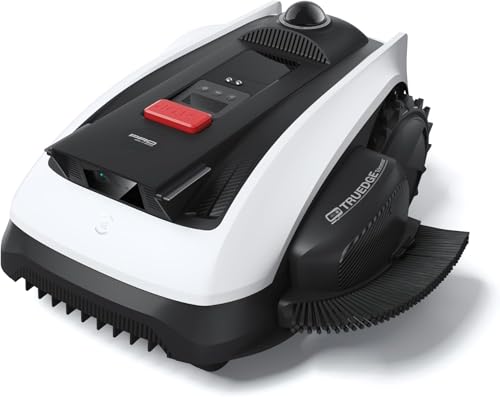
Wire-free LiDAR navigation for precise mowing.
TruEdge Trimmer ensures clean, zero-edge cutting.
AIVI 3D technology avoids obstacles effectively.

Efficient AI obstacle avoidance technology.
Wire-free setup with precise RTK mapping.
Handles steep slopes up to 80% with ease.
Start with the physical layout. Virtual boundaries, perimeter wire, cameras, LiDAR, GNSS/RTK, and cellular or Wi-Fi links are only as useful as their installation and signal conditions. Tree cover, slopes, narrow passages, damp grass, unclear edges, neighboring lawns, pools, roads, stairs, drops, and lower walkways can all expose weaknesses. A safe design should explain what happens when positioning or communication is lost and should default safely rather than continuing toward an exclusion zone. No-go areas and mapped islands are useful, but they are not a substitute for physical separation where a failure could have serious consequences.
Treat headline capacity, slope, runtime, cutting width, and “zero-edge” claims as operating targets, not guarantees. A stated quarter-acre or one-acre limit may assume short grass, suitable terrain, clear satellite or camera views, and an uncomplicated boundary. Independent testing in the supplied reviews found traction problems on damp or uneven ground, incomplete edge cutting, difficult narrow passages, mapping problems, and boundary departures on some products. A wide deck may improve coverage but may not fit a narrow route. Fast charging can reduce interruptions, but repeated charging may still be needed on larger or difficult lawns.
For people and pets, look for documented lift, tilt, collision, and accessible-blade stopping behavior, ideally tested on the exact model rather than inferred from sensor marketing. For battery and charging safety, the relevant evidence covers the battery pack, charger, dock, and battery-management system against overheating, short circuit, overcharge, and water-related faults. A current listing in UL Product iQ, Intertek’s ETL directory, the CSA Group database, or an IECEE CB certificate is materially stronger than an unexplained badge. FCC authorization verifies intentional-radio functions; it does not establish blade, battery, charger, or whole-product safety. IPX6 or another IP rating is also not, by itself, proof of a third-party ingress test or permission to mow in heavy rain.
A substantiated product should provide a model-specific manual, clear wet-weather and slope limits, parts and battery-service information, firmware support, privacy terms, and precise exclusions for its claims. Check CPSC recall and incident records, the exact product listing and variant, and any independent test method rather than relying on demonstrations or broad family-level claims. For connected models, review location, camera, diagnostics, cellular, and account-data practices before enabling app control.
Recurring cautions in the supplied reviews are significant: no product had a located, traceable UL, ETL, or CSA listing for the complete mower, charger, and dock; no product had model-specific standardized wildlife testing; and many manuals require people and pets to stay away while mowing. Low-profile animals and objects can be missed even when larger obstacles are avoided. Several products also need careful mapping near roads, pools, stairs, drops, or neighboring property, and some showed limitations in rain, wet grass, steep terrain, or poor signal. These machines should therefore be treated as supervised outdoor equipment, not as a guarantee of unattended safety.
The topics below separate practical safeguards from marketing claims. Scores are comparative signals from the supplied reviews: a higher score reflects stronger evidence and controls among these products, not a guarantee of safe unattended operation.
This measures whether cutting stops during lifting, tilting, collisions, and close contact, with evidence beyond sensor claims. It matters because every mower has accessible cutting hardware beneath the deck. Supplied scores ranged from 63 to 78: higher-scoring products had documented or independently observed lift-stop behavior, while lower-scoring products lacked model-specific contact testing or showed uncertainty around low objects.
This examines the battery, charger, dock, and management system for overheating, short-circuit, overcharge, and water-fault protection, plus unresolved recalls. It matters because the mower often charges outdoors. Scores ranged from 70 to 73, showing limited separation: manufacturer protections were described, but the reviews repeatedly found no complete UL, ETL, CSA, or CB listing for the exact system.
This measures boundary accuracy and what happens after GNSS, RTK, camera, or communications failure. It matters near roads, pools, stairs, drops, and property lines. Scores ranged from 53 to 79. Higher-scoring products had independent boundary or mapping tests and usable exclusion controls; lower scores reflected boundary departures, cliff-detection concerns, difficult signal conditions, or reliance on careful owner setup.
This measures whether operating and washing limits are clear and supported by applicable ingress evidence. It matters because a mower, dock, and charger remain outside. Scores ranged from 54 to 77. Higher-scoring products combined documented rain sensing and enclosure ratings with clearer restrictions; lower scores reflected conflicting rain claims, wet-ground problems, or no located accredited ingress report.
This measures whether acreage, slope, runtime, docking, edge coverage, cutting width, and navigation claims hold up in disclosed independent testing. It matters because yard conditions determine whether automation actually works. Scores ranged from 57 to 88. Higher scores came from repeatable tests on uneven or complex lawns; lower scores reflected manufacturer-only claims, conflicting capacity figures, charging cycles, wet-ground limits, or incomplete edges.
This measures radio authorization, update support, app permissions, location and camera practices, cloud dependence, and privacy transparency. It matters because connected mowers can expose maps, location, diagnostics, or images. Scores ranged from 58 to 78. Higher-scoring products had traceable radio authorization and clearer support or privacy information; lower scores involved broad collection, advertising-related sharing, or conflicting app disclosures.
This measures whether claims about AI avoidance, wire-free operation, acreage, slopes, weather, quietness, and hands-free use state their material limits. It matters because marketing figures often omit wet grass, tree cover, boundary geometry, or supervision requirements. Scores ranged from 48 to 82. Higher scores had more precise limits and independent support; lower scores included conflicting capacity, rain, slope, or charging claims.
This measures traceable third-party certification and model-specific testing for the mower, charger, dock, core safety, and advertised performance. It matters because FCC, CE, IP, or seller badges do not prove whole-product safety. Scores ranged from 68 to 78, but the supplied reviews still located no complete UL, ETL, CSA, or CB listing for any exact system. Higher scores mainly reflected stronger independent evidence, not certification completeness.
This measures avoidance or safe stopping for small, low-profile animals and whether scheduling avoids unattended night mowing. It matters because hedgehog-sized animals may not be detected before contact. Scores ranged from 58 to 78. TerraMow and some other products avoided tested surrogates, but no supplied product had standardized model-specific wildlife testing; a higher score therefore indicates better available evidence and controls, not proven live-animal safety.
This measures adjustable cutting height, no-mow zones, area-specific schedules, rain delays, and controls against scalping or unnecessary night operation. These features let owners maintain taller turf and preserve selected habitat. Scores ranged from 74 to 82. Higher-scoring products offered wider or more usable height ranges and detailed zone and weather controls; lower scores had fewer controls or more limited documentation.
This measures whether blades, batteries, wheels, sensors, chargers, and other wear parts can be identified, obtained, and serviced, with a practical recycling route. It matters because replacing a battery or blade is preferable to discarding a mower. Scores ranged from 56 to 80. Higher scores reflected replaceable batteries, published parts, manuals, and service support; lower scores included sealed or unclear battery paths.
This is a 2-wheel-drive, battery robotic mower designed to maintain up to 0.25 acre. It uses three blades across an 8.7-inch cutting width, with an electrically adjustable 1.57 to 3.54-inch cutting-height range. WORX specifies a 20V, 4Ah removable lithium-ion battery, an 80-minute charge time, Wi-Fi and Bluetooth, and a 30 percent maximum slope rating. Its defining feature is wire-free mapping using stereo cameras, RTK Cloud positioning, and V-SLAM, all manufacturer-stated. An independent 30-day test found setup and automatic mapping easy, and mowing effective on a flatter yard. That same test found the mower struggled to turn and regain traction on a much steeper 20 to 30-degree slope, which exceeds its stated 17-degree limit. The product has a rain sensor and hose-washable deck claim, but no model-specific IP rating or public ingress-test report was found.
This mower fits an owner maintaining a small lawn, roughly a quarter acre or less, that is predominantly flat and already kept at a manageable grass height. It is particularly relevant for someone who wants wire-free setup and is willing to define mowing areas in the app, monitor the first mapping runs, and keep toys, pet items, branches, and people clear before operation. The removable battery has practical value for a household already using compatible WORX cordless equipment. Daytime scheduling is the more cautious operating pattern where wildlife may be present.
It is not suited to households that need independently demonstrated protection around unsupervised children, pets, or small wildlife. The published independent test showed inconsistent handling of low-profile objects, including a dog bone contacted by the blades. It also is not a strong fit for lawns with steep perimeter slopes, unmanaged tall grass, roads, pools, stairs, open property boundaries, or persistent dense tree cover, because public model-specific evidence for failure behavior after degraded localization was not located. Avoid relying on the hose-washable claim as proof of an IP-rated enclosure.
The mower has exposed cutting blades beneath its deck, so its camera and collision functions should not be treated as proof that it will safely avoid every low object, pet item, or animal. Independent testing found good avoidance of some larger toys but a direct blade strike on a dog bone. Published hedgehog research shows that robotic mowers often need physical contact before detecting animals, and no model-specific wildlife surrogate test for this mower was found. Daytime operation and a cleared lawn are prudent safeguards. WORX states that the mower uses a removable 20V lithium-ion battery and supports over-the-air and USB software updates. A removable battery can reduce whole-product disposal when the pack ages, but no model-specific battery replacement procedure, recycling program, or third-party electrical-safety listing was located. The manufacturer also posts a California Proposition 65 warning naming lead and DEHP. CPSC recall results found recalls for other WORX products, not this robotic mower.
The Dreame A3 AWD 2000 is a battery-powered, wire-free robotic lawn mower for mapped lawns up to 0.5 acre. It uses four-wheel drive, a 7.9-inch cutting width, LiDAR and binocular camera vision to build a virtual map, then returns to its charging station and resumes work. Dreame states that the app supports up to 150 zones, no-go areas, schedules, and a 1.2 to 3.9 inch cutting-height range. The documented platform has a 5 Ah, 18 V lithium battery and a 20 V charging system. The manufacturer manual describes lift locking and off-map alarms, while also directing users to keep people, children, and animals out of the work area. Its 0.5-acre capacity, 80 percent slope rating, obstacle recognition claims, and edge-cutting claim are manufacturer-stated. No model-specific independent field test or traceable US third-party electrical-safety listing was located in the reviewed registries.
This product suits an owner of a clearly defined lawn at or below 0.5 acre who wants to avoid installing a perimeter wire and is willing to supervise setup, maintain clean sensors, and set exclusion zones around ponds, stairs, roads, flower beds, and play areas. It is most aligned with a yard that has substantial slopes but still has predictable turf boundaries, good access to a protected charging location, and an owner comfortable using an app for mapping, scheduling, alerts, and firmware-dependent functions.
It is not suited to households that expect a mower to operate safely around unsupervised children, pets, or wildlife. The manual itself says to keep people and animals out of the work area. It also fits poorly where the mowing boundary meets traffic, water, drop-offs, or neighboring property without a forgiving physical buffer. Buyers needing independently verified electrical certification, documented small-animal testing, privacy-minimizing connected controls, or proven performance in wet, foggy, heavily shaded conditions should treat the current evidence as incomplete.
The safety documentation is concrete about residual hazards. It instructs owners to use only the supplied charging equipment, keep the dock away from standing water and combustible materials, use a ground-fault protected outlet, and keep hands and feet away from the rotating blades. The manual also describes battery temperature protections and says the lithium battery may only be replaced by skilled personnel. A product manual for this A3 AWD series lists IPX6 protection for the mower, IPX4 for the charging station, and IP67 for the power supply, while still prohibiting use in standing water and warning against high-pressure washing. Ecology controls are stronger on lawn management than on wildlife evidence. Adjustable cutting height, area scheduling, and no-go zones can support less intensive mowing when used conservatively. However, no independent small-animal test for this product was found. Published hedgehog research indicates that robotic mowers may need physical contact before detecting an animal, so unattended night mowing remains a meaningful wildlife concern. Dreame offers replacement blades, but its battery is not presented as owner-replaceable.
This is a battery-powered, wire-free robotic lawn mower for maintained lawns up to a manufacturer-stated 2,000 square meters, roughly one-half acre. It weighs 39.2 pounds and uses two blade discs with a 13-inch cutting width plus a side-mounted line trimmer. Cutting height is electronically adjustable from 1.18 to 3.54 inches, and the stated mowing time per charge is 50 minutes. Its defining hardware is a LiDAR, camera, and 3D time-of-flight sensor package that maps boundaries and obstacles without a buried perimeter wire. The manufacturer documents lift, collision, and rain sensors, no-entry zones, rain pausing, and an animal-protection scheduling control. An independent month-long field review confirmed effective mowing and close trimming along many fences and garden beds, but also found that path edges, tight triangular corners, and repeated turns around posts still need attention.
This product suits an owner of a regularly maintained lawn with clear, enclosed boundaries, fence lines or garden beds, and enough open space for a 39-pound robot to turn. It is most appropriate for someone comfortable creating maps, no-entry zones, schedules, and a conservative rain delay in an app. The strongest practical case is a lawn where recurring perimeter trimming is laborious, but where the owner can still inspect blades, clear toys and debris, and do occasional manual finishing at paths or tight corners.
It is not suited to households that expect unattended mowing around children, pets, wildlife, ponds, cliffs, exposed wires, or unfenced transitions to roads. The manual requires physical boundary precautions and supervision during initial mapping, so virtual mapping should not be treated as the only protection at a hazardous edge. It is also poorly suited to neglected, overgrown turf, lawns dominated by narrow corners or path edges, or buyers who need a user-replaceable battery and independently listed electrical safety certification.
The mower has documented lift, collision, rain, LiDAR, camera, and 3D obstacle sensors. Its manual also calls for a clear, enclosed mowing area, no-entry zones around hazards, and a 30 cm setback from ponds or cliffs. Those are meaningful safeguards, but they are installation and sensor controls rather than independently published blade-contact test results. No active U.S. recall or regulatory warning specific to this product was located in the checks performed. For ecological use, the app supports area-specific schedules, no-entry zones, adjustable cutting height, rain pauses, and an animal-protection time setting. These controls can help avoid repeated scalping and allow owners to avoid unattended nighttime mowing. ECOVACS sells genuine blades and trimmer wear parts, but the battery requires skilled replacement. The connected app has a documented privacy policy and account-data controls, although its policy allows collection and sharing of personal information with service providers and advertising partners.
This is a battery-powered, wire-free robotic lawn mower for lawns up to about three quarters of an acre. It uses dual cutting discs with a 13-inch cutting width, electronic cutting-height adjustment from 1.2 to 3.5 inches, LiDAR, camera, ToF, lift, collision, and rain sensors. A side-mounted string trimmer is intended to reduce hand edging. The manufacturer states a 7.5Ah, 240Wh battery, 70-minute recharge, IPX6 mower protection, and app-based mapping, zones, and schedules. Independent testing gives the strongest evidence for its practical mowing performance. CHIP measured 173 minutes of mowing per charge, 92 minutes to recharge, 62 dB operating sound, reliable obstacle recognition, and very good area coverage. Its test also found that automatic mapping needs boundaries at least 5 cm high, and standby electricity use was comparatively high. No traceable US listing was located for the exact mower, dock, or charger in UL, ETL, or CSA certification registries.
This product suits an owner of a broadly open, well-defined lawn approaching three quarters of an acre who wants regular maintenance cutting rather than occasional recovery mowing. It is most appropriate where mapped edges have clear physical definition, grass is kept below roughly 4 inches before first use, and the property has no unprotected drop-offs or road-adjacent turf. It also fits someone prepared to use the app for zones, schedules, cutting height, mapping corrections, and routine blade or trimmer-line maintenance.
It is not suitable for households that need independently certified proof of mower, battery, charger, and dock safety before allowing autonomous operation around children or pets. Avoid relying on it alone around hedgehogs, other small animals, pools, stairs, curbs, roads, or loosely bounded neighboring property, because model-specific wildlife and boundary-failure testing was not found. It is also a weaker fit for very intricate yards, boundaries lower than 5 cm, steep terrain beyond its stated limit, or owners sensitive to docked standby energy use.
The mower has lift, collision, rain, camera, LiDAR, and ToF sensors, and independent testing confirmed a blade quick-stop function, lift sensing, and reliable avoidance of ordinary lawn obstacles. Those are meaningful safeguards, but they do not substitute for a traceable third-party electrical or mower-safety certification. No relevant US recall or regulatory warning was located in the CPSC search reviewed. The manual still treats the machine as a residual-risk cutting tool, directing users to keep children away during mowing and avoid operation in bad weather, particularly lightning. For lawn care, the adjustable 1.2 to 3.5 inch cut range, no-go areas, multi-area maps, and schedules can support higher cuts and less unnecessary mowing. The mower is manufacturer-rated IPX6, while the charging station is rated IPX4, but an accredited IP test report was not located. Ecovacs sells genuine wear parts and documents blade, trimmer, and storage maintenance. Battery replacement and recycling instructions for this exact product were not located. Wildlife protection remains unproven despite the manufacturer’s hedgehog-avoidance claim, so unattended nighttime mowing deserves caution.
This is a 32.4-pound, battery-powered robotic mower for lawns up to about 0.37 acre. It uses a 8.66-inch cutting disc with a 2 to 4 inch height range, virtual mapped boundaries, LiDAR, and a front camera rather than a perimeter wire. The manufacturer states a 165 Wh lithium-ion battery, about 160 minutes of typical mowing per charge, and a 45 percent maximum internal slope. The supplied North American manual documents a lift sensor that stops blade rotation when the unit is raised, plus app-controlled off-limit islands, schedules, weather responses, and an animal-friendly obstacle setting. The 59 dB(A) noise figure and IP66 rating for the mower and charging station are manufacturer declarations. No model-specific independent field test or public UL, ETL, or CSA product listing was located in the review.
It suits an owner of a clearly bounded, maintained lawn of roughly one-third acre or less who wants wire-free mapping and is prepared to set virtual exclusion zones carefully. The documented 2 to 4 inch cut range, replaceable blades, user-replaceable battery, and weather scheduling are practical for routine lawn maintenance. It is most appropriate where children, pets, wildlife, toys, sticks, and loose debris can be kept out of the mowing area while it operates.
It is not suited to households that need a mower to operate safely around unsupervised children, roaming pets, or regular wildlife activity. The manual specifically requires users to schedule operation when people and pets are absent. It also is a poor fit for lawns with poorly defined boundaries near roads, pools, stairs, or neighboring property unless exclusion zones and physical separation are carefully planned. Avoid relying on the headline capacity for long, wet, heavily divided, or very uneven grass.
The product has meaningful documented safeguards, including a lift sensor that stops blade rotation, a physical emergency stop button, scheduled mowing, weather responses, virtual exclusion areas, and a setting intended to give pets and small animals more clearance. Its manual also warns that these measures do not remove all risk. Users are instructed to clear debris and prevent children, pets, and people from being near the mower during operation. For outdoor exposure, the manufacturer declares IP66 protection for the mower body and charging station and IP67 for the power supply. It advises against heavy rain, snow, thunderstorms, pressure washing, damaged cords, and non-original batteries. No product-specific CPSC recall was located in the checked U.S. recall resources. The battery and blades can be replaced, and the model has a published 8.38 out of 10 French repairability index. However, public third-party electrical certification and model-specific wildlife collision testing were not found.
This is a compact, battery-powered robotic mower for a mapped lawn up to a manufacturer-stated 1/8 acre. It uses RTK satellite positioning and a front vision system instead of perimeter wire. The mower is 24 pounds, has a 7.1-inch cutting width, and its U.S. cutting-height range is 2.0 to 3.6 inches. Its 55 Wh lithium-ion battery is stated to provide about 60 minutes of typical mowing and about 90 minutes of charging. The most defining practical feature is its app-created virtual boundary, including separate zones, channels, and no-mow islands. The manual also documents weather-responsive scheduling, lift and tilt status indications, and an optional animal-friendly setting. The exact radio hardware carries an FCC authorization, but no public U.S. NRTL listing or model-specific independent blade-safety, battery-safety, ingress, or wildlife test report was located.
It suits an owner of a small, clearly bounded lawn with relatively open sky, gradual terrain, and time to map the property carefully in the app. It is especially appropriate where frequent light trimming at a 2.0 to 3.6-inch height is preferable to occasional heavy cutting. The owner should be willing to inspect blades, keep the camera and charging contacts clean, set weather delays, and use no-mow islands around garden beds, fragile turf, and other areas the mower should not enter.
It is not suited to properties where an error at the edge could put the mower into a road, pool, stairway, drainage ditch, or unfenced neighboring area. It also needs caution in yards with steep boundary edges, abrupt curbs, dense overhead cover, long or wet grass, or regularly parked vehicles in mapped channels. Households with active nocturnal wildlife should not rely on the animal setting as proven protection. It is also a poor fit for buyers who require independently listed U.S. electrical safety certification or a user-replaceable battery.
The manual documents several useful safeguards: the mower reports lifted, tilted, and flipped states, calls for the disabling device before lifting or servicing, specifies original charging equipment, and states battery protections for overheating, short circuit, over-current, and over-charge. The radio hardware is identified with an FCC authorization. No product-specific CPSC recall or safety warning was located in the review, but no public UL, ETL, or CSA listing for the complete mower, dock, and charger was found either. For lawn care, the product offers a useful 2.0 to 3.6-inch U.S. cutting range, no-mow islands, zones, and weather-based schedule controls. Its materials are manufacturer-listed as a polypropylene frame and ASA cover. Navimow says animal-friendly mode changes the route around nearby small animals, yet no model-specific independent wildlife-surrogate result was located. Avoiding unattended night mowing remains the more conservative wildlife practice. The battery should be serviced professionally and routed through local battery or e-waste channels rather than household trash.
This is a battery-powered, two-wheel robotic mower intended to maintain up to a half-acre of established lawn. It uses a three-blade, 8.7-inch cutting system, adjustable 1.57 to 3.54 inch cutting height, a 20 V lithium-ion PowerShare battery, charging dock, stereo camera, Wi-Fi, Bluetooth, and cloud-delivered RTK positioning. It is designed for mapped, wire-free mowing rather than cutting down overgrown grass. Worx documents a 30 percent slope limit, rain sensing, app-managed zones and schedules, and an IPX6 mower enclosure. The manual also specifies a removable 5 Ah battery and a 90 W charger for the half-acre version. These are manufacturer specifications, not independent performance results. I found no traceable current UL, ETL, or CSA directory listing, model-specific blade-contact test report, or independent full-yard test for this exact product.
It suits an owner with a maintained, mostly open lawn of up to about half an acre, reliable home internet, and slopes no steeper than the stated 30 percent limit. It is most appropriate for someone prepared to map zones, establish no-go areas around hazards, and use the mower as a frequent maintenance tool after the lawn has first been conventionally cut. The removable battery and app-based schedules also suit owners able to perform routine blade, cleaning, and software maintenance.
It is not a fit for households where children, pets, or small wildlife may enter the mowing area unsupervised and where independently verified close-contact blade safety is required. Avoid relying on it beside unprotected pools, stairs, roads, or property boundaries unless mapped exclusion zones have been carefully tested under local tree cover and weather conditions. It is also poorly suited to tall or dense grass, unreliable internet coverage, slopes beyond 30 percent, or buyers unwilling to accept camera, location, and garden-image data practices.
The product has documented outdoor-use features including an IPX6 mower enclosure, a rain sensor, a removable lithium-ion battery, and a specified 90 W charger. Its owner documentation instructs users not to lift the mower with power on and not to touch moving hazardous parts until they stop. Those are useful operational safeguards, but I did not find public, model-specific independent testing of blade-contact protection or a recognized North American certification-directory record for the mower, dock, and charger. Ecologically, app zones, schedules, rain-responsive operation, and a 1.57 to 3.54 inch cutting-height range can help avoid scalping and unnecessary mowing when used carefully. There is no independent evidence that its vision system reliably protects small, low-profile wildlife, so daytime operation and a lawn inspection remain prudent. Worx also posts a Proposition 65 warning identifying lead and DEHP. Its privacy notice says vision-equipped mowers can collect garden images and location-related data, with image-sharing opt-out available in the app.
The RockMow X115H is a battery-powered, wire-free robotic lawn mower for lawns of up to about 0.37 acre. It uses an RTK reference station, onboard vision, four-wheel drive, a charging station, and app-based mapping rather than a buried perimeter wire. The mower has a 9.45-inch cutting width, six blades, and a manufacturer-stated cutting-height range of 1.57 to 3.54 inches. Roborock documents an approximately 55-minute mowing time per charge, a 65-minute charge time, a 21.6 V, 6 Ah lithium-ion battery, and stated IPX6 protection for the mower and charging station. Its radio platform has an FCC equipment authorization, but that verifies radio compliance, not mower blade, battery, charging, ingress, or performance safety. No traceable UL, ETL, CSA, CB, or model-specific independent safety and field-performance report was located.
This product suits an owner of a contained residential lawn below the stated 0.37-acre limit who can supervise initial mapping, keep children and pets out of the mowing area, and maintain a clear yard. It is most appropriate for someone who values wire-free installation, can place and protect an RTK reference station, and accepts that practical capacity may fall below the stated limit in dense grass, irregular layouts, shade, damp conditions, or narrow routes. The buyer should also be comfortable using an app and applying firmware updates.
It is not suited to households that need independently demonstrated blade safety around children, roaming pets, or wildlife. Avoid relying on its camera and obstacle claims for low-profile animals or objects, because model-specific independent results were not found. It is also a poor fit for properties with an unfenced edge near roads, pools, stairs, or neighboring land where documented localization-loss and boundary-failure behavior matters. Buyers who require third-party electrical certification, a publicly documented replacement-battery route, or proven real-world capacity should seek stronger documentation.
The mower has a lithium-ion battery, a 32 V power supply, six cutting blades, and stated outdoor ratings of IPX6 for the mower and charging station, IPX5 for the RTK station, and IP67 for the power supply. Roborock also lists charging and operating temperature limits. These are manufacturer manual specifications, not independently verified ingress or electrical-safety certification. No exact-product recall or CPSC safety warning was located in the checked U.S. sources. Ecology-oriented controls include the adjustable 1.57 to 3.54 inch cut height, app-based zones and schedules, rain return, and a stated wildlife-friendly pause schedule. However, no independent small-animal avoidance testing was found. Roborock provides a three-year main-unit warranty and two-year battery warranty, with repair handled through support or authorized service. A public model-specific parts catalog, service manual, battery replacement instructions, and recycling pathway were not located.
This is a battery-powered, wire-free robotic mower for small to medium lawns. It uses a 5,200 mAh lithium-ion battery, an 8.66-inch cutting width, and a stated 1.18 to 3.15-inch electrically adjustable cutting-height range. ECOVACS states that it runs for up to 90 minutes per charge, handles slopes up to 45 percent, and uses rotating LiDAR, 3D time-of-flight sensing, and an AI camera for mapping and obstacle avoidance. The mower includes a charging station, replaceable blade set, and an integrated line trimmer intended to reduce edge cleanup. Its official documentation supports rain sensing, lift sensing, collision sensing, no-entry zones, schedules, and an animal-protection scheduling control. These are manufacturer-documented functions, not independently validated safety outcomes. ECOVACS also claims IPX6 protection for both mower and station, but no accredited ingress-test report was located.
This product fits an owner of a mostly connected, maintained small lawn who wants to avoid perimeter-wire installation and can map boundaries carefully before unattended use. It is most suitable where the mowing area has clear edges, no road or pool exposure near a poorly defined boundary, and relatively dry, predictable turf. It can also suit someone prepared to use app-defined no-entry zones, rain delays, and a conservative daytime schedule. The owner should be comfortable checking blades, trimmer line, sensors, and dock connections as routine maintenance.
It is not suited to homes where children, pets, or wildlife may regularly enter the mowing area while it operates, especially at night. Do not treat its camera and LiDAR claims as independently proven protection for low-profile animals. It is also a poor fit for yards with unfenced road access, water hazards, stairs, loose soil, abrupt grade changes, or complex disconnected sections unless boundaries and exclusion areas can be mapped and supervised conservatively. Buyers requiring a traceable US third-party electrical-safety listing should seek clearer certification evidence.
The important health safeguard is not the obstacle-avoidance marketing, but the operating discipline in the manual. It calls for clearing objects from the lawn, keeping children and pets away during mowing, and powering down with the safety key before lifting or maintenance. ECOVACS documents lift, collision, rain, LiDAR, camera, and time-of-flight sensors, but no independent blade-contact or small-animal avoidance test for this exact product was located. For ecology, the mower provides useful controls such as adjustable cutting height, no-entry zones, multi-area settings, schedules, rain delay, and an animal-protection time control. Those can support higher cuts, protected habitat patches, and daytime mowing. Genuine replacement blades and trimmer components are available, which can extend service life. No CPSC recall or US product-safety warning specific to this mower was found in the checked records. The battery-replacement procedure and a model-specific battery recycling path were not clearly published.
This is a battery-powered robotic lawn mower with a 9.45-inch cutting width, a 40 to 90 mm cutting-height range, a 21.6 V, 6 Ah lithium-ion battery, and a charging station. The manufacturer rates it for lawns up to one-half acre. It maps a user-defined work area without perimeter wire, using LiDAR and binocular cameras, then works from schedules in the Roborock app. The manual documents lift and tilt states that require local confirmation before mowing resumes, a rain sensor that sends the mower back to its dock, and IPX6 ratings for the mower body and charging station. These are manufacturer documents, not independent safety or field-test results. No model-specific third-party mowing, wildlife, electrical-safety, or blade-safety test report was located.
This product suits an owner of a clearly bounded lawn of up to about one-half acre who can supervise setup, keep children and pets off the lawn during operation, and maintain clean camera and LiDAR surfaces. It is most relevant where installing a perimeter wire is impractical and the owner accepts app-based mapping and scheduled mowing. The owner should also have an appropriate weather-protected charging location, an accessible outdoor outlet, and willingness to handle routine blade inspection and replacement.
It is not suited to households that need independently demonstrated blade safety around children, roaming pets, or frequent wildlife. It is also unsuitable for sites where an error could put the mower into a road, pool, stairway, public path, or neighboring property, because model-specific boundary-loss testing was not found. Avoid relying on unattended night mowing. Buyers needing independently certified electrical safety, published repair parts availability, or proven half-acre and steep-slope results should not treat the manufacturer claims as confirmed performance.
The manual identifies a lithium-ion battery, a removable battery compartment for disposal, and a direction to send the battery to a professional recycling facility. It also provides blade-replacement instructions and warns that reusing blade screws can create a serious injury risk. The manufacturer recommends battery replacement every two years through after-sales support rather than by the owner. A three-year main-unit warranty and two-year battery warranty are published for this product. For outdoor use, Roborock states IPX6 protection for the mower and charging station, IP67 for the charger, and a rain-triggered return to dock. These ratings were not independently verified through a laboratory report. No U.S. recall or consumer-product exposure warning for this model was located in the review search. No UL, ETL, CSA, or model-specific wildlife test listing was located. Wildlife scheduling should remain conservative, with daylight operation preferred because published robotic-mower research has found that obstacle detection alone does not establish small-animal safety.


