Best Overall
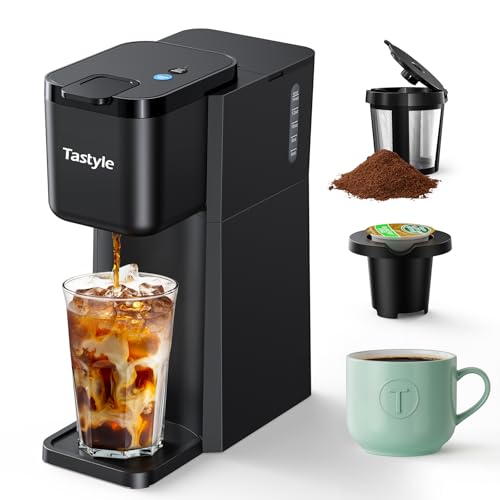
Tastyle Mini Coffee Maker 2.0
Compact design fits in small spaces.
Quick brewing time for busy mornings.
Easy-to-clean detachable components.
 Lauren Wilson
Compact design fits in small spaces.
Quick brewing time for busy mornings.
Easy-to-clean detachable components.

Versatile brewing for K-Cup and grounds.
Compact design fits in small spaces.
Large removable reservoir for easy filling.
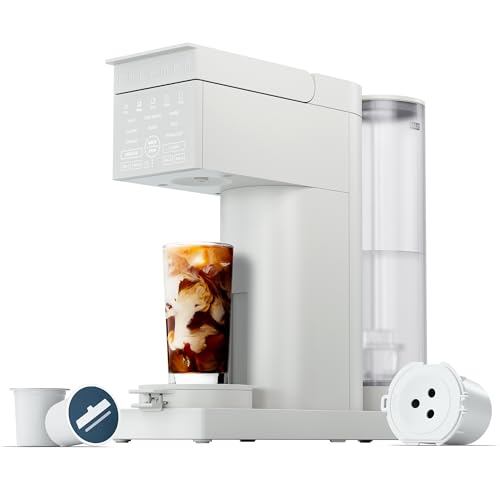
Compact design fits small spaces easily.
Quick brewing for busy mornings.
Compatible with most coffee pod brands.
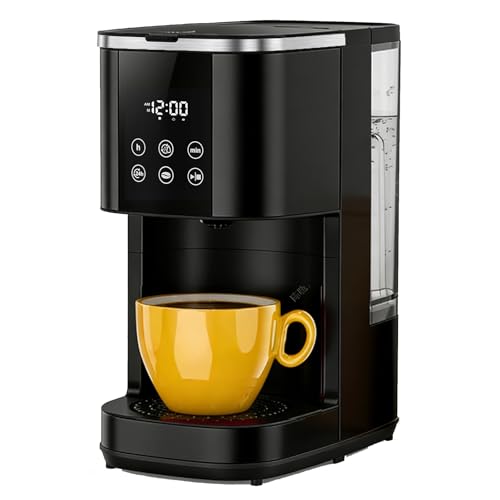
Versatile brewing for both K-Cups and grounds.
Instant-heat feature for quick coffee preparation.
Large 40 oz water tank minimizes refills.

Compact size fits small spaces easily.
Brew size customization from 6 to 12 oz.
Simple operation with a one-touch button.

Offers both single serve and 12-cup brewing.
Programmable settings for convenient coffee timing.
K-Cup compatible for versatile coffee options.

Large 72-ounce reservoir minimizes refills.
Programmable features offer customized brewing.
Durable stainless steel design enhances longevity.

Versatile brewing options for hot and iced coffee.
Detachable milk frother for easy cleaning.
Compact design fits travel mugs easily.

Compatible with both K-cup and ground coffee.
Quick brewing time for busy mornings.
Convenient descaling reminder for easy maintenance.
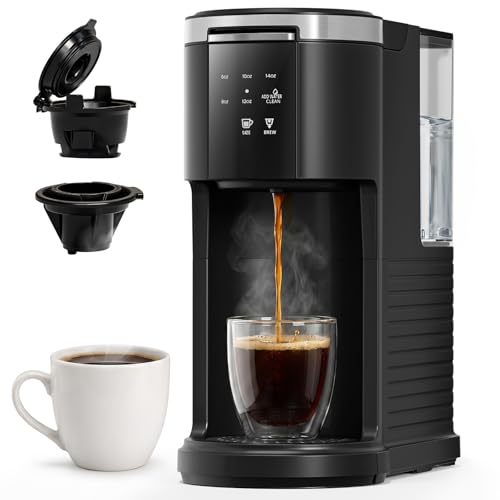
Versatile brewing with capsule and ground coffee.
Convenient memory function for personalized brews.
Large, removable water tank for easy refills.
The useful question is not simply whether a machine brews coffee. It is whether the exact product delivers the advertised amount consistently, safely, and with a cleaning routine you can realistically follow. Look for model-specific instructions that identify cup sizes, water requirements, cleaning intervals, descaling steps, pod compatibility, reusable-filter compatibility, automatic shutoff, and warnings about hot water, steam, needles, and opening the brew chamber. A removable reservoir and removable pod holder, filter, drip tray, nozzle, or frother parts make residue easier to access; milk-contact parts need especially prompt cleaning.
Headline numbers can mislead. A large reservoir may mean fewer refills, but it does not prove low water waste or good hygiene if water sits between uses. A stated wattage describes electrical input, not energy used per cup or standby consumption. An automatic-shutoff claim does not establish how much idle power is saved unless energy is measured under a stated test protocol. Cup-size markings also do not prove delivered-volume accuracy. “Fast brewing,” “bold,” “strong,” and “iced” are operating labels unless temperature, volume, cycle time, and test conditions are independently documented. One supplied independent test found fast cycles but also found an iced setting that produced a watered-down drink; another found coffee temperatures of 180–189°F and low strength.
For electrical safety, look for a traceable listing for the exact model from an OSHA-recognized Nationally Recognized Testing Laboratory. UL Product iQ, Intertek’s ETL directory, and CSA’s product database are more meaningful than an unsupported UL- or ETL-style statement. UL 1082 is the relevant household electric coffee-maker standard in the supplied evidence. A certification claim for a product family or related variant should not automatically be treated as proof for every configuration.
For hot-water contact, “BPA-free” alone is incomplete. Stronger documentation identifies the reservoir, tubing, seals, pod holder, grounds basket, and other wetted materials and supports their actual hot-food-contact conditions through applicable FDA food-contact information, NSF listings where claimed, or model-specific declarations and test reports. For performance, look for Specialty Coffee Association certification or a reproducible independent test covering temperature, dose, volume, cycle consistency, and conditions.
Across the supplied products, no universal category-wide contraindication was established. However, repeated cautions make careful use essential: brewing chambers can contain extremely hot water and steam, pod needles can be sharp, and opening lids or removing pods during brewing can cause burns or splashing. Buyers who need independently traceable electrical certification, fully disclosed food-contact materials, measured energy use, repair support, or dishwasher-safe cleaning should verify those points before purchase rather than infer them from marketing language. Milk systems add residue-management demands, and several products have conflicting warranty, specification, or certification information.
These topics distinguish a convenient brewer from one with stronger evidence for safe use, lower waste, maintainability, and trustworthy claims. Scores compare only the supplied products; they are not independent certifications.
This measures whether the exact model is listed by an OSHA-recognized testing laboratory for the applicable coffee-maker standard, especially UL 1082. That matters because these products combine water and mains electricity. Among the supplied products, scores range from 70 to 88: the higher-scoring models have traceable model or family evidence, while most rely on unverified manufacturer or retailer claims.
This covers safeguards against hot-water ejection, steam, hot surfaces, dry boiling, overheating, and unattended heating. It matters because pod chambers and brew outlets remain hazardous during and after a cycle. Supplied scores run from 72 to 82. Higher-scoring products document controls such as low-water lockouts, sleep or shutoff behavior, brew interruption, and clearer warnings, while low scores reflect mainly manufacturer-stated protection or unresolved handling concerns.
This measures whether every part touching hot water or coffee is identified and supported for its actual food-contact use. It matters because broad claims such as “BPA-free” do not identify tubing, seals, resins, or metal grades. Scores range from 54 to 72. Higher scores reflect somewhat clearer material information, but no supplied product provides a complete material and compliance file, so even the stronger results have an evidence gap.
This measures access to reservoirs, pod holders, filters, drip areas, and frothers, along with clear rinsing and descaling instructions. Residual grounds, coffee oils, standing water, and milk can create hygiene problems if parts are difficult to remove. Scores range from 74 to 84. Higher-scoring products document more removable or washable high-residue parts; lower scores more often involve fixed tanks, hand-cleaning burdens, or incomplete access.
This measures whether claims about healthier coffee, toxin-free brewing, wellness benefits, or enhanced extraction are limited and supported at real-use conditions. Ordinary coffee preparation does not establish a health benefit. Scores are tightly grouped from 74 to 85 because most products make few meaningful health claims. A higher score mainly reflects restrained claims and fewer unsupported promises, not a demonstrated therapeutic advantage.
This measures temperature, dose range, cup-volume accuracy, cycle consistency, and special modes through SCA certification or reproducible third-party testing. It matters because labels such as “strong,” “hot,” and “iced” do not define the delivered drink. Scores range from 68 to 87. Higher-scoring products have independent timing or laboratory evidence; lower-scoring products rely mainly on specifications and untested mode names.
This compares advertised cup sizes, compatibility, brew time, shutoff, temperature, materials, and eco claims with exact-product documents and testing. It matters because the supplied reviews repeatedly found conflicting dimensions, wattage, dishwasher guidance, warranty terms, or model designations. Scores range from 50 to 82. Higher scores reflect precise, better-supported documentation; lower scores signal material contradictions or broad claims that could not be verified.
This measures whether buyers can identify the manufacturer or responsible U.S. party, stable model number, safety contacts, warranty route, and recall information. That traceability matters if a defect appears or a remedy is needed. Scores range from 68 to 88. Higher-scoring products provide clearer manufacturer support, model identification, and parts or warranty channels; lower scores lack durable documentation or a clear service path.
This measures whether the brewer reliably accepts loose grounds or a durable reusable filter and whether disposal claims are practical and qualified. It matters because a pod brewer can create one disposable unit per cup. Scores range from 68 to 86. Higher-scoring products include a documented reusable grounds holder or permanent filter; lower scores center on disposable pods or fail to clearly document reusable brewing.
This measures energy per cup, idle power, water lost in warming or rinsing, and whether automatic shutoff works effectively. Per-cup filling and a stated shutoff may help, but neither proves efficiency without measurement. Scores range from 59 to 80. Higher-scoring products have clearer shutoff or fresh-fill designs; no supplied product has independent energy, standby, and water-use results for a complete conclusion.
This measures expected service life, leak and failure resistance, warranty clarity, replacement parts, and repair access. Serviceability matters because replacing a failed brewer creates more material waste than maintaining one. Scores range from 68 to 78. Higher-scoring products have named support, clearer warranty terms, or replacement parts; lower scores lack parts catalogs, repair channels, durability testing, or consistent warranty documentation.
This is a compact 120 V, 800 W single-serve coffee maker for one 6 to 14 ounce drink at a time. It accepts K-Cup style pods or loose grounds in its included reusable basket, and has separate Hot Brew and Over Ice buttons. The water level is set by filling the non-removable reservoir to its marked volume. The available product manual describes removable pod and grounds holders, a removable drip tray, a water-shortage alert, dry-boil protection, a self-clean cycle, descaling reminder, and automatic shutoff after brewing. Those are manufacturer-stated features, not independently validated safety or performance results. No model-level UL, ETL, CSA, or SCA listing was located in the public registers checked. The published product documentation also calls the hot-water-contact construction BPA-free plastic, but does not identify the specific polymers, metals, or food-contact compliance documentation.
This product suits a single adult who wants a very small brewer for a dorm room, desk, RV, or compact kitchen and is comfortable measuring water for each drink. It is especially relevant for someone who mostly brews loose grounds and will empty and wash the basket after use, while retaining occasional pod compatibility. The 6 to 14 ounce range is intended for one mug, rather than serving several people or maintaining a ready reservoir of water.
It is not a strong fit for households that need independently documented electrical certification, precise food-contact material disclosure, or independently verified brew temperature and consistency. It also requires more attention from people who prefer a removable water tank that can be washed separately. Children should not operate it without close adult supervision because the instructions warn of hot surfaces and hot-water handling. Anyone seeking repairable appliances should note that a parts catalog and established repair channel were not located.
The useful ecological feature is the included reusable basket for ground coffee. It can reduce reliance on single-use pods when it is used consistently, although the brewer still accepts pods and no pod recycling or compostability program is documented. Filling only the intended 6 to 14 ounce serving may avoid water left in a large standing reservoir. Automatic shutoff is stated, but there are no independent measurements of brew energy, idle power, or water waste. For health and safety, the documentation states BPA-free plastic, dry-boil protection, water-level alerts, and automatic shutoff. BPA-free alone does not identify all parts that contact hot water or provide a full compliance record. Public searches did not identify a model-level electrical listing or independent brew-performance certification. The manual gives useful cleaning and descaling directions, but the non-removable reservoir remains a cleaning limitation.
This is a compact, 120-volt, 1,000-watt single-serve brewer for K-Cup style pods or loose coffee grounds. Manufacturer documentation identifies six selected cup sizes from 6 to 24 ounces, three modes labeled Hot Brew, Bold, and Over Ice, a removable 40-ounce water reservoir, and clearance for a travel mug up to 7.3 inches tall. It includes separate pod and reusable grounds holders. The available product manual gives useful setup, rinsing, descaling, and hot-liquid handling instructions, and lists auto shut-off as a feature. However, no independently published test was found for this exact product's brew temperature, volume accuracy, energy use, or mode performance. Searches also did not confirm a model-specific listing in a major U.S. electrical-safety certification directory.
This product suits a single coffee drinker or a small shared workspace that wants both pod convenience and the option to brew loose grounds. Its narrow 4.7-inch body, removable reservoir, selectable portions, and tall-mug clearance fit a compact counter routine where several drinks may be made before refilling. It is also relevant for users who want to reduce pod use without abandoning pod compatibility. Follow the cleaning and descaling steps closely, particularly where water hardness is high.
It is not suited to buyers who require independently verifiable electrical certification, independently tested brew temperature, or a fully documented hot-water material system before bringing an appliance into the home. It is also a weaker fit for households with young children or people who cannot reliably manage hot beverages, because the brewer uses heated water and the available documentation relies mainly on routine handling warnings. Users seeking repairable appliances with readily orderable replacement parts should look for documented parts support.
The product manual provides ordinary electrical and hot-liquid precautions, including keeping the appliance, plug, and cord out of water, allowing parts to cool before cleaning, and using only cold water in the reservoir. It also describes removable components and descaling steps that can help limit residue and stagnant-water buildup when followed consistently. No product-specific CPSC recall was found in the searches performed. The product can brew loose grounds with its reusable filter, which can reduce disposable pod consumption. That benefit depends on actually using grounds and on washing the reusable filter. The BPA-free polypropylene description is manufacturer-stated, not supported by a complete disclosure of every hot-water-contact part or a public food-contact compliance report. No model-specific energy or water-use measurements were found, so its efficiency claims remain unverified.
This is a narrow, countertop single-serve coffee maker for pods or loose grounds. It has five nominal cup settings from 4 to 12 ounces, three strength settings, three temperature settings, an over-ice program, four saved favorites, and a removable reservoir. The official guide specifies a reusable loose-grounds filter holding up to 17 grams, a separate pod receptacle, removable drip parts, and 1500 W, 120 V operation. Independent hands-on testing recorded 4-ounce to 12-ounce brew cycles of 41 seconds to 1 minute 44 seconds. The same test measured finished-drink temperatures of 160 to 178 F across settings, so its hottest cup was below the 195 to 205 F range cited there for optimal coffee. Chefman states that the product is cETL approved, but a model-level listing was not located in the public Intertek directory during this assessment.
This product suits a one or two person household that alternates between pods and ground coffee, wants portions from 4 to 12 ounces, and is prepared to follow routine hand cleaning. It is especially practical for a user who wants to cut pod use by brewing loose grounds in the supplied reusable filter, or who wants saved profiles for several household preferences. The adjustable mug lift can also help position short mugs nearer the outlet and accommodate a taller travel mug when lowered.
It is not well suited to buyers who require documented identification and compliance support for every hot-water contact material, or who prefer products without a Proposition 65 warning. People who need independently confirmed electrical listing records should seek a product whose exact model appears in the issuing laboratory's public registry. It also is a poor fit for anyone expecting dishwasher-safe accessories, very hot finished coffee, repair parts beyond water filters, or a machine that can safely be left without routine reservoir, grounds, and descaling care.
The most useful health protections are operational rather than material disclosures. The guide instructs users not to open the lid during brewing, identifies sharp pod-puncturing needles, requires a grounded three-prong outlet, and describes a low-water and temporary overheat lockout. No matching product recall was located in the CPSC recall resources reviewed. Chefman maintains a support channel, product registration process, and model and date-code identification instructions. The product carries a California Proposition 65 cancer and reproductive-harm warning. The warning does not name the chemical or component, and the official documentation does not identify the plastic or other hot-water contact materials. On waste, it can brew loose grounds in its reusable filter, though pod brewing still creates single-use waste. The guide directs users to empty grounds promptly to limit mold, hand-wash removable parts, empty the reservoir between uses, and descale after its cleaning reminder. It enters sleep mode after 10 minutes, but no independent energy or water-use measurements were found.
This is a compact countertop single-serve brewer for K-Cup style capsules or loose grounds. Product documentation describes five selected cup sizes from 6 to 14 ounces, a removable 40-ounce reservoir, a reusable grounds basket, and a removable drip tray. The body is listed as plastic and measures about 11.14 by 5.51 by 12.09 inches. Intertek documentation supports cETLus certification to UL 1082 and Canadian household-appliance standards for the matching CM3729 product family, though the exact black-2 retail suffix is not explicitly named in that certificate. The available instructions also tell users not to open the brew chamber during brewing and to descale the machine. Independent tests of temperature, volume accuracy, coffee strength, or energy use were not located.
This format suits one-person households, desks, dorm rooms, or compact kitchen setups that want a small brewer able to switch between capsules and loose grounds. It is especially relevant for users who will actually use the reusable grounds basket, empty the drip tray, wash the removable reservoir, and follow the descale reminder. The 6 to 14 ounce selection is intended for ordinary mugs rather than carafes or large multi-cup brewing. It also suits users comfortable manually switching the unit off after use.
It is not suited to buyers who need a clearly documented automatic shutoff, independently tested brew temperature or volume accuracy, or fully disclosed hot-water-contact materials. Households with children, people vulnerable to burns, or users likely to leave appliances energized should take the documented lack of automatic shutoff seriously. It is also a poor fit for buyers expecting a milk frother, warming function, or genuinely programmable operation, because independent retailer specifications for the matching version say those functions are absent.
The strongest safety evidence is an Intertek authorization covering the matching CM3729 coffee-maker family to UL 1082 and Canadian household-appliance standards. Its documentation includes ordinary hot-surface, electrical-shock, and brew-chamber warnings. A search of U.S. consumer-product recall resources did not identify a recall or safety warning for this product. That is not proof of defect-free operation, and the exact retail suffix was not expressly named in the certification document. The reservoir and other water-contact parts are broadly described as plastic or food-grade, but no polymer list, food-contact declaration, or migration testing was found. The reusable grounds option can avoid disposable pod waste. Conversely, no automatic shutoff is listed for the matching version, and no measured energy, standby-power, water-use, repair-parts, or durability data was located. Regular emptying, washing, and descaling remain important because the product has a removable water system rather than a sealed disposable-water path.
This is a compact, plug-in single-serve coffee maker that brews one K-Cup pod at a time. You pour fresh water into its one-cup reservoir for each drink, from 6 to 12 ounces according to the manufacturer guide. It measures 4.5 inches wide, 11.3 inches deep, and 12.1 inches high, with cord storage and a removable drip tray. Its most concrete operating feature is a manufacturer-documented 90-second automatic shutoff after brewing. The manufacturer guide also provides specific cleaning access for the removable pod holder and funnel, drip tray, reservoir, and entrance and exit needles. Independent testing located for this exact model reported reasonably consistent delivered volume and taste across repeated brews, but no recognized brew-quality certification or public temperature test report was found.
This product suits a one-person household, dorm resident, office user, or anyone with very limited counter width who wants a simple hot drink maker rather than a full carafe machine. It is especially suited to people who make one drink at a time and can add fresh water before every brew. It also fits users willing to follow needle-cleaning and descaling instructions, and those who want the option to use loose grounds through Keurig's reusable filter instead of relying entirely on disposable pods.
It is not well suited to households that regularly make multiple drinks back to back, because the reservoir is filled separately for each cup. It is also a poor fit for people seeking adjustable brew temperature, strength control, milk frothing, or documented specialty-coffee brewing performance. People with limited hand steadiness should take particular care around the pod chamber and cleaning needles. Anyone requiring traceable third-party electrical certification or a full hot-water-contact material disclosure should select a product with those records publicly available.
The manufacturer guide includes meaningful practical controls for hot-water use. It instructs users not to open the handle while brewing, warns that the pod holder contains extremely hot water during operation, and identifies sharp pod-piercing needles. The guide also requires unplugging before cleaning. No recall was located for this K-Mini product, although a different, older MINI Plus model was recalled in 2014 after reports of overheated water spraying from the brewer. For hygiene, the guide documents removal and routine washing of the pod holder and funnel, periodic reservoir cleaning, needle clearing, and descaling every 3 to 6 months. Keurig states that water-circulating components are BPA-free, but it does not provide a full material breakdown for this product. Disposable K-Cup pods can create ongoing waste, though this brewer is confirmed compatible with Keurig's reusable grounds filter. The short 90-second auto-off is documented, but independently measured electricity and water use were not found.
This is a countertop dual brewer with a 12-cup glass-carafe drip side and a separate single-serve side for K-Cup capsules or loose grounds. The available instruction document specifies 6, 8, 10, and 14 ounce single servings, a reusable full-pot filter, a reusable single-serve grounds holder, a capsule holder, programmable carafe brewing, and a removable drip tray. These are manufacturer-stated operating details reproduced by an independent manual archive, not independent performance findings. The documentation also describes automatic shutoff, a water-only clean cycle, and removable coffee-contact accessories that can be washed after use. Its safety directions warn that removing the lid during brewing can cause scalding. No model-level electrical listing, brew-temperature test result, complete hot-water-contact material declaration, or published warranty term was located. The product record also conflicts with the instruction document on weight, so published specifications deserve confirmation before relying on them.
This product suits a household that alternates between shared pots and one-person coffee, and that is willing to follow routine cleaning and descaling instructions. It is most relevant for users who want loose-ground brewing as their normal low-waste option but still want capsule compatibility for convenience. It also fits a buyer with enough counter clearance for its roughly 14.6 inch depth and height, and who accepts that the documented settings and cleaning features are manufacturer-stated rather than independently tested.
It is not well suited to buyers who require a publicly traceable electrical-safety listing before bringing a heated appliance home. It is also a weak fit for people who need confirmed food-contact materials, independently measured brew temperature, or dependable published energy-use data. Households that want repairable appliances with accessible replacement parts and a clearly stated warranty should look for stronger documentation. People with limited ability to clean removable parts and descale regularly should also avoid a brewer with multiple coffee-contact holders and reservoirs.
The instruction document includes basic burn precautions, tells users to keep the lid closed during brewing, and describes automatic shutoff after brewing. Those measures are useful, but no current product-level certification from an OSHA-recognized electrical testing laboratory was located in the checked listing resources. I also found no matching U.S. Consumer Product Safety Commission recall notice in the searches performed. That is not the same as independent safety validation. The strongest ecological feature is the stated ability to brew loose grounds with reusable full-pot and single-serve holders, reducing reliance on disposable capsules when those holders are used. The removable drip tray and listed washable coffee-contact accessories support regular cleaning, while the documented descaling routine may help maintain flow. Material transparency remains limited, however. The available documentation identifies the product generally as plastic without identifying each hot-water-contact polymer, seal, or tubing material. No independent energy, water-use, durability, or repairability test was located.
This is a countertop, single-serve hot beverage brewer with a removable 72-ounce reservoir, five selected cup sizes from 4 to 12 ounces, pod brewing, and an included reusable basket for loose grounds or tea. It also dispenses hot water and has a rinse cycle. Cuisinart’s manual specifies a 15 g maximum dose for the reusable basket and a roughly 1 to 2 minute brew cycle, depending on cup size. The strongest independently checked performance evidence is an archived Consumer Reports test, which rated temperature consistency and size consistency excellent, while rating brewing range and taste fair. Cuisinart documents a 30-minute default automatic shutoff, although users can extend it or disable it. The product has been discontinued on Cuisinart’s main product page, but the manufacturer still listed eight replacement parts and a 3-year limited warranty at the time checked.
This product suits a household that wants flexible single cups without being locked into disposable pods. It is particularly practical for people who alternate between capsules, loose grounds, tea, and hot-water uses, and who value a larger reservoir over refilling for each drink. It also fits an owner willing to maintain a brewer, including rinsing the chamber, cleaning removable parts, and descaling. The reusable basket is meaningful for buyers who routinely brew their own grounds and want to reduce capsule waste.
It is not suited to buyers who require documented current third-party electrical listing evidence before bringing an appliance home, since that model-level verification was not publicly traceable in the sources checked. It is also not ideal for people who want measured low standby consumption, independently verified brew temperatures and volumes under a published protocol, or a fixed short shutoff period. Households with young children should account for the manual’s warnings about hot water, hot capsules, and sharp needles in the brewing chamber.
The manual gives clear burn-prevention instructions. It warns that the capsule chamber contains very hot water during brewing, tells users not to open it mid-cycle, and identifies two sharp capsule-piercing needles. It also specifies cleaning and descaling procedures, including removable dishwasher-safe brewing components. No product-specific CPSC recall was located in the recall sources checked. Cuisinart states that the product is BPA-free, but that is not a full material declaration for every part exposed to hot water or coffee. The strongest waste-reduction feature is the included reusable grounds filter, which can replace disposable pods when used consistently. The 72-ounce reservoir and automatic shutoff may reduce repeated filling and unattended heating, but no independent energy or water-use measurements were found. Common replacement parts remained available from Cuisinart when checked, although the main product listing identifies the brewer as discontinued.
The Tastyle K330MF is a compact, 120 V single-serve coffee maker rated at 1,000 W. It uses K-Cup-style pods or loose grounds in a reusable filter, with a removable 40 oz water tank, six stated serving sizes from 6 to 24 oz, and a detachable rechargeable whisk frother. It is intended for hot coffee, iced coffee, and milk drinks in a small kitchen or office. The manufacturer states that the plastic construction is BPA-free and that the unit has dry-burn protection, a descaling reminder, and a 10-minute auto shutoff. Its published instructions give concrete cleaning steps for the removable reservoir, brew accessories, drip tray, and frother whisk. An independent editorial test reported an approximately two-minute 8 oz cycle and about 175 F at the cup, but this was not an accredited laboratory test. An ETL mark appears in product material, yet no traceable model-level NRTL directory record was located.
This product suits a one or two person household that alternates between pods and loose grounds, wants iced drinks or simple milk foam, and can follow a regular cleanup routine. The removable 40 oz tank reduces refilling compared with a one-cup-fill design, while the reusable filter offers a practical route away from disposable pods. It also fits buyers who accept manufacturer-stated safeguards and do not require independently published energy, temperature, or component-material test results.
It is not suited to buyers who need a publicly traceable NRTL certification record before bringing a heated appliance into the home, or to workplaces with strict procurement and electrical-safety documentation requirements. People with heightened concerns about hot-water-contact plastics should choose a product with a full material declaration rather than a BPA-free claim alone. It is also a poor fit for users unable to rinse milk-contact parts immediately, or for households that need readily documented replacement parts and repair support.
The main health-positive features are manufacturer-stated dry-burn protection, automatic shutoff, and instructions that tell users to avoid hot surfaces, let the appliance cool before cleaning, and keep the frother motor out of water. The documentation also provides descaling and removable-part cleaning directions, which matter because standing water, coffee residue, and milk foam residue can create hygiene and performance problems. Material disclosure is limited. Tastyle identifies BPA-free plastic, but does not publicly identify every hot-water-contact plastic, seal, metal, or frother-contact component, or provide a food-contact compliance report. The product can use a reusable grounds filter, reducing single-use pod waste when used that way. Its auto shutoff may limit idle electricity, but no independent energy or water-use measurement was located. No product-specific U.S. recall or regulator warning was found in the searches reviewed.
This is a compact, corded single-cup coffee maker for either K-Cup style pods or loose grounds. It has a 12-ounce maximum water fill, with markings for 6, 8, 10, and 12 ounces. Published product instructions list a 7.85 by 4.33 by 9.45 inch footprint, 120-volt operation, and a reusable grounds filter plus a pod holder. Its defining practical feature is that the user adds the exact water volume for each cup, rather than drawing from a large reservoir. The published instructions also describe one-button brewing, automatic shutoff at cycle completion, a removable drip tray, and a descaling reminder. These are manufacturer-stated or product-documentation claims, not independently measured performance results. No recognized home-brewer certification or reproducible third-party test of this exact product’s temperature, volume accuracy, or cycle consistency was located.
This product suits a person who makes one cup at a time and has little counter space, such as a desk user, dorm resident, small apartment occupant, or occasional guest-room coffee drinker. It is especially relevant for someone who wants the option to use ordinary ground coffee in the supplied reusable basket, rather than relying only on disposable pods. The manual-fill format also works for people who prefer to decide each cup’s water amount between 6 and 12 ounces.
It is not a strong fit for households making several drinks back-to-back, people who need a large reservoir, or anyone expecting programmed timing, strength selection, or independently verified brew-temperature control. Buyers who require documented third-party electrical certification, a complete hot-water material declaration, or established replacement-part support should choose a product with that evidence. It also needs attentive hot-beverage handling, since published instructions warn against touching hot surfaces or opening the lid immediately after brewing.
Published instructions describe automatic shutoff, a maximum-fill line, and warnings not to touch hot surfaces or open the lid immediately after brewing. They also instruct users to unplug before cleaning, avoid immersing the appliance, and wait after brewing before opening the capsule area. These are useful operating safeguards, but they do not replace an independently verified electrical-safety listing. No product-specific UL, ETL, or CSA listing was confirmed in the public registers checked, and no relevant U.S. recall notice was located during verification. The reusable grounds filter is the clearest environmental positive because it can avoid a disposable pod per cup. The product still supports pods, and no recycling or compostability claim was substantiated. A BPA-free and heat-resistant material claim appears in published product documentation, but the precise materials of every hot-water-contact component and their food-contact compliance evidence were not provided. Descaling instructions are detailed, which can help keep the small water path clean, but no independent energy, water-use, durability, or brewing-performance test was found.
This is a compact countertop single-serve brewer for K-Cup style capsules or loose grounds. Documentation for the same product design specifies five drink sizes from 6 to 14 ounces, a removable 40-ounce reservoir, touchscreen controls, a reusable grounds holder, and a removable drip tray. It is intended for home, office, or small-space coffee preparation rather than espresso or milk drinks. An Intertek Authorization to Mark covers the CM9429E product family to UL 1082 and applicable Canadian appliance standards. That document does not name WAA among its listed brands, so it is strong evidence for the shared design but not complete brand-level confirmation for this particular product. The available manual gives useful hot-surface, unplugging, cleaning, and descaling instructions, including a five-minute automatic shutoff claim. No independent temperature, cup-volume, energy, or reliability test was located.
This product suits a household, desk area, RV, or modest office that wants ordinary single cups without committing to capsules every time. Its strongest practical fit is a user who alternates between K-Cup style pods and their own loose grounds, wants drink sizes from 6 to 14 ounces, and has limited counter space. It also fits someone willing to follow routine cleaning and descaling instructions and who values a removable reservoir over filling a small single-cup tank before every drink.
It is not suited to buyers who require fully traceable, brand-specific third-party electrical certification, material declarations for every hot-water-contact component, or independently measured coffee performance. Households with people unable to safely manage hot surfaces, pod puncture parts, and cleaning should use an appliance with more clearly documented safeguards and support. It also is not a fit for repair-focused owners, because published replacement parts and repair procedures were not found, or for espresso and milk-drink users because this is a drip-style single-serve brewer.
The most meaningful safety finding is an Intertek authorization covering the CM9429E design family to UL 1082, the U.S. household coffee-maker standard recognized under OSHA's NRTL program. However, WAA is not one of the brands named on that authorization, so buyers should inspect the product label for the Intertek mark and matching electrical information rather than treating the shared model number as complete proof. The available instructions also call for cooling before cleaning, avoiding hot surfaces, and not operating with inadequate water. For waste, the included reusable grounds holder is the clearest benefit because it allows coffee without a disposable pod. The removable holder and drip components can be washed, and the manual includes descaling guidance, both helpful for residue control. The material record is incomplete. Plastic is stated, but there is no detailed food-contact material declaration or test report. Energy claims rest on the stated five-minute automatic shutoff, with no independent measurement of brew or idle electricity use.


