Best Overall
10% Coupon
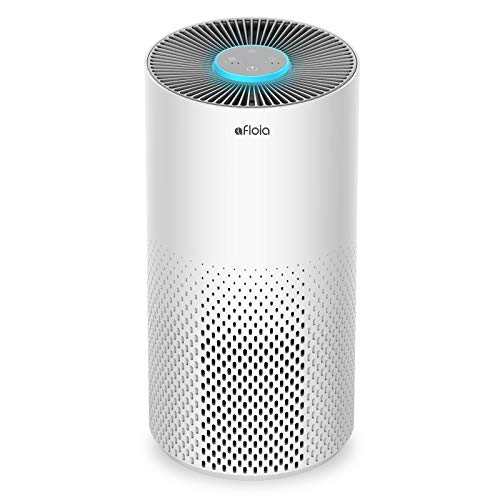
Afloia Kilo White Air Purifier for Home
Effective for large rooms up to 1076 sq ft.
True HEPA filter removes allergens and pollutants.
Quiet operation at just 22dB noise level.
 Lauren Wilson
Effective for large rooms up to 1076 sq ft.
True HEPA filter removes allergens and pollutants.
Quiet operation at just 22dB noise level.

Effective at removing smoke, pollen, and odors.
Compact design fits easily in any room.
Quiet sleep mode ensures restful nights.

Efficiently removes allergens and pollutants.
Quiet operation ideal for bedrooms.
Energy-saving with smart auto mode.

Efficiently removes allergens and odors effectively.
Quiet sleep mode ensures undisturbed rest.
Built-in PM2.5 monitor for air quality tracking.

Smart WiFi and Alexa compatibility enhance convenience.
HEPA filter effectively targets allergies and pollutants.
Quiet operation ensures a peaceful sleep environment.

Covers large areas effectively up to 1200ft².
Integrated fragrance function for pleasant aroma.
Smart air quality sensor for real-time monitoring.

Covers large 2000 Ft² area efficiently.
Equipped with a washable filter for convenience.
Includes fragrance sponge for added freshness.
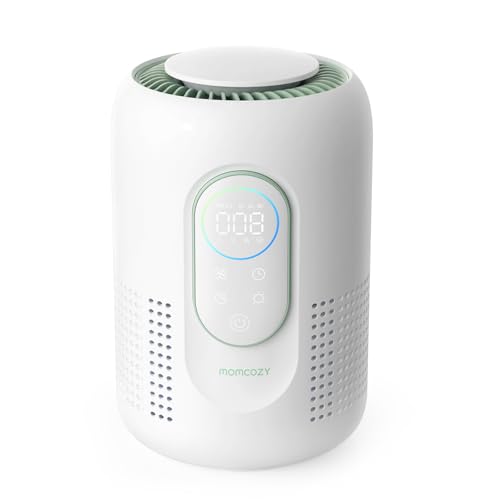
Efficient HEPA filter captures small particles.
Quiet operation, ideal for nursery use.
Compact design fits easily in small spaces.

Covers large rooms up to 1076 sq ft.
H13 True HEPA filter for superior air cleaning.
Effective odor elimination and night light feature.

Effectively removes smoke with True HEPA filter.
Compact size ideal for bedrooms and dorms.
Quiet operation ensures restful sleep.
The most important number is **smoke CADR**—clean-air delivery rate—not the largest square-foot figure on a product page. CADR indicates how quickly a purifier delivers cleaned air. A room-size claim is meaningful only when it states the air-change rate, ceiling height, and test conditions behind it. Across the products reviewed, advertised coverage ranged from roughly 200 to more than 2,000 square feet, while independently listed room sizes were often much smaller. Claims such as “one air change per hour” can describe broad coverage but relatively slow cleaning. A purifier that lists 90–122 CFM smoke CADR, for example, is suited to a smaller room than a headline area may suggest.
Look for the exact model in the **AHAM Verifide Room Air Cleaners Directory** or an **ENERGY STAR** product record with current smoke, dust, and pollen CADRs. A stated HEPA, H13, micron, or “99.97%” figure is not a substitute for room-level airflow data. Noise should also be judged at the fan speed that produces useful CADR, not only from a quiet sleep-mode claim. A low-decibel number without test distance, fan speed, or independent measurement may not describe effective cleaning.
For unwanted chemistry, favor a fan-and-filter design with documented low or zero ozone emissions. **CARB certification**, an **ENERGY STAR** ozone entry, or **UL 2998 Zero Ozone Emissions** validation is more meaningful than an unsupported “ozone-free” statement. Be cautious with ionizers, plasma, electrostatic, photocatalytic, and UV features unless model-specific emissions evidence is available. Optional aroma trays and fragrance pads are not needed for particle filtration and can add scent exposure.
Activated carbon may help with some odors, but odor and VOC performance depends on the amount and type of sorbent media. Most supplied products disclose neither carbon mass nor a standardized gas-removal test, so broad claims about VOCs, smoke gases, formaldehyde, or persistent odors should be treated cautiously. A washable prefilter can reduce dust loading, but the main filter is usually a recurring disposable item. Check the replacement interval, correct filter availability, reminder method, and any recycling or take-back option.
Finally, look for a traceable North American electrical-safety listing through UL, Intertek ETL, or CSA, and check the exact model against CPSC recalls and safety warnings. Recurring cautions in the supplied reviews include unverified large-room claims, unmeasured noise at effective speed, uncertain electrical listings, limited carbon evidence, disposable-filter waste, and optional fragrance exposure. One product also carried a Proposition 65 lead warning, while a recall affected a different model from the same brand; exact-model verification therefore matters. No supplied product should be treated as a medical device, infection-control system, mold-remediation tool, or substitute for ventilation and source control.
The topics below distinguish a purifier that has useful, documented particle performance from one that mainly presents broad marketing claims. Scores are used alongside the underlying review evidence: a higher score means the supplied product performed better on that specific buyer concern, not that it guarantees a health or environmental outcome.
This measures whether claims about allergies, asthma, infection, sleep, or other health outcomes stay within the evidence for portable filtration. A high score reflects restrained claims and clear limits; a low score reflects implied prevention, cure, or guaranteed symptom improvement. Among the supplied products, stronger scores were paired with language describing particle reduction as supplemental rather than promising medical or sleep benefits.
This measures whether disclosed smoke CADR can provide useful air changes in the buyer’s actual room and ceiling height. High-scoring products had model-specific figures such as 98, 115, 122, or 242 CFM smoke CADR; low-scoring products relied on large coverage claims without CADR. The recurring distinction is useful airflow for a stated room, not maximum square footage.
This measures ozone and other unwanted chemistry from ionization, plasma, electrostatic, photocatalytic, or UV features. High scores in the supplied set were associated with CARB mechanical-device listings or independently reported zero or low ozone, including 0.0 ppb records. Lower scores reflected missing exact-model certification or unexplained UV or electronic-cleaning features. Optional fragrance is a separate exposure and is not needed for filtration.
This measures whether odor and VOC claims are supported by meaningful carbon media and whether aroma features are clearly optional. High scores require transparent carbon capacity or gas testing and no required scent; low scores commonly reflected undisclosed carbon mass, no gas-phase test, or fragrance pads. Most supplied products could support only cautious claims about light odors, not substantial VOC removal.
This measures whether the exact purifier and power supply have a traceable North American safety certification and no unresolved recall or serious incident pattern. A high score means credible model identification and no relevant safety action; a low score reflects unconfirmed UL, ETL, or CSA listings. CARB certification can include electrical-safety testing, but it does not replace checking the exact model’s listing.
This measures whether useful cleaning can continue without noise, bright lights, or controls that encourage the buyer to turn the unit down or off. High scores are supported by sound data tied to the effective fan setting or credible quiet-use evidence. Lower scores commonly involved sleep-mode numbers only; the supplied reviews repeatedly note that the quietest setting may move substantially less air.
This measures sealing, bypass protection, replacement instructions, reminder accuracy, and continued access to correctly fitting filters. High scores were associated with named replacement cartridges, clear intervals, washable prefilters, or filter-life indicators. Lower scores reflected uncertain filter availability, vague maintenance information, or disposable cartridges whose continued fit and supply were not clearly documented.
This measures whether the exact model has third-party smoke, dust, and pollen CADRs rather than only HEPA or micron claims. High scores in the supplied set came from current ENERGY STAR or AHAM-linked model data, including strong results for several Blueair, Dreo, Levoit, and Clorox products. Lower scores reflected independent hands-on tests without standard CADR programs, or no model-specific performance record.
This measures whether coverage, HEPA, pathogen, pet, smoke, odor, sensor, and environmental claims state their conditions and limitations. High scores distinguish particle capture from gas removal and disease protection. Lower scores commonly involved one-air-change coverage headlines, unsupported virus or sleep claims, inconsistent CADR figures, or claims that a purifier removes all contaminants. The supplied scores ranged from cautious, evidence-matched products to heavily qualified marketing.
This measures electricity used to deliver particle cleaning, including smoke CADR per watt and partial-on or standby power. High-scoring products in the supplied set had ENERGY STAR qualification and figures such as 5.3–7.0 CFM per watt, low partial-on power, or low annual energy use. Lower scores lacked independent efficiency data or offered only a manufacturer wattage without linking it to useful cleaning.
This measures filter materials, service interval, replacement availability, prefilter durability, and disposal or recycling support. High scores were helped by washable prefilters, longer stated intervals, and readily available genuine replacements. Lower scores reflected frequent composite-filter replacement, uncertain availability, and no take-back or recycling program. Even a durable prefilter usually does not eliminate disposable main-filter waste.
The Afloia KILO is a compact, floor or tabletop portable air purifier with a cylindrical replacement filter, touch controls, three fan settings, timer, and colored night light. It is intended for particle control in one small enclosed room, rather than whole-home cleaning. Afloia describes a three-stage filter with a prefilter, particle filter, and activated-carbon layer, and recommends filter replacement every three to six months. An ENERGY STAR record for this exact Kilo model independently lists smoke, dust, and pollen CADRs of 56, 69, and 85 cfm, respectively, plus zero measured ozone emissions. Those numbers support useful particle filtration in a small room. They do not substantiate the much larger 1,076 square foot marketplace coverage statement without a stated air-change target. The ENERGY STAR record identifies the particle filter as HEPA-type H11, while some marketplace materials use stronger HEPA wording.
This product fits someone seeking supplemental particle filtration beside a bed, in a nursery, home office, or similarly small enclosed room with an 8-foot ceiling. The independently listed 56 cfm smoke CADR is most appropriate where the device can run continuously and the room is around 87 square feet, not across an open apartment or large living area. It also suits users who value a simple fan-and-filter design, low partial-on power, a timer, and a sleep setting, and who can keep replacement filters on hand every few months.
It is not suited to buyers who need verified cleaning across a large bedroom, open-plan living space, high-ceiling room, or a room with substantial wildfire-smoke infiltration. Its independently listed smoke CADR is modest for those uses. It is also not a substitute for moisture repair and mold remediation, source control for strong odors or chemicals, ventilation, medical treatment, or layered infection precautions. Fragrance-sensitive households and people with chemical exposures should not rely on its unspecified carbon quantity for meaningful VOC reduction.
The clearest health-positive finding is the independently recorded fan-and-filter configuration with 0.0 ppb ozone emissions. This avoids the ionization, plasma, and ozone-generating mechanisms that can create unwanted indoor chemistry. Portable filtration can reduce airborne particles, but it does not remove every pollutant or independently guarantee allergy, asthma, sleep, or infection outcomes. It should complement source control and ventilation. Afloia states that the filter combines a prefilter, particle filter, and activated carbon. The carbon layer may help with light odors, but the company does not publish carbon mass or a gas-removal test. Replacement is recommended every three to six months, creating ongoing composite-filter waste. No product-specific filter recycling or take-back program was found. ENERGY STAR records confirm efficiency information, but that label does not validate broader health claims or the marketplace coverage statement.
This is a compact, plug-in room air cleaner measuring about 6.1 by 6.1 by 9.7 inches and weighing 3 pounds. It uses a replaceable cylindrical filter. The manufacturer describes a pre-filter, high-efficiency particle layer, and activated-carbon layer, plus four speeds, a timer, sleep controls, and an optional essential-oil pad. Its defining independent evidence is a 31 cfm smoke CADR, 33 cfm dust CADR, and 36 cfm pollen CADR in the ENERGY STAR register. That register assigns it a 48 square foot room size, so its verified particle output suits a very small enclosed room, not the 287 square foot coverage stated in the product listing. CARB lists it as a mechanical air cleaner, and ENERGY STAR reports 0.0 ppb ozone emissions.
This product fits someone who needs supplemental particle cleaning in a genuinely small, enclosed space, such as a compact bedroom, dorm room, nursery, workstation, or small office. The verified 31 cfm smoke CADR is most useful when the unit can run continuously near its higher settings in a room around the 48 square foot ENERGY STAR reference size. It also suits users who prioritize low electricity use and want a mechanical filtration design without ionization or a required fragrance feature.
It is not appropriate as the primary cleaner for an average bedroom, living room, open-plan area, or a space represented by the 287 square foot listing claim. People managing wildfire smoke, substantial cooking emissions, heavy pet allergen loads, or infection-risk reduction in a larger shared room need particle output sized to the actual room volume. It is also a poor fit for people with fragrance sensitivity, migraine, asthma triggered by scents, or households that need demonstrated VOC and odor removal rather than an undisclosed thin carbon layer.
The strongest health finding is independently registered particle performance paired with low-ozone documentation. ENERGY STAR reports 31 cfm smoke CADR, 32 cfm PM2.5 CADR, and 0.0 ppb ozone emissions. CARB lists this model as a certified mechanical air cleaner. These facts support particle reduction in a very small room, but portable filtration does not replace source control, clean-air ventilation, or medical care. The manufacturer describes a multi-layer filter with activated carbon and says it should be replaced every 3 to 6 months. Replacement cartridges are available from the manufacturer, but filter composition, carbon quantity, recycling instructions, and a take-back program were not documented. The optional fragrance pad should remain unused where scent exposure is a concern. A February 2026 CPSC fire and burn recall affected AROEVE MK04 units, not this product, but it makes exact-model electrical certification especially important to verify before use.
This is a small, corded tabletop air purifier for a bedroom, dorm room, desk area, or other enclosed space. The available product manual describes a cylindrical unit measuring about 6.7 by 6.7 by 9.8 inches, with three fan speeds, a timer, 360-degree intake, and an optional essential-oil tray. It uses a replaceable layered filter described as a pre-filter, H13 particle filter, and activated-carbon layer. The manufacturer states that it can clean a 250-square-foot room every 15 minutes and also markets coverage up to 1,076 square feet. Those statements are not backed by a model-specific smoke CADR in the available independent AHAM directory or an identified independent test report. The 22 dB noise figure and 5 W rating are likewise manufacturer-stated, with no published test conditions for the effective high-speed setting.
This product fits a buyer seeking a compact, basic fan-and-filter unit for a small enclosed sleeping, study, or desk-area space, and who is comfortable treating the stated 250-square-foot and low-noise figures as manufacturer claims rather than independently verified performance. It may also suit users who want simple manual controls, a timer, and the option to leave any fragrance feature unused. It is most appropriate where the goal is supplementary particle filtration, alongside source control and ventilation where possible.
It is not a suitable evidence-led choice for someone sizing filtration for a large room, an open plan, wildfire smoke, significant allergy or asthma concerns, or infection-risk reduction. Those uses need a known smoke CADR matched to the actual room volume and operating speed. It also does not suit people who need confirmed low-ozone certification or traceable North American electrical listing for this exact product. Fragrance-sensitive households should avoid using the essential-oil tray.
The filter design is described as mechanical pre-filtration, H13 particle filtration, and activated carbon, which is preferable in principle to intentionally ozone-generating cleaning methods. However, the exact product was not found in CARB's certified-device list, despite the product materials claiming CARB certification. The available materials also claim EPA certification, but EPA does not certify individual portable air cleaners. No model-specific independent CADR or ozone-emissions result was identified. The activated-carbon claim gives no media mass or chemical-gas test result, so it should not be read as proof of meaningful VOC control. The aroma tray is optional and can be left empty, which avoids introducing scent emissions. Filters are consumable waste. Replacement options appear to be available, but the available documentation does not provide a precise filter composition, recycling route, take-back program, or clearly model-specific replacement interval. No applicable CPSC recall or warning was located in the review.
This is a compact, corded room air purifier with a cylindrical 3-in-1 replacement filter, touch controls, four fan speeds, auto and turbo modes, a particulate sensor, and an aroma-pad compartment. It is intended for one enclosed room, not whole-home cleaning. The manufacturer sells a dedicated filter with a prefilter, HEPA layer, and activated-carbon layer. Its defining evidence is independent AHAM-derived performance data: smoke CADR is 115 CFM, with 121 CFM for dust and 131 CFM for pollen. Those figures support a suggested 178 square foot room at about 4.8 air changes per hour when run at the tested high setting. ENERGY STAR data also identifies fan-and-filter technology and reports 0 ppb ozone emissions. The much larger 856 square foot claim needs context, since that corresponds to only about one air change per hour.
This product fits someone using one closed bedroom, nursery, dorm room, office, or other small room of roughly 178 square feet or less who wants independently verified particle reduction for smoke-sized particles, dust, and pollen. It is particularly relevant when it can run on a higher speed during active particle events, then be reduced for sleep. It also suits buyers who specifically want a mechanical filtration design with CARB certification and documented zero ozone emissions, while leaving the aroma feature unused.
It is not designed to clean an open-plan living area, an entire apartment, or a large room at a rapid air-change rate. Households managing wildfire smoke, severe allergies, asthma triggers, or an active respiratory infection should not treat the 856 square foot figure as equivalent to high-rate cleaning. It is also a poor fit for people who need documented VOC, formaldehyde, or persistent odor removal, because the carbon amount and gas-phase performance are not disclosed. Fragrance-sensitive users should not use the aroma pads.
The strongest health safeguard is the product's mechanical filtration approach. CARB lists the model as mechanical, and ENERGY STAR-qualified product data reports 0 ppb ozone emissions. That matters because EPA cautions against air cleaners that intentionally generate ozone and notes that ionization, plasma, and some other electronic technologies can create ozone. The verified CADRs support particle reduction, while EPA describes health and allergy improvements from portable HEPA cleaners as possible and often modest, not guaranteed. The replacement filter combines a prefilter, HEPA layer, activated carbon, and plastic construction. Dreo sells the exact replacement and describes tool-free fitting, which can help maintain use of the intended filter. However, it is still a disposable composite filter, and no take-back, recycling route, carbon quantity, or independently verified gas-removal result was found. The included aroma-pad option is not needed for normal filtration and can introduce fragrance exposure. ENERGY STAR qualification supports energy performance, but it does not validate health claims.
This is a compact, cylindrical room air purifier with 360-degree air intake, a three-stage disposable filter, touch controls, Wi-Fi app control, voice-assistant support, timer, sleep mode, and night light. It is intended for a bedroom, dorm, nursery, or similarly small enclosed room. The manufacturer lists dimensions of 8.1 by 8.1 by 12.6 inches and a 37-watt rated power draw. Its particle performance is independently documented. ENERGY STAR lists 98 cfm smoke, 109 cfm dust, and 104 cfm pollen CADR, with a 152-square-foot room size. That smoke CADR is suitable for roughly a 150-square-foot room with an 8-foot ceiling under EPA sizing guidance. Levoit’s own page instead states 90 cfm CADR and 672 square feet at one air change per hour, so the larger coverage claim needs that important operating-condition qualifier.
This product suits someone using a small enclosed bedroom, dorm room, nursery, office, or pet room, particularly where fine-particle reduction from outdoor smoke, pollen, dust, or dander is the goal. Its independently listed 98 cfm smoke CADR fits a room around 150 square feet under EPA’s 8-foot-ceiling sizing table. It also suits people who want scheduled operation, app access, or a low partial-on power draw. For allergies or asthma, it is a supplemental exposure-reduction tool, not a substitute for source control, cleaning, ventilation, or medical care.
It is not designed to deliver rapid cleaning across a 600 to 675 square foot open-plan area, a high-ceiling room, or several connected rooms. The manufacturer’s larger coverage figure assumes only one air change per hour, while its independently listed smoke CADR is sized for a much smaller room. It is also not a solution for mold growth, combustion sources, severe smoke infiltration, or substantial chemical and odor problems, because the carbon quantity and gas-removal performance are not disclosed. Buyers needing independently verified quiet high-speed operation should seek measured sound data.
The most important safety finding is that CARB lists the product as mechanical filtration. That classification means it uses physical filtration rather than ion generation, and ENERGY STAR reports zero ozone emissions for the listed model. This matters because EPA advises avoiding air cleaners that intentionally generate ozone. CARB certification also requires electrical-safety testing for portable air cleaners sold in California. The filter combines a pre-filter, particle filter, and activated-carbon layer. Levoit states that the particle layer removes 99.97% of particles down to 0.3 microns and that the carbon layer reduces gases and odors, but the amount of carbon and a standardized gas test were not disclosed. The manufacturer recommends replacing the combined cartridge every six to eight months. That supports ongoing performance, but creates recurring disposable-filter waste, with no verified recycling or take-back program located. Levoit also posts a California Proposition 65 lead warning for the product, without identifying the component or exposure level.
This is a compact, DC-powered tabletop air purifier, measuring about 6.5 inches wide and 9.8 inches tall. It uses a replaceable cylindrical filter, touch controls, a PM2.5 display, automatic and sleep modes, a timer, child lock, and an optional pad for essential oils. LUNINO states a 5-watt rating, H13 HEPA filtration, 15 dB sleep operation, and a 1,200-square-foot coverage claim. The defining verified safety fact is that California's air-cleaner register lists model BW302 as a mechanical device, meaning physical filtration rather than ionization or ozone-generating technology. Cleaning capacity is much less clear. LUNINO does not publish a model-specific AHAM CADR or independent test report. A separate supplier listing for a BW302 of the same dimensions reports 60 m³/h CADR, about 35 cfm. If applicable, that figure does not substantiate a 1,200-square-foot room claim.
This product fits a person seeking a small, low-power mechanical-filter unit for a desk, bedside area, nursery, or other very small enclosed space, particularly when the fragrance pad will remain unused. The PM2.5 display, automatic mode, timer, child lock, and replacement reminder may make routine operation straightforward. Its California mechanical-device listing is relevant for households that specifically want to avoid an ionizer or similar electronic air-cleaning mode. Room-size expectations should remain conservative because a verified, model-specific CADR is not available.
It is not well suited to someone trying to clean a large living room, open-plan area, basement, or a 1,200-square-foot space during wildfire smoke. The product lacks a published independent CADR, and the available same-model supplier specification points to a much lower airflow than that coverage claim implies. It is also a poor fit for households managing asthma, COPD, migraine, fragrance sensitivity, or chemical sensitivity if the aromatherapy feature may be used. It should not be treated as infection protection or as a substitute for ventilation, source control, or medical care.
The strongest health-related finding is the California Air Resources Board entry for BW302, listed under FOSHAN AGILEBOW as a mechanical air cleaner. CARB describes this category as physical filtration without ozone or ion generation. CARB certification also requires electrical-safety testing, although it does not verify particle-cleaning effectiveness or establish that a device is safe for every use case. The fragrance pad is optional, not required for filtration, and leaving it empty avoids deliberately adding scent to indoor air. EPA notes that fragrances can cause asthma episodes and other adverse effects in some sensitive people. The filter is a disposable consumable. LUNINO's documentation calls for replacement every three to six months and offers a branded replacement filter, but provides no filter-material breakdown, recycling or take-back program, carbon quantity, gas-removal test, or independently verified cleaning output. EPA guidance emphasizes selecting a purifier by CADR, which is not published here.
This is a compact, corded room air cleaner, measuring 6.1 by 12.2 by 15.75 inches and weighing 6.7 pounds. It uses a three-stage filter assembly with a washable prefilter, particle filter, activated-carbon layer, four fan speeds, timer, automatic mode, particle display, child lock, and an optional fragrance pad. The maker states a 22-watt rating and 20 dB sleep setting. The strongest independently confirmed fact is that California lists both product variants as certified mechanical air cleaners. That supports low-ozone operation without an ionizer or UV mode. The manufacturer sells a dedicated replacement filter for both variants and specifies a 2,000-hour filter reminder. Its 2,200-square-foot, one-hour coverage claim is manufacturer-stated, not supported by a public model-specific smoke CADR or AHAM performance listing located in this review.
It suits a buyer seeking a compact mechanical particle filter for a bedroom, office, or other enclosed room, especially one who values automatic fan adjustment, a washable prefilter, and readily available official replacement filters. It is also a reasonable fit for households that want to avoid ionizer and UV features, since CARB lists the product variants as mechanical air cleaners. Use the stated large-room coverage cautiously and size it conservatively because public CADR data was not located.
It is not well suited to someone who needs documented air cleaning for a specific room volume, wildfire smoke response, allergy management plan, or infection-risk strategy. Those uses need a disclosed smoke CADR and sound data at the corresponding effective speed, neither of which was located. It is also a poor fit for people with fragrance-triggered headaches, asthma symptoms, or chemical sensitivities if the aromatherapy pad will be used. Do not treat it as a solution for mold moisture, major VOC sources, or whole-home filtration.
The verified health highlight is CARB certification. California lists both product variants as mechanical air cleaners, which is meaningful because it avoids an intentional ozone-generating mode. This matters because ozone can irritate the lungs. Portable filtration can lower airborne particles, but EPA describes health and allergy improvements as possible and often modest, not guaranteed. It does not replace source control, ventilation, or treatment of moisture and mold. The product has a washable prefilter and an official replacement-filter supply, both of which can extend service life and reduce premature disposal. The main filter remains a disposable combined particle and carbon component, with a manufacturer-set 2,000-hour reminder. No filter take-back or recycling program, carbon-media quantity, AHAM CADR result, ENERGY STAR qualification, or independent acoustic report was located. The scent pad is optional, but essential oils add fragrance exposure rather than improving filtration.
The Momcozy AP01 is a compact tabletop air purifier for a nursery, bedroom, or other small enclosed room. It uses a replaceable cylindrical four-layer filter with a prefilter, H13 HEPA media, activated carbon, and a silver-ion-treated layer. It has four fan speeds, a PM2.5 display with automatic mode, and a dimmable night light. Momcozy says the unit is intended for rooms up to 250 square feet and can clean that area in 15 minutes, but it does not publish model-specific smoke, dust, and pollen CADRs or the test conditions behind that claim. A meaningful independently confirmed fact is that California lists this exact model as a certified mechanical air-cleaning device. That is reassuring for ozone concerns. The 21 dB sleep-mode figure, filter performance statements, odor claims, and PM2.5-monitor performance remain manufacturer-stated rather than independently documented for this product.
This product suits someone setting up a small, enclosed nursery or bedroom who wants a compact mechanical purifier with a visible PM2.5 reading, automatic fan adjustment, a low-light option, and direct access to replacement filters. It is most appropriate when used as a supplement to source control and ventilation, such as limiting candles, smoke, and strong cleaning-product emissions. The CARB mechanical-device listing is particularly relevant for households seeking to avoid ionizer or ozone-generator designs. Its stated quiet sleep mode may also suit light-sensitive nighttime settings.
It is not well suited to buyers who need a documented particle-cleaning rate for wildfire smoke, significant allergies, asthma management, or a larger room. No independently verified smoke CADR was located, so the advertised room coverage cannot be relied on for those higher-stakes uses. It is also not the right tool for mold remediation, moisture problems, or meaningful chemical and VOC control, because its carbon quantity and gas-removal performance are undisclosed. Families seeking proven infection prevention should not treat a portable purifier as a standalone protective measure.
The strongest safety finding is California Air Resources Board certification for the exact product as a mechanical air cleaner. CARB certification is relevant because it distinguishes the unit from electronic air-cleaning technologies and addresses ozone-emission controls. No applicable U.S. recall or regulator warning for this product was located in the review. The claimed ETL, CE, and FCC certifications could not be confirmed in a public issuing-body listing during this assessment. The filter combines particle filtration, carbon, and a silver-ion-treated layer. Carbon can help with gases only when there is enough sorbent media, and Momcozy does not disclose its carbon mass or publish a chemical-gas test. The brand says a cartridge lasts about three to four months and sells replacements directly. That supports maintenance continuity, but frequent disposable cartridges create ongoing material waste. No recycling instructions, filter-material breakdown, or take-back program was identified.
MOOKA B-D02L is a compact, corded room air purifier, about 7.1 inches square and 11.1 inches tall. It draws room air through a cylindrical three-stage cartridge with a pre-filter, H13 HEPA layer and activated-carbon layer. Four fan modes, timers, child lock and a switchable night light make it a manual bedside or desktop device, not an automatic sensor-driven cleaner. The manufacturer says the cartridge should be replaced every 3 to 6 months. Its room-size figures are manufacturer-stated, six air changes per hour in 215 square feet and one air change per hour in 1,076 square feet. A nonstandard independent reviewer test found meaningful particle reduction in a 120-square-foot room, but there is no identified model-specific AHAM or Energy Star CADR listing. That leaves the large-area claim difficult to validate under the standard CADR framework.
This product suits someone seeking a small, simple purifier for a bedroom, desk area, nursery or other enclosed room around 120 square feet, provided they can run it on a higher fan setting when particle control matters. It is also relevant for households that value manual controls, a switchable light and modest measured electricity use. The buyer should be prepared to replace the cartridge every 3 to 6 months and treat the carbon layer as limited odor support, not a tested VOC-control system.
It is not suited to people who need verified smoke CADR data for wildfire smoke, asthma management, infection-risk planning or a larger shared living space. Those uses require a model with independently listed particle performance sized to the actual room and ceiling height. It is also a poor fit for households dealing with strong cooking odors, tobacco smoke or chemical VOCs, because carbon quantity and gas-removal performance are not disclosed. California buyers seeking documented low-ozone certification should verify the exact product before use.
The published design is based on mechanical filtration, with a pre-filter, HEPA layer and activated-carbon layer. That avoids an advertised ionizer, plasma or UV mode, but it is not the same as independently verified zero-ozone performance. The exact product was not found in the CARB certified-device list reviewed. Its manual presents cULus Intertek marking, although a corresponding public product-listing record was not located during this review. No applicable CPSC recall was identified in the recall search performed. Filter replacement is the main material burden. MOOKA sells a dedicated cartridge and advises replacement every 3 to 6 months, which supports continued use but creates recurring mixed-media filter waste. The company does not disclose activated-carbon mass, filter-material composition, recycling instructions or a take-back program for this cartridge. Electricity demand is relatively low in one independent test, but cleaning efficiency per watt remains unverified because no independent CADR is available.
This is a two-pack of small, plug-in room air purifiers, each about 6 by 6 by 9.7 inches. The product is intended for bedroom, dorm, and similar single-room use, with touch controls, a night light, sleep mode, and a fragrance sponge. The seller states that each uses particle filtration with activated carbon, while third-party retail listings confirm separately sold replacement filters described as True HEPA and activated carbon. The defining limitation is evidence, not a confirmed defect. The stated 270-square-foot coverage figure has no published smoke CADR, test report, or stated ceiling-height condition. EPA guidance uses CADR, rather than square footage alone, to size a portable cleaner. The 24 dB sleep-mode figure is manufacturer-stated and does not identify fan speed, distance, or test method. No model-specific AHAM Verifide, ENERGY STAR, CARB, UL 2998, or electrical-safety listing was located in the checked public registers.
This product suits someone who wants two very small, basic mechanical-filter units for separate bedrooms, desks, dorm spaces, or other enclosed small rooms, and who is comfortable treating the stated room coverage and quiet-mode number as manufacturer claims. It also fits a household that values having replacement filters currently listed for sale. Use it as a supplemental particle-control measure alongside source control and ventilation, rather than as a documented solution for a large room, smoke emergency, odors, or a health condition.
It is not well suited to people who need a documented cleaning rate for wildfire smoke, asthma management, allergy symptoms, infection-risk reduction, or a room with high ceilings. Those uses require a cleaner with model-specific CADR data sized to the actual room. It is also a poor fit for fragrance-sensitive users unless the scent feature is left unused, and for households needing verified low-ozone emissions, a traceable electrical-safety listing, measured energy performance, or substantial odor and VOC control.
Portable filtration can reduce airborne particles, but EPA says health and symptom improvements are generally modest and not universal. This product's published mechanical particle filter and activated-carbon filter description is more consistent with ordinary particle filtration than with an intentional ozone-generating technology. However, no independent model-specific CADR, ozone-emissions result, or health-outcome study was found. The fragrance sponge is optional in practice, but it can add avoidable fragrance exposure for scent-sensitive occupants. The product includes replaceable filters, and replacement filters for this model are listed separately, which helps avoid discarding the units when filters load up. Still, the manufacturer does not publish the carbon mass, filter material breakdown, service interval, take-back program, recycling instructions, power draw, or standby consumption located in this review. No applicable CPSC recall or public safety incident record was found in the checked searches, but no traceable North American electrical-safety listing was located either.


