Best Overall
29% off

Brome Squirrel Solution200 Bird Feeder
Effective squirrel-proof design ensures seed protection.
Six feeding ports accommodate multiple birds simultaneously.
Includes a convenient free seed funnel for easy refills.
 Daniel Kenitz
Effective squirrel-proof design ensures seed protection.
Six feeding ports accommodate multiple birds simultaneously.
Includes a convenient free seed funnel for easy refills.
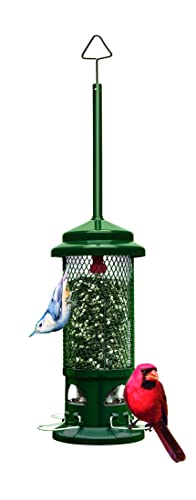
Effectively deters squirrels from accessing bird seed.
Durable metal perches accommodate multiple birds.
Generous 1.3-pound seed capacity for convenience.

Effective design keeps squirrels away.
360° tray allows multiple birds to feed.
Durable and weather-resistant for outdoor use.

Squirrel-proof design protects bird seed supply.
Large 4.2-pound capacity reduces refills.
Four feeding ports accommodate multiple birds.

Effectively keeps squirrels away from bird food.
Large seed capacity minimizes refill frequency.
Adjustable design accommodates various bird types.

Durable construction withstands harsh weather conditions.
Large capacity reduces frequent refills.
Easy to clean and maintain.

Solar-powered design for uninterrupted birdwatching.
AI technology identifies over 10,000 species.
Real-time app alerts enhance birdwatching experience.

Solar-powered for eco-friendly, continuous operation.
AI identifies and captures bird videos automatically.
2K live feed offers clear, detailed viewing.

Rechargeable perch deters squirrels effectively.
Large 5lb seed capacity minimizes refills.
Durable UV-stabilized tube ensures long-lasting use.
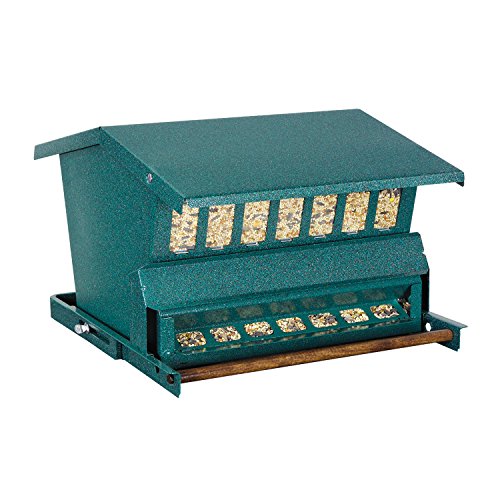
Effectively deters squirrels with unique design.
Durable build for long-lasting outdoor use.
Large seed capacity minimizes refill frequency.
Look first for a named mechanism and its operating conditions. A weight-sensitive perch or shroud should state the required clearance from trees, rails, roofs, walls, or other launch points, and explain whether the threshold can also exclude heavier birds. The supplied reviews repeatedly show that placement is decisive: one design specifies 18 inches of surrounding clearance, while other guidance calls for keeping feeders well away from squirrel jumping points. A mechanism can fail if a squirrel reaches the ports from nearby support without putting its full weight on the feeder. No feeder should be treated as universally squirrel-proof; some products expressly exclude only certain animals or may not deter raccoons, chipmunks, flying squirrels, deer, bears, possums, grackles, or starlings.
For performance, prefer independently observed evidence that names the exact model and reports the setup, seed type, test duration, and whether squirrels actually reached the food. A one-week or one-month outdoor test is more informative than seller language, but still does not cover every installation or animal. Bird access should be reported too: cage openings, perch size, and spring settings can preserve access for finches and chickadees while excluding cardinals, jays, or other heavier birds. Capacity figures also need context. A five-pound hopper may reduce refills, but wet or old seed can become a hygiene problem, and a large feeder can be heavy enough to bend a weak support.
A buyer should also check whether the feeder can be emptied, taken apart, scrubbed, rinsed, disinfected when appropriate, and dried completely. Covered hoppers, ventilation, drainage holes, and seed-catching trays may reduce wet seed and spillage, but they are not substitutes for cleaning. Open trays and inaccessible internal areas can leave seed, hulls, or droppings behind and attract rodents or concentrate disease hazards. Look for a cleaning demonstration or instructions that identify every seed-contact part, rather than relying on “easy clean” wording.
For safety and service life, inspect moving shrouds, springs, ports, wire spacing, edges, hanging hardware, and any pinch or entrapment points. Prefer clear material declarations, warranty terms, replacement parts, and repair support. Where a product includes electronics, a product-specific FCC authorization is relevant to its wireless function; UL Product iQ or Intertek ETL records would be relevant only where applicable. A CPSC recall or SaferProducts record is not a safety certification, and the absence of a recall is not proof that a product is safe. Environmental claims such as “recyclable,” “lead free,” or “durable” should identify supporting material records or a certifier.
Recurring caveats in the supplied reviews are important: squirrel control depends on clear placement and can be bypassed; large or heavy birds may also be excluded; spilled or damp seed still needs prompt removal; and regular cleaning and complete drying are necessary. Moving mechanisms require inspection, and one supplied review reported a bird-foot entrapment injury. Powered rotating parts require extra safeguards around children and pets. Products without cleaning instructions, replacement parts, load guidance, or independent testing leave meaningful uncertainty for buyers.
A feeder affects bird, pet, and human health through cleanliness, construction, and where seed accumulates. Its ecological value depends on limiting non-target access without unnecessarily excluding or injuring birds. The supplied products show that strong performance in one area does not guarantee strong performance in the others.
This measures whether seed stays dry, droppings stay out of food, and every food-contact area can be emptied, scrubbed, rinsed, disinfected when appropriate, and dried. It matters because dirty, wet feeders and spilled seed can concentrate mold, pathogens, and exposure for birds, pets, and people. The supplied scores range from weak designs that cannot be fully disassembled to higher-scoring feeders with removable parts and explicit drying instructions.
This covers sharp edges, pinch points, unstable hardware, flaking finishes, and accessible small or breakable parts. A high-scoring feeder is robust in ordinary outdoor use and gives clearer material or safety information. Among the supplied products, metal or mixed metal construction generally scores better than exposed plastic, but no score removes the need to inspect moving parts, hanging hardware, and contact areas for wear or entrapment risks.
This measures whether advertising explains what the feeder can and cannot prevent, including setup requirements and animal limitations. Higher-scoring products state that deterrence is conditional, identify required clearance, or disclose that exclusion is not absolute. Lower-scoring products use absolute-sounding “squirrel-proof” language despite having no physical barrier, no independent test, or known bypasses such as nearby footholds and alarm habituation.
This measures whether named-model claims are supported by reproducible outdoor testing, recognized certification, or public regulator records rather than seller assertions alone. The best supplied evidence reports squirrel access, bird species, test duration, or seed outcomes for the exact model. Many lower-confidence products had no independent test, no model-linked FCC record where relevant, no certification, and no regulator record beyond the absence of a recall.
This measures whether adult squirrels are actually kept from seed under realistic use, without simply blocking birds. The strongest supplied results combine a physical weight-triggered or cage mechanism with named-model outdoor testing; several products rely only on seller claims, alarms, metal bodies, or untested gravity systems. Clearance matters: nearby launch points can let squirrels bypass a closure, so even a high-scoring mechanism is conditional.
This considers whether the perch geometry, cage openings, ports, and weight setting let the intended birds feed safely. Higher-scoring products had independent observations of several small and medium songbirds, or clearly documented target species and access. Lower-scoring or less certain products lacked aperture measurements or bird testing, and some mechanisms can close for heavier birds along with squirrels.
This examines wire spacing, ports, moving guards, perches, and hanging parts for entrapment, cuts, crushing, feather damage, or snagging. Scores are generally moderate because product-specific wildlife-injury testing is scarce. A reported bird-foot injury on one moving-perch feeder and the absence of independent pinch or aperture testing show why smooth, guarded parts and regular inspection matter even when a product claims to be wildlife-safe.
This measures whether seed is dispensed predictably, stays dry, and is caught or drained instead of accumulating below the feeder. Higher-scoring products include a tested seed-saving baffle, ventilation, or a more contained hopper; open trays, wet clumps, and squirrels scattering seed score lower. No design eliminates the need to sweep fallen seed, keep pets away, and remove damp or old food.
This measures whether the supplied hardware and instructions support secure mounting, squirrel-resistant clearance, adequate support, and bird-safe window placement. Higher-scoring products provide concrete clearance or mounting options; lower-scoring products offer generic hanging advice without load limits or launch-point distances. Buyers still need to verify that a full feeder is supported securely and is not placed where birds face avoidable window-collision risk.
This covers resistance to chewing, corrosion, UV exposure, water intrusion, seed clumping, and mechanical wear, along with replacement wear parts. Higher-scoring products combine outdoor material claims with warranties, parts diagrams, or repair support. Lower-scoring products lack service-life testing or replacement components, while powered feeders add charging and electronic-part limitations. A weatherproof claim alone does not establish long-term durability.
This considers material transparency, durable construction, replaceable parts, packaging, and end-of-life options. Higher-scoring supplied products have named replacement parts, lifetime or multi-year coverage, or a documented repair route. Lower-scoring products provide only broad plastic or metal descriptions and no parts catalog or recycling guidance. Repair support is useful evidence against premature disposal, but manufacturer recyclability claims remain unverified without traceable material records.
This is a hanging, weight-activated tube feeder with six seed ports, a 2-quart or 3.4-pound seed capacity, and a 24-inch body. A squirrel’s weight lowers the outer shroud to cover the ports, while birds use the individual perches and outer cage. Brome says it should have at least 18 inches of clearance from nearby launch points for that mechanism to work. Independent named-model tests by TechGearLab and Bob Vila found that the mechanism blocked squirrels in their test setups. TechGearLab also found the feeder attracted chickadees, titmice, finches, and some larger visitors, but reported that disassembly and cage cleaning took time. Construction is independently described as metal, plastic, and resin. Brome provides cleaning instructions and a route to request replacement parts, but its lead-free and fully recyclable claims are manufacturer statements rather than publicly identified third-party certifications.
This feeder fits a household with persistent adult squirrel pressure that can hang it from a secure support with at least 18 inches of open clearance. It suits people feeding sunflower, safflower, or similar dry seed to chickadees, titmice, finches, nuthatches, and other small to medium birds. Its 3.4-pound capacity is practical for an active backyard without requiring daily refills. It also suits an owner willing to take the feeder apart and clean the cage, ports, and ventilation area on a regular schedule.
It is not a simple option for anyone who needs the quickest possible wash-up, because independent testing found cage cleaning time-consuming. It is also a poor fit where raccoons, bears, deer, opossums, chipmunks, or flying squirrels are the main visitors, since Brome specifically excludes those animals from its deterrence claim. Do not rely on it where the hanging point is weak or close to rails, branches, decks, or walls that let a squirrel reach sideways. Households seeking dependable access for large perch-loving birds should note the small-perch limitation.
Keeping seed dry and feeders clean matters because wild birds can carry Salmonella, and contaminated seed or droppings can spread disease at a feeding station. Brome instructs owners to empty, disassemble, soak, scrub, rinse, and fully air-dry the feeder every two to three weeks. This aligns broadly with public-health cleaning steps, but the cage still adds scrubbing work. Remove feeders and clean the area if sick or dead birds appear. The ecological strength is a nonlethal, weight-triggered barrier that independent tests found effective against squirrels. Its limits are important. Brome says the feeder needs 18 inches of clearance and does not deter several other animals. The brand states that its feeders are lead-free, recyclable, and repairable through replacement parts, but it does not identify a public certifier for the material claims. No product-specific CPSC recall or regulatory warning was located in the search conducted.
This is a hanging, tube-style seed feeder with four metal perches and a stated 1.3-pound, or three-quarter-quart, capacity. It is intended for mixed seed or black-oil sunflower seed and is used by suspending it with open clearance around the feeder. Its defining feature is a weight-triggered outer shroud. Brome states that the shroud closes the seed ports when a squirrel loads the mechanism, while a third-party product review describes the same closing action in use. Brome’s published parts diagram separately identifies the hanger, shroud, perches, and seed-tube assembly, which makes the product more serviceable than a sealed feeder. Construction claims include RoxResin exterior components, stainless-steel perches and hanger, UV stabilization, and seed-tube ventilation. Those material and weather claims were found in manufacturer-supplied product descriptions, not laboratory material testing.
This product suits a homeowner with a modest backyard bird-feeding station, persistent adult squirrel pressure, and a secure hook, branch, or pole that can maintain clear space around the feeder. It is most appropriate for buyers feeding smaller perching and clinging birds with sunflower seed or a compatible premium mix, who are willing to refill a compact reservoir and periodically disassemble it for cleaning. Its replaceable core assemblies also fit a buyer who prefers maintaining a mechanical feeder rather than treating it as disposable.
It is not well suited to households that cannot place a hanging feeder away from branches, rails, walls, poles, or other launch points. The closing mechanism needs an unobstructed setup to work as intended. It is also a poor fit for buyers seeking independently measured proof of squirrel exclusion, spill control, bird injury prevention, or chemical safety. People trying to feed larger or heavier birds consistently should be cautious, because the adjustable weight mechanism is specifically intended to shut out heavier visitors. Households with pets should still keep pets away from seed and debris below the feeder.
The strongest health feature is cleanability. A third-party review reports detachable, dishwasher-safe components, and the separated assemblies shown in Brome’s parts diagram should allow scrubbing and drying beyond the level possible with sealed feeders. That matters because CDC and Cornell guidance emphasizes removing old seed and droppings, disinfecting feeders, rinsing, and drying fully before refilling. The manufacturer’s ventilation claim may help seed stay drier, but it is not a substitute for regular cleaning or for discarding wet, clumped, or spoiled seed. The product has no electrical component and no claimed third-party certification requiring registry verification. No relevant CPSC recall or public regulator warning was identified in the checks performed. The documented parts breakdown is a meaningful lower-waste attribute because major wear assemblies can be individually identified and serviced. However, Brome does not provide a full material formulation, recycled-content claim, packaging statement, or end-of-life recycling guidance for this product.
This is a hanging, tube-style seed feeder with a circular perch and catch tray. Independent retailer listings corroborate the stated 3-pound capacity, 7.5 by 7.5 by 11 inch size, and ABS plastic and metal construction. It is intended for outdoor use with wild-bird seed and is refilled by releasing and lifting the roof. The product description says a weight-sensitive mechanism closes feeding ports when a squirrel loads the perch, while the roof is intended to keep rain off the seed. Those are manufacturer-stated performance claims, not findings from a named-model independent field trial. Searches did not locate a product manual, exploded-parts diagram, cleaning demonstration, replacement-parts catalog, warranty terms, or recognized third-party certification for this specific feeder.
This product suits a budget-conscious household with a modest hanging feeding station that wants a compact feeder, does not need a large bulk-seed reservoir, and is prepared to monitor it closely. It is most appropriate for someone feeding common small to medium perching songbirds, regularly sweeping seed beneath the feeder, and willing to clean the tray, ports, and tube every week or two in wet weather or during heavy use. It also suits users who accept a manufacturer-stated squirrel-deterrence mechanism rather than requiring independently tested exclusion.
It is not suited to households that need documented wildlife-safe design, independently proven squirrel exclusion, or readily available replacement parts before putting a feeder outdoors. Avoid relying on it where squirrels can launch from nearby trees, railings, roofs, or fences, because no model-specific placement guidance or test limits were found. It is also a poor fit for users unable to take feeders apart and clean them frequently, or for sites with sick birds, heavy moisture, rodents, pets that can reach spilled seed, or frequent large-bird activity.
The main health issue is maintenance, not an identified material warning. CDC and Project FeederWatch advise regular outdoor cleaning, including scrubbing, rinsing, disinfection when warranted, and complete drying before refilling. They also caution that seed debris, droppings, and wet residue can support pathogen spread and attract rodents. A tray can help intercept loose seed, but it also needs routine cleaning so it does not become a collection point for contaminated seed or droppings. The ABS-and-metal material description was corroborated by retailer listings, but no composition declaration for coatings, food-contact testing, safety certification, UV testing, corrosion testing, warranty, or replacement-parts support was found. No product-specific recall, regulatory action, or FTC case was identified in the searched United States sources. The squirrel-deterrence mechanism is plausible, but there is no reproducible, named-model independent test showing its effectiveness or its limits. Safe siting remains important, including keeping launch points away and addressing window-collision risk.
This is a hanging, four-port seed feeder with a 4.2-pound stated capacity. The manufacturer lists it at 15.5 inches high, with metal and plastic construction, a metal frame, reinforced tabs, metal-covered hanging wire, and a wide top opening for filling. It is intended for mixed wild-bird seed or black-oil sunflower seed and is presented for songbirds including finches, cardinals, and grosbeaks. Its weight-activated design is manufacturer-stated to close all four ports when weight is applied to a perch or the roof. The manufacturer also gives specific setup conditions, including four feet of ground clearance, eight feet from jump-off points, and a pole baffle where appropriate. No published, independent named-product field test was located. Reviews hosted on the manufacturer site document some successful use, but also reports of squirrels bypassing the mechanism, wet seed clumping, inaccessible cleaning areas, plastic-port chewing, and spring rust.
This product fits a bird feeder user who wants a hanging, relatively high-capacity seed feeder and can follow a deliberate installation plan. It is most suited to an open location where the feeder can be kept four feet above ground, eight feet from launch points, and paired with a pole baffle if needed. It also suits someone prepared to clean outdoors regularly, fully dry the feeder before refilling, inspect the spring-loaded mechanism, and manage fallen seed below the feeding area.
It is not suited to households that need independently verified squirrel exclusion, especially where squirrels can reach the hanger, roof, nearby trees, railings, or structures. It is also a poor fit for users unable to clean a feeder outdoors or who need every seed-contact area to be easily brush-accessible. Avoid relying on it where replacement parts are essential, since the manufacturer says replacement springs are unavailable. Households with pets should also prevent pets from contacting spilled seed or sick and dead birds.
The manufacturer gives useful cleaning instructions that broadly align with public-health feeder hygiene principles. It recommends cleaning outdoors, wearing gloves, soaking in a 9:1 water-to-bleach solution, scrubbing, rinsing, and drying completely. That matters because tube feeders with ports can concentrate bird contact, and wet or soiled seed can increase disease and pest concerns. The feeder should be emptied and cleaned more often during wet weather or heavy use. Material disclosure is limited to metal and plastic. The product page does not present a material certification, third-party safety certification, recycled-content claim, or end-of-life program. The metal frame and covered hanging wire are manufacturer-stated to resist chewing, but manufacturer-hosted feedback includes reports of chewed plastic ports and rusted springs. Replacement springs are not available, which weakens repairability and can turn a single worn mechanism into a disposal issue.
This is a hanging, six-port tube feeder with a 5.1-pound, or three-quart, seed capacity and a detachable cardinal perch ring. It uses a spring-loaded, weight-activated outer shroud. When enough weight lands on the feeder, the shroud moves down to cover the ports. The manufacturer specifies black-oil sunflower seed and advises against mixes containing large fruit pieces or nuts. Independent product testing by Bob Vila found the named feeder effective at deterring squirrels and rated its durability and ease of use highly. Brome states that its parts can be separated by hand without tools, that the seed tube is ventilated, and that exposed components are chew-proof and UV-resistant. Its squirrel claim is meaningfully limited, however. Brome says the feeder does not deter several animals, including chipmunks, raccoons, deer, bears, and some squirrels, and it needs 18 inches of clear space around it to work as intended.
This product suits a dedicated backyard bird feeder user who regularly buys black-oil sunflower seed, has persistent squirrel theft, and can hang the unit with at least 18 inches of open clearance on every side. Its large capacity and six ports make it practical for a busy feeding station serving small and medium songbirds. It also fits owners willing to periodically disassemble, scrub, rinse, and dry a feeder, and to adjust the spring if bird access or unwanted heavy visitors become an issue.
It is not suited to households needing a feeder that excludes every nighttime or ground-based visitor. Brome specifically does not claim protection from chipmunks, raccoons, deer, bears, possums, or some squirrels, and advises bringing it indoors at night. It is also a poorer fit where the feeder must sit near railings, branches, walls, or other launch points, because those can bypass the weight mechanism. Buyers who cannot maintain regular cleaning, safely reach a hanging feeder, or need a built-in spill tray should consider a different setup.
Regular cleaning matters because congregating birds at feeders can spread disease, and public-health guidance advises cleaning feeders regularly and using disposable gloves during cleaning. Brome's tool-free detachable design can make that work more manageable, while its ventilation system is intended to reduce retained humidity. That ventilation benefit is manufacturer-stated, not independently quantified. The feeder should still be emptied, scrubbed, rinsed, and fully dried on a routine schedule, with spilled seed removed below it. The construction is independently described as metal, plastic, and resin, while Brome states that squirrel-exposed parts are chew-proof and all components are UV-resistant. A limited lifetime warranty and model-specific replacement parts support repair rather than full replacement. Brome also states that its feeders are lead-free, recyclable, and designed for repair, but it does not provide a publicly identifiable third-party certification record or material test report for those environmental and material claims. No applicable powered-product certification is relevant because this feeder has no electrical component.
This is a hanging tube-style seed feeder with a claimed 2-pound capacity, four feeding ports, a bottom tray with two perches, and a 4.5-inch top opening. The product page lists it at 6.1 by 6.1 by 13.58 inches and says it can hold sunflower, safflower, peanut, corn, or mixed seed. It is intended for small to medium seed-eating backyard birds, including finches, chickadees, cardinals, and similar visitors. The composition is listed as metal and plastic by both the marketplace page and an independent retailer listing. Jarkyfine states that the metal mesh, ports, and exterior are chew-resistant, rust-resistant, weatherproof, and squirrel-proof. The wide opening is a practical claimed feature for filling and access during cleaning, but no manual or parts diagram was located to show full disassembly or confirm how the tube, tray, ports, and hanger should be scrubbed and dried.
This product suits a buyer who wants a compact hanging seed feeder with a moderate 2-pound hopper, several feeding positions, and a relatively wide fill opening. It fits a routine where the owner can inspect the tray, remove damp or spoiled seed, brush debris from the ports, and clean the feeder regularly. It is more appropriate where squirrel pressure is occasional or where the feeder can be placed with a separate baffle and adequate clearance from trees, fences, roofs, and railings.
It is not suited to households that need documented squirrel exclusion, such as sites with persistent adult squirrels, raccoons, or deer and costly seed loss. The product provides no verified access test, threshold setting, or installation protocol for that purpose. It is also not ideal for anyone needing a fully documented washable design, replacement parts, a defined warranty, or disclosed finish chemistry. Use extra caution around outdoor pets and areas where spilled seed can attract rodents.
Wild bird feeders can spread disease when droppings, wet seed, and hull debris accumulate. CDC and Project FeederWatch advise regular outdoor cleaning, thorough rinsing and drying, handwashing after handling feeders, and increased cleaning or temporary feeder removal when sick birds are observed. Tube feeders with ports need particular attention because birds congregate closely at the feeding points. This product's 4.5-inch opening may help physical access for cleaning, but the available listing does not document complete disassembly, drainage, dishwasher safety, or cleaning instructions. Its listed materials are metal and plastic, with no published material declaration, recycled-content claim, replacement-parts program, or third-party corrosion test located. No product-specific CPSC recall or public safety action was located in the searched public resources, but no certification or independent safety testing was identified either. The squirrel-proof claim should be treated as a manufacturer claim, not as independently validated exclusion.
This is a solar-assisted, app-connected seed feeder with an integrated camera, a stated 1.25-liter ABS plastic hopper, a 360-degree adjustable perch, and a USB-C backup charging option. It is intended for remote viewing of visiting birds through 2.4 GHz Wi-Fi, with motion notifications and a stated 2K live-video feed. The available model-specific manual documents a flip-top refill opening, hopper washing instructions, drainage-hole maintenance, and removal of old or wet seed. Those are useful maintenance provisions, although the camera and electronics cannot be immersed. The same documentation describes a manually triggered app alarm intended to deter squirrels. It is not a weight-activated or caged feeder, and no named-model independent field test was located showing that it prevents squirrels from reaching seed.
This product suits a backyard birdwatcher who wants an app camera alongside a conventional seed hopper, has dependable 2.4 GHz Wi-Fi at the installation point, and can maintain the feeder routinely. It is most appropriate where the solar panel can receive regular sun and the owner can mount it securely on a suitable pole, wall, or tree. The user should be comfortable emptying wet seed, washing the hopper, and manually using the app alarm if squirrels appear.
It is not suited to someone seeking proven squirrel exclusion, especially where squirrels can jump from nearby trees, roofs, fences, or poles. An alarm is not equivalent to a weight-closing mechanism or exclusion cage. It is also a poor fit for sites without stable 2.4 GHz Wi-Fi, deeply shaded locations, or users who cannot inspect and sanitize a feeder regularly. Households with outdoor pets should also manage access to birds, droppings, and spilled seed.
The product is documented as using ABS for its hopper and as containing a rechargeable battery and camera electronics. The available manual directs owners to discard damp or clumped seed, wash the hopper with warm soapy water, keep drainage holes clear, and avoid immersing the camera module. Those instructions align with the practical need to keep seed dry and feeding surfaces clean. Regular sanitation remains important because wild birds and contaminated feeders can spread Salmonella to people and pets. Public health guidance calls for cleaning feeders outdoors, drying them before refilling, washing hands afterward, and removing feeders if sick or dead birds are found. No product-specific independent safety testing, public certification record, repair-parts catalog, or named-model squirrel-exclusion test was located in the reviewed sources. The weatherproof and spill-control statements remain manufacturer claims rather than independently verified outdoor performance.
This is a 1.8-liter ABS-plastic seed feeder with an integrated camera, solar panels, a removable camera module, and mounting hardware for a wall, tree, fence, or pole. Its documented manual lists 2.4 GHz Wi-Fi only, live video, motion alerts, two-way audio, and app-based bird identification. The product is intended for seed feeding and close-range backyard observation rather than as a mechanically squirrel-excluding feeder. An independent hands-on review confirmed close-up viewing, solar-assisted charging, USB-C backup charging, and removal from the mounting base for filling or cleaning. The same review found that the audible and flashing squirrel alarms did not deter a feeding squirrel. The feeder can therefore record or alert you to squirrel visits, but it should not be treated as a reliable barrier to squirrel access.
This product suits a backyard birdwatcher who wants camera footage and app alerts from a compact, approximately 1.8-liter seed feeder, has reliable 2.4 GHz Wi-Fi at the installation site, and can mount it securely on a wall, post, tree, or pole. It is most appropriate where squirrels are occasional visitors rather than a major seed-loss problem. The removable feeder body can also help a user who is prepared to take it down routinely for cleaning and refilling.
It is not suited to households that need dependable squirrel exclusion, especially where adult squirrels routinely empty feeders or damage plastic outdoor equipment. A reviewer directly observed a squirrel ignore both the loud alarm and flashing light. It is also a poor fit for buyers needing documented electrical certification, a verified weatherproof rating from an issuing body, replaceable wear parts, or a detailed sanitation protocol. Avoid tree or wall installation if you cannot ensure secure hardware, adequate Wi-Fi, and safe siting away from collision-prone windows.
The food-contact feeder body is listed as ABS plastic, and the product documentation calls for regular cleaning of the seed tray and feeding areas to limit old seed, droppings, mold, and bacteria. That is important because Cornell guidance recommends cleaning feeders regularly, rinsing with a dilute bleach solution, and drying fully before refilling. The available instructions do not demonstrate that every food-contact surface can be disassembled and scrubbed, so careful manual cleaning remains necessary. The key ecological limitation is squirrel control. The product uses a siren and flashing light rather than a seed-blocking mechanical mechanism, and an independent reviewer reported no deterrent effect on a squirrel actively feeding. No product-specific recall, public exposure warning, recognized certification record, replacement-parts catalog, or independent long-term durability test was located in this review. The ABS housing, integrated electronics, solar components, and lithium battery also create a more difficult end-of-life and repair profile than a simple feeder with separately replaceable parts.
This is a hanging, motorized tube feeder for dry seed. It holds up to 5 pounds and uses a rechargeable base with a weight-activated spinning perch ring. When sufficient weight is placed on the ring, it turns to dislodge a squirrel. It has four feeding ports, a powder-coated metal base, and a UV-stabilized polycarbonate tube, according to an independent comparative product test. Independent testing over one week found that this product worked extremely well at keeping squirrels off and was robust, though a filled feeder needs a sturdy, rigid hanging support. The manufacturer’s instructions also document a meaningful limitation, red squirrels and chipmunks may be too light to activate the mechanism. The body can be taken apart for cleaning and replacement of several parts, but the battery-containing Power Stick must not be opened or immersed.
This product suits a backyard bird feeder user dealing mainly with adult tree squirrels, who has a rigid hook or pole system that can safely carry a filled 5-pound feeder. It is particularly appropriate for someone willing to remove and recharge the base indoors, clean a multi-part tube feeder regularly, and follow clearance guidance so squirrels must put their full weight on the perch. It also fits users who value replaceable body parts and can manage a heavier hanging feeder.
It is not suited to households where children or pets can reach a moving perch ring, or where safe indoor charging and battery handling are not practical. It is also a poor fit for locations dominated by red squirrels or chipmunks, because the manufacturer says they may not be heavy enough to activate it. Avoid using it on a light shepherd’s hook, a weak branch, or an installation close enough to a rail, tree, pole, or structure that squirrels can lean across rather than land fully on the perch.
The feeder can be substantially disassembled, including the tube, feeding port, and silo, which supports thorough washing and drying. That matters because Project FeederWatch advises taking seed feeders apart, scrubbing all parts, rinsing, and drying fully, with more frequent cleaning during wet weather or heavy use. Tube feeders with ports need especially careful disinfection when birds show eye disease symptoms. Its materials are powder-coated metal and UV-stabilized polycarbonate, confirmed by independent product testing. The manufacturer’s current instructions identify nickel-cadmium batteries inside the sealed Power Stick and direct users not to incinerate them or open the unit. No third-party electrical safety certification is declared in the product instructions. The repairable feeder body can reduce replacement waste, but the sealed battery, motor, and gearbox remain a disposal and service limitation.
This is a large, one-sided hopper feeder for dry birdseed. It can be hung or fitted to the included pole hardware. Woodlink specifies a 10-quart seed reservoir, a clear seed-level window, and a hardwood perch connected to an adjustable counterweight. The perch is intended to close the seed-tray access when an animal exceeds the selected weight. The operating instructions provide ounce-marked settings and list example bird weights, with 2 ounces suggested for general feeding. They also document a lid that locks open for filling and cleaning, a plastic ground socket installed in a 10-inch hole, and monthly cleaning with mild soap and a little bleach. The squirrel-deterrence mechanism is concrete and plausibly functional, but no reproducible independent field test of this exact product was located.
This product suits a yard feeder user who wants a high-capacity dry-seed hopper and is willing to tune a weight-sensitive perch for selected small and medium birds. It is particularly relevant where refilling a small feeder frequently is inconvenient, since Woodlink specifies a 10-quart reservoir. It also fits users who can install a stable pole or hang a heavy loaded feeder from substantial support, then maintain it by discarding old seed, cleaning it regularly, and clearing seed waste below it.
It is not well suited to households that want all visiting birds, including heavier blue jays, mourning doves, grackles, and blackbirds, to retain access at the same time as squirrel exclusion. It is also a poor fit for users seeking independently tested squirrel-proof performance, detailed material or coating disclosure, or a no-maintenance feeder. Keep it away from areas where pets can reach spilled seed or wild birds. Users near windows should not rely on the included siting advice alone, because it lacks collision-risk distances.
The product's most useful health feature is maintainability. Its instructions call for monthly cleaning, removal of old seed, mild soap, a little bleach, and a roof that locks open during cleaning. That matters because contaminated feeders and spilled seed can help spread disease among birds and can expose people and pets to Salmonella. More frequent cleaning is appropriate when the feeder is visibly soiled or heavily used. Woodlink identifies a hardwood perch, clear plastic seed window, and metal feeder format, but it does not publish a full material or coating declaration for this product. No product-specific certification was claimed or located, and no matching CPSC recall, warning, or FTC action was located in the searched public records. The instruction sheet offers repair or replacement for products or parts that do not meet satisfaction expectations, which may support repair, but no public parts catalog or packaging and end-of-life information was found.


