Best Overall
18% off

ZAFRO Smart Tower Fan 42-Inch Black
Ultra quiet operation for peaceful sleep.
Convenient app and voice control features.
Wide 120° oscillation for optimal air distribution.
 Lauren Wilson
Ultra quiet operation for peaceful sleep.
Convenient app and voice control features.
Wide 120° oscillation for optimal air distribution.

Quiet operation ideal for bedrooms and offices.
Convenient remote control for easy adjustments.
Sleek bladeless design enhances safety and style.

Whisper-quiet operation at just 28dB.
Adjustable with five speeds and four modes.
Convenient remote control and 12-hour timer.

Sleek bladeless design ensures quiet operation.
Convenient remote control for easy adjustments.
Compact size fits well in any room.

Quiet operation ideal for bedroom use.
Customizable cooling with six speed settings.
Convenient 1-12 hour timer feature.

Super quiet operation for peaceful environments.
Adjustable height for customizable airflow direction.
Energy-efficient design reduces electricity consumption.

Quiet operation ideal for a restful environment.
Versatile settings with multiple speeds and modes.
Sleek, bladeless design enhances safety and style.

Adjustable speed settings for personalized comfort.
Quiet operation ideal for bedrooms or offices.
Sleek, space-saving design fits any room.
Whisper-quiet operation ensures a peaceful environment.
Adjustable height offers personalized comfort.
Remote control adds convenient usability.

Quiet operation enhances restful sleep.
Temperature-adaptive airflow adjusts automatically.
Wide 270° airflow ensures complete room coverage.
Start with the product’s intended use and physical design. A taller enclosed tower can direct airflow across a bed, desk, or seating area, while a compact tabletop model is intended for one nearby person. Oscillation range, speed selection, timer operation, display shutoff, remote control, and dependable on-unit controls determine how easily airflow can be adjusted. A stable base, guarded moving parts, secure assembly, and safe battery compartments matter particularly in homes with children or pets.
Treat headline numbers as claims unless their conditions and source are clear. Airflow may be reported as feet per second, cubic feet per minute, or another volume unit; these figures are not interchangeable and do not by themselves show useful airflow at a person’s location. Decibel claims can omit speed, distance, room conditions, or oscillation noise. Wattage may be a rated maximum, a manual figure, or a conflicting marketplace specification rather than measured electricity use. A timer can limit runtime, but it does not prove low operating or standby consumption. Independent testing should identify the exact product and disclose test conditions. For fan performance, relevant methods include AMCA 210 for aerodynamic performance and AMCA 300 for sound; an AMCA Certified Ratings Program entry or an identifiable independent laboratory report is stronger than an undetailed listing figure.
Safety evidence also needs exact-model matching. A claimed UL, ETL, or CSA mark is meaningful only when the product and model can be traced to the certifier’s public record. Intertek’s ETL directory, UL Product iQ, and CSA’s product listing database are the relevant places to check. A U.S. voltage rating and instructions for polarized plugs, fuses, overload protection, cord placement, dry use, stable-floor placement, and cleaning are useful, but they do not substitute for authenticated certification. Recall and incident searches in CPSC’s Recalls and SaferProducts.gov databases can identify known problems; a clear search is not proof that a product is risk-free.
For indoor air hygiene, look for specific unplugged cleaning instructions and access to dust-prone grilles, intake covers, blades, or prefilters. An ordinary fan is not an air cleaner. Filtration, allergen-removal, smoke, or purification claims require appropriate evidence such as a published CADR and AHAM verification; none should be inferred from an enclosed or “bladeless” outlet. Environmental claims likewise need product-specific material, recycled-content, packaging, repair, parts, and end-of-life disclosures rather than broad recyclable or green language.
Across the supplied products, the recurring safety caveat is that a fan must not be used as the heat-safety plan in dangerously hot conditions. CDC-related warnings in the reviews state that fans may provide comfort but can increase body temperature above 90°F or in very hot indoor conditions; use air conditioning or a cool location instead. Coin-cell remote batteries are a repeated child-ingestion hazard, and several products lack independently authenticated safety certification or measured airflow, noise, and power data. A few reviews also report tip-over concerns, conflicting electrical specifications, or oscillation noise, so these details deserve checking before purchase.
These topics assess a tower fan as an electrical air-moving appliance, not as an air conditioner or air purifier. Higher scores reflect stronger documentation, safer limits, and more credible evidence in the supplied reviews; they do not mean that any product is risk-free or suitable for dangerous heat.
This measures whether the fan offers useful personal airflow while clearly limiting its role during dangerous heat. That matters because a fan may improve comfort without lowering room temperature or preventing heat illness. Among the supplied products, higher scores generally accompany explicit ordinary-comfort use and clearer limits; lower scores occur where “cold air” or cooling language could mislead or where heat guidance is missing.
This measures U.S. voltage instructions, plug and cord safeguards, overload or fuse protection, authenticated safety evidence, and the absence of unresolved relevant incidents. It matters because tower fans are unattended mains-powered appliances. The strongest supplied scores belong to products with exact-model UL 507 or ETL documentation; lower scores reflect only marketplace marks, missing public certification matches, or unresolved specification uncertainty.
This measures stability, guarding, moving-part access, pinch points, and battery safety. A tower’s enclosed outlet can reduce direct blade access, but it does not prove stability or safe battery design. Higher-scoring examples combine documented stability or guard testing, secure bases, and practical warnings; lower-scoring products lack independent evaluation, have reported knock-over concerns, or use accessible coin-cell remote batteries.
This measures whether users can safely remove dust from intakes, outlets, grilles, blades, or covers and whether air-cleaning claims stay within the evidence. It matters because a fan recirculates room air and collects dust without necessarily filtering it. Higher scores reflect washable or removable access and clear unplugged cleaning instructions; lower scores reflect limited access or unsupported purification and allergen claims.
This measures whether the exact product is traceable to an accredited independent certifier rather than relying on a seller-issued mark. For tower fans, public UL, ETL, or CSA records are especially important for electrical safety. The supplied products with exact-model UL 507 or ETL documentation score much higher; products with only listing claims or no directory match score lower.
This measures whether airflow, reach, noise, oscillation, and wattage are supported by reproducible testing that identifies the exact product and conditions. It matters because feet-per-second, CFM, decibels, and watts are easily presented without context. The supplied products with identifiable independent airflow or sound testing score higher; manufacturer-only figures, even detailed ones, score lower.
This measures whether listings distinguish air movement from refrigeration, air purification, room-temperature reduction, energy savings, and room-size performance. Higher-scoring products state narrower, supportable functions; lower-scoring products use “cold air,” “whole-room cooling,” or similarly broad language without corresponding proof. A fan’s comfort benefit should never be presented as heat protection.
This measures the practical reliability and fallback operation of speeds, modes, oscillation, timers, displays, remotes, apps, and warranties. It matters because a fan should remain usable if a remote battery or connected service fails. Higher scores reflect manuals, physical controls, timers, troubleshooting, and support; lower scores reflect sparse documentation, reported operating problems, or unclear service paths.
This measures whether app, Wi-Fi, voice, and account features are optional, transparent, secure, and supported, with useful local controls when connectivity fails. It matters because a connected fan can involve identifiers, location, usage data, or account information. Higher-scoring products avoid cloud dependence or provide clearer disclosures; lower scores reflect data collection, unencrypted data disclosures, required accounts, or no update commitment.
This measures electricity use at useful airflow, idle or connected standby draw, and automatic shutoff. A lower-wattage claim alone does not show better efficiency if airflow is unknown. In the supplied set, higher scores reflect documented low-power or standby figures and timers, while lower scores reflect manufacturer-only ratings, conflicting wattage entries, or no measured draw under disclosed conditions.
This measures whether the fan can be kept working through cleaning, warranty support, replacement parts, service, and replaceable remote batteries. It matters because inaccessible dust paths, sealed motors, or missing parts can shorten product life. Higher-scoring products provide clearer warranties, cleaning access, or support paths; lower-scoring ones lack parts catalogs, repair instructions, or meaningful service documentation.
This measures product-specific material disclosure, recycled content, packaging, end-of-life instructions, and the accuracy of environmental claims. It matters because plastic construction or a recyclable-packaging statement says little about the whole appliance’s disposal or impact. Scores are higher where claims have identifiable certification or disclosure; lower where green language cannot be tied to the exact product or recycling route.
This is a corded, floor-standing 42-inch tower fan with a two-piece base, remote, touch controls, claimed app and voice control, 12 claimed speed settings, four claimed modes, 120-degree oscillation, and a claimed 12-hour timer. It is intended for indoor air circulation, not air purification or refrigeration. The available listing materials make its headline performance figures manufacturer-stated, not independently confirmed. They advertise 22 dB, 28 ft/s airflow, and either 1,060 or 1,680 CFM depending on the published specification. The phrase “blow cold air” overstates what an ordinary fan does, because it moves air and can improve evaporative comfort, but does not lower room temperature. The product manual gives useful electrical and placement precautions, including a polarized fused plug, indoor-only use, stable placement, and unplugging before cleaning.
This product suits a buyer who wants a tall indoor fan for personal or shared-room airflow and values multiple manufacturer-stated control methods. It is most appropriate where a conventional remote and touch panel remain available if phone controls are inconvenient. The wide claimed oscillation and many claimed speed settings may suit bedrooms, home offices, and living spaces where people want to direct moving air across more than one seating position. Use it as a comfort fan in a normally cool indoor room, not as cooling equipment.
It is not appropriate for anyone relying on a fan during dangerous indoor heat, especially older adults, infants, pregnant people, or people with heart, respiratory, or other health conditions. CDC guidance says fans should be used only below 90°F indoors because they can increase body temperature above that point. It also does not suit buyers who require an authenticated U.S. safety listing, independently measured sound and airflow data, a documented security-update commitment, or readily available replacement-parts and warranty terms.
The available instruction material includes meaningful basic safeguards. It calls for a stable surface, supervised children, an intact cord, indoor-only use, and unplugging before cleaning. It also describes a polarized plug with a replaceable fuse. However, no exact-product certification from a recognized U.S. testing laboratory could be authenticated, so these written safeguards are not equivalent to an independently verified safety listing. The product is a fan, not an air cleaner. No filtration, CADR, allergen, or purification evidence was found, and its surfaces should be kept free of dust using the manual's unplug-first, damp-cloth cleaning direction. Manufacturer materials do not provide a material breakdown, packaging information, electronics-recycling instructions, repair parts catalog, or product-specific warranty terms. The app-store disclosures say no data is collected, but Android also reports that transmitted data is not encrypted.
This is a corded, 42-inch plastic tower fan for indoor air circulation. It uses a two-piece floor base, touch controls and a remote, with six speed settings, four modes, 90-degree oscillation, a display and a timer. The seller describes a removable rear grille and impeller, plus a fused plug, circuit protection and a child-oriented pinch-proof grille. Its most important limit is clear in the product description, it circulates air and does not regulate room temperature or function as an air conditioner. The stated 22 dB low-speed noise figure, 26 ft/s airflow, 30-foot projection and 45 W rating are manufacturer claims, not figures located in an independent laboratory report. The seller also claims ETL certification, but an exact public listing for this product was not located in Intertek's directory.
This product suits someone who wants a tall, corded air-circulation fan for a bedroom, office or living area that already has safe cooling or ventilation available. It is particularly relevant for users who value a remote, timer, several airflow settings and access to the rear intake for dust removal. It is also better suited to users who understand that its role is to create a breeze and distribute conditioned air, rather than lower the room's actual temperature.
It is not appropriate as the only heat-safety measure during dangerous heat, especially for older adults, children, people with heart or lung conditions, or anyone without access to a cooler space. CDC guidance warns that fans can increase body temperature above 90 F. Households needing independently verified electrical certification, documented tip stability, measured low-noise performance, long warranty coverage or replacement parts should seek products with those records publicly available. It is also unsuitable for air cleaning, allergen control or smoke removal.
The product's own description makes an important health distinction, it is an air-circulation fan, not an air conditioner or temperature-control device. That matches public-health guidance that fans do not prevent heat illness in very hot conditions. It makes no air-purification or allergen-removal claim, which avoids confusing a fan with a filtered air cleaner. The seller states that the rear grille and impeller can be removed for cleaning, a useful hygiene feature if done with the product unplugged and according to its instructions. However, the seller's ETL claim was not authenticated for this exact product through a public Intertek record. Plastic is disclosed as the main material, but no recycled-content, packaging-reduction, end-of-life recycling or product-specific repair information was found. The remote is battery-powered, so its battery should be kept away from children and recycled through an appropriate local program.
This product is a corded, indoor 36.2-inch tower fan with a 6.5-inch square footprint and an 8.5-pound stated weight. The exact product manual specifies 120 V, 60 Hz power, 39 W rated power, five speeds, a 1 to 12 hour timer, 90-degree oscillation, onboard buttons, and a remote using a CR2025 coin battery. It is intended to circulate room air, not refrigerate it. Its strongest documented practical features are the removable back cover for internal dust cleaning, physical controls that remain available without an app, and a two-year limited warranty. The stated 28 dB noise level, high air-speed claim, and airflow figure were not supported by a located independent AMCA rating or an exact-model laboratory report. The phrase "blow cold air" should not be interpreted as lowering room temperature or as protection during dangerous heat.
This product suits someone seeking directed personal airflow for a bedroom, desk area, or modest indoor room where floor space is limited. It is particularly practical for users who want a conventional corded fan with physical controls, a handheld remote, timer, display-off setting, and adjustable overnight airflow rather than app dependence. It also fits users willing to vacuum or dust the intake area periodically, since the manual provides access through the rear cover. Use it on a dry, hard, level floor with the specified clearance.
It is not appropriate as the main heat-safety measure in a hot home, especially when indoor temperatures approach or exceed 90°F, or for people at elevated heat risk who need an air-conditioned cooling space. It is also unsuitable for anyone expecting actual air conditioning, particle filtration, allergy relief, or verified room-scale airflow data. Homes with toddlers should account for the remote's coin battery and supervise use. Those needing independently traceable certification evidence, published sound testing, or easily available repair parts should seek products with that documentation.
The manual gives useful electrical-use safeguards. It specifies a polarized 120 V plug, an overload fuse, restrictions on extension cords, and instructions to stop use if the cord or plug is damaged. It also directs users to keep vents free of lint and dust, which matters for airflow and overheating prevention. The manual warns that the remote's coin battery can cause severe injury if swallowed. For heat safety, this is a comfort device rather than cooling equipment. CDC guidance says fans may provide comfort, but should not be relied on to prevent heat illness in very hot indoor conditions. The manufacturer also posts a California Proposition 65 warning that the product can expose users to lead, without identifying the relevant component or exposure amount. The stated plastic construction has no product-specific recycled-content, packaging-reduction, or end-of-life recycling disclosure. Cleaning access, a replaceable remote battery, replaceable plug fuse, and a two-year limited warranty may prevent some premature disposal, but no broader repair-parts program was located.
This is a corded, freestanding 43-inch plastic tower fan for indoor air circulation. It has a roughly 11.8 by 11.8-inch footprint, three speeds, three modes, remote control, 85-degree oscillation, and a timer up to 12 hours. The manufacturer’s instructions specify 120 V, 60 Hz, 50 W operation, while the marketplace record states 60 W. The lower figure should not be treated as confirmed energy use because the sources conflict. Its most important verified feature is electrical safety certification. An Intertek Authorization to Mark names the NDTFT14RH and 5314H models, including Antarctic Star branding, as tower fans evaluated to UL 507. Intertek is an OSHA-recognized testing laboratory. Airflow, room coverage, 36 dB noise, and actual watt draw have not been independently located for this exact product. It circulates air, it is not an air conditioner or air cleaner.
This product suits someone seeking a tall, corded fan for personal comfort in a bedroom, home office, or living area where indoor temperatures remain below 90°F. It is particularly suited to users who want local buttons and a remote, adjustable airflow, broad oscillation, and scheduled shutoff without Wi-Fi, an account, or app permissions. Its documented UL 507 certification is relevant for buyers who want a traceable electrical-safety listing rather than relying only on a marketplace claim. It should be used on a level, dry floor with its intake and outlet unobstructed.
It is not for heat-emergency use, cooling an unairconditioned space during dangerous heat, or anyone who needs the fan to lower room temperature. CDC guidance says fans can increase body temperature when indoor temperatures exceed 90°F, so people at elevated heat risk should use air conditioning or a cooling center instead. It also does not suit buyers who need verified airflow, independently measured low noise, a documented room-size rating, or substantiated energy efficiency. Homes needing easy long-term repair or formal recycling guidance should note the limited parts availability and missing end-of-life information.
The strongest safety finding is traceable certification. Intertek’s authorization names this Antarctic Star model family and specifies UL 507, the electric-fan safety standard. The manual also instructs users to keep the fan on a flat, dry floor, maintain clearance from walls so openings are not blocked, avoid inserting fingers through the grilles, and unplug before cleaning. No product-specific CPSC recall, warning, or public unsafe-product report was located in the searched U.S. databases. This is an air-circulating fan, not an air purifier. No filtration, CADR, allergen-removal, or other air-cleaning claim was found. Exterior cleaning guidance is limited to unplugging first, wiping with a dry or slightly damp cloth, and avoiding water or cleaning chemicals inside the unit. The manufacturer discloses plastic construction and a one-year warranty, but does not provide meaningful product-specific material, recycled-content, packaging, recycling, standby-power, or post-warranty parts disclosures. The website’s claim that it cools room temperature in three seconds is not appropriate for an ordinary fan.
This is a 37-inch, plug-in plastic tower fan for indoor air circulation. It is designed to stand on the floor and is marketed for bedrooms, dorms, offices, and living areas. Seller specifications independently reproduced by major marketplaces describe six speed settings, four modes, remote and touch controls, 90-degree oscillation, and a timer of up to 12 hours. Those are seller or manufacturer-stated features, not independently tested findings. The product moves room air, it does not contain an air-conditioning or air-cleaning system. Its advertised 26 ft/s airflow and 28 dB sound figure have not been located in an independent laboratory report or AMCA certification record. Published reseller specifications also conflict on rated power, listing either 65 watts or 75 watts. The repeated wording that it can “blow cold air” overstates what an ordinary circulating fan does.
This product suits a budget-focused user who wants a tall, non-connected indoor fan for personal airflow in a bedroom, dorm room, or small shared living space with a safe indoor temperature. The stated remote, touch panel, timer, six speeds, and oscillation can be useful for adjusting airflow from bed or a desk. It is most appropriate where the buyer accepts that the advertised airflow, noise, and power figures are manufacturer-stated and has access to a properly cooled space during extreme heat.
It is not appropriate as protection during dangerous indoor heat, especially for infants, older adults, pregnant people, people with heart or chronic health conditions, or anyone unable to relocate to air conditioning. CDC guidance says fans should be used indoors only below 90°F because above that temperature they can increase body temperature. It is also not the right choice for buyers who require a publicly verified electrical safety listing, independently measured sound or airflow data, a documented repair path, or an air purifier for particle reduction.
The most important health limitation is that this is an air-circulating fan, not an air conditioner or purifier. A fan can improve comfort by moving air, but it does not cool the room or remove pollutants. CDC guidance advises using fans indoors only when temperatures are below 90°F, and using air conditioning or a cooling location when temperatures are higher. The product listing should not be read as a heat-safety solution. No exact-product certification record was located in the public safety-certifier directories searched, and no relevant product-specific CPSC recall or warning was located. The housing is stated to be plastic. No recycled-content, recyclable-packaging, low-waste, energy-saving, parts, repair, or end-of-life recycling documentation was found. The conflicting 65-watt and 75-watt retailer specifications prevent a reliable assessment of electricity use.
This is a corded indoor pedestal fan that can also be configured as a tabletop unit. It has a DC motor, five stated speed settings, 90-degree horizontal oscillation, manual vertical adjustment, a 12-hour timer, push-button controls, and a remote. Retailer-copied specifications identify a mostly plastic construction, a 20-watt rating, and adjustable height. Levoit states that the fan reaches 1,024 CFM and 22 feet per second, and that its lowest setting produces 20 dB of sound. Those figures are manufacturer claims, not results located in an AMCA certified-rating record or an exact-model independent laboratory report. The product is a personal air-moving device, not an air conditioner or air cleaner. It can improve perceived comfort through airflow, but it does not lower room temperature or filter pollutants.
This product suits someone who wants adjustable personal airflow beside a bed, desk, sofa, or in a modest indoor room, and who values a conventional local-control fan rather than app features. Its stated oscillation, timer, five speeds, height conversion, and remote support flexible everyday placement. It is also relevant for a household that wants a fan that can be routinely dusted, since the manufacturer states that the front grille and blades detach. The buyer should treat the sound, airflow, and energy figures as manufacturer-stated rather than independently measured.
It is not appropriate as the primary safety measure during dangerous indoor heat. CDC says fans should be used only below 90°F indoors, and EPA says portable fans do not cool the air and should not be used for cooling in a closed room when temperatures are in the mid-90s or higher. It is also not for someone needing verified low noise, verified electrical certification, independently confirmed performance, or a device that filters smoke, allergens, or other indoor pollutants. Households with young children should review the included assembly and guarding instructions before use.
The important health limit is that this product circulates air rather than cooling or cleaning it. CDC advises using fans indoors only when the temperature is below 90°F, because a fan can increase body temperature above that point. EPA similarly advises that electric fans do not cool air and are not protective against heat illness in very hot closed rooms. No filtration, CADR, ozone, allergen-removal, or purification claim was identified for this product. No exact-model recall, regulatory warning, or public incident pattern was located in the CPSC sources reviewed. That is reassuring but does not replace an authenticated electrical safety listing. The manufacturer’s broader policy provides a two-year limited warranty, which may reduce premature replacement. Materials disclosure remains limited to a retailer-copied plastic specification, with no product-specific recycled-content, packaging, repair-parts, or end-of-life recycling disclosure located. The lack of connected features avoids privacy and software-support burdens.
This is a corded, freestanding tower fan for indoor personal airflow and room air circulation. The available product manual identifies 120 V, 60 Hz input, 42 W rated power, a CR2025 remote battery, four airflow levels, Normal, Natural, Sleep, and Auto modes, oscillation, and a timer that can be set from one to eight hours. The manual gives this product an important heat-safety limit, stating that it is not an air conditioner and suggesting use with an AC unit. That is appropriate framing because a fan moves air around the user but does not make a dangerous hot room safe. Its manual also shows an Intertek marking and a fused, polarized plug. Intertek is an OSHA-recognized testing laboratory, but an exact public certification record for this specific product could not be confirmed. Published high-airflow and low-noise figures remain manufacturer claims, not independently rated results.
This product suits someone seeking a compact, corded tower fan for direct airflow at a bed, desk, or seating area, especially where app control is unwanted. It has physical controls, a remote, oscillation, display muting, and a one to eight hour timer. It is also better suited to a household that will follow the manual's placement, assembly, cord, cleaning, and coin-battery instructions. It can supplement an air-conditioned room by helping circulate cooled air.
It is not appropriate as the sole heat-safety plan for a home during a heat emergency, for people who need a cooler room rather than moving air, or for settings without access to air-conditioned refuge. CDC guidance says electric fans may provide comfort but do not prevent heat-related illness when temperatures are in the high 90s. Households with young children should also reconsider any remote with an accessible coin-cell battery, or secure the remote and routinely verify that its battery compartment locks fully.
The available manual contains useful safeguards. It requires a flat, dry surface and installed base, warns against inserting objects into the grilles, specifies a polarized plug, and describes a fused plug intended to protect against overload or short-circuit conditions. It also gives detailed CR2025 coin-cell warnings, including the risk of severe internal burns and death after ingestion. No product-specific U.S. recall was located in the CPSC recalls search during verification. The manual carries an Intertek marking, and Intertek is an OSHA-recognized testing laboratory. However, an exact public certification entry for this product was not confirmed. The product is a fan, not an air cleaner, and no filtration, CADR, or purification capability was documented. Its 42 W manual rating and timer can limit runtime, but airflow-per-watt and standby consumption were not independently measured. No verified recycled-content, packaging-reduction, parts, repair, or recycling program information was found.
This is a corded, freestanding 40-inch oscillating tower fan for indoor household use. It uses five manually selected airflow settings, touch controls, a handheld remote, and a 1, 2, 4, or 8 hour shutoff timer. The remote uses two replaceable AAA batteries and stores in a recess behind the controls. The manufacturer documents assembly with a two-piece base, locking nut, and thumb screws. Its manual confirms a polarized plug, a replaceable overload fuse in the plug, and instructions not to use an extension cord. Retailer data identifies a plastic housing and states that the product is ETL Listed, but the exact product could not be confirmed in Intertek's public certification search. No exact-product independent airflow, noise, or power test was located, so performance claims such as quietness and whole-room coverage remain manufacturer-stated rather than independently measured.
This product suits someone seeking basic, non-connected personal air movement in a bedroom, home office, or living area. It is most appropriate where a slim 40-inch floor fan, remote operation, adjustable speed, oscillation, and a timed shutoff are useful. It also suits users who want a conventional fan with accessible dust-removal instructions and replaceable remote batteries. It should be used in a dry indoor room below 90°F, with the fully assembled base on a level surface and the cord directly connected to a suitable wall outlet.
It is not suited to people relying on it as protection during extreme indoor heat, including older adults, infants, pregnant people, or people with chronic medical conditions. CDC advises that fans can raise body temperature when indoor conditions exceed 90°F, so air conditioning or a cooled public space is safer then. It is also not for buyers who need independently verified airflow, decibel, or wattage results, air purification, a washable filter, app control, or a documented long-term parts and repair program.
The documented electrical precautions are meaningful but conventional. The U.S. manual specifies a polarized plug, overload fuse protection, dry indoor use, no extension cord, and unplugging before cleaning or relocation. It also calls for close supervision around children. The assembled base is secured with a locking nut and thumb screws, but the product remains a tall, lightweight floor appliance that should stay on a level surface. Searches did not identify a recall specific to this product in the CPSC recall database or public SaferProducts search. The fan has no filtration, air-cleaning, or health-purification function. Cleaning dust from the intake and grille area can help maintain ordinary air movement, but it does not improve indoor-air quality in the way a tested air cleaner can. The disclosed construction is primarily plastic, with no verified recycled-content, packaging-reduction, or end-of-life recycling program. The manual recommends local recycling for the remote's AAA batteries, while the fan itself has no product-specific recycling instructions.
This is a corded indoor pedestal air circulator with a compact round base, three-blade head, touch controls, remote, timer, adjustable height, manual vertical tilt, and horizontal oscillation. Its stated use is moving air around a bedroom, office, kitchen, or living room, rather than cooling the room itself like an air conditioner. Published product documentation describes 38 to 42 inch height adjustment, 90 degree horizontal oscillation, 105 degree manual tilt, eight speeds, three modes, and detachable grilles and blades for cleaning. Those are manufacturer-stated features. The published performance figures need caution. The marketplace record states 36 watts and 28.2 dB, while a manual published for this product states 60 watts and a 20 dB minimum. No exact-product AMCA certification or independent laboratory report was found to reconcile the airflow, noise, or power claims.
This product suits a person who wants a relatively small, corded floor fan for targeted indoor airflow at a desk, bed, or seating area. It is most appropriate for households that value physical controls, a remote, a timer, adjustable aiming, and access to a basic one-year manufacturer warranty. It can be useful as a comfort aid in an already safe indoor temperature, especially when its airflow can be directed at the user rather than expected to cool an entire room.
It is not for anyone needing an appliance that actually cools a dangerously hot room, conditions air, or removes allergens or pollutants. During heat illness risk, seek air conditioning or another reliably cool location rather than relying on fan airflow. It is also a poor fit for buyers who require publicly traceable certification of this exact product, independently measured noise and power data, or documented recycling and replacement-part availability. Keep it out of wet locations and away from children who could reach the grille or remote battery.
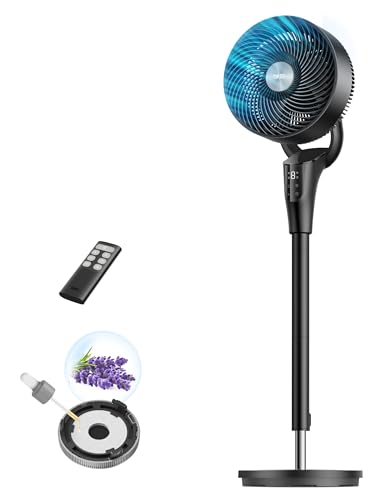
The available manual gives sensible baseline safety instructions. It calls for a polarized 120 V outlet, says not to use a damaged cord or plug, warns against wet or damp locations, directs users not to insert fingers or objects into openings, and calls for a stable level surface. Public searches did not identify a recall or public unsafe-product report specific to this product. That is not proof of absence of risk. More importantly, no exact-product public certification record was found in the checked UL, ETL, CSA, or TÜV directories. This is an air-moving appliance, not an air cleaner or air conditioner. The aroma-pad compartment only adds fragrance and should not be understood as filtration or a health feature. The manual's detachable blade and grille design supports dust removal, which can reduce buildup on the fan itself. The product is described as plastic, and no specific recycled-material, packaging, electronics-recycling, or spare-parts program was located. DREO's published warranty is 12 months for original material and workmanship defects.
This is a freestanding, corded tower fan with a 39.8-inch height, 13.9-pound stated weight, touchscreen controls, magnetic remote, Wi-Fi app connection, and 10 speed levels. It uses two internally housed fan sections that move horizontally through 180 degrees and vertically through 90 degrees. The product is for indoor air movement and personal comfort, not for lowering room temperature or replacing air conditioning during dangerous heat. Dreame states 55 W power, up to 989 CFM circulation, and a 538-square-foot theoretical room refresh in about four minutes. The manufacturer identifies third-party laboratory report numbers for airflow and energy figures, but the underlying reports and test conditions are not publicly available for independent review. Its own published materials also conflict, with the United States product page stating 55 W while the supplied catalog lists 75 W.
This product fits a buyer who wants a tall indoor fan with broad directional movement, local touch controls, and a remote for a bedroom, home office, or living area. It is especially relevant where a conventional exposed-blade fan is undesirable and where routine intake cleaning matters. The user should be comfortable treating the stated high airflow and room-coverage figures as manufacturer claims rather than independently reproducible ratings. It also suits someone willing to use the fan alongside air conditioning or a properly cooled indoor space.
It is not suited to anyone who needs independently authenticated U.S. electrical certification before using a mains-powered fan, or who needs verified performance data for airflow, sound, energy use, or air-cleaning capacity. It is not a substitute for air conditioning, a cool location, hydration, and medical attention during dangerous heat. Households with young children should secure the remote and its button cell battery. Privacy-sensitive buyers who do not want a connected product should avoid app setup and use the physical controls instead.
The manual contains meaningful use safeguards. It requires a stable, level surface, warns against damaged cords, wet locations, blocked airflow, flammable vapors, and placing the cord where it can be tripped over. It also documents a polarized plug, child lock, and warnings that the remote's CR2025 or CR2032 button battery can cause severe injury if swallowed. No product-specific CPSC recall or public safety incident pattern was located in the checked U.S. sources. Dreame states that the intake filter is removable and washable, and sells an optional replacement high-efficiency filter. That does not establish room air-cleaning performance. No AHAM CADR rating was located, so it should not be treated as an air purifier. The manual gives WEEE disposal guidance, but this is an EU disposal framework and does not provide product-specific U.S. recycling instructions, packaging disclosures, recycled-content claims, or repair-part availability.


