Best Overall
19% off

G3 Tankless Reverse Osmosis System
Highly efficient 2:1 pure to drain ratio
Smart LED faucet enhances usability
Tankless design saves space under sink
 Daniel Kenitz
Highly efficient 2:1 pure to drain ratio
Smart LED faucet enhances usability
Tankless design saves space under sink
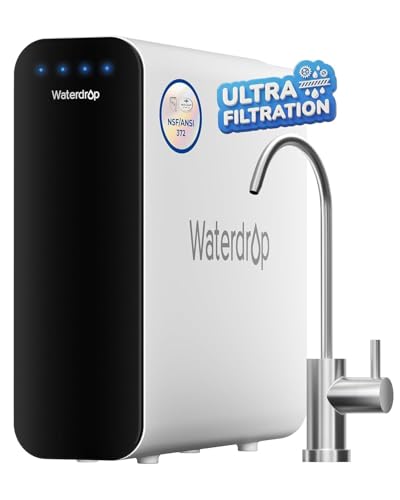
Easy installation and maintenance with tankless design.
Provides high filtration efficiency without using electricity.
Includes a smart panel for convenient monitoring.
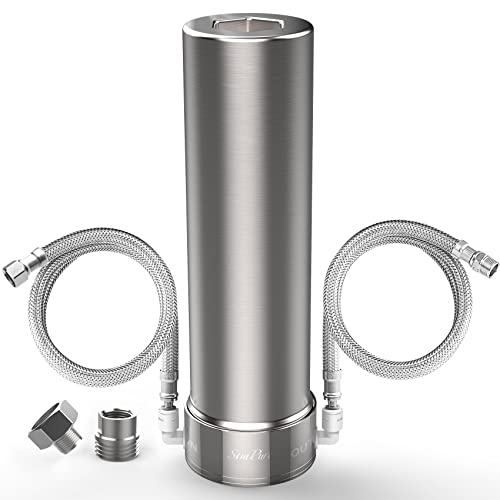
Easy installation with no drilling needed.
Effectively reduces 99% lead and chlorine.
Long-lasting filtration for up to 20,000 gallons.
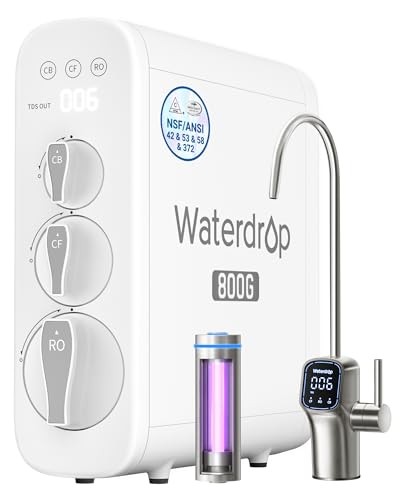
Fast 800 GPD water flow rate
Tankless design saves under-sink space
Smart faucet with LED purifier

Removes 99.99% of contaminants effectively.
Quick and easy filter changes.
Stylish brushed nickel faucet included.
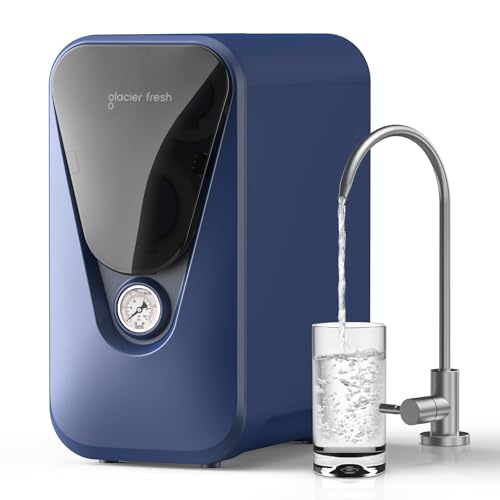
High 800 GPD output for fast filtration.
Non-electric design for energy savings.
Reduces PFAS/PFOS, enhancing water safety.

pH+ remineralization for better tasting water.
NSF certified for reliable water filtration.
Easy under-sink installation and maintenance.

Easy installation with direct connect feature.
Effectively removes lead and chlorine odors.
Compact design fits well under sinks.
Easy installation with direct connect design.
Certified to remove 99.99% chlorine and lead.
Improves taste and odor of drinking water.

Efficiently removes sediment and chlorine taste.
Tankless design saves valuable under-sink space.
High capacity for long-lasting filtration performance.
The first question is not how many stages a product advertises, but which contaminant your water actually contains. Start with your utility’s annual Consumer Confidence Report or a laboratory test for private water. Then match that concern to the exact product’s certified reduction claim. NSF/ANSI 42 generally concerns aesthetic effects such as chlorine taste and odor; NSF/ANSI 53 covers specified health-effect contaminant reductions; NSF/ANSI 58 applies to reverse-osmosis systems; NSF/ANSI 401 covers specified emerging compounds. NSF/ANSI/CAN 372 addresses lead content in wetted components, not removal of lead from water. Materials certification and a low-lead claim therefore should not be treated as proof of broad contaminant reduction.
A substantiated product can be traced by its exact model in an accredited register such as the NSF Certified Drinking Water Treatment Units database, WQA Gold Seal directory, IAPMO R&T Listing Directory, CSA Product Listing, or UL Product iQ. The listing should identify the applicable standard and the specific contaminants, capacity, and conditions. A manufacturer test report can be useful when it names the tested model, laboratory, method, influent conditions, and results, but startup testing of a few submitted units is not the same as current third-party certification.
Headline figures commonly mislead. A 0.01- or 0.5-micron rating does not by itself prove removal of a chemical or protection against bacteria and viruses. “Reduces more than 1,000 contaminants,” “purified,” “99.99%,” PFAS language, and “NSF certified” can be broader than the documented scope. A UV light is not automatically certified disinfection, and cyst reduction does not mean bacterial or viral treatment. Reverse-osmosis flow, capacity, and pure-to-drain ratios also need context: manufacturer-stated efficiency is not necessarily an independently rated recovery figure, and capacity may change with water quality, pressure, temperature, and usage.
Maintenance is part of performance. Compare replacement intervals, rated capacity, flushing instructions, compatible replacement cartridges, leak checks, sanitation guidance, and any reliable end-of-life indicator. A long membrane interval does not eliminate shorter-lived prefilters, and a reminder cannot protect performance if its batteries are depleted. Also check pressure, temperature, feed-water, drain, faucet, and electrical requirements before installation.
Several safety cautions recur in the supplied reviews. These products are generally intended for treated, microbiologically safe municipal water and are not substitutes for boiling or disinfection during a boil-water advisory. Ordinary carbon, ultrafiltration, and reverse-osmosis systems should not be assumed safe for untreated or unknown-quality well water, bacteria, viruses, or parasites without a specifically applicable certified claim and suitable source-water treatment. Buyers should also confirm the exact contaminant claim rather than relying on broad marketing, follow replacement and leak-check instructions, and account for recurring cartridge or membrane waste. Powered systems additionally need an outlet and clear installation limits; reverse-osmosis systems need a drain connection and may waste water.
These topics separate a filter that merely changes taste from one whose treatment, materials, maintenance, environmental burden, and marketing claims can be checked. Scores below reflect the supplied product reviews and reward specific, exact-model evidence rather than broad claims.
This measures whether the exact system is independently certified to reduce the health-related contaminant a buyer needs addressed. For under-sink filters, a high score means the named claim matches a local water concern, such as lead, fluoride, PFAS, or dissolved solids; a low score reflects broad marketing or testing without an exact certified scope. Supplied scores ranged from 45 to 94.
This measures safeguards for parts touching drinking water, including lead content and health effects from extraction. It matters because “BPA-free” or “food-grade” wording does not establish drinking-water material safety. Higher-scoring products had exact NSF/ANSI/CAN 372 or comparable support; lower-scoring products relied mainly on manufacturer descriptions. Supplied scores ranged from 68 to 92.
This measures whether germ-reduction or UV claims are certified for stated organisms and whether the instructions limit ordinary filters to microbiologically safe source water. That distinction matters during well-water contamination or a boil-water advisory. Higher scores reflected clear limitations and, in some cases, cyst evidence; no supplied product should automatically be treated as a bacteria or virus purifier. Scores ranged from 48 to 89.
This measures whether replacement intervals, rated capacity, compatible parts, flushing, sanitation, and change indicators are specific enough to prevent unnoticed performance loss. Under-sink systems often use several cartridges on different schedules. Higher-scoring products supplied concrete intervals and reminders; lower-scoring products required manual tracking or had conflicting capacity information. Scores ranged from 62 to 90.
This measures resistance to leaks, cracks, pressure failure, unsafe connections, and electrical faults, along with installation limits and shutoff guidance. It matters because an under-sink failure can damage cabinets and because powered reverse-osmosis systems add electrical and pump considerations. Higher-scoring products had clearer structural, pressure, leak-check, or safety documentation. Scores ranged from 68 to 88.
This measures whether the exact product sold can be found in an accredited certification register with a defined standard and current status. It matters because a component, related model, or brand-level claim may not cover the complete system. Higher-scoring products were traceable in NSF, WQA, or IAPMO evidence; lower-scoring products relied on maker documents or could not be matched. Scores ranged from 32 to 96.
This measures whether standards and marks support the claimed benefit. For example, NSF/ANSI 42 or 372 should not be presented as proof of broad health-contaminant removal, and a UV component should not imply certified disinfection without the relevant scope. Higher-scoring products kept claims closer to documented standards; lower-scoring products overstated them. Scores ranged from 38 to 94.
This measures whether percentages, contaminant lists, micron ratings, capacity, flow, TDS, UV, and “purified” language state their limits and match applicable testing. A high score means the buyer can distinguish laboratory conditions and named contaminants from universal promises. Lower scores included conflicting specifications, broad all-contaminant language, or unsupported PFAS and heavy-metal claims. Scores ranged from 35 to 92.
This measures whether current test reports identify the model, laboratory, method, influent conditions, and results, and whether relevant recalls or safety signals are addressed. It matters because transparent evidence helps buyers judge performance through filter life and installation risks. Higher scores reflected detailed product documentation and accountability; lower scores reflected missing reports or unresolved claim questions. Scores ranged from 52 to 88.
This measures reject-water loss for reverse osmosis and unnecessary water loss for other systems. A high score means low waste is documented without weakening verified treatment. Direct-flow carbon and ultrafiltration systems generally avoid an RO reject stream, while RO ratios may be manufacturer-stated rather than independently rated. Supplied scores ranged from 68 to 98.
This measures replacement cartridge, membrane, packaging, and disposal burden, balanced against service life and replacement availability. High scores came from longer intervals, reusable housings, or clear replacement support; low scores reflected several proprietary disposable cartridges or no recycling information. Every supplied system still created some recurring replacement waste, and no product-specific take-back program was identified.
This is a tankless, under-sink reverse-osmosis system that sends treated water to its own smart-display faucet. It is a powered unit with a stated 600-gallons-per-day production rate, a drain connection, and a slim 18.11 by 5.67 by 17.72 inch housing. It is intended for municipal tap water, within stated inlet conditions of 14.5 to 87 psi and 41 to 100 F. The strongest independently documented treatment evidence is IAPMO R&T certification to NSF/ANSI 58 for TDS, fluoride, cadmium, hexavalent chromium, and selenium reduction, plus NSF/ANSI 372 for low lead content. Waterdrop also publishes test tables for many additional chemicals, but those broader results should not be read as equivalent to the independently traceable certified scope. The unit uses three replaceable cartridges, with manufacturer-stated lives of six months, 12 months, and 24 months.
This system fits a household using treated municipal water that wants a dedicated drinking-water faucet, has an under-sink outlet and nearby drain, and has limited cabinet width for a storage tank. It is particularly relevant where a local water report identifies fluoride, cadmium, hexavalent chromium, selenium, or elevated dissolved solids, because those are the reduction claims independently documented for the system. The household also needs to be prepared to follow the six-month, 12-month, and 24-month replacement schedule.
It is not a suitable stand-alone response to a boil-water notice, untreated well water, sewage intrusion, or a known microbial contamination problem. Waterdrop specifies municipal feed water and says well water needs prefiltration, while the product has no independently verified UV or microbiological-purifier certification. It is also unsuitable where no under-sink electrical outlet or drain connection is available, where water pressure falls outside its stated range, or where the buyer needs independently certified reduction of a particular PFAS, lead, arsenic, or nitrate concern.
The health evidence is strongest for the limited claims on the IAPMO R&T documentation. The system is certified under NSF/ANSI 58 for TDS, fluoride, cadmium, hexavalent chromium, and selenium reduction, and under NSF/ANSI 372 for low lead content. Its public performance sheet reports broader test results, but the available certification record does not independently trace all of those broader contaminant claims. Check the local utility report and match the exact contaminant to a certified claim. Reverse osmosis can reduce many dissolved contaminants, but this product is not a certified disinfection unit. The manual limits it to municipal water, calls for maintenance, and supplies filter-life indicators. Its stated 2:1 treated-water-to-drain ratio is relatively restrained for RO, but it remains a wastewater-producing technology and is not independently verified here under EPA WaterSense. Replacement cartridges and the membrane create recurring plastic and spent-media waste, with no reviewed take-back pathway.
This product is a plumbed-in, three-cartridge under-sink ultrafiltration unit with a separate faucet. It uses PP, ultrafiltration, and carbon-treatment cartridges, occupies about 14.8 by 4.7 by 14.0 inches, and is intended for indoor municipal tap water. Waterdrop states a 0.6 gallon-per-minute maximum flow, 6-month PP filter life, 12-month CT filter life, and 24-month UF filter life. Installation requires drilling for the dedicated faucet and must stay within the stated 14.5 to 87 psi and 41 to 100 F feed-water limits. The most important independently confirmed fact is narrower than a contaminant-removal certification. IAPMO lists the exact product under NSF/ANSI/CAN 372, which addresses weighted lead content of drinking-water-contact materials. Waterdrop's 0.01-micron ultrafiltration and taste-and-odor claims are plausible design claims, but no exact-product certification or public performance sheet was located to verify reductions of lead, PFAS, fluoride, dissolved chemicals, or specific microbes.
This product suits a household on treated municipal water that wants a dedicated drinking-water faucet, does not need reverse osmosis, and has enough cabinet space for a 14-inch-tall housing. It is most appropriate where the goal is reducing sediment and improving taste or odor while keeping normal dissolved-mineral content. The buyer should be prepared to drill a faucet hole, confirm cold-water pressure is within the stated range, and replace the PP, CT, and UF cartridges on their separate schedules.
It is not a safety-specific choice for a household responding to known lead, PFAS, arsenic, nitrate, fluoride, or other dissolved-contaminant results, because no exact-product certified reduction claim for those contaminants was located. It is also unsuitable as a response to a boil-water advisory, suspected bacterial contamination, or an untreated private well. Immunocompromised households should not infer microbiological protection from the micron rating alone. Anyone unable to drill for a separate faucet or maintain three cartridge intervals should select a format that fits those constraints.
The strongest health evidence is the exact product's IAPMO listing to NSF/ANSI/CAN 372. That is meaningful for limiting lead content in the parts that contact drinking water. It does not show that the product removes lead already present in tap water. Publicly available material did not establish exact-product certification to NSF/ANSI 53 or 58 for health contaminant reduction, or to a microbiological treatment standard. The manufacturer also limits the unit to municipal tap water and advises prefiltration for well water. Ecologically, this direct-flow ultrafiltration format does not produce the reject-water stream associated with reverse osmosis. Its tradeoff is consumables. The system uses three replacement cartridges on 6-month, 12-month, and 24-month schedules. Timely replacement matters because neglected filters can lose performance and can support microbial growth. No product-specific cartridge recycling or take-back program was located in the reviewed manufacturer materials.
The SimPure V7 is a non-powered, direct-connect under-sink filter for an existing cold-water faucet. It uses one replaceable composite cartridge with polypropylene sediment layers, activated carbon, and KDF media. The manufacturer specifies a 1.6 gallon-per-minute maximum flow, 20,000-gallon or 12-month cartridge interval, 10 to 125 psi feed pressure, and cold water only. It directs users to flush a new cartridge for five minutes and inspect connections for leaks. The maker describes a 304 stainless-steel body and claims reduction of chlorine, lead, heavy metals, taste, and odor, while stating that total dissolved solids are not lowered. Those contaminant and material claims are manufacturer-stated, not independently confirmed for this exact product. An NSF search current through August 9, 2026 found no matching SimPure drinking-water-treatment product, so the claimed lead reduction is not traceable to an exact-model NSF certification.
This product fits a household on municipal water, or a private well that has already been tested and found microbiologically safe, when the goal is point-of-use taste and odor improvement at one existing cold-water faucet. It suits users with enough under-sink space who can work within the stated pressure and temperature limits, inspect for leaks after installation, and keep a calendar reminder for cartridge replacement. Its direct plumbing layout also fits situations where a separate drinking-water faucet and electrical outlet are not wanted.
It is not a fit for households responding to a boil-water advisory, recurring bacterial contamination, or an untested private well. The product has no verified microbiological treatment claim, and its own manual restricts use to potable sources already tested safe. It is also not the right evidence base for a home with a known lead, PFAS, arsenic, fluoride, nitrate, or other contaminant concern unless the exact local concern is addressed by separately verified treatment. People unable to monitor cartridge age or manage under-sink plumbing should avoid relying on its long claimed service interval.
The key health limitation is evidence, not an identified defect. SimPure states that this product uses polypropylene, activated carbon, and KDF media in a stainless-steel housing, and claims chlorine, lead, and heavy-metal reduction. However, no exact-model NSF drinking-water-treatment listing was found, and the manufacturer does not publish an exact-model performance data sheet or identifiable reduction test report showing influent conditions, methods, and results. The claimed reductions therefore should not be treated as independently verified protection for a specific local contaminant. The manual does give useful safety boundaries. It specifies cold municipal water or well water tested safe by a certified laboratory, warns against unsafe sources, gives pressure limits, and requires filter changes and flushing. This direct-flow filter needs no electricity and produces no routine reverse-osmosis reject-water stream. Its environmental tradeoff is a spent composite cartridge on the maker’s 12-month schedule, with no identified recycling or take-back guidance.
This is a powered, tankless under-sink reverse-osmosis system for one dedicated drinking-water faucet. Waterdrop specifies an 18.11 by 5.67 by 17.73 inch unit, three replaceable cartridges, a smart faucet with filter-life and TDS displays, ultraviolet hardware, and use with municipal tap water at 14.5 to 87 psi. It requires an electrical outlet and a drain connection. Its strongest evidence is a model-specific performance data sheet stating IAPMO R&T certification to NSF/ANSI 42, 53 and 58 for listed reduction claims, plus NSF/ANSI 372 for low lead content. The sheet lists reductions for contaminants including lead, arsenic, fluoride, chromium VI, radium, nitrate, selected PFAS, chlorine and listed VOCs. The advertised 800-gallons-per-day output and 3:1 pure-to-drain ratio are manufacturer specifications, not independently verified efficiency ratings.
This product fits a household on treated municipal water that wants a dedicated drinking and cooking faucet, has an outlet and drain connection under the sink, and has identified contaminants that appear on the documented reduction sheet. It is particularly relevant where a utility report, plumbing issue, or water test raises concern about listed dissolved contaminants such as lead, nitrate, fluoride, chromium VI, radium, arsenic, or specified PFAS. The filter-life alerts and stated replacement schedule suit users prepared to maintain three cartridges on time.
It is not a whole-home treatment system, so it does not address water used for showers, laundry, ice makers, or other taps. Households using private wells, rainwater, water of unknown microbial quality, or water under a boil-water advisory should not treat the ultraviolet marketing claim as a substitute for a properly designed and verified disinfection plan. It also does not suit installations without a nearby electrical outlet, drain access, adequate feed pressure, or room for a dedicated faucet and tubing.
The health case rests on a traceable, product-specific performance data sheet that identifies IAPMO R&T certification to NSF/ANSI 42, 53 and 58 for listed contaminant reductions. NSF/ANSI 372 certification is also meaningful because it addresses lead content in drinking-water-contact materials. EPA advises buyers seeking PFAS treatment to look for NSF/ANSI 53 or 58 certification with relevant PFAS claims, while noting that current certification does not necessarily show reduction to every current federal PFAS drinking-water level. The product does not make a good emergency-water solution. Its own instructions limit use to municipal water, and the ultraviolet claim lacks an identified microbiological treatment certification. Ecologically, the manufacturer states a 3:1 pure-to-drain ratio, which is more informative than an unspecified wastewater claim, but it was not independently rated. Three disposable cartridges are replaced on staggered intervals, and no product-specific recycling or take-back pathway was found. No relevant active U.S. CPSC recall was located in the review search.
This is a compact, non-powered under-sink drinking-water filter with four disposable quick-change cartridges, a dedicated faucet, sediment filtration, ultrafiltration, KDF and activated-carbon stages. It does not use reverse osmosis, does not lower total dissolved solids, and does not create a reject-water stream. The manufacturer lists a 0.01-micron hollow-fiber membrane in current product materials. The current manufacturer guidance gives the full cartridge set a 1,100-gallon, 6 to 9 month service interval, rather than the 8,000-gallon figure in the catalog record. Its manual specifies municipal potable-water use, 20 to 50 psi feed pressure for warranty coverage, 40 to 100 F water, and a source free of iron, manganese and hydrogen sulfide. No current accredited certification-register listing was located for this exact iSpring product and its contaminant claims.
This product fits a household on treated municipal water that wants a dedicated drinking-water faucet, wants to preserve dissolved minerals, and has room for a compact wall-mounted unit under the sink. It is most suitable when the concern is primarily sediment, chlorine taste or odor, and a buyer is prepared to replace all four cartridges about every 6 to 9 months. The installation is better suited to users comfortable with basic plumbing work, or households willing to use a licensed plumber.
It is not a good fit for households responding to a documented lead, arsenic, PFAS, nitrate, or other specific contaminant issue unless they can obtain exact-product independent evidence for that contaminant. It should not be relied on during a boil-water advisory, with unsafe or unknown-quality water, or for untreated private-well water without appropriate disinfection and water testing. It also does not suit buyers who need verified virus reduction, automatic end-of-life indication, or reverse-osmosis-level dissolved-solids reduction.
The manufacturer describes a 5-micron sediment stage, hollow-fiber ultrafiltration, KDF with granular activated carbon, and a final activated-carbon stage. Its manual appropriately limits use to potable municipal water and warns against microbiologically unsafe or unknown-quality water without adequate disinfection. That warning matters because membrane pore size and carbon stages do not substitute for a certified microbiological purifier during an advisory or an untreated-water problem. The unit avoids reverse-osmosis reject water and uses no electricity, which reduces operating water and energy demand. Its environmental tradeoff is a four-cartridge replacement set every 6 to 9 months, with no manufacturer recycling or take-back program located. The manufacturer identifies compatible replacement cartridges, but no current public independent certification listing or exact-product test report was located to validate the stated health-contaminant reductions. The FTC's 2017 and 2019 actions concerned deceptive country-of-origin advertising, not a recall or a finding of a water-treatment safety defect.
This is a tankless, under-sink reverse-osmosis product with a dedicated faucet. The manufacturer describes a five-stage layout using sediment, carbon, an RO membrane, granular carbon, and post-carbon filtration. It measures about 13.6 by 8.3 by 16.5 inches, uses household water pressure rather than electricity, and is specified for municipal water at 0.25 to 0.7 MPa inlet pressure. Its defining practical claims are manufacturer-stated 800 GPD output, a 3:1 treated-to-drain ratio, and tool-free filter changes. The manufacturer specifies six months for the carbon and prefilter cartridges and one to two years for the RO filter. It also advertises certification to several NSF/ANSI standards, including 58 and 372. However, the exact complete product was not located in the NSF listing checked, which shows Glacier Fresh replacement cartridges rather than this RO system. No exact-model certificate, performance data sheet, or accessible full SGS report was found to independently confirm the advertised contaminant reductions.
This product suits a household on microbiologically safe municipal water that wants a compact, dedicated drinking-water tap and has adequate incoming pressure within the stated 0.25 to 0.7 MPa range. It is especially relevant where cabinet space or access to an electrical outlet is limited, because the manufacturer specifies a tankless, non-electric design. It also fits users prepared to follow a six-month prefilter and carbon replacement schedule, replace the RO element after one to two years, and verify treatment needs against their own utility report or laboratory water test.
It is not a good fit for a household relying on it as verified treatment for a known local lead, PFAS, arsenic, nitrate, radium, or microbial problem, because exact-model certified reduction claims and performance data were not independently located. It is also unsuitable as protection during a boil-water advisory, after flooding, or with untreated well-water concerns unless public-health authorities specify appropriate treatment. Avoid it where supply pressure falls below the stated minimum, where drain access is unavailable, or where users cannot reliably replace filters on schedule.
Reverse osmosis is a plausible mechanism for reducing many dissolved contaminants, and public-health guidance recognizes RO as a point-of-use option for some chemical concerns. That mechanism alone does not verify this product's advertised reductions. EPA advises buyers seeking PFAS treatment to confirm an exact product's NSF/ANSI 53 or 58 PFAS certification in an accredited certifier's directory. That confirmation was not available here, despite the manufacturer's broad certification statements. The product's 3:1 treated-to-drain claim is favorable for an RO design if it holds under the stated operating conditions, but it was not confirmed through an independent efficiency listing. The replacement schedule is usable, although cartridges and membranes remain a recurring solid-waste burden. No take-back or recycling information was identified. No relevant United States recall, EPA action, or CPSC recall was found in the checked sources, but that does not replace traceable certification or public test documentation.
This is a non-powered, under-sink reverse-osmosis drinking-water system with a separate faucet, pressurized storage tank, drain connection, and six treatment stages. The final stage is an alkaline remineralization cartridge, intended to add a small amount of minerals after reverse osmosis. iSpring specifies replacement intervals from six months for the sediment filter to three years for the membrane, subject to source-water conditions. Its most important verified feature is that the brushed-nickel version is currently listed by NSF to NSF/ANSI 58. The listing covers reduction claims for asbestos, barium, cadmium, trivalent chromium, copper, fluoride, lead, selenium, and total dissolved solids. NSF's listed standardized daily production rate is 25.41 gallons, while the product's 75 GPD figure should be understood as a manufacturer rating rather than the independently listed production result. The system is for treated, microbiologically safe water, not a substitute for disinfection.
This product suits a household on municipally treated water that has identified concerns matching its verified claims, especially lead, fluoride, dissolved solids, or the listed inorganic contaminants. It also fits a buyer with enough cabinet room for a tank, filter housings, tubing, and a drain connection, and who is willing to do periodic filter changes and flushing. It is most appropriate when the buyer has reviewed the local water report or has tested their own water, rather than relying on a general purification claim.
It is not a suitable primary safeguard for a private well, a boil-water advisory, flood contamination, or any source with suspected bacteria or viruses unless appropriate disinfection is provided separately. It also does not fit households seeking a documented low-waste system, because no verified waste-to-treated-water ratio or WaterSense label was found. Buyers needing a reliably documented 75 gallons per day should be cautious, since NSF lists a lower standardized daily production rate for this exact product.
The health case is strongest where the source-water issue matches the NSF/ANSI 58 listing. For the exact brushed-nickel product, NSF independently lists claims for lead, fluoride, asbestos, barium, cadmium, trivalent chromium, copper, selenium, and total dissolved solids. That certification also provides stronger confidence in the assembled system than claims based only on individual components. The manual correctly states that the system is not for microbiologically unsafe or unknown-quality water without adequate disinfection. The remineralization cartridge may change taste and pH, but iSpring says the result depends on source water and describes only a small mineral addition. No health benefit should be inferred from that stage. The system has recurring cartridge and membrane waste, plus an unquantified reject-water stream. iSpring has a past FTC enforcement history over misleading country-of-origin advertising, including a 2019 order-violation case. That does not negate the current NSF listing, but it supports caution with marketing claims beyond independently certified scope.
This is a non-powered, three-stage carbon-block filter that installs on the cold-water line beneath a kitchen sink and sends filtered water through the existing main faucet. The product measures 14.5 by 4.7 by 14.1 inches. Its exact-model manual specifies 1.5 gallons per minute, 20 to 80 psi operation, cold water only, and 1,000-gallon capacity. The manual identifies IAPMO R&T certification to NSF/ANSI 42 and 53 for material safety, structural integrity, chlorine, lead, Class I particles, cysts, and TTHM. It also clearly limits cyst use to disinfected water and warns against use on microbiologically unsafe or unknown water without adequate disinfection. The manufacturer sells stage-specific replacement cores, but the product page makes broader reduction claims, including fluoride and chloramine, that are not listed in the manual's certified performance table.
This product suits a household on municipally treated, microbiologically safe cold water that wants filtration through its existing kitchen faucet without a separate drinking-water tap or electricity. It is especially relevant where verified lead, cyst, chlorine, particulate, or TTHM reduction addresses a documented local concern. It also suits users able to track three different replacement intervals, inspect connections for leaks, flush the system after service, and keep the unit protected from freezing.
It does not suit households relying on untreated or intermittently unsafe private-well water, or anyone responding to a boil-water advisory, because it does not disinfect water or establish microbiological safety. It is also a poor fit where the main concern is a specific contaminant not listed in the manual's certified performance data, including PFAS, fluoride, nitrate, hardness, or broad dissolved-solids reduction. The manual specifically requires pretreatment above its nitrate and hardness limits.
The strongest health evidence is the exact-model manual's stated IAPMO R&T certification to NSF/ANSI 42 and 53 for material safety, structural integrity, and defined performance claims. Its lead, cyst, chlorine, particulate, and TTHM claims are more useful than a generic carbon-filter claim. The manual also responsibly says not to use the system on microbiologically unsafe or unknown water without adequate disinfection. The manufacturer recommends replacing three filter stages on different schedules and the plastic housings every 18 months. Its inner-core approach can reduce housing waste, but used adsorption media, cores, and eventually housings still require disposal. No recycling or take-back program was identified. No relevant CPSC recall or regulator warning was found in the reviewed searches, but the broader website claims should not be treated as independently verified beyond the specific claims in the performance data.
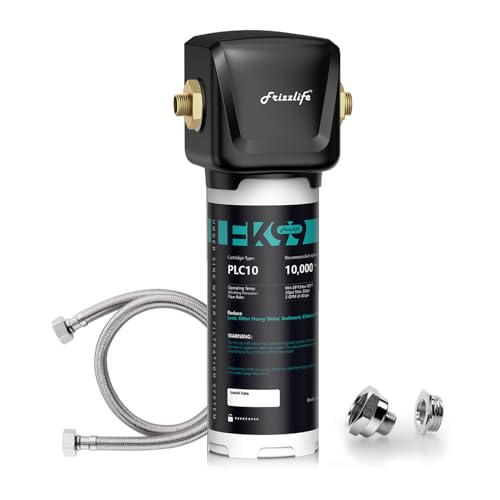
This is a non-powered, direct-connect under-sink carbon-block filter that treats cold water at the existing kitchen faucet. Frizzlife lists a 0.5-micron carbon block, a manufacturer-stated flow rate of 2 gallons per minute at 60 psi, and a 10,000-gallon or 12-month replacement interval. The housing is designed to remain installed while the inner core is replaced. The defining evidence issue is certification. The product marketing makes NSF/ANSI 42 and 53 performance claims, but Frizzlife’s own product page identifies NSF/ANSI 372 for the unit, a lead-content materials standard rather than a contaminant-reduction standard. NSF’s public notice says Frizzlife is not certified by NSF and may not claim NSF certification. No exact-product listing was found in the checked NSF, WQA, or IAPMO certification sources for the claimed lead and contaminant reductions.
This product fits a household on municipally treated, microbiologically safe cold water that wants an under-sink carbon filter connected to the existing faucet and is prepared to replace the core on schedule. It is most suitable where the practical goal is taste and odor improvement, with the understanding that the manufacturer’s broader chemical-reduction claims are not independently confirmed for this exact unit. It also suits users who value avoiding reverse-osmosis wastewater and prefer replacing an inner core instead of discarding a full plastic cartridge housing.
It is not appropriate for a household that needs independently certified reduction of lead, PFAS, a named VOC, arsenic, nitrate, or another local contaminant identified in its water report. It is also not suitable for untreated well water, water subject to a boil-water advisory, or any suspected microbial contamination. A carbon filter does not replace boiling or other official advisory instructions. People unable to track annual replacement should use a system with a reliable capacity or replacement indicator.
The important health limitation is not the carbon-block format itself, but the lack of independently traceable, exact-product performance certification for the marketed contaminant claims. EPA advises selecting a filter evaluated by an accredited third party when lead reduction is needed. Here, the NSF certification representation does not hold up, because NSF publicly states that Frizzlife is not certified by NSF. The manufacturer does, however, clearly say the product is for municipal or otherwise disinfected water. Ecologically, this is a direct-flow carbon filter rather than a reverse-osmosis unit, so it does not have a reject-water stream. Frizzlife also offers a core-only replacement approach that can reduce plastic disposal relative to replacing the full housing. Those benefits are manufacturer-stated. No maker take-back program, cartridge recycling instructions, or independently verified life-cycle information was found for this product.
This is a pressure-driven, three-stage under-sink system that supplies a separate drinking-water faucet. The manufacturer specifies a sediment cartridge followed by granular activated carbon and a carbon-block cartridge. It operates from the cold-water line without electricity, and the manufacturer states a flow of up to 1 gallon per minute, depending on incoming pressure. Its most important limitation is that it is a carbon and sediment filter, not reverse osmosis or a disinfection system. The current manual explicitly says it does not reduce total dissolved solids and must not be used with microbiologically unsafe or inadequately disinfected water. iSpring describes the system as tested against NSF/ANSI 42, 53, and 61 standards, but the exact complete product could not be independently traced in the public certification registers reviewed. That distinction matters for claims about lead, PFAS, or other health contaminants.
This product fits a household on municipally treated, microbiologically safe cold water that wants a dedicated faucet for improving sediment, chlorine-related taste, and odor. It is suited to buyers comfortable with a conventional housing-and-cartridge setup, including shutting off the supply, changing three cartridges, checking fittings, and flushing the system. It also suits users who want filtered drinking and cooking water without reverse-osmosis wastewater or electricity, provided their local water report does not identify a contaminant that requires a verified reduction claim.
It is not a suitable stand-alone response to a boil-water advisory, a private-well bacteria problem, flood-related contamination, or water that may be inadequately disinfected. The manual directly says not to use it for microbiologically unsafe water. It is also a weak evidence fit for households targeting lead, PFAS, arsenic, nitrate, dissolved salts, or a named industrial chemical unless they can obtain current, exact-product third-party certification for that specific contaminant. People unable to monitor cartridge changes should avoid systems without an included change indicator.
The safety-positive feature is clarity about microbial limits. The manual says not to use the system with microbiologically unsafe or inadequately disinfected water, and it says the unit does not reduce dissolved solids. Those statements are more appropriate than presenting a carbon filter as broad purification. The manual also provides cold-water, temperature, pressure, flushing, and leak-check instructions. The evidence gap is certification traceability. iSpring says the product is tested against NSF/ANSI 42, 53, and 61 standards, but the exact assembled product was not located in the public certification directories reviewed. Replacement intervals and cartridge part numbers are published, but there is no public recycling or take-back program identified for the spent cartridges. iSpring has also been subject to FTC action over misleading unqualified Made in USA claims, which is separate from water performance but relevant to advertising accountability.


