Best Overall
22% off

FEPPO Waterless Diffuser Essential Oil Starter Kit
Covers over 1000 square feet effectively.
Includes five hotel-quality scent oils.
Features adjustable scent levels and timers.
 Lauren Wilson
Covers over 1000 square feet effectively.
Includes five hotel-quality scent oils.
Features adjustable scent levels and timers.

Covers large areas up to 2000 sq.ft.
Includes remote control for easy operation.
Offers multiple lighting modes for ambiance.

Long-lasting, hotel-inspired fragrance experience.
High-quality, natural essential oil ingredients.
Versatile use in diffusers and nebulizers.
Cordless design allows for easy placement.
Waterless operation simplifies maintenance and use.
Comes with ClickWick blends for versatile scents.

Covers large areas up to 1000 sq. ft.
Features adjustable mist for customization.
Includes mood lights and remote control.

Efficient cold air diffusion for consistent aroma.
Sleek black design complements any decor.
Suitable for various spaces like homes and offices.

Covers large areas up to 1100 sq ft.
Features smart schedules for convenience.
Includes app control for easy operation.

Covers large areas up to 3000 sq. ft.
Offers adjustable intensity and timing features.
Controlled via app or easy panel.

Long-lasting, hotel-inspired fragrance experience.
High-quality blend of natural essential oils.
Compatible with ultrasonic diffusers for easy use.

No water needed for operation.
Comes with five essential oils.
Compact and easy to use.
Whether one works depends on controlled output, suitable oil compatibility, reliable placement, and honest performance information. Adjustable intensity, intermittent spray cycles, pause intervals, and automatic shutoff help limit how much fragrance enters a room. A useful manual should state output settings, schedules, placement, ventilation, cleaning, spill handling, and warnings for children, pets, and people sensitive to fragrance. Refillable bottles and replaceable atomizer cores can reduce cartridge waste and help keep the device in service, provided replacement parts and maintenance instructions are actually available.
Coverage figures need particular caution. Supplied products advertise areas from about 1,000 to 5,000 square feet, yet the reviews repeatedly found no disclosed test method, ventilation condition, oil-consumption rate, duty cycle, or independent room result. Some claims are reported in square feet, others in cubic feet or cubic meters, and different records sometimes conflict for the same product. “Quiet,” “no residue,” “long lasting,” and runtime claims have similar limitations when no reproducible test protocol is provided. A large reservoir may reduce refill frequency, but it does not prove low consumption or low exposure.
For indoor-air health, the strongest evidence would be an ISO 16000-9 or ASTM D6670 third-party chamber report identifying the exact diffuser and scent formulation, with emissions measured at realistic settings. Buyers should not treat “essential oil,” “natural,” “hotel scent,” “clean,” or “waterless” as evidence of low VOC, particle, or terpene-reaction-product exposure. A current, product-specific Safety Data Sheet should identify hazards, solvents, and relevant ingredients, while meaningful allergen disclosure is more useful than scent notes alone.
For powered models, look for a model-matched listing in UL Solutions Product iQ, Intertek’s ETL directory, or the CSA Group database. FCC testing can support radio compliance for app-connected products, but it is not the same as electrical or fire-safety certification. A manufacturer statement, marketplace badge, or absence of a recall is not a substitute for a traceable NRTL record. Performance and health claims should also stay within evidence: claims about breathing, sleep, focus, stress, purification, antimicrobial action, or disease treatment require more than general aromatherapy language.
Across the supplied products, the recurring safety concern is concentrated fragrance oil. No supplied oil system had the complete combination of formula disclosure, allergen information, product-specific SDS, and independent emissions testing needed to establish low exposure. Several reviews specifically caution households with infants or young children, pets, asthma, fragrance-triggered migraine, chemical sensitivity, respiratory symptoms, or fragrance allergies. Oils should be secured against ingestion and skin or eye contact, and devices should be used conservatively, upright, and with ventilation. No product-specific recall was identified in the supplied reviews, but that does not establish certification or safe use for sensitive people.
Waterless operation changes how fragrance is delivered, not whether fragrance chemicals enter the room. The topics below distinguish controllable use and documented construction from unsupported claims or missing safety records.
This measures evidence for low VOC, terpene-reaction-product, and particle emissions from the exact diffuser and oil at realistic settings. It matters because cold-air systems disperse undiluted fragrance indoors. The supplied scores range from 52 to 70: higher-scoring products had somewhat better health-impact evidence, but no supplied product had an independent chamber test establishing low emissions.
This measures whether supplied or recommended oils disclose ingredients, allergens, solvents, hazards, and a current product-specific SDS. It matters because scent names and “essential oil” descriptions do not reveal exposure or poisoning hazards. Scores range from 52 to 73; the higher end reflects more useful manufacturer formula-policy information, while lower scores correspond to undisclosed included oils or missing SDS and allergen details.
This measures intensity adjustment, spray and pause intervals, timers, ventilation, placement, and warnings for sensitive users. These controls are especially important because waterless devices release concentrated oil directly into air. Scores range from 58 to 79. Higher-scoring products document programmable schedules or granular pauses; lower scores reflect conflicting shutoff information or limited guidance on ventilation and sensitive users.
This measures independent safety listing for the exact diffuser, adapter, voltage, and battery system. It matters for any corded, USB-powered, or rechargeable appliance. Scores range from 54 to 96, but the reviews repeatedly found no model-specific UL, ETL, or CSA record. The highest score belonged to an oil-only product with no powered appliance, so it should not be interpreted as certification of a diffuser.
This measures leak resistance, secure oil storage, hazard labeling, and child-resistant packaging where required. It matters because concentrated oils can cause harm if swallowed or splashed into eyes or onto skin. Scores range from 58 to 76. Higher-scoring products document keyed compartments, upright placement, or handling instructions; lower scores reflect accessible or poorly documented oils and unsupported “child-friendly” or “pet-friendly” language.
This measures whether claims about sleep, breathing, stress, purification, antimicrobial effects, or disease treatment match the available evidence and regulatory boundaries. It matters because a fragrance machine is not automatically an air cleaner or medical device. Scores range from 45 to 78. Higher-scoring products use narrower room-fragrance descriptions; lower scores include unsupported therapeutic, respiratory, or air-purification language.
This measures whether coverage, scent intensity, refill life, noise, consumption, and “no residue” claims have a stated method and realistic supporting evidence. It matters because advertised room size varied widely and was rarely independently tested. Scores range from 52 to 72. Higher scores reflect more qualified or consistent specifications, but no supplied product had a complete independent performance report.
This measures model-specific third-party records for safety, emissions, materials, performance, or radio functions. It matters because seller assertions do not independently establish compliance. Scores range from 68 to 75. Higher-scoring products had a matching FCC radio report or more corroborated documentation, but FCC testing does not replace NRTL electrical certification, and no supplied diffuser had complete independent verification across all relevant claims.
This measures device materials, oil bottles, cartridges, packaging, refill frequency, and disposal guidance. A refillable reservoir can avoid proprietary single-use cartridges, but it still creates oil-bottle and packaging waste. Scores range from 68 to 76. Higher-scoring products generally use refillable formats or larger reservoirs, while the reviews still found little product-specific recycling, recycled-content, or end-of-life documentation.
This measures cleaning instructions, resistance to residue and clogging, replacement atomizers or seals, parts access, and warranty support. It matters because undiluted oil can foul the atomizer and shorten service life. Scores range from 69 to 90. Higher-scoring products document replaceable cores, cleaning procedures, spare seals, or meaningful warranties; lower scores lack clear maintenance or replacement-part support.
This is a corded, 10 W waterless fragrance diffuser that uses cold-air atomization to disperse undiluted scent oil. FEPPO states that it holds 120 mL of oil, includes five 20 mL hotel-inspired oils, uses a replaceable atomizer core, and has button and remote controls. The manufacturer lists dimensions of 5 by 5 by 9 inches. Its defining practical feature is output control. FEPPO states that each of six levels sprays for 30 seconds, then pauses from 60 to 360 seconds, with 1, 2, 4, and 8 hour timers plus auto-off. The claimed 1,000 plus square foot coverage and under 38 dB noise figure are manufacturer claims, not supported by a published product-specific test protocol or independent report located in this review. No model-specific chamber emissions testing or electrical safety listing was located.
This product suits an adult buyer who specifically wants waterless scenting in a larger, open living area, office, or hospitality-style space, and who values scheduled, intermittent fragrance rather than continuous output. It is also suited to someone who wants a starter set with oils included and can place a corded unit on a stable surface away from children and animals. The adjustable pauses make it more workable for buyers willing to begin at the lowest setting and reassess scent strength.
It is not well suited to households with infants, young children, pets that may access bottles, or anyone unable to store concentrated oils securely. People with fragrance-triggered asthma, migraines, chemical sensitivities, respiratory disease, or a need to minimize indoor VOC and particle sources should choose a non-fragrancing option. It is also a poor fit for buyers who require independently verified electrical certification, full fragrance ingredient disclosure, or demonstrated coverage and emissions performance before using a product in a bedroom, nursery, clinic, or enclosed workspace.
FEPPO describes this as a waterless cold-air diffuser that turns oil into a dry nano mist. That avoids water dilution, but it does not establish low indoor-air exposure. Published diffuser and essential-oil research shows that scenting can add terpenes, VOCs, and particles indoors, with exposures varying by oil, room conditions, and use pattern. No chamber test for this product or its supplied oils was located. The included oils are identified by scent names, not by a product-specific ingredient list or SDS located in this review. Poison Control advises keeping essential oils locked away from children and pets because misuse or swallowing can cause serious poisoning. FEPPO lists a replaceable atomizer core, which is a potentially useful serviceability feature. However, no material-recycling, oil-disposal, packaging, or end-of-life documentation was located. No product-specific CPSC recall was identified in the public sources checked.
This is a corded, waterless cold-air scent diffuser that screws a 120 mL oil bottle into an atomizer and releases fragrance as a dry mist. It is a tall cylindrical metal unit with a remote, seven lighting options, three output settings, and 1, 4, or 8 hour timers. The kit documentation lists five 20 mL scent bottles, a spare atomizer core, spare sealing rings, and a cleaning tool. The externally posted manual states coverage of up to 2,000 square feet, but it provides no room conditions, oil-consumption data, emissions testing, or repeatable coverage method. The manual does provide conservative basic directions, including upright placement, ventilation, original-cord use, and keeping oils away from children and pets. No model-specific NRTL electrical listing, fragrance SDS, ingredient list, or independent chamber-emissions report was located.
This product fits an adult household or low-traffic office that wants waterless fragrance control rather than humidification, can place a corded device upright on a stable surface, and can keep oil bottles inaccessible to children and pets. Its documented timed cycles and low, medium, and high settings are useful for people who prefer to start with short, low-output sessions in a ventilated room. It also suits users willing to clean the atomizer and replace a wear component when scent output declines.
It is not well suited to households with toddlers, people who may accidentally ingest oils, or pets that can reach the unit or bottles. It is also a poor fit for people with fragrance-triggered headaches, asthma symptoms, chemical sensitivities, or a need for verified low-emission indoor-air products, because no product-specific emissions report or oil formulation disclosure was located. Avoid relying on it for sleep, stress, respiratory, antimicrobial, or air-cleaning outcomes. Those uses need evidence beyond fragrance diffusion.
The main health issue is the unverified oil formulation. The available documentation calls the five bottles essential oils but does not identify their ingredients, allergens, solvents, or hazards through a product-specific safety data sheet. Poison Control notes that essential oils can cause serious poisoning when misused and should be stored out of reach of children and pets. EPA-linked indoor-air research also shows that evaporated essential oils can raise VOC concentrations, and terpenes can react with ozone to form secondary pollutants. The diffuser offers exposure controls through timed operation and three intermittent output settings, and its manual advises ventilation and upright use. Those are helpful instructions, not proof of low emissions. No current model-specific UL, ETL, or CSA listing was found. On waste and service life, the refillable 120 mL bottle format, spare atomizer core, spare seals, and cleaning instructions may extend use, but no packaging, recycling, oil-disposal, or independently verified materials documentation was located.
This is a 120 ml, or 4 fl oz, liquid fragrance blend intended to scent rooms through a compatible cold-air or ultrasonic diffuser. It is an oil refill, not a powered waterless diffuser, so it has no motor, adapter, battery, heating element, or electrical safety listing to assess. AromaTech currently lists Santal in several bottle sizes and describes a woody scent profile centered on sandalwood, papyrus, cardamom, amber-like warmth, musk, and other fragrance notes. The manufacturer states that its diffuser oils combine natural, plant-derived, and modern synthetic materials, and that the range is made without parabens, phthalates, formaldehydes, nitromusks, acetaldehyde, and synthetic colorants. Those are manufacturer statements, not a full formula disclosure. No current product-specific SDS, ingredient list with concentrations, emissions chamber test, or independent indoor-air report was located for this Santal oil.
This product fits an adult household that already owns a compatible cold-air or ultrasonic diffuser and wants a large-format woody room scent rather than a device. It is most suitable where occupants can start with the diffuser's lowest output, ventilate as needed, and stop use if the fragrance feels irritating or overpowering. The 120 ml size is practical for users who know they tolerate this scent style and expect regular diffuser use, since it reduces refill changes relative to small sample bottles.
It is not suited to buyers seeking a complete waterless diffuser, because this product is only the scent oil. It is also a poor fit for households with fragrance-sensitive occupants, uncontrolled asthma symptoms, scent-triggered migraines, or anyone who needs measured low-emission indoor products. Avoid leaving it accessible in homes with young children or pets, where a spill, eye contact, skin contact, or ingestion of concentrated liquid is a realistic concern. It is also not ideal for buyers who require a full ingredient list and product-specific hazard documentation before use.
The most important health limitation is documentation. AromaTech describes Santal as a fragrance blend made from natural, plant-derived, and modern synthetic materials, but a current product-specific SDS and detailed ingredient disclosure were not located. A retailer listing for an earlier 4 oz version named a few fragrance ingredients, but that is not a substitute for a current manufacturer safety document or a complete formula. The manufacturer says its oils comply with IFRA guidelines and exclude several ingredient classes, including phthalates and formaldehyde. Those statements do not establish low indoor exposure. EPA notes that air fresheners can emit VOCs, and low-VOC terminology alone does not establish indoor-air safety. No product-specific emissions testing was found. The refill avoids electronic waste because it is not a device, but it remains a single-use liquid product in a bottle, with no verified refill, recycling, or disposal program located. Store it closed, upright, and away from children and pets.
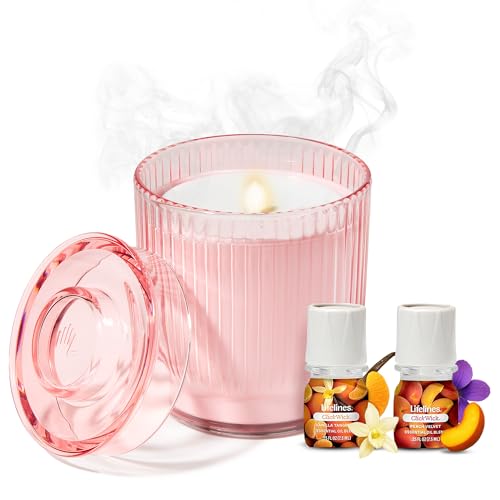
This is a rechargeable, waterless tabletop scent diffuser made to resemble a small candle. The pink ribbed version is about 5.5 inches wide and 6.5 inches high, and includes Vanilla Tangerine and Peach Velvet ClickWick oil blends plus a USB cable. A capped blend bottle is inserted into the base, then opening the lid starts scent diffusion and an LED flame effect. Closing the lid or blowing toward the unit turns it off. The manufacturer states that a charge provides 50-plus hours of scent and that ClickWick bottles can be swapped without water. The supplied scent family is more specifically disclosed than a generic essential-oil claim, with citrus essential oils and natural fragrance named for both included blends. However, no model-specific chamber emissions report, full fragrance SDS, or independently traceable electrical safety listing was located.
This fits an adult who wants modest fragrance and candle-like light in a small personal area, such as a desk, bedroom, bathroom, dorm room, or reading corner. It is most suitable for someone comfortable using proprietary scented-oil refills and who values not handling water, wax, or a lit wick. The selectable intensity and reported automatic shutoff are useful for brief, supervised sessions where the user can reduce output or turn the unit off if the scent becomes too strong.
It is not a strong fit for people with fragrance-triggered asthma, migraines, chemical sensitivities, or unexplained respiratory symptoms. The included blends contain citrus oils and undisclosed natural-fragrance mixtures, while product-specific emission data are unavailable. It also needs careful placement away from children and pets because the concentrated oil bottles can be accessed during replacement and essential-oil products can be hazardous if swallowed. Households requiring independently listed charging safety or repairable appliances should seek documentation that this product does not publicly provide.
The main safety advantage is practical rather than independently certified. The product is designed without a burning wick, so it avoids combustion smoke, flame, and molten wax during normal use. Its rechargeable battery and waterless operation may reduce routine water handling, but a public UL, ETL, or CSA certification record was not found for this exact product. A battery SDS supplied through a retailer describes hazards if the cell ruptures and directs proper disposal. Lifelines identifies the included oils as blends of named essential oils and natural fragrance, and says they are free of parabens, phthalates, and dyes. That is useful but not a full allergen or chemical disclosure. The citrus-containing blends are relevant for indoor air because fragrance terpenes can react with ozone to form particles and formaldehyde. The reusable device still relies on proprietary, nonrefillable oil bottles, with no clear end-of-life guidance located.
This is a plug-in, waterless fragrance diffuser that atomizes oil rather than using a water reservoir. Independent retailer listings corroborate a 120 mL oil capacity, 10 W corded operation, an aluminum-alloy exterior, remote control, three output settings, and 1, 4, or 8 hour timers. It is supplied with six small fragrance oils and two replacement atomizer cores. The claimed 1,000 square foot coverage, sub-38 dB noise, leak resistance, tilt shutoff, and automatic shutoff are manufacturer-stated features repeated by retailers, not independently tested performance findings. No model-specific emissions chamber report, fragrance-oil SDS, ingredient list, or traceable UL, ETL, or CSA listing was located. This matters because waterless diffusion intentionally releases concentrated fragrance material into occupied indoor air.
This product fits an adult household that wants a compact, plug-in fragrance device for occasional, user-controlled scenting and is prepared to run it at a low setting or on a timer. It is most suitable where added humidity is unwanted, such as a normally humid room, and where the device can remain upright on a stable surface near an outlet. The included replacement cores and stated one-year warranty are also relevant for users willing to perform routine maintenance rather than treating the diffuser as disposable.
It is not suited to households seeking a documented low-emission indoor-air product, fully disclosed fragrance ingredients, or independently listed electrical safety. Avoid relying on the pet-friendly or child-friendly claim in homes with toddlers, pets that chew or investigate bottles, or anyone who could access concentrated oil. People with fragrance-triggered asthma, migraines, chemical sensitivity, or unexplained respiratory symptoms should not assume waterless diffusion is low exposure. It also is not appropriate as an air cleaner, antimicrobial device, or treatment for sleep, stress, or respiratory conditions.
The key health issue is the supplied oil, not simply the metal housing. The product information identifies six fragrance oils but does not provide a product-specific SDS, ingredient list, allergens, solvents, or disposal instructions. Poison Control cautions that essential oils and liquid air fresheners should be stored out of reach of children and pets, because swallowing and eye or skin exposure can cause harm. The stated tilt shutoff may reduce spill risk, but it does not replace secure storage or hazard labeling. EPA resources note that fragrances, particularly terpene-containing citrus and pine scents, can react with ozone indoors to form particles and formaldehyde. No exact-product emissions report was found, so low indoor-air exposure cannot be inferred from waterless or cold-air marketing. On durability, the aluminum exterior, included replacement atomizer cores, and stated one-year warranty are favorable, though no parts catalog, recycling plan, packaging details, or end-of-life guidance was located. No matching U.S. recall or regulator action was located in the searched records.
This is a corded, cold-air, waterless fragrance-oil diffuser in a 4.05-ounce, approximately 120 mL format. The black product is listed at 6 watts and 11.5 inches tall. It is designed to atomize oil from a refill bottle rather than dilute it with water, and fragrance oil is not included. Manufacturer documentation for the closely related Air-Scent version describes three output levels, 1, 3, 6, and 12 hour timers, automatic shutoff, and an LED night light. It also instructs users to keep the unit upright, tighten the bottle, use the supplied adapter, and clean it with a short rubbing-alcohol cycle every 1 to 2 months. No model-specific chamber emissions report, fragrance formula disclosure, safety data sheet, or traceable UL, ETL, or CSA listing was located.
It suits an adult household or office user who wants waterless fragrance dispensing, prefers to choose and refill their own compatible oil, and can keep the unit upright on a stable surface. The timer and three intensity settings are useful for someone who wants to limit operating time rather than run scent continuously. It is more appropriate for a ventilated, moderate-size room than for a tiny enclosed area, since the published coverage figures are volume claims rather than independently validated room-performance results.
It is not well suited to households with toddlers, people who may ingest liquids, or pets that can reach the diffuser or stored oils. Concentrated fragrance liquids can cause eye and skin irritation and may be harmful if swallowed, depending on the formula. People with asthma, migraine, fragrance sensitivity, respiratory symptoms, or a need for verified low-emission indoor products should seek a setup with exact-product emissions data and clearer sensitive-user guidance. It also does not fit buyers who require confirmed UL, ETL, or CSA listing documentation.
The important health limitation is not a confirmed defect in the device, it is the absence of product-specific exposure evidence. Independent indoor-air research shows that evaporated essential oils and diffuser use can raise terpene and VOC concentrations, with exposure depending on the oil, output, room volume, ventilation, and indoor chemistry. The manufacturer provides output and timer controls, but does not publish a chamber test for this unit or a clear routine-use ventilation plan. The product uses polypropylene and an empty refill bottle that can be reused, which may reduce cartridge waste. Its manual also gives a cleaning procedure intended to keep the atomizer functioning. However, no oil disposal instructions, packaging information, replacement-parts catalog, or verified recycling program was located. No product-specific CPSC recall or unsafe-product report was identified in the sources searched, but that does not establish independent electrical or emissions certification.
This is a corded, waterless fragrance diffuser for essential or compatible fragrance oils. A published user guide describes a 4 by 4 by 11.5 inch polypropylene unit with a refillable 120 mL bottle, a 6 watt maximum draw, Bluetooth app control, three output levels, timers, and a warm LED light. It atomizes oil without added water or heat. The claimed 1,100 square foot coverage is a manufacturer-stated performance figure repeated in the guide, not a published chamber-test result. The guide gives practical cleaning directions, including a monthly 90 percent or higher isopropyl alcohol flush, but it does not provide product-specific emissions data, fragrance SDS documents, or an independently verifiable electrical safety listing.
This product fits an adult household or small workplace that wants controllable ambient scent in a larger open room and is willing to manage fragrance exposure actively. The most suitable user wants a refillable bottle instead of cartridges, has a stable elevated surface near an outlet, and can use the app or manual controls to limit operation to selected hours. It is also suited to someone prepared to perform the specified monthly alcohol cleaning and inspect the cord and bottle connection routinely.
It is not well suited to homes with young children or pets that can reach the device or stored oils. Concentrated essential oils and fragranced liquids can be harmful if swallowed and may irritate skin or eyes. It is also a poor fit for people with fragrance-triggered headaches, asthma, chemical sensitivities, or a need for demonstrated low-emission indoor-air products. Buyers who require independently listed electrical equipment, published oil ingredients, or validated coverage and runtime data need documentation this product does not provide.
The main health limitation is not a confirmed defect, it is missing product-specific evidence. No chamber report was found showing low VOC, terpene-reaction-product, or particle exposure for this diffuser with any oil. Essential-oil diffuser research has found increased terpene and VOC exposure, and terpenes can form secondary pollutants indoors. Aromatherapy is not established as a treatment for insomnia or other health conditions. The product uses a refillable 120 mL bottle, which can reduce cartridge waste, and the published guide calls for monthly maintenance rather than disposable atomizer cartridges. The housing is described as polypropylene and lead-free, but no independent material certification or end-of-life guidance was located. No product-specific CPSC recall or safety action was identified in the searches performed. Keep oils secured and out of reach, because Poison Control warns that misuse or ingestion of essential oils can cause serious poisoning.
This is a corded, waterless cold-air fragrance diffuser for a tabletop, floor, or wall installation. It has a refillable 400 mL oil reservoir, Bluetooth app and front-panel controls, and no fragrance oil is included. XEITIN states that it can scent up to 3,000 square feet and last 60 to 75 days, but those are manufacturer claims rather than independently verified performance figures. A matching model manual supports the basic format, including a 400 mL bottle, programmable spray and pause cycles, a device lock, and instructions to keep the unit upright. It also gives oil-use rates that vary sharply by setting, from 0.02 to 2.66 g per hour, and says those figures depend on the test oil. No model-specific chamber emissions report, NRTL electrical listing, or independent coverage test was located.
This product suits an adult user scenting a larger open living area, office, lobby, or retail-like space who wants waterless fragrance rather than humidification. It is particularly suited to someone willing to choose, label, store, and refill their own compatible oil, then use the app or panel to keep output intermittent. The adjustable cycles are useful where the unit can be mounted or placed upright, away from traffic, children, and pets, with ventilation available if fragrance becomes noticeable or irritating.
It is not well suited to households with fragrance-sensitive people, asthma that is triggered by scents, migraine sensitivity, or anyone seeking an air-cleaning or health product. The diffuser deliberately disperses concentrated fragrance oil, while no exact-product emissions testing was found. It also needs a location inaccessible to children and pets because oils can harm after swallowing or eye exposure. Buyers needing independently listed electrical equipment, fully disclosed fragrance ingredients, or reliable performance data for a specific room size should choose a product with those records publicly available.
The strongest safety positives are operational rather than independently certified. A matching manual directs users to keep the filled product upright, keep it inaccessible to children and pets, avoid damaged plugs and overloaded outlets, and prevent oil contact with eyes or ingestion. It also documents regular nozzle and bottle cleaning. The refillable 400 mL reservoir and separately available reservoir and nozzle can reduce disposable-device waste compared with replacing an entire unit. Important gaps remain. No exact-product UL, ETL, or CSA listing, emissions chamber report, recall record, or product-specific fragrance SDS was found. EPA guidance notes that fragranced products can contribute reactive chemicals indoors, and some scented materials can react with ozone to form particles and formaldehyde. Use the lowest effective setting, avoid continuous operation in enclosed rooms, and stop use if occupants develop symptoms. The manufacturer provides no detailed packaging, recycling, oil-disposal, or end-of-life guidance.
This product is a 500 ml, or 16 fl oz, Santal-scented aroma oil blend. It is a consumable for scent diffusion, rather than a diffuser itself, so it contains no heater, battery, power supply, or electrical controls. The catalog describes amber, vanilla, cedar, sandalwood, and peach-related scent notes and presents it for diffuser use. AromaTech currently describes its aroma oils as blends made for nebulizing, waterless cold-air diffusion, and says its fragrance range follows IFRA guidelines and excludes several named material classes. Those are manufacturer statements, not a product-specific ingredient list, safety data sheet, or chamber-emissions report for this Santal formulation. Independent research on other essential-oil diffusers shows that diffusion can raise indoor VOC and particle concentrations, but no equivalent test report was found for this product.
This suits an adult household or hospitality user who already owns a compatible waterless cold-air diffuser, wants a long-use fragrance-oil refill, and can store concentrated liquid securely. It is most appropriate where scenting is optional, rooms can be ventilated, and the user can start at a low output and stop if fragrance is irritating. The large bottle format is practical for frequent scenting because it reduces refill handling, but it also requires deliberate storage and spill control.
This is not suited to homes with toddlers, people likely to ingest or handle the oil unsupervised, or pets that can access the bottle or a spill. It is also a poor fit for fragrance-sensitive people, people with scent-triggered headaches or respiratory symptoms, and occupants who need highly predictable low-VOC indoor air. Buyers using a water-based ultrasonic diffuser should not assume compatibility from the catalog wording, because AromaTech currently describes its oils as intended for waterless cold-air nebulizing systems.
AromaTech states that its fragrance oils comply with IFRA guidelines and are made without parabens, phthalates, formaldehydes, nitromusks, acetaldehyde, and synthetic colorants. It also says its oils are formulated for cold-air diffusion and that its scent machines offer intensity and scheduling controls. These are useful manufacturer disclosures, but they do not replace a current, product-specific safety data sheet, quantitative allergen disclosure, or independent emissions testing for this Santal formula. The absence of electrical hardware eliminates powered-device fire and shock concerns for this oil itself. The more relevant safety issue is concentrated fragrance liquid. Poison Control advises keeping essential oils and liquid air fresheners locked away from children and pets, and direct contact or ingestion can cause harm. The 500 ml bottle may reduce packaging turnover, but no verified bottle-material, recycled-content, recyclability, disposal, or refill-packaging documentation was found.
This is a corded, waterless cold-air scent diffuser that atomizes oil-based fragrance or essential oils into a dry mist. The starter set is listed with five 20 mL fragrance samples, a remote, two replacement atomizing cores, six output levels, 1, 4, and 8-hour timers, and a 5 V, 2 A adapter requirement. Retail listings independently repeat those basic contents and operating controls. Its defining limitation is evidence quality. No product-specific fragrance ingredient list, Safety Data Sheet, chamber emissions report, or traceable UL, ETL, or CSA listing was found. Coverage claims also conflict across sales materials, with one stating up to 1,000 square feet and another up to 1,500 square feet, without a disclosed test method.
This product suits an adult household that wants adjustable ambient fragrance without adding moisture, and that has a ventilated living area or office where scent can be kept modest. It is most practical for someone willing to begin at the lowest setting, use the timer rather than continuous scenting, keep the unit upright, and store the oils separately in a secured location. The included samples and replacement atomizing cores may also suit a user who values an all-in-one starter format and basic service parts.
It is not a good fit for homes with infants, unsupervised children, pets that can reach or chew oil bottles, or anyone unable to lock concentrated fragrance oils away. People with asthma, fragrance sensitivity, migraine triggered by odors, chemical sensitivities, or a need for documented low-emission products should avoid relying on it, because no exact-product emissions testing or full oil disclosure was located. It also does not suit buyers who need independently verified electrical certification, evidence-based room coverage, or a diffuser intended to run continuously overnight.
The main health issue is not added humidity, but unmeasured fragrance exposure. EPA identifies air fresheners as possible indoor VOC and particle sources, and notes that citrus and pine fragrance chemicals can react with ozone to form particles and formaldehyde. This set includes citrus-named scents, but its actual chemical composition and emission rate are not disclosed, so the product cannot be treated as low-VOC or suitable for sensitive users. EPA recommends source control and ventilation, while Poison Control advises keeping essential oils locked away from children and pets. No product-specific SDS, emissions report, recall, regulatory action, or verified electrical certification was found in the checked public sources. The ABS plastic body and refillable oil format may avoid disposable single-use cartridges, and the included replacement atomizing cores could extend service life. However, there is no published warranty, recycling plan, packaging documentation, or oil disposal guidance, so end-of-life and consumable impacts remain unclear.


