Best Overall
43% off
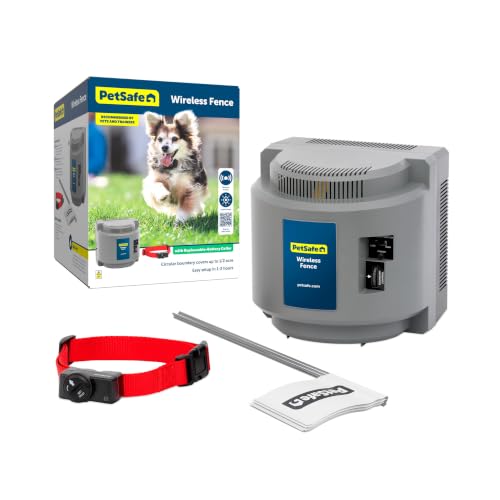
PetSafe Wireless Pet Fence Containment System
Easy setup with no digging required.
Adjustable boundary covers up to 1/2 acre.
Safe, gentle correction for all dog sizes.
 Brianna York
Easy setup with no digging required.
Adjustable boundary covers up to 1/2 acre.
Safe, gentle correction for all dog sizes.

Easy setup with no digging required.
Portable design for use anywhere.
Covers up to 3/4 acre effectively.

No monthly fees, saving you money.
Customizable boundaries for precise pet control.
Track multiple pets with one app.

Covers up to 100 acres of land.
Includes tone, vibration, and static options.
Rechargeable collar for convenience and sustainability.

No subscription needed for operation.
Customizable fence boundaries for flexibility.
Advanced safety features for peace of mind.

Extended battery life for uninterrupted usage.
Waterproof design for all weather conditions.
Accurate GPS, ensuring reliable boundary tracking.

Easy setup without digging or wires.
Adjustable boundaries for customized safe zones.
Portable design for travel-friendly pet containment.

No monthly fees required for use.
Waterproof design ensures durability outdoors.
Dual modes offer customizable boundary settings.

Covers a wide area up to 3500ft.
Waterproof collars for all-weather use.
Rechargeable system for convenience and sustainability.

Portable design for easy outdoor use.
Adjustable boundary for customizable containment.
IPX7 waterproof for all-weather durability.
The first practical question is whether the boundary suits the property. Radio systems generally create circular boundaries and can be affected by metal, buildings, vehicles, electrical equipment, terrain, and other signals. GPS systems may require clear sky view and can lose accuracy around trees, walls, buildings, and covered spaces. A claimed radius or acreage is not the same as a measured boundary. Look for an independent, model-matched field test that reports boundary drift, warning-zone width, trigger consistency, and performance across relevant terrain, weather, sky-view, and interference conditions. The strongest evidence described in this category used a commissioned field report, but even that test used tape-and-flag ground measurements rather than RTK-GNSS surveyed boundaries and did not prove guaranteed containment.
A buyer should also distinguish operating modes. Tone-only or vibration-first use is less aversive than a system that defaults to or automatically escalates to static correction, but several supplied products still make static available through the collar or remote. The American Veterinary Society of Animal Behavior position cited in the reviews recommends reward-based training and advises against aversive electronic collars. Clear training instructions should include leash-supervised sessions, visual flags or boundary markers, gradual distractions, stress signs, and exclusions for aggressive, fearful, very young, ill, undersized, or otherwise unsuitable dogs.
Fit and failure behavior matter as much as range. Look for a stated neck-size and weight range, contact-point guidance, skin checks, repositioning instructions, a maximum daily wear time, and clear instructions to stop use if irritation develops. Useful fail-safes include low-battery warnings, correction cutoffs, lockouts, wire-break or transmitter alarms, static-free re-entry, and documented behavior during signal loss, GPS degradation, power loss, pairing failure, and battery depletion. No product should replace supervision or a physical barrier where escape could expose a dog or another person to immediate danger.
For electrical and radio claims, a waterproof label such as IP67 or IPX7 is only meaningful when tied to a stated test method and the exact collar. Check for model-matched UL, ETL, or CSA listings, rechargeable-cell safety evidence, and an exact FCC identification matching the marketed transmitter, remote, and collar. FCC authorization supports legal radio use; it does not establish animal welfare, boundary accuracy, charger safety, or waterproof performance. Finally, consider lifecycle responsibility: rechargeable parts, replaceable batteries, repair or replacement support, battery chemistry disclosure, and a usable U.S. recycling or take-back route.
Across the supplied products, the recurring safety caveats are substantial. Static correction is common, and the reviews repeatedly say these systems are unsuitable for fearful, reactive, aggressive, very young, ill, medically vulnerable, undersized, or skin-sensitive dogs. They are also unsuitable as the sole safeguard near roads, wildlife, livestock, water, neighbors, visitors, or other hazards. Owners must expect signal or GPS variation, power and battery limitations, supervised training, daily collar checks, and a physical backup when reliable separation is essential.
These topics separate a convenient containment aid from a product whose welfare, fit, failure behavior, environmental impact, and technical claims have been examined more carefully. Scores are relative to the supplied products and reflect the evidence and reviews provided, not a guarantee of safe use.
This measures whether the collar can avoid aversive stimulation through tone-only or vibration-first operation and whether the evidence addresses dog welfare. Higher-scoring examples offered tone or vibration without automatic shock in fence mode; lower-scoring products made static central, automatic, or available through remote training. Even higher scores do not establish that electronic containment is welfare-neutral.
This measures stated dog and neck-size limits, contact-point precautions, wear-time limits, repositioning, skin checks, materials, and safety guidance. Higher-scoring products commonly specified one- or two-finger fit, daily checks, repositioning, and a 12-hour maximum; lower-scoring products lacked wear limits, breakaway information, or clear contact-care instructions. Fit must be checked against the individual dog, not just the advertised size range.
This measures whether instructions require supervised, visual-boundary training and identify dogs for whom electronic containment is unsuitable. Higher-scoring products described flags, leash work, staged sessions, stress signs, or exclusions for aggressive and vulnerable dogs. Lower-scoring products offered little suitability screening or no structured visual training plan. Training guidance cannot make a physical barrier out of an electronic one.
This measures protection during low battery, power or signal loss, GPS degradation, wire damage, pairing problems, re-entry, and correction events. Higher-scoring products documented several safeguards such as low-battery indicators, alarms, lockouts, correction cutoffs, and correction-free re-entry. Lower-scoring products left signal-loss, battery-depletion, or re-entry behavior unclear. A warning or cutoff reduces risk but does not guarantee containment.
This measures evidence against shock, overheating, battery failure, charger hazards, and water ingress. Higher-scoring products had somewhat stronger stated or traceable safety details, but the supplied reviews repeatedly found no exact-model UL, ETL, CSA, battery-cell, charger, or ingress certification. A manufacturer IP67 or IPX7 claim alone is weaker than a model-matched test using a stated method.
This measures repeatable outdoor performance rather than the advertised radius or acreage. High scores require independent reporting of drift, warning-zone width, trigger consistency, and conditions such as sky view, terrain, weather, and interference, ideally against surveyed ground truth. Most supplied radio products lacked this evidence; the GPS product with the strongest score had a model-matched field report, but its commissioned method still had limits.
This measures whether each transmitting base, remote, and collar is traceably authorized for U.S. use and correctly identified. Higher-scoring products had FCC records that matched the relevant hardware or model family. Lower-scoring products lacked an exact FCC identification or relied on general compliance language. FCC authorization addresses radio legality and interference rules, not boundary reliability, electrical safety, or humane training.
This measures whether range, accuracy, waterproofing, harmlessness, containment, tracking, and suitability claims match disclosed limitations. Higher-scoring products acknowledged interference, GPS drift, power loss, or the absence of a physical barrier. Lower-scoring products paired absolute or reassuring language with limited evidence, such as unsupported waterproof or reliability claims. Buyers should treat untested range and safety promises as manufacturer statements.
This measures model-matched evidence from qualified third parties, including field, electrical, radio, and battery testing. Higher-scoring products had traceable external reports or authorization records; lower-scoring products relied mainly on manuals, listings, badges, or self-issued claims. In this category, even the better independent boundary report was commissioned by the manufacturer and did not prove performance in every property or welfare safety.
This measures whether the responsible company, model, contact information, recalls, incident reports, and corrective-action path can be checked. Higher-scoring products had clearer manufacturer or support traceability and no exact recall found in the reviewed records. Lower-scoring products had limited company identification or marketplace documentation. No recall found is not the same as proof that a product is risk-free.
This measures disposable-battery use, rechargeable-component durability, battery chemistry disclosure, replacement or repair support, unnecessary accessories, and a U.S. recovery route. Higher-scoring products generally used rechargeable collars and, in one case, documented replacement and recycling guidance. Lower-scoring products relied on disposable batteries or had no battery replacement, take-back, repair, or recycling pathway. Rechargeable does not automatically mean repairable or responsibly recoverable.
This product is a plug-in radio transmitter and battery-powered receiver collar that creates an adjustable circular boundary, stated by PetSafe to reach up to 90 feet from the transmitter, or up to one half acre. It is intended for dogs over 8 pounds, with a collar that offers a tone-only setting plus five static-correction levels. Training flags and a test light are included to map and practice the boundary. The manual provides meaningful operating limits. It says the collar stops static correction after 30 seconds, does not correct on re-entry, and shows a low-battery warning. It also explicitly says this is not a physical barrier and cannot guarantee containment. However, the same manual documents boundary fluctuation of up to 5 percent from electronic noise, and says signal loss can activate the collar. No independent, model-matched field accuracy study or waterproof test rating was located.
This product is most suited to an owner with a relatively open, circular yard who understands that it is a training aid rather than secure fencing. The dog should be over 8 pounds, old enough for structured training, non-aggressive, healthy enough to wear a contact-point collar, and already responsive to basic cues. It fits households able to supervise initial sessions, test the boundary in several locations, check collar fit and skin daily, and use another containment method when reliable physical separation is needed.
It is not suited to fearful, reactive, aggressive, very young, medically vulnerable, or skin-sensitive dogs. The manufacturer specifically warns against use with aggressive dogs, and the manual acknowledges that static tolerance varies and containment cannot be guaranteed. It is also unsuitable where a dog could reach roads, wildlife, neighbors, visitors, or other hazards if it escapes. Avoid use in metal-heavy locations, around metal crates, or in yards where a circular boundary cannot stay safely inside the property line.
The key health issue is the collar's use of static correction through neck contact points. Although tone-only operation is available, static correction is integral to the standard containment design. AVSAB's current position recommends reward-based training only and advises against aversive methods, including electronic collars. The product manual does provide unusually specific pressure-injury precautions, including a 12-hour daily wear limit, repositioning every one to two hours, daily skin inspection, and stopping use if a rash or sore appears. The transmitter manual documents FCC Part 15 compliance language and identifies interference precautions. No model-specific UL, ETL, CSA, or IP waterproof certification was located. The collar uses a replaceable RFA-67 battery. PetSafe instructs users to keep spent batteries out of household waste and contact customer care for disposal guidance, but the system still relies on disposable batteries rather than a rechargeable collar. No recall for this exact product was located in the reviewed U.S. recall sources.
This product is a plug-in radio-based containment system for dogs at least 5 pounds. An indoor transmitter creates an adjustable circular boundary, and the supplied rechargeable receiver collar warns with a tone and can then deliver one of five static-correction levels. PetSafe states coverage reaches a 105-foot radius, or up to 3/4 acre, with a 2- to 3-foot boundary zone. The collar is stated to fit 6- to 28-inch necks and to charge in 2 to 3 hours. The manufacturer manual documents useful controls, including tone-only mode, a 15-second correction cutoff, 10-second correction lockout, low-battery indication, transmitter alarms, and correction-free re-entry. It also documents meaningful limitations. Power loss leaves the dog unprotected, metal and electronic interference can alter the usable boundary, and the electromagnetic field can fluctuate. No model-matched independent field-accuracy report or third-party electrical or waterproof certification was located.
This system fits an owner with a roughly circular, open yard who needs a portable no-dig boundary and is prepared to test the perimeter repeatedly, use the supplied flags, and complete the supervised training plan. The dog should be at least 5 pounds, comfortably fit the collar, be healthy enough for close skin monitoring, and not be aggressive. It is most appropriate where the owner can supervise outdoor time and has a backup plan for outages or an escape.
It is not appropriate for aggressive, fearful, reactive, very young, medically vulnerable, or skin-sensitive dogs, particularly where a static correction could worsen distress. It also does not suit homes needing a true barrier against visitors, wildlife, other dogs, roads, or a dog that could cause harm after escape. Avoid it for irregular lots, yards with substantial metal structures or parked vehicles near the area, frequent outages, or households unable to perform daily collar checks and structured training.
The strongest health protections are procedural rather than independently certified. The manual specifies direct but not excessive contact, daily checks for redness or sores, a 12-hour wear limit, repositioning, and stopping use if irritation occurs. It also says the product is not for aggressive pets. Those are important safeguards, but the collar can deliver static correction through neck contact points. That exposure conflicts with AVSAB guidance favoring reward-based methods and avoiding aversive electronic collars. The rechargeable lithium-ion collar battery avoids routine disposable battery use, and the manual says users should recycle the equipment rather than place it in municipal waste. However, the battery is non-replaceable, so battery failure can shorten the useful life of the whole collar. A U.S. rechargeable-battery recycling route exists through Call2Recycle, but no model-specific PetSafe take-back program, repair pathway, IP test rating, UL listing, or ETL listing was located. No recall for this exact product was located in the CPSC results reviewed.
This is a GPS-based outdoor containment collar with a phone app and handheld remote. The seller says the app can draw either a custom polygon or a circular boundary, manage up to five collars, and provide activity monitoring without a monthly app charge. The remote is presented as a first-stage training tool for up to two dogs when a second collar is added. The seller says the collar can issue sound, vibration, or static stimulation near the digital boundary and advises beginning with remote training. It also limits the intended environment to open outdoor areas with stable GPS, not indoor or heavily wooded locations. No product-specific technical manual, independent boundary-accuracy report, electrical safety listing, waterproof test record, or matching FCC equipment authorization was located in the checked sources.
This product is most suited to an owner of an adult dog already responsive to reward-based recall cues, who has a large, open outdoor area with dependable GPS reception and can directly supervise early use. The owner should be prepared to map and repeatedly test the boundary, train with sound or vibration cues first, inspect neck contact regularly, and retain a physical leash or barrier as backup. It may also fit a household that needs an irregular temporary boundary and accepts the seller's no-monthly-fee app model.
It is not suited to fearful, reactive, aggressive, very young, ill, or very small dogs, or dogs with neck skin problems. These dogs need an individualized plan from a veterinarian or qualified reward-based behavior professional, not an electronic correction system. It is also unsuitable where GPS is obstructed by dense trees, buildings, steep terrain, or poor sky view, and for properties bordering roads, water, wildlife, or other hazards. Do not treat it as a substitute for supervision or a secure physical enclosure.
The key welfare issue is the availability of static stimulation. The seller describes sound, vibration, and static modes, while AVSAB and APDT recommend reward-based training and advise against shock or other aversive tools because of welfare risks. The seller does recommend initial training, but no product-specific suitability exclusions, structured visual-boundary protocol, wear-time limit, or contact-point skin-care instructions were located. The listing makes no verified claim of UL, ETL, CSA, FCC, or independently tested waterproof certification for this exact product. No exact-product recall was located in the checked CPSC sources, but searchable public records also did not establish a robust responsible-company trail or corrective-action route. Battery chemistry, replacement support, repairability, and U.S. take-back or recycling guidance were not disclosed, leaving its end-of-life handling unverified.
This is a wired, in-ground dog containment system. A powered transmitter sends a signal through a continuous buried boundary wire, while the dog wears a rechargeable receiver collar. The supplied kit includes 1,000 feet of wire and 100 visual flags. SportDOG states that this starter layout can enclose up to 1 1/3 acres, with expansion possible through added wire and collars. The collar has a tone and vibration-only setting, plus seven static-stimulation levels. Its official guide documents a low-battery indicator, a wire-break alarm, and correction events limited to up to 15 seconds. The same guide cautions that this is not a physical barrier and cannot guarantee containment. No model-matched independent field test was located to establish real-world boundary accuracy or escape performance.
This system fits an owner of a healthy, non-aggressive dog above the stated minimum size who has a stable yard layout, can bury and periodically inspect wire, and is prepared to complete hands-on boundary training. It is most appropriate where visible flags, direct supervision during early sessions, frequent collar-fit checks, and a separate physical plan for gates, roads, visitors, and outages are practical. The owner should be willing to use the tone and vibration setting first and involve a veterinarian or qualified trainer if suitability is uncertain.
It is not suited to fearful, reactive, aggressive, medically vulnerable, or undersized dogs, or to dogs with existing neck irritation. It is also unsuitable where an escape could create an immediate road, wildlife, livestock, bite, or neighbor-safety risk, because the system cannot physically stop a dog or outsiders from crossing the boundary. Households unable to supervise training, inspect for wire damage and interference, recharge the collar, or remove and reposition it within the stated wear limits should use a non-aversive physical containment approach instead.
The main health concern is the collar's static-stimulation mode. The official instructions include a tone and vibration-only setting, staged training, stress-sign monitoring, and a warning not to use the product with aggressive dogs. Those safeguards are meaningful, but they do not remove the welfare concern from static correction. AVSAB's current humane-training position recommends reward-based methods only and advises against aversive tools including electronic collars. The manufacturer provides practical contact-point safety guidance and identifies the collar as rechargeable lithium-ion rather than disposable-battery powered. It says the battery should provide hundreds of recharge cycles, generally last 3 to 5 years, and be replaced through customer care. Its manual also directs users to recycle the equipment rather than discard it with household waste. The collar's IP67 and NEMA 6P water-resistance claims are manufacturer-stated, not backed here by a public third-party certification listing for the exact product.
This is a GPS containment system for dogs over 25 pounds with 13 to 28 inch necks and properties of at least three quarters of an acre. It combines a map-based boundary in the My PetSafe app, a powered home base and a rechargeable contact-point collar. The manufacturer states that the collar can run for up to five days per charge and offers tone and vibration only, or 10 static-correction levels. Its manual gives unusually concrete operating limits. Boundary posts should stay at least 25 feet from roads or hazards, dense tree cover can weaken the signal, and the product is not a tracking device if a dog escapes. The collar has low and critical battery indications, GPS-loss and system-error signals, plus a 15-second correction limit and 10-second over-correction lockout. FCC test documentation independently matches the collar radio to this product.
This system fits an owner of a healthy, non-aggressive dog over 25 pounds who has a large open property, can complete the included multi-session training process and will supervise outdoor access. It is most relevant where installing buried wire or a conventional fence is impractical, but the owner can keep digital boundary posts well back from roads, verify collar fit throughout the day and maintain a separate physical plan for gates, visitors and high-risk areas. It also suits households that do not need post-escape location tracking.
It is not suitable for fearful, reactive or aggressive dogs, dogs under 25 pounds, puppies not yet ready for basic obedience training, or dogs with neck skin problems that make contact points unsuitable. It also does not fit homes near busy roads where a GPS warning zone cannot be set well inside the property line, small lots below three quarters of an acre, densely obstructed sites, or households needing a solid barrier. Buyers who want a containment method without static stimulation should select a non-aversive physical solution instead.
The main health issue is the electronic containment mechanism. The collar can be set to tone and vibration only, but static correction remains available in 10 levels and is used after the warning sequence when that mode is selected. AVSAB's humane-training position rejects aversive tools including electronic collars. PetSafe does provide important risk controls, including aggressive-dog exclusion, a two-week training guide, a correction timeout, a separate collar requirement for leash use and explicit skin-care instructions. The collar is rechargeable, which reduces routine disposable-battery waste, and the product carries a one-year limited warranty. The safety guide expects hundreds of recharge cycles and gives temperature limits for charging. However, no U.S. take-back program, replacement-battery pathway, battery chemistry disclosure or third-party electrical listing was located. The product's collar radio is traceable to FCC testing, but that radio evidence does not verify waterproof performance or lithium-battery safety. No exact-model CPSC recall was located in the searched public records.
This is a GPS virtual-fence collar for medium dogs with 12 to 18 inch necks. The owner creates a boundary in the phone app, then trains the dog to respond to two audible warnings before vibration and, if enabled, static correction at the boundary. SpotOn states that core fence functions do not need cellular service, while remote location, low-battery notices, escape alerts, and app-based manual feedback require an optional cellular plan. The manufacturer specifies a minimum dog weight of 15 pounds, a minimum property size of one-third acre, and a 15-foot buffer between the boundary and hazards such as roads. A third-party field test commissioned by SpotOn and conducted by Spirent reported 2.8 feet average drift for the Omni model, using tape-and-flag measurements in several outdoor environments. The public summary does not provide a full accredited test report or raw results.
This product is suited to an adult, healthy dog of at least 15 pounds with a 12 to 18 inch neck, living on an outdoor property of at least one-third acre that has room for a 15-foot setback from roads, water, or other hazards. It fits an owner willing to charge the collar daily, inspect the neck, complete several supervised training sessions, and use tones, rewards, and leash practice as the main learning tools. It is most appropriate as a managed containment aid, not an unattended barrier.
It is not suited to fearful, highly anxious, reactive, aggressive, ill, very young, or poorly socialized dogs, because the product can deliver static correction and veterinary behavior guidance advises against aversive training methods. It is also unsuitable for small or narrow yards, properties where a GPS buffer cannot be kept away from traffic or water, and households needing guaranteed containment. Owners unable to train consistently, inspect skin daily, recharge frequently, or supervise outdoor use should not treat this collar as a substitute for fencing.
The key health concern is the available static-correction mode. SpotOn places two tones before vibration and makes static correction optional and adjustable, but the collar still relies on an aversive consequence at the virtual boundary when that mode is enabled. AVSAB recommends reward-based methods and advises against electronic shock collars. The fit guidance is more specific than many collar instructions, including a one or two finger fit, dry skin and contact points, daily skin checks, and repositioning at least every 12 hours. Pressure sores and rare sensitivity to stainless-steel contact points are acknowledged by the manufacturer. The collar uses an internal rechargeable lithium-ion battery, rather than disposable batteries. SpotOn states a typical battery life of five to seven years and offers repair of straps, electronics, and other components outside warranty, which can reduce premature disposal. The maker claims IP67 water resistance, but a model-specific public ingress test report and third-party electrical-safety listing were not located. No product-specific CPSC recall or public incident action was identified in the checked sources.
This is a rechargeable GPS containment and training collar for outdoor dogs. It is managed through a phone app, which the product page says can draw polygon boundaries and exclusion zones. The package includes 10 boundary flags, metal contact tips in two lengths, silicone tip caps, a magnetic USB charging cable, and a shock test light. The seller states that the collar uses a dual-core GPS module, supports a 64 to 3,280 foot boundary, connects to 12 or more satellites, and keeps saved fence settings after Bluetooth disconnects. Those performance figures are manufacturer claims, not independently verified results. The collar is also stated to use beep, vibration, and static correction. That last mode is the central welfare limitation of this product.
This product is most suited to an owner of a healthy adult dog who already has a large outdoor area, can supervise training closely, and specifically wants app-drawn temporary boundaries without buried wire or recurring app fees. The owner should be prepared to use the included flags as visual training markers, monitor charging, and treat the GPS boundary as a management aid rather than a physical barrier. It is better aligned with people who can avoid or disable static correction and use reward-based recall and boundary training alongside it.
It is not suited to dogs that are fearful, reactive, aggressive, medically fragile, very young, or small enough that collar fit and contact pressure cannot be assessed carefully. It is also a poor fit for households beside roads, wildlife hazards, water, or other places where one escape could have serious consequences. Do not rely on it as the sole containment layer for an unsupervised dog. Buyers needing demonstrated boundary accuracy, documented fail-safe behavior, or independently certified electrical and radio compliance need more evidence than is available here.
The main health concern is the stated static-correction mode. The American Veterinary Society of Animal Behavior recommends reward-based training and advises against aversive methods, including electronic shock collars. The product includes flags and offers beep and vibration warnings, which can support visual and lower-aversive training, but its materials do not establish that static correction is harmless or necessary. The seller describes medium-firm Shore A50 silicone and an IP67-rated collar, while also saying not to immerse it or use it for swimming. No exact-model third-party electrical safety listing or ingress test report was found. The rechargeable 1,000 mAh lithium battery may reduce disposable-battery waste, but no replacement-battery program, repair pathway, take-back program, or U.S. recycling instructions were identified. No recall or public safety action for this exact product was located in the reviewed public sources.
This is a rechargeable GPS containment collar intended to create a virtual outdoor boundary without buried wire, WiFi, cellular service, or an app. The seller states that settings are made on the collar, with a circular boundary adjustable from 49 to 6,561 feet in radius or a free-form boundary made from GPS waypoints. It is sold as a one-collar system. The listing calls it an electric dog fence, but the accessible product material does not clearly identify the correction sequence, stimulation settings, safety cutoff, or whether an aversive electrical correction can be disabled. Its IPX7 rating, three-hour charge time, and up to 24-hour runtime are manufacturer claims, not independently verified test results. No model-matched field accuracy report, safety certification, FCC equipment authorization record, or accessible user manual was located.
This is most relevant to an owner managing a large, open outdoor area who wants a temporary, wire-free boundary and can remain present for supervised training and outdoor time. The owner should be comfortable setting and checking GPS waypoints directly on the collar, using visible markers during training, and treating the system as a supplemental management tool. It is better suited to a dog already comfortable with outdoor handling and able to learn boundaries through reward-based work, rather than a dog expected to be safely contained without active oversight.
It is not appropriate for fearful, anxious, reactive, aggressive, very young, medically compromised, or skin-sensitive dogs, particularly because the accessible materials do not clearly explain the collar's correction method or fit safeguards. It is also unsuitable where escape could expose a dog to traffic, livestock, water, wildlife, strangers, or other serious hazards. Homes needing a dependable physical barrier, protection from people or animals entering the property, or verified containment performance in obstructed GPS conditions should use a different management approach.
The central health issue is uncertainty around aversive exposure. The seller describes the product as an electric dog fence, yet the accessible listing does not disclose its correction progression, stimulation intensity, cutoff behavior, or a tone-only option. AVSAB recommends reward-based training and advises against aversive tools, including electronic shock collars. A visible training boundary, close supervision, and reward-based recall work are especially important if this product is used. The collar is manufacturer-stated as rechargeable, IPX7 rated, and capable of up to 24 hours of operation, which can reduce disposable-battery use. However, no battery chemistry, replaceable-battery option, repair service, take-back program, or disposal instructions were located. No exact-model electrical safety listing, waterproof test report, FCC authorization record, recall, or public incident report was located in the reviewed sources. That absence is not independent proof of safety or compliance.
This is a two-collar radio-boundary system with a handheld remote that also acts as the fence center point. The manufacturer states that users can select one of 14 circular boundary levels, from about 25 to 3,500 feet, and use beep, vibration, or manually operated static stimulation for training. The collar is listed for dogs from 10 to 130 pounds, with a maximum 23.6-inch neck circumference. The manufacturer states that automatic fence alerts use beeps and vibration rather than static stimulation, and stop after a defined warning sequence. Its own manual also warns that walls, metal, weather, electromagnetic interference, and collar position can change performance. A radio authorization record matches the manufacturer and X-series manual, but no qualified independent field test was located for this product's boundary repeatability, waterproof rating, battery safety, or containment performance.
This system is most suited to a handler of one or two medium or larger dogs who needs a portable circular boundary in an open area, can test the boundary every session, and will actively supervise training. The manufacturer lists a 10 to 130 pound dog range and provides fit instructions for a collar up to 23.6 inches. It is better aligned with handlers prepared to use the automatic beep and vibration alerts, mark and rehearse the boundary, and leave manual static stimulation unused.
It is not suited to puppies under six months, fearful or aggressive dogs, dogs in poor health, pregnant dogs, or dogs with current neck irritation. The manual specifically cautions against shock training for several of these groups. It is also unsuitable where an escape could expose a dog to roads, neighbors, livestock, or wildlife, because a radio boundary is not a physical barrier and can be affected by interference. Avoid rain exposure for the remote and do not rely on it indoors or near major metal structures.
The key welfare distinction is that the manufacturer describes automatic fence alerts as beep and vibration only, not automatic static stimulation. That reduces automatic electric exposure, but does not make the whole product non-aversive. The remote retains 30 static levels and can deliver a manually triggered shock for up to eight seconds. AVSAB recommends reward-based training and advises against electronic shock collars. Controlled research has also found more tension and less environmental interaction in dogs trained with electronic collars than in a reward-based comparison group. The collar uses rechargeable batteries, which avoids routine disposable-cell waste. The manual lists 350 mAh collar batteries, an 800 mAh remote battery, USB-C charging, and a claimed IPX7 collar rating. However, battery chemistry, replacement-battery availability, repair pathways, and a U.S. take-back route were not disclosed. No model-specific UL, ETL, battery-safety, charger-safety, or waterproof test report was located. The manufacturer provides a one-year warranty and published support contact details.
This is a rechargeable GPS containment collar set for two dogs. It creates either a circular outdoor boundary or a multi-point boundary set by walking the perimeter, rather than using buried wire or a base transmitter. The matching product manual states a 49 to 6,561 foot circular setting range, a 10 foot audible warning zone, and selectable sound, vibration, or static correction once a dog enters the correction zone. A matching FCC-authorized product model is documented as a Part 15 Class B digital device. The manual also gives meaningful operating limits, including outdoor use in open areas, at least three GPS signal bars, and daily collar wear limited to eight hours. Boundary accuracy, water resistance, battery safety, and real-world escape prevention were not independently tested for this product model in the sources reviewed.
This product is most suited to an owner of one or two medium or larger dogs who has a large, open outdoor area with reliable sky view, can supervise use, and is prepared to set and test the GPS boundary before each session. The owner should be comfortable using the collar in sound-only mode, following the documented fit and eight-hour wear limits, and treating the system as a training aid rather than a physical barrier. It is better aligned with temporary outdoor zones than with dense or obstructed properties.
It is not suited to dogs who are fearful, reactive, aggressive, medically vulnerable, very young, or likely to be distressed by aversive stimulation. It is also unsuitable for properties with dense tree cover, buildings, eaves, indoor areas, roads, livestock hazards, or other consequences if a dog exits the boundary. Do not rely on it where unsupervised containment is essential. The matching manual says weak GPS can stop triggering outside the set area, so it is not a substitute for secure fencing, a leash, or attentive supervision.
The important health issue is the correction mechanism. The matching manual documents sound, vibration, and adjustable static stimulation, plus metal contact points with silicone covers. It includes practical fit, skin, and wear-time guidance, including a two-finger check, stopping use for rashes or abrasions, and a maximum eight-hour daily wear period. However, AVSAB recommends reward-based training and advises against aversive tools such as electronic collars. Static correction can be disabled, but its availability remains relevant for welfare-sensitive dogs. A matching product model has an FCC authorization and an emissions report, but those records do not establish water-ingress protection, charger safety, battery-cell safety, or humane containment performance. The collar uses a rechargeable lithium battery, which avoids disposable-cell waste. No brand-specific replacement battery, repair, take-back, or recycling policy was located. At end of life, EPA guidance is to keep lithium-ion batteries out of household trash and recycling bins and use a suitable battery or electronics recycler.