Best Overall
9% off

AOSEED X-Maker Joy AI+ 3D Printer
Pre-loaded with 8,000+ diverse 3D models.
Operates at high speed, up to 400mm/s.
Includes 8 colorful PLA filaments for creativity.
 Daniel Kenitz
Pre-loaded with 8,000+ diverse 3D models.
Operates at high speed, up to 400mm/s.
Includes 8 colorful PLA filaments for creativity.

Easy-to-use interface for young creators.
Built-in AI assistance enhances learning experience.
Safe design tailored for children's use.

High-speed printing for efficient production.
Large build volume for bigger projects.
Multi-color capability enhances design versatility.

Easy setup with native 4-color printing.
Fast 600mm/s 3D printing speed.
Quiet operation at just 45dB.

High-resolution 10K mono LCD screen.
Fast printing speed at 70mm/h.
Stable LighTurbo light source enhances precision.
Multicolor printing with CFS enhances design versatility.
High-speed printing at 600mm/s saves time.
Smart auto leveling ensures precise prints.

High-speed printing at 600mm/s enhances productivity.
Automatic leveling ensures precise and hassle-free setup.
Dual AI cameras provide advanced monitoring capabilities.
Large build volume accommodates bigger projects.
High-speed printing enhances efficiency significantly.
Supports multi-color/materials for creative flexibility.

Fast printing speed enhances productivity.
Easy one-click setup simplifies use.
Multicolor printing adds creative versatility.

Fast 600mm/s printing speeds.
Convenient 1-click auto leveling feature.
High-quality 300°C direct drive extruder.
For filament printers, compare the usable build volume, nozzle and bed temperatures, compatible materials, and whether the printer is open or enclosed. A 300°C nozzle or heated chamber may allow ABS, ASA, nylon, polycarbonate, or fiber-filled materials, but those capabilities also increase the need for material-specific ventilation and handling information. Resin printers require a different workflow: uncured resin, washing, curing, spill control, solvent handling, and disposal are part of the product's practical footprint. A cover limits access, but it is not automatically a filtered or exhausted enclosure.
A convincing safety claim should identify the exact model and be supported by appropriate documentation. For electrical and fire protection, look for an independently listed product in a recognized registry, such as UL Product iQ, Intertek's ETL directory, or the CSA Group listing database. FCC authorization, CE marks, or a manufacturer's declaration may establish other forms of compliance, but they do not by themselves establish a U.S. electrical fire-safety listing. For emissions, look for a current model-and-material-specific report using ANSI/CAN/UL 2904, or a matching UL Solutions SPOT or GREENGUARD listing. A manufacturer's statement that a printer has HEPA, carbon, activated-carbon, or other filtration is not the same as validated particle-and-gas capture performance.
Headline figures also need context. Maximum print speed is not the same as recommended or measured speed, and advertised speed may lack test conditions. A power rating is not measured energy use during heating, printing, standby, or cooldown. Camera monitoring and AI detection may notify a user without stopping heaters or motion safely. Power-loss recovery, filament-runout detection, or a pause function can reduce some failed prints, but they do not prove protection against every jam, failed fan, overheating event, or unattended-print hazard. Multicolor printing can save manual spool changes while still creating purge and transition waste.
Look for model-specific manuals, firmware notes, replacement-part listings, repair instructions, warranty terms, serial-number support, and corrective-action notices. These help establish whether a printer can be maintained rather than discarded. Also check material limits and use restrictions: the supplied reviews repeatedly show incomplete guidance for ventilation, chemical hazards, food-contact, medical, child-use, and safety-critical applications.
Across the supplied products, the recurring contraindications are clear. None should be treated as suitable for bedrooms, nurseries, poorly ventilated shared rooms, or unsupervised access by children or pets. Open printers leave hot nozzles, heated beds, and moving parts accessible; enclosed printers still require supervision and do not automatically provide safe indoor air. Resin printers add uncured-resin skin and inhalation exposure, solvent handling, and hazardous waste. Higher-temperature filament and resin work requires a dedicated, ventilated setup, and no supplied product had independently verified emissions performance sufficient to remove that caveat.
These topics assess the controls and evidence that matter after the basic specifications are known. Scores are relative to the supplied products: a high score indicates stronger documentation or safeguards in the reviewed material, not a guarantee of safe operation or certification.
This measures whether an enclosure, exhaust route, and particle-plus-gas filtration are designed and documented for the materials and temperatures supported. It matters because filament printers can release particles and gases, while resin printers add uncured-resin and solvent exposure. Among the supplied products, stronger scores generally went to enclosed machines with documented filter arrangements; open or unfiltered printers scored much lower.
This measures protection against thermal runaway, overheating, damaged heater wiring, short circuits, shock, and fire, including independent electrical listing and effective fault shutoffs. It matters because printers combine heaters, motors, electronics, and long unattended cycles. Scores were generally higher where manuals described grounded power, temperature controls, fuses, or shutdown features, but no supplied product had verified U.S. UL, ETL, or CSA listing evidence.
This measures guarding, warnings, cooldown behavior, and practical protection from burns, pinches, cuts, and entanglement. It is especially important for open-frame printers and products marketed for children. Enclosed machines with doors, child locks, or access barriers scored relatively higher; open machines with exposed nozzles, beds, belts, or gantries scored lower. Enclosures still did not establish complete child-safe or interlocked protection.
This measures whether the product clearly identifies compatible materials, temperature limits, ventilation needs, chemical hazards, and restrictions on food-contact, medical, child-use, or similar claims. It matters because material risk changes substantially with resin type, solvent, filament, temperature, and additives. Higher-scoring products supplied clearer material profiles and operating guidance; lower-scoring ones had conflicting compatibility claims or limited ventilation and hazard information.
This measures whether the printer detects jams, failed fans, filament snags, runout, power loss, overheating, and failed prints, then responds safely rather than merely sending an alert. The supplied products commonly documented runout detection, power-loss recovery, cameras, or spaghetti alerts. Higher scores reflected broader documented fault coverage and pause behavior, while lower scores reflected alerts without evidence of automatic heater or motion shutdown.
This measures whether low-emission, filtered, enclosed, or indoor-safe claims are backed by current third-party testing for the exact model and material under a recognized method. It matters because an enclosure or filter claim alone cannot establish room-air protection. Scores clustered relatively closely because no supplied product had a located model-specific ANSI/CAN/UL 2904 report, GREENGUARD listing, or equivalent independent emissions result.
This measures whether speed, accuracy, noise, material compatibility, cameras, filtration, multicolor capability, and safety claims state their conditions and match the evidence. It matters because maximum speed, power rating, AI alerts, and filter labels are easy to overread. Higher scores reflected independently checked specifications or clearly qualified claims; lower scores reflected conflicting material lists, unresolved speed claims, or camera and filtration claims that exceeded the documentation.
This measures whether the exact product has an identifiable manufacturer, model and serial support, accessible manuals, firmware or service notices, and a credible route to corrective action. It matters when a heater, cable, filter, or software issue appears after purchase. Higher-scoring products had named manufacturers, model-specific support, firmware, warranty, or parts resources; lower scores had less complete documentation or weaker repair and response evidence.
This measures purge, support, transition, and failed-print waste, plus reuse, repair, durable spool handling, and recycled or refill-material support. It matters because multicolor systems can consume substantial purge filament, while resin workflows create contaminated supports, wipes, gloves, and solvent waste. Higher scores were supported by measured lower multicolor waste, resin filtering, or repairable parts; most products lacked quantified waste or recycled-material evidence.
This measures electricity during heat-up, printing, standby, and cooldown, including heated beds and chambers and the quality of sleep or heater controls. It matters because large beds, heated chambers, and resin heating can draw significant power. The strongest supplied evidence was an independently measured 121 W average print draw for one filament printer; most other products offered only rated power figures or no model-specific measurements.
This measures whether wear and safety-relevant parts can be identified, bought, and replaced, and whether manuals, firmware, and warranty support keep the product usable. Higher scores among the supplied products were associated with model-specific guides and parts for hotends, heaters, fans, beds, belts, electronics, tanks, films, and screens. Lower scores reflected limited parts catalogs or mainly routine-maintenance information.
This is a compact, enclosed filament printer aimed at children, families, and classroom-style creative projects. AOSEED’s product documentation identifies the X-MAKER JOY AI+ as a PLA-only machine with a 120 x 120 x 120 mm build area, 2.4 GHz Wi-Fi app control, pre-leveling, a quick-swap nozzle, and a built-in camera for monitoring and time-lapses. The manufacturer also states that the printer can reach 400 mm/s, although the published materials do not give a repeatable test profile for that headline speed. Its enclosure and low-temperature-nozzle claims are manufacturer-stated safeguards against accidental contact. An FCC equipment authorization record independently supports that a closely named AI+ printer has wireless-radio authorization, but FCC authorization is not an electrical-safety listing. I found no current model-specific UL, ETL, CSA, UL 2904, GREENGUARD, or comparable emissions certification record, and no independent emissions test report for this product.
This product fits a supervised household or elementary classroom that wants a small PLA-only printer for short toy, decoration, and introductory design projects. It is particularly suited to beginners who value pre-leveling, app-guided one-press printing, and a contained physical workspace over broad material choice. The 120 mm cubed build area is appropriate for small objects, and the published maintenance guides make it more workable where an adult can help with clogs, nozzle replacement, and setup. Use it in a well-ventilated location rather than treating the enclosure as an air-cleaning system.
It is not for unsupervised child use, bedrooms, poorly ventilated classrooms, or settings where people may be sensitive to airborne particles or odors. The available evidence does not show tested particle-and-gas filtration, external exhaust, or independently verified low-emissions performance. It also does not suit users needing ABS, nylon, carbon-fiber, or other higher-temperature materials, large parts, food-contact or medical-use assurances, or documented electrical listing from a US Nationally Recognized Testing Laboratory. Buyers needing predictable high-speed production should require tested speed and quality conditions.
The clearest health-positive design choice is PLA-only compatibility. CDC notes that PLA often releases fewer particles than ABS, but it also warns that filament printers can release small particles and gases. CDC and NIOSH recommend fresh-air ventilation, local exhaust or effective particle-and-gas filtration, and distance from operating printers. This product has an enclosure, but no documented exhaust path, filter media, replacement schedule, or independent emissions result was found. The enclosure should reduce access to hot and moving parts, not be treated as proof of clean indoor air. AOSEED publishes useful maintenance instructions for the quick-swap nozzle, printhead, fittings, filament feed, and clogs, which can extend service life instead of making a minor fault a disposal event. The manufacturer states a 60 W rating for the related JOY configuration, but there are no measured energy figures for this AI+ unit, including standby. PLA is commonly marketed as biodegradable, yet printed parts and failed prints should not be assumed to compost in ordinary home conditions. No product-specific US recall or public safety report was found in the CPSC recall and SaferProducts search tools reviewed.
This is an enclosed desktop filament printer for young makers, sold here with eight PLA spools. The manufacturer identifies the X-MAKER as a 150 x 150 x 150 mm printer for PLA and ABS, with Wi-Fi, USB and SD printing, a touchscreen, and a built-in camera. Its current official product page lists an age range of 9 to 16. Safety-relevant functions are documented in the manufacturer manual, including a child lock, filament-runout pause function, power-loss recovery, cooling controls, and instructions to wait until the nozzle is below 45 C before handling a print. The enclosed cabinet helps limit access to hot and moving hardware, but no product-specific particle and gas filtration specification or independent emissions result was found. The 400 mm/s marketplace claim is not supported by the current official page, which lists up to 300 mm/s and also references 160 mm/s elsewhere.
It suits a supervised home, library, or classroom maker who wants an enclosed PLA-focused printer with a modest 150 mm cubed build space and simple app, touchscreen, USB, or SD workflows. It is particularly relevant where replacement wear parts matter, because the manufacturer publicly lists the nozzle module, extruder module, hotbed, filament detector, cable, and build plate. Adult setup and oversight remain important when loading filament, removing supports with pliers, and managing hot parts.
It is not suited to households that need independently verified low indoor emissions, listed electrical safety hardware, or a documented HEPA plus gas-filtration path. It is also a poor fit for bedrooms, poorly ventilated rooms, and settings with asthma-sensitive occupants if printing will be frequent. Avoid treating the enclosure as a substitute for ventilation, particularly when using ABS. It also does not suit buyers who need a confirmed 400 mm/s machine, because the manufacturer’s current speed documentation is lower and inconsistent.
The product can use PLA and ABS. Federal NIOSH guidance says plastic-filament printing can release small particles and gases, recommends ventilation and source controls, and notes that PLA often releases fewer particles than ABS. The manufacturer’s enclosure may reduce casual access to the print zone, but it has not documented a particle-and-gas filter, outdoor exhaust path, or model-specific emissions test. PLA should be the lower-exposure default, with fresh-air ventilation during all printing. The manufacturer documents hot-part cooldown instructions and supervision when removing supports. Its manual also documents a filament-runout pause function, which can prevent a print continuing after an empty spool. For service life, AOSEED sells several model-specific replacement parts and offers a 12-month warranty. No product-specific CPSC recall or emissions certification was located in the sources reviewed. FCC authorization verifies the wireless radio equipment only, not electrical, fire, or emissions safety.
This product is an open-frame, material-extrusion 3D printer that melts thermoplastic filament through a direct-drive hot end onto a heated PEI spring-steel build plate. It has a 260 x 260 x 260 mm build volume, a 300°C stated nozzle limit, and a 100°C stated bed limit. It is intended for home, hobby, and small-workshop fabrication rather than enclosed industrial production. Anycubic documents a built-in four-filament feed system, plus optional expansion hardware for up to 19 colors. The manufacturer also lists PLA, PETG, TPU, PVA, carbon-fiber filled PLA and PETG, and ASA among supported materials. Filament-break and entanglement detection, power-loss resume, camera-based spaghetti detection, and automatic leveling are manufacturer-stated functions. Published model-specific repair and firmware-update guides provide more service documentation than a typical sealed appliance, although independent performance, emissions, and electrical-safety test results were not located.
This product suits an adult hobbyist, maker, or small workshop that wants built-in multicolor filament handling for decorative models, organizers, prototypes, and functional PLA or PETG parts. It fits users who can dedicate a stable work surface, learn slicer settings, and periodically maintain moving parts. It is particularly appropriate for someone comfortable following repair instructions, because Anycubic provides model-specific guides for components including the heated bed and filament detection hardware. A separate ventilated work area is an important condition, especially when using higher-temperature or fiber-filled filaments.
It is not suited to a bedroom, nursery, classroom, library, or shared living room without effective local ventilation and adult supervision. The open layout leaves hot and moving components accessible, and the product has no documented emissions-control system. It is also a poor fit for buyers who require independently listed US electrical safety hardware, independently verified low-emission operation, or unattended printing with a confirmed automatic fire-safety shutdown. Users planning food-contact, medical, dental, or child-use items need material-specific compliance evidence that this product does not provide.
The primary health issue is indoor emissions control. The product is an open filament printer, and no model-specific enclosure, exhaust, HEPA and gas filtration, or independent emissions result was found. NIOSH guidance notes that filament printing can release ultrafine particles and organic chemicals, and recommends engineering controls such as local exhaust, ventilated containment, and appropriate filtration. That matters more when printing hotter materials or carbon-fiber filled filaments. The manual warns that the nozzle and bed become very hot, that moving components can injure users, and that the nozzle remains hot after printing. It also specifies a 250V, 10A replacement fuse. FCC and CE marks appear in the manual, but these do not establish a model-matched US NRTL electrical listing. Ecologically, the manufacturer claims its multicolor feed system reduces purge waste, but has not supplied independently verified waste or energy measurements. The repair guides and firmware update log are useful service-life evidence, while published parts availability and recycling arrangements remain unclear.
This is an open-frame fused-filament 3D printer with a 260 x 260 x 260 mm build volume, a direct-drive print head, a 300 C hardened-steel nozzle, and a heated PEI spring-steel bed rated to 100 C. It is designed for four-color printing out of the box, with manufacturer-stated expansion to 19 colors through additional material-handling hardware. Anycubic lists PLA, PETG, TPU, PVA, PLA-CF, PETG-CF, and ASA as supported materials. Its stated recovery and monitoring features include power-loss resume, filament and tangle detection, and AI spaghetti detection. An independent review found the default multicolor purge settings lean, but reported color bleed that required increased purge settings. The product is visibly unenclosed, so its operating setup matters substantially for indoor use.
This product suits a home hobbyist, maker, or small workshop user who wants multicolor decorative prints, prototypes, organizers, or non-critical functional parts within a 260 mm cube. It fits someone prepared to learn slicer purge settings, maintain the nozzle and motion system, and print primarily lower-temperature materials such as PLA or PETG. The user should have a dedicated, well-ventilated work area and be willing to stay nearby for early prints and material changes.
It is not suited to classrooms, bedrooms, shared living spaces, or homes with children or pets that cannot be kept away from an active open printer. It is also a poor fit for users needing demonstrated low-emission operation, unattended overnight printing, or a verified U.S. electrical safety listing. Those regularly printing ASA, carbon-fiber composites, or other higher-temperature materials need controlled ventilation and should not treat the open frame or AI camera as exposure control.
The key health issue is the open-frame design. Anycubic supports materials including ASA and carbon-fiber-filled filaments, while the printer has no documented enclosure, exhaust connection, or combined particle-and-gas filter. NIOSH guidance identifies ultrafine particles and volatile chemicals as potential filament-printing exposures and recommends engineering controls such as ventilation, enclosures, and high-efficiency filtration. Use a separate, ventilated work area rather than relying on a household room alone. The manual warns that the nozzle, bed, and fresh extrusion become extremely hot, and that high-speed moving components can injure users. It specifies a 250 V, 10 A replacement fuse and directs users to power off during malfunction. Anycubic provides firmware updates, a one-year printer warranty, and listed service parts including hotends, nozzles, belts, and extruder components. No model-specific independent emissions certification or U.S. NRTL listing was verified. No Kobra X-specific CPSC recall was located in the reviewed sources.
This is a compact desktop vat-photopolymer resin printer. It cures compatible 405 nm liquid resins layer by layer with a 7-inch, 10K monochrome LCD, then the user removes, solvent-washes, and UV-post-cures the printed part. Anycubic documents a 153.4 x 87 x 165 mm build volume, about 2.2 L, USB file transfer, a 24 V, 2.5 A adapter output, and 0.01 to 0.15 mm suggested layer heights. The most defining practical feature is its small, high-resolution resin-printing format, not a heated filament-printing process. The manufacturer also documents power-loss resume, a vat-cleaning routine, and a status reminder for replacing the consumable FEP release film. Those are useful maintenance and recovery features, but they are manufacturer documentation, not independent performance or safety validation.
It suits an informed hobbyist or small workshop user making miniatures, prototypes, figurines, jewelry masters, or other small detailed parts within a 153.4 x 87 x 165 mm build space. The user should have a dedicated, well-ventilated work area, a stable level bench, appropriate gloves and UV eye protection, and a planned process for resin recovery, washing, curing, and cleanup. It also suits someone willing to perform routine FEP-film inspection and replacement rather than treating the machine as maintenance-free.
It is not suited to bedrooms, living areas, shared classrooms, or other spaces without effective ventilation and a controlled cleanup area. It is also a poor fit for households where children or pets can reach uncured resin, sharp scrapers, moving equipment, or solvent containers. People who need independently verified low-emission operation, a built-in exhausted enclosure, or a US NRTL electrical-safety listing should not treat the cover, optional purifier, CE mark, or FCC mark as substitutes for those protections.
The key health issue is the resin workflow, not merely the printer. Anycubic's manual warns that vapors or fumes may irritate and directs users to work in an open, well-ventilated area, wear gloves and UV eye protection, and keep the product away from children. CDC and NIOSH guidance for vat photopolymerization likewise identifies uncured resin particles and gases, solvent washing, UV curing, and sanding as exposure points. A cover alone may not contain those emissions. The manual supports some lower-waste practices. It instructs users to filter and reuse remaining vat resin, use vat cleaning to recover cured residue, monitor the FEP film, and replace it before failures damage the product. Anycubic also provides parts and repair documentation. However, the workflow still consumes FEP film, disposable cleanup materials, resin supports, and alcohol. No model-specific measured energy-use data or independently verified emissions certification was located.
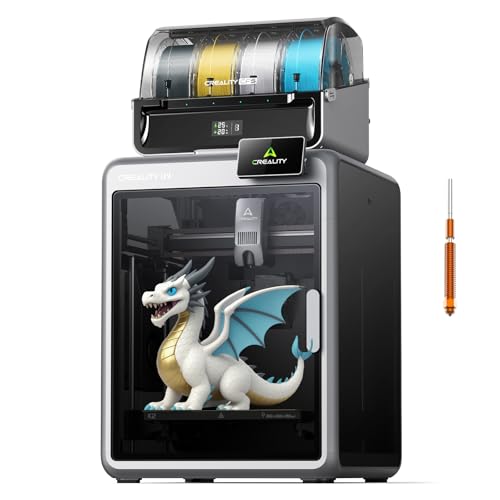
The Creality K2 Combo is an enclosed desktop FFF 3D printer supplied with Creality’s CFS filament system for multicolor printing and automatic refill. The manufacturer’s manual specifies a 260 x 260 x 260 mm build volume, 1.75 mm filament, a direct-drive extruder, a nozzle temperature up to 300 C, and a heated bed up to 100 C. It is intended for making plastic parts from materials including PLA, PETG, ABS, PET, PLA-CF, and other listed compatible filaments. Its defining practical features are manufacturer-documented automatic bed leveling, a camera, power-loss recovery, a filter exhaust fan, and an activated-carbon cartridge that Creality says needs regular replacement. Creality also documents replacement and maintenance procedures for wear items including the nozzle, hotend, cutter, wiper, PTFE tubing, fans, and filter cartridge. No model-specific independent indoor-emissions test result was found.
This product suits an adult hobbyist, maker, or small workshop user who needs an enclosed printer for medium-size functional parts and wants CFS-based multicolor work or automatic refill. It is most appropriate where the user can dedicate a stable, ventilated work area, follow the material limits in the manual, inspect and replace consumable parts, and stay present for setup and routine checks. The documented replacement procedures make it particularly relevant for owners prepared to maintain a printer rather than treat it as a sealed appliance.
It is not suited to unsupervised use around children or pets, or to bedrooms, classrooms, and poorly ventilated living spaces where ABS, ASA, or other higher-emission filaments may be printed. The manual warns about hot surfaces, moving components, and the need for adult supervision. It also is not for users who require a US NRTL-listed electrical product, independently verified low emissions, or documented low energy use. Buyers seeking those protections need product-specific third-party evidence, not filter or enclosure claims alone.
The manufacturer documents an enclosed chamber, filter exhaust fan, and replaceable activated-carbon air-filter cartridge. Its maintenance guidance says the cartridge should be replaced periodically, as often as monthly with frequent use. That is a useful maintenance provision, but no independent, model-and-material-specific emissions certification or test report was located. Creality’s own manual also says to place the printer in a well-ventilated area, which remains important when using ABS or other volatile materials. The product has hot and moving parts, including a nozzle rated up to 300 C and a heated bed rated up to 100 C. The manual warns against touching these parts, wearing gloves or loose wraps near motion systems, and allowing children near the machine without adult supervision. For service life, Creality publishes repair and maintenance guidance for many common parts. Multicolor printing can increase purge waste, and no model-specific measured electricity or waste data was located. Creality publishes an EU conformity declaration, but this does not establish US NRTL listing or independent emissions performance.
This is a large, fully enclosed filament 3D printer supplied with one four-spool Creality Filament System unit. Creality states a 350 x 350 x 350 mm build volume, up to 600 mm/s print speed, an actively heated chamber reaching 60 C, and expansion to up to 16 colors with additional filament units. The included filament unit is specified for PLA, PETG, ABS, ASA, PET and PLA-CF, with stated exclusions including flexible TPU and damp PVA or BVOH. Its most defining practical feature is the unusually large heated enclosure, which is intended for large functional prints and higher-temperature engineering filaments. The manufacturer documents an air filter, filament-break detection, automatic bed leveling, cameras, firmware updates, and detailed replacement procedures. A public FCC test report independently identifies the K2 Plus base printer and records a 100 to 240 V, 1,200 W rated input, but it is an RF compliance report, not a product fire-safety or emissions certification.
This product suits an experienced hobbyist, prototyping shop, school lab with active supervision, or small business that needs a large enclosed filament printer and can dedicate a stable, ventilated work area to it. It is particularly relevant when parts exceed the size practical for smaller desktop machines, or when a project needs repeated color changes from rigid, supported filaments. The buyer should be comfortable with firmware updates, maintenance, filament drying, purge-waste collection, and checking prints rather than relying on remote monitoring alone.
It is not a fit for bedrooms, nurseries, cramped apartments, or other poorly ventilated living spaces, especially if printing ABS, ASA, nylon, or carbon-fiber-filled materials. The enclosure and stated air filter do not have independently verified emissions performance for this model. It is also unsuitable for unsupervised access by young children or pets because the nozzle, heated bed, moving gantry, and 1,200 W heating system remain hazardous. Buyers needing an OSHA NRTL-listed complete printer, validated indoor-air certification, or measured low-energy operation need documented evidence not located here.
The manufacturer documents a full enclosure, an air filter, a grounded three-prong power connection, warnings not to touch the nozzle or heated bed, and a direction to keep children under 10 supervised. Those are meaningful baseline controls. The product also supports materials such as ABS, ASA and PLA-CF, which makes room ventilation and material-specific handling important. No model-specific independent test was located that demonstrates particle or chemical-emission reduction from the enclosure or filter under ANSI/CAN/UL 2904 or a comparable method. For electrical traceability, the base printer appears in public FCC documentation and Creality publishes a European declaration of conformity. These do not establish a United States NRTL safety listing for the complete product. On service life, Creality provides unusually extensive model-specific repair guidance and firmware resources. Multicolor operation can increase purge waste, although Creality has published slicer updates aimed at improving filament-use estimates and flushing behavior. No model-specific measured electricity-use data or filter replacement schedule was located.
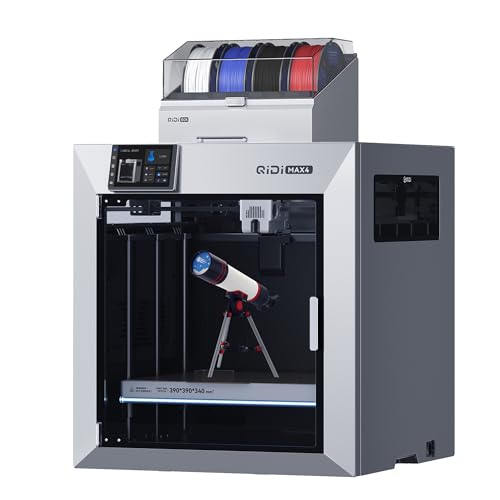
This is a large enclosed filament printer with a 390 × 390 × 340 mm build area. It melts 1.75 mm thermoplastic filament and deposits it layer by layer, with the Combo configuration intended to work with QIDI Box for multicolor feeding. The manufacturer specifies a 370°C nozzle, 120°C heated bed, and independently heated chamber up to 65°C. QIDI documents a three-stage internal filter consisting of a G3 pre-filter, H12 HEPA filter, and coconut-shell activated carbon. It also documents filament runout sensing, fan speed feedback, filament-clog detection, camera-based failure detection, and power-loss recovery. These are useful controls, but no product-specific independent emissions result or US electrical safety listing was located in the reviewed certification sources. The unit is large and heavy, with a manufacturer-stated 46.5 kg net weight for the Combo.
This product suits an experienced maker, prototyping shop, or supervised educational lab that needs to print large functional parts in one piece and has a stable, ventilated workspace. It is especially relevant when the work calls for an enclosed machine and manufacturer-supported profiles for materials such as ABS, ASA, PA, PC, or fiber-reinforced filament. The user should be comfortable with routine maintenance, firmware updates, handling a roughly 46.5 kg unit, and setting material-specific temperatures rather than relying on unattended operation.
It is not suited to bedrooms, nurseries, small shared living spaces, or classrooms that require independently verified low-emission performance. It is also a poor fit where a verified US electrical safety listing is mandatory, or where unattended overnight printing is expected. Children and pets should not have unsupervised access because the manual identifies burn and pinch hazards. Buyers making food-contact, medical, dental, or child-use objects need separate material and application evidence, which this product documentation does not supply.
The enclosure and manufacturer-stated three-stage filter are constructive exposure-control features, and the manual instructs users to place the printer in a ventilated environment. That matters because filament printing can produce ultrafine particles and volatile chemicals, with emissions affected by filament, temperature, color, and print conditions. The filter should not be read as proof of low indoor emissions because no product-specific independent chamber test or GREENGUARD certification was located. The manual warns that the print head can exceed 300°C and the bed can exceed 100°C. It also warns against reaching into the machine during operation and calls for child supervision. QIDI provides product support, firmware resources, parts-replacement guidance, and a one-year consumer printer warranty. No model-specific public recall or corrective-action notice was located in the reviewed US sources. The manufacturer provides no measured energy-use data, recycled-material claim, or quantified purge and failed-print waste data.
This is an open-frame fused-filament 3D printer with a 260 x 260 x 260 mm build volume, a direct-drive print head, a heated PEI spring-steel bed rated to 100 C, and a nozzle rated to 300 C. It uses filament rather than liquid resin and is intended for desktop model making. The official product page lists PLA, PETG, TPU, PVA, PLA-CF, PETG-CF, ASA and ABS among supported materials. Its defining feature is native four-color printing through Anycubic's filament-handling system, with expansion to 19 colors only with additional equipment. Anycubic also states a 300 mm/s recommended speed, 600 mm/s maximum speed, camera-based anomaly alerts, filament entanglement detection, power-loss resume, and automatic bed leveling. Those performance and monitoring claims are manufacturer statements, not independently validated results.
It suits an adult hobbyist or supervised makerspace user who wants an open desktop filament printer with a 260 mm cube build volume and manufacturer-stated four-color capability. It is most appropriate for users prepared to learn slicing, material selection and routine maintenance, and who have a dedicated, well-ventilated work area. The published parts catalog is a practical advantage for someone willing to replace consumable or wear components rather than treat the printer as disposable.
It is not a suitable unsupervised device for children, pets, bedrooms, classrooms without appropriate ventilation, or shared living areas where people may be close to active prints. Despite kid-oriented marketplace wording, the manual warns about extreme heat, moving components and small accessories. It is also a poor fit for users intending frequent ABS, ASA or carbon-fiber printing without a separately engineered enclosure and effective local exhaust. Buyers requiring independently listed electrical safety or verified low-emission operation need documentation not located for this product.
The main health issue is the open design. The manual warns that the nozzle, bed and newly extruded material become extremely hot, that the machine has high-speed moving parts, and that children should be kept away. The product supports materials including ABS and ASA, yet no built-in containment, particle filtration, gas filtration or outdoor exhaust path is documented. NIOSH guidance recommends ventilation and, where appropriate, ventilated enclosures or local exhaust for filament printing because particles and gases can be released during use. No model-specific third-party emissions certification or test report was found. The product documentation does identify several fault-related features, including filament detection, entanglement detection and power-loss resume, but the available evidence does not establish safe automatic shutdown for thermal or print failures. On durability, Anycubic publishes a model-specific parts catalog and lists a one-year printer warranty. The company also provides a manual, firmware-update path and serial-number-based support ticket process. Anycubic claims lower multicolor purge waste, but no independent waste measurement was located.
This product is an open-frame fused-filament desktop 3D printer that melts plastic filament through one nozzle and builds objects layer by layer. Its stated build volume is 220 x 220 x 220 mm, with a PEI flexible steel build plate, a 110°C heated bed, and a 300°C maximum nozzle temperature. It is intended for PLA, PETG, TPU, PLA-CF, and PETG-CF materials. Flashforge states that its integrated filament system can switch among four colors and refill from another loaded spool. The manufacturer also states a maximum 600 mm/s travel speed, 300 mm/s print speed, automatic bed leveling, filament detection, and power-outage recovery. These are manufacturer specifications, not independent performance or safety test results. Official support documentation does show unusually broad model-specific maintenance and firmware-update coverage.
This product suits an adult hobbyist, design classroom technician, or small workshop user who wants a compact 220 mm-class printer for visible PLA, PETG, TPU, or carbon-fiber-filled filament projects and values built-in four-color work. It is most appropriate where there is dedicated, well-ventilated workspace, active supervision of long prints, and willingness to perform routine maintenance. Its published repair instructions are particularly useful for users comfortable replacing consumable or mechanical parts rather than treating the printer as sealed equipment.
It is not well suited to bedrooms, nurseries, poorly ventilated apartments, or shared indoor spaces where people cannot be separated from printing emissions. It also needs a different setup for unattended overnight operation, child or pet access, or uses demanding a fully guarded print area. Schools and libraries should not treat it as a classroom-safe filtered appliance, because this configuration has no built-in air filtration and no located independent emissions certification. Users needing verified electrical listing or low-emission documentation should require those records before installation.
The key health limitation is exposure control. Flashforge lists no air-filtration system for this configuration, and the product is open rather than enclosed. It can heat compatible polymers to a 300°C nozzle temperature and supports carbon-fiber-filled PLA and PETG. NIOSH guidance notes that filament printing can release ultrafine particles and chemical vapors, with material, color, and temperature affecting emissions. Use source capture or strong outdoor-exhaust ventilation, keep people away during operation, and allow cooling before handling the bed or printed parts. No product-specific UL 2904 emissions report, GREENGUARD result, or equivalent independent indoor-air result was located. Electrical safety documentation reviewed identifies a 650 W input in the user guide, but does not provide a model-specific US UL, ETL, or CSA listing. On service life, the manufacturer publishes repair procedures for many components and ongoing firmware release notes. Multi-color operation creates purge waste, yet no quantified purge, energy, recycled-material, or refill-material data was located.



