Best Overall
5% off

Samsung The Movingstyle Essential 32" 4K UHD Smart Monitor
Adjustable rolling stand offers flexible positioning.
Built-in speakers enhance entertainment experience.
AI Picture Optimizer delivers clear, vibrant visuals.
 Daniel Kenitz
Adjustable rolling stand offers flexible positioning.
Built-in speakers enhance entertainment experience.
AI Picture Optimizer delivers clear, vibrant visuals.
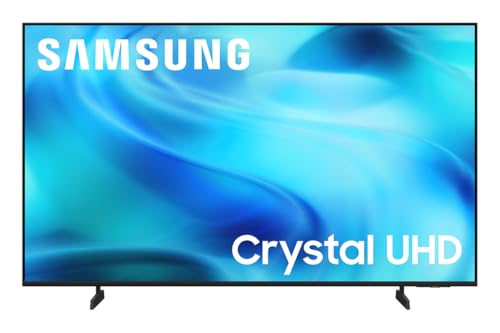
Exceptional picture quality with Crystal Processor 4K.
Access to endless free content options.
Convenient voice control with Alexa built-in.

Stunning picture quality with vibrant colors.
Impressive sound performance enhances viewing experience.
Sleek design complements any living space.
Start with the room and the way you watch. Screen size, viewing distance, direct reflections, and side seating affect whether the picture is comfortable and usable. Brightness and reflection measurements matter in rooms with windows or lamps. Contrast, black levels, local-dimming behavior, HDR tone mapping, and color accuracy matter more for movies and HDR programs. A 60 Hz panel can suit ordinary streaming and casual console play, but it is not the same as a television independently verified for 4K at 120 Hz. Gaming buyers should check the exact HDMI port and mode for 4K refresh rate, variable refresh rate (VRR), automatic low-latency mode, eARC, input lag, and PC compatibility.
A headline refresh-rate figure deserves particular caution. The supplied reviews identify one 32-inch listing whose advertised 144 Hz figure does not match the product’s confirmed 60 Hz maximum. “Motion enhancement” also does not establish fast pixel response or clear sports and game motion. Similarly, QLED, quantum-dot color volume, HDR10+, Mini LED, AI upscaling, and eye-comfort language can be manufacturer claims unless the exact model and size are supported by a manual, a specific product page, a certification, or reproducible testing. Family-level testing is useful context, but it is not the same as a direct measurement of the exact size.
For substantiation, look for model-specific records rather than a brand-level promise. Electrical safety can be checked through UL Product iQ, the Intertek ETL Product Directory, or CSA Group listings, alongside CPSC recall records and the installation manual. Energy use should be compared using the exact FTC EnergyGuide label, the Department of Energy television test procedure, or an EPA ENERGY STAR television entry. Environmental claims are stronger when the product appears in the EPEAT television registry or has documented recycling, take-back, parts, repair, and lifecycle information.
Independent evidence is especially important for picture quality. RTINGS or Consumer Reports testing can separate measured brightness, contrast, local dimming, color, reflections, flicker, motion, and input lag from panel terminology. VESA or TÜV Rheinland records may substantiate relevant display characteristics, but the record must apply to the exact product. Connected-TV buyers should also look for a stated security-update period, privacy controls, advertising and viewing-history settings, vulnerability disclosure information, and support terms.
Across the supplied products, several cautions recur. All are limited to 60 Hz in the reviewed product-specific or confirmed specifications, so none is a verified choice for 4K 120 Hz gaming. More than one review reports poor direct-reflection handling or limitations in bright rooms, and flicker-sensitive viewers should be cautious because testing found pulse-width-modulation flicker in some modes, although not every exact size was separately measured. Competitive gaming and fast sports are therefore not safe assumptions from “4K” or “Motion” labels. Secure freestanding sets or wall mounts according to the instructions, particularly around children; missing model-specific safety-listing evidence should not be treated as proof of safety.
These topics treat a television as both a viewing device and a connected electrical product. The supplied scores show why a product with stronger support documentation or lower measured energy use may still have weaknesses in picture testing, flicker behavior, repair evidence, or gaming features.
This measures credible electrical-fire and shock safety listing, plus clear anti-tip or wall-mount instructions. For a television, the exact model’s UL, ETL, or CSA record and usable installation guidance matter more than a general brand reputation. Among the supplied products, scores range from 72 to 74; the higher result reflects somewhat stronger reviewed safety evidence, while missing public model-specific listings remain an uncertainty.
This covers measured flicker, reflection control, and comfort settings, while rejecting unsupported blue-light or wellness implications. A high result means the viewing characteristics are lower risk and claims are properly supported. Scores range from 54 to 72: the 43-inch product scores highest, while the other two have lower scores alongside reported reflection or PWM-flicker concerns. Flicker sensitivity remains individual and mode-dependent.
This measures model-specific, publicly checkable certification, listing, or reproducible laboratory testing for safety, energy, environmental, and performance claims. It is weighted more heavily because a label alone cannot establish real capability. Scores range from 72 to 82. The 65-inch product has direct RTINGS testing, while the other reviews note missing exact-product picture, energy, environmental, or electrical records.
This checks whether 4K, HDR, quantum-dot, Mini LED, refresh-rate, AI-upscaling, color-volume, and smart-feature claims match the exact listing, manual, and measured capability. The 32-inch product scores 52 after its 144 Hz listing conflicted with a confirmed 60 Hz maximum. The other products score 77 and 78, reflecting clearer reviewed specifications, though manufacturer claims still need qualification.
This measures brightness, contrast, local dimming, color accuracy, reflections, motion clarity, and HDR handling in independent tests. It matters because panel labels do not predict how a television looks in a real room. Scores range from 45 to 70. Direct testing found substantial weaknesses in the 65-inch product; the 43-inch product has no exact independent picture test, so its claimed Mini LED performance remains unconfirmed.
This checks HDMI bandwidth, 4K refresh rate, VRR, ALLM, eARC, input lag, and PC support on the advertised ports and modes. For televisions, a port count is less useful than knowing what each port can actually do. Scores range from 52 to 77. The 43-inch product documents 4K at 60 Hz and eARC, while the others remain limited or less suitable for high-refresh gaming.
This measures data-practice transparency, privacy controls, security-update policy, and connected-TV security assurance. It matters because streaming platforms, accounts, viewing histories, and advertising operate beyond the screen itself. Scores are 78 to 84. All supplied products benefit from Samsung’s manufacturer-stated seven-year security-update policy for recent smart TVs; one review also confirms that viewing-history recognition can be turned off, while advertising and account-linked services still require attention.
This checks traceable U.S. compliance records for the television and wireless components, accurate labels, and the absence of unresolved recalls or corrective actions. Scores range from 72 to 76, with no supplied review identifying a product-specific recall or CPSC action. However, the reviews also note that publicly searchable model-specific electrical listings were not located, so a clean recall search is not equivalent to a complete safety record.
This measures annual and standby electricity use for the screen size and features actually sold. A high score means lower independently reported use when operating, connected, and idle. Supplied scores range from 70 to 78. The 43-inch product has a documented 0.5 W standby figure, while the 32-inch product has an EnergyGuide estimate of 138 kWh annually; not every reviewed energy figure was confirmed through a public federal record.
This measures evidence of safer materials, repair support, parts access, take-back or recycling, and independently assessed environmental design. For televisions, these safeguards can reduce replacement waste and make end-of-life handling more responsible. Scores are relatively close, from 74 to 78. Recycling support appears in the reviews, but no supplied product had confirmed EPEAT registration or complete model-specific lifecycle and safer-materials documentation.
This considers durable operation, warranty coverage, firmware support, service options, parts, and repair information. Those details matter because a television that cannot be supported or repaired may become electronic waste sooner. Scores range from 76 to 78, so the supplied products are similar. Each review identifies a one-year manufacturer warranty; parts or exact repair documentation are incomplete or unavailable for some products.
This is a 32-inch, 4K smart monitor on a tall rolling stand, intended to move between rooms for streaming, casual computer use, and cloud gaming. Samsung's product documentation identifies a VA panel with 3840 x 2160 resolution, HDR10 support, 300 cd/m² typical brightness, a 60Hz maximum refresh rate, two HDMI inputs, and USB-C charging up to 65W. The defining physical feature is the manufacturer-stated steel, aluminum, and plastic rolling stand. It adds a weighted wheeled base, 7.9 inches of height adjustment, pivot, tilt, and limited swivel, but brings the complete assembly to 55.6 pounds and 50.8 inches tall. Samsung also states that the product runs Tizen, includes Smart TV apps, SmartThings, far-field voice interaction, and Alexa. No independent laboratory review or model-specific third-party display certification was located in this review.
This product suits someone who needs one fixed-power screen to move between a home office, kitchen, bedroom, or shared living space. The 32-inch 4K format gives a high pixel count for documents and streaming, while USB-C charging can simplify a laptop setup. It also fits users who value built-in streaming apps and SmartThings control rather than attaching a separate media device. The stand is most practical where floors are smooth and there is room for a 17.7-inch-deep, 50.8-inch-tall wheeled base.
It is not well suited to competitive PC or console gaming that depends on verified variable refresh rate, low input lag, or refresh rates above 60Hz. Samsung's own specification does not substantiate the retail record's G-Sync claim. It also warrants caution in homes with young children, unstable flooring, narrow pathways, or frequent cable trip hazards. The full rolling assembly weighs 55.6 pounds and stands over four feet tall, while no independently verified anti-tip assessment or model-specific wall-mount installation guidance was located. Users seeking measured HDR performance should also avoid assuming that HDR10 labeling alone establishes strong HDR output.
Samsung states that this product includes Flicker Free and Eye Saver Mode settings, but no model-specific independent flicker, reflection, or eye-comfort measurements were found. These settings should be treated as comfort controls, not as evidence of a health benefit. The connected design also includes far-field voice interaction, Alexa, SmartThings, and Tizen services. Samsung publishes a seven-year security-update policy for recent smart monitors, though connected features still involve data practices that users should review and configure. Samsung discloses steel, aluminum, and plastic in the stand and provides U.S. electronics recycling drop-off guidance. Those are useful end-of-life provisions, but no model-specific EPEAT listing or independently verified lifecycle assessment was located. Samsung publishes a 150W maximum power figure, not measured annual or standby consumption, so the likely electricity burden in real smart and idle use remains unverified.
This product is a 75-inch, 4K LED smart television for streaming, broadcast TV and external HDMI devices. Samsung documents a 60Hz 4K design, three HDMI inputs, one USB port, Tizen smart TV software, 20W two-channel audio, a 400 x 300 mm wall-mount pattern, and a supplied stand. Its published typical power use is 165W, with 0.5W standby power. Independent testing of the U8000H series, including the 75-inch U.S. variant, confirms it is an entry-level display rather than a high-performance HDR set. The tested family has no local dimming, limited color range, low HDR brightness, poor direct-reflection control, narrow off-axis viewing, and slow pixel response. It can accept 4K at 60Hz, while its higher 120Hz mode is limited to 1080p.
This product suits a buyer who primarily wants a very large 4K screen for casual streaming, cable or antenna viewing in a moderately lit room. It is most appropriate where seating is fairly centered, because independent testing found that picture quality falls off from the sides. It also fits users who value Samsung's Tizen platform and its stated long operating-system upgrade period, but who do not need strong HDR highlights, advanced local dimming, or high-bandwidth console and PC gaming.
It is not well suited to rooms with bright windows or lamps facing the screen, because independent testing found weak glare control and insufficient brightness to overcome it. Home theater users who watch dark films, viewers spread across a wide couch, and people seeking vivid HDR should account for the measured low contrast, lack of local dimming, limited colors, and narrow viewing angle. Competitive gamers and owners of current high-refresh consoles or PCs should also avoid assuming 4K at 120Hz, because 4K input is limited to 60Hz.
For physical safety, Samsung supplies installation guidance and documents the 400 x 300 mm wall-mount pattern. A suitable mount, wall structure, fasteners, and careful anchoring remain important for a screen of this size. No product-specific CPSC recall or safety warning was located in the checked U.S. recall resources. Public confirmation of a model-specific UL, ETL, or CSA electrical listing was not located, so that evidence remains incomplete rather than negative. Samsung lists a typical draw of 165W, maximum draw of 200W, 0.5W standby power, automatic power-off, and an ambient-light sensor. The company also directs U.S. users to its electronics recycling program. Independent ENERGY STAR or EPEAT registration for this exact product was not located in the checked public databases. The connected platform collects usage information for recommendations and advertising features, but Samsung documents privacy controls and says optional viewing-information collection can be declined during setup.
This is a 65-inch, 4K OLED smart television for streaming, broadcast TV, movies, and console or PC gaming. It has a 64.5-inch viewable screen, a 300 x 200 mm wall-mount pattern, four HDMI inputs, Wi-Fi, Bluetooth, and Samsung's Tizen platform. Samsung states that it uses a matte Glare Free finish, OLED HDR+, and variable refresh support up to 165Hz. Independent lab testing was conducted on the matching 65-inch version. It confirmed perfect OLED black levels, outstanding suppression of direct reflections, very low game-mode input lag, and 4K at 165Hz on all four HDMI 2.1 ports. The same testing found that bright full-screen HDR scenes can dim through automatic brightness limiting, and that slow camera pans can stutter. The product is ENERGY STAR certified in the United States, with 221 kWh reported annual energy use and 0.6 W measured standby power.
It suits a viewer who needs a 65-inch television in a living room with strong daylight or visible lamps, where reflection control matters as much as black levels. It also fits a household connecting several current consoles or a gaming PC, since independent testing confirmed four high-bandwidth HDMI ports, VRR, low latency, and 4K gaming up to 165Hz. It is best suited to varied viewing, including films, streaming, sports, and games, rather than a single static channel or desktop display for many hours every day.
It is not well suited to households that leave static menus, news tickers, channel logos, security-camera grids, or PC desktop interfaces on screen for long uninterrupted periods, because OLED burn-in remains a cumulative risk. It is also a poorer fit for people who require Dolby Vision or DTS support, which independent testing reports is absent. Buyers relying on published power figures should not assume the lower catalog number is accurate, since the independently listed ENERGY STAR annual-use figure is substantially higher. Wall mounting should use the specified 300 x 200 mm pattern and an appropriate mount.
For visual comfort, the strongest evidence is practical rather than medical. Independent testing found the matte coating highly effective at softening direct reflections, which can make viewing easier in bright rooms. The OLED panel does not use a traditional LED backlight or PWM dimming, although testing still detected a slight brightness variation tied to refresh rate. EyeComfort mode is available, but it should not be read as a proven eye-health intervention. The U.S. ENERGY STAR entry verifies 221 kWh annual energy consumption, 118.67 W on-mode power under the federal procedure, and 0.6 W standby power. Samsung publishes a U.S. e-waste disposition policy and operates electronics recycling programs, but no model-specific EPEAT registration was located. Samsung also publishes a seven-year smart-TV security-update policy. No exact-product CPSC recall or public safety warning was located in the sources reviewed, but a public UL or ETL listing was not found.