Best Overall
30% off

OBSBOT Tiny 2 4K AI Webcam
High-quality 4K video with HDR light correction.
AI tracking ensures smooth and accurate focus.
Convenient voice and gesture control features.
 Daniel Kenitz
High-quality 4K video with HDR light correction.
AI tracking ensures smooth and accurate focus.
Convenient voice and gesture control features.

AI tracking ensures you're always in frame.
Gesture control makes hands-free operation easy.
Ultra-clear 4K resolution enhances video quality.

Crystal clear Ultra 4K HD video quality.
Dual noise-cancelling mics enhance audio clarity.
Easy USB Plug&Play setup.

Clear 1080P video quality for online calls.
Dual microphones enhance audio clarity.
Easy setup with plug-and-play functionality.

Crystal-clear 1080P video quality for sharp images.
Built-in microphone for clear audio capture.
Privacy cover ensures enhanced security and discretion.

AI tracking enhances smooth and precise movements.
Quick 0.2s AI autofocus for sharp clarity.
Gesture control offers hands-free operation.

AI framing and autofocus enhance video quality.
Gesture control allows for hands-free operation.
Dual microphones ensure clear audio capture.

Sharp 4K image quality enhances video clarity.
Autofocus feature ensures clear visuals effortlessly.
Wide compatibility with various operating systems.

Crystal clear 1080p video quality.
Excellent stereo audio clarity.
Effective low-light correction feature.
Crystal-clear 2K video quality.
AI-noise canceling for clear audio.
Adjustable field of view options.
Resolution is only one part of the picture. A claim such as 4K should state the usable frame rate—often 30 frames per second in the supplied products—and the connection, software, and computer conditions required. A 1080p camera may be more useful at 60 frames per second for motion than a 4K camera limited to 30. Field of view also changes the result: a narrow view suits one desk user, while a wider 90- or 100-degree claim can include more people or workspace but may show more of the room. Autofocus, fixed focus, low-light correction, HDR, tracking, and noise cancellation should be tied to documented operating modes rather than undefined feature names.
Look for exact-model documentation: a manual, datasheet, compatibility matrix, firmware history, warranty terms, and clear model identification. For stronger performance evidence, an independent test should disclose the setup, firmware, resolution, frame rate, lighting, and audio method. The strictest evidence is a report from an ISO/IEC 17025-accredited laboratory using relevant methods such as ISO 12233 for resolution and ISO 15739 for camera noise. Marketplace reviews and hands-on articles can reveal practical strengths and failures, but they are not repeatable laboratory validation.
Privacy is equally important. A durable physical shutter or lens cover is stronger than software permissions alone, but it usually blocks video without muting the microphone. A clear active-use LED helps, though it should not be treated as a substitute for a physical lens block or audio control. Cameras that point downward in sleep mode offer a visible cue but are not equivalent to a separate shutter. Check whether the product requires companion software, an account, cloud features, voice control, or ongoing firmware support, and review its privacy and security documentation.
For safety and traceability, look for the responsible manufacturer, exact model, support route, and U.S. compliance documentation. A verifiable UL, ETL, or CSA listing, an OSHA-recognized NRTL record, and—where applicable—a supplier declaration in the FCC Equipment Authorization system are stronger than logo-only claims. USB power avoids a supplied mains adapter in many products, but it does not establish electrical safety certification. For environmental claims, prefer product-specific materials and packaging declarations, repair or replacement-part information, and a U.S. take-back or recycling route. EPEAT or TCO registration matters only when the exact product is registered.
Recurring caveats in the supplied reviews deserve attention. Many products lack verified NRTL safety listings, exact U.S. compliance declarations, accredited performance tests, documented security-support periods, repair programs, and product-specific recycling evidence. Built-in microphones are repeatedly adequate for ordinary calls but weaker in noise, echo, keyboard sounds, or polished recordings. Low-light image quality, autofocus, HDR, and tracking can be less reliable than headline claims suggest. Several products have no physical microphone disconnect, and one tracking camera was reported to continue providing video while its indicator was inactive after a firmware problem. Mounts can also fall or fit poorly on thick displays, while some products run warm during extended processing. These are important reasons to test the camera before relying on it for confidential, professional, or safety-critical use.
## Health and Ecology The supplied products show that a webcam's practical safety and sustainability profile depends on controls and documentation as much as on image quality. A high score reflects stronger evidence and fewer unresolved concerns within the reviewed set; it does not mean every risk or limitation has been eliminated.
This covers the camera, cable, connector, mount, and any supplied power accessory, including shock, overheating, burn, breakage, and falling-device concerns. USB power can avoid a separate mains adapter, but it is not safety certification. Higher-scoring products had fewer unresolved concerns; lower-scoring ones lacked public UL, ETL, CSA, NRTL, or exact electrical-test evidence, or raised heat and mounting cautions.
This measures whether users can reliably stop video or audio capture and tell when capture is active. A physical lens shutter or cover, a clear activity light, and documented controls matter because software permissions can be changed or bypassed. The supplied scores range from 48 for a gimbal-position privacy control with a reported indicator failure to 91 for an integrated shutter; most covers still do not mute microphones.
This concerns companion applications, firmware, AI tracking, voice features, cloud services, account requirements, permissions, updates, and data handling. Higher scores were associated with direct UVC or plug-and-play operation, published privacy information, firmware tools, or support processes. Lower scores reflected missing security-support periods, unclear update practices, or greater reliance on software features for privacy and camera control.
This asks whether resolution, frame rate, focus, field of view, low-light behavior, HDR, tracking, audio processing, and compatibility claims include their conditions and limits. Higher-scoring products documented concrete modes such as 4K at 30 fps or 1080p at 60 fps. Lower-scoring products had conflicting focus or field-of-view specifications, incomplete mode tables, or marketing claims not supported by a manual.
This measures whether competent third-party testing confirms the exact product using disclosed, repeatable methods. The supplied evidence is mostly hands-on review rather than ISO/IEC 17025 laboratory reporting, so even the better scores indicate useful practical support rather than accredited measurement. Higher scores came from exact-product reviews that observed tracking, video, mounting, or audio; lower scores reflected no exact-product independent test.
This covers delivered sharpness, motion, exposure, color, autofocus, framing, and low-light results at usable settings—not just pixel count. Higher-scoring products had independent reports of clear 4K or stable 1080p video, accurate color, or dependable tracking. Lower-scoring products showed grain, washed-out or overexposed highlights, motion blur, inconsistent focus, or unresolved claims about frame rate and lighting conditions.
This measures speech intelligibility at realistic desk distances, background-noise handling, distortion, and the limits of noise cancellation or beamforming. Higher scores came from independent findings of clear speech or useful steady-noise reduction. Lower scores reflected thin, hollow, echoey, harsh, or keyboard-sensitive audio, or claims that lacked disclosed distance, room-noise, processing, and recording conditions.
This concerns an identifiable manufacturer and model, responsible-party information, support route, and credible U.S. electromagnetic-compatibility and safety documentation. Higher scores in the set reflected clearer model and manufacturer records, but no supplied product had complete evidence across every requested source. Lower scores commonly reflected missing FCC supplier declarations, NRTL listings, exact compliance files, or traceable U.S. documentation.
This measures operating-system and application compatibility, USB behavior, mount security, connection stability, firmware support, warranty, replacement parts, and remedies for recurring failures. Higher-scoring products combined documented compatibility with secure mounting, firmware tools, repair pricing, or clear warranty support. Lower scores reflected reports of crashes, failed updates, disconnects, falling mounts, unclear warranty terms, or unsupported operating systems.
This measures durability, detachable or supportable parts, material and packaging evidence, repair options, and a practical U.S. reuse or electronics-recycling route. The strongest supplied example scored 88 because it combined documented lower-impact materials, a product footprint, and recycling routes. Products scoring in the high 60s generally lacked material declarations, repair programs, take-back support, or product-specific recycling evidence.
OBSBOT Tiny 2 is a compact, USB-C desktop webcam with a two-axis pan and tilt gimbal, dual microphones, a monitor mount, a storage case, and a standard tripod socket. It connects directly to a computer and is intended for video calls, streaming, presentations, and desk views. The manufacturer documents Windows 10 or later and macOS 11 or later support, and recommends a USB 3.0 connection for normal operation. Its defining feature is motorized subject tracking and reframing. The manufacturer also documents gesture, voice, manual focus, HDR, and up to 4x digital zoom controls. Independent hands-on testing supports strong delivered video at 4K and 30 fps, with crisp detail, stable color, and good low-light results. The camera can enter sleep by facing its lens downward, but it does not provide a separate physical lens shutter.
This product suits a desk-based presenter, instructor, streamer, or remote worker who moves while speaking and needs the camera to keep them framed without manually adjusting a webcam. It is especially relevant for users who can connect directly to a USB 3.0 computer, want monitor or tripod mounting, and value detailed 4K video for calls or recordings. It also fits users comfortable managing camera settings through companion software and who can use a separate microphone if consistent voice processing is important.
It is not well suited to people who require a dedicated, independently closable lens shutter for confidential rooms, shared workspaces, bedrooms, or sensitive consultations. It is also a weaker fit for users who need dependable noise suppression for calls in busy homes, classrooms, or offices, because independent tests found audible background noise and occasional voice processing problems. Buyers needing publicly verifiable electrical safety certification, a documented U.S. take-back route, or assured long-term repair parts should require that evidence before relying on this product.
The product is a wired USB webcam and the included package does not contain a mains power adapter. Its manual says the underside may become warm during long operation and directs users to use the supplied data cable, a USB 3.0 port, and adequate computer or dock power. Research did not identify a CPSC recall for this product. However, no public exact-model NRTL safety listing or public exact-model FCC conformity document was identified during this review. For privacy, the lens can be tilted down into sleep mode and the indicator turns off. This is a useful visible position, but it is not the same as a separate shutter. A hard storage case is included, which may help protect the gimbal in transport. Independent reporting describes the housing as magnesium alloy. No substantiated U.S. take-back program, repair-parts policy, recycled-material claim, or product-specific end-of-life plan was found, so responsible disposal depends on local electronics-recycling options.
This is a compact, wired USB-C pan and tilt webcam with a built-in monitor clip, tripod thread, dual microphones, status light, and a two-axis motorized gimbal. It connects directly to a Windows or Mac computer and can be used with Zoom, Microsoft Teams, Skype, and Google Meet. The manufacturer documents 4K at 30 frames per second, 1080p at 60 frames per second, 4x digital zoom, autofocus, HDR controls, gesture controls, and software-based tracking. Independent hands-on testing supports strong sharpness, responsive autofocus, and effective subject tracking in ordinary natural and artificial light. Reviewers also found limitations that matter in practice, including occasional tracking misses, less predictable gestures, and exposure that can look slightly bright or washed out before adjustment. Built-in audio is usable for informal calls, but independent reviewers describe it as muffled or merely serviceable rather than a replacement for a dedicated microphone.
It suits a desk-based remote worker, teacher, presenter, or streamer who needs the camera to keep one moving speaker framed during calls or demonstrations. It is especially relevant for someone who can provide reasonable room lighting, uses Windows 10 or later or macOS 11 or later, and values quick autofocus for showing documents or small objects. Basic video use works by USB connection, while the companion software adds framing, gimbal, image, and gesture settings.
It is not suited to people who need a true hardware privacy barrier in bedrooms, clinical spaces, shared offices, or any setting where a camera must be physically blocked between uses. It also does not fit users who need polished voice recording for professional broadcasts, since independent reviews characterize the microphones as casual-use quality. Buyers who need documented U.S. safety certification, a public compliance declaration, a repair path, or a manufacturer recycling program should require that evidence before deployment.
The safety picture is limited but not alarmist. This is a USB-powered webcam with no supplied mains adapter. Its manual says the base may become warm during extended operation and instructs users to connect it directly to a computer or to a separately powered dock. No relevant U.S. recall was located in the checked CPSC sources. However, no publicly verifiable exact-product UL, ETL, or CSA listing was located. The camera has an indicator light and can enter sleep mode, but it lacks a physical shutter. The companion software is optional for ordinary webcam operation, though it is needed for advanced controls and firmware updates. OBSBOT's privacy policy says its product and software ecosystem may collect device details and, when relevant functions are used, audio, image, and video information. The policy offers privacy-rights requests, but no fixed security-support period was found. No product-specific recycled-content claim, packaging specification, U.S. take-back program, repair documentation, or materials declaration was located.
The EMEET Nova 4K is a compact wired USB webcam intended for desk-based video calls, online teaching, and basic streaming. It has a monitor clip, a ball-style swivel mount, and a standard tripod socket. The manufacturer states that it provides 4K video, PDAF autofocus, a 73-degree field of view, dual microphones, a physical privacy cover, and optional EMEETLINK software for settings and firmware updates. Independent hands-on reviews support that it can deliver a detailed, natural-looking image in good light and usable call audio. They also identify important limits. Its 4K mode runs at 30 frames per second, low-light automatic exposure can be inconsistent, and obtaining the better results may require software adjustment. The USB cable is hardwired, so cable damage cannot be remedied by simply replacing a detachable lead.
This product suits a home-office worker, remote teacher, or occasional creator who uses a desktop or laptop at a normal desk distance, has reasonably good front lighting, and wants a compact USB camera with a narrower 73-degree framing angle. It is also suited to people who value a physical lens cover and the ability to mount the camera on either a screen or a standard tripod. Users willing to adjust exposure, white balance, and other image settings in optional software are more likely to realize its better image quality.
It is not well suited to people who need dependable out-of-box low-light performance, fast-motion 4K capture, or a polished software workflow. Independent review evidence indicates that default exposure can be inconsistent in dim scenes and that 4K is limited to 30 frames per second. It is also a weaker fit for organizations needing verifiable U.S. safety and compliance documentation, formal security-support commitments, or replaceable cables. Privacy-sensitive users who need a hardware microphone mute should not treat the lens cover as an audio control.
The camera is powered through its wired USB connection and does not include a separate mains power adapter in the documented package. A physical lens cover is a meaningful privacy control because it blocks video capture at the lens, although it does not disable the microphones. No exact-model recall was located in the checked U.S. Consumer Product Safety Commission recall sources. No exact-model UL, ETL, or CSA listing was located in the checked certification directories. An independent reviewer observed little single-use plastic in the retail packaging and described the body as robust plastic. That is a limited packaging observation, not a verified materials or lifecycle claim. EMEET states that an extended warranty of up to two years is available through its direct store, which can support continued use. However, no U.S. take-back program, repair-parts policy, recycled-material declaration, or exact-product electronics-recycling plan was located. The fixed cable also reduces repairability if it is damaged.
This is a compact, USB-powered 1080p webcam for computer video calls. The current product documentation describes a fixed-focus CMOS camera, dual microphones, a monitor clip, a USB-A plug with an A-to-C adapter, and a separate privacy cover. It is intended to work without a required companion app, although EMEETLINK is available for image adjustments. An older manufacturer manual documents 1920 by 1080 capture at 30 fps, an activity LED, a tripod-ready base, and automatic USB setup on supported computers. Independent hands-on testing of the C960 family found acceptable results in good light, but weak color and grainier output in dim light. That testing also characterized the built-in microphones as middling. Documentation has changed across C960 revisions, so claims about the supplied shutter, warranty term, focal range, and current operating-system support should be checked against the package for the unit received.
This product fits a person who needs a simple external camera for routine calls from a desktop monitor or laptop, works in a reasonably well-lit room, and is comfortable choosing the camera and microphone in the meeting app. The wide 90-degree view can accommodate a wider desk scene or more than one person. It also suits users who prefer basic USB operation without installing camera software, while retaining the option to adjust image settings with EMEETLINK if needed.
It is not a good fit for people who regularly work in dim rooms, need faithful color for client-facing video, or expect consistently smooth video without controlling lighting. It is also unsuitable for podcasting, music, teaching in noisy spaces, or accessibility-critical speech capture when built-in microphone quality is important. Privacy-sensitive users who need to disable both video and audio with one durable hardware control should look elsewhere, because the supplied cover only blocks the lens. Buyers requiring verified U.S. safety or electromagnetic-compliance paperwork should also choose a documented product.
The direct health-related strengths are modest but practical. The webcam is USB-powered, so it has no separate mains power adapter to manage, and current documentation states that a physical privacy cover is included. Older manufacturer documentation also identifies an activity LED. Independent testing of an earlier refreshed C960 found that its adhesive shutter worked, but that design is less robust than an integrated shutter and does not stop microphone capture. No CPSC recall or public warning specific to this webcam was located in the verification work. However, no exact-product listing in UL, ETL, or CSA directories and no public U.S. compliance declaration were located. EMEET provides public support contact details and a general privacy policy, but no product-specific recycling or take-back route, material disclosure, repair instructions, or replacement-parts policy was found. At end of life, it should be handled through an electronics recycler rather than household trash.
This is a wired USB webcam for desk video calls, streaming, and basic recording. It connects directly to a computer and is intended to be selected as the camera and microphone in the operating system. The supplied manual documents a 2K mode up to 30 frames per second, two built-in omnidirectional microphones, a 2 m cable, a monitor clip and stand, plus a 1/4-inch tripod thread. The manufacturer states that it has fixed focus, automatic light correction, an 80-degree diagonal field of view, and a flip-style privacy cover that physically blocks the lens. The manual also identifies a power indicator. There is no located independent laboratory test for this exact product, so its image, low-light, and microphone claims remain manufacturer-stated rather than independently confirmed. Published specifications are not fully consistent, because the catalog record gives a 95-degree field of view while the manufacturer page and manual specify 80 degrees.
This product suits a person who needs a compact, wired camera for a fixed desk position, such as routine one-person calls, online classes, or a basic home-office setup. It is most appropriate where the subject normally sits within the manufacturer-stated 0.5 m to 5 m image range and can provide decent front lighting. The physical lens cover is useful for buyers who want a direct visual privacy action after a call. Its clip, freestanding base, and tripod thread also suit simple monitor or desktop arrangements.
It is not well suited to users who need independently measured image or microphone performance for professional streaming, accessibility-sensitive communication, recordings in difficult lighting, or important remote interviews. Buyers who frequently move toward and away from the camera should be cautious because the manufacturer specifies fixed focus. It is also a weak fit for organizations that require a verifiable safety listing, a model-specific FCC declaration, formal security update commitments, asset repair documentation, or established U.S. electronics-recycling arrangements before deployment.
For privacy, the most useful documented safeguard is the included cover, which the manufacturer says physically blocks the lens when closed. The manual also shows a power indicator and describes direct USB operation, so normal use does not appear to require an account, cloud service, or device-management app. UGREEN's website privacy policy applies to its website, not specifically to this webcam. The company publishes a U.S. support contact and a 24-month limited warranty for eligible purchases. No exact-product NRTL safety certification, model-specific FCC declaration, environmental materials disclosure, repair-parts program, or U.S. take-back route was located. No associated U.S. CPSC recall was located in searches of the CPSC recall database. The manual advises against dropping, disassembling, or exposing the product to strong light, and it identifies the product as a wired USB device. End-of-life handling should therefore use a local electronics-recycling program rather than household trash.
This compact USB webcam combines a 4K imaging camera, a second AI-assist camera, three microphones, and a two-axis motorized gimbal. It connects by a 1.5 m USB-C cable, includes a USB-A adapter and monitor mount, and also has a standard 1/4-inch mounting thread. EMEET specifies 4K at 30 fps, 1080p at 60 fps, a 1/2.55-inch Sony imaging sensor, f/1.8 aperture, and 310-degree pan with 180-degree tilt. Independent reviewers confirmed that the motorized tracking keeps a moving user framed and that the picture is strong in mixed lighting. They also found limits that matter, including manual rather than automatic zoom behavior, no HDR, limited gesture controls, and uneven firmware behavior. Core webcam use does not require EMEET Studio, but software is needed for some settings such as gesture and audio-mode controls.
This product fits a desk-based presenter, teacher, livestream host, or remote worker who regularly stands, demonstrates objects, or moves around a small indoor space. Its main practical advantage is mechanical pan and tilt tracking, rather than a fixed crop, while the 4K at 30 fps and 1080p at 60 fps modes cover common meeting and streaming uses. It also suits users who want ordinary plug-and-play webcam operation first, with optional software controls for presets, tracking settings, and audio modes.
It is not suited to privacy-sensitive bedrooms, shared homes, clinical settings, or confidential workspaces where an always-reliable hardware shutter and directly coupled recording indicator are required. An independent test documented video continuing while the LED was inactive after a failed firmware update. It is also a poor fit for users who need mature, low-maintenance control software, Windows on ARM support, HDR, or automatic zoom that keeps a face consistently large in frame. Linux users can use standard webcam functions, but EMEET Studio controls are documented for Windows and macOS.
The main health-related issue is capture control. Tilting the unit downward is the product's stated privacy mode, which physically directs the camera away from the user, but it is not a lens shutter. An independent reviewer reported a firmware fault in which the webcam continued providing video although its activity LED was inactive. Unplugging the camera remains the more dependable way to prevent capture when it is not needed. The webcam is USB-powered and no separate mains adapter is supplied. No relevant U.S. recall or regulatory warning was located in the checked public sources, but no exact-product U.S. safety listing was found either. EMEET provides a two-year webcam warranty and firmware-update instructions. Its recycling page identifies paper packaging, plastic packaging, and electronics as separate waste streams, but it does not provide an exact-product material disclosure, repair-parts program, or U.S. mail-back recycling service.
This is a compact USB webcam for desktop calls, streaming, and recording. It uses a 1/2-inch CMOS sensor and is specified by OBSBOT at 4K up to 30 frames per second or 1080p up to 60 frames per second. The body weighs 40.5 g without its magnetic mount. It connects by USB-C, with a USB-C to USB-A adapter, cable, magnetic mount, and detachable magnetic lens cover listed as included items. Independent reviewers broadly confirm strong video for a webcam of this size, including good automatic exposure and useful image controls. Reviews also identify practical limits. Image results can need adjustment under office lighting, the magnetic mounting arrangement can be easier to dislodge than a fixed clamp, and built-in microphone sound is less dependable than the video.
It suits a mobile worker, teacher, or solo creator who wants a very small USB camera with stronger video than a typical laptop camera, and who can provide reasonable front lighting. It is especially relevant where 4K at 30 fps, 1080p at 60 fps, automatic framing, portrait orientation, and manual image controls are useful. The included magnetic cover also helps a user who will consistently fit a physical lens block after calls. A separate microphone is sensible for important recordings.
It is not suited to people who require independently documented electrical safety certification, a fixed integrated shutter, or a proven long-term software security commitment. It is also a poor fit for households where a detachable cover is likely to be misplaced. Streamers, podcasters, and remote workers whose speech must remain clear in noisy or echo-prone rooms should not rely on its built-in microphones alone. Users who need repairability, a U.S. recycling path, or verified recycled materials will find the environmental documentation too limited.
The most useful privacy safeguard is physical rather than software-based. OBSBOT documents an included magnetic lens cover that blocks the lens when fitted, and it also describes a sleep mode. The cover does not itself disable the microphone, and its separate design means it can be lost. No active U.S. recall or consumer-product safety warning for this webcam was located in the checked sources. The camera is USB-powered and does not include a separate mains power adapter. However, no exact-model NRTL safety listing, public U.S. electromagnetic compliance declaration, or detailed materials disclosure was located. OBSBOT offers warranty repair and publishes some spare-part pricing in certain regions, but no practical U.S. product take-back program, packaging specification, recycled-content claim, or product-specific lifecycle information was found. Use a local certified electronics recycler at end of life.
This is a compact, USB-powered desktop webcam for calls, streaming, recording, and online classes. It clips to a monitor or laptop and can also mount on a tripod. UGREEN states that it uses an 8 MP CMOS sensor, provides 4K at 30 fps or 1080p at 60 fps, has phase-detection autofocus, two microphones, a 70-degree field of view, and a USB-A-to-USB-C adapter. An independent exact-model review found useful everyday image detail and reasonably reliable autofocus, while also noting that measured laboratory data for color, noise, and low-light performance were unavailable. The physical lens cover is a meaningful direct privacy control, although the available documentation does not clearly explain a capture-status light or a hardware microphone mute control. The manufacturer's own specification presentation is somewhat unclear because its feature text says 4K30 while a basic specification table lists only 1080p video capture.
This product suits a solo remote worker, student, teacher, or casual streamer who wants a compact external camera for a monitor-based desk setup. Its 70-degree framing is most appropriate when one person is centered in the shot and a narrower view helps keep the surrounding room out of frame. It also fits users who want a physical cover over the lens between calls, use USB-A or USB-C computers, and can provide reasonable front lighting. The 1080p60 mode may be useful when smoother motion matters more than maximum resolution.
This product is not designed for group meetings, wide shared desks, classroom boards, or conference rooms, because its 70-degree view is narrow. It is also a poor fit where clear speech must be proven in noisy or echo-prone rooms, since no rigorous independent microphone test was found. Privacy-sensitive users who need a documented microphone disconnect, detailed camera-use indicator behavior, or a published security-support period should seek those controls explicitly. Organizations requiring verified safety listings or product-specific U.S. compliance paperwork need documentation beyond what was located.
The main health-related benefit is the manufacturer-stated physical lens cover, which can block the camera optically without relying on application settings. This reduces unintended video exposure when it is closed. Documentation located for the product does not clearly establish a hardware microphone mute switch, capture-light behavior, firmware support period, or a product-specific software security update process. No U.S. recall or CPSC warning specific to this product was identified in the recall searches performed. The webcam is USB-powered and does not include an external mains adapter, but no verifiable NRTL listing or exact-product safety certification was located. UGREEN publishes a two-year limited warranty and maintains U.S. contact details. However, no product-specific U.S. electronics take-back path, repair-parts policy, packaging details, or substantiated recycled-material claim was found, so end-of-life support remains limited in the available evidence.
This product is a USB-A desktop webcam for video calls, simple recordings, and streaming. It has a fixed 5 foot attached cable, a monitor clip with a tripod thread, dual microphones, autofocus, and an activity LED. Logitech documents Full HD 1080p capture at 30 frames per second and a 78 degree field of view. The core camera specification is manufacturer-stated, not laboratory-certified. Independent reviews of the closely related C920 platform support usable sharpness and dependable autofocus in ordinary indoor lighting, while also finding that built-in audio is a convenience feature rather than a substitute for a dedicated microphone. This version does not include a physical lens shutter, so the LED and software or system permissions are the main capture controls.
This product suits a desk-based caller who needs a conventional USB webcam for individual meetings, remote work, classes, or casual streaming in a reasonably lit room. It is practical for someone who can place the camera near the screen with its attached 5 foot cable, values autofocus and a tripod option, and already uses a headset or does not need polished recorded audio. It also fits users who prefer a simple camera without a required cloud video service.
It is not suited to people who need a hardware barrier against unwanted camera use, including shared homes, dorm rooms, therapy spaces, bedrooms, or workstations handling sensitive information. The lack of a physical shutter means users must rely on the activity LED, operating-system permissions, unplugging it, or adding a compatible external cover. It is also a poor fit for fast-motion recording, wide-room framing, dark rooms, podcasting, or professional voice recording where 30 fps and built-in microphones create clear limits.
The primary privacy concern is concrete, this product has an activity LED but no documented physical lens shutter. A visible LED can help signal use, but it does not physically prevent video capture. The webcam is USB bus-powered and does not ship with a separate mains power adapter. No U.S. CPSC recall or product-specific safety warning was identified in the checked sources. A public U.S. electrical safety listing for this exact product was not located. Logitech publishes a U.S. end-of-life program that accepts webcams through Best Buy partner collection, and provides mail-back support where local drop-off is inconvenient. That gives this product a practical disposal route. However, no product-specific evidence was found for recycled-plastic content, repairability, replaceable cable design, plastic-free packaging, or a product carbon footprint. The permanently attached cable and absent listed spare parts can limit repair options if either component fails.
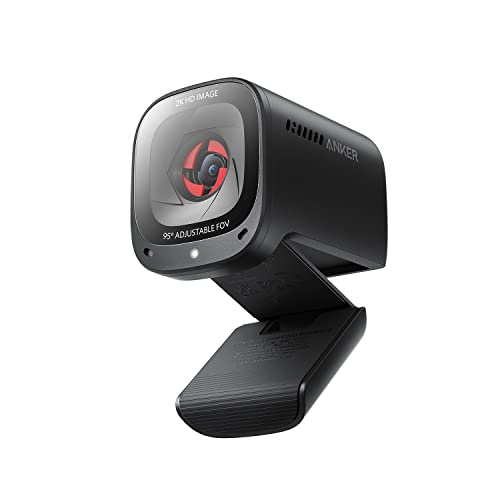
This compact USB webcam is intended for laptop or monitor mounting, with a threaded base for tripod use. It connects by USB-C, includes an adapter cable for USB-A, and is specified for Windows 7 or later and macOS 10.11 or later. The manufacturer states that it provides 1440p video, autofocus, adjustable 65, 78, and 95 degree fields of view through its desktop software, dual microphones, and a physical sliding lens cover. Independent reviewers confirmed sharp detail in good light and usable voice pickup in video calls. They also found meaningful limitations. Colors can look washed out, autofocus can be inconsistent, and motion becomes soft in dim lighting. The microphone makes speech understandable, but reviewers describe its tone as cool or thin rather than natural. The built-in shutter is a concrete privacy control because it physically covers the lens.
This product suits a desk-based remote worker, student, or occasional caller who needs visibly sharper framing than a typical integrated laptop camera and wants a non-software privacy barrier. It is especially practical for one-person calls where the 65 degree setting can reduce room visibility, or for wider desk and whiteboard views using the 78 or 95 degree settings. It also suits users who can provide reasonable front lighting and are comfortable adjusting image settings in the optional desktop software.
It is not well suited to users who routinely present, move, or demonstrate objects in dim rooms, because independent tests found soft motion and less reliable autofocus under poor light. It is also a weaker fit for interviews, voice recording, streaming, accessibility communication, or shared-room calls where natural, consistent microphone sound is important. People requiring independently verifiable electrical safety certification, a documented long-term software support commitment, repair parts, or formal U.S. electronics take-back support need more documentation than is publicly available here.
The strongest health-related feature is the integrated mechanical privacy cover. It can be slid across the lens without relying on an app setting, and independent testing confirmed that it fully covers the camera. A visible red cover position also gives the user a simple cue that video capture is blocked. The product is USB-powered, so it does not include a separate mains power adapter. The manufacturer identifies the product and provides a manual, declaration document, support contact, and 18-month warranty. No active U.S. recall or regulatory warning specific to this webcam was identified in the checked sources. However, no public exact-product NRTL certification record was located. The optional software privacy notice says AnkerWork conferencing products may collect usage statistics, performance metrics, settings, and logs. Public materials do not substantiate recycled-content claims, repairability, or a dedicated U.S. take-back program, so end-of-life planning should use local electronics recycling options.