24% off

Anycubic Photon P1 Resin 3D Printer
High precision printing for detailed models.
User-friendly interface with easy setup.
Durable construction ensures long-lasting use.
Members Only
Checked by ReviewTier
 Daniel Kenitz
High precision printing for detailed models.
User-friendly interface with easy setup.
Durable construction ensures long-lasting use.

High-speed printing at 150mm/h.
Large 16K resolution for detailed prints.
Smart tank heating ensures consistent results.

Designed for large resin 3D models.
Compatible with multiple MSLA 3D printers.
Simplifies post-processing with wash and cure.

Extra large space accommodates bigger 3D prints.
Fan interface enhances temperature control efficiency.
Dustproof design ensures cleaner printing environment.

Large build volume for bigger projects.
Convenient auto-leveling feature simplifies setup.
High-resolution printing for detailed results.

Fast 600mm/s printing speeds.
Convenient 1-click auto leveling feature.
High-quality 300°C direct drive extruder.
High speed printing at 150mm/h
Smart automatic leveling feature
Convenient WiFi file transfer

Delivers exceptional ±2μm high precision.
Features fast 4.5s/layer printing speed.
Includes reliable C5 industrial Z-axis.

Ultra-high 9K LCD for detailed prints.
Pre-leveled platform simplifies setup process.
AI 2D-to-3D model generation for easy design.
High-resolution 16K LCD for detailed prints.
Large build volume for bigger projects.
Auto resin heating ensures consistent quality.
Whether a printer works well depends on more than its advertised LCD resolution or maximum speed. Build volume determines the size and number of parts that can be produced in one job. Motion stability, leveling, release film, resin temperature, exposure settings, software, and the selected resin all affect results. Automatic leveling, residue detection, temperature control, resin feeding, and recovery can reduce some setup or handling work, but they do not independently prove accuracy, reliability, or safety.
Headline figures often overstate what buyers can expect. LCD pixel size is not the same as finished-part dimensional accuracy, and a stated speed may apply only to particular layer heights, resins, or test objects. Claims about precision, repeatability, resin savings, peel-force reduction, or reliability are stronger when an independent report identifies the exact model, resin, layer height, settings, test artifact, measurement equipment, and method. ISO/ASTM 52902:2023 is the relevant reference for geometric capability assessment. A cover, carbon filter, “low odor” resin, water-washable resin, or automatic feed system should not be treated as proof that ordinary precautions are unnecessary.
For air emissions, look for a current model-specific report using ANSI/CAN/UL 2904 or an equivalent transparent method. It should identify particle results, VOCs, aldehydes, resin, settings, and test conditions. None of the supplied products had that level of independent emissions evidence. A complete-product electrical safety listing is a separate question: CE, RoHS, FCC, or certified components do not establish an OSHA-recognized U.S. listing. Buyers should look for the complete printer in current UL Product iQ, Intertek ETL, CSA, TÜV Rheinland, or MET certification records, and check CPSC Recalls and SaferProducts.gov.
Material documentation matters just as much. The seller should identify compatible resins and solvents and provide current, product-specific Safety Data Sheets, including handling, first aid, spill, exposure-control, and disposal information. “Non-toxic,” “plant-based,” and “low odor” are not substitutes for hazard information. Buyers should also look for a traceable manufacturer, U.S. contact, serial-number or firmware-support path, and a documented remedy if a safety issue emerges.
Across the supplied reviews, the recurring caveat is that resin printing is not suitable for bedrooms, kitchens, shared living areas, poorly ventilated apartments, or spaces accessible to children and pets. Uncured resin can irritate skin and eyes and may cause allergic sensitization; printing, washing, curing, and sanding can add vapors, particles, solvent, and UV hazards. Every resin setup needs ventilation, suitable gloves and eye protection, spill control, sealed washing containers, guarded curing practices, and a plan for contaminated waste. No supplied product included a complete, independently validated low-exposure workflow, integrated wash-and-cure protection, verified emissions control, and confirmed complete-product U.S. electrical listing together.
The scores below compare how well the supplied products address the hazards, environmental burdens, and evidence gaps that matter in resin printing. A high score indicates stronger documented controls or support within this set; it does not mean the product is risk-free or independently certified in every area.
This measures enclosure, exhaust, filtration, and practical ventilation instructions for resin vapors and particles. Resin printers can emit during printing, opening, washing, curing, and sanding, so a lid alone is not enough. Among the supplied products, scores ranged from 68 to 74; higher-scoring models had clearer ventilation or handling directions, but none had model-specific ANSI/CAN/UL 2904 emissions verification.
This measures safeguards against drips, splashes, overflow, and direct contact while filling, recovering, removing, and cleaning resin. Funnels, fill marks, drip trays, pour spouts, automatic feeding, and release systems can reduce some handling. Scores ranged from 74 to 95; the highest score belonged to the filament printer because ordinary use avoids uncured resin, while resin printers generally scored in the mid-to-high 70s.
This measures protection during solvent washing, UV curing, and post-processing. A high score requires more than a printer cover: it depends on guarded UV sources and specific directions for solvent, splash, ventilation, and eye protection. Scores ranged from 68 to 96. The filament printer scored highest because it avoids resin washing and UV post-curing; the resin products generally required separate, exposure-prone equipment.
This measures safety against shock, overheating, short circuits, and fire, with emphasis on certification of the complete printer rather than individual parts. Scores ranged from 68 to 74 among the supplied products. Manufacturer overheat alerts, grounded-power instructions, and FCC records may help, but no supplied resin printer had a located UL, ETL, CSA, MET, or TÜV listing for the complete product.
This combines practical reduction of acrylate, solvent, airborne, UV, and electrical hazards. Higher scores reflect clearer controls and safer handling support, not elimination of risk. Resin printers scored from 68 to 74. The strongest products combined better spill guidance, ventilation instructions, material documentation, and traceability; all still required separate washing and curing and a controlled, ventilated workspace.
This measures whether a current, model-specific independent report identifies the resin, settings, test method, particles, VOCs, and aldehydes. Scores were tightly grouped from 68 to 70 because no supplied product had located ANSI/CAN/UL 2904 testing or equivalent transparent emissions results. A cover or optional purifier therefore remains a claim or design feature, not measured exposure performance.
This measures whether buyers can find compatible-material information and complete, current SDS documents before purchase. Scores ranged from 68 to 84. Higher-scoring products had accessible manufacturer SDS libraries or a specific resin SDS with hazard, PPE, spill, and disposal information. Lower scores reflected incomplete resin pathways or reliance on broad descriptions such as low odor or beginner-friendly.
This measures whether speed, resolution, filtration, quietness, easy-cleaning, and safety claims are specific and properly qualified. Scores ranged from 52 to 76. Higher-scoring products more clearly separated manufacturer specifications from independent findings. Lower-scoring products included contradictions or unsupported implications, such as treating low odor, a cover, or nominal resolution as proof of safety or finished-part performance.
This measures transparent, reproducible evidence for dimensional accuracy, speed, resolution, and repeatability. Scores ranged from 55 to 80. Independent hands-on testing supported some products, but the supplied reviews repeatedly noted the absence of standardized model-specific testing with named resin, settings, artifact, and measurement method. Nominal pixel size and maximum speed alone are therefore weak evidence.
This measures whether buyers can identify the manufacturer and exact unit, obtain support or firmware, and receive a documented remedy if a defect appears. Scores ranged from 72 to 82. Higher-scoring products had identifiable manufacturers, U.S. contacts, firmware or support paths, and warranty or parts information. FCC authorization helped trace wireless products but did not establish electrical or fire certification.
This measures whether the product ecosystem explains how to contain uncured resin, wash liquid, wipes, filters, and contaminated containers and keep them out of drains, soil, and stormwater. Scores ranged from 68 to 80. The strongest documentation included resin SDS disposal directions and instructions to filter or fully cure resin waste, while lower-scoring products left solvent and contaminated-material disposal less clear.
This measures replaceable wear parts, support and firmware, power and consumable transparency, end-of-life guidance, and substantiated environmental claims. Scores ranged from 70 to 79. Higher-scoring products had documented replacement screens, tanks, films, plates, nozzles, or sensors and ongoing support. No supplied product had a product-specific lifecycle assessment or broad, substantiated end-of-life program in the reviewed material.
This is a desktop masked-stereolithography resin printer that cures liquid photopolymer in a 223 x 126 x 230 mm build area, stated by the manufacturer as 6.5 L. It uses a 10.1-inch 14K monochrome screen, a steel build plate, a heated resin vat adjustable from 20 to 40 C, and automated leveling. The printer is intended for detailed prototypes, miniatures, models, and small-batch parts. Manufacturer specifications list a 215 W supply, a vat capacity of up to 1 L, and compatibility with Anycubic resins and other mainstream resins. Independent hands-on testing confirmed the physical size and reported consistently successful printing over more than 20 prints, including in a cold workshop. The base product has a hinged cover and supplied filters, but its AirPure 2.0 external ventilation accessory is optional, not included.
This product suits a maker, modeler, engineer, or small studio that needs finely detailed resin parts up to 230 mm tall and can dedicate a workshop, garage, or similarly separated work area to the full resin workflow. It is especially relevant where cold ambient conditions otherwise undermine resin printing, since the heated vat performed well in an independently observed cold-workshop test. The user should already be prepared to buy or install effective outdoor ventilation, use chemical-resistant gloves and eye protection, and manage washing and waste handling.
It is not appropriate for a bedroom, shared living area, classroom without engineered controls, or any home where children, pets, or chemically sensitive people can access the work zone. It also does not suit someone seeking a clean, low-touch appliance, because uncured resin, contaminated tools, and solvent-washed parts require disciplined handling. Buyers without a practical way to ventilate outdoors, store resin away from light, contain spills, and use a local household hazardous-waste program should choose a process with less chemical handling.
The cover provides a physical barrier during printing and the manual calls for a well-ventilated, flat workspace, gloves, and UV eye protection. Those measures matter because federal NIOSH guidance says vat photopolymerization can release particles and gases, and that covers may not fully contain them. The base product does not include the AirPure 2.0 outdoor-venting accessory, and no independent model-specific air-emissions or filter-performance report was verified. Anycubic provides SDS access for numerous compatible resins. That is useful because uncured photopolymer can cause allergic or irritant dermatitis. A 2024 CPSC consumer incident report described blistering rash after exposure to Anycubic high-speed resin used with a different Anycubic printer, not this product specifically. No product-specific CPSC recall was identified. Treat uncured resin, solvent, wipes, filters, and empty contaminated containers as controlled waste. Do not pour them into drains, onto soil, or into stormwater, and use local household hazardous-waste options where available.
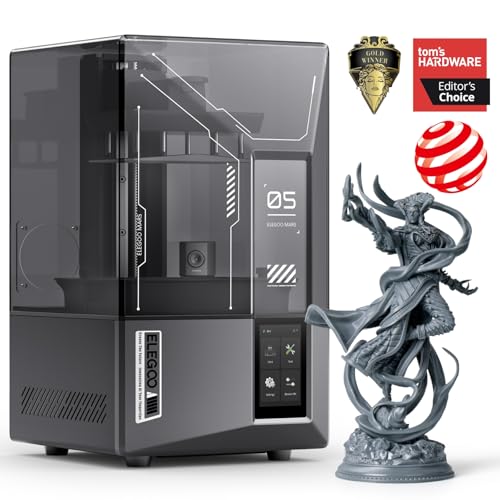
This is a desktop vat-photopolymer resin printer. It builds parts by selectively curing liquid resin in a tank, then requires the user to remove, wash, post-cure, and often sand the printed part. ELEGOO lists a 211.68 x 118.37 x 220 mm build volume, a 10-inch 16K monochrome screen, and a 14 x 19 micrometer nominal XY pixel size. Those are manufacturer specifications, not independent dimensional-accuracy results. Its defining practical features are a resin tank heater intended to hold resin at 30 C, tilt-release printing, automatic leveling, a camera, and sensors for resin level, residue, and leveling faults. ELEGOO also states that LED temperatures above 80 C trigger a pause and alert. The unit includes a resin tray, funnel, gloves, and mask, but it does not include an effective verified air-filtration or outdoor-exhaust system, nor a wash-and-cure station.
This product fits an experienced hobbyist, workshop user, or small prototyping operation that needs a mid-size resin build area for detailed miniatures, figurines, dental-style models, display pieces, or small batches of intricate parts. The user should already have a dedicated, ventilated work area away from living and sleeping spaces, chemical-resistant gloves, eye protection, closed wash containers, a cure setup, and a local hazardous-waste plan. The heater and automatic leveling are most useful where ambient temperatures vary and repeatable setup convenience matters.
It is not suited to bedrooms, kitchens, shared living spaces, poorly ventilated apartments, classrooms without formal chemical controls, or households where children, pets, or chemically sensitive people can access the work area. It is also a poor fit for anyone who expects resin printing to be clean or ready to use from the box. Users who cannot safely pour resin, manage contaminated gloves and wipes, keep wash solvent contained, use UV protection, and take cured and uncured waste to an appropriate collection route should choose a different production method.
The main safety issue is the resin workflow, not the screen resolution. NIOSH states that uncured vat-photopolymer resin can contain acrylates and other chemicals associated with asthma or allergic and irritant dermatitis. It also warns that printing, curing, and sanding can release particles and gases, and that IPA washing can irritate lungs and skin. A lid and a compatible optional carbon purifier do not establish effective exposure control. Use outdoor exhaust or validated particulate and gas filtration, allow the chamber to clear before opening, and keep gloves, eye protection, spill supplies, and sealed wash containers ready. The included funnel, tray, and tank pour spouts are useful spill-control measures. They do not remove the need to prevent uncured resin, contaminated solvent, wipes, filters, and gloves from entering drains, soil, or trash unless local rules allow it. ELEGOO identifies replaceable release film, resin tanks, build plates, and LCD screens, which supports maintenance. It gives the LCD only a three-month limited warranty, and no model-specific emissions certification or complete-product NRTL electrical listing was found.
The Mercury X Bundle is a two-piece post-processing system, not a resin printer. It combines a powered wash station with a lidded bucket and basket, plus a separate 405 nm UV curing station with a rotating turntable and tinted cover. The manufacturer manual documents 100 to 240 V input, rated power of 12 W for washing and 36 W for curing, plus timers up to 30 minutes. ELEGOO states that the wash bucket holds 7,000 mL and that lifting the curing cover stops the UV lights. The manual also directs users to keep wash liquid below the maximum mark, clean any liquid from the housing quickly, and keep the curing cover on during operation. However, no model-specific independent air-emissions report or U.S. NRTL electrical listing was located. This product manages post-print cleaning and curing, not vapors generated inside a resin printer.
This product suits experienced home resin-printing users who already have a ventilated post-processing area, suitable gloves and eye protection, and a plan for handling contaminated wash liquid. Its separate stations are useful for users processing multiple small or medium resin prints, especially when workflow benefits from washing one batch while another is ready to cure. It is also appropriate for users willing to follow fill limits, keep the wash container closed, dry parts before curing, and manage high-concentration alcohol carefully.
It is not suited to households that lack ventilation, safe chemical storage, or access to local household hazardous-waste guidance. It also is not a fit for children’s spaces, shared kitchen or living areas, or users who expect water-washable resin to make disposal to a drain acceptable. People seeking a post-processing system with independently verified air-emissions performance or a complete U.S. NRTL electrical listing should use a product supported by that specific documentation. It is not a substitute for exposure controls at the printer itself.
The most useful safety features are physical rather than independently tested. The wash station uses a lidded bucket, and the manufacturer says the curing unit shuts off its UV lights when the cover is lifted. The manual still warns users not to remove the cover during curing. The available CE compliance document identifies EMC and low-voltage standards for a tested sample, but it does not establish a U.S. NRTL listing for the complete product. No product-specific CPSC recall was located in the checks completed. Post-processing remains the main exposure concern. NIOSH warns that uncured resin can cause dermatitis or asthma, that IPA can irritate lungs and skin, and that curing can generate particles and gases. ELEGOO's manual recommends reusing wash liquid and curing settled residue in sunlight, but it does not give clear U.S. instructions for spent solvent or contaminated liquid. EPA advises against pouring household hazardous waste into drains, soil, or storm sewers and recommends checking local collection options.
This is a passive tent-style enclosure for an LCD resin printer and related equipment, not a printer, extractor, filter, wash station, or cure station. The product page describes a fan interface and claims an interior of 1000 x 500 x 1000 mm, intended to hold resin-printing equipment and potentially a curing machine and cleaning machine. It also claims a transparent viewing window, dust protection, reduced noise, and odor blocking. The product page describes an aluminum foil cloth cover with a metal frame, while its specification table separately calls the material aluminum. It claims the cloth is flame-retardant, but no test standard, certification, or issuing-body listing was provided. The listed dimensions also conflict, because the specification table gives a 1000 mm cube while the item description gives a 1000 x 500 x 1000 mm interior. No model-specific emissions, airflow, filtration, UV-blocking, or temperature-control data were located.
This product suits an experienced resin-printing user who already has a separately planned ventilation setup, compatible personal protective equipment, spill supplies, and a dedicated work area. Its stated interior may be useful for someone arranging a resin printer with cleaning or curing equipment and wanting a physical dust barrier and a viewing window. The buyer should measure every device and allow room for safe opening, resin handling, cable routing, and any properly designed exhaust connection. It is most appropriate as one component of exposure control, not the complete control system.
It is not suited to users expecting a ready-made fume-control solution for a bedroom, shared living space, school, or poorly ventilated room. The listing gives no verified airflow, capture efficiency, filter specification, or emissions result, so it cannot establish that vapors or particles are controlled at a safe level. It is also unsuitable for buyers who need built-in spill containment, guarded UV curing, a wash system, or documented fire certification. Households with children, pets, pregnancy concerns, asthma, or resin-sensitized occupants need more robust separation and ventilation planning.
The key health limitation is that enclosure alone is not verified source control. CDC and NIOSH state that vat photopolymerization can release uncured-resin particles and gases, and that uncured resin can cause dermatitis or asthma. They recommend ventilation, suitable gloves, eye protection, prompt spill cleanup, and careful handling during resin recovery, washing, curing, and sanding. This product has no located independent test showing that its cover, fan interface, or claimed odor blocking reduces those exposures. No electrical certification or model-specific flame-resistance documentation was found for this passive enclosure. No product-specific recall or safety action was located in the searched U.S. consumer-safety resources. Resin, solvent, contaminated wipes, and filters still require separate management. EPA advises against pouring hazardous household chemicals or solvents into drains, onto the ground, or into stormwater, and recommends checking local household hazardous-waste collection options.
This is a large desktop vat-photopolymer resin printer that cures 405 nm-compatible liquid resin layer by layer. It has a manufacturer-stated 285.5 x 214 x 300 mm build area, described as 18.3 L, with a 1.9 L heated resin vat, a 14-inch 12K LCD, and 296 W rated power. It is intended for larger models or multiple parts in one job. The supplied manual independently corroborates the core physical format, including the 300 mm height, 296 W rating, Wi-Fi, resin vat, removable cover, and supplied protective equipment. The manufacturer also documents auto-level checks, failure detection, a drip hanger, and a dedicated pouring spout. Those productivity and handling claims are manufacturer-stated, not independently validated performance results.
This product suits an experienced hobbyist, studio, or small workshop that needs a physically large resin build area for tall figures, props, prototype housings, or batches of smaller parts. The user should have a dedicated, level workbench in a ventilated work area, storage for liquid resin and contaminated supplies, and a separate sealed washing and curing workflow. It also suits users prepared to follow the manufacturer support system for calibration, firmware, and component replacement.
It is not suited to bedrooms, shared living rooms, kitchens, or other occupied spaces without practical ventilation and separation from children, pets, food, and personal items. It is also a poor fit for users who expect the cover or an odor accessory to eliminate resin vapor risk, or who lack nitrile gloves, eye protection, spill supplies, and hazardous-waste access. Beginners who do not want hands-on resin recovery, solvent washing, curing, and cleanup should avoid this workflow.
The strongest health controls documented for this product are basic but meaningful. The manual calls for an open, well-ventilated installation area and tells users to wear gloves and a mask while handling resin. Its enclosed cover can limit incidental contact during printing, but CDC guidance cautions that emissions may not be fully contained by a cover. The base product has no verified model-specific air-emissions result, and the separately sold odor accessory is not evidence of effective gas or particle control. Anycubic maintains a broad resin SDS library. The Standard Resin V2 SDS identifies skin irritation, allergic skin reaction, serious eye damage, respiratory irritation, and long-lasting aquatic toxicity. It specifies ventilation, protective gloves and eye protection, spill collection, and approved disposal. Users should treat uncured resin, wash liquid, wipes, filters, and containers as contaminated materials. Official repair guides for the product's power supply, cooling fan, UV driver, camera, display-related parts, Z axis, and cover are a positive durability feature. No product-specific U.S. recall was identified in this review.
This product is an open-frame fused-filament 3D printer, not a resin printer. It melts thermoplastic filament and deposits it on a removable PEI steel sheet. The manufacturer specifies a 220 x 220 x 220 mm build volume, one extruder, four-filament color switching, a 300°C maximum extruder temperature, a 110°C bed, and USB, Ethernet, and Wi-Fi connectivity. The concrete appeal is multicolor printing in a relatively compact machine. Independent hands-on testing found the four-color switching mechanically effective and reported good print quality, although the reviewer found the supplied slicer unstable and incomplete around color-swap waste. The base product is open, has no stated air filtration, camera, or lighting. Flashforge sells an enclosure kit separately, but it is not part of the standard product.
This product fits a maker, classroom supervisor, or small workshop that mainly prints PLA or PETG models, prototypes, organizers, signs, and decorative objects, and wants four-color capability without handling photopolymer resin. It is most appropriate where there is a dedicated, ventilated work area away from routine occupancy. It also suits users willing to learn slicer settings, monitor long jobs, and replace consumable hotend or nozzle components when needed. The 220 mm cubed build space is practical for many small to medium parts.
It is not well suited to bedrooms, nurseries, small shared rooms, or poorly ventilated home offices, because the standard product is open and lacks stated filtration while heated-filament printers can release ultrafine particles and organic vapors. It is also unsuitable for buyers specifically seeking a resin printer, since it uses solid filament and has no resin vat, washing, or UV-curing workflow. Users needing enclosed high-temperature engineering-material printing, documented emissions testing, or verified complete-product electrical certification should look for a product with those protections included and documented.
The most important safety clarification is that this product uses solid thermoplastic filament, not uncured photopolymer resin. That avoids the acrylate skin sensitization, resin spills, solvent washing, and UV curing hazards associated with desktop resin printing. It still has meaningful filament-printing hazards. The manual warns against touching hot surfaces, requires grounding and the supplied power cord, and instructs use in a well-ventilated environment. NIOSH reports that filament printers can emit ultrafine particles and gases, with emissions affected by printer design and material. The standard product is open and lists no air filtration, so ventilation or source capture remains important. No model-specific independent emissions report or complete-product NRTL safety listing was located. The product has an FCC authorization for its Wi-Fi functions, published serial-number guidance, firmware support, and official replacement hotend and nozzle listings. Multicolor operation produces purge material, and no product-specific disposal or recycling program for that waste was located.
This is a desktop masked stereolithography resin printer for small, high-detail parts such as miniatures, prototypes, and jewelry-scale models. It uses 405 nm light to cure liquid photopolymer resin in a 153.36 x 77.76 x 165 mm build area. ELEGOO specifies a 7-inch 9K monochrome LCD, 18 micron XY pixel size, 0.01 to 0.2 mm layers, Wi-Fi and USB connectivity, and a maximum 150 mm/h print speed. The defining practical features are a tilting resin-tank release system, automatic leveling, a resin-level and residue sensor, and an included resin tray, funnel, gloves, and mask. Independent hands-on reviews confirm clean fine-detail results under stated test conditions, but they are not standardized dimensional-accuracy reports. The printer has an anti-UV cover and requires ventilation, gloves, careful resin handling, washing, and separate final curing.
This product suits a hobbyist or small studio making detailed, relatively small resin parts who can dedicate a ventilated work area to printing and post-processing. It is especially practical for someone comfortable using nitrile gloves, eye protection, sealed wash containers, a separate curing setup, and local hazardous-waste services. The compact build area, automatic leveling, camera monitoring, residue warnings, and tilt-release design are useful for frequent batches of miniatures, figurines, prototypes, and similarly detailed parts rather than large one-piece objects.
It is not suited to bedrooms, kitchens, shared living rooms, poorly ventilated apartments, or spaces used by children, pets, people with acrylate sensitivity, asthma, or anyone unable to control access during printing and cleanup. It also does not fit a buyer expecting a self-contained workflow. Liquid resin, alcohol washing, UV curing, contaminated wipes, filters, and failed prints require separate protective equipment, sealed handling, cleanup capacity, and disposal planning. It is also unsuitable where a verified NRTL-listed complete printer is a procurement requirement.
The most important health fact is that this product uses uncured photopolymer resin. ELEGOO's current resin safety information warns of skin and eye irritation, allergic skin reaction, and long-lasting aquatic toxicity. The printer manual calls for gloves and a mask, warns against direct skin contact, recommends ventilating the printing room, and directs users to keep resin below the maximum fill line. NIOSH also advises ventilation, acrylate-resistant gloves, eye protection, prompt spill cleanup, sealed wash containers, and caution around curing emissions. The anti-UV cover limits direct exposure during enclosed printing, but it does not eliminate vapor or particle concerns when opening the cover or handling parts. No model-specific independent emissions report under UL 2904 was found. ELEGOO publishes resin SDS material and product safety information, which is a useful transparency measure. However, the printer manual does not provide a complete local disposal route for uncured resin or contaminated wash liquid. The resin SDS directs disposal under applicable regulations, so users should use local household hazardous-waste guidance rather than drains, soil, or stormwater.
This is a desktop masked stereolithography resin printer for detailed models, prototypes, and small production parts. It uses a 405 nm light source and a 10.3-inch 8K amber LCD. HeyGears lists a 222 x 122 x 228 mm build volume, 29.7 micrometer native XY pixel size, 30 to 100 micrometer layers, 180 W rated power, and a 20 kg machine weight. These are manufacturer specifications, not independent measurements. Its defining workflow features are automatic resin refill and heating, plus force monitoring and automatic screen leveling, all manufacturer-stated. The printer has a hood, but no model-specific evidence was located for chamber exhaust, HEPA and gas filtration, or emissions testing. That distinction matters because vat photopolymerization can release particles and chemical vapors even during normal printing.
It suits an experienced hobbyist, studio, or small business producing detailed miniatures, display pieces, prototypes, or similar small parts in repeated batches. The 222 x 122 x 228 mm build volume is substantial for this use, while the automatic refill feature can reduce routine bottle handling. It is most appropriate where there is a dedicated, ventilated work area, chemical-resistant gloves, eye protection, closed wash containers, and a practical route for hazardous-waste disposal. Buyers should be prepared to use the compatible material profiles and maintain consumables.
It is not suitable for bedrooms, kitchens, shared living rooms, classrooms without controlled ventilation, or homes where children, pets, or chemically sensitive people can access the work area. It is also a poor fit for anyone expecting the enclosed hood to make resin printing safe without ventilation and protective equipment. Choose another workflow if you cannot safely handle uncured sensitizing resin, contaminated wipes, and solvent wash liquid, or if you need independently verified emissions control or a complete third-party electrical safety listing.
The most useful safety-positive finding is resin hazard transparency. HeyGears publishes product-specific safety data sheets for compatible materials. Representative PAP10 and PAS10 sheets identify acute toxicity, skin irritation, skin sensitization, eye irritation, and respiratory hazards. This is important because uncured resin is not a low-contact material. The automatic refill feature may reduce manual pours, but it does not eliminate exposure during part removal, vat cleaning, support removal, washing, or spill cleanup. No product-specific independent emissions report, effective chamber-filtration evidence, or complete NRTL electrical listing was located. NIOSH advises ventilation, protective gloves and eye protection, prompt spill cleanup, sealed wash containers, and ventilation during UV curing. Resin, solvent, contaminated wipes, filters, and containers should not go down drains or outdoors. EPA guidance supports using local household hazardous-waste routes where available. HeyGears documents replaceable wear parts and a one-year warranty, which is favorable for serviceability, but the screen and consumable components still create replacement waste.
This compact desktop vat-photopolymerization printer uses 405 nm resin and an LCD light source to make small, high-detail parts such as miniatures, figures, and prototypes. Creality states a 153.36 x 77.76 x 160 mm build volume, a 6.8-inch 9K LCD with 18 micrometer pixels, 0.01 to 0.2 mm layer settings, and 65 W rated power. Its defining practical features are manufacturer-stated factory pre-leveling, USB and 2.4 GHz Wi-Fi connectivity, and compatibility with HALOT BOX and CHITUBOX. The official support ecosystem also lists current firmware and component replacement guides. However, the manufacturer comparison explicitly identifies no air-purification feature on this model, and no model-specific independent emissions report or independently reproducible accuracy study was located.
This product suits an adult hobbyist or desktop maker producing small, detailed resin pieces who has a dedicated, well-ventilated work area and is prepared to manage gloves, eye protection, spill cleanup, washing, UV curing, and local hazardous-waste options. Its stated 153.36 x 77.76 x 160 mm capacity is oriented to miniatures, figures, tabletop components, and compact prototypes rather than large functional parts. It also fits users who value a smaller machine, factory pre-leveling, and documented access to common replacement procedures.
It is not suited to bedrooms, shared living rooms, classrooms, poorly ventilated basements, or homes where children, pets, or chemically sensitive people may access the work area. The product has no listed air purification, while NIOSH warns that vat photopolymerization can release particles and gases that a cover may not contain. It is also a poor fit for buyers unwilling to handle uncured acrylate resin and solvent-contaminated waste, or for users needing independently verified emissions, electrical listing, dimensional accuracy, or production reliability data.
Uncured photopolymer resin is the main health issue, not the printer's compact size or low stated power. NIOSH says vat photopolymerization can expose users to resin particles and gases, acrylates that can cause dermatitis or asthma, solvent irritation during cleaning, and UV-related emissions during curing. Use active ventilation, chemical-resistant gloves, eye protection, sealed wash containers, and immediate spill cleanup. The manufacturer lists no air-purification system for this product, so external ventilation is especially important. Creality markets compatible resin as low odor and low irritation, but odor is not a safety control and the product page does not supply model-specific emissions results. No active U.S. recall or safety action for this exact product was located in the checked sources. Creality does provide repair documentation for several wear and electronic parts, which can extend service life. Resin, contaminated wipes, filters, and wash solvent should not enter drains, soil, or stormwater. EPA recommends using local household hazardous-waste collection options for hazardous household chemicals and solvents.
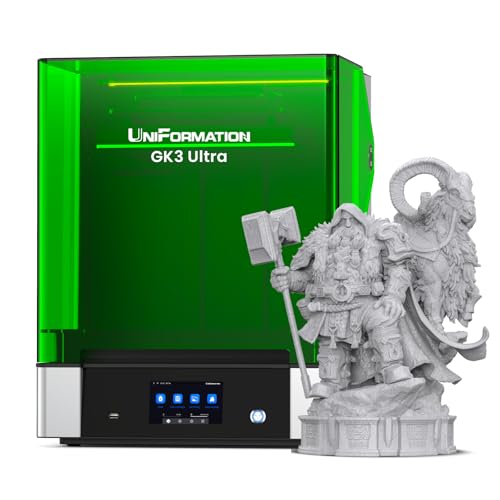
This is a large masked-SLA resin printer for making figurines, props, prototypes, and batches of smaller parts from liquid 405 nm photopolymer resin. Manufacturer documentation specifies a 300 x 160 x 300 mm build volume, 13.5-inch 16K LCD, 20 x 26 micrometer pixels, a 1,000 ml vat, and a 1.2 kg automatic-feed cartridge. Its defining practical features are manufacturer-stated rather than independently validated. These include a sealed cover, internal 4,500 RPM fan and activated-carbon filter, adjustable 25 C or 30 C resin heating, automatic feed, and a resin drip hanger. The manual also directs users to ventilate the work area, wear gloves and safety glasses, clean printed parts with isopropyl alcohol, and UV-cure them. No model-specific independent emissions report, electrical NRTL listing, or independent dimensional-accuracy report was located.
This product fits an experienced hobby workshop, small studio, or prototype operation that needs a stated 300 mm print height or wants to place many small pieces on one build plate. The user should have a stable bench that supports roughly 35 kg, dedicated ventilated workspace, chemical-resistant gloves, eye protection, sealed containers for washing, and a planned route for resin and solvent waste. It also suits users prepared to calibrate exposure settings for each resin and to replace films, filters, and other consumables.
It is not suited to bedrooms, shared living areas, poorly ventilated garages, classrooms without chemical controls, or homes where children or pets can access resin, solvent, or the printer. It is also unsuitable for anyone expecting a carbon filter or water-washable resin to remove the need for ventilation, gloves, cleanup discipline, and controlled waste handling. Buyers needing independently verified low emissions, a complete U.S. electrical safety listing, or validated dimensional accuracy should require that documentation before relying on this product in a regulated or safety-sensitive setting.
The product uses liquid photopolymer resin and 405 nm curing light. NIOSH warns that uncured resin can contribute to dermatitis or asthma risk, that vat printers can emit particles and gases, and that IPA washing and UV curing add exposure points. The manufacturer provides an enclosure, carbon filter, ventilation instruction, gloves, and basic directions to wash with IPA and cure parts. Those measures are useful, but the carbon system has not been independently verified for this exact product, resin, and operating condition. The manufacturer sells replacement vats, films, screens, plates, and filters, which can extend service life. It also maintains firmware and a model guide, including a serial-number-related service procedure for some earlier heater layer-line problems. No product-specific disposal plan for contaminated wash liquid, wipes, filters, or uncured resin was located. EPA guidance says household hazardous waste should not be poured into drains, onto soil, or into stormwater, so local household hazardous-waste instructions remain necessary.



