Best Overall
$20 Coupon

Abosi AI Smart Camera Glasses
Integrated AI for object recognition and translation.
High-quality 1200P video with 6-axis stabilization.
Durable design with polarized UV400 lenses and waterproofing.
 Daniel Kenitz
Integrated AI for object recognition and translation.
High-quality 1200P video with 6-axis stabilization.
Durable design with polarized UV400 lenses and waterproofing.

Unique Batman Limited Edition design captivates fans.
Exceptional audio quality by Bang & Olufsen.
Immersive 201'' video display for a cinematic experience.

Real-time translation enhances travel experiences.
Open-ear audio keeps you aware of surroundings.
Auto color-changing lenses adapt to lighting conditions.

Real-time translation enhances travel experiences.
Anti-shake video ensures smooth recording.
Photochromic lenses adapt to light changes.

Stylish design with advanced audio features.
Lightweight and comfortable for all-day wear.
Seamless integration with voice assistants.

Captures stunning 4K HD video seamlessly.
Sleek design with built-in camera functionality.
Hands-free recording for ultimate convenience.

Automatic lens tint adapts to sunlight.
Built-in audio for a wireless experience.
Durable design with safety-rated materials.

Built-in speakers offer clear, immersive sound.
Hands-free calls with integrated microphone feature.
UV protection lenses for eye safety outdoors.
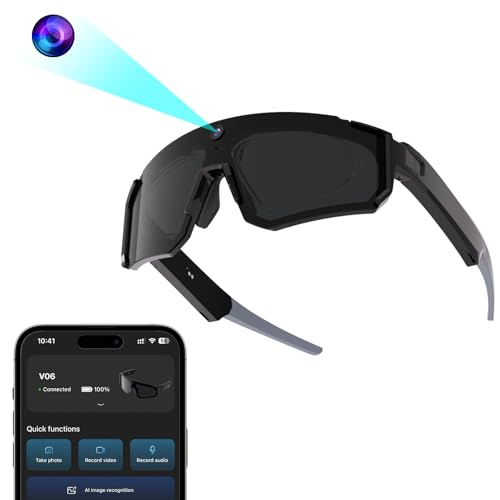
High-quality 32MP HD video recording feature.
Built-in ChatGPT for smart assistance.
EIS stabilization ensures smooth video capture.
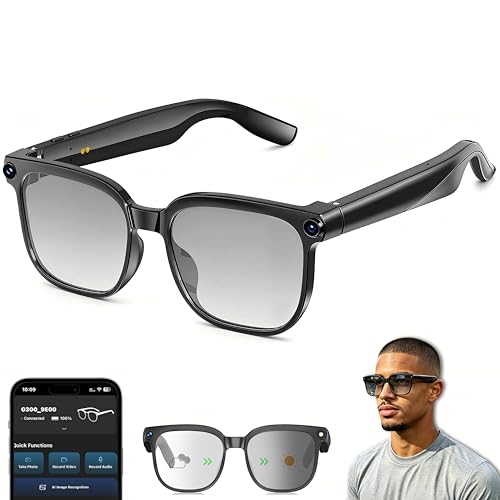
Seamlessly integrates voice assistant for hands-free use.
Real-time translation enhances travel and communication.
Photochromic lenses adapt to changing light conditions.
A useful product is not defined by its biggest headline number. Camera resolution such as 8MP, 2K, 4K, or 1200P does not by itself establish image quality, stabilization, frame rate, or actual recording resolution. Battery capacity and claimed playback time can describe different conditions, while continuous video usually lasts much less than standby or music use. Language counts may refer to translation languages, interface languages, or unsupported marketing claims. Water ratings also need careful reading: IP54, IP65, IP66, IP67, and IPX4 describe different test conditions, and a rating does not prove that the charging case is protected or that immersion is safe.
Look for evidence tied to the exact product and supplied accessories. For wireless functions, a traceable FCC Equipment Authorization System record should match the model, FCC ID, label, manual, and RF-exposure documentation; Bluetooth claims can also be checked against the Bluetooth SIG database. Battery and charging claims are stronger when the glasses, case, battery, cable, and adapter have model-specific UL, ETL, CSA, CB Scheme, IEC 62368-1, or IEC 62133-2 evidence from a qualified laboratory. A general charger instruction is not the same as a safety certification.
For lenses, seek an exact-configuration ANSI Z80.3 report, FDA-compliant impact evidence, or ISO 8980-3 transmittance testing from an ISO/IEC 17025-accredited optical laboratory. “UV400,” polarized, photochromic, blue-light, or anti-blue-light wording is not enough on its own. For open-ear audio, look for disclosed maximum output, volume limiting, exposure warnings, or model-specific acoustic testing aligned with WHO-ITU safe-listening guidance. AI translation and recognition should have stated languages, test conditions, limitations, and reproducible results; they should never be treated as dependable medical, legal, emergency, or navigation tools.
Camera glasses also require social safeguards. A conspicuous recording light, reliable capture controls, clear recording behavior, and plain privacy information reduce—but do not remove—the need for consent. Check what the app collects, where recordings and AI queries go, how long they are retained, how deletion works, and how long security updates are supported. Finally, favor products with replaceable lenses, repair support, service documentation, battery or case replacement, and a credible electronics or battery recycling route.
Across the supplied reviews, recurring safety concerns include missing model-specific battery, optical, acoustic, and durability evidence; inconsistent water-resistance claims; unclear or inconsistent app data practices; absent or insufficient recording notices; and unverified translation or AI accuracy. Several products also conflict on camera resolution, language count, battery life, storage, or charging time. No product should be relied on for high-stakes decisions, and camera-equipped models are unsuitable for privacy-sensitive settings without clear consent. Products described as not water resistant, or whose water claims conflict, should be kept away from rain, sweat, immersion, and wet charging.
These topics reflect the evidence supplied for this category. A high score means the review found stronger, more traceable support for the defined issue; it does not mean every product is certified or risk-free. The strongest differences in this set generally appear in exact-model radio records, capture notices, claim consistency, and documentation of service or data handling.
This examines the glasses, case, battery, cable, and adapter for model-specific protection against overheating, shock, and fire. It matters because electronics and lithium batteries sit against the face and are charged in a small case. Scores range from the high 70s for better-documented products to the high 60s and 70, where reviews commonly found no UL, ETL, CSA, or IEC report.
This measures whether UV, impact, polarization, photochromic behavior, and visible-light claims are proven for the supplied lenses. Camera glasses are still eyewear, but many supplied products provide only “UV400,” polarized, or photochromic marketing. Higher scores in this set reflect clearer manufacturer documentation; lower scores reflect missing ANSI, FDA, ISO, or accredited optical-lab evidence.
This asks whether open-ear speakers disclose maximum output, provide usable volume limiting, and warn about exposure. Open-ear design can leave the ear canal uncovered, but it does not by itself make loud listening safe. Scores cluster around the high 60s and 70 because the reviews generally found volume controls but little or no model-specific output, limiter, or exposure-warning evidence.
This measures whether Bluetooth, Wi-Fi, and other transmitters are authorized for U.S. sale and matched to the exact product. It matters because similar-looking models and shared platforms can have different filings. The strongest scores, in the 80s and 90s, belong to products with traceable FCC records and RF or SAR material; lower scores reflect generic, unmatched, or absent authorization evidence.
This measures whether camera and microphone activity is conspicuous, controllable, and clearly explained. A visible capture light, physical controls, reset function, and plain recording instructions separate stronger products from those with no documented indicator or audio-only notice. Scores reach the upper 70s and low 80s where capture LEDs and deletion controls are documented, while weaker products leave bystander safeguards unclear.
This examines app permissions, encryption, account protection, security updates, cloud processing, retention, and deletion. It matters because glasses may capture faces, voices, locations, transcripts, and AI queries. Higher scores in this group reflect local media handling, documented deletion, or clearer app disclosures; lower scores reflect conflicting store labels and privacy policies, vague retention, or no product-specific security information.
This measures whether translation, recognition, voice-assistant, and conversational-AI claims are tested across stated languages and real conditions. Higher scores in this set reach the low 70s where limitations and app functions are better described; lower scores reflect conflicting language counts, user reports of errors, or no representative benchmark. No supplied product is supported for high-stakes reliance.
This checks whether camera resolution, stabilization, battery life, waterproofing, lens features, language counts, and AI functions match the shipped product under stated conditions. Scores vary widely: the strongest supplied product reaches the low 80s, while many sit near 50 because materials conflict on 4K versus 1080p, IP ratings, storage, runtime, or language coverage.
This measures current, traceable third-party evidence for the exact glasses and case rather than generic certificates or seller statements. Higher scores in the 80s reflect model-matched FCC records or other identifiable evidence; many products score around 68–70 because no exact UL, optical, acoustic, battery, Bluetooth, or ingress report was found.
This measures whether IP ratings, sport use, hinges, drops, and wear claims are supported for the complete wearable and charging system. The supplied scores range from about 50 to the high 70s. Higher-scoring products state practical limits or have clearer documentation, while lower-scoring products commonly claim IP protection without a model-specific IEC 60529 report or contradict their own manuals.
This measures replacement lenses or batteries, repair support, service life, take-back options, and responsible recycling. Replaceable lenses can keep a working frame in use, while sealed batteries can shorten useful life. Scores are generally in the high 60s and 70s: a few products document lens or case support, but most lack a replacement-battery route, parts catalog, repair manual, or manufacturer take-back program.
This product is a 49.3 g, no-display camera sunglasses format intended for hands-free video, calls, music, voice queries, object recognition, and spoken translation through a phone-connected app. The listing states that it has a 260 mAh lithium-ion battery, Bluetooth connectivity, polarized UV400 lenses, a magnetic charging connection, and a supplied prescription insert frame. An independently indexed retail report repeats several manufacturer-stated specifications, including an 8 MP camera, 1200P 30 fps video, 6-axis stabilization, 50-minute charging, and up to five hours of music playback. Those figures are not independent laboratory results. The most important concern is inconsistent water protection language. The product record says IP64, while multiple external listings for the same named product say IP54. Neither version was accompanied by an IEC 60529 test report.
This product suits an adult phone user who wants sunglasses that can capture casual first-person clips, take calls, and play audio without a display in the field of view. It is most relevant for daylight walking, travel journaling, or low-stakes vlogging where manufacturer-stated 1200P video and voice features are acceptable as convenience tools. The included prescription insert frame may also be useful for a buyer who can have custom lenses fitted and does not need independently verified optical performance.
It is not suited to people who need confirmed eye-protection testing, impact-rated lenses, or dependable water resistance for rain-heavy, dusty, or high-sweat sports. Children and anyone sensitive to loud audio should avoid relying on it for long listening sessions because maximum output and safe-listening controls were not disclosed. It is also unsuitable for workplaces, classrooms, healthcare settings, or households where clear camera-recording notice, app privacy controls, and documented data deletion are required.
The product combines a camera, microphones, open-ear speakers, wireless connection, and a 260 mAh lithium-ion battery in eyewear. No model-matched electrical-safety listing from UL, ETL, CSA, or an equivalent certification body was located. The supplied lenses are marketed as polarized UV400, but no accessible impact-resistance certificate or optical laboratory report verifies the claim. FDA notes that sunglasses sold in the United States must use impact-resistant lenses. Safe-listening features such as exposure monitoring, volume limits, and warnings were not documented. WHO recommends volume limiting and listening-exposure information for personal audio devices. The camera and microphone make clear recording notice important, yet no model-specific evidence of a visible recording indicator or privacy policy was found. No repair manual, replacement battery or lens catalog, take-back program, or certified recycling pathway was located. The conflicting IP54 and IP64 claims also make sweat and water limits uncertain.
This product is a wired personal display worn like glasses, not a self-contained AI camera device. It connects by USB-C to a compatible source with DisplayPort video output, such as a phone, computer, handheld gaming device, or supported console setup. RayNeo states that the glasses have two 0.6-inch Micro-OLED displays, Full HD per eye, up to 120Hz refresh, HDR10, four speakers, adjustable nose pads, flexible temples, and a 76g frame. The Justice edition adds Batman-themed accessories and presentation, while the core display hardware is the Air 4 Pro. Independent reviews confirm that it functions as a large virtual screen and that its supplied light blocker improves viewing in ambient light. Independent testing also found some edge blur, nose-pad discomfort during extended sessions, and limited practical value from the instant 2D-to-3D feature.
This product suits an adult who wants a portable wired screen for films, streamed video, or gaming from a laptop, handheld console, tablet, or phone that genuinely supports USB-C DisplayPort output. It is especially relevant for seated travel, hotel use, couch viewing, or short gaming sessions where a 76g wearable and included light blocker are more practical than carrying a monitor. It also suits users who prefer a display-only format without an onboard camera, wireless radio, or separately charged glasses battery.
It is not suited to people who need a standalone headset, a camera for recording, wireless connectivity in the glasses, or a head-tracked screen that stays fixed in space. RayNeo confirms that this model has a fixed display rather than 3DoF anchoring. It is also a poor fit for people who need verified impact-rated or UV-protective eyewear, formal sweat or rain protection, published safe-listening limits, or long multi-hour wear without possible nose pressure and edge blur. Do not use it while driving, cycling, crossing traffic, or doing work needing unobstructed vision.
The strongest safety positive is architectural rather than certification-based. RayNeo states that the glasses contain no built-in battery and operate from the connected host device, which removes a wearable battery charging cycle. The core display also does not require Wi-Fi or an app for ordinary screen mirroring. Available product information describes it as a display-focused wearable rather than a camera product, reducing the usual bystander-recording concern associated with camera glasses. RayNeo advertises TÜV SÜD low-blue-light and flicker-free status, 3840Hz dimming, and an eye-protection mode, but a public model-specific certificate or optical laboratory report was not found. No IP durability report or U.S. electrical-safety listing was located. RayNeo offers a one-year warranty with repair or replacement remedies, but no parts catalog, battery replacement path, or U.S. product take-back program was identified. Dispose of failed electronics through a responsible local e-waste channel rather than household trash.
This is a black semi-rim smart-glasses product with an integrated camera, microphones, open-ear audio, Bluetooth, onboard storage, and smartphone-linked voice and translation functions. It is intended for hands-free photos, video, calls, music, and travel-oriented assistance. An independent retailer mirrors the product's stated 32 GB storage, 270 mAh lithium-ion battery, approximately 8-hour battery figure, and two-hour charging figure. These are seller-provided specifications, not independently tested measurements. The same retailer repeats claims of an 8MP camera, 4K video, color-changing lenses, Wi-Fi syncing, and real-time AI translation. No model-specific lab report, official manual, privacy policy, FCC ID, Bluetooth qualification record, optical test report, or battery-safety certification was located. Product descriptions associated with the same S01 name also conflict across marketplaces, which limits confidence in the advertised configuration.
This product suits an adult who wants an inexpensive, hands-free camera and Bluetooth-audio format for casual travel clips, short personal recordings, and phone calls, and who can test all advertised functions promptly. It is most appropriate where imperfect image quality, translation performance, and battery runtime would be an inconvenience rather than a safety, work, or accessibility issue. The buyer should be comfortable using a smartphone and should treat storage, 4K video, AI translation, lens behavior, and waterproofing as manufacturer-stated claims rather than independently confirmed performance.
It is not suited to anyone who needs documented electrical safety certification, a traceable U.S. radio authorization, or a proven recording indicator for use around clients, students, patients, guests, or children. Avoid relying on it for navigation, emergency communication, medical interpretation, legal or business translation, or evidence-quality recording. It is also a poor fit for prescription-lens users, impact-risk sports, swimming, heavy rain, or people needing verified UV protection, since no exact-lens optical or ingress-protection test evidence was located. Buyers needing repairs or long-term support should note the stated 15-day warranty.
The product is described as using a 270 mAh lithium-ion battery and a charging cable, but no model-matched UL, ETL, CSA, CB, or IEC safety report was found. Use only an appropriate USB power source, keep the charging area dry and attended, and stop use if the frame, cable, or battery area becomes unusually hot, swollen, damaged, or emits odor. The water claim is not backed by a located IP test report, so it should not be interpreted as permission for immersion or charging while wet. The camera, microphone, and translation features create privacy and data-handling questions, yet no usable product-specific privacy, retention, deletion, or security-update policy was located. No take-back program, replacement battery, replacement lenses, repair manual, or parts catalog was located. At end of life, treat the product as lithium-battery electronic waste and use a recognized e-waste or battery collection route rather than household trash.
This is a camera-and-audio smart-glasses product with a photochromic lens configuration, Bluetooth and Wi-Fi, open-ear calling and media controls, and a companion app called HeyCyan. Osawalla identifies the corresponding GP02 unit as a 40.8 g TR90-frame design with ABS arms, PMMA lenses, 32 GB local storage, a 290 mAh battery, an 8 MP camera, and 1080P video. Those are manufacturer-stated specifications, not independent bench results. The strongest independently traceable compliance evidence is radio authorization. An FCC equipment authorization for smart-glasses models M01 and M02 covers Bluetooth and 2.4 GHz Wi-Fi operation and includes RF-exposure documentation. Osawalla also says recording activates an indicator light or sound, and that captured media is first held in temporary local storage before transfer to the app. No model-specific optical, battery, acoustic, IP, or AI accuracy test report was located.
It suits an adult who wants occasional hands-free first-person photos, short video clips, calls, music, and basic travel assistance in a regular-glasses format. It is most appropriate for someone who treats camera quality, translation, and object recognition as convenience functions rather than dependable tools. The FCC authorization is a meaningful benefit for a U.S. buyer using Bluetooth and 2.4 GHz Wi-Fi. It also fits users who understand that the claimed tint-changing lenses and splash resistance are manufacturer-stated rather than independently validated performance claims.
It is not suitable for swimming, showering, or any use based on the catalog statement of one-meter waterproofing. Osawalla's own description limits protection to IP65 splash resistance and says the product is not designed for submersion. It is also a poor fit for people needing prescription-ready optical assurance, certified UV or impact protection, hearing-safe output controls, or independently tested camera stabilization. Do not rely on its translation or recognition output for medical, legal, safety, navigation, or urgent communication decisions.
The radio hardware has unusually useful traceability for this type of product. FCC authorization for the M01 and M02 smart-glasses models covers the listed Bluetooth and 2.4 GHz Wi-Fi transmitters, with the grant noting RF-exposure threshold exclusion. The available M02 manual also warns against disassembly or battery replacement, identifies the internal battery as nonremovable, and directs users to follow local battery-disposal rules. Important evidence gaps remain. No model-specific listing from UL, ETL, or CSA, nor an independent battery, lens, audio, or IP test report, was located. The manufacturer calls the unit IP65 and suitable for splashes, but not submersion, which conflicts with the catalog's one-meter waterproof statement. No replacement battery, lens parts catalog, repair instructions, take-back program, or recycler certification was located. The companion app declares no collected data in its store privacy label, but public documentation does not clearly explain cloud AI data retention or deletion.
This product is a display-free smart eyewear frame with a 12MP first-person camera, four microphones, open-ear speakers, Bluetooth 5.3, Wi-Fi 6, and a 210 mAh internal battery. It connects to the Hi Rokid phone app for media management, settings, AI assistance, and translation. Rokid states that compatible prescription, sun, tinted, photochromic, polarized, and reading lenses can be fitted separately. Its core format is confirmed by Rokid's product and support material. Independent hands-on reporting also confirms the camera can produce real-world sample images. Battery endurance needs caution, however. Rokid states up to 12 hours of typical use, while one independent reviewer saw roughly 40% battery reduction after about two hours of active use. The product has a small recording light, but that reviewer found it dim indoors and very hard to see in daylight.
This suits an adult who specifically wants camera-and-audio smart glasses without a visual display. It is most aligned with hands-free point-of-view photos, short video clips, calls, voice queries, and moving media to a phone through the companion app. It can also fit a wearer who plans to obtain compatible prescription lenses from an optician and accepts that the AI, translation, and battery claims are primarily manufacturer-stated. The owner should be comfortable managing app permissions and charging a proprietary accessory.
It is not well suited to people who need a clearly visible recording signal around family members, coworkers, classrooms, patients, or the public. The indicator's poor daylight visibility makes it especially unsuitable where bystander trust or consent is important. Avoid relying on it for medical, legal, navigation, accessibility, emergency, or safety-critical translation and AI decisions. It also does not fit users who need independently verified UV and impact protection from the supplied lenses, published hearing-exposure limits, waterproofing proof, easy repair parts, or robust all-day battery evidence.
The glasses use open-ear audio rather than sealed earbuds, which may preserve awareness of nearby sounds, but Rokid does not publish a model-specific maximum output, volume-limit feature, or acoustic exposure report. The frame includes a camera and microphones, and an external recording indicator is present. Independent testing found that light hard to notice in bright conditions, so users should announce recording and obtain consent where appropriate. Rokid offers a one-year limited warranty for normal-use hardware faults and supports separately fitted prescription lenses. That may extend frame usefulness for some wearers. Still, no publicly located model-specific electrical-safety certification, battery test report, optical-lens compliance report, IP rating report, repair manual, replacement battery program, or e-waste take-back program substantiated broader safety or end-of-life claims. App privacy disclosures should be reviewed closely before granting contacts, location, media, microphone, or notification permissions.
This is a camera-equipped, no-display smart-glasses frame with Bluetooth calling, open-ear music, voice activation, AI translation and object-recognition claims. The supplied bundle is described as including black UV-protection lenses, a separate blue-light lens pair, a charging cable, cloth and manual. It is intended for casual hands-free recording, calls and phone-connected AI features, rather than prescription correction or sports protection. The product description, reproduced by independent retailers, states that it uses an 8 MP IMX219 camera to create 4K video and 32 MP photos, with electronic stabilization. It also states a 300 mAh lithium-ion battery, up to 10 hours of music playback and 80 minutes of total video recording. These are manufacturer-stated figures, not independently bench-tested results. No model-specific safety certification, optical laboratory report, radio authorization identifier, privacy policy or AI accuracy study was located during verification.
This product fits an adult who wants a conventional-looking, no-display frame for short first-person clips, occasional Bluetooth calls and casual phone-connected translation or voice-assistant use. It is most relevant for users who value the manufacturer-stated inclusion of two lens sets and can accept that claimed 4K capture, translation coverage and battery runtime have not been independently verified. It also suits users prepared to manage volume conservatively and to seek confirmation of applicable recording-consent rules before using the camera around others.
It is not suited to anyone needing verified protective eyewear, prescription-lens compatibility, certified sports impact protection or dependable all-weather use. The accessible product information does not provide a lens test report, impact-resistance documentation, water-resistance rating or hinge and drop-test evidence. It is also a poor fit for children, people with hearing sensitivity who need output limits, workplaces with strict recording rules, or users who need documented app privacy, deletion and software-support commitments. Do not rely on the translation or object-recognition claims for medical, legal, safety or emergency decisions.
The product uses a lithium-ion battery and is sold as a Bluetooth and Wi-Fi-connected camera wearable. No recall or product-safety warning specifically naming iONCT smart glasses was found in the CPSC recall resources checked. However, no accessible model-specific listing in the UL, ETL or CSA directories, and no model-specific battery test report, was located. Charge it only with appropriate equipment, avoid charging when damaged or unattended, and stop use if the frame or cable becomes unusually hot. The lens bundle is described as UV-blocking and blue-light filtering, but no optical lab evidence was found for the supplied lenses. U.S. sunglasses must use impact-resistant lenses, yet the product materials located do not provide the underlying certificate or test result. The manufacturer gives a one-year warranty, but accessible materials did not identify replacement batteries, replacement parts, repair instructions or a take-back program. At end of life, keep the battery-containing glasses out of household trash and use an electronics or battery recycling program that accepts the device.
This is a 33 g, non-camera smart eyewear product with open-ear Bluetooth 5.2 speakers, a microphone, button and voice controls, USB-C charging, and photochromic polycarbonate lenses in a TR90 frame. It is intended for calls, music, phone voice assistants, and app-based AI chat and translation. The manufacturer lists a 200 mAh rechargeable lithium-polymer battery and up to 10 hours of use. The manual specifies a 32°F to 104°F operating range and says not to submerge the glasses. The manufacturer also claims UV400 protection, ANSI Z87+ impact protection, IPX4 water resistance, blue-light filtering, and translation in 165 languages. Those claims were found in the manufacturer materials, but no model-specific accredited lab report, independent translation evaluation, or matched safety certification was located. The supplied manual includes a visible LED, microphone, volume adjustment, and a power button, but does not document a listening-exposure limit or explain microphone data handling.
This product suits an adult who wants ordinary-looking glasses with hands-free phone calls, open-ear audio, and occasional phone-connected translation while walking, commuting, or doing light outdoor activity. It is most appropriate for someone comfortable treating the quoted 10-hour runtime, UV protection, water resistance, and AI capabilities as manufacturer statements rather than independently tested performance. The stated 32°F to 104°F operating range and no-submersion warning make it better suited to mild everyday conditions than demanding outdoor work.
It is not suited to people who need independently documented eye protection for hazardous work, dependable protection in heavy rain or immersion, or confirmed all-day battery performance. Avoid relying on its translation or AI responses for medical, legal, emergency, navigation, or safety-critical decisions because no model-specific accuracy evidence was located. It is also a poor fit for listeners who need a documented volume cap or hearing-exposure guidance, and for privacy-sensitive workplaces or households that require clear app-level microphone-data retention and security disclosures.
The manual gives useful battery-use information that is often absent from low-cost wearables. It identifies a 200 mAh rechargeable lithium-polymer battery, USB-C charging, a 32°F to 104°F operating range, and a warning against water submersion. It also says the glasses should not be used for driving at twilight, at night, or in poor light. These are manufacturer materials, not independent safety certification. The supplied lenses are manufacturer-stated polycarbonate photochromic lenses with UV400 and ANSI Z87+ claims. Replacement lenses, including prescription options, are offered for this product family, which may extend frame life. However, no accessible model-specific accredited reports were found for the impact, UV, water-resistance, battery, or audio-safety claims. The manufacturer offers a one-year warranty, but no battery replacement program, e-waste take-back program, recycler certification, or product-specific end-of-life guidance was located.
This product is a 33 g, non-camera smart-glasses format with open-ear Bluetooth audio, a microphone, buttons, USB-C charging, and companion-app functions. It is intended for calls, music, phone voice assistants, AI chat, and two-way spoken translation, rather than visual augmented reality. The manufacturer identifies this configuration as GlobeEar, with Bluetooth 5.2, a TR90 frame, polycarbonate photochromic lenses, and an IPX4 water-resistance rating. The manufacturer also states 10 hours of working time, UV400 protection, blue-light filtering, ANSI Z87+ impact eyewear, and translation in 165 languages. Those are manufacturer claims, not independently supplied optical, acoustic, battery, or translation test results. No camera is listed for this product, but its microphone and app-based translation still require attention to conversation privacy and phone permissions.
This product suits an adult who wants conventional-looking glasses that combine phone calls, podcasts, music, voice-assistant access, and occasional app-based translation without a camera. It is particularly relevant for walking, commuting, light outdoor activity, and travel where retaining some awareness of nearby sounds matters. The stated 33 g weight, IPX4 splash rating, photochromic lenses, and availability of replacement lens options are practical features for a wearer who understands that the safety, optical, battery-life, and translation claims remain manufacturer-stated rather than independently tested.
It is not appropriate for anyone who needs certified protective eyewear for work, shooting, industrial tasks, or other safety-critical use. The stated ANSI Z87+ and UV claims are not backed by an accessible exact-product test report. It is also unsuitable for swimming, heavy rain exposure, or immersion because the stated protection is IPX4 only. Avoid relying on its translation or AI responses for medical, legal, emergency, navigation, or safety decisions. Privacy-sensitive workplaces, classrooms, clinics, and shared households should also consider the active microphone and companion-app data handling before use.
The manufacturer identifies a polycarbonate lens, TR90 frame, USB-C port, open-ear speakers, microphone, Bluetooth 5.2, and IPX4 splash resistance for this product. It also says the supplied lenses are photochromic, UV400, blue-light filtering, and ANSI Z87+ impact protective. No model-specific accredited optical report, impact report, acoustic exposure result, FCC authorization record, or battery-safety certificate was located to independently confirm those claims. No product-specific U.S. recall or safety warning was found in the checks performed. For product life, the manufacturer lists a one-year warranty and sells replacement lenses, prescription lens options, replacement USB-C cables, and adapters. That can reduce disposal from lens wear or lost accessories. There is no published replacement battery, repair manual, take-back program, or electronics recycling instruction for this product, so its embedded lithium-polymer battery remains the likely end-of-life constraint. The published privacy policy offers access and deletion requests, but does not clearly set retention periods for translation audio or AI-query data.
This product is a camera-equipped, open-ear Bluetooth and Wi-Fi sunglasses-style wearable for hands-free photo, video, calls, music, voice queries, object recognition, and translation. A product manual record identifies a 1.6-ounce frame, 32MP camera claim, 3840 x 2160 listed resolution, lithium-ion battery, and no display. It also lists Bluetooth 5.3 and Wi-Fi transfer. The core camera, stabilization, assistant, translation, polarized-lens, and noise-cancellation statements are manufacturer-stated marketing claims reproduced by sellers and a manual-hosting service, not independent performance tests. Published specifications conflict on important details. Listings variously state IP54 or IP57 water protection, 4GB storage with 16GB or 32GB memory, and 260mAh or 300mAh battery figures. Those conflicts make the precise configuration and environmental limits unclear.
This product fits an adult who wants a lightweight-looking, hands-free camera and basic Bluetooth calling or music in outdoor daylight, and who can treat its stated 32MP capture, stabilization, translation, and weather resistance as unverified claims. It may suit short recreational walks, hikes, or rides where a phone remains available for app connection and backup recording. It is better suited to someone comfortable checking recording rules and managing files than to a user seeking documented protective eyewear or formally verified electronics.
It is not suited to riders, workers, or athletes who need certified impact protection, documented UV filtering, dependable rain protection, or a defined IP test limit. Do not use it as safety eyewear or assume the lenses provide verified sun protection. It is also a poor fit for people who need verified wireless authorization, secure documented handling of camera and AI-query data, safe-listening controls, or reliable translation for medical, legal, emergency, navigation, or other high-stakes decisions. Avoid covert or uncertain-consent recording situations.
The product contains a lithium-ion battery and uses Bluetooth and Wi-Fi, but no model-specific battery-safety certification, charging limits, approved adapter specification, or independent electrical test report was located. A search of U.S. Consumer Product Safety Commission recall material did not identify a product-specific recall or warning. That is not proof of safety, especially because the exact radio authorization and RF documentation could not be matched to this product. Lens protection needs caution. The product is marketed as polarized and UV protective, but no exact-lens optical report was found, while another marketplace record describes the black version as not polarized and without UV protection. Water claims also conflict between IP54 and IP57. No replacement battery, lens parts catalog, repair manual, or electronics take-back program was located. Use established e-waste and lithium-battery recycling channels at end of life rather than household trash.
This is a 38 g, camera-equipped pair of photochromic smart glasses intended for hands-free photos, video, calls, open-ear audio, voice assistance, and translation. The product listing states an 8 MP camera, 300 mAh lithium-ion battery, Bluetooth and Wi-Fi, 4 GB storage, IP65 protection, and use with the HeyCyan app on Android and iOS. Those hardware figures are manufacturer-stated, not independently tested for this product. The companion app is independently confirmed to pair glasses, manage settings and updates, monitor battery and network status, and transfer media to a phone. A separate retailer listing also describes local device storage before app transfer. Public product information is inconsistent on key specifications, including storage and battery life, so those claims should not be treated as settled performance figures.
This product fits an adult who wants a relatively light, non-display glasses camera for casual first-person clips, phone calls, and transferring media to a smartphone through the HeyCyan app. It is most suitable where recording is brief, the buyer can tolerate manufacturer-stated performance figures, and the glasses are not being relied on for protective eyewear, all-day battery operation, professional translation, or sensitive work. The phone app's documented controls and media-management functions are central to this use case.
It is not suited to people who need certified sunglasses or protective lenses, assured water resistance for rain or sweat-heavy sport, verified low-volume listening protection, or traceable U.S. radio authorization for a particular unit. It is also inappropriate for healthcare, classrooms, confidential workplaces, legal interviews, or homes where camera and microphone recording could expose sensitive information. Avoid treating its translation, object recognition, or AI responses as reliable for medical, legal, emergency, travel-document, or safety-critical decisions.
The product contains a lithium-ion battery and uses Bluetooth and Wi-Fi, but no model-specific battery-safety certification or public electrical test report was found. Its photochromic lenses are not supported by a product-specific ANSI or ISO optical report, so UV filtering, impact resistance, and optical performance remain unverified. The listed IP65 claim also lacks an accessible test report for this exact glasses configuration. Camera and microphone functions raise bystander-privacy considerations. A generic HeyCyan glasses manual describes a capture indicator light, but that manual is not confirmed for this product. More importantly, the HeyCyan developer is under an active Australian privacy investigation announced October 7, 2026, without a final regulatory finding. No repair manual, replacement-battery or lens-parts catalog, or manufacturer take-back program was found. Dispose of the lithium-ion electronics through an appropriate battery or e-waste collection program rather than household trash.



